
养老服务

Search documents
声动中国丨开局之年,愿望“上新”!听中国实干者新愿景
Yang Guang Wang· 2026-01-09 14:00
Group 1 - The year 2026 marks the beginning of the "15th Five-Year Plan," with various industry professionals expressing their hopes for the new year [2] - Individuals from diverse sectors, including community service, tourism, logistics, and advertising, are eager to contribute to their industries and improve their lives [2] - There is a collective aspiration for advancements in technology, cultural heritage storytelling, and the implementation of beneficial policies at the grassroots level [2] Group 2 - The emphasis is on unity and practical efforts to embark on a new journey towards high-quality development [3]


每月最高800元!江西一地发补贴啦
Xin Lang Cai Jing· 2026-01-09 13:36
Core Viewpoint - The city of Jiujiang is implementing a subsidy program for elderly individuals with moderate to severe disabilities, aimed at alleviating the burden of care on families and enhancing the local elderly care service system, starting from January 1, 2026 [5]. Subsidy Details - The subsidy will target elderly residents aged 60 and above who have been assessed as having moderate, severe, or complete disabilities [5]. - Excluded from the subsidy are elderly individuals already receiving certain types of assistance, such as those under special hardship support or concentrated care for economically disadvantaged disabled elderly [5]. Types of Subsidy Projects - The subsidy covers four main categories: 1. Long-term care in nursing homes (30 days or more) 2. Short-term care in nursing homes (less than 30 days) 3. Daytime care services 4. Home and community care services, including meal assistance, bathing, medical aid, cleaning, mobility assistance, emergency support, and rehabilitation care [6]. Subsidy Format and Standards - Subsidy funds will be distributed as electronic vouchers through the "Minzheng Tong" platform, with different voucher types for various services: - Assessment voucher: 100 yuan - Long-term care voucher: 800 yuan (40% discount) - Short-term care voucher: 800 yuan (40% discount) - Daytime care voucher: 800 yuan (40% discount) - Home care service voucher: 800 yuan (50% discount) [6]. Application and Verification Process - Elderly individuals or their representatives can apply for the subsidy online via the "Minzheng Tong" platform, with offline assistance available for those unable to apply online [9]. - An assessment of the individual's disability level is required to qualify for the subsidy, and the assessment fee can also be covered by the assessment voucher [9]. - Electronic vouchers will be issued within five working days for first-time applicants and will be renewed monthly [9][11]. Voucher Redemption Process - Elderly individuals can use the electronic vouchers to offset costs for eligible services, with service providers required to upload relevant documentation to the "Minzheng Tong" platform for verification [10][11]. Contact Information for Subsidy Inquiries - A list of contact numbers for various districts in Jiujiang is provided for public inquiries regarding the subsidy program [26].

尹力围绕保障和改善民生到东城区调研,要求坚持人民至上,增进民生福祉
Xin Lang Cai Jing· 2026-01-09 05:17
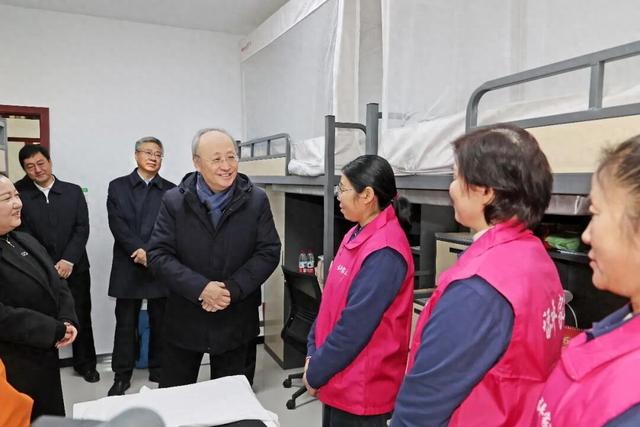
Group 1 - The core message emphasizes the importance of improving and safeguarding people's livelihoods, aligning with the central economic work conference's spirit and the municipal committee's directives [1] - The government aims to enhance the quality of public services, adapt to demographic changes, and strengthen the public service supply guarantee mechanism [7][8] - The focus is on expanding quality education resources, improving healthcare services, and ensuring food safety throughout the supply chain [7][8] Group 2 - The home service industry is highlighted as a sunrise industry that significantly impacts the well-being of families and the modernization of the capital [3] - There is a push for the integration of home services with elder care and childcare, along with an emphasis on training and improving the professional capabilities of service providers [3] - The government is committed to enhancing the management and regulatory frameworks for home service enterprises to promote healthy market development [3] Group 3 - The West Zongbu Street renewal project is the first in Dongcheng District to conduct a comprehensive rental withdrawal, focusing on community needs and improving public service facilities [5] - The project aims to create high-quality living spaces by optimizing funding, land use, and approval processes [5] - The government encourages collaboration among various stakeholders, including residents, to ensure community-driven development [5] Group 4 - The government plans to enhance the living conditions for vulnerable groups, particularly the elderly and children, by improving elder care services and expanding childcare support [8] - There is a commitment to using data-driven approaches to address common public concerns and improve service delivery [8] - The government emphasizes the importance of community engagement and collaborative governance to create a more livable and warm city [8]
北京海淀聚焦养老服务升级等重点领域 今年计划建设不少于10家“海淀食堂”
Xin Lang Cai Jing· 2026-01-08 22:04
Group 1: Commercial Consumption Enhancement - In 2026, Haidian District will focus on improving commercial consumption quality, upgrading elderly care services, and enhancing cultural tourism quality [1] - The district plans to accelerate the renovation of commercial spaces, including the Century Jinyuan shopping center, and create smart business districts [2] - Haidian aims to attract high-profile flagship stores and promote diverse integration of culture, commerce, and tourism to enhance consumer experiences [2] Group 2: Elderly Care Services - Haidian District plans to establish at least 10 "Haidian Canteens" by 2026, enhancing service networks and operational effectiveness in elderly care [3] - By 2025, the district will add 65 elderly meal service points, increasing the total to 293, with 87 additional enterprises applying to join the elderly meal service alliance [3] - Since August 2023, over 5 million elderly meal service instances have been recorded in Haidian [3] Group 3: Tourism Development - Haidian District will support the creation of the national 5A-level tourist attraction at Xiangshan Park, which is ready for inspection after two years of preparation [5] - In the first half of 2026, Haidian will release measures for high-quality cultural and tourism development, focusing on major projects, consumer scenarios, and the integration of various industries [5][6] - The district aims to enhance the quality and layout of museums, encouraging social investment in the museum sector to improve cultural service offerings [6]
医疗机构可在养老院开设服务点
Xin Lang Cai Jing· 2026-01-08 17:59
Core Viewpoint - The city has launched a joint initiative to promote high-quality development of integrated medical and elderly care services, involving multiple government departments to enhance collaboration between healthcare institutions and elderly care facilities [1][2][3] Group 1: Policy Measures - The initiative supports the establishment of medical service stations within elderly care institutions and integrates these institutions into a close-knit medical alliance management system [1] - It encourages the transformation of underutilized secondary and lower-level medical institutions into rehabilitation hospitals, nursing homes, and palliative care centers [1] - Elderly care institutions can entrust their internal medical facilities to healthcare institutions for management, aiming to increase the number of nursing care beds [1] Group 2: Cooperation and Services - The policy emphasizes the establishment of cooperative agreements between healthcare institutions and elderly care facilities, promoting multi-level contracts and ensuring basic public health and medical services are provided [2] - It includes health service actions for disabled and cognitively impaired elderly individuals, offering health assessments and guidance, and integrating economically disadvantaged groups into social assistance programs [2] - The initiative supports extending services from healthcare institutions to community elderly care services, providing home visits and family beds for elderly individuals with various health needs [2] Group 3: Technological Integration - The city encourages collaboration between integrated care institutions and healthcare providers with internet diagnostic capabilities to offer remote consultations and chronic disease management [3] - It promotes the use of internet hospitals for home-based elderly patients to manage common and chronic diseases [3] - By the end of 2027, all eligible integrated care institutions will be included as designated medical insurance points [3]
物产中大:公司控股子公司与强脑科技合作研发认知训练康复系统
Zheng Quan Ri Bao Wang· 2026-01-08 14:13
证券日报网讯1月8日,物产中大(600704)在互动平台回答投资者提问时表示,公司控股子公司物产中 大金石集团有限公司与强脑科技公司合作研发了认知训练康复系统。根据老年人的认知水平和健康状 况,设计适老化操作界面及分级训练课程,该系统已在物产中大金石集团有限公司旗下养老机构落地使 用。 ...

物产中大:公司控股子公司与强脑科技公司合作研发了认知训练康复系统
Mei Ri Jing Ji Xin Wen· 2026-01-08 10:45
Core Viewpoint - The company has engaged in the development of a cognitive training rehabilitation system in collaboration with Qiangnao Technology, targeting elderly individuals' cognitive levels and health conditions [1]. Group 1: Company Initiatives - The company’s subsidiary, Wuchan Zhongda Jinshi Group Co., Ltd., is involved in the research and development of the cognitive training rehabilitation system [1]. - The system features an age-friendly operational interface and tiered training courses designed specifically for elderly users [1]. - The cognitive training rehabilitation system has already been implemented in the company's affiliated elderly care institutions [1].
2026年宏观经济与资产配置展望
Sou Hu Cai Jing· 2026-01-08 10:17
Group 1 - The core theme for China's economy in 2026 will focus on boosting domestic demand and emphasizing technology development, as external uncertainties persist due to factors like the US-China trade war [2][3][25] - The economic growth target for 2026 is set at approximately 5.0%, which aims to ensure over 10 million new jobs, balancing current needs with long-term goals [6][25] - The potential GDP growth rate is projected to decline to around 4.63% during the 15th Five-Year Plan period (2026-2030), influenced by structural constraints such as an aging population and diminishing capital returns [4][5][6] Group 2 - The government is expected to implement more proactive fiscal and monetary policies, maintaining a fiscal deficit of around 4% and a broad fiscal deficit rate potentially exceeding 10% [7][12] - To address insufficient effective demand, an annual injection of 4 trillion to 5 trillion yuan into the economy is necessary to maintain normal economic circulation [12][25] - The real estate market is anticipated to face significant challenges, with a projected need for approximately 4.58 trillion yuan to normalize unsold housing inventory [9][10] Group 3 - The focus on technology will include significant investments in AI infrastructure, semiconductor manufacturing, and high-end manufacturing sectors, with domestic companies expected to benefit from policy support [21][25] - The consumer market is expected to see a shift towards service consumption, with policies aimed at enhancing consumer environments and increasing household income [19][20] - Structural policies will be necessary to improve income distribution and enhance consumer spending, particularly targeting middle and low-income groups [14][17][25]

首个“公建民营”落子深圳 远洋椿萱茂中标深圳龙岗区养老护理院
Xin Lang Cai Jing· 2026-01-08 08:55
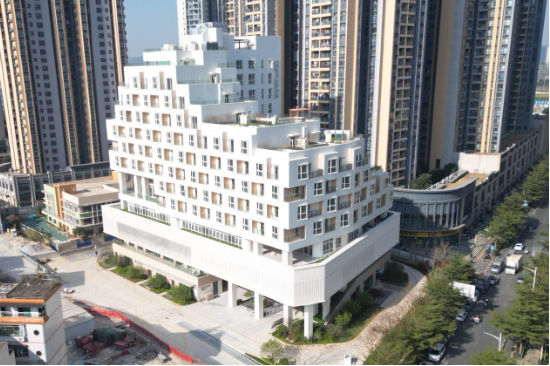
Core Insights - Ocean Group's high-quality health and elderly care service brand, Chuanxuanmao, has won the bid for the public-private partnership elderly care project in Longgang District, Shenzhen, marking a significant expansion in the Guangdong-Hong Kong-Macao Greater Bay Area [1][11] - The public-private partnership model in elderly care combines government leadership with market-oriented professional operations, requiring higher standards for operators compared to traditional elderly care facilities [1][11] Group 1: Benchmark Creation - The Longgang District elderly care facility will cover an area of 26,000 square meters with 350 planned beds, benefiting from excellent transportation links and proximity to major hospitals [2][12] - The project aims to create a smart, green, and ecological elderly care environment, featuring diverse living spaces for various needs, including independent and assisted living, as well as specialized care for dementia patients [2][13] - The design incorporates a "vertical forest" concept to integrate nature into the architecture, enhancing the living experience for residents [2][13] Group 2: Model Breakthrough - Winning the public-private partnership project reflects Chuanxuanmao's over ten years of experience and international perspective in the elderly care sector [5][16] - The company has collaborated with leading international elderly care institutions to develop a differentiated service model, offering over 220 services and 500 service details, establishing a high professional barrier in dementia care and health management [6][16] Group 3: Strategic Significance - The trend of "cross-border elderly care" is rising, with nearly 100,000 Hong Kong seniors choosing to settle in Guangdong Province, a 40.5% increase over the past decade, indicating a growing demand for high-quality health management in the aging population [7][18] - Chuanxuanmao, designated by the Hong Kong government as a mainland elderly care service provider, has developed a mature service system tailored for the elderly in the Greater Bay Area, positioning itself to meet regional demands effectively [7][18] Group 4: National Expansion - Chuanxuanmao's national presence includes coverage in five major urban clusters and twelve core cities, operating over 30 chain facilities with more than 11,000 beds and employing over 2,200 professional elderly care staff [10][20] - The company is expanding its service offerings from institutional care to home-based smart health management and travel care, continuously broadening its service boundaries to provide high-quality living for the elderly [10][20]
从交通基础的网络完善到城市更新的品质升级,从医疗服务的普惠到教育事业的走心
Nan Jing Ri Bao· 2026-01-08 03:42
Group 1: Urban Development and Infrastructure - The opening of the elevated main line of National Highway 312 between Ningzhen and Qixianghe has improved connectivity between the two areas, reducing travel time by nearly 20 minutes for residents [1] - Nanjing has been selected as one of the first pilot cities for urban renewal during the 14th Five-Year Plan, launching 48 urban renewal pilot projects, enhancing the quality of urban life [2][3] - The city has implemented micro-transformation plans to alleviate traffic congestion, resulting in a 30% decrease in congestion index and a 20% increase in average vehicle speed on key road segments [3] Group 2: Transportation Enhancements - The newly opened 2-kilometer dual six-lane expressway has significantly reduced travel time from 90 minutes to 40 minutes for drivers traveling to Zhenjiang [5] - Nanjing's urban rail transit system has expanded to 524.4 kilometers, adding 129.7 kilometers since the end of the 13th Five-Year Plan, enhancing commuting convenience for residents [6] - The introduction of the "Little Blue Whale" micro-circulation bus brand has improved access to public transportation, addressing the "last mile" issue for residents [6] Group 3: Social Services and Welfare - Nanjing has implemented a high-quality, inclusive elderly care service strategy, achieving 100% coverage of district-level elderly service centers and over 1,400 community care centers [9] - The city has introduced a "zero out-of-pocket" policy for hospitalization expenses related to childbirth, significantly reducing financial burdens for families [10] - The establishment of "Ninghai Shiguangli," an all-age dining facility, exemplifies the city's commitment to enhancing elderly care services [7][8] Group 4: Education Improvements - Nanjing has launched 24 educational projects during the 14th Five-Year Plan, including the installation of air conditioning in all ordinary classrooms, improving the learning environment for students [11][12] - The city has added approximately 120,000 new compulsory education seats and over 40,000 high school seats, facilitating access to quality education [12] - Comprehensive health monitoring and nutritional standards have been established for students, ensuring their well-being and academic performance [12]