农产品

Search documents
中国继续采购美豆,豆粕外强内弱(豆粕周报2.2-2.6)-20260209
Da Yue Qi Huo· 2026-02-09 08:19
1. Report Industry Investment Rating No information provided. 2. Core Views - **Overall**: The soybean and soybean meal markets are in a complex situation, with multiple factors such as Sino - US trade, South American weather, and domestic supply - demand affecting prices. Both are expected to maintain a volatile pattern in the short - term [10][11]. - **Soybean**: US soybeans are in a volatile state, waiting for the follow - up of the Sino - US trade agreement and South American weather. Domestic soybeans are affected by factors like spot price strength, demand, Sino - US trade, and import volume, also showing short - term volatility [11]. - **Soybean Meal**: The domestic soybean meal market is influenced by US soybean trends, end - of - year demand, and import volume. It is expected to maintain a short - term volatile pattern [10]. 3. Summary by Directory 3.1 Weekly Tips No information provided. 3.2 Recent News - Sino - US tariff negotiations have reached a preliminary agreement, which is short - term positive for US soybeans. However, the quantity of Chinese purchases of US soybeans and US soybean weather are still uncertain. The US soybeans are oscillating around 1,100 points in the short - term [13]. - Domestic soybean imports will continue to decline in Q1. The soybean inventory of oil mills remained high in January. The weather for soybean planting and growth in South America is relatively normal, and soybean meal has returned to range - bound trading [13]. - Domestic pig - farming losses have led to low expectations for pig restocking. The good demand for soybean meal in January supports its price expectations. Affected by the interaction of US soybeans and rising soybean meal demand, it maintains a range - bound pattern [13]. - Domestic soybean meal inventories in oil mills remain high. There is still a possibility of speculation on the weather in the US soybean - producing areas. Affected by the preliminary Sino - US trade negotiation agreement, soybean meal will maintain a short - term range - bound pattern [13]. 3.3 Bullish and Bearish Concerns 3.3.1 Soybean Meal - **Bullish**: The preliminary Sino - US trade negotiation agreement is short - term positive for US soybeans; domestic oil mills have no pressure on soybean meal inventory; there are still uncertainties in the weather in South American soybean - producing areas [14]. - **Bearish**: The total import volume of domestic soybeans remained high in January; under normal weather conditions, South American soybeans are expected to have a bumper harvest [14]. 3.3.2 Soybean - **Bullish**: The rising cost of imported soybeans supports the domestic soybean market; the expected increase in domestic demand for domestic soybeans supports price expectations [15]. - **Bearish**: The preliminary Sino - US trade negotiation agreement leads to an increase in Chinese purchases of US soybeans; the increase in the production of new - season domestic soybeans suppresses the price expectations of beans [15]. 3.4 Fundamental Data - **Global Soybean Supply - Demand Balance**: From 2016 to 2025, the global soybean harvest area, output, and total supply generally showed an upward trend, while the inventory - to - consumption ratio fluctuated [21]. - **USDA Monthly Supply - Demand Report**: From June 2025 to January 2026, the US soybean planting area, yield, and output showed some fluctuations, and the期末库存 also changed [22]. - **US Soybean Growth Process**: In 2024, the sowing, growth, and harvesting processes of US soybeans were compared with the previous year and the five - year average, showing different growth progress [23][24][25]. - **South American Soybean Growth Process**: In the 2024/25 and 2025/26 seasons, the planting and harvesting processes of soybeans in Brazil and Argentina were compared with the previous year and the five - year average [26][27][28][29][30]. 3.5 Positioning Data No information provided. 3.6 Soybean and Soybean Meal Fundamentals 3.6.1 US Soybean Market - The January USDA report has a slightly bearish impact. US soybeans are in a weak - volatile state in the short - term, affected by the increase in Brazilian soybean production. The overall short - term trend is influenced by weather changes in South American soybean - producing areas and the follow - up of the Sino - US trade agreement [34]. - The Fed's interest rate cut in December is positive for commodities in the short - term. The US soybean futures market is expected to maintain volatility, and the weather in South America and the follow - up of the Sino - US trade agreement are the main driving forces for short - and medium - term trends [34]. 3.6.2 Domestic Soybean Meal Industry Chain - **Imported Soybean Arrival**: The arrival volume of imported soybeans has entered a low level at the beginning of the year, and the year - on - year volume has recently decreased [37]. - **Oil Mill Pressing and Inventory**: The soybean inventory of oil mills has continued to decline, while the soybean meal inventory has rebounded from a low level. The soybean crushing volume of oil mills has returned to a high level, and the soybean meal output in December increased year - on - year. The unexecuted contracts of oil mills continued to decline, indicating a weakening of stocking demand [38][40][42]. - **Soybean Meal Transaction**: The procurement of domestic downstream enterprises has rebounded from a low level, and the提货 volume has remained at a relatively high level [46]. - **Pig - Farming Inventory**: The pig inventory has increased slightly year - on - year, the sow inventory has decreased year - on - year and slightly month - on - month. The pig price has fluctuated slightly recently, and the piglet price has rebounded slightly. The proportion of large pigs in China has increased, and the cost of secondary fattening of pigs has continued to rise. The domestic pig - farming profit is slightly profitable, and the pig - grain ratio and feed - to - meat ratio have fallen to a low level [47][49][51][53][55]. 3.7 Meal Market Structure - The soybean meal futures have returned to a volatile state, the spot price is relatively stable, and the spot premium has remained at a relatively high level [60]. - The spot price difference between soybean meal and rapeseed meal has narrowed, and the price difference of the 2605 contract has fluctuated slightly [62]. 3.8 Technical Analysis 3.8.1 Soybean - The soybean futures are in a narrow - range oscillation, affected by the interaction of US soybean trends and the relative strength of domestic soybean spot. Technical indicators such as KDJ and MACD are in a volatile adjustment stage, and the future trend needs new guidance [67]. - Domestically, soybeans are in a strong - volatile state, affected by the follow - up of the Sino - US trade agreement, the strength of domestic soybean spot, and the arrival volume of imported soybeans. The overall trend is affected by multiple factors such as the import of US soybeans and domestic soybean production [68]. 3.8.2 Soybean Meal - The soybean meal futures have rebounded after reaching the bottom, affected by the interaction of US soybean trends and the short - term weakening of domestic demand. Technical indicators such as KDJ and MACD are in a volatile adjustment stage, and the future trend needs new guidance. The overall situation is in a range - bound pattern, affected by the bearish weather in South American soybean - producing areas and the peak domestic demand season [70]. - The soybean meal is affected by the interaction of US soybean trends and the off - season of domestic demand, and it rebounds after reaching the bottom. The expected bumper harvest of South American soybeans and the relatively high arrival volume of imported soybeans suppress the price expectations, while the follow - up of the Sino - US trade agreement and the weather in South American soybean - producing areas support the bottom price [71]. 3.9 Next Week's Focus - **Most Important**: The growth and harvesting weather in South American soybean - producing areas, the follow - up of the Sino - US trade agreement, and the arrival and operation of Chinese imported soybeans [72]. - **Second - Important**: The domestic demand for soybean meal, the inventory of domestic oil mills, and downstream procurement [73]. - **Less Important**: Macroeconomic factors and conflicts such as those between Russia and Ukraine and between Israel and Palestine [73]. 3.10 Trading Strategies 3.10.1 Soybean Meal - **Futures**: US soybeans are oscillating around 1,100 points in the short - term, and soybean meal is expected to maintain a range - bound pattern. For the M2605 contract, short - term trading is recommended within the range of 2,700 - 2,900 [16]. - **Options**: Sell out - of - the - money put options [18]. 3.10.2 Soybean - **Futures**: The A2605 contract of soybean is expected to oscillate within the range of 4,300 - 4,500, and short - term range trading is recommended [19]. - **Options**: Sell out - of - the - money put options [19].
国贸期货日度策略参考-20260209
Guo Mao Qi Huo· 2026-02-09 08:03
Report Summary 1. Report's Industry Investment Rating No specific investment rating for the industry is provided in the report. 2. Core Viewpoints - In the short - term, the stock index is expected to consolidate after a rebound on low volume. In the long - term, with a low - interest - rate environment and "asset shortage", the domestic market has abundant funds and the economy is bottoming out, so the medium - to - long - term upward trend of the stock index is not expected to end [1]. - Asset shortage and weak economy are beneficial for bond futures, but the central bank has recently warned about interest - rate risks, so attention should be paid to the Bank of Japan's interest - rate decision [1]. - Market sentiment has recovered. In the context of tightening nickel ore supply in Indonesia, supply concerns may continue to disrupt the market. For different metals and commodities, their prices are affected by various factors such as supply and demand, policies, and macro - sentiment [1]. 3. Summary by Related Catalogs Macro - finance - Stock index: Short - term consolidation after rebound, medium - to - long - term upward trend remains [1]. - Bond futures: Asset shortage and weak economy are favorable, but central bank warns of interest - rate risks, focus on Bank of Japan's decision [1]. Non - ferrous Metals - Copper: Prices have rebounded due to improved downstream demand and increased risk appetite [1]. - Aluminum: Prices are oscillating strongly with limited industrial - end drivers and improved macro - sentiment [1]. - Alumina: Operating capacity has declined, but inventories have increased, and prices remain oscillating [1]. - Zinc: Cost center is stable, prices are expected to rebound after a correction due to increased risk - aversion sentiment [1]. - Nickel: Prices have rebounded in the short term, affected by the situation in Indonesia. In the long term, high global inventories may be a constraint [1]. - Stainless steel: Futures are oscillating, with support from the raw - material side and improved macro - sentiment. Attention should be paid to actual production by steel mills [1]. - Tin: Prices are volatile in the short term, and investors should focus on risk management and profit protection [1]. Precious Metals and New Energy - Gold and silver: Have rebounded due to improved liquidity, weak dollar index, and weak inflation expectations. They are expected to stabilize and oscillate before the Spring Festival [1]. - Platinum and lithium: May fluctuate strongly in a wide range in the short term due to improved liquidity [1]. Industrial Products - Industrial silicon: Northwest production is increasing while southwest production is decreasing. Scheduled production of polysilicon and organic silicon decreased in December [1]. - Polysilicon: Suggested to wait and see due to liquidity risks [1]. - Carbonate lithium: In the off - season for new - energy vehicles, with strong demand for energy storage and battery exports. There is a need for a correction after a large increase [1]. - Rebar and hot - rolled coil: High production and high inventory limit price increases, and the transmission from futures to spot prices is not smooth. Unilateral long positions should be closed, and positive arbitrage positions can be taken [1]. - Iron ore: There is obvious pressure above the current level, and chasing long positions is not recommended [1]. - Manganese silicon and ferrosilicon: There is a combination of weak reality and strong expectations. Current supply and demand are weak, but energy - consumption control and anti - involution may affect supply [1]. - Soda ash: Follows glass, with looser supply and demand in the medium term, and prices are under pressure [1]. - Coke and coking coal: Similar logic, mainly depending on capital sentiment during the off - season. Opportunities for high - point realization of spot goods or establishment of positive arbitrage positions should be grasped [1]. Agricultural Products - Palm oil, soybean oil, and rapeseed oil: Are expected to turn to an oscillating trend due to various factors such as the end of pre - festival stocking, purchase expectations, and tariff adjustments [1]. - Cotton: The market is currently in a situation of "having support but no driver". Future policies, planting area, weather, and demand should be monitored [1]. - Sugar: There is a consensus on short - selling due to global surplus and increased domestic supply. If prices continue to fall, there is strong cost support, but the short - term fundamentals lack continuous drivers [1]. - Corn: Is expected to oscillate narrowly in the short term. After the Spring Festival, attention should be paid to the selling pressure of ground - stored grain and policy changes [1]. - Soybean meal: Is expected to oscillate in a range in the short term, affected by factors such as US soybean exports and Brazilian discounts. The spot basis is expected to weaken [1]. - Pulp: With disturbances on the supply side and weakening demand after restocking, it is advisable to wait and see [1]. - Logs: Spot prices have risen, and with a decrease in February arrivals and rising foreign quotes, the futures price has an upward driving force [1]. - Pigs: Spot prices are stabilizing, demand is supportive, and production capacity still needs to be further released [1]. Energy and Chemicals - Crude oil and fuel oil: OPEC+ has suspended production increases until the end of 2026, the US and Iran may hold peace talks, and the geopolitical situation in the Middle East has cooled down. The commodity market sentiment has turned bearish [1]. - Asphalt: Short - term supply - demand contradictions are not prominent, following crude oil. The "14th Five - Year Plan" construction demand may be falsified, and supply is sufficient [1]. - BR rubber: The cost side has strong support, and there are expectations of export increases. Short - term downstream negative feedback is being realized, and the market should pay attention to pre - Spring Festival inventory clearance [1]. - PTA and short - fiber: The PX market is strong, driving up chemical products. PTA production is increasing, and short - fiber prices follow costs closely [1]. - Ethylene glycol: Overseas prices have rebounded, and the reduction in Middle East exports has boosted market confidence [1]. - Styrene: The futures price has rebounded due to improved supply - demand fundamentals, and the inventory has decreased [1]. - Methanol: Affected by the situation in Iran, there are both long and short factors. Downstream negative feedback is obvious [1]. - PVC: Global production capacity expansion is limited in 2026, but the fundamentals are poor. There may be a rush for exports, and capacity may be cleared in the northwest [1]. - LPG: The CP price has risen, and the market is expected to weaken. The basis is expected to widen, and demand is short - term bearish [1]. - Container shipping on the European route: Pre - festival freight rates have peaked and declined. Airlines are cautious about resuming flights and plan to increase prices after the off - season in March [1].
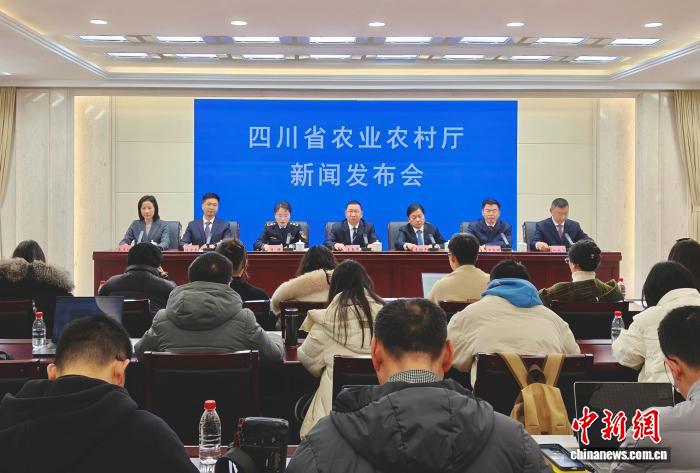
2025年四川农产品质量安全例行监测合格率达99.5%
Zhong Guo Xin Wen Wang· 2026-02-09 06:53
Core Insights - In 2025, Sichuan Province achieved a 99.5% compliance rate in routine monitoring of agricultural product quality, indicating a stable and positive trend in agricultural safety [1][2]. Monitoring and Compliance - Sichuan has significantly increased its agricultural product monitoring efforts, with over 168,000 samples tested, achieving a historic high of more than 2 samples per thousand people [2][3]. - The compliance rates for various agricultural products are as follows: vegetables and fruits at 99.3%, tea at 99.7%, livestock and bee products at 99.9%, and aquatic products at 99.3% [2][3]. Regulatory Measures - Targeted initiatives have been implemented to address agricultural product quality issues, including regular inspections of agricultural inputs with a compliance rate of 98.4% from over 9,700 samples tested [4]. - A total of 911 agricultural input cases were processed, resulting in fines totaling 8.54 million yuan [4]. - Specific measures for managing pesticide residues have been adopted, with a dynamic management system for high-risk production entities [4]. Innovation in Oversight - Sichuan has introduced innovative practices to enhance regulatory efficiency, including risk classification for 46,300 agricultural entities and the establishment of 276 standardized regulatory stations [4]. - The province has developed a traceability system with 183,000 agricultural product traceability chains, allowing for certified and coded products to be marketed and verified [4]. Focus on Consumer Safety - As the Spring Festival approaches, Sichuan will concentrate on high-consumption and high-risk "basket" products, enhancing risk assessments and regulatory enforcement to ensure the safety of food supplies [5].


挚爱人间一抹红——追记实干为民的好干部贺娇龙
Xin Lang Cai Jing· 2026-02-09 05:10
Core Viewpoint - The article highlights the life and contributions of He Jiaolong, a local leader in Xinjiang, who dedicated her life to improving the living conditions of her community and promoting local tourism and agriculture, ultimately becoming a beloved figure before her untimely passing. Group 1: Early Life and Career - He Jiaolong was born in 1979 in a small village in Xinjiang, raised in a loving family that valued education and hard work [5] - She worked various jobs before becoming a village official, where she quickly gained recognition for her practical approach and dedication to community service [6][8] Group 2: Community Development Initiatives - As a local leader, He Jiaolong addressed significant challenges in her community, such as poor infrastructure and healthcare access, by initiating road construction and improving local services [9][10] - Under her leadership, the village became the first in the county to transition all residents into brick houses and became known for its cleanliness [10] Group 3: Promotion of Tourism and Agriculture - He Jiaolong focused on promoting tourism in her hometown, leveraging its natural beauty and cultural heritage to attract visitors [19] - She helped local residents start businesses related to tourism, such as restaurants and handicrafts, significantly improving their livelihoods [19][21] Group 4: Rise to Fame and Online Presence - In November 2020, He Jiaolong gained national attention when she appeared in a viral video promoting winter tourism, leading to a surge in visitors to her town [22][24] - She later embraced live streaming to sell local agricultural products, achieving remarkable sales figures and building a substantial online following [38][52] Group 5: Challenges and Resilience - Despite facing criticism and personal challenges, He Jiaolong remained committed to her mission of helping her community, even during the COVID-19 pandemic [48][51] - She established a charity to support local residents and responded to emergencies, demonstrating her dedication to public service [60] Group 6: Legacy and Impact - He Jiaolong's tragic passing in January 2026 left a profound impact on her community, with many mourning her loss and celebrating her contributions [78][82] - A rose was named "Jiaolong" in her honor, symbolizing her lasting influence and the love she cultivated in her community [83]

吉粤携手硕果丰 吉品出海启新程 吉林省“吉字号”农产品广州专场推介会圆满落幕
Xin Lang Cai Jing· 2026-02-09 05:09
Core Insights - The event "Jizhu Bay Area, Guangdong Business Opportunities" successfully showcased Jilin agricultural products in Guangzhou, aiming to enhance market channels and brand influence for "Jizhu" products [1][2] Group 1: Event Overview - The event was co-hosted by Jilin and Guangdong agricultural departments, with the goal of deepening cooperation and sharing resources between the two regions [1] - Three major exhibition areas highlighted premium agricultural products from Jilin, including ginseng, black fungus, sweet corn, and deer products, showcasing the ecological advantages of Jilin's black soil [1] Group 2: Collaboration and Partnerships - A significant highlight was the signing of multiple cooperation agreements, enhancing agricultural industry collaboration between Jilin and Guangdong [2] - Jilin Youth E-commerce Association partnered with a Bay Area agricultural short video live-streaming base to facilitate cross-regional cooperation, enabling faster market access for "Jizhu" products [2] Group 3: Cross-Border Expansion - The event marked a breakthrough in cross-border trade, with Jilin enterprises signing agreements with the Thai Chinese Youth Chamber of Commerce to leverage their Southeast Asian market channels [2] - The launch of the "Jizhu" agricultural products Southeast Asia cross-border e-commerce initiative was initiated, providing comprehensive support for Jilin enterprises to enter Southeast Asian markets [2]
特色“广货”美味动人!“中山香农”在深圳热销出圈
Nan Fang Nong Cun Bao· 2026-02-09 03:31
Core Viewpoint - The "Zhongshan Xiangnong" regional brand successfully showcased its unique agricultural products in Shenzhen, attracting significant consumer interest and sales during the "Zhongshan Goods Go Global" event [3][4][5]. Group 1: Event Overview - The event took place at the Happy Harbor Ferris Wheel Square in Shenzhen on February 7-8 [2][5]. - The "Zhongshan Xiangnong" brand presented nearly a hundred distinctive agricultural products, highlighting the culinary delights of Zhongshan [6][7]. Group 2: Popular Products - The "Yifeng cured meat rice" became a highlight, drawing long queues as it featured a combination of Yifeng sausages, cured meat, and high-quality rice, praised for its rich flavor and texture [14][15][16]. - Other popular items included freshly prepared "Shiqi pigeon" and "Crispy fish," which received positive feedback from consumers for their taste and quality [18][19][20]. Group 3: Unique Fruits - Rare tropical fruits like "Chocolate pudding fruit" and "Finger lime" gained popularity, selling out quickly with 500 kilograms sold on the first day [30][33]. - The "Chocolate pudding fruit" was noted for its unique taste, combining chocolate and banana flavors, while the "Finger lime" was appreciated for its refreshing taste and visual appeal [35][36][40]. Group 4: Sales Strategy - The brand adopted a dual online and offline sales strategy, utilizing platforms like Douyin, WeChat, and JD to reach a broader audience [42][46]. - The online sales of Zhongshan's specialty products, including cured meats and Shiqi pigeon, were well-received, indicating a strong market demand [47]. Group 5: Future Plans - The "Zhongshan Xiangnong" brand aims to continue enhancing its quality and brand presence, promoting Zhongshan agricultural products beyond the local market to the Greater Bay Area and nationwide [50][56][59].

南农晨读 | 过年就买梅州柚
Nan Fang Nong Cun Bao· 2026-02-09 03:30
Group 1 - Guangdong has become a key gateway for APEC goods entering the Chinese market, leveraging its geographical advantages and long-standing trade ties with APEC economies [5][6][7] - The first high-level meeting of APEC's "China Year" will be held in Guangzhou in February 2026, enhancing Guangdong's role in regional trade connectivity [6][7] - The provincial grain and material reserve work meeting in Guangzhou focused on summarizing 2025's efforts and planning for 2026 to ensure a strong start for the "14th Five-Year Plan" [10][11] Group 2 - The 16th Jilin (Changchun) Winter Agricultural Expo showcased Deqing Gonggan as a representative of Guangdong products, highlighting the strength of Lingnan agricultural products and fostering collaboration between Guangdong and Jilin [14][15][16] - The 42nd Spring Flower Market in Chen Village, known as "China's Year Orange Town," has commenced, blending traditional customs with modern agricultural branding for a 10-day consumer event [18][19][20] - A research and support activity led by South China Agricultural University in Heyuan aims to integrate technology and culture to promote local agricultural modernization and high-quality development [23][24][25]
资讯早班车-2026-02-09-20260209
Bao Cheng Qi Huo· 2026-02-09 02:08
1. Report Industry Investment Rating No relevant content provided. 2. Core Viewpoints of the Report - The macro - economic data shows a mixed picture, with some indicators like GDP growth slowing down while others such as CPI turning positive. The commodity market has different trends, with gold rising and silver experiencing significant price fluctuations. The financial market has various developments including bond market changes and currency exchange rate movements. The stock market shows a shift in capital flow from mainstream wide - based ETFs to specific high - growth theme ETFs [1][2][36]. 3. Summary by Section 3.1 Macro Data - GDP growth in Q4 2025 was 4.5% year - on - year, down from 4.8% in the previous quarter and 5.4% in the same period last year. The manufacturing PMI in January 2026 was 49.3%, slightly up from 49.0% in the previous month. The non - manufacturing PMI: business activity was 49.4%, down from 50.1% in the previous month [1]. - In December 2025, social financing scale was 22075 billion yuan, lower than 35299 billion yuan in the previous month. M0, M1, and M2 growth rates showed different trends, with M0 growth slowing down, M1 growth dropping significantly, and M2 growth slightly increasing [1]. - CPI in December 2025 was 0.8% year - on - year, turning positive from - 0.3% in the previous month. PPI was - 1.9% year - on - year, slightly improving from - 2.3% in the previous month [1]. 3.2 Commodity Investment Reference 3.2.1 Comprehensive - The State Council executive meeting studied policies to promote effective investment, aiming to use various funds and tools to promote major projects in key areas [2]. - In January 2026, the futures market had a good start, with total funds increasing by over 400 billion yuan to 2.57 trillion yuan, and customer equity increasing by about 19% compared to the end of 2025. The number of futures customers also continued to grow [2]. - The Shanghai Gold Exchange adjusted the margin ratio and price limit of some contracts [2]. 3.2.2 Metals - On February 9, spot gold rose 1% to return to the $5000 mark, and spot silver rose nearly 3%. From February 2 to 6, the on - site price of Guotou Silver LOF dropped 40.94% in a single week [4][5]. - China's foreign exchange reserves increased for the sixth consecutive month, and gold reserves increased for 15 consecutive months. In January 2026, global gold ETFs attracted a record $18.7 billion in capital inflows [5][6]. 3.2.3 Coal, Coke, Steel, and Minerals - In late January, the daily output of crude steel of key steel enterprises was 1.935 million tons, down 2.22% month - on - month and 8.25% year - on - year [9]. 3.2.4 Energy and Chemicals - Indian refiners are avoiding purchasing Russian oil for April delivery. The IEA predicts that by 2030, the combined share of renewable energy and nuclear power in the global power structure will rise to 50% [10]. - The EU proposed the 20th round of sanctions against Russia, covering energy, financial services, and trade. The US Energy Secretary will visit Venezuela to understand local oil and gas production [10][11]. 3.2.5 Agricultural Products - The national standard for pre - made food safety is open for public comment, with restrictions on preservatives and shelf - life. The agricultural department will strengthen the regulation of pig production capacity [13]. - APK reduced Ukraine's corn and rapeseed export forecasts. Brazilian soybean sales reached 33.9% of the expected output, lower than 42.4% in the same period last year [13]. 3.3 Financial News Compilation 3.3.1 Open Market - On February 6, the central bank conducted 31.5 billion yuan of 7 - day reverse repurchase operations and 300 billion yuan of 14 - day reverse repurchase operations, with a net withdrawal of 146 billion yuan. This week, there will be 405.5 billion yuan of reverse repurchase and 500 billion yuan of 182 - day repurchase due [16]. 3.3.2 Important News - This week, important domestic and international events include the release of economic data, corporate earnings reports, and international negotiations. The State Council studied policies to promote effective investment, and the central government emphasized the front - loading of macro - policies [17]. - Eight departments jointly issued a document to ban virtual currency - related business activities. The CSRC issued a regulatory guide for the overseas issuance of asset - backed securities tokens [18]. - The Ministry of Commerce will build a policy system to cultivate new service consumption growth points. China's foreign exchange and gold reserves increased, and the Asian and global manufacturing PMIs showed different trends [19][21]. 3.3.3 Bond Market Review - In the inter - bank bond market, bond yields generally declined, and bond futures rose. In the exchange bond market, some bonds had significant price changes. The convertible bond index rose, and the currency market interest rates had different trends [26][27][28]. 3.3.4 Foreign Exchange Market - The on - shore RMB against the US dollar rose 7 points at the 16:30 close, and the RMB central parity rate against the US dollar was adjusted down 20 points. The US dollar index fell 0.36% [31]. 3.3.5 Research Report Highlights - Shenwan Fixed - income believes that the convertible bond market style is solidified, and the supply - demand contradiction is intensified. CITIC Securities expects the market to return to the main lines of domestic policy and economic repair and overseas Fed rate - cut expectations in February [32][33]. - CICC believes that the Fed is unlikely to "shrink the balance sheet" in the short term, and the final rate - cut amplitude may exceed market expectations. CICC Fixed - income believes that the default risk of short - duration urban investment bonds is still low [33][34]. 3.4 Stock Market News - In 2026, the A - share ETF market showed a trend of capital flowing from mainstream wide - based ETFs to theme ETFs. Southbound funds have continuously increased their investment in the Hong Kong stock market, and the Hong Kong IPO market has maintained its popularity [36]. 3.5 Today's Reminder - On February 9, 248 bonds are listed, 118 bonds are issued, 147 bonds are due for payment, and 309 bonds are due for principal and interest repayment [35].
华泰期货:国内供应充足,豆粕价格震荡运行
Xin Lang Cai Jing· 2026-02-09 01:59
热点栏目 自选股 数据中心 行情中心 资金流向 模拟交易 客户端 来源:华泰期货 作者: 薛钧元 粕类市场要闻与重要数据 期货方面,上周末收盘豆粕2605合约2735元/吨,环比下跌32元/吨,跌幅1.16%;上周末收盘菜粕2605 合约2239元/吨,环比下跌48元/吨,跌幅2.1%。现货方面,天津地区豆粕现货价格3170元/吨,环比持 平,现货基差M05+435,环比上涨32;江苏地区豆粕现货价格3030元/吨,环比下跌20元/吨,现货基差 M05+295,环比上涨12;广东地区豆粕现货价格3010元/吨,环比下跌60元/吨,现货基差M05+275,环 比下跌28。福建地区菜粕现货价格2410元/吨,环比下跌80元/吨,现货基差M05+171,环比下跌32。 豆粕:国际方面,巴西国家商品供应公司表示,截至1月17日当周,巴西2025/26年度大豆收割进度为 2.3%,去年同期的收割进度为1.2%。布宜诺斯艾利斯谷物交易所表示,截至1月21日,阿根廷2025/26年 度大豆播种完成96.2%,高于一周前的93.9%。 国内方面,据Mysteel农产品调研显示,2026年第5周国内全样本油厂大豆到港共计30. ...

“特色集市+多彩民俗”勾勒新春活力图景 节前市场“热气腾腾”年味浓
Yang Shi Wang· 2026-02-09 01:46
Group 1: Festive Atmosphere - The upcoming Spring Festival is marked by vibrant decorations and cultural activities across various regions, enhancing the festive spirit [4][5][7] - In Tianjin, 59 unique light displays integrate local cultural elements, while Chengdu showcases dynamic light technology with traditional silk patterns [4] - In Yunnan, a park features a 15-meter tall flower peacock made from 200,000 flowers, creating a picturesque scene [4] Group 2: Market Activity and Consumer Engagement - Various regions are hosting diverse celebrations, including traditional performances and fun competitions, attracting large crowds [7] - In Ningxia, locals engage in traditional activities like writing Spring Festival couplets, while in Chongqing, fun contests such as pig-catching and chicken-catching are popular [7] Group 3: Pre-Festival Market Dynamics - Specialty markets are bustling with consumers purchasing traditional goods, with local products and delicacies drawing significant attention [10] - In Guangdong, a promotional campaign is underway to boost consumption, offering vouchers and discounts to encourage spending [10] Group 4: Supply and Pricing Stability - The supply of essential goods is abundant, with stable prices reported across major markets as the festival approaches [12][16] - Recent data indicates an increase in inventory levels for meat, oil, vegetables, eggs, and grains compared to early January [16] - Efficient logistics systems are in place to ensure smooth distribution of agricultural products, with measures taken to maintain price stability [18]