新茶饮

Search documents
“五一”假期餐饮市场热度攀升 新茶饮消费迎来爆发式增长
Zheng Quan Ri Bao· 2025-05-06 12:42
Group 1: Overall Market Performance - During the "May Day" holiday in 2025, the national consumption market showed robust vitality, with key retail and catering enterprises' sales increasing by 6.3% year-on-year [1] - The catering sector emerged as a significant driver of the holiday economy, particularly in popular tourist cities where dining and new tea beverage sales performed exceptionally well [1] Group 2: Company Performance - Xibei Catering Group reported an increase in customer traffic during the "May Day" holiday compared to the Qingming Festival, with peak dining periods leading to long wait times in major cities like Beijing, Shanghai, Guangzhou, and Shenzhen [1] - The company plans to open 80 new stores in 2025, having already completed 24 new store openings and 11 restaurant upgrades by the end of April [1] Group 3: New Tea Beverage Market - Sichuan Baicha Baidao's sales surged by 50% during the "May Day" holiday, with some scenic area stores experiencing sales growth exceeding 1700%, and one store seeing a 3000% increase [2] - The new tea beverage sector's explosive growth during the holiday reflects a broader industry trend, driven by consumer demand for health-oriented drinks and cultural experiences [3]
“假日经济”带火新茶饮消费
Huan Qiu Wang· 2025-05-06 11:36
Core Insights - The "holiday economy" has surged during the May Day holiday, with new tea beverage products experiencing strong sales growth [1] - The travel market exhibited characteristics of "long-term explosion, cross-border dual heating, and county-level resurgence," significantly boosting foot traffic to new tea beverage stores [2] Sales Performance - During the May Day holiday, overall sales for tea brand Cha Bai Dao increased by 50% compared to the previous period [2] - In cities with the highest sales growth, many were non-first-tier cities, with some stores seeing sales increases exceeding 1700%, and the highest being 3000% at the Jiayuguan Great Wall Visitor Center [2] - Foreign tourist spending at Cha Bai Dao stores increased by over 60% compared to the pre-holiday period, indicating a growing trend of foreign visitors seeking out Chinese tea beverages [2] Product Innovation - Cha Bai Dao launched a new product line at its flagship store in Chengdu, featuring items deeply rooted in Sichuan culture, which attracted many foreign tourists [3] - The "Mountain Tea Bi Luo Chun" series, which includes seasonal tea blends infused with floral aromas, sold over 1.5 million cups during the holiday [6] - Top-selling products during the holiday included "Yang Zhi Gan Lu" and "Watermelon Boba," with total sales nearing 10 million cups [6] Cultural Significance - New tea beverages have become a "standard" for consumers during outings, serving not only as a thirst quencher but also as a "social currency" reflecting the "holiday economy" [6]

“五一”出游热带火新茶饮消费,部分门店销量增30倍
Bei Jing Ri Bao Ke Hu Duan· 2025-05-06 08:58
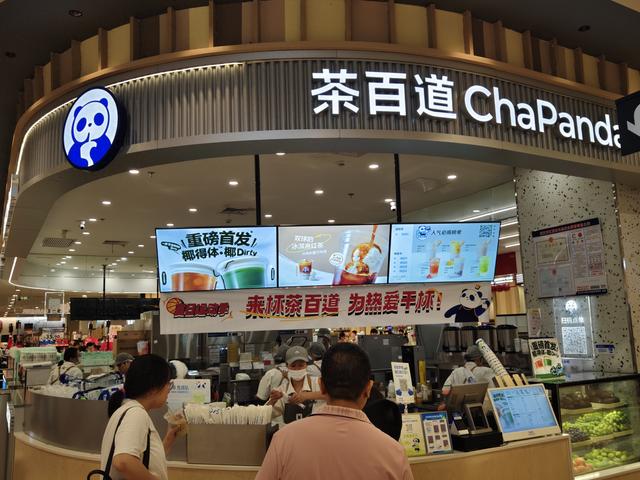
Core Insights - The new tea beverage industry experienced significant sales growth during the "May Day" holiday, with brands like Nayuki and Cha Bai Dao seeing remarkable increases in order volumes and sales figures [1][3][5] Group 1: Sales Performance - Nayuki's tea saw a nationwide sales surge, with some stores reporting order volumes increasing by over 300% compared to the pre-holiday period [1] - Cha Bai Dao's overall sales revenue increased by 50%, with many stores experiencing sales growth exceeding 1700%, and some scenic area stores reporting a staggering 3000% increase [1][3] - The top ten cities for sales growth during the holiday were primarily non-first-tier cities, such as Jiayuguan, Pingxiang, Jiuquan, and Aba, indicating a shift in consumer behavior [3] Group 2: Consumer Trends - The holiday period saw a rise in outdoor activities, leading to increased foot traffic in tea beverage stores located in scenic spots and transportation hubs [5] - The influx of foreign tourists contributed to a more than 60% increase in sales revenue at stores during the holiday, highlighting the appeal of Chinese tea beverages to international visitors [5] - New tea beverages have become a "standard" for consumers during outings, serving not only thirst-quenching needs but also acting as "social currency" with cultural significance [5] Group 3: Product Innovation - Many new tea beverage brands launched flower-themed drinks, desserts, and cultural gifts during the holiday, catering to the trend of flower-themed consumption experiences [3] - As health consciousness rises, brands are introducing plant-based fruit and vegetable product lines to offer consumers more diverse options [5]
茶百道:“假日经济”带火新茶饮消费 多家门店销量增幅超1700%
news flash· 2025-05-06 06:10
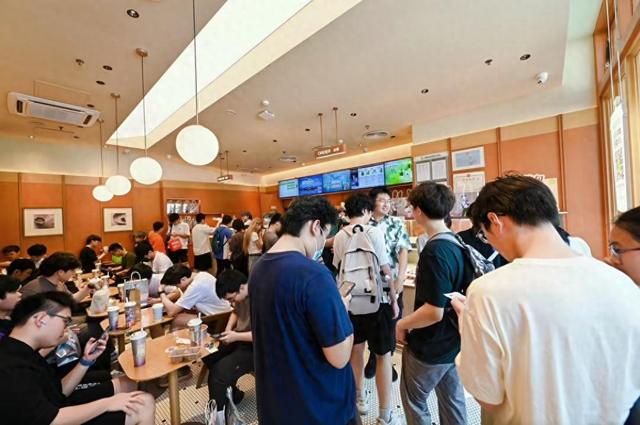
Group 1 - The core viewpoint of the article highlights the strong growth in new tea beverage consumption during the "May Day" holiday, driven by the "holiday economy" [1] - During the "May Day" period, the overall sales of the company increased by 50% compared to the previous period [1] - Several stores across the country experienced sales growth exceeding 1700%, with some tourist location stores seeing sales growth as high as 3000% [1] Group 2 - Foreign tourist spending at the company's stores increased by over 60% compared to the period before the holiday [1]
更下沉的“蜜雪冰城”寻求突围
财富FORTUNE· 2025-05-05 13:00
Core Viewpoint - The article discusses the growth and expansion strategy of the new tea beverage brand TIANLALA, highlighting its rapid store openings and plans for international expansion, while noting its lower brand recognition compared to competitors like MIXUE BINGCHENG and TEA BAIDAO [1][4]. Group 1: Domestic Expansion - TIANLALA has over 8,000 signed stores across 31 provinces, with more than 40% located in towns and schools [1]. - The brand has a significant presence in lower-tier cities, with 81.15% of its stores in third-tier cities and below, compared to MIXUE BINGCHENG's 57.13% [1]. - The average customer spending at TIANLALA is around 10 yuan, with a popular product priced at 8 yuan achieving sales of over 20 million cups within five months [1][2]. Group 2: Business Model and Supply Chain - TIANLALA's founder, Wang Wei, initially drew inspiration from MIXUE BINGCHENG, particularly in product offerings and supply chain management [2]. - The company began building its own orchards and factories in its third year to ensure low-cost raw material supply, which is crucial for its pricing strategy [2]. - TIANLALA's product gross margin is approximately 55%, lower than the 60%+ margins of other brands, leading to a preference for smaller store formats to reduce costs [2]. Group 3: International Expansion - TIANLALA has opened 60 stores in Indonesia and has plans to expand to Cambodia, the Philippines, and Uzbekistan, with a goal of adding over 200 new stores in Southeast Asia, Europe, North America, and the Middle East by 2025 [3][4]. - The company aims to achieve over 10 billion yuan in revenue by 2025, supported by significant investment in building a centralized system for overseas operations [4]. Group 4: Brand Development and Market Position - TIANLALA plans to invest 20% of its revenue in brand building by 2025, a significant increase from less than 5% in 2024, to enhance its brand image and recognition [4]. - The company is currently behind competitors in terms of brand awareness despite having a comparable number of stores [4]. - TIANLALA's IPO plans have been delayed, with a focus on improving supply chain, information technology, and brand recognition before going public [5].
股价连创新高背后:古茗(01364)地域扩张的边界在哪里?
智通财经网· 2025-05-03 11:53
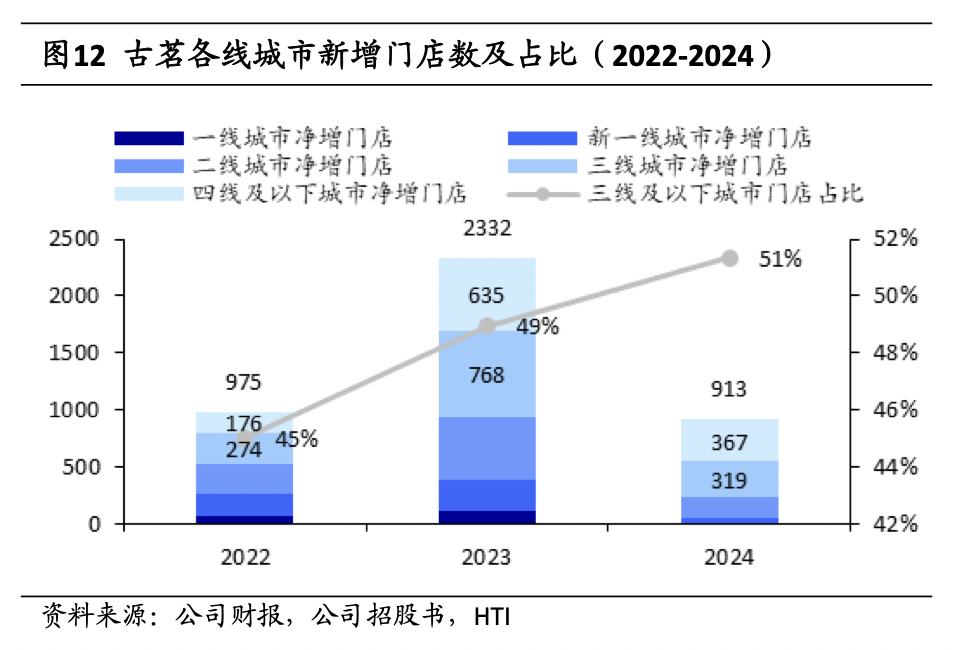
Core Viewpoint - The new tea beverage industry is experiencing significant activity with multiple leading companies going public, particularly highlighting the impressive performance of Gu Ming, which has seen its stock price surge since its listing [1][2]. Company Overview - Gu Ming is a rapidly growing Chinese beverage company, holding a 17.7% market share as the largest mass-market fresh tea beverage brand in China by GMV in 2023 [2]. - The company operates a light-asset franchise model, with approximately 99.9% of its GMV coming from franchise stores, managing only 7 directly operated stores [2][6]. - As of the end of 2024, Gu Ming has opened 9,914 stores across 17 provinces, primarily in East and South China, and has not yet expanded internationally [2]. Business Strategy - Gu Ming employs a "regional encryption" strategy, expanding into neighboring provinces only after surpassing 500 stores in a single province, with eight provinces contributing 83% of GMV [2]. - The company focuses on lower-tier cities, with 51% of its stores located in tier-three cities and below, and 41% of its stores in rural areas, the highest among the top five mass-market fresh tea brands in China [3][6]. Financial Performance - Gu Ming's revenue has shown steady growth, with figures of 4.38 billion, 5.56 billion, 7.68 billion, and 8.79 billion yuan from 2021 to 2024, although the growth rate has slowed [6]. - The company's gross margin was 30.6% in 2024, down 0.7 percentage points year-on-year, attributed to increased support for franchisee profitability [7]. - Adjusted net profit for 2024 grew by 5.7% to 1.542 billion yuan, supported by the franchise model, improved supply chain efficiency, and effective cost control [8]. Competitive Landscape - The new tea beverage industry is facing intense competition, with market growth rates expected to decline from 44.3% in 2023 to 12.4% by 2025, and over 20,000 store closures anticipated in 2024 [9]. - Gu Ming acknowledges fierce competition in product development, quality, pricing, and customer experience, with challenges in differentiating products amid a homogenized market [9][10]. Future Outlook - Gu Ming plans to enhance its marketing efforts and increase capital investment in response to intensified competition, with a sales expense ratio rising to 5.5% in 2024 [10]. - The company aims to focus on dine-in services and introduce student discount cards to boost customer retention, while also expanding its product offerings to include coffee and baked goods [10]. - Maintaining long-term competitive advantages and addressing product differentiation will be critical challenges for Gu Ming moving forward [11].
大涨!港股5月迎开门红,离岸人民币汇率直线拉升
Guang Zhou Ri Bao· 2025-05-02 14:47
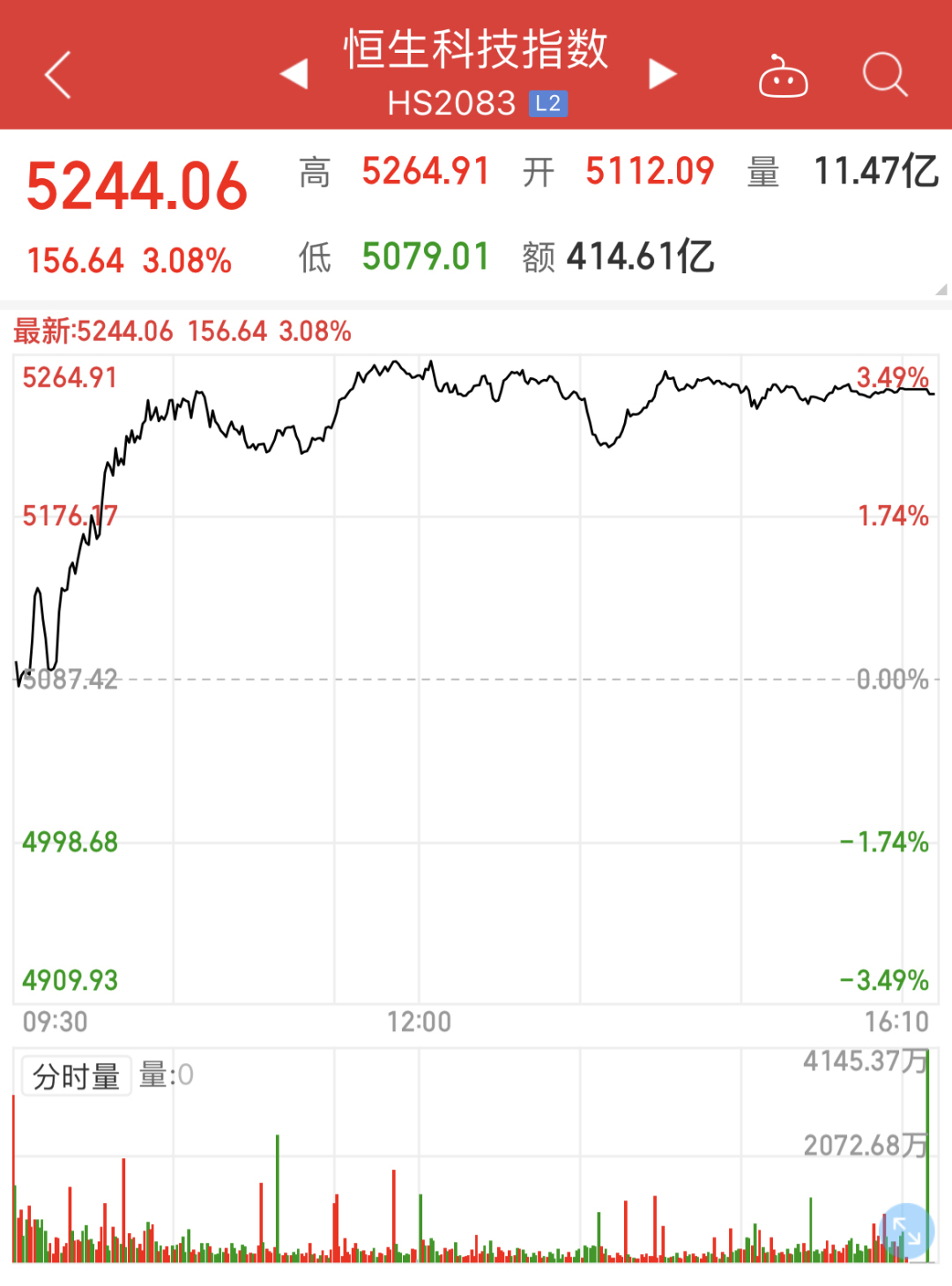
Market Performance - The Hong Kong stock market opened positively on May 2, with the Hang Seng Index rising by 1.74% to close at 22,504.68 points, the Hang Seng Tech Index increasing by 3.08%, and the National Enterprises Index up by 1.92% [1][2]. Sector Performance - Technology stocks saw a significant increase, with Xiaomi Group rising over 6%, Alibaba and JD Group up more than 3%, and Kuaishou, Lenovo Group, Bilibili, and Tencent Holdings each gaining over 2% [2][3]. - New energy vehicle companies collectively surged, with Li Auto's stock increasing by over 7% [3]. - CXO concept stocks experienced a substantial rise, with WuXi AppTec gaining over 7% [3]. - New tea beverage stocks also performed well, with Nayuki's Tea rising by over 8% [3]. Company Updates - Xpeng Motors reported a year-on-year increase of 273% in new car deliveries for April, while Li Auto's new car deliveries grew by 31.6% [4]. - Xiaomi's automotive division delivered over 28,000 vehicles in April, with the Xiaomi SU7 Ultra model starting to be delivered [4]. Currency and Trade Insights - The offshore RMB to USD exchange rate saw a significant increase, rising over 370 points to reach 7.24, the highest level since April 4 [4]. - China is currently evaluating trade negotiations with the United States, with indications of a marginal easing in trade tensions, leading to a release of market bullish sentiment [6]. Future Market Outlook - China Galaxy Securities suggests that investor risk appetite is gradually recovering, supported by positive fiscal policies and moderately loose monetary policies, which may lead to stable earnings growth in the Hong Kong stock market [6]. - Guotai Junan Securities indicates that under increasing external pressures, domestic demand-related sectors may benefit from rising consumer policy expectations, predicting a short-term consolidation in the Hong Kong market with a gradual shift towards technology growth style investments [6].
港股收评:恒生指数涨1.74% 恒生科技指数涨3.08%
news flash· 2025-05-02 08:18
金十数据5月2日讯,港股高开高走,截至收盘,恒生指数涨1.74%,恒生科技指数涨3.08%,国企指数 涨1.92%。盘面上,科网股全线上涨,小米集团(01810.HK)涨超6%,阿里巴巴(09988.HK)、京东 (09618.HK)涨超3%,快手(01024.HK)、联想集团(00992.HK)、哔哩哔哩(09626.HK)、腾讯控股 (00700.HK)涨超2%;汽车股集体走高,零跑汽车(09863.HK)涨超7%;CXO概念股整体大涨,药明涨超 7%;新茶饮股集体上行,奈雪的茶(02150.HK)涨超8%。 港股收评:恒生指数涨1.74% 恒生科技指数涨3.08% ...
《洞见ESG》4月刊:ESG强制信披倒计时
21世纪经济报道· 2025-04-30 12:45
《洞见ESG》4月刊 ESG强制信披倒计时 政策速递 证监会发文规范A股ESG信披,这458家上市公司须做好准备 近日,证监会发布修订后的《上市公司信息披露管理办法》,第六十五条明确提出"上市公司按照证券 交易所的规定发布可持续发展报告"。该《信披办法》于2025年7月1日起正式施行。 【点击查看详 情】 铝冶炼纳入碳市场有何影响?2026年碳配额缺口或达34万吨,企业需尽快降低碳成本 铝冶炼纳入碳市场的管控范围与电力行业有所不同。电力行业只管控化石燃料燃烧排放,而新纳入的 铝冶炼行业,除了化石燃料燃烧排放,工业过程排放也纳入管控。 【点击查看详情】 1200家水泥企业将纳入全国碳市场,如何减碳? 按照单吨水泥碳排放550kg计算,近十年我国水泥工业每年碳排放在11亿吨以上。纳入全国碳市场的水 泥企业或达1200家,目前企业减排压力不大,但预计三到五年内碳配额将收紧,减排成本将上升。 【点击查看详情】 全国碳市场首次扩围:纳入钢铁、水泥、铝冶炼行业,新增1500家重点排放单位 生态环境部发布《全国碳排放权交易市场覆盖钢铁、水泥、铝冶炼行业工作方案》。此次扩围后,预 计全国碳排放权交易市场重点排放单位将达到37 ...
高管逆势疯狂涨薪,谁在收割企业的未来?
3 6 Ke· 2025-04-30 01:46
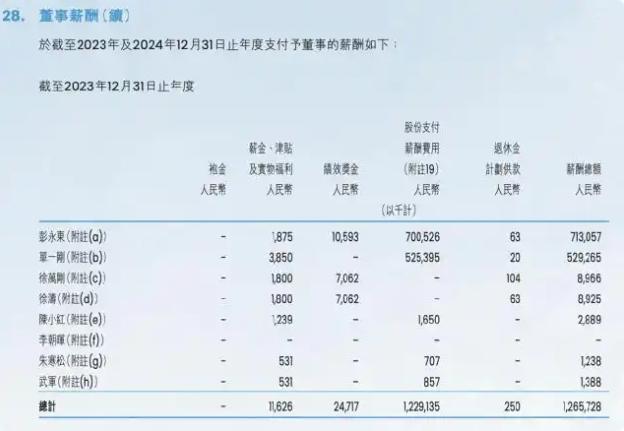
Core Viewpoint - The financial reports of companies, particularly Beike, have sparked significant discussion due to the astonishing executive compensation amidst a challenging economic environment, highlighting a stark contrast between executive pay and employee earnings [1][2][3]. Group 1: Executive Compensation - Beike's CEO Peng Yongdong received a total compensation of 400.71 million yuan in 2024, while co-founder and executive director Dan Yigang earned 299.49 million yuan [1]. - In 2023, Peng's compensation was 713 million yuan, and Dan's was 520 million yuan, reflecting a significant increase despite the overall economic slowdown and challenges in the real estate sector [2][6]. - The compensation for Peng in 2022 was 475 million yuan, which was 56 times higher than in 2021, while Dan's was 355 million yuan, 51.8 times higher than the previous year [6]. Group 2: Company Performance - Beike's revenue from 2021 to 2024 was 80.8 billion yuan, 60.7 billion yuan, 77.8 billion yuan, and 93.5 billion yuan respectively, indicating a recovery trend [4]. - The net profit figures for Beike during the same period were -525 million yuan, -1.397 billion yuan, 5.89 billion yuan, and 4.066 billion yuan, showing a significant turnaround after a challenging period [4][5]. - The company has 43,817 stores and 427,656 agents, generating 58.6 billion yuan in revenue from new and existing home businesses, with agents earning an average of 82,200 yuan annually [8]. Group 3: Industry Context - The phenomenon of rising executive pay amidst declining profits is not unique to Beike; other companies like Tongrentang and Yanghe have also seen similar trends where executive compensation increased despite poor financial performance [9][11]. - In 2024, Tongrentang's revenue was 18.597 billion yuan, with a net profit decline of 8.54%, yet executive salaries rose by over 20% [9][11]. - The disparity between executive compensation and employee earnings raises questions about fairness and equity within companies, as ordinary employees face salary pressures while executives enjoy substantial pay increases [9][15].