创新药

Search documents
创新药ETF国泰(517110)盘中涨超1%,市场关注行业出海与业绩亮点
Mei Ri Jing Ji Xin Wen· 2026-01-21 06:30
Group 1 - The core viewpoint of the article highlights the significant growth and potential of China's innovative pharmaceuticals sector, particularly in the context of international expansion and record-breaking performance in business development (BD) transactions [1] - In 2025, the total amount of BD transactions for Chinese innovative drugs reaching overseas is projected to hit $135.655 billion, with upfront payments of $7 billion and a total of 157 transactions, all marking historical highs [1] - The ongoing BD transactions validate the global competitiveness of Chinese innovative drugs, which is expected to bolster long-term investor confidence [1] Group 2 - The small nucleic acid drug sector is experiencing accelerated development, with leading companies making significant strides in new target development and treatment convenience, supported by continuously validated clinical data [1] - The increasing focus on this sector is likely to drive more licensing and merger collaborations, which could further stimulate the growth of the upstream supply chain [1] - The ETF Guotai (517110) tracks the SHS Innovative Drug Index (931409), which selects innovative pharmaceutical companies from the Shanghai, Shenzhen, and Hong Kong markets, emphasizing strong R&D capabilities and growth potential [1]
20cm速递|“十五五”促进中小企业发展规划,创业板50ETF华夏(159367)上涨0.93%,同类产品最低费率档
Mei Ri Jing Ji Xin Wen· 2026-01-21 06:14
Group 1 - The A-share market saw all three major indices rise on January 21, with the ChiNext 50 ETF (Hua Xia, 159367) increasing by 0.93%. Notable stocks included Sanhuan Group, which rose over 6%, Xiechuang Data, which increased over 5%, and Jingjia Micro, which gained over 4% [1] - The State Council's press conference highlighted a positive outlook for small and medium-sized enterprises (SMEs) in China by 2025, with key indicators showing significant growth: the added value of industrial SMEs increased by 6.9% year-on-year, and the SME export index has been in an expansion zone for 21 consecutive months [1] - The cultivation of specialized and innovative enterprises has yielded substantial results, with 17,600 "little giant" enterprises and over 140,000 specialized and innovative SMEs established, alongside more than 600,000 technology and innovation-oriented SMEs. The R&D intensity of "little giant" enterprises reached 7%, with an average of 26.6 invention patents per entity [1] Group 2 - The ChiNext 50 Index focuses on sectors such as information technology, new energy, financial technology, and pharmaceuticals, primarily consisting of leading technology companies in areas like optical modules, chips, new energy batteries, and innovative drugs. These sectors align with national policy directions and global technological trends, showcasing high growth potential and innovation [2] - The ChiNext 50 ETF (Hua Xia, 159367) offers two core advantages: a 20% price fluctuation limit, providing greater trading flexibility compared to traditional broad-based indices, and low management fees of 0.15% and custody fees of 0.05%, which effectively reduce investment costs [2]

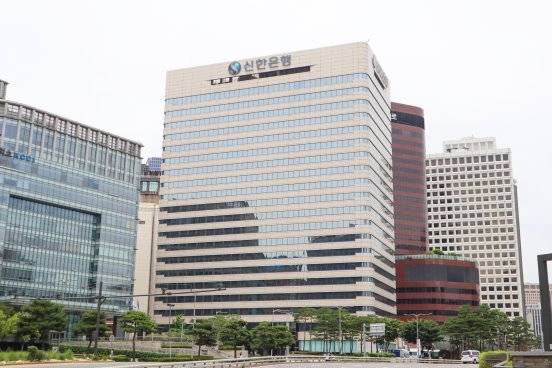
汇友联盟携手新韩银行,深化医疗健康领域创新投资布局,挖掘产业变革长期价值
Sou Hu Cai Jing· 2026-01-21 03:23
Core Viewpoint - The healthcare industry is undergoing profound changes driven by global demographic shifts, rising medical demands, and continuous technological advancements, transitioning from "scale expansion" to a new phase that emphasizes both "quality and efficiency" [1][6]. Group 1: Collaboration Overview - Huayou Alliance and Shinhan Bank have reached a preliminary cooperation intention to explore innovative investments in healthcare, focusing on innovative drugs, high-end medical devices, and upgrades in medical services [1][3]. - The collaboration aims to integrate international financial resources with the development of the healthcare industry, providing professional and patient capital support for high-quality projects with innovation capabilities and growth potential [3][4]. Group 2: Market Dynamics - The healthcare industry is currently in a development window driven by multiple factors, including an aging population, increasing demand for chronic disease management, precision diagnosis, and high-quality medical services [3][4]. - Rapid advancements in biomedicine, medical device engineering, and digital healthcare are reshaping research and development models, diagnostic methods, and service systems [3][4]. Group 3: Investment Focus - The collaboration will focus on three main areas: 1. Innovative drugs with clear clinical value and technological differentiation, particularly in major diseases and unmet medical needs [5]. 2. High-end medical devices, especially companies with technological accumulation and industrialization capabilities in imaging equipment, interventional devices, in vitro diagnostics, and high-end consumables [5]. 3. Upgrading medical services through specialized operations, digital management, and innovative service models to enhance medical efficiency and patient experience [5]. Group 4: Risk Management and Compliance - Risk control and compliance management are prioritized in the collaboration, recognizing the specialized and long-cycle nature of healthcare investments [5][6]. - Both parties will adhere to relevant laws and regulations, conducting thorough due diligence and continuous monitoring to dynamically assess technical risks, policy changes, and market environments [5][6]. Group 5: Broader Implications - The cooperation between Huayou Alliance and Shinhan Bank reflects a recognition of the long-term value of the healthcare industry by international financial forces [6]. - By introducing rational and professional international financial resources, the collaboration aims to support the transformation of innovative results and the upgrading of medical services, contributing to overall industry efficiency [6].

港股科技ETF(513020)盘中涨超0.5%,优质科技企业赴港节奏有望延续
Mei Ri Jing Ji Xin Wen· 2026-01-21 03:03
Group 1 - The core viewpoint is that the Hong Kong stock market is gathering leading H-share semiconductor companies, and the recent stable performance of domestic GPU, large model, and hard technology companies post-listing is expected to continue attracting quality tech enterprises to Hong Kong, providing ongoing incremental targets for the Hong Kong tech sector [1] - Investment strategies suggest that due to strict regulations and cooling sentiment in the A-share market, Hong Kong tech heavyweight stocks are likely to benefit from the upcoming AI product release window, with "northbound capital" potentially becoming more active in seeking advantageous assets in Hong Kong, indicating that Hong Kong stocks may outperform A-shares in the short term [1] - Leading tech companies in Hong Kong are accelerating the integration of AI with their business ecosystems, such as Alibaba advancing productization in core scenarios like e-commerce and transportation using its Qianwen platform, and Tencent enriching AI applications through its WeChat ecosystem [1] Group 2 - The Hong Kong Stock Connect Technology Index is overweight in sectors like new energy vehicles, innovative pharmaceuticals, and semiconductors compared to the Hang Seng Technology Index, showing a cumulative return of 224.25% from the base date at the end of 2014 to the end of 2025, significantly outperforming the Hang Seng Technology Index, which has a return of 83.87% [2] - The Hong Kong Stock Connect Technology Index has consistently outperformed similar indices, including the Hang Seng Internet Technology Index and the Hang Seng Healthcare Index, indicating its strong performance in the long term [2]
早盘直击|今日行情关注
申万宏源证券上海北京西路营业部· 2026-01-21 02:27
Core Viewpoint - The market is currently experiencing a mild adjustment phase after a period of continuous gains, with significant divergence in sector performance. The focus is shifting from event-driven themes to fundamentals, particularly in the technology growth sector, which remains the main driver of the spring market rally [1][2]. Group 1: Market Performance - The Shanghai Composite Index entered a consolidation phase after a series of gains, with a total decline in over 3,100 stocks and a trading volume shrinking to 2.8 trillion [1]. - The divergence in sector performance is notable, with differences in gains and losses exceeding 5% between leading and lagging sectors [1]. - The current market adjustment is viewed as a healthy correction that could facilitate further development of the rally, emphasizing the importance of maintaining trading volume and sector rotation [1]. Group 2: Sector Focus - The technology and materials sectors are expected to dominate in January, with a focus on themes such as commercial aerospace, brain-computer interfaces, and low-altitude economy [2]. - The rise in raw material prices, driven by technological investment trends, presents opportunities in small metals, energy metals, and new chemical materials [2]. - High-dividend traditional sectors are also suggested for left-side attention, anticipating a rebound during the annual report season in March-April [2]. Group 3: Specific Opportunities - AI hardware is projected to experience significant growth, with the peak of AI applications expected in 2026, indicating a transition from quantity to quality in AI applications [2]. - The trend of robot localization and integration into daily life is anticipated to continue, with opportunities arising in sensors, controllers, and dexterous hands as the market evolves [2]. - The semiconductor industry is expected to see continued domestic growth, with a focus on semiconductor equipment, wafer manufacturing, materials, and IC design [2]. - The demand for new energy materials is rising due to rapid growth in domestic and overseas energy storage needs, with signs of supply shortages and price increases expected to persist through 2026 [2]. - The innovative drug sector is entering a recovery phase after four years of adjustment, with positive net profit growth expected to continue into 2026 [2].

生物医药行业:JPM大会中国市场有6款顶级候选药物值得关注
Ping An Securities· 2026-01-21 00:27
Investment Rating - The industry investment rating is "Outperform the Market," indicating that the industry index is expected to perform better than the market by more than 5% over the next six months [31]. Core Insights - The JPMorgan Healthcare Conference highlighted six top candidate drugs in the Chinese market for 2026, with four originating from local innovative companies, showcasing their R&D capabilities that can compete with multinational brands [4]. - The report anticipates continued active merger and acquisition (M&A) transactions in the biopharmaceutical sector, with a projected global M&A transaction volume reaching $5.1 trillion in 2025, led by a 44% increase in the healthcare sector [4]. - Investment strategies suggest focusing on innovative Chinese pharmaceutical companies that are enhancing their global competitiveness, particularly in therapeutic areas like metabolism, chronic diseases, and central nervous system disorders, as well as potential technology platforms such as small nucleic acid drugs and CAR-T therapies [5]. Summary by Sections Industry Overview - The JPMorgan Healthcare Conference showcased 24 Chinese innovative pharmaceutical companies, including BeiGene and Legend Biotech, presenting their latest R&D and commercialization achievements [4]. - The report emphasizes the importance of the Chinese market, identifying six candidate drugs that are expected to make significant impacts in 2026 [4]. Investment Strategy - The report recommends focusing on innovative therapeutic areas beyond traditional oncology and immunology, such as metabolic disorders and chronic diseases [5]. - It also highlights the potential of emerging technology platforms, suggesting investment in companies that are advancing in areas like peptide drugs and small nucleic acids [5]. Market Performance - The pharmaceutical sector experienced a decline of 0.68% last week, while the Shanghai and Shenzhen 300 Index fell by 0.57%, ranking the pharmaceutical industry 17th among 27 sectors [20]. - In contrast, the Hong Kong pharmaceutical sector saw an increase of 2.38%, outperforming the Hang Seng Index, which rose by 2.56%, ranking 6th among 11 sectors [30].
全球化资产配置需求提升 QDII基金总规模逼近1万亿元
Zheng Quan Ri Bao· 2026-01-20 16:16
Group 1 - The total scale of QDII funds has reached 970 billion yuan, marking a 59% increase from 610 billion yuan a year ago, and accounts for 2.6% of the total market fund scale [1] - The rapid growth of QDII funds reflects an increasing demand for global asset allocation among investors, despite still being lower than mainstream fund products like equity, bond, and index funds [1] - QDII fund scale has entered a fast growth phase since last year, with significant milestones reached: 610 billion yuan at the beginning of last year, 700 billion yuan in July, 900 billion yuan in September, and currently at 970 billion yuan [1] Group 2 - The performance of QDII funds has shown strong resilience, with 68 products having a net value increase of over 10% this year, particularly in technology-themed products [2] - The main holdings of QDII funds are concentrated in sectors like semiconductors and innovative pharmaceuticals, reflecting high market demand and providing stable support for fund performance [2] - The semiconductor industry's sales have significantly increased since last year, with expectations for continued growth driven by strong demand from AI applications and data center infrastructure [2] Group 3 - The "AI+" sector in healthcare has made significant breakthroughs, with expectations for scaling applications by 2026, enhancing the attractiveness of related sectors [3] - AI technology is gradually being integrated into the entire chain of research, diagnosis, treatment, and management in healthcare, which is expected to further increase interest in this sector [3]
自免ADC走到爆发前夜
3 6 Ke· 2026-01-20 13:44
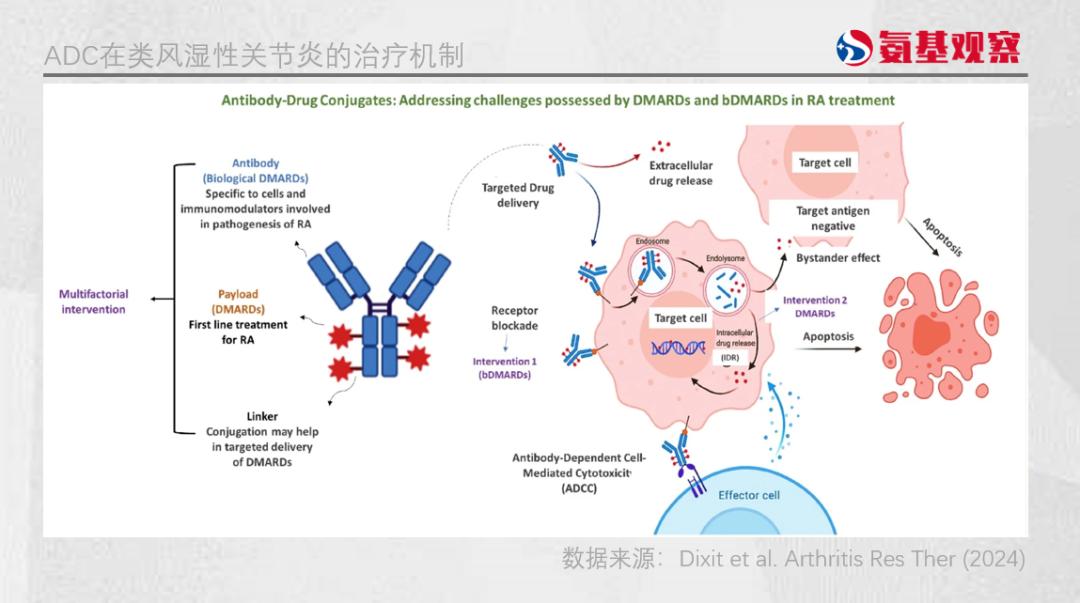
Core Insights - Antibody-drug conjugates (ADCs) have emerged as a highly certain therapeutic strategy in the innovative drug field, with major multinational corporations (MNCs) incorporating ADCs into their core technology platforms for both monotherapy and combination treatments [1][2] - The potential of ADCs extends beyond oncology, as their characteristics of "precise targeting and strong efficacy" align well with the needs of autoimmune diseases for "precise intervention and long-term control" [1][2] - Despite early-stage exploration in autoimmune ADCs, Chinese biopharmaceutical companies have transitioned from followers to core participants, with several firms advancing multiple autoimmune ADC pipelines into clinical stages [1][2] Industry Developments - The last two decades have seen significant advancements in the treatment of autoimmune diseases, moving from traditional immunosuppressants to more targeted therapies, yet unmet needs remain for more precise and sustainable immune modulation [2][4] - ADCs are positioned to address these unmet needs by targeting specific immune cell phenotypes, allowing for effective delivery of therapeutic payloads while minimizing systemic toxicity [2][4][5] - The transition of ADCs from oncology to autoimmune diseases is facilitated by their targeting, delivery efficiency, and safety advantages, addressing long-standing issues in traditional autoimmune therapies [5] Clinical Trials and Challenges - AbbVie has been a pioneer in exploring ADCs for autoimmune diseases, with two key projects, ABBV-3373 and ABBV-154, demonstrating promising early clinical efficacy but ultimately facing challenges that led to their discontinuation [8][10] - ABBV-3373 showed significant efficacy in a Phase 2 study for rheumatoid arthritis, but concerns over long-term steroid exposure and adverse events arose [10] - ABBV-154 also faced challenges, including potential tumor events, leading to its termination despite achieving statistical improvements in key efficacy endpoints [10] Competitive Landscape - The field of autoimmune ADCs is becoming increasingly competitive, with differentiation in target selection, dosage forms, and indications already underway [11] - Various targets such as B cells, T cells, and related activation pathways are being explored, with ADCs targeting BCMA, CD19, and CD20 showing potential [11][13] - Domestic biopharmaceutical companies in China are leading the charge, with innovative ADCs like DB-2304 and SHR4597 entering clinical trials, showcasing advancements in dosage forms and delivery methods [13][14] Future Outlook - While autoimmune ADCs have not yet reached commercialization, early clinical efficacy suggests the potential for long-term treatment solutions, with the industry awaiting significant breakthroughs [14]

杨德龙:2026年资本市场的主要投资机会|立方大家谈
Sou Hu Cai Jing· 2026-01-20 12:12
Economic Growth and Structure - In 2025, China's GDP achieved a growth of 5%, meeting the initial target, but quarterly growth rates showed a declining trend: 5.4%, 5.2%, 4.8%, and 4.5% [1] - The trade surplus reached a historic high of over $1.1 trillion, demonstrating strong export competitiveness despite trade tensions [1] - The Consumer Price Index (CPI) growth rate was 0%, and the Producer Price Index (PPI) experienced negative growth, indicating insufficient demand and excess capacity in the industrial sector [1] Industrial and Consumption Data - Industrial production saw a growth of 5.9% for the year, with notable increases in 3D printing equipment (52.5%), industrial robots (28%), and new energy vehicles (25.1%) [2] - Retail sales of consumer goods surpassed 50 trillion yuan, growing by 3.7%, but the growth rate showed a significant slowdown, particularly in December with a year-on-year increase of only 0.9% [2] Investment Trends - Fixed asset investment decreased by 3.8%, primarily due to a 17.2% decline in real estate development investment, highlighting the pressure on stabilizing investment amid real estate adjustments [3] - The National Development and Reform Commission emphasized the need to strengthen domestic demand and adapt to the upgrading of demand structures, with plans to develop a strategy for expanding domestic demand from 2026 to 2030 [3] Industry Focus and Future Opportunities - The focus for 2026 includes sectors like robotics, AI, and innovative pharmaceuticals, with expectations for continued growth in technology-driven industries [4] - The construction of 6G networks is anticipated to create new demand for communication equipment, while the commercial aerospace sector has seen a significant correction after previous hype [4] Market Outlook and Investment Strategy - The market is expected to continue a slow bull trend, with a focus on technology stocks and some undervalued quality stocks attracting attention [5] - Investors are advised to maintain a rational approach, avoiding excessive leverage and focusing on long-term, value-based investments to capitalize on the slow bull market opportunities [5]
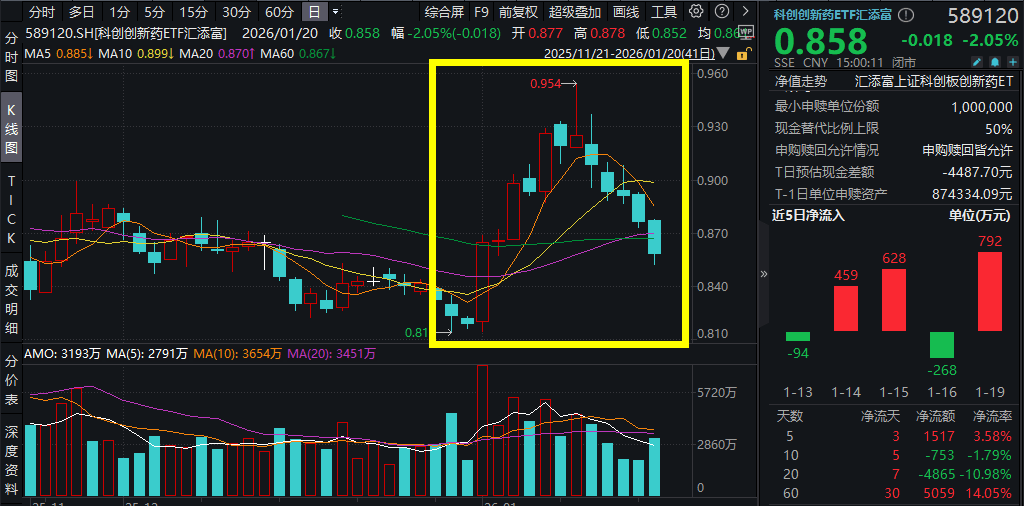
创新药板块承压,益方生物等跌超3%,科创创新药ETF汇添富(589120)跌超2%,资金逆势涌入!"全球创新药春晚"JPM召开,中国创新药闪耀全球
Sou Hu Cai Jing· 2026-01-20 11:33
Core Viewpoint - The A-share market is experiencing fluctuations, particularly affecting the innovative drug sector, with the ETF Huatai Innovation Drug (589120) declining by 2.05% and facing a five-day losing streak, despite attracting over 7.9 million yuan in funds [1][3]. Group 1: Market Performance - The Huatai Innovation Drug ETF (589120) has seen a decline in its constituent stocks, with major players like I-Mab and Junshi Biosciences dropping over 3%, and others like BeiGene and Zai Lab falling more than 2% [3]. - The top ten constituent stocks of the ETF show a negative trend, with BeiGene-U down by 2.38% and Junshi Biosciences-U down by 3.42%, indicating a general downturn in the sector [3]. Group 2: Long-term Outlook - Despite the short-term market pressure, the long-term outlook for the innovative drug sector remains positive, with expectations of a clear beta market driven by liquidity recovery at the beginning of the year [4]. - The JPM conference highlighted the achievements of over 20 Chinese pharmaceutical companies, with projections for significant revenue growth in innovative drugs, such as a 25% increase for Heng Rui in 2026 [4]. Group 3: Business Development (BD) Trends - The BD activities in the sector are at a peak, with 17 transactions occurring since January, totaling approximately 10.15 billion USD in upfront payments, significantly exceeding market expectations [5]. - The ongoing trend of foreign companies expanding in China and the increasing flow of funds into the innovative drug sector suggest a favorable environment for growth and investment [5]. Group 4: Investment Strategy - The innovative drug sector is recommended for increased allocation, particularly in Hong Kong stocks, as the market is currently at a relative bottom, with potential for new historical highs [5]. - The ETF focuses on leading innovative drug companies, providing a high degree of exposure to the opportunities presented by the rise of Chinese innovative drugs [5].