
流媒体

Search documents
Netflix will let users customize and share clips on mobile
CNBC· 2025-09-03 14:44
Core Insights - Netflix has updated its "Moments" feature, allowing users to select start and end points for clips to save and share, enhancing user engagement with content [1] - The update aligns with the release of the second part of season 2 of the popular series "Wednesday," which has become a significant driver of viewership for Netflix [1][2] - "Wednesday" has achieved over 252 million views, making it the most popular show on Netflix to date [2] Feature Update - The "Moments" feature was initially launched last year and is now exclusively available on mobile devices [1] - The new "clip" option enables users to adjust the length of segments, which can then be saved in the "My Netflix" tab for easy access and sharing [1] Strategic Initiatives - The update is part of Netflix's broader strategy to revamp its brand, including a redesigned homepage and a vertical video feed similar to TikTok [3] - Netflix has been implementing various strategic moves since a period of stagnation in 2022, including a cheaper ad-supported subscription plan and measures against password sharing [3] Membership Data - Although Netflix no longer releases subscription data, it reported having over 300 million paid memberships as of January [4]



流媒体让美国人更沉迷电视
财富FORTUNE· 2025-09-02 13:05
Core Viewpoint - The article highlights a significant shift in how Americans consume television, with streaming platforms surpassing traditional cable TV in viewership share, indicating a historic change in leisure activities [2][4]. Group 1: Shift in Viewing Habits - Streaming platforms have officially overtaken traditional "linear" television in viewership share, reflecting a major transformation in leisure time consumption [2]. - Despite the shift to streaming, Americans still spend about 5 hours daily on leisure activities, with over half of that time dedicated to watching television [4]. Group 2: Spending Trends and Challenges - As of July, spending on streaming video and audio has exceeded 10% of income across all income levels, with growth rates surpassing other entertainment categories like live events and theme parks [6]. - The industry faces challenges such as "content decline," where content providers are reducing the number of original series and films, focusing instead on fewer, higher-quality projects [6][10]. Group 3: User Behavior and Loyalty - Approximately two-thirds of households spend less than $40 monthly on streaming services, while about one-sixth spend over $80, indicating a rising cost trend [11]. - User loyalty is not guaranteed, with nearly one-fifth of Americans either canceling or starting new streaming subscriptions in July, suggesting flexible consumption strategies based on content availability [13]. Group 4: Future Growth Areas - Streaming platforms are focusing on two growth engines: live sports events and music integration, with over one-third of sports fans willing to subscribe to new services for exclusive event access [15]. - Artificial intelligence is seen as a key variable that could lower content creation costs and enable personalized content, potentially disrupting current business models in the streaming industry [17].


韩剧不断“封神”,为何动画还没“崛起”?
Hu Xiu· 2025-09-02 09:50
Core Viewpoint - The article discusses the challenges and developments in the South Korean animation industry, highlighting the recent release of the Netflix-funded animated film "Goodbye, Starry People" and its implications for the future of Korean animation [1][30]. Group 1: Industry Background - South Korea's animation industry has struggled to produce successful non-children's animated films, with no notable cases prior to recent developments [3][32]. - The entry of Netflix into the South Korean market in 2015 has significantly influenced the local content landscape, promoting the globalization of "K-Wave" alongside K-POP [2][32]. - The animation sector has historically faced challenges, including a lack of investment and support, leading to a focus on children's content rather than adult-oriented animations [46][68]. Group 2: "Goodbye, Starry People" - "Goodbye, Starry People" is the first exclusive Korean animated film funded by Netflix, featuring a romantic story set in 2050 between an astronaut and a musician [1][4][18]. - The film received a Rotten Tomatoes freshness rating of 88% and a score of 3.9 on Letterboxd from approximately 30,000 users, indicating a positive reception despite low online discussion [1]. - The film's production involved notable actors for voice roles, enhancing its appeal and emotional resonance with audiences [14][16]. Group 3: Challenges and Future Prospects - Despite the film's quality, it struggled to gain traction in the market, ranking third in the Korean film category on Netflix upon release and quickly dropping from the top ten in several regions [30][48]. - The article reflects on the broader issues facing the South Korean animation industry over the past three decades, including failed projects and a lack of audience interest in non-children's animations [31][47]. - The government has announced plans to increase funding for the animation industry, with a goal of establishing a more supportive environment for diverse animated content [74][75].

表面看涨实则看空?奈飞(NFLX.US)期权市场释放430万美元谨慎信号
智通财经网· 2025-09-02 00:12
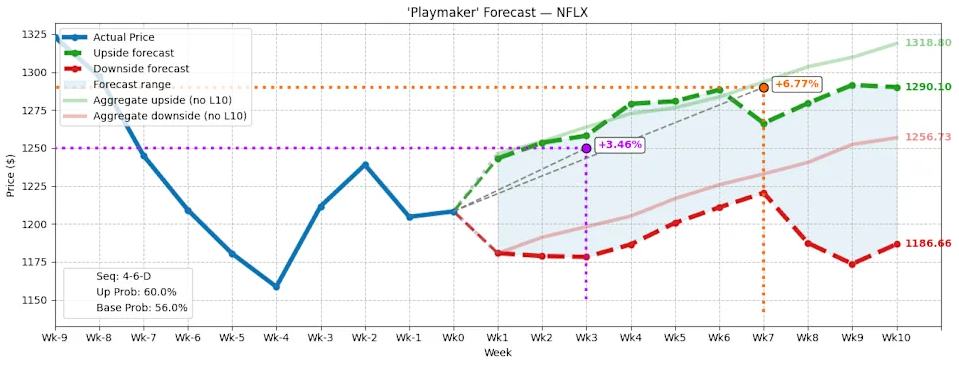
Group 1 - The core sentiment in the options market for Netflix (NFLX.US) indicates a cautious outlook, with total derivatives trading volume reaching 164,872 contracts, which is 44.8% higher than the average daily volume over the past month [1] - The put/call ratio stands at approximately 0.875, suggesting a slight bullish sentiment, but net trading sentiment leans towards bearish with nearly $4.3 million involved [1] - Despite a recent decline of nearly 3% since August 18 and a 10% drop over the past six months, Netflix's stock has maintained a 79% increase over the past 52 weeks, indicating potential for a rebound [1] Group 2 - Quantitative models suggest that the median price range for Netflix over the next 10 weeks is between $1,256.73 and $1,318.80, with potential downside adjustments to $1,186.66 to $1,290.10 due to market reversal signals [2] - Two bullish call spread strategies are highlighted: one with a strike price of $1,242.50/$1,250 that could yield a maximum return of 150% if the stock rises by 3.46% in three weeks, and another with a strike price of $1,280/$1,290 that has a maximum return close to 160% but requires a higher initial cost [4] - The current options activity, while not a strong bullish signal, combined with the stock's recent pullback and long-term growth potential, may provide a cautious entry point for investors [4]
美股一路上涨,很多人会问:既然大家都赚钱了,那输家到底是谁?
美股研究社· 2025-09-01 10:50
Core Viewpoint - The stock market is not a strict zero-sum game; it is fundamentally linked to economic growth, allowing for potential mutual benefits among investors over the long term [4]. Group 1: Types of Stock Price Increases - Stock price increases can be categorized into two main types: 1. Companies with strong profitability and consistent performance, leading to genuine value appreciation [5]. 2. Companies lacking competitive strength but experiencing price surges due to market speculation, often resulting in losses for latecomers [9][12]. Group 2: Real-World Examples of Stock Price Increases - **Apple (AAPL)**: Over the past two decades, Apple's stock price has increased significantly due to its strong cash flow from products like iPhone and services, benefiting long-term shareholders [7]. - **GameStop (GME)**: In early 2021, GameStop's stock price surged from under $20 to over $400 due to retail investor speculation, leading to significant losses for those who bought at peak prices [10][12]. Group 3: Other Factors Influencing Stock Price Increases - **Industry Trends**: Some stocks rise due to rapid industry growth and favorable market positioning [14]. - **Policy or Macro Environment**: Stock price increases can also result from favorable policies or macroeconomic trends [15]. - **Future Growth Expectations**: Companies with average short-term performance may see stock price increases based on market expectations of future potential [17]. - **Structural Changes or Innovations**: Companies undergoing strategic changes or innovations can experience stock price increases [18]. - **Mergers and Acquisitions**: Corporate actions like mergers or asset sales can unlock value and drive stock price increases [22][25]. Group 4: Conclusion on Market Dynamics - The continuous rise of the U.S. stock market does not guarantee profits for all investors; long-term gains are typically realized by those who invest in quality companies and hold their positions, while those chasing short-term trends may incur losses [24].


美股一路上涨,很多人会问:既然大家都赚钱了,那输家到底是谁?
3 6 Ke· 2025-09-01 03:18
Core Insights - The stock market is not a strict zero-sum game; it is fundamentally linked to economic growth and corporate profitability, allowing for potential mutual benefits among investors over the long term [3][23] - Stock price increases can be attributed to two main categories: genuine corporate value growth and speculative market behavior [3][6] Group 1: Genuine Corporate Value Growth - Companies with strong profitability and consistent performance, such as Apple, see their stock prices rise due to real value creation, benefiting long-term shareholders [4][23] - Apple's stock has increased hundreds of times over the past two decades, driven by substantial cash flow from its product ecosystem [4] - The rise in stock prices reflects the wealth generated by the company being distributed among its investors [3] Group 2: Speculative Market Behavior - Companies lacking strong competitive advantages may experience stock price increases driven by market speculation, leading to a cycle of rapid price increases followed by significant declines [6][9] - The GameStop case illustrates how speculative trading can lead to massive price swings, benefiting early investors while later entrants may incur substantial losses [7][9] Group 3: Industry Trends and Structural Opportunities - Stock price increases can also result from favorable industry trends, where companies capitalize on rapid market expansion [10][11] - Netflix's stock growth from 2007 to 2020 was fueled by the explosive growth of the streaming industry, reflecting market share gains rather than just company performance [11] Group 4: Policy and Macro Environment - Stock price increases can be driven by favorable policies or macroeconomic trends, as seen with Tesla, where government incentives for electric vehicles significantly boosted demand and stock prices [12][13] Group 5: Market Expectations and Future Growth Potential - Companies with average short-term performance may see stock price increases based on market expectations of future growth, as demonstrated by Amazon's early stock performance despite initial losses [16][17] Group 6: Structural Changes and Innovation - Stock price increases can also stem from strategic changes, product innovations, or technological advancements, as evidenced by Nvidia's stock growth driven by AI and data center demand [18][19] Group 7: Mergers, Restructuring, and Asset Value Release - Companies can unlock potential value through mergers, asset sales, or strategic restructuring, leading to stock price increases, as seen with Disney's acquisition of 21st Century Fox [21]


与Netflix的东南亚激战,中国平台能赢吗?
Hu Xiu· 2025-08-28 12:47
Core Insights - The Southeast Asian streaming market is projected to grow to $6.8 billion by 2030, representing a 49% increase from 2024, with strong competition emerging from Chinese platforms against traditional leader Netflix [1] - The competition has evolved beyond content output to encompass localization depth, business model innovation, and cultural understanding [2] Group 1: Market Dynamics - By Q1 2025, U.S. platforms will still dominate Singapore with nearly 60% market share, while in Thailand, Chinese platforms have captured about 40% of the market, surpassing the 30% share of U.S. platforms [1] - The entry of Chinese platforms is driven by saturated domestic markets and the significant growth potential in Southeast Asia, where digital entertainment demand is high and cultural similarities exist [9][10] Group 2: Strategies of Chinese Platforms - iQIYI adopts a "high-profile" strategy, investing heavily in content production, planning to release 4 to 6 original Thai series annually with budgets around $1.54 million each [4] - WeTV focuses on idol cultivation, launching local talent discovery programs, which enhances user engagement and creates a unique content ecosystem [6][7] - Youku emphasizes a model export strategy, successfully adapting its popular variety show "Street Dance of China" for the Vietnamese market, establishing sustainable content production capabilities [8] Group 3: Competitive Advantages - Chinese platforms leverage pricing advantages, with subscription fees around $2 to $3 per month compared to Netflix's starting price of $7 to $8, making them more accessible in Southeast Asia [11] - The depth and agility of localized content production are key strengths for Chinese platforms, as they create content that resonates more with local audiences compared to Netflix's sometimes globally-oriented narratives [12][13] - Chinese platforms have quickly integrated local payment methods, enhancing user experience, while Netflix has been slower to adapt, previously relying mainly on credit card payments [14] Group 4: Future Trends - The rise of short dramas is a significant new variable in the market, with downloads of short drama apps in Southeast Asia increasing by 61% in Q1 2025, indicating a growing preference for this content format [17] - Short dramas offer lower production costs and quicker turnaround times, providing an opportunity for Chinese platforms to explore local user preferences [19] - iQIYI is aggressively pursuing short drama strategies, while Youku and WeTV are taking more cautious approaches, with potential collaborations with local teams [19][20] Group 5: Overall Competitive Landscape - The competition in the Southeast Asian streaming market has shifted from content acquisition to a comprehensive battle over ecosystems and business models [21] - Chinese platforms are establishing a foothold through flexible pricing, deep localization, and payment innovations, while Netflix maintains its position through brand strength and high-quality productions [22]



波兰监管机构指控Netflix擅自提价:未获用户同意单方面上调订阅费用
Huan Qiu Wang Zi Xun· 2025-08-26 03:43
Group 1 - The Polish Office of Competition and Consumer Protection (UOKiK) has formally charged Netflix for raising subscription prices without explicit user consent, with increases up to 7 Polish zloty (approximately 13.8 RMB) [1][3] - UOKiK stated that Netflix's price increase process was deemed "passive default" and violated Polish consumer protection laws, which require "active, clear" consent from users for any changes in service terms or pricing [3][4] - Netflix claims compliance with local laws, asserting that notifications were sent via in-app messages and emails, and that price adjustments align with user service agreements [3][4] Group 2 - As of Q2 2024, Netflix holds over 4 million subscribers in Poland, leading the streaming market, with basic subscription prices rising from 37.99 zloty to 42.99 zloty [4] - The Polish consumer rights organization "Federacja Konsumentów" is encouraging affected users to retain billing records and may assist in collective lawsuits for compensation if Netflix is found in violation [4] - UOKiK has requested Netflix to submit a written defense within 14 days and plans to hold a public hearing on September 10 [5] Group 3 - If found guilty, Netflix could face fines up to 10% of its previous year's global revenue, potentially reaching 3.3 billion USD based on 2023 financial reports [5] - This incident is not the first regulatory challenge for Netflix regarding pricing strategies, as it faced warnings in Spain and Mexico for its "password sharing fee" policy and an investigation by the EU Commission into its dynamic pricing algorithms [4]
中期业绩扭亏为盈,中国儒意如何凭产业协同战略“深蹲起跳”?
Zhi Tong Cai Jing· 2025-08-26 03:09
Core Viewpoint - The company has demonstrated significant financial improvement in the first half of the year, with revenue reaching RMB 2.206 billion, a year-on-year increase of 20%, and a net profit of RMB 1.228 billion, successfully turning a profit, with adjusted net profit growing by 140% to RMB 1.303 billion, indicating a substantial enhancement in profitability [1] Group 1: Business Performance - The company's three core businesses—film, streaming media, and gaming—are working in synergy, driving substantial growth [2][7] - The content production segment generated RMB 570 million in revenue, with several popular films contributing significantly to the company's performance [2] - The gaming segment has become a new growth engine, with revenue of RMB 1.21 billion, reflecting a 40% year-on-year increase [5][6] Group 2: Future Growth Drivers - Multiple high-quality films are set to be released, providing strong momentum for future earnings growth [3] - The company is actively integrating AI technology into its operations, enhancing user experience and content personalization [4][6] - The company has made strategic investments in emerging sectors such as trendy toys and financial technology, expanding its business landscape [7][8] Group 3: Strategic Initiatives - The acquisition of 30% stake in Kuaiqian for RMB 240 million marks the company's entry into the third-party payment and fintech sector, enhancing its ecosystem [8][9] - The collaboration with 52TOYS in the trendy toy sector aims to tap into the growing "Guzi economy" and strengthen emotional connections with younger audiences [7] - The company is focused on creating a closed-loop of "content payment + fintech," which is expected to enhance its operational capabilities and drive new revenue streams [9]
中期业绩扭亏为盈,中国儒意(00136)如何凭产业协同战略“深蹲起跳”?
智通财经网· 2025-08-26 03:07
Core Viewpoint - The company has reported strong financial performance for the first half of the year, with revenue of RMB 2.206 billion, a year-on-year increase of 20%, and a net profit of RMB 1.228 billion, marking a significant turnaround from losses, with adjusted net profit rising 140% to RMB 1.303 billion, indicating a substantial improvement in profitability [1] Group 1: Business Performance - The content production segment generated revenue of RMB 570 million, driven by several successful film releases, including "Detective Chinatown 1900," which achieved a box office of RMB 3.6 billion, and "The Lychee of Chang'an," which reached RMB 647 million [2] - The game segment has become a new growth engine, with revenue of RMB 1.21 billion, reflecting a 40% year-on-year increase, supported by the successful launch of multiple new games [5] - The company is actively expanding into new business areas such as trendy toys and financial payments, enhancing its growth potential [7][8] Group 2: Strategic Initiatives - The company is focusing on synergistic effects among its three core businesses: film, streaming, and gaming, which are driving significant growth [1][5] - The company has made strategic investments, including acquiring a 30% stake in Kuaiqian for RMB 240 million, entering the third-party payment and fintech sector, which is expected to enhance its ecosystem [8][9] - The company is leveraging AI technology across its operations, improving content personalization and user experience in both streaming and gaming [6][4] Group 3: Future Outlook - The company anticipates further revenue growth in the second half of the year, supported by the release of several new films and games [1][2] - The integration of payment solutions with existing services is expected to create new revenue streams and enhance operational efficiency [9] - The overall strategic layout is clear, with significant collaborative effects expected to drive sustainable growth and open new avenues for profitability [9]