
奢侈品

Search documents
买全球惠全球 “出口中国”展现中国市场“磁吸力”
Xin Hua She· 2025-11-06 17:01
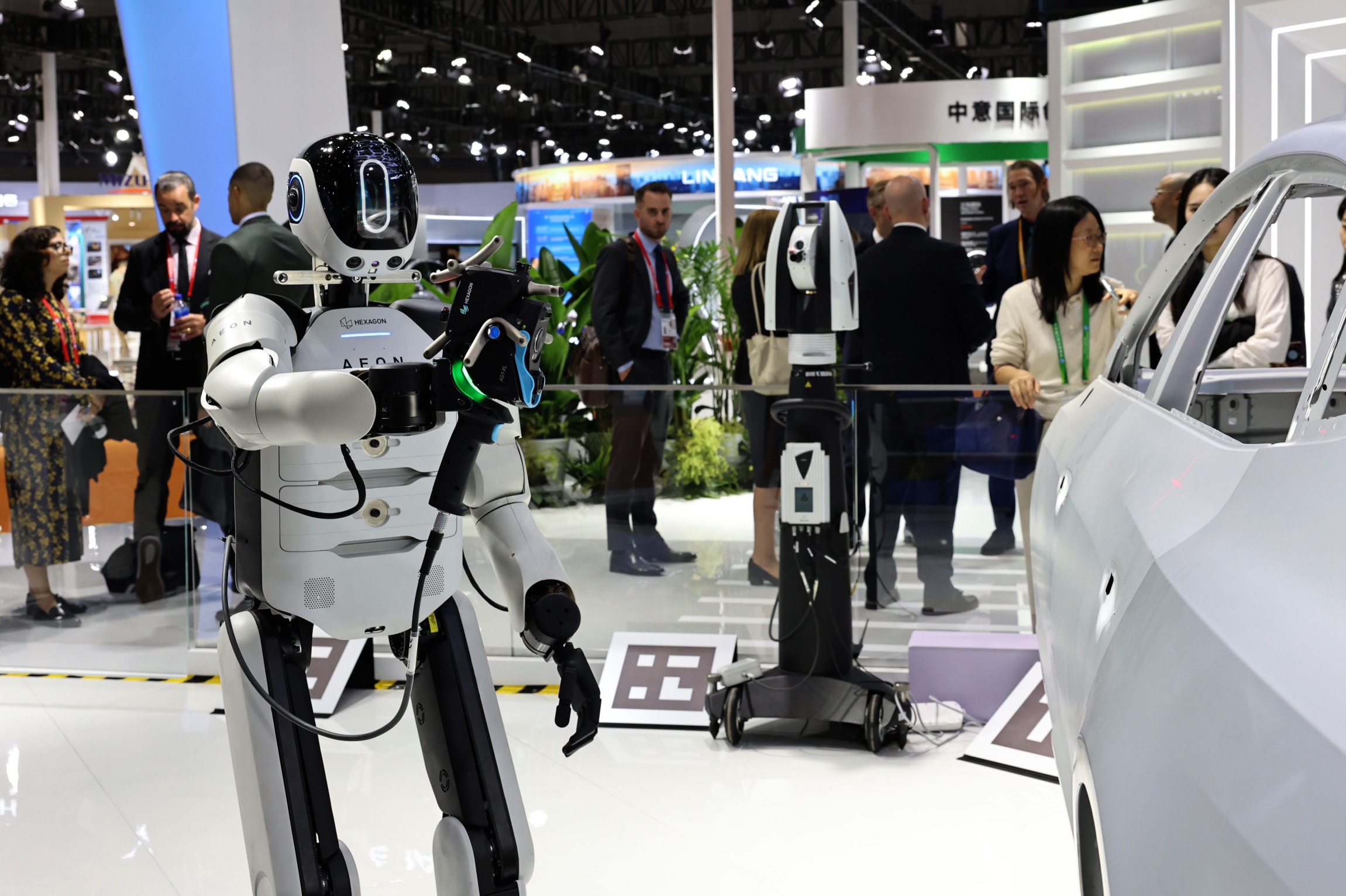
Core Insights - The 8th China International Import Expo (CIIE) showcases the collaboration between global enterprises and the Chinese market, highlighting China's role as a significant player in international trade and economic cooperation [1][12]. Group 1: Market Opportunities - 4,108 companies from 138 countries and regions are participating in the CIIE, indicating a strong global interest in the Chinese market [1]. - The event features various sectors, including agricultural products, consumer goods, and smart transportation, showcasing innovative products and services that cater to Chinese consumers [2][4]. - China is projected to import goods worth 18.4 trillion yuan and services worth 4.3 trillion yuan in 2024, reflecting a growth of over 60% compared to a decade ago [5]. Group 2: International Collaboration - Chinese companies have signed procurement agreements worth over $40.9 billion with 34 partners from 17 countries, covering a wide range of products [5]. - The CIIE serves as a platform for developing countries to access the Chinese market, with significant participation from African nations, which saw an 80% increase in exhibitors [10]. - The event promotes the idea of shared opportunities, with initiatives like "Shared Big Market · Export to China" aimed at enhancing cooperation and mutual benefits [11]. Group 3: Economic Impact - The CIIE is expected to enhance China's consumption potential, with activities focused on premium shopping, exquisite food, and tourism [6]. - The retail sales of consumer goods in China grew by 4.5% year-on-year in the first three quarters, indicating stable market growth [5]. - The event is seen as a vital platform for multinational companies to explore stable and predictable cooperation opportunities with China [12].

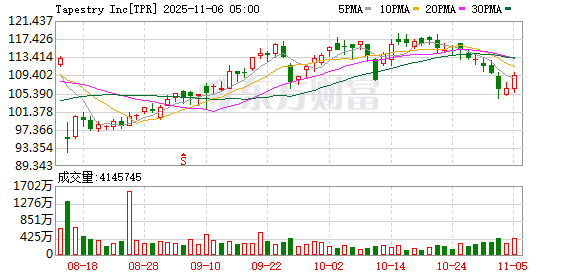
(第八届进博会)泰佩思琦国际业务总裁:计划在中国新增百家门店
Zhong Guo Xin Wen Wang· 2025-11-06 14:28
Core Insights - Tapestry views China as a key market, with plans to open 100 new stores in the next two to three years, building on its existing 400+ locations [2] - The company has participated in the China International Import Expo for seven consecutive years, highlighting its commitment to the Chinese market [2] - Tapestry's brands, including Coach and Kate Spade, are adapting to the preferences of Chinese consumers, particularly the younger generation, who prioritize product quality and emotional value over social status [3] Market Environment - The luxury goods sector is a significant part of the Chinese consumer market, and Tapestry is keen to engage with local policies and industry leaders at the Import Expo [2] - The emergence of local brands in China is seen as a positive development, fostering competition that can enhance overall consumption and drive brand innovation [3] - Tapestry believes that by effectively reaching consumers through design and store experiences, it can maintain a competitive edge in the market [3]

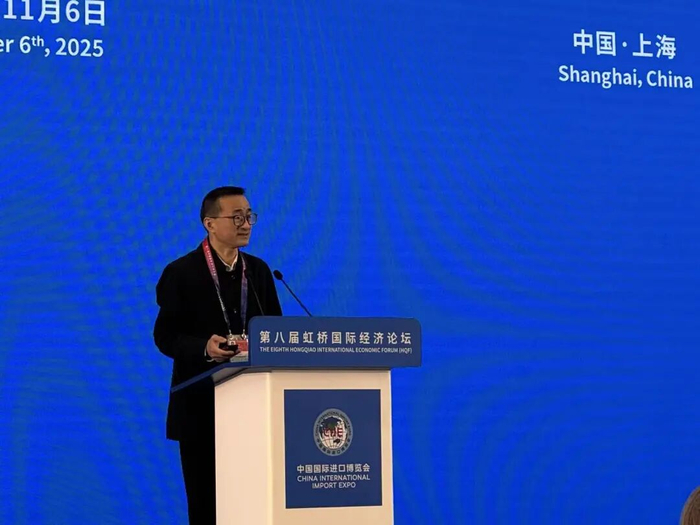
聚焦进博|提振中国消费,政商学界虹桥发声
Guo Ji Jin Rong Bao· 2025-11-06 14:16
Core Insights - The forum emphasized the importance of boosting consumption in China as a key driver for global economic growth, focusing on policy barriers and open sharing as dual engines for this initiative [1][12] - The goal during the "14th Five-Year Plan" period is to significantly increase the consumption rate, which was approximately 55% in 2020, compared to around 80% in developed countries [1][3] Policy Recommendations - A combination of policies is needed to address short-term consumption issues and restore consumer confidence, income, and assets [3] - Structural reforms in income distribution and a robust social safety net are crucial for enhancing consumption [3] - Rapid implementation of counter-cyclical policies alongside structural reforms is necessary to stimulate consumption [3] Economic Outlook - Experts predict that in five years, China's economy will achieve higher income levels and a more balanced demand structure, optimizing the balance between government investment, household consumption, and private sector investment [3][4] - The transition from an investment-driven economy to one led by domestic services and consumer spending is essential for sustainable growth [4] Consumer Trends - There is a notable shift in consumer preferences towards AI and environmentally friendly products, with domestic brands gaining popularity due to their cost-effectiveness and cultural relevance [9][11] - The luxury goods market is witnessing a change in consumer attitudes, focusing more on self-expression and sustainability, with a younger demographic driving this trend [11] Industry Insights - The AIPC (AI Personal Computing) market is projected to grow significantly, from $610 billion in 2025 to $9,920 billion by 2035, with a compound annual growth rate of 32.16% [8] - The automotive market is experiencing a shift towards electric vehicles, with expectations that by 2030, over 60% of sales will be from new energy vehicles [11] Conclusion - The forum concluded that breaking down policy barriers, building a unified national market, and activating new consumption scenarios are vital for stimulating both the Chinese and global markets [12]


开云集团携全品牌亮相进博会
Bei Jing Shang Bao· 2025-11-06 13:16
Core Insights - Kering Group showcased its full brand portfolio at the 8th China International Import Expo, featuring brands such as Gucci, Saint Laurent, Bottega Veneta, Balenciaga, and others [1] - Balenciaga launched its new fragrance line, marking its debut in the Asia-Pacific region at the expo, while Bottega Veneta's perfume series also made its first appearance [1] - Kering Group signed a strategic cooperation memorandum with China Resources Vientiane Life during the expo, focusing on sustainable development initiatives and aligning with China's dual carbon strategy [1] Brand Participation - Participating brands included Gucci, Saint Laurent, Bottega Veneta, Balenciaga, McQueen, Brioni, Boucheron, Pomellato, Qeelin, Ginori 1735, Kering Eyewear, and Kering Beauté [1] - The event highlighted Kering's commitment to sustainability through its partnerships and product launches [1] Strategic Initiatives - The strategic cooperation with China Resources Vientiane Life aims to enhance sustainable practices in Kering's retail operations within mainland China [1] - Initiatives include a "sustainable development strategic cooperation plan," zero-carbon store pilots, and promoting sustainable lifestyles [1]
法国部长级代表上任后首访中国
Guo Ji Jin Rong Bao· 2025-11-06 10:31
Group 1 - France continues to actively participate in the China International Import Expo (CIIE), showcasing the deep foundation and ongoing vitality of Sino-French economic and trade cooperation [1] - This year, 120 French companies are participating, including luxury giants LVMH and Kering, along with various small and medium enterprises [1] - The French pavilion features 12 companies with exhibits spanning beauty, industrial products, food, wine and spirits, health, energy, logistics, and cutting-edge technology [1] Group 2 - Nicolas Forissier, the French Minister for Foreign Trade and Attractiveness, chose China for his first official visit, emphasizing support for French exports to China and assisting French companies in entering the Chinese market [1][2] - The presence of numerous high-level French officials and over 100 exhibitors at the CIIE highlights the importance of the Chinese market for French enterprises [2] - Participating companies are committed to long-term development in China, offering high-quality products and services, and demonstrating France's ability to meet changing market demands [2]
进博引力场:4108家企业背后的中国机遇
Huan Qiu Wang· 2025-11-06 10:10
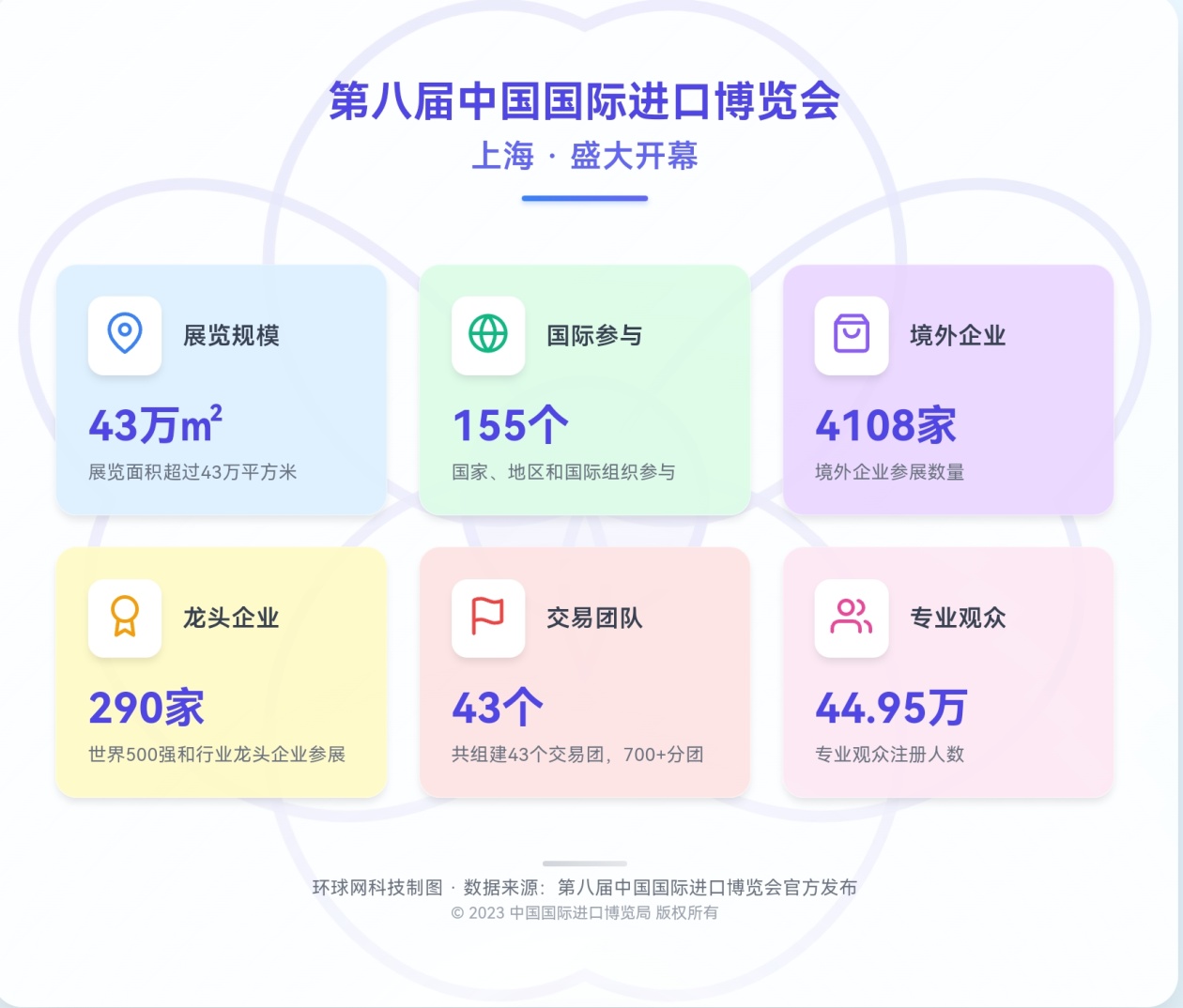
Core Insights - The 8th China International Import Expo (CIIE) will take place from November 5 to 10, 2025, in Shanghai, featuring participation from 155 countries and regions, with 4,108 foreign enterprises exhibiting, marking a record exhibition area of over 430,000 square meters [1][15]. Group 1: Participation and Growth - The number and quality of participating enterprises have significantly increased, with 290 Fortune Global 500 and industry-leading companies across various sectors such as healthcare, automotive, consumer goods, and technology [3][15]. - The number of enterprises from Belt and Road Initiative countries has increased by 23.1% year-on-year, highlighting the expo's inclusivity and leadership as a global public product [3]. Group 2: Exhibition Highlights - The exhibition area has surpassed 430,000 square meters, equivalent to 60 standard football fields, indicating high demand for exhibition space, with many companies securing their spots a year in advance [3][15]. - Over 400 new products, technologies, and services are expected to debut globally or in Asia, covering cutting-edge fields such as green energy, life sciences, and artificial intelligence [5]. Group 3: Notable Exhibitors and Innovations - Burberry showcased a Shanghai limited edition collection, emphasizing its commitment to the Chinese market and the importance of the CIIE as a platform for brand engagement [4]. - Siemens Healthineers presented three new photon-counting CT devices, with two expected to be produced locally in China by 2026, enhancing China's capabilities in high-end medical equipment manufacturing [7][8]. Group 4: Long-term Commitment and Market Confidence - Companies like Bayer and Siemens have demonstrated long-term commitment to the Chinese market, with Bayer launching a new crop health brand and Siemens focusing on integrating AI into industrial applications [12][13]. - The presence of "full attendance" companies at the expo reflects their recognition of the platform's value and their confidence in the Chinese market's potential [9][13].
聚焦进博|在交流与交友中觅商机
Guo Ji Jin Rong Bao· 2025-11-05 15:43
Core Insights - The China International Import Expo (CIIE) serves as a significant platform for enhancing cooperation between China and developing countries, particularly in Africa, by providing opportunities for smaller industries to gain visibility and access to the Chinese market [1][4] Group 1: Impact on African Enterprises - The CIIE has facilitated the entry of African products into the Chinese market, with companies like Hill Bio Group leveraging the expo to promote local raw materials and support impoverished communities [4] - Many African agricultural products remain underrepresented in global markets, often overshadowed by larger international food corporations, but the CIIE offers a chance for these products to reach consumers [4] - The expo provides financial support for African exhibitors, with many booths being free or at half price, which helps stimulate local employment and product exports [4] Group 2: Luxury Brands and Market Strategy - Luxury brands like Maybach have expanded their presence at the CIIE, increasing their exhibition space significantly to enhance consumer awareness of their diverse product offerings beyond automobiles [5][7] - The strategy of brands like Muji reflects a focus on local sourcing and design, aiming to create a complete supply chain that emphasizes local materials and production [10] Group 3: Trade Services and Networking - Companies providing trade services, such as customs brokerage, find value in participating in the CIIE as it connects them with a wide range of exhibitors and buyers, facilitating business opportunities [12] - The CIIE is recognized as a platform for building relationships and fostering collaboration among participants, highlighting the importance of networking in business development [12]
进博“夜”品静安,全球CEO共赴“心动时分”
Guo Ji Jin Rong Bao· 2025-11-05 14:05
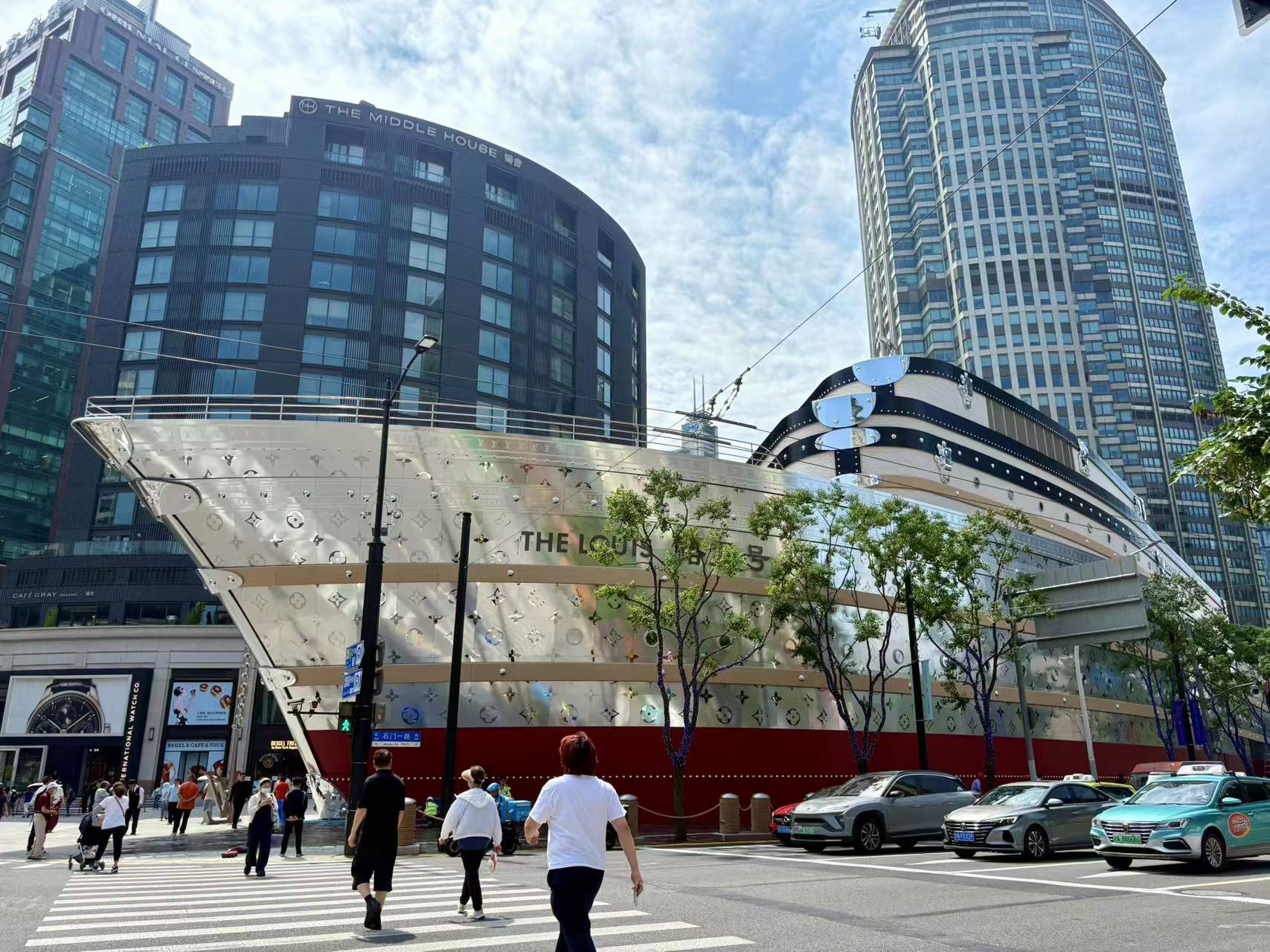
Core Viewpoint - The "Global CEO Look at Jing'an" event during the 8th China International Import Expo highlights Jing'an's commitment to becoming a hub for international business and investment opportunities, showcasing its efficient service and vibrant commercial environment [1][6]. Group 1: Event Overview - The event featured nearly 20 global CEOs and executives who explored Jing'an's investment potential and discussed future cooperation [1]. - The "Louis Number" exhibition, a significant project by Louis Vuitton, exemplifies Jing'an's ability to attract international brands and create a high-end consumer ecosystem [2][4]. Group 2: Commercial Landscape - Jing'an's Nanjing West Road, known as the "first commercial street in China," is evolving into a world-class shopping district, housing over 2,000 domestic and international brands, with more than 70% being international [5]. - The presence of luxury giants like LVMH, Kering, and Richemont underscores Jing'an's status as a global fashion showcase [5]. Group 3: Night Economy and Cultural Integration - The Zhang Garden, a cultural landmark, is enhancing Jing'an's night economy by blending historical charm with modern commercial activities, featuring local brands and international products [5][6]. - The "first launch + bonded" model at Zhang Garden facilitates a streamlined entry for international brands into the Chinese market, attracting interest from global fashion companies [6]. Group 4: Strategic Invitations - Jing'an is inviting global enterprises to invest and establish a presence in the district, emphasizing its open and innovative environment [6]. - Local leadership expresses a commitment to fostering partnerships and enhancing Jing'an's competitiveness and attractiveness as an international business hub [6].
奢侈品消费连续6个季度下滑
第一财经· 2025-11-05 06:30
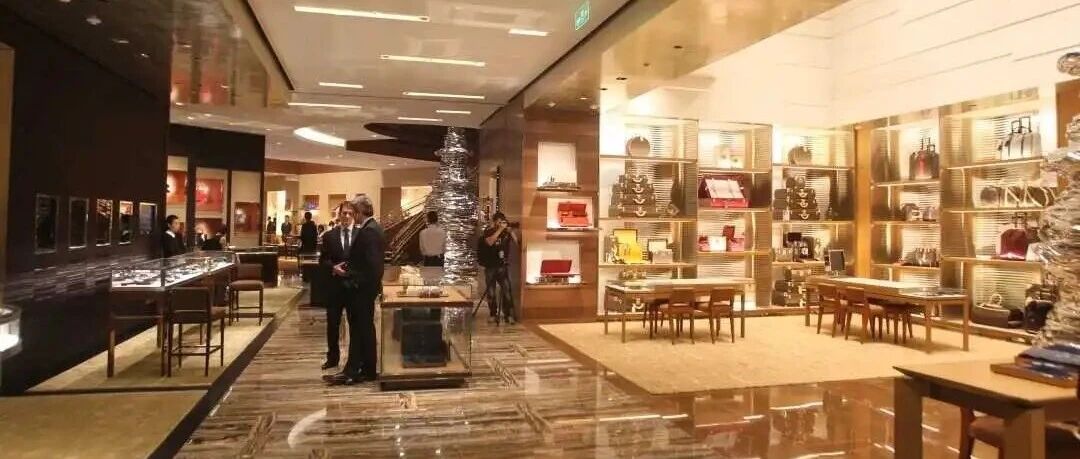
Core Viewpoint - The luxury goods market in China is experiencing a significant downturn, with sales declining for six consecutive quarters, leading to a shift in consumer preferences towards experience and emotional value rather than mere possession [2][3][12]. Group 1: Market Performance - The luxury goods market in China and the U.S. has seen a decline, with projections indicating a potential drop in global luxury sales by 2% to 5% by mid-2025 [3][4]. - Major luxury brands like LVMH and Kering reported substantial revenue and profit declines in the first half of 2025, with LVMH's revenue down 4% and Kering's net profit down 46% [4][5]. - High-end shopping malls that previously thrived are now facing challenges, with brands seeking rent reductions and operational support due to declining sales [2][4]. Group 2: Consumer Behavior Changes - There is a notable shift in consumer behavior, with a growing demand for experiential and emotional connections rather than just material possessions [12][13]. - The consumer demographic is becoming increasingly blurred, with younger consumers engaging in both luxury and fast fashion, necessitating a more flexible approach from retailers [12][13]. - The trend of conservative spending among high-end consumers is leading to a preference for investment-worthy items like jewelry and gold [4][12]. Group 3: Retail Strategies - Brands are increasingly requesting support from shopping malls, including rent reductions and marketing assistance, to cope with declining sales [8][9]. - Shopping malls are adapting by diversifying their tenant mix to include non-traditional luxury brands and experiential offerings to attract a broader customer base [13][14]. - The competitive landscape has shifted to favor tenants, with shopping malls needing to enhance their value propositions to retain key brands [9][10]. Group 4: Operational Challenges - High-end malls face the challenge of maintaining their brand identity while introducing new, trendy brands, which could dilute their luxury positioning [14]. - The need for balance between attracting foot traffic and preserving the integrity of the luxury brand mix is becoming increasingly critical for mall operators [14][15]. - As the market evolves, there is a call for shopping centers to cater to a wider audience, integrating cultural and experiential elements to enhance customer engagement and stabilize revenue [14][15].

奢侈品消费连续下滑6个季度 高奢商场从坚守清高到放下身段
Di Yi Cai Jing· 2025-11-05 05:11
Core Insights - The luxury goods market in China has experienced a significant downturn, with negative growth recorded for six consecutive quarters, as reported by Bain & Company [1][2][3] - Major luxury brands are facing declining revenues and profits, prompting them to close underperforming stores and seek support from shopping malls [3][4] - Consumer preferences are shifting towards experiential and emotional consumption, leading to a transformation in the luxury retail landscape [9][10] Market Performance - The luxury goods market in China and the U.S. has both seen a decline, with projections indicating a potential global sales drop of 2% to 5% by 2025 [2][3] - LVMH reported a 4% decline in revenue and over a 20% drop in net profit for the first half of 2025, while Kering's net profit fell by 46% [3] - Chanel has also faced its first revenue and profit decline since 2020, highlighting the broader challenges within the luxury sector [3] Brand Strategies - Brands are increasingly closing low-performing stores to concentrate resources on key locations, with Kering planning to close 80 stores this year [4][3] - The shift in consumer behavior has led brands to adapt their marketing strategies, focusing more on social media and direct consumer engagement [3][7] Shopping Mall Dynamics - Shopping malls are under pressure to support luxury brands through rent reductions and marketing initiatives, as sales decline [6][8] - Malls are adopting more diverse promotional activities to attract consumers, such as immersive art installations and themed events [7][10] - The market has shifted to a tenant-driven landscape, with landlords needing to be more supportive of their tenants to maintain occupancy [8][10] Consumer Behavior - The traditional luxury marketing approach centered on material possession is being replaced by a focus on experiences and emotional connections [9][10] - The consumer demographic is becoming more blended, with luxury purchases being made by a wider range of consumers, including those who previously engaged with fast fashion [9][10] Operational Challenges - High-end malls face challenges in maintaining their brand identity while introducing new, trendy brands to attract foot traffic [11] - Balancing the introduction of popular brands with the existing luxury tenant mix is crucial to avoid alienating core luxury customers [11][10]