
种植业

Search documents
焦点访谈丨推动农业农村现代化再上新台阶
Xin Lang Cai Jing· 2026-01-04 07:36
Core Viewpoint - The Central Rural Work Conference emphasizes the importance of "Three Rural Issues" (agriculture, rural areas, and farmers) for the modernization of agriculture and rural revitalization, particularly in the context of the 14th Five-Year Plan starting in 2026 [1][9]. Group 1: Agricultural Production and Food Security - Ensuring stable and safe supply of food and important agricultural products is a top priority for agricultural modernization and building a strong agricultural nation [2]. - The target for national grain production is to maintain over 1.4 trillion jin (approximately 700 million tons) by 2025, ensuring food security for the population [2]. - The meeting calls for the implementation of a new round of actions to enhance grain production capacity, focusing on improving agricultural production efficiency and quality [2][3]. Group 2: Technological Innovation in Agriculture - The conference highlights the need to strengthen key agricultural technologies and efficiently apply scientific achievements to enhance agricultural productivity [3]. - Innovations such as AI-powered laser weeding robots are being tested to improve efficiency and reduce environmental impact in agricultural practices [3]. - Emphasis is placed on integrating technology with agriculture to solve traditional production challenges and enhance productivity [3]. Group 3: Rural Income and Employment - Increasing farmers' income is a core goal of agricultural modernization, with policies aimed at stabilizing prices of important agricultural products [3][5]. - The rural income per capita is projected to reach 23,119 yuan in 2024, with a 6% year-on-year growth in the first three quarters of 2025 [5]. - The meeting proposes to enhance support for migrant workers and promote entrepreneurship to increase rural income sources [5][7]. Group 4: Poverty Alleviation and Rural Revitalization - Continuous consolidation of poverty alleviation achievements is essential for agricultural modernization and urban-rural integration [6]. - The meeting emphasizes the establishment of a long-term mechanism to prevent a return to poverty, with a focus on employment support and skill development [6][7]. - The importance of integrating various departments to monitor and adjust poverty alleviation efforts dynamically is highlighted [6]. Group 5: Policy and Reform Directions - The conference discusses the need for comprehensive reforms in rural areas, including extending land contracts and innovating financing mechanisms for rural development [8]. - Strengthening the leadership of the Party in "Three Rural Issues" is emphasized to drive progress in rural revitalization and agricultural modernization [9]. - The overall goal is to make agriculture a modern industry and improve living conditions in rural areas, ultimately leading to a wealthier and happier life for farmers [9].
量化大势研判 202601:宜攻守兼备:成长+质量
Minsheng Securities· 2026-01-04 07:25
- The report introduces a quantitative framework for market trend analysis, emphasizing the inherent attributes of assets and their lifecycle stages, categorized into five styles: external growth, quality growth, quality dividend, value dividend, and bankruptcy value[6][7][10] - The framework prioritizes asset comparison using metrics such as expected growth (gf), actual growth (g), profitability (ROE), high dividend (D), and bankruptcy value (PB/SIZE), each tailored to specific lifecycle stages[7][10] - The quantitative model has demonstrated strong historical performance, achieving an annualized return of 27.45% since 2009, with notable positive excess returns in most years, particularly post-2017[17][20][18] - The report recommends three dominant styles for January 2026: expected growth, actual growth, and profitability, supported by metrics like Δgf, Δg, and ΔROE, all showing expansion trends[15][33][29] - Expected growth strategy selects industries with the highest analyst forecasted growth rates, achieving significant excess returns since 2019. Recommended sectors for January 2026 include automotive sales, home appliances, tungsten, emerging financial services, and lithium[37][39][36] - Actual growth strategy focuses on industries with the highest Δg and related factors (sue, sur, jor), showing strong long-term excess returns. Recommended sectors for January 2026 include photovoltaic equipment, electronic chemicals, lithium battery chemicals, aerospace military, and home appliances[39][40][36] - Profitability strategy targets industries with high ROE and low PB-ROE valuation residuals, with notable excess returns from 2016 to 2020. Recommended sectors for January 2026 include agriculture, liquor, power distribution equipment, non-dairy beverages, and network connection/tower setup[42][43][36] - Quality dividend strategy uses DP+ROE scoring to select industries, with significant excess returns in 2016, 2017, and 2023. Recommended sectors for January 2026 include forestry/processing, boiler equipment, public transportation, fuel cells, and network connection/tower setup[45][46][36] - Value dividend strategy employs DP+BP scoring, achieving notable excess returns in 2009, 2017, and 2021-2023. Recommended sectors for January 2026 include security, daily chemicals, pet food, buses, and network connection/tower setup[48][50][36] - Bankruptcy value strategy selects industries with the lowest PB+SIZE scores, showing strong excess returns in 2015-2016 and 2021-2023. Recommended sectors for January 2026 include automotive sales, ceramics, cotton textiles, dyeing, and building decoration[52][53][36]
东方证券农林牧渔行业周报(20251229-20260104):年底猪价延续偏强,关注补库进程影响-20260104
Orient Securities· 2026-01-04 05:30
Investment Rating - The industry investment rating is "Positive" and is maintained [5] Core Viewpoints - The pig farming sector is expected to benefit from recent policies and market dynamics that promote capacity reduction, leading to a potential price turning point in Q2 2026, with long-term performance improvements anticipated for related stocks [3][43] - The structural growth trend in the post-cycle sector continues, with profits likely to gradually transmit downstream if the current round of pig capacity reduction proceeds smoothly, benefiting the animal health sector [3] - The planting chain shows a confirmed upward trend in grain prices, indicating favorable fundamentals for planting and seed industries, highlighting significant investment opportunities [3] - The pet food sector is experiencing growth and price increase logic, with continuous recognition of domestic brands and sustained growth of leading companies [3] Summary by Sections Pig Farming - The average price of live pigs as of December 31 was 12.76 yuan/kg, a week-on-week increase of 10.38%, while the average price of 15 kg piglets was 19.44 yuan/kg, up 2.21% week-on-week [12][51] - The supply side shows a widening price gap for fattened pigs, supporting price increases, while demand is boosted by consumption expectations during the New Year holiday [12][17] Poultry - The price of white feather broilers increased to 7.82 yuan/kg, up 6.39% week-on-week, and chick prices rose to 3.59 yuan/chick, up 1.7% week-on-week [17][51] - The supply of meat chickens has increased, leading to a more relaxed market supply, while demand has weakened due to some slaughterhouses reducing operations [17] Feed Sector - The prices of corn, wheat, and soybean meal have risen, with corn averaging 2351.57 yuan/ton, up 0.57% week-on-week, and soybean meal at 3172.29 yuan/ton, up 0.96% week-on-week [27][51] - Increased selling enthusiasm among farmers is noted, although the pace of supply remains slow [27] Major Agricultural Products - The domestic natural rubber futures price was 15605 yuan/ton as of December 31, down 0.29% week-on-week, with inventory levels increasing [38][51] - The current down cycle for sugar prices continues, with no significant recovery expected [39]





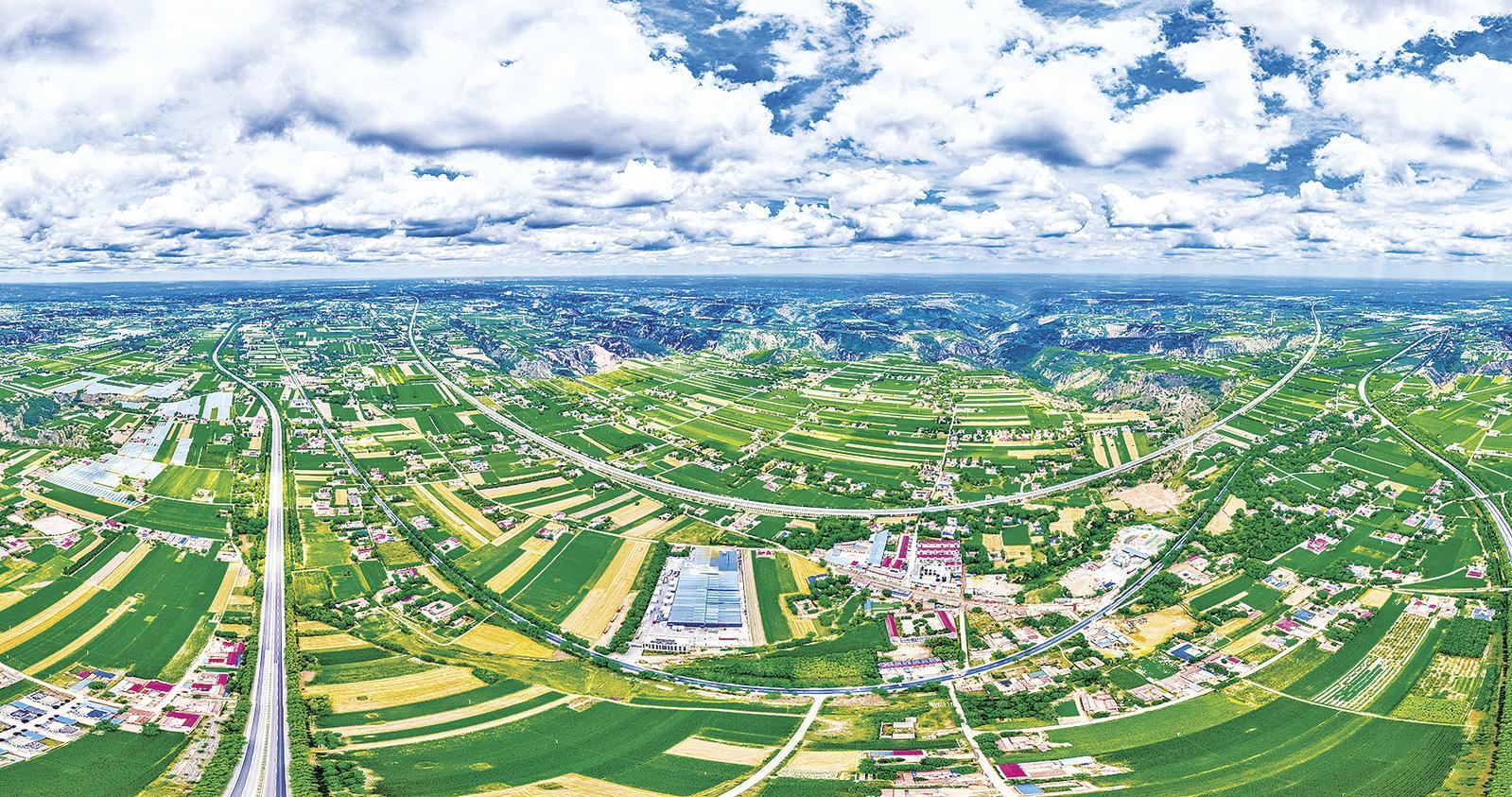
建好新时代“陇东粮仓”——庆阳市“十四五”时期农业农村高质量发展综述
Xin Lang Cai Jing· 2026-01-04 01:28
Core Viewpoint - The article discusses the agricultural and rural development in Qingyang during the "14th Five-Year Plan" period, emphasizing the importance of food security, poverty alleviation, and the promotion of sustainable agricultural practices to support high-quality economic growth [5][14]. Summary by Sections Food Security Enhancement - The city has implemented the strategy of "storing grain in the ground and technology," leading to significant improvements in grain production capacity. A total of 3.2625 million acres of high-standard farmland have been established, and the comprehensive mechanization rate for major crops has reached 80.4% [6]. - In the first nine months of 2025, the grain sowing area reached 6.0111 million acres, exceeding the provincial target of 5.91 million acres, with a total grain production of 1.5 million tons [6]. Poverty Alleviation Achievements - Qingyang has successfully eradicated absolute poverty, with a poverty incidence rate dropping from 26.58% in 2013 to zero by 2020. The city has implemented various policies to prevent a return to poverty, with a total of 2.0802464 billion yuan allocated for poverty alleviation projects [7][8]. - The city has achieved a 100% insurance coverage rate for low-income and formerly impoverished populations, and significant improvements in rural infrastructure have been made [8]. Sustainable Agricultural Practices - The "three-dimensional dual-cycle" agricultural model promotes the recycling of waste between planting, breeding, and mushroom industries, enhancing resource support for agricultural development and reducing pollution [9][10]. - The livestock population has shown steady growth, with significant increases in the number of cattle, sheep, pigs, and chickens, alongside a remarkable 146% increase in edible mushroom production [10]. Expansion of Specialty Industries - The city is focusing on developing five major agricultural industry clusters, including beef, mutton, pork, chicken, and apples, with 389 agricultural industrialization leading enterprises established [11][12]. - The overall agricultural product processing rate has reached 63%, and the total output value of advantageous specialty industries has surpassed 50 billion yuan [12]. Rural Development Initiatives - The city has implemented various rural construction actions, achieving a sanitation toilet coverage rate of 94.24% and improving rural infrastructure significantly [13]. - The overall rural environment has improved, with increased public satisfaction and happiness among residents [13]. Future Outlook - Looking ahead to the "15th Five-Year Plan," Qingyang aims to further enhance agricultural strength, rural beauty, and farmer prosperity, revitalizing the "East Long Grain Warehouse" [15].

卫星“看”庄稼、大数据“算”收成 农业发展向“新”而行
Yang Shi Wang· 2026-01-04 00:03
Core Viewpoint - In 2025, new productive forces are empowering various industries, particularly agriculture, through advanced technologies such as remote sensing satellites and big data, leading to a transformation in traditional agricultural practices [1] Group 1: Agricultural Innovation - The year saw significant advancements in the research and application of major crop varieties, including high-yield rice, drought-resistant wheat, and high-oil soybeans, with over 95% of crop varieties being independently bred in China [4][5] - Smart agricultural equipment is rapidly advancing, with high-end intelligent machinery narrowing the gap, and new energy agricultural equipment accelerating the transition to greener operations [6][7] - The innovation capacity in smart agriculture continues to improve, with 62 new intelligent equipment breakthroughs, including automated driving and precision feeding devices [8] Group 2: Talent Development and Training - The smart agriculture empowerment program has trained nearly 40 million people throughout the year, enhancing digital skills among farmers through various online courses [10] Group 3: Case Study - Dragon Fruit Production - In Guangxi Nanning, the application of new productive forces has transformed traditional dragon fruit cultivation into smart agriculture, improving production efficiency and product quality [11] - The use of LED lights for night-time flowering has shortened the production cycle by over 15 days, increasing yield by approximately 2000 jin per mu and enhancing fruit quality [12] - A comprehensive digital agricultural management system has been established, utilizing IoT sensors to collect real-time data for precise farming operations, allowing a couple to manage over 30 mu of land efficiently [13] - The dragon fruit farm has implemented full-chain standardization, ensuring quality control from planting to packaging, with each fruit receiving a "passport" for traceability [14][15]
抱团发展走出生态致富路
Xin Lang Cai Jing· 2026-01-03 22:20
Core Insights - The article discusses the successful transformation of a previously impoverished village in Inner Mongolia into a self-sustaining community through innovative agricultural practices and cooperative economic models [1][2][3] Group 1: Economic Development Strategies - The village implemented a "hugging cycle" model for collective economic development, focusing on "one piece of land, one stalk, and a group of sheep" [1][2] - The land consolidation strategy involved leasing over 4,000 acres from 170 households, generating an average annual income of approximately 1.2 million yuan [1] - A feed processing plant was established to utilize agricultural straw, reducing environmental impact and providing job opportunities for villagers [2] Group 2: Cooperative Models - A cooperative sheep farming model was created by uniting 14 villages, leading to stable income for farmers and employment for over 140 individuals, with monthly earnings reaching over 4,000 yuan for many [2] - The cooperative structure allows for resource sharing and efficient utilization, creating a "wealth chain" that benefits both the community and the environment [2] Group 3: Skills Training and Employment - The village provided skills training for various practical jobs, helping residents transition from dependency to self-sufficiency [3] - A "guaranteed dividend" mechanism was introduced to support those without skills or labor, enhancing their income through land leasing [3] Group 4: Sustainable Practices - The village has expanded its circular industrial chain by introducing new crops and processing facilities, increasing product value [3] - The integration of ecological farming practices, such as raising free-range chickens and goats, has diversified income sources and improved community wealth [3]
甘肃:这些科技小院助农有妙招
Xin Lang Cai Jing· 2026-01-03 19:18
Core Viewpoint - A technological transformation in agriculture is occurring in Gansu Province, driven by the establishment of 62 technology small farms that integrate production, education, research, and application to elevate traditional agriculture towards standardization, branding, and intelligence [1]. Group 1: Agricultural Innovation and Impact - The technology small farms are enhancing organic farming practices, as demonstrated by the successful cultivation of organic vegetables, leading to significant income increases for farmers [2]. - The introduction of scientific methods has resulted in a substantial increase in crop yields, such as the "Liumei" variety, which has seen production rise from 300 jin per mu to 1300 jin per mu [3]. - Gansu has trained 36,700 farmers through a combination of theoretical training, practical demonstrations, and ongoing guidance from agricultural experts [3]. Group 2: Mechanization and Efficiency - The implementation of mechanization in chili pepper production has halved the harvesting costs, with yields increasing from over 400 kg to 600 kg per mu, generating a value of 5,200 yuan per mu [4]. - The establishment of a digital platform for the Jiuquan goji berry industry has improved resource management across over 100,000 mu of farmland, enhancing operational efficiency [4]. Group 3: Research and Development - The Zhangye Corn Technology Small Farm has successfully collected over 6,800 corn germplasm resources and developed new corn varieties, contributing to the region's reputation as a seed production hub [5]. - The Jiuquan Herbaceous Flower Technology Small Farm is working on revising national seed quality standards, indicating a focus on quality and industry standards [6].
焦点访谈|读懂中央农村工作会议这些重要提法
Yang Shi Wang· 2026-01-03 13:25
Core Insights - The central theme of the news is the emphasis on the importance of "Three Rural Issues" (agriculture, rural areas, and farmers) in the context of China's modernization efforts, particularly as the country approaches the 14th Five-Year Plan starting in 2026 [1][23]. Group 1: Agricultural Modernization - The meeting highlighted the need to anchor agricultural modernization and promote comprehensive rural revitalization, with a focus on ensuring food security and increasing farmers' income [1][3]. - A target was set for national grain production to remain stable at over 1.4 trillion jin (approximately 700 million tons) by 2025, ensuring food security for the population [3][7]. - The integration of advanced agricultural technologies, such as AI and robotics, is seen as crucial for improving production efficiency and environmental sustainability [9][11]. Group 2: Farmer Income and Employment - The core goal of agricultural modernization is to increase farmers' income, with policies aimed at maintaining reasonable prices for key agricultural products [11][15]. - The meeting emphasized the importance of creating new income sources through the development of new industries and business models, particularly in the context of urbanization and labor transfer [15][19]. - A successful case was presented where local initiatives in Jiangxi province led to significant income increases for farmers through the development of specialty products and cooperative models [13][19]. Group 3: Poverty Alleviation and Support Mechanisms - The meeting underscored the need to consolidate and expand the achievements of poverty alleviation, ensuring that support mechanisms remain in place to prevent a return to poverty [15][19]. - A dynamic adjustment mechanism for poverty prevention was discussed, involving collaboration among various local departments to monitor and support vulnerable populations [16][19]. - The importance of continuous support and responsibility from the government was highlighted, ensuring that those who have escaped poverty are not left without assistance [19][21]. Group 4: Policy and Reform Initiatives - The meeting discussed the need for comprehensive reforms in rural areas, including extending land contracts and innovating financing mechanisms for rural development [21][23]. - The emphasis was placed on the role of local governments in driving rural revitalization and agricultural modernization, with a call for active engagement and practical efforts [23].
盐碱地上,创业村正创业(迈向“十五五”的发展图景·大国小村)
Ren Min Ri Bao· 2026-01-02 22:14
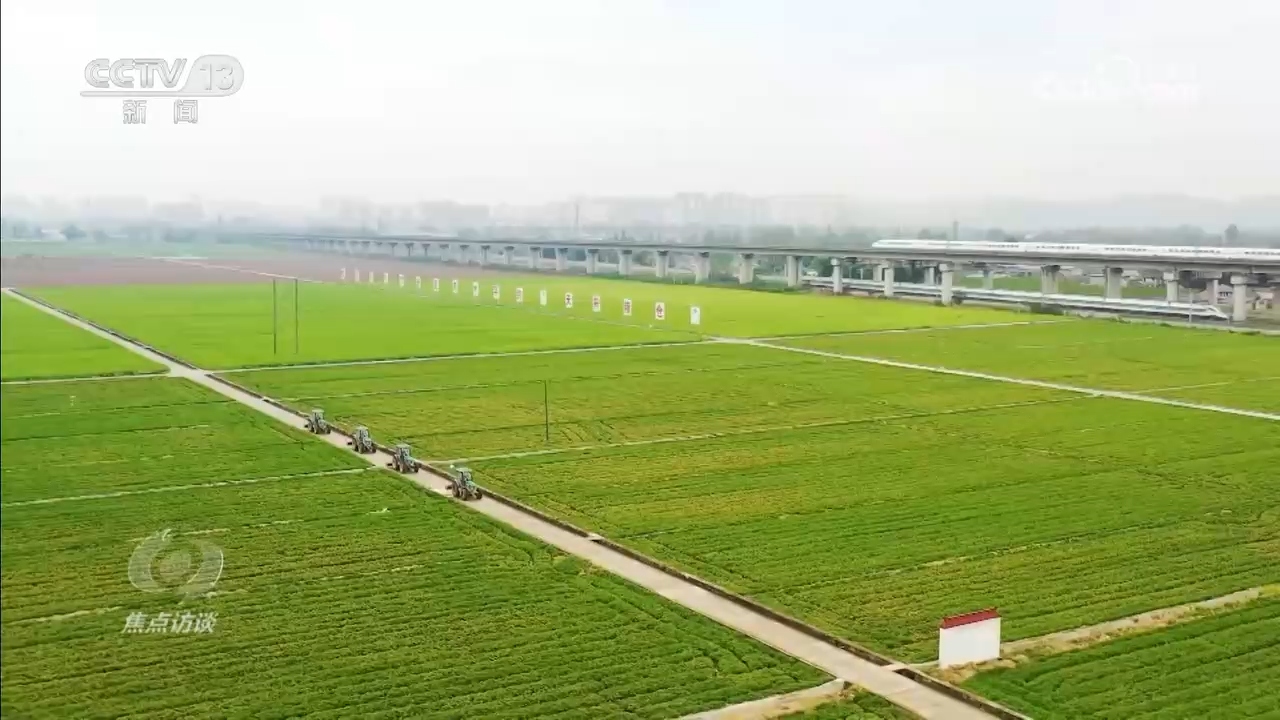
Core Viewpoint - The article highlights the transformation of a village in Jilin Province, China, through agricultural innovation and branding, leading to increased production and income for local farmers [2][3]. Group 1: Agricultural Development - The village faced significant challenges due to poor soil conditions, initially yielding only 300-500 jin (150-250 kg) of corn per hectare [2]. - The introduction of research on saline-alkali land rice cultivation by the Jilin Agricultural Academy marked a turning point for the village [2]. - The village's rice planting area expanded from 280 hectares to over 950 hectares due to successful trials and community engagement [2]. Group 2: Branding and Market Strategy - The establishment of a green agricultural brand aimed to enhance the market value of local rice, with green rice priced 20% higher than ordinary rice [3]. - The village adopted an "order agriculture" model, allowing farmers to focus on cultivation while ensuring market access [3]. - The "Zhanlai Rice" brand has achieved a public brand value exceeding 1 billion yuan, with 155,900 acres of rice cultivation in the region [3]. Group 3: Economic Impact - The village collective's financial status improved significantly, with revenues surpassing 500,000 yuan in 2025, allowing for infrastructure development and community benefits [4]. - The village plans to establish its own rice processing factory and enhance training for farmers to further improve agricultural practices and market reach [4].

走好自己的创业路
Ren Min Ri Bao· 2026-01-02 22:11
Core Viewpoint - The article highlights the transformation of saline-alkali land into productive agricultural land through perseverance, technological advancements, and community support, emphasizing the potential for profitable farming and the importance of attracting young people back to agriculture [2][3]. Group 1: Agricultural Development - The challenges of farming on saline-alkali land are acknowledged, with historical skepticism from the community regarding its viability [2]. - The increase in grain yield and income over the years is attributed to hard work, community assistance, and guidance from agricultural experts [2]. - The article discusses the importance of modern agricultural training for farmers to enhance their skills in crop management and pest control [2]. Group 2: Community and Infrastructure - Improvements in village infrastructure, such as roads and streetlights, have been made, yet some young people still perceive farming as unappealing and unprofitable [3]. - The need for large-scale operations and advanced machinery in agriculture is emphasized as a future direction for the village [3]. - The article mentions the shift towards green agriculture and brand development in the rice industry, indicating a move towards processing and sales [3]. Group 3: Youth Engagement - There is a call to attract young people back to farming by showcasing the potential for successful careers in agriculture, including professional farming and green agriculture [3]. - The narrative suggests that entrepreneurship in agriculture requires multiple attempts and a supportive community to succeed [3].