
可再生能源

Search documents
专访能源基金会CEO:中国可再生能源已进入“负成本”时代
Zhong Guo Xin Wen Wang· 2025-11-17 14:09
正在巴西贝伦举行的《联合国气候变化框架公约》第三十次缔约方大会(COP30)上,中国新一轮国家自 主贡献目标备受瞩目。能源基金会首席执行官(CEO)兼中国区总裁邹骥在接受中新社记者专访时表示, 中国可再生能源已进入"负成本"时代,这为实现气候目标提供了坚实支撑。 专访能源基金会CEO:中国可再生能源已进入"负成本"时代 中新社巴西贝伦11月17日电 题:专访能源基金会CEO:中国可再生能源已进入"负成本"时代 中新社记者 刘文文 谈及中国可再生能源发展现状,邹骥给出一组关键数据:中国风光发电量在全社会用电量的占比由2020 年的9.7%提高到2024年的18.6%,年均提升超过2个百分点。 来源:中国新闻网 编辑:郭晋嘉 今年9月,中国宣布新一轮国家自主贡献目标。其中包括,到2035年,中国全经济范围温室气体净排放 量比峰值下降7%-10%,力争做得更好。非化石能源消费占能源消费总量的比重达到30%以上,风电和 太阳能发电总装机容量达到2020年的6倍以上、力争达到36亿千瓦。 广告等商务合作,请点击这里 邹骥指出,在全球气候治理面临不确定性的背景下,中国作为主要大国率先明确新一轮国家自主贡献目 标,展现了应 ...
2025年10月中国可持续航空燃料行业新图景:电气SAF篇
RMI· 2025-11-17 12:19
Investment Rating - The report does not explicitly provide an investment rating for the sustainable aviation fuel (SAF) industry, but it emphasizes the potential for significant growth and development in the electric SAF sector, particularly in China [4][5]. Core Insights - The aviation industry faces increasing pressure to reduce carbon emissions, with the International Civil Aviation Organization (ICAO) targeting net-zero emissions by 2050. Sustainable aviation fuel (SAF) is identified as a key solution to achieve this goal [4][7]. - Electric SAF, produced from renewable electricity, water, and captured CO2, is seen as a necessary complement to biomass SAF due to its higher reduction potential and theoretical production capacity [4][9]. - The report highlights that while electric SAF has a promising future, it currently faces high production costs, limiting its commercial viability in the short term [12][39]. - China is positioned to play a significant role in the global electric SAF market due to its advanced renewable energy capabilities and potential for cost-effective production [5][20]. Summary by Sections 1. Research Background and Overview of SAF Development - The aviation sector's carbon emissions have been growing rapidly, necessitating urgent action for reduction. SAF is viewed as the most effective means for the aviation industry's green transition [4][7]. - Electric SAF is distinguished from biomass SAF by its raw materials and production processes, offering greater sustainability and long-term scalability [33]. 2. Global Development Status of Electric SAF - The global SAF market is experiencing rapid growth, with production expected to reach 1.25 billion liters (approximately 1 million tons) in 2024, doubling from 2023 [11]. - Over 40 airlines have committed to using SAF, with projections of approximately 14 million tons of SAF usage by 2030 [11]. - Electric SAF is still in the early stages of commercialization, primarily represented by demonstration plants and small-scale projects [12]. 3. Technical Route Analysis of Electric SAF - Electric SAF technology can be categorized into three main modules: green hydrogen production, CO2 capture, and liquid fuel synthesis. The main synthesis pathways include Fischer-Tropsch synthesis (FT) and methanol-to-jet (MtJ) [44]. - The report notes that while biomass SAF currently dominates the market, electric SAF is expected to overcome existing challenges and become a major production technology by 2035 [39]. 4. Production Potential Analysis of Major Countries - The report evaluates the production potential and cost structure of electric SAF in China, the US, Germany, and Saudi Arabia, highlighting China's advantages in renewable energy and green hydrogen production [5][20]. - It emphasizes the need for clear long-term development goals and supportive policies to foster the electric SAF industry in China [5]. 5. Future Global Market Development Trends - The report predicts that by 2035, electric SAF will play a crucial role in the global SAF supply and demand landscape, with China emerging as a key player [5][20]. 6. Key Conclusions - Electric SAF has greater decarbonization potential but faces high costs until 2035, making it difficult to compete effectively with biomass SAF in the short term [5][39]. - The development of electric SAF is not only vital for the aviation industry's energy efficiency and emissions reduction but also serves as a new driver for economic growth and job creation in China [5].
李高:技术创新驱动产业实践,因地制宜发展绿色新质生产力
2 1 Shi Ji Jing Ji Bao Dao· 2025-11-17 10:20
Core Viewpoint - The global climate governance is at a critical stage, and China emphasizes the importance of technological innovation in driving industrial practices for green and low-carbon development, which is essential for addressing climate challenges and promoting global climate governance [1][3]. Group 1: Technological Innovation and Investment - China is focusing on low-carbon technology innovation in key areas such as renewable energy, industrial decarbonization, new energy storage, and transportation, increasing R&D investment to accelerate the transition of cutting-edge technologies from laboratories to industrial applications [3][4]. - The country aims to achieve a total installed capacity of renewable energy generation of 2.16 billion kilowatts by June 2025, accounting for over 40% of the global total, with wind and solar power capacity exceeding the 2030 national contribution target ahead of schedule [4]. Group 2: Industry Practices and Achievements - Currently, one-third of electricity consumed in China comes from clean energy sources, and the country has maintained the world's largest production and sales of new energy vehicles for ten consecutive years [4]. - China provides over 80% of the world's photovoltaic components and 70% of wind power equipment, contributing to a significant reduction in the average cost of wind and solar power generation over the past decade, with costs decreasing by over 60% and 80%, respectively [4]. Group 3: Collaborative Efforts and Future Goals - The establishment of over 6,000 national-level green factories by the end of 2024, which account for approximately 20% of the total output value of the manufacturing industry, is part of China's strategy to lead industry transformation through green factories and supply chain construction [4]. - China expresses its willingness to share low-carbon technology achievements and practical experiences with other countries, aiming to contribute to building a clean and beautiful world and achieving global sustainable development [4].
COP30观察:中国绿色方案在全球南方加速落地
Zhong Guo Xin Wen Wang· 2025-11-17 08:30
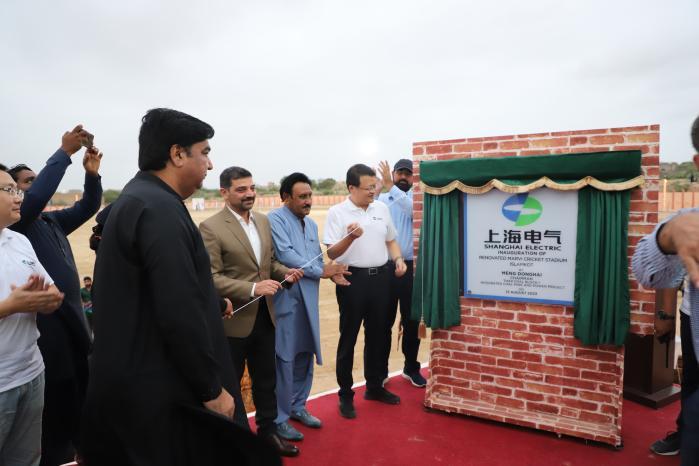
COP30观察:中国绿色方案在全球南方加速落地 巴西贝伦位于亚马孙河口,湿热而多雨。当气候谈判回到森林,参加 COP30的各国代表围绕能源转型 与气候治理展开密集磋商。 今年,全球南方国家的声音更为突出。他们共同面临能源成本上升、极端天气威胁等难题,其诉求也更 加明确一致——能源转型方案必须可负担,也必须可落地、可持续。 《联合国气候变化框架公约》执行秘书斯蒂尔在COP30开幕式致辞中表示,目前,太阳能和风能在全球 90%的地区已成为成本最低的电力来源。今年,可再生能源已超越煤炭成为世界首要能源。 这些年,可再生能源的广泛利用正改变一些国家的能源结构版图:在南亚沙漠,上海电气等企业运营的 能源项目,给无垠黄沙注入无限生机;在东南亚沿海,远景能源等企业参建的风电项目在极端天气点亮 了"用户的灯";中国能建等企业在拉美高原地区承建的光伏发电项目,持续向当地用户提供稳定清洁电 力。 从塔尔沙漠的能源项目,再到拉美与非洲的光伏、风电布局,中国的绿色方案正以多种形式进入南方国 家的能源结构调整中。 它们共同呈现出一种可以清晰观察的趋势——以较低成本获取清洁能源,以较短周期完成项目落地,并 在实际运行中具备较高稳定性。 ...

全球投资仍未走出低谷
Jing Ji Wang· 2025-11-17 01:39
Global Investment Trends - Global investment conditions remain sluggish in the first half of 2025, with foreign direct investment (FDI) declining by 3%, marking the third consecutive year of decline [1][2] - Geopolitical tensions, trade frictions, and companies reassessing supply chain risks contribute to cautious investment sentiment [1][2] Greenfield Investment - Greenfield investment, a key indicator of new capital expenditure and future production capacity, has seen a significant decline, with a 17% drop in global projects [2] - Developed and developing countries experienced declines of 20% and 12% respectively, contrasting with the recovery period from 2023 to 2024 [2] - Manufacturing greenfield projects decreased by 26%, particularly in sectors related to global supply chains such as electronics, machinery, automotive, and textiles [2] International Project Financing - International project financing, primarily in infrastructure sectors like energy and transportation, has sharply decreased due to high interest rates and rising geopolitical risks [3] - Renewable energy projects saw a 9% decline, while other electricity projects experienced a 38% drop in project numbers and a 52% decrease in investment amounts [3] - Domestic project financing has increased by 39% in number and 29% in amount, indicating a shift as local capital attempts to fill the gap left by international capital withdrawal [3] Cross-Border Mergers and Acquisitions - Cross-border M&A activity has significantly decreased, with total deal value dropping from $448 billion in 2024 to $172 billion in 2025 [4] - The U.S. and U.K. saw declines of 33% and 59% respectively, with overall European M&A activity down by approximately 1% [4] - There is an increase in divestitures and withdrawals, leading to instability in M&A activities in developing countries [4] Sustainable Development Goals Impact - The weak international investment climate negatively affects the achievement of sustainable development goals, with related project numbers declining by 10% and investment amounts down by 7% [4] - This trend indicates a reduction in both the number of projects and the average size of individual projects, further weakening capital formation capabilities in developing countries [4] Future Investment Landscape - The global investment landscape is expected to become more "regionalized" and "friend-shored," with investments favoring politically friendly countries [5] - Manufacturing related to supply chains will continue to face pressure, with developed countries likely to repatriate critical manufacturing processes [5] - Digital economy and artificial intelligence are projected to be the only bright spots for global investment growth, driven by strategic emphasis on AI and semiconductor development [5]
联合国贸发会议报告显示 全球投资仍未走出低谷
Jing Ji Ri Bao· 2025-11-17 00:31
Global Investment Trends - Global investment conditions remain sluggish in the first half of 2025, with foreign direct investment (FDI) declining by 3%, marking the third consecutive year of decline [1][2] - The report indicates that geopolitical tensions, trade frictions, and companies reassessing supply chain risks contribute to cautious investment sentiment [1][2] Types of International Investment - Greenfield investments, a key indicator of new capital expenditure and future production capacity, have significantly decreased, with a 17% drop in global projects [2] - Developed countries experienced a 20% decline in greenfield investments, while developing countries saw a 12% decrease [2] - Manufacturing greenfield projects faced the most significant decline, with a 26% reduction, particularly in sectors related to global supply chains such as electronics, machinery, automotive, and textiles [2] International Project Financing - International project financing, primarily in infrastructure sectors like energy and transportation, has sharply declined due to high global interest rates and increased geopolitical risks [3] - Renewable energy projects saw a 9% decrease, while other electricity projects experienced a 38% drop in project numbers and a 52% decline in investment amounts [3] - Domestic project financing has increased by 39% in number and 29% in amount, indicating a shift as local capital attempts to fill the gap left by international capital withdrawal [3] Cross-Border Mergers and Acquisitions - Cross-border M&A activity has decreased significantly, with total deal value dropping from $448 billion in 2024 to $172 billion in the first half of 2025 [4] - The U.S. saw a 33% decline in M&A activity, while the UK experienced a 59% drop, and Europe overall declined by approximately 1% [4] - There is a notable increase in divestitures and withdrawals, leading to instability in M&A activities in developing countries [4] Impact on Sustainable Development - The decline in international investment activities negatively impacts the achievement of sustainable development goals, with related project numbers decreasing by 10% and investment amounts down by 7% [4] - This trend indicates not only fewer projects but also a reduction in the average size of individual projects, further weakening capital formation capabilities in developing countries [4] Future Investment Landscape - The global investment landscape is expected to become more "regionalized" and "friend-shored," with investments favoring politically friendly countries [5] - Supply chain-related manufacturing will continue to face pressure, and developed countries are likely to repatriate critical manufacturing processes [5] - Digital economy and artificial intelligence are projected to be the only bright spots for global investment growth, driven by strategic emphasis on AI and semiconductor development [5]
联合国贸发会议报告显示:全球投资仍未走出低谷
Jing Ji Ri Bao· 2025-11-16 23:14
Core Insights - Global investment conditions remain sluggish in the first half of 2025, with foreign direct investment declining by 3% for the third consecutive year, influenced by escalating global trade tensions, geopolitical uncertainties, and corporate reassessment of supply chain risks [1][2] Group 1: Greenfield Investment - Greenfield investment, a key indicator of new capital expenditure and future production capacity, has significantly contracted, with a 17% decrease in global projects. Developed and developing countries saw declines of 20% and 12%, respectively [2] - Manufacturing greenfield projects experienced the most substantial drop, with a 26% reduction, particularly in sectors related to global supply chains such as electronics, machinery, automotive, and textiles [2] - The decline in greenfield investment is attributed to rising U.S. tariff barriers, which have notably pressured manufacturing investments in countries like Vietnam, India, Brazil, and South Africa [2] Group 2: International Project Financing - International project financing, primarily in infrastructure sectors like energy, renewable resources, and transportation, has seen a significant downturn due to high global interest rates and increased geopolitical risks [3] - Renewable energy project numbers fell by 9%, while other electricity projects saw a 38% decrease in quantity and a 52% drop in value, indicating a weak performance across various sectors [3] - Domestic financing is replacing international financing, with domestic project financing increasing by 39% in quantity and 29% in value, highlighting a shift as international capital withdraws [3] Group 3: Cross-Border Mergers and Acquisitions - Cross-border M&A activity has sharply declined, with total deal value dropping from $448 billion in 2024 to $172 billion in the first half of 2025. The U.S. and U.K. experienced the largest declines, with decreases of 33% and 59%, respectively [4] - Service and manufacturing sectors saw significant reductions in M&A activity, with service sector deals down by 25% and manufacturing by 12% [4] - Increased divestments and spin-offs have led to greater instability in M&A activities in developing countries [4] Group 4: Sustainable Development Goals - The weak international investment climate negatively impacts the achievement of sustainable development goals, with related project numbers declining by 10% and investment amounts down by 7% in key areas such as renewable energy, infrastructure, and health [4] - The average size of individual projects is shrinking, further undermining the capital formation capacity of developing countries in critical sustainable development sectors [4] Group 5: Future Investment Trends - The global investment landscape is expected to become more "regionalized" and "friend-shored," with investments increasingly flowing between politically friendly nations, shifting from a globalized to a group-based approach [5] - Manufacturing sectors related to supply chains will continue to face pressure, with developed countries likely to repatriate key manufacturing processes to domestic or friendly economies [5] - Digital economy and artificial intelligence are projected to be the only bright spots for global investment growth, driven by strategic emphasis on AI and semiconductor development, as well as intensified technological competition among nations [5]
凝聚行动共识,加速绿色转型
Ren Min Ri Bao· 2025-11-16 05:49
应对气候变化关乎人类共同未来。只有各尽所能,团结协作,才能实现人与自然和谐共生,守护好我们 唯一的地球家园 正在巴西贝伦举行的《联合国气候变化框架公约》第三十次缔约方大会(COP30),承载着各方开 启"加速发展和落实行动的十年"的共同期待。作为大会重要铺垫,贝伦气候峰会达成《贝伦宣言》,呼 吁更公正、更具包容性的气候行动,彰显各方团结应对气候危机的决心。当前,全球气候治理进入关键 阶段,国际社会亟须凝聚合力,以切实行动发出全球绿色低碳转型不可逆转的明确信号。 (一) 贝伦,是通往"地球之肺"亚马孙雨林的门户城市。在此举行《联合国气候变化框架公约》缔约方大会具 有特殊意义——它提醒我们重温10年前各方达成《巴黎协定》的初心。 2015年12月,巴黎气候变化大会上,近200个缔约方达成《巴黎协定》,确立了2020年后以"国家自主贡 献"为主体的国际应对气候变化机制安排,重申了《联合国气候变化框架公约》确立的共同但有区别的 责任原则,成为全球气候治理的重要里程碑。 10年来,从完成实施细则谈判到建立"损失与损害基金",再到198个国家同意"转型脱离化石燃料"、首 次明确能源转型方向……全球气候合作在曲折中前行。法 ...
[视频]COP30“中国角”活动发布多项中国能源转型成果文件 多方赞赏中国推动绿色创新合作
Sou Hu Cai Jing· 2025-11-15 23:47
Core Viewpoint - China is committed to addressing global climate change through practical actions and aims to provide solutions for global energy transition [1] Group 1: Event Overview - The theme side event "China's Energy Transition and New Energy Development" was held at the 30th Conference of the Parties to the United Nations Framework Convention on Climate Change (COP30) [1] - Key documents such as "China Energy Transition Outlook 2025" and "China Green Certificate Development Report" were released during the event [1] Group 2: International Recognition - International figures have expressed appreciation for China's contributions to the development of renewable energy and the promotion of energy transition cooperation [1]
凝聚行动共识,加速绿色转型(寰宇平)
Ren Min Ri Bao· 2025-11-15 21:51
Core Viewpoint - The article emphasizes the urgent need for global cooperation to combat climate change, highlighting the significance of the COP30 conference in Brazil and the adoption of the Belem Declaration, which calls for more equitable and inclusive climate actions [1][2]. Group 1: Climate Action and International Cooperation - The Belem Climate Summit serves as a reminder of the commitments made in the Paris Agreement, which established a framework for international climate action based on "nationally determined contributions" [1]. - Global climate cooperation has progressed over the past decade, with significant milestones such as the establishment of the "loss and damage fund" and the agreement to transition away from fossil fuels [2]. - Despite these advancements, there remains a substantial gap between ambition and reality, with increasing extreme weather events and rising greenhouse gas emissions indicating that the climate crisis is not alleviating [2][3]. Group 2: Responsibilities of Developed and Developing Nations - The principle of "common but differentiated responsibilities" is crucial in addressing climate change, with developed countries bearing historical and legal obligations to lead in emissions reduction and provide financial support to developing nations [3]. - The voices from the Belem Climate Summit reflect a collective expectation for substantive fairness and climate justice, emphasizing the need for developed countries to take more effective actions [3]. Group 3: Green Transition and Economic Development - The article highlights the necessity of a green low-carbon transition as a global trend, linking climate crisis mitigation with poverty alleviation and economic development [4]. - Countries are encouraged to enhance international cooperation in green technology and industry, ensuring the accessibility and affordability of clean energy technologies [4]. - The focus on national contributions at the Belem conference has seen over 100 countries submit new climate action plans, with notable commitments from China and Brazil to significantly reduce greenhouse gas emissions by 2035 [5]. Group 4: South-South Cooperation and Global Impact - Developing countries are increasingly exploring diverse energy transition models and climate financing solutions, with China achieving significant milestones in renewable energy capacity and emissions reduction [5][6]. - Initiatives like the "Evergreen Tropical Rainforest Fund" and commitments from countries like India to increase non-fossil energy sources demonstrate the proactive stance of global South nations in climate action [5]. - The article underscores that addressing climate change is a shared responsibility, with all nations needing to collaborate for a sustainable future [5][7].