
啤酒

Search documents
百威亚太遭多家大行下调预期
Guo Ji Jin Rong Bao· 2026-01-22 14:36
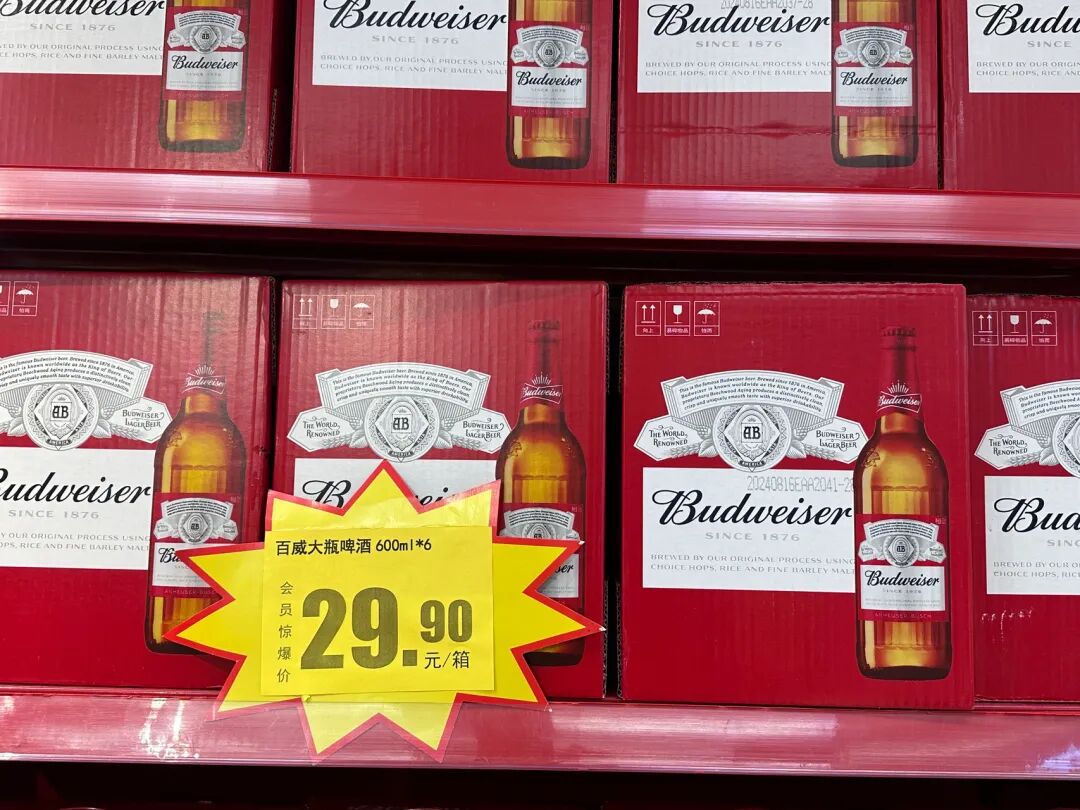
Core Viewpoint - Major banks, including Citigroup and JPMorgan, have released reports predicting that Budweiser APAC's (01876.HK) 2025 full-year performance will fall short of expectations, primarily due to weak demand in the Chinese market [1] Group 1: Financial Forecasts - Citigroup forecasts a 3% and 10% downward adjustment in Budweiser APAC's sales and core net profit for 2025, respectively, with sales impacted by the later timing of the Lunar New Year [1] - JPMorgan has lowered Budweiser APAC's target price from HKD 8.5 to HKD 7.9, predicting a 6.4% decline in natural sales in 2025 [1] Group 2: Market Performance - In the first half of 2025, Budweiser APAC's beer sales in China decreased by 8.2%, with net income dropping by 9.5% and revenue per hectoliter declining by 1.4%, indicating a "volume and price drop" situation [3] - Budweiser APAC's market share in China's premium beer segment has shrunk from nearly 50% in 2015 to around 40% [3] Group 3: Management Changes and Strategic Initiatives - Budweiser APAC appointed its first Chinese CEO, Cheng Yanjun, in February 2025, with a focus on reversing the downturn in the Chinese market [3] - Under the new leadership, the company is increasing investment in its core brands, Budweiser and Harbin Beer, while abandoning some non-core niche brands and accelerating penetration into offline channels like supermarkets and convenience stores [3]

惠泉啤酒:公司股东户数请参阅公司披露的定期报告
Zheng Quan Ri Bao· 2026-01-22 11:45
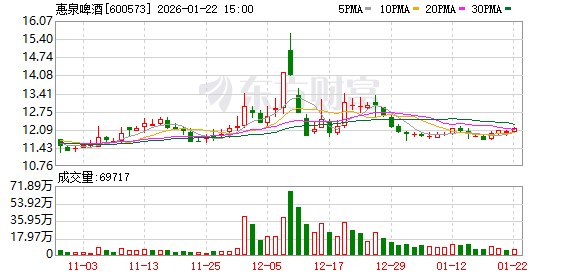
Group 1 - The company, Huiquan Beer, responded to investor inquiries on its interactive platform regarding the number of shareholders, indicating that this information can be found in the company's disclosed periodic reports [2]

不拼酒量拼口味 金星啤酒靠中式精酿爆发
BambooWorks· 2026-01-22 09:30
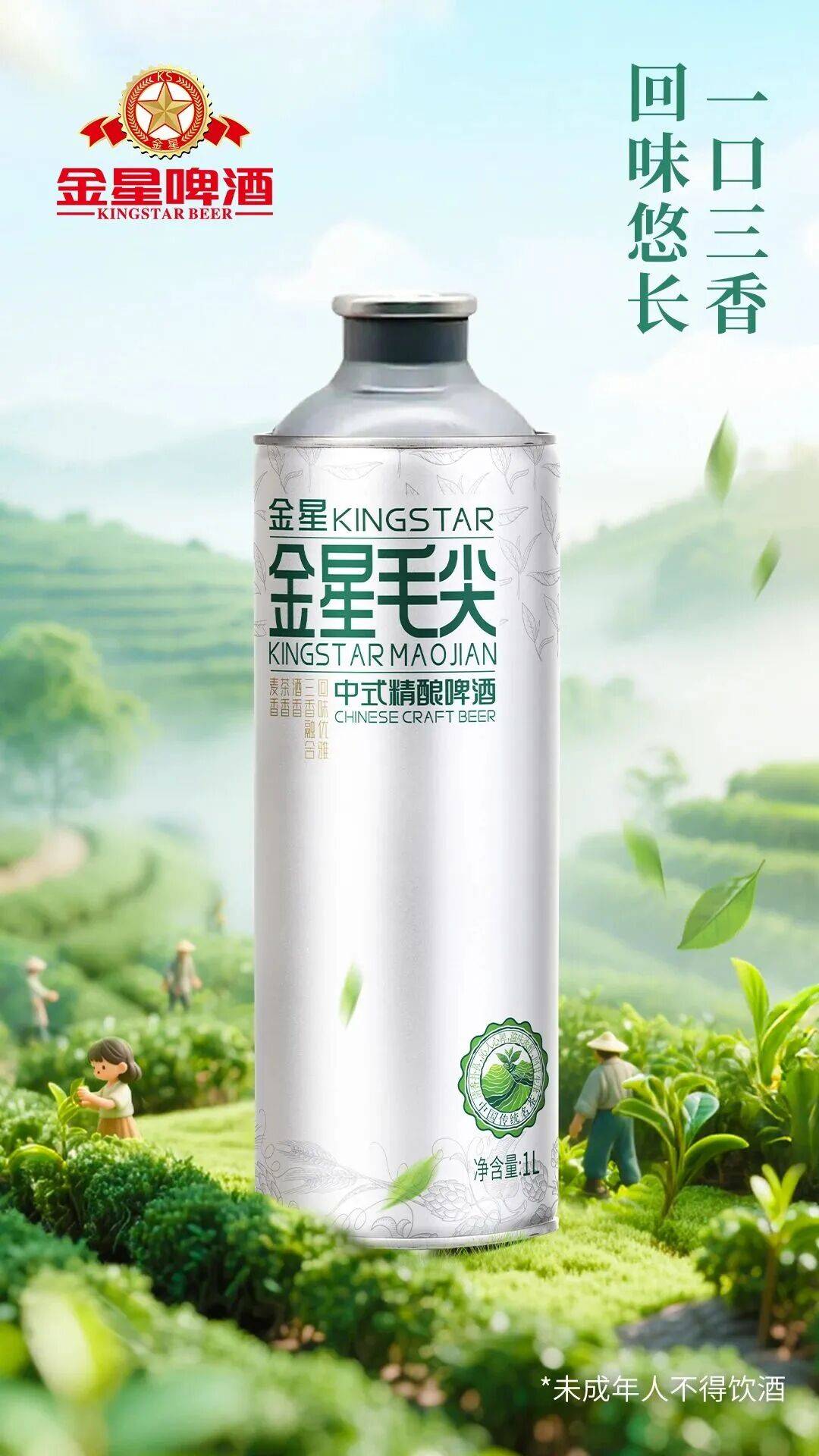
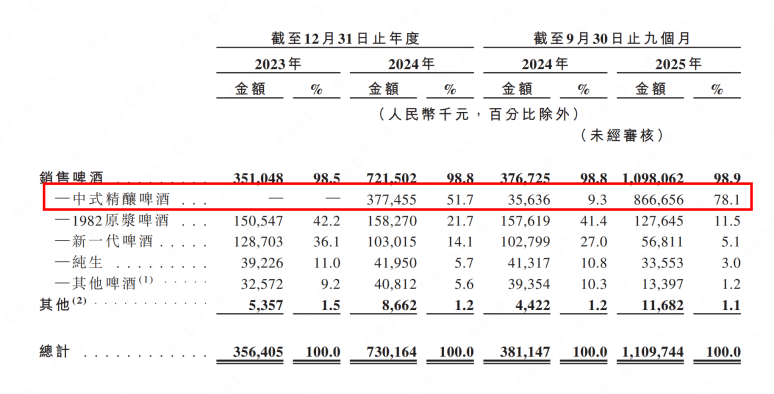
Core Viewpoint - Jin Xing Beer has submitted its listing application, marking a significant moment for the regional brewery as it transitions towards craft beer production, achieving notable success in recent years [1][2]. Group 1: Company Overview - Established in 1982, Jin Xing Beer has primarily focused on the Henan market, relying on channel density and cost control rather than brand premium for its competitive advantage [4]. - The company has shifted its product structure in response to market saturation, launching its first Chinese craft beer, "Jin Xing Mao Jian," in August 2024, and expanding its offerings to include flavors like jasmine tea and sugar-coated hawthorn [5]. Group 2: Financial Performance - The company reported a dramatic revenue increase of 105% in 2024, reaching approximately 730 million yuan, with revenue for the first nine months of the year soaring to about 1.11 billion yuan, a 190% increase compared to the same period in 2024 [5]. - The contribution of craft beer to total revenue rose significantly, from zero in 2023 to approximately 377 million yuan in 2024, accounting for 51.7% of total revenue, and further increasing to about 867 million yuan, representing 78.1% of total revenue in the first nine months of the year [5]. Group 3: Market Dynamics - The craft beer market in China is one of the fastest-growing segments, with the market size expanding from approximately 12 billion yuan in 2019 to an estimated 63 billion yuan by 2024, reflecting a compound annual growth rate of over 35% [2]. - Jin Xing Beer has seen its gross margin rise from 27.3% in 2023 to 37.8% in 2024, and further to 47% in the first nine months of 2025, indicating a significant improvement in profitability [6]. Group 4: Competitive Landscape - The craft beer segment, while lucrative, presents challenges due to shorter product life cycles and the need for continuous innovation to maintain consumer interest [7]. - Increased competition from national brands launching their own craft or premium lines poses a threat, as these brands typically have stronger brand influence and channel negotiation power compared to Jin Xing Beer [7]. - The overall valuation environment for beverage stocks in the Hong Kong market has been cautious, with Budweiser APAC's stock price dropping 64% since its listing in 2019, reflecting market skepticism about industry growth [7]. Group 5: Future Outlook - Jin Xing Beer's listing is seen as unique due to its focus on craft beer and rapid margin improvement, but future success will depend on its ability to adapt to changing consumer preferences and competitive pressures [8].
燕京啤酒:预计2025年净利润同比增长50.00%至65.00%
Jing Ji Guan Cha Wang· 2026-01-22 02:55
Core Viewpoint - Yanjing Beer (000729) is expected to report a net profit of 1.584 billion to 1.742 billion yuan for the year 2025, representing a year-on-year growth of 50.00% to 65.00% [1] Financial Performance - The net profit excluding non-recurring gains and losses is projected to be between 1.457 billion and 1.561 billion yuan, indicating a year-on-year increase of 40.00% to 50.00% [1]

中式精酿冲击港股:金星啤酒IPO前分红上亿,却拖欠员工社保
Sou Hu Cai Jing· 2026-01-22 01:48
Core Viewpoint - The article discusses the impressive growth of Henan Jinxing Beer Co., Ltd. as it aims to become the first "Chinese craft beer" listed on the Hong Kong Stock Exchange, highlighting both its remarkable financial performance and underlying operational risks. Financial Performance - In the first three quarters of 2025, Jinxing Beer reported revenue of 1.11 billion yuan, a 211% increase from 356 million yuan in 2023 [1] - Net profit surged from 12.2 million yuan to 305 million yuan, a 24-fold increase over two years, with a gross margin rising to 47% [1] Product Dependency - The company's growth is heavily reliant on a single product category, "Chinese craft beer," which contributed 78.1% of revenue in the first three quarters of 2025, up from 9.3% in 2024 [5] - Traditional beer products have seen significant declines, with revenues from core products like 1982 Original and New Generation Beer dropping by 19% and 44.7%, respectively [5] Market Risks - The low barrier to entry for "Chinese craft beer" poses a risk as it can be easily replicated, with no established national standards [6] - The lifecycle of non-standard products is short, leading to high demand volatility, as evidenced by the rapid introduction of over 50 SKUs in just over a year [6] Competitive Landscape - Jinxing Beer holds a mere 0.3% market share in retail, significantly overshadowed by major players like China Resources and Budweiser, which have market shares 52 times and 40 times larger, respectively [7] - The increasing concentration of the beer market, with the top five brands holding 89.2% market share, intensifies competition for smaller brands [6] Distribution Challenges - Over 94% of Jinxing Beer’s revenue comes from distribution channels, with only 4.1% from direct sales, indicating a highly concentrated distribution model [7] - The company’s reliance on social media for short-term sales spikes has not translated into a robust national distribution network [7] Governance and Financial Concerns - The company is controlled by a family structure, with the controlling shareholders holding 93.45% of the equity, raising concerns about governance [8] - Aggressive dividend payouts totaling approximately 329 million yuan before the IPO exceeded the net profit for the first three quarters of 2025, signaling potential cash flow issues [8] - The company has accumulated social security and housing fund arrears of 21.9 million yuan from 2023 to the first three quarters of 2025, which could lead to regulatory scrutiny [9] Long-term Viability - The article questions whether the short-term explosive growth driven by a single product can sustain long-term market competitiveness, especially in the face of larger competitors [10] - The combination of a weak product structure, high regional dependency, and governance issues may hinder the company's ability to maintain a net profit growth rate above 20% in the next three years [10]
光大证券晨会速递-20260122
EBSCN· 2026-01-22 01:07
Group 1: Macro Insights - The risk of a government shutdown in the U.S. is significantly lower than in 2025, with six departmental budgets already passed and preliminary consensus on the remaining six [2] - The Trump administration's focus on foreign issues may lead to a more stable domestic policy environment, reducing the likelihood of a "hard landing" in political negotiations [2] Group 2: Banking Sector - The new "package" loan interest subsidy policy is expected to increase the subsidy scale to between 100 billion and 200 billion, significantly higher than previous rounds, which will support investment and consumption [3] - This policy is anticipated to catalyze a positive market trend for the banking sector, particularly benefiting small and micro enterprises and retail-focused companies [3] Group 3: Real Estate Market - In 2025, the total area of residential land transactions in 100 cities decreased by 14.2% year-on-year, while the average transaction price increased by 3.4% [4] - The core 30 cities saw a 8.7% decline in residential land transaction area, with an average price increase of 6.4% year-on-year, indicating a stabilization in the market [4] - The article suggests that leading state-owned enterprises in real estate will see a recovery in operational performance as supply-side adjustments take effect [4] Group 4: Medical Sector - The surgical robot industry has significant growth potential with low penetration rates, and clearer policy guidelines are expected to drive industry growth [5] - The industry is transitioning from a "consumables-driven" model to a more mature "technology and consumables separation" model, which may enhance profitability [5] - Focus is recommended on segments that meet high-value definitions in the new guidelines, particularly in the laparoscopic robot sector [5] Group 5: Company Analysis - Yanjing Beer is projected to achieve a net profit of 1.584 to 1.742 billion yuan in 2025, representing a year-on-year growth of 50% to 65% [7] - The company's profit is further bolstered by land reserve payments, and product optimization along with channel expansion is driving high sales growth [7] - The forecast for net profit from 2025 to 2027 is set at 1.596, 1.886, and 2.178 billion yuan respectively, with current price-to-earnings ratios of 22x, 18x, and 16x [7]
【光大研究每日速递】20260122
光大证券研究· 2026-01-21 23:07
Group 1: Banking Sector - The "package" loan interest subsidy policy aims to enhance support for small and micro enterprises, with an expected subsidy scale of 100 to 200 billion in 2026, significantly higher than previous scales, which may catalyze a positive market trend for banks [5] Group 2: Real Estate Sector - In 2025, the total land transaction area in 100 cities decreased by 14.2% year-on-year, while the average transaction price increased by 3.4% to 5,605 yuan per square meter; the core 30 cities saw a similar trend with a transaction area decline of 8.7% and an average price increase of 6.4% to 9,404 yuan per square meter [5] - The article indicates that with the gradual clearing of supply-side issues, leading state-owned enterprises in real estate are expected to stabilize and improve their operational performance [5] Group 3: Pharmaceutical Sector - The introduction of price project guidelines is expected to boost the commercialization of domestic surgical robots, which have significant growth potential and low penetration rates; the industry is transitioning from a "consumables-driven" model to a more mature "technology and consumables separation" model [6] Group 4: Company Performance - Ningbo Bank reported a revenue of 71.97 billion, an 8% year-on-year increase, and a net profit of 29.33 billion, up 8.1%, indicating stable growth in revenue and profit for 2025 [7] - Yahua Group's lithium hydroxide business is benefiting from rising lithium prices, with its self-owned mining operations providing dual raw material security; the company is also expanding into solid-state battery technology [8] - Anta Sports reported a stable retail performance in a weak market, with overall retail revenue growth reaching double digits for the year, driven by multiple brands and a global expansion strategy [8] - Yanjing Beer expects a net profit of 1.584 to 1.742 billion, a year-on-year increase of 50% to 65%, supported by land reserve income and product matrix optimization [8]

金星啤酒港股IPO闯关,中式精酿神话下的多重拷问
Sou Hu Cai Jing· 2026-01-21 15:14
Core Viewpoint - Henan Jinxing Beer Co., Ltd. has submitted its IPO application to the Hong Kong Stock Exchange, showcasing impressive growth figures but facing significant concerns regarding sustainability and governance issues [1][12]. Financial Performance - Revenue is projected to increase from 356 million RMB in 2023 to 1.11 billion RMB by 2025, while net profit is expected to surge from 12.2 million RMB to 30.5 million RMB, marking a 24-fold increase in two years [1][3]. - The gross profit margin is anticipated to rise from 27.3% to 47% during the same period [1]. Product Innovation - The launch of "Jinxing Maojian" tea beer in August 2024 marked a pivotal shift for the company, contributing significantly to sales with 10 million cans sold within 10 months [2]. - By 2025, the Chinese craft beer segment accounted for 78.1% of Jinxing's revenue, establishing it as a leading player in the flavored craft beer market with a 14.6% market share [2][4]. Market Challenges - The company faces challenges from increased competition as major players like China Resources and Budweiser enter the craft beer market with similar products [6]. - Jinxing's reliance on a single product category raises concerns about sustainability, as traditional products are declining in revenue [4][6]. Governance and Compliance Issues - The company has distributed dividends totaling 329 million RMB, exceeding its profits for the first three quarters of 2025, raising questions about financial management [8][10]. - Governance concerns are highlighted by the family's absolute control over 93.45% of the shares, which may signal a lack of confidence in reinvesting in the company [10][12]. - There are significant issues regarding unpaid social security and housing fund contributions, totaling over 21.9 million RMB, which could lead to legal repercussions [11][12]. Asset Ownership Concerns - Approximately 25.7% of Jinxing's owned properties lack proper ownership certificates, which could expose the company to administrative penalties [12]. - The company acknowledges potential risks associated with these ownership issues, which could adversely affect its business and financial status [12]. Market Outlook - The craft beer market in China is projected to grow from 12.5 billion RMB in 2019 to 63.2 billion RMB by 2024, with a compound annual growth rate of 38.4% [6]. - The success of Jinxing's IPO will depend on its ability to manage risks and demonstrate sustainable growth potential in a competitive landscape [13].
燕京啤酒(000729):改革红利持续释放 土地收储款进一步增厚利润
Xin Lang Cai Jing· 2026-01-21 10:30
Group 1 - The company forecasts a net profit attributable to shareholders of 1.584 to 1.742 billion yuan for 2025, representing a year-on-year growth of 50% to 65% [1] - The expected net profit excluding non-recurring items is projected to be 1.457 to 1.561 billion yuan, with a year-on-year increase of 40% to 50% [1] - The profit growth is attributed to both the improvement in the main business and the recognition of land reserve payments from subsidiaries, which will add approximately 132 million yuan to the net profit [1] Group 2 - In the context of a weak recovery in consumption, the beer industry has seen a slowdown in production growth, with a reported 0.3% year-on-year decline in national beer production from January to November 2025 [2] - The company is optimizing its product matrix and expanding sales channels, focusing on high-end and youth-oriented strategies, with the flagship product Yanjing U8 experiencing significant sales growth [2] - The product structure includes a three-tier framework of high-end, mid-range, and regional specialty products, along with differentiated offerings like non-alcoholic white beer and dry beer to meet diverse consumer needs [2] Group 3 - The company maintains profit forecasts for 2025-2027 at 1.596 billion, 1.886 billion, and 2.178 billion yuan respectively, with current price-to-earnings ratios of 22x, 18x, and 16x [3] - The rapid growth of the flagship product U8 is expected to drive sustained performance, and there remains significant room for cost reduction and efficiency improvements [3] - The company is rated as "buy" based on its position as a leading domestic beer brand and its growth potential [3]
燕京啤酒(000729):2025年度业绩预告点评:改革红利持续释放,土地收储款进一步增厚利润
EBSCN· 2026-01-21 10:19
Investment Rating - The report maintains a "Buy" rating for Yanjing Beer, indicating a positive outlook for the company's performance in the coming years [5]. Core Insights - Yanjing Beer is expected to achieve a net profit attributable to shareholders of 1.584 to 1.742 billion yuan in 2025, representing a year-on-year growth of 50% to 65%. The company attributes this growth to both operational improvements and the recognition of land reserve payments from subsidiaries, which are expected to contribute approximately 132 million yuan to net profit [1][3]. - The company has been optimizing its product matrix and expanding its sales channels, focusing on high-end and youthful strategies. The flagship product, Yanjing U8, has seen significant sales growth, becoming a key driver of revenue [2]. Summary by Relevant Sections Financial Performance - The projected net profit for 2025 is between 1.584 billion and 1.742 billion yuan, with a growth rate of 50% to 65% year-on-year. The expected net profit margin for the first three quarters of 2025 is 15.32%, which is still below industry peers but improving as reforms progress [1]. - The company forecasts a net profit of 1.596 billion yuan for 2025, with a corresponding P/E ratio of 22x, indicating a favorable valuation compared to future earnings [3]. Product and Market Strategy - Yanjing Beer is enhancing its product structure with a focus on the high-growth flagship product Yanjing U8, complemented by mid-to-high-end products like Yanjing V10 and regional specialties. The company is also introducing differentiated products such as non-alcoholic beers to cater to diverse consumer preferences [2]. - The sales strategy includes a dual approach of "full-channel integration and regional deep cultivation," aiming to penetrate both strong and emerging markets while adapting to consumer trends [2]. Profitability and Valuation - The report projects a steady increase in net profit from 1.596 billion yuan in 2025 to 2.178 billion yuan by 2027, with corresponding P/E ratios decreasing from 22x to 16x, suggesting an attractive investment opportunity as the company continues to grow [3][10]. - The company's gross margin is expected to improve from 37.6% in 2023 to 43.1% by 2027, reflecting enhanced operational efficiency and cost management [12].