
天然气

Search documents
华创证券张瑜:伊朗地缘“灰犀牛” 哪些价格受影响?
Xin Lang Cai Jing· 2026-01-28 08:28
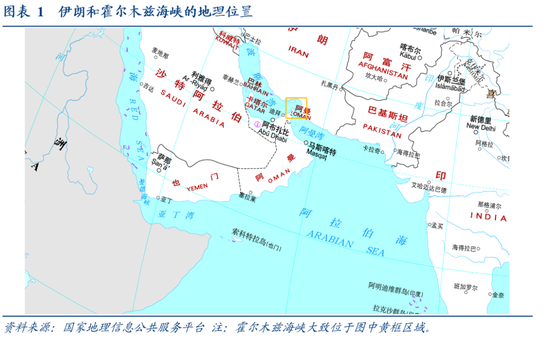
经济困境引发各地抗议,逐步升级为伊朗全国大规模骚乱,伤亡人数是过往动荡之最。去年11月开始, 伊朗多地因物价上涨、货币贬值等问题发生抗议,随后扩散至全境并出现暴力骚乱和大规模伤亡,期间 全面断网8天。1月下旬局势趋于缓和。1月21日伊朗官方称近期骚乱事件导致3117人死亡。 地缘冲突风险仍存。1月22日特朗普表示美国"大型舰队"正驶向伊朗周边。 从经济地理位置看,伊朗对霍尔木兹海峡具有强大控制力。霍尔木兹海峡是全球能源贸易的咽喉要道, 流经该海峡的石油和其他液体燃料贸易量约占全球消费量约20%,占全球海运贸易量约27%,流经该海 峡的LNG贸易量约占全球LNG贸易量的20%,约占全球天然气贸易量的9%。 二、伊朗的主要自然资源 1、石油:全球探明原油储量第三,目前日产量约320万桶/日,出口量约180万桶/日。伊朗探明原油储 量约2000亿桶,仅次于委内瑞拉和沙特。2025年下半年,伊朗原油日产量约占全球的3.2%,出口量约 占全球总出口的4.1%。 炒股就看金麒麟分析师研报,权威,专业,及时,全面,助您挖掘潜力主题机会! 一瑜中的 文:华创证券首席经济学家 张瑜 报告摘要 伊朗骚乱似有平息,但"灰犀牛"的地 ...

中辉能化观点-20260128
Zhong Hui Qi Huo· 2026-01-28 06:19
中辉能化观点 中辉能化观点 | | 中辉能化观点 | | | --- | --- | --- | | 品种 | 核心观点 | 主要逻辑 | | | | 地缘反复扰动,油价短线反弹。地缘:中东地缘反复,油价反弹;核心驱 动:淡季供给过剩,消费淡季叠加 OPEC+仍在扩产周期,全球海上浮仓 | | 原油 | 空头反弹 | 以及在途原油激增,美国原油和成品油库存均累库,原油供给过剩压力逐 | | ★ | | 渐上升;关注变量:美国页岩油产量变化,俄乌以及中东地缘进展。 | | | | 中东地缘反复,跟随成本端反弹。成本端油价短期受地缘扰动反弹,当前 | | LPG | | 原油仍过剩,中枢或继续下移;供需方面,液化气商品量出现下降,PDH | | ★ | 空头反弹 | 开工率维持在 70%上方,下游化工需求存在韧性;库存端利多,港口库存 | | | | 环比下降。 | | L | | 乙烷继续涨价,盘面跟随成本继续偏强震荡,关注寒潮和地缘变动。两油 | | | 空头反弹 | 石化库存暂无明显压力,上游出厂价偏强。近期线性排产继续回升,农膜 | | ★ | | 需求淡季,终端补库意愿不足,基本面供强需弱存累库预期,谨 ...
伊朗地缘“灰犀牛”:哪些价格受影响?
一瑜中的· 2026-01-28 06:10
文 : 华创证券首席经济学家 张瑜 执业证号:S0360518090001 联系人: 付春生(18482259975) 报告摘要 伊朗骚乱似有平息,但"灰犀牛"的地缘风险仍存。本篇报告主要概述伊朗的基本经济国情,侧重自然资 源、优势产业和出口结构。 一、伊朗近期发生了什么? 经济困境引发各地抗议,逐步升级为伊朗全国大规模骚乱,伤亡人数是过往动荡之最。 去年11月开始,伊 朗多地因物价上涨、货币贬值等问题发生抗议,随后扩散至全境并出现暴力骚乱和大规模伤亡,期间全面 断网8天。1月下旬局势趋于缓和。1月21日伊朗官方称近期骚乱事件导致3117人死亡。 地缘冲突风险仍存 。1月22日特朗普表示美国"大型舰队"正驶向伊朗周边。 从经济地理位置看,伊朗对霍尔木兹海峡具有强大控制力。 霍尔木兹海峡是全球能源贸易的咽喉要道,流 经该海峡的石油和其他液体燃料贸易量约占全球消费量约20%,占全球海运贸易量约27%,流经该海峡的 LNG贸易量约占全球LNG贸易量的20%,约占全球天然气贸易量的9%。 二、伊朗的主要自然资源 1、石油:全球探明原油储量第三,目前日产量约320万桶/日,出口量约180万桶/日。 伊朗探明原油储量约 ...


胜通能源股价跌5.23%,国联基金旗下1只基金重仓,持有5.93万股浮亏损失17.73万元
Xin Lang Cai Jing· 2026-01-28 03:48
1月28日,胜通能源跌5.23%,截至发稿,报54.15元/股,成交2.57亿元,换手率2.74%,总市值152.83亿 元。 截至发稿,王喆累计任职时间7年76天,现任基金资产总规模34.58亿元,任职期间最佳基金回报 106.32%, 任职期间最差基金回报-9.24%。 陈薪羽累计任职时间6年183天,现任基金资产总规模15.79亿元,任职期间最佳基金回报89.98%, 任职 期间最差基金回报-19.21%。 声明:市场有风险,投资需谨慎。 本文基于第三方数据库自动发布,任何在本文出现的信息(包括但 不限于个股、评论、预测、图表、指标、理论、任何形式的表述等)均只作为参考,不构成个人投资建 议。受限于第三方数据库质量等问题,我们无法对数据的真实性及完整性进行分辨或核验,因此本文内 容可能出现不准确、不完整、误导性的内容或信息,具体以公司公告为准。如有疑问,请联系 biz@staff.sina.com.cn。 责任编辑:小浪快报 资料显示,胜通能源股份有限公司位于山东省烟台市龙口市经济开发区和平路5000号,成立日期2012年 11月13日,上市日期2022年9月8日,公司主营业务涉及LNG的采购、运输、销 ...
天然气指数盘中涨2%,多股涨超8%
Mei Ri Jing Ji Xin Wen· 2026-01-28 03:13
Group 1 - The natural gas index increased by 2% during the trading session [1] - Among the constituent stocks, Tongyuan Petroleum surged by 15% [1] - PetroChina Oilfield Services reached the daily limit up [1] - Potential Energy Holdings rose by 9% [1] - Zhongman Petroleum and China Oil Engineering both increased by over 8% [1]




加拿大加速布局亚洲能源市场
Zhong Guo Hua Gong Bao· 2026-01-28 02:55
Core Insights - Canada is accelerating its energy market strategy towards Asia to reduce reliance on the U.S. amid geopolitical tensions and trade issues [1][2] Group 1: Economic Impact - Fossil fuel exports, particularly oil and gas, account for approximately 25% of Canada's total exports [1] - The Canadian government is seeking to establish long-term energy export agreements with Southeast Asia, a market valued at $5 trillion [2] Group 2: Trade Agreements and Initiatives - Canada signed a memorandum of understanding with Malaysia covering LNG, oil, small modular reactors, and renewable energy [2] - Ongoing negotiations for the Canada-ASEAN Free Trade Agreement aim to lower tariffs and improve investment protection for Canadian businesses [2] Group 3: Infrastructure Developments - The expansion of the Trans Mountain pipeline, set to begin in May 2024, will nearly double Canada's oil transportation capacity to 890,000 barrels per day [2] - The new infrastructure will provide a direct export route to Asia, reducing dependence on U.S. buyers and increasing the volume of heavy sour crude suitable for Asian refineries [2]
美国又一条“斩杀线”!冬季风暴肆虐 10人死于街头!电费狂飙1400% 最多超80万用户停电
Hua Xia Shi Bao· 2026-01-28 00:34
电影里的"末日情景",如今正在美国上演。 综合美国地方政府消息及媒体报道,截至当地时间1月27日,本轮强冬季风暴已导致美国14个州至少38 人死亡。这场风暴令美国中部和东部大片地区被暴雪、冰灾与低温笼罩。目前全美仍有超55万户家庭和 企业处于断电状态。 据纽约市长马姆达尼证实,38名死者中有10人来自纽约市,均被发现于户外,但目前尚不清楚他们是否 为无家可归者。本轮冬季风暴造成纽约市气温降至8年来最低。 截至目前,近2亿美国人仍处于某种形式的冬季寒潮预警中,这种情况预计将至少持续至2月1日。而美 国国家气象局正密切关注另一场可能在本周末影响美国东部地区的冬季风暴。 电价狂飙1400% 风暴影响下,全美最多时约81万户用户遭遇停电。 美国电力现货批发价格通常在每兆瓦时200美元左右,上周末部分地区一度突破每兆瓦时3000美元,狂 飙1400%。周一新英格兰地区次日电力价格飙升约82%,至每兆瓦时313美元;宾夕法尼亚州和马里兰 州的PJM西部电网电力价格更是暴涨约360%,至每兆瓦时约413美元,创下2014年1月以来的新高。 美国最大电网运营商PJM电网预计,周一电力生产中断规模达22.4吉瓦,占总供电容量的 ...

今日国际国内财经新闻精华摘要|2026年1月28日
Xin Lang Cai Jing· 2026-01-28 00:08
Group 1: International News - The international precious metals market has shown significant volatility, with spot gold prices rising by 3.52% to a historic high of $5187.37 per ounce on January 27, 2023 [1][12] - COMEX gold futures increased by 1.82%, closing at $5175.10 per ounce, with a peak of $5187.20 during electronic trading [1][12] - Silver market experienced more volatility, with New York silver futures rising by 6.66% to surpass $113 per ounce, later retreating to below $111, resulting in a daily increase of 4.73% [1][12] Group 2: Energy Market - U.S. natural gas futures saw significant fluctuations, initially rising over 7% to $7.284 per million British thermal units, before dropping by 15% to $5.772 due to recovering production and declining demand [2][13] - Crude oil prices experienced slight increases, with WTI crude surpassing $62 per barrel, up 2.28%, and Brent crude exceeding $66 per barrel, up 1.92% [2][13] Group 3: Foreign Exchange Market - The U.S. dollar index (DXY) continued to decline, with a daily drop of 0.95% to 96.17 points, nearing a four-year low [3][14] - Non-U.S. currencies appreciated, with the euro rising by 0.6% against the dollar and the British pound increasing by nearly 0.7% to $1.3787, the strongest level since October 2021 [3][14] Group 4: U.S. Stock Market - The U.S. stock market showed mixed performance, with the Dow Jones falling by 0.83%, while the Nasdaq rose by 0.91% and the S&P 500 increased by 0.41%, reaching an intraday record high of 6986.38 points [4][15] - Major tech stocks mostly rose, with Micron Technology up over 5%, Intel up over 3%, and Amazon and Microsoft both up over 2% [4][15] Group 5: Corporate Developments - AI startup Anthropic plans to double its fundraising target to $20 billion, with a valuation reaching $350 billion [9][17] - Boeing anticipates delivering 500 737 aircraft by 2026, aiming for positive free cash flow between $1 billion and $3 billion [10][17]






上证早知道|芯片涨价 最高80%;头部券商业绩预告 净利暴增115%
Shang Hai Zheng Quan Bao· 2026-01-27 23:09
Group 1 - The People's Bank of China reported that by the end of Q4 2025, the balance of RMB loans reached 271.91 trillion yuan, a year-on-year increase of 6.4%, with a total increase of 16.27 trillion yuan for the year [1] - The new revised Drug Administration Law will be implemented on May 15, marking the first comprehensive revision in 23 years, reflecting significant changes in drug research, production, circulation, and usage [1] Group 2 - The State Administration of Foreign Exchange proposed new policies to facilitate capital project settlement and NRA account refunds in Hainan Free Trade Port, allowing non-financial enterprises to use foreign exchange income for loans to non-related enterprises [2] - The market regulatory authority plans to enforce the new Anti-Unfair Competition Law to combat unfair competition and protect consumer rights [2] Group 3 - The Shanghai Futures Exchange imposed restrictions on 18 clients in tin and silver futures trading for failing to declare actual control relationships [3] Group 4 - Guokewai issued price increase notices for KGD products, with increases of 40% for 512Mb, 60% for 1Gb, and 80% for 2Gb products, indicating structural opportunities in the semiconductor industry [4] - Analysts expect significant growth in the domestic A-share market driven by AI demand and recovery in the electronics sector, with a focus on AI computing power and semiconductor equipment [4] Group 5 - U.S. natural gas prices surged to a three-year high due to a winter storm, with Henry Hub futures reaching $7.43 per million British thermal units, a 140% increase since January 16 [5] - Analysts believe that geopolitical risks and OPEC+ interventions will support oil prices despite short-term pressures [5] Group 6 - DeepSeek launched a new OCR model, enhancing document recognition capabilities, which is expected to accelerate AI applications [6] - The AI application landscape is projected to accelerate by late 2025 to early 2026, with significant developments from major tech companies [6] Group 7 - Guotai Junan forecasts a net profit of 27.53 to 28.01 billion yuan for 2025, a year-on-year increase of 111% to 115% [7] - Shenwan Hongyuan expects a net profit of 9.1 to 10.1 billion yuan for 2025, representing a growth of 74.64% to 93.83% [7] - Red Tower Securities anticipates a net profit of 1.215 billion yuan for 2025, a 59.05% increase year-on-year [7] Group 8 - Nandu Property expects a net profit of 90 to 115 million yuan for 2025, a year-on-year increase of 310.86% to 424.99% [8] Group 9 - Beixin Road and Bridge won a bid for a highway project with a contract value of 1.221 billion yuan and a project duration of 1096 days [9] - New Meixing anticipates a net profit of 118 to 138 million yuan for 2025, a growth of 160.76% to 204.96% [9] Group 10 - Public funds have increased their investment in Hong Kong stocks, with 26 new funds reported this year, focusing on technology, pharmaceuticals, and cyclical sectors [10] - The net inflow into Hong Kong-themed ETFs reached 29.851 billion yuan, indicating strong market interest [10] Group 11 - Institutional investors net bought 230 million yuan of Hongjing Technology, highlighting its position as a key partner in the cloud export ecosystem [11] - Institutional investors also net bought 52.424 million yuan of Chengtian Weiye, which is expanding into power semiconductor packaging materials [12]
欧盟通过法案:逐步停止进口俄天然气
Huan Qiu Shi Bao· 2026-01-27 22:50
Group 1 - The EU has officially passed regulations to gradually stop importing pipeline and liquefied natural gas from Russia by the end of 2026 and September 30, 2027, respectively, with potential extensions for member states facing supply challenges [1] - Hungary and Slovakia opposed the legislation, highlighting their reliance on Russian energy imports, with Hungary planning to take the case to the European Court [1] - Prior to the Russia-Ukraine conflict, over 40% of the EU's natural gas was supplied by Russia, which is expected to drop to around 13% by 2025 [1] Group 2 - In the previous month, the five largest EU energy-importing countries spent approximately $1.66 billion on energy imports from Russia, primarily natural gas and LNG, with Hungary being the largest buyer [2] - The EU's energy supply gap is widening, with reduced supplies from Algeria and Norway, leading to an increased dependency on U.S. LNG imports, which may reach up to 160 additional shipments this winter [2] - Analysts predict that the U.S. will supply about 70% of Europe's LNG between 2026 and 2029, up from the current 58% [2] Group 3 - Since early January, European natural gas prices have risen by approximately 40% due to geopolitical uncertainties and cold weather impacts [3]