外贸

Search documents
白宫摊牌,特朗普开始怕了,美国电话打到北京,想要的中方答应了?
Sou Hu Cai Jing· 2025-05-27 15:35
Group 1 - The recent phone call between U.S. and Chinese officials is seen as a positive signal following the Geneva economic talks, emphasizing the importance of bilateral relations and communication channels [1][3] - The U.S. and China have agreed to cancel 91% of additional tariffs and suspend 24% of reciprocal tariff measures, leading to significant market reactions, including a more than 3% increase in major U.S. stock indices and a surge in Chinese semiconductor and new energy sectors [3][6] - The U.S. Secretary of Commerce expressed confidence that consumers would not feel the impact of tariffs, although he later acknowledged the negative effects of tariff policies on U.S. businesses [1][3] Group 2 - The recent Geneva economic talks have resulted in a wave of new orders for foreign trade enterprises, indicating a positive market response and increased activity in factories [6] - Experts suggest that the U.S. tariff war has not achieved its intended goals, highlighting three major issues: misperceptions, incorrect calculations, and erroneous actions [8] - There is a consensus that while China has effectively countered U.S. trade aggression, the trade conflict is far from over, and future negotiations will be complex and challenging [8]

外贸企业3A认证:如何提升国际合作信任度?
Sou Hu Cai Jing· 2025-05-27 11:51
Core Viewpoint - The 3A certification is becoming a crucial factor for foreign trade enterprises to establish credibility and trust in international markets, moving beyond mere product cost-effectiveness [1][5]. Group 1: Importance of 3A Certification - The 3A certification serves as an international credit evaluation standard, significantly reducing overseas clients' concerns about cooperation [1][2]. - A Zhejiang textile export company experienced a 30% increase in order volume from a German client after obtaining the 3A certification, highlighting its role in enhancing trust and compliance perception [2]. Group 2: Digital Transformation in Certification Process - The "Like Customer" mini-program allows foreign trade enterprises to complete the 3A certification application online, streamlining the process and reducing time and effort [2]. - This digital approach is particularly beneficial for small and medium-sized enterprises, enabling them to enhance their creditworthiness without incurring additional labor costs [2]. Group 3: Ongoing Maintenance of Creditworthiness - Maintaining credit qualifications requires ongoing compliance management, financial transparency, and adherence to delivery schedules to avoid negative impacts on credit ratings [4]. - Regular updates of certifications and participation in industry credit evaluations can further strengthen a company's market image [4]. Group 4: Market Trends and Competitive Advantage - The integration of digitalization and credit economy is reshaping global trade rules, emphasizing the need for foreign trade enterprises to focus on credit building as a core strategy [5]. - The widespread adoption of 3A certification reflects a shift in the Chinese foreign trade industry from price competition to value competition, enhancing the global image of Chinese manufacturing from cost advantages to quality commitments [5].

港股基金暂居公募年内收益榜榜首 机构看好港股配置价值
Shen Zhen Shang Bao· 2025-05-26 17:21
Group 1 - The recent adjustment in AI-related theme funds contrasts with the strong performance of certain Hong Kong stock funds, with the Huatai-PineBridge Hong Kong Advantage Selected Fund leading the public fund performance this year [1] - Several Hong Kong theme funds and equity funds with heavy Hong Kong stock holdings have achieved returns exceeding 30% year-to-date, indicating a potential shift in investment focus towards Hong Kong stocks [1] - As of May 26, the Hang Seng Index has risen by 16.06% this year, outperforming several major A-share indices, which have seen declines during the same period [1] Group 2 - Analysts suggest that current valuations of Hong Kong stocks are at a historical medium level, and recommend investors focus on sectors such as technology, durable consumer goods, and defense industries [2] - The report highlights the potential benefits for sectors impacted by new regulations on major asset restructurings, particularly for central state-owned enterprises and technology companies [2]
关税2.0时代,中国企业如何展现经济韧性?
Guo Ji Jin Rong Bao· 2025-05-26 09:37
Group 1 - The global trade landscape is undergoing rapid restructuring, entering a more challenging "Tariff 2.0 era" characterized by broader implications, higher average tariffs, and more pronounced factional divisions [1] - The Shanghai University of Finance and Economics hosted a forum focused on "The Path for Chinese Enterprises in the Tariff 2.0 Era," aiming to explore strategies and opportunities for Chinese companies under new tariff policies [1] - The forum emphasized the need for a practical dialogue mechanism, innovative talent cultivation models, and contributions of Chinese wisdom to global governance [1] Group 2 - Companies are facing challenges in overseas financing, with banks raising requirements for outbound financing, including the need for loans from qualified foreign banks and ESG compliance [1][2] - The phenomenon of "involution" in competition is leading to a decline in market share for Chinese companies in overseas markets, necessitating industry associations to establish standards to prevent vicious competition [2] - To mitigate trade risks, companies are encouraged to diversify exports and upgrade transshipment trade, with suggestions to explore new intermediary countries like the UAE for better trade relations with the U.S. [2] Group 3 - A roundtable discussion revealed that 80% of surveyed foreign trade enterprises in Suzhou achieved positive growth despite adverse external conditions, showcasing the resilience of private export enterprises [5] - The government of Suzhou is actively involved in addressing foreign trade issues to prevent potential social problems arising from factory shutdowns and employee layoffs [5] - Companies are adapting to increased tariffs by maintaining existing trade methods, leveraging cost advantages, and utilizing transshipment trade to circumvent tariff barriers [5][6] Group 4 - Different sizes and types of companies exhibit varying strategies in response to tariffs, with those possessing core competitiveness being less affected [6] - Traditional B2B companies with less bargaining power face significant pressure from sudden tariff increases, potentially leading to order cancellations or delays [6] - High-tech industries with irreplaceable products can mitigate tariff impacts through price adjustments, while smaller sellers may benefit from shifts in sales volume due to changes in platform traffic [6]
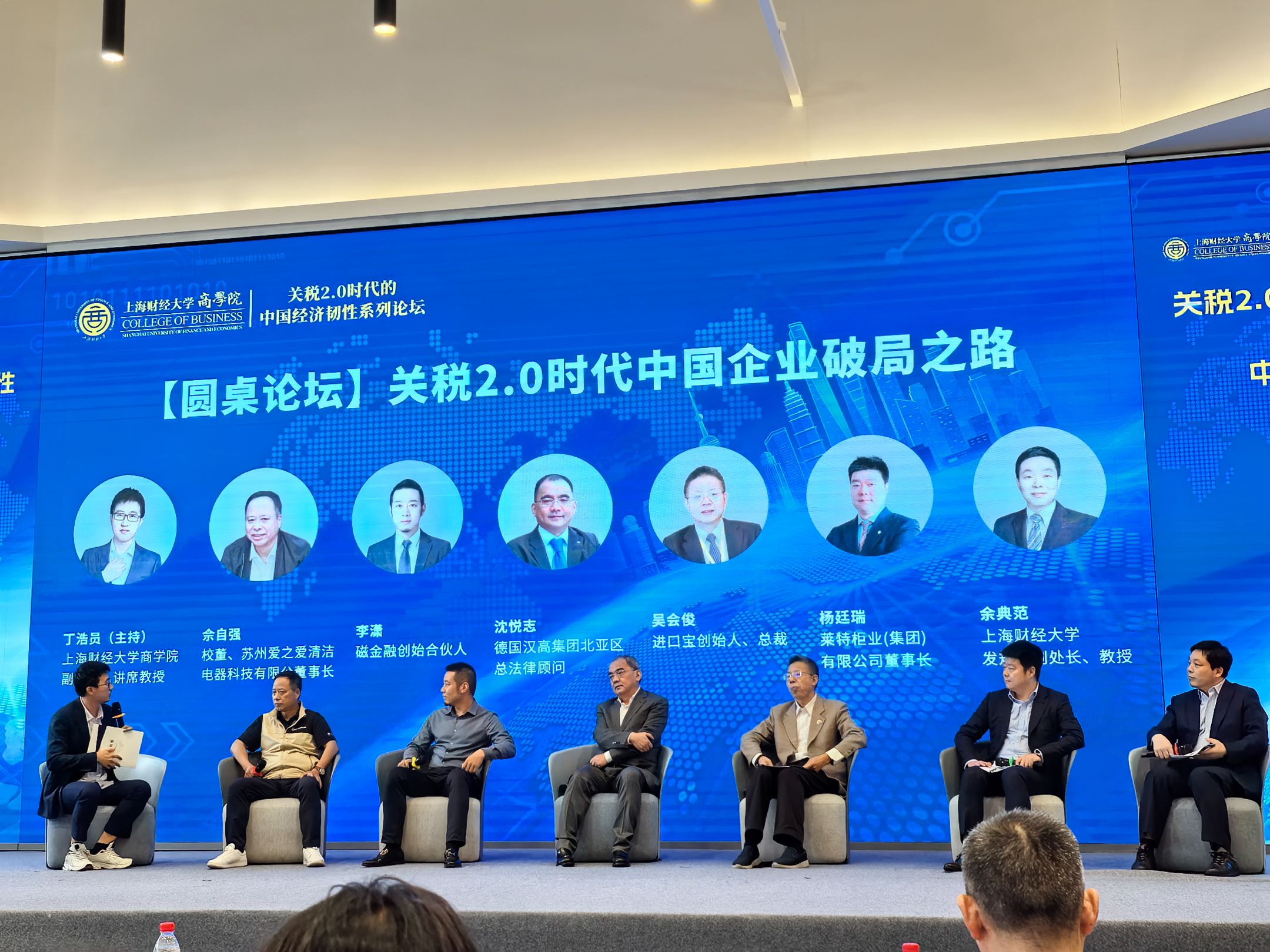
罗志松:企业应开拓非美国市场
Guo Ji Jin Rong Bao· 2025-05-26 09:37
Group 1 - The current business environment is significantly different from one or two decades ago, with intense domestic and international competition, leading to a phenomenon of "involution," which also drives economic growth [1] - China's position in global trade has notably improved, becoming the largest trading partner for over 140 countries, supported by strong manufacturing capabilities and a complete industrial chain [1] - Most companies are currently pausing orders rather than halting operations, indicating strong resilience, with no large-scale loan withdrawals or layoffs reported [1] Group 2 - Over 80% of companies are affected by Tariff 2.0, with those relying on U.S. orders facing the most significant impact; however, 18% of companies still report order growth, indicating strong competitiveness and product uniqueness [2] - The Shanghai government is forming a special task force to address Tariff 2.0, focusing on logistics and cross-border e-commerce development [2] - A public service platform is being established to support companies in expanding internationally, expected to launch in the fourth quarter, providing information and professional services [2] - Green trade is emerging as a crucial trend in global trade, with companies encouraged to participate in the formulation of international trade rules and to focus on ESG development [2]
1—4月广西经济稳定增长
Guang Xi Ri Bao· 2025-05-26 02:15
Economic Growth - The region's economy showed stable growth from January to April, with industrial production increasing significantly, as the added value of industrial enterprises above designated size grew by 8.0% year-on-year [1] - The high-tech manufacturing sector experienced remarkable growth, with the added value increasing by 28.9% year-on-year, driven by advancements in "Artificial Intelligence+" [1] Industrial and Service Sector Performance - Key sectors such as optical electronic devices, lithium-ion batteries for vehicles, new energy vehicles, service robots, and industrial robots saw substantial production increases, with year-on-year growth rates of 130%, 66.5%, 47.3%, 32.0%, and 30.6% respectively [1] - The service industry continued to recover, with high-tech service enterprises reporting an 18.7% increase in revenue year-on-year, particularly in intellectual property services and technology transfer services, which grew by 150% and 69.0% respectively [1] Consumer Market and Investment - The consumer market remained stable, with retail sales of consumer goods above designated size increasing by 3.3% year-on-year, driven by the "old-for-new" policy, particularly in communication equipment and home appliances, which saw increases of 52.8% and 38.6% respectively [2] - Fixed asset investment grew by 1.4% year-on-year, with industrial investment rising by 11.3%, accounting for 44.2% of total fixed asset investment [2] Foreign Trade and Public Budget - The total foreign trade import and export volume reached 258.41 billion yuan, a year-on-year increase of 16.9%, with significant growth in trade with ASEAN, EU, Africa, and the Middle East [2] - General public budget expenditure was 210.46 billion yuan, up 8.6% year-on-year, with 79.5% allocated to social welfare [2] Employment and Consumer Prices - The consumer price index saw a slight year-on-year decrease of 0.3%, while urban employment figures showed positive trends with 143,900 new jobs created [3]
跨境急单潮涌:美国买家不再讨价还价,中国工厂昼夜赶工
21世纪经济报道· 2025-05-26 01:58
Group 1 - The core viewpoint of the article highlights the significant reduction in bilateral tariffs between China and the United States, with the U.S. canceling 91% of additional tariffs and suspending 24% of "reciprocal tariffs," effective May 14 [1] - Following the tariff reductions, there has been a dramatic increase in trade activity, with container shipping bookings from China to the U.S. surging nearly 300% [1] - The article emphasizes the need for foreign trade enterprises to maintain a keen market sense amidst external uncertainties, indicating that a self-reform process within China's foreign trade industry has already begun [1] Group 2 - The article mentions that the recent policy adjustments have activated the previously stagnant China-U.S. trade market, leading to a surge in orders for foreign trade enterprises and full-capacity operations in factories [1] - It notes that the global shipping market is experiencing a supply-demand imbalance, with prices soaring due to increased demand for shipping services [1]

宏观深度:关税冲击、内需缓冲与政策应对
财信国际经济研究院· 2025-05-25 08:05
Group 1: Tariff Impact - The tariffs may lead to a GDP decline of 0.6-1.4 percentage points in 2025[2] - Exports to the US are expected to shrink by 40-80%, resulting in a 6-12% drop in overall exports[10] - Employment is projected to decrease by approximately 4.5 million jobs due to reduced exports[16] Group 2: Domestic Demand Buffer - In an optimistic scenario, domestic demand could offset about 1 percentage point of the growth gap[3] - Manufacturing investment is expected to decline by 2.0-3.5 percentage points due to tariff impacts[31] - Government consumption is anticipated to increase GDP by approximately 1 percentage point, driven by counter-cyclical policies[42] Group 3: Policy Recommendations - It is suggested to increase fiscal reserves by 800 billion yuan to counteract the growth gap[4] - Strengthening the stock and real estate markets is recommended to leverage wealth effects for economic circulation[4] - Accelerating supply-side reforms in the service sector is crucial to unlock potential[4]
中美贸易90天窗口期,中国港口忙起来
Huan Qiu Shi Bao· 2025-05-23 22:53
Core Insights - The recent pause in tariffs between China and the U.S. has created a valuable "foreign trade window" for businesses, leading to a surge in demand for shipping and logistics services [1][10][12] - Companies are experiencing a significant increase in orders, with some reporting a 30% rise in order volume since the trade talks [11][19] - The logistics and shipping sectors are particularly busy, with container bookings from China to the U.S. increasing by nearly 300% in a recent week [4][10] Shipping and Logistics - Shipping companies are adjusting their capacities to meet the rising demand, with some reporting a doubling of bookings for freight from China to the U.S. [1][4] - The Ningbo-Zhoushan Port is experiencing a busy period, with a reported throughput of 998,000 standard containers in April, reflecting a year-on-year increase of 5.6% [4][19] - Freight rates for shipping to the U.S. have surged, with costs for the West Coast reaching approximately $6,000 per standard container and the East Coast around $7,000, both doubling from earlier this year [6][8] Export Trends - U.S. retailers are actively seeking to replenish inventory ahead of the holiday season, with a notable increase in inquiries for products from China [10][11] - Various sectors, including toys, clothing, and food products, are seeing a rise in orders as businesses aim to capitalize on the temporary tariff relief [10][11] - Companies are reporting tight shipping space, with some logistics firms experiencing a backlog in shipping requests [6][10] Market Sentiment - Many Chinese exporters are optimistic about the U.S. market, with expectations of continued demand despite the uncertainty surrounding future tariffs [15][19] - The sentiment among exporters is that the trade relationship will improve, as both sides recognize the mutual benefits of trade [15][20] - Companies are exploring new markets and diversifying their export strategies to mitigate risks associated with tariffs [19][20]
靠AI逃离苦旅的外贸人
3 6 Ke· 2025-05-23 11:26
Core Insights - The article highlights the transformative impact of AI on the foreign trade industry, showcasing how AI can facilitate significant transactions and streamline operations [1][3][17] Group 1: AI's Role in Foreign Trade - AI has enabled a $20 million order to be secured without human intervention, demonstrating its efficiency in handling customer inquiries and transactions [1][3] - The use of AI digital assistants allows businesses to overcome traditional barriers such as language, time zones, and cultural differences, significantly improving customer engagement [3][4][20] - AI-driven systems have increased email open rates to 70% and tripled inquiry conversion rates compared to traditional methods [8][10] Group 2: Challenges in Traditional Foreign Trade - Traditional foreign trade is fraught with challenges including language barriers, high customer acquisition costs, and complex logistics, which have historically made it a difficult endeavor [4][6] - The reliance on human experience for decision-making in foreign trade has led to inefficiencies and risks, such as inventory mismanagement [6][13] Group 3: Efficiency Gains from AI - AI enhances operational efficiency by automating repetitive tasks, allowing human workers to focus on higher-value activities [7][8] - The cost of producing marketing content has decreased by over 99.5% due to AI, enabling faster and more cost-effective product promotion [12] - AI systems can analyze vast amounts of data to provide insights for better decision-making, improving the accuracy of inventory and production planning [15][21] Group 4: The Future of Foreign Trade with AI - The integration of AI in foreign trade is not a replacement for human expertise but rather a tool that amplifies traditional strengths, emphasizing the need for skilled professionals who understand both trade and AI [18][21] - Building long-term relationships and trust remains crucial in foreign trade, as AI cannot replace the human element in business interactions [20]