
人工智能产业

Search documents
吴晓波发表《AI闪耀中国》
Huan Qiu Wang Zi Xun· 2025-12-30 03:13
Group 1 - The core viewpoint of the article emphasizes that China, leveraging its largest manufacturing capacity and application market, is focusing on open-source large models and the industrial application of AI from "1 to N" [3] - AI multimodal technology is disrupting the content industry, with AI's value being realized in real-world "scenarios" that help traditional industries reshape their business models [3] - The era of artificial intelligence belongs to those who are quick to adopt and effectively use AI tools, with intelligent agents becoming efficiency pioneers for individuals [3] Group 2 - China occupies 65% of the global supply chain for embodied intelligence, driven by long-term accumulation in smart hardware, which is accelerating the formation of a comprehensive robot ecosystem from industrial collaboration to home services and specialized applications [3] - China is defining Industrial 5.0, centered around "machine vision and deep learning, large models and intelligent agents, embodied intelligence, and full-process AI management" [3] - Among the 189 global "lighthouse factories," China holds 79, accounting for 42% of the total [3] Group 3 - The use of intelligent agents in e-commerce is transforming product selection and marketing, allowing good products to emerge and consumers to regain sovereignty, leading to a "flow equity" shift [3] - The proliferation of AI tools is giving rise to "super individuals," and to support the AI entrepreneurship wave, a "Navigating and Running" plan has been initiated [3]

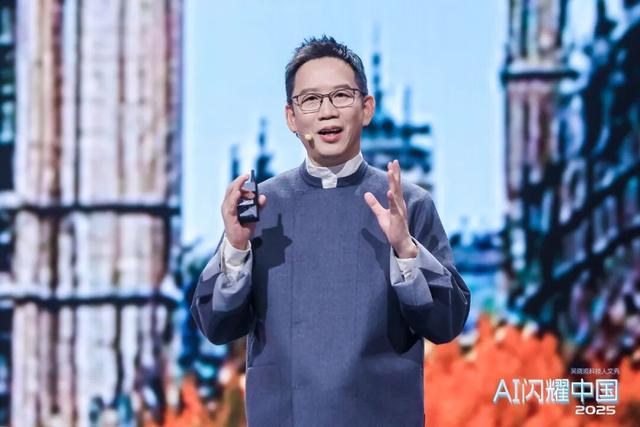
4000人涌入现场 听吴晓波说AI:十年泡沫期已来 可“泡沫是我们的热情,我们的钱”
Mei Ri Jing Ji Xin Wen· 2025-12-29 14:50
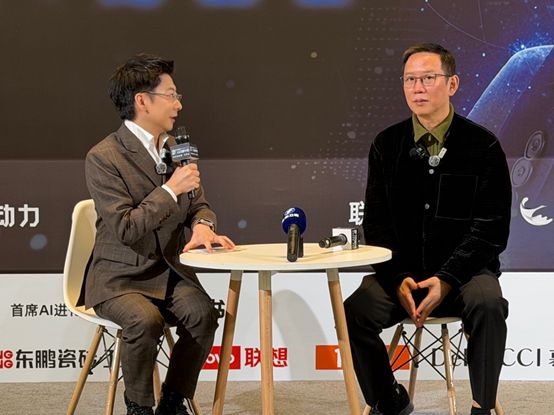
12月28日晚,超过4000人涌入厦门国博会议中心,他们都是赶来看优酷人文主办的《AI闪耀中国 2025 吴晓波科技人文秀》的观众。 今年,吴晓波将"AI"(人工智能)定为核心议题,大秀也是由一首女孩与机器人合奏的钢琴曲《花开在 眼前》开幕。吴晓波说:"一个是硅基人类,一个是碳基人类,他们用双手弹奏同一首曲子,这样的场 景指向一个正在发生的未来。" 演讲通过优酷全程直播。出乎意料的是,原本设想的是科技话题受众以男性为主,但预约数据显示,女 性观众占比不低。 正式演讲前,吴晓波接受了每日经济新闻等媒体采访。他反复强调一个判断:AI已不再是遥远的技术 概念,它正在渗透日常生活和产业现场。 他深入分析了AI与国家、产业乃至每个人的关系。吴晓波还感叹:"晚会有很多年轻观众在线。原来说 世界属于'90后''00后',现在看来,似乎是真的了。" 第四次工业革命发生了 "2023年,ChatGPT3.5出来后,人类实际上就进入到了新的人工智能纪元。"吴晓波表示。 两年过去,AI不再只是实验室里的模型或媒体标题里的热词。他看到:"在今天,人工智能距离我们的 生活仅仅只有1米之远了,我们每个人已经在使用AI,或者说我们已经在被 ...
多部门发声,2026年要做这些事
财联社· 2025-12-29 11:43
Core Viewpoint - The article outlines the key tasks and changes planned for 2026 in various sectors, including finance, employment, consumption, investment, urban development, and technological innovation, as part of China's strategic planning for economic growth and stability. Group 1: Fiscal Policy - In 2026, a more proactive fiscal policy will be implemented, focusing on expanding fiscal expenditure, optimizing government bond tools, enhancing transfer payment efficiency, and improving expenditure structure [2][3] - The fiscal policy aims to promote resident employment and income growth by coordinating various funds to support job stability and entrepreneurship [3] Group 2: Consumption and Investment - The government will support consumption through initiatives like the "old for new" program, optimizing subsidy standards, and promoting service consumption [4] - Measures will be taken to stabilize investment, including increasing central budget investments and utilizing various government investment funds to enhance investment efficiency [5] Group 3: Urban Development - High-quality urban renewal will be prioritized, focusing on community improvements, public space enhancements, and safety projects [6] Group 4: Industry and Technology - There will be an emphasis on enhancing industrial technological innovation capabilities, addressing core technologies, and developing a national manufacturing trial service network [9] - The government plans to cultivate emerging and future industries, including AI, integrated circuits, and biotechnology, while supporting innovation in sectors like 6G technology [10] Group 5: Infrastructure and Energy - The construction of cross-regional and cross-basin transportation corridors will be advanced to support national strategic goals [11] - The energy sector will see an increase in renewable energy supply, with significant additions in wind and solar power capacity, and a focus on future energy industries like hydrogen and nuclear energy [12] Group 6: Social Welfare - The implementation of direct disbursement of maternity benefits to insured individuals will be pursued, along with expanding coverage for flexible employment and migrant workers [13] - The real estate market will be stabilized by utilizing existing housing stock for affordable housing and other social needs [14]

春季行情或提前启动,三大方向值得关注 | 一财号每周思想荟(第48期)
Sou Hu Cai Jing· 2025-12-26 02:09
Group 1: Spring Market Outlook - The spring market is expected to start early due to three seasonal positive factors: policy expectation window, friendly liquidity environment, and performance data vacuum period [1][2] - The policy expectation window is characterized by the transition from the Central Economic Work Conference in December to the National People's Congress in March, providing a rich imagination space for market participants [1] - The liquidity environment at the beginning of the year is typically favorable, with increased credit issuance by banks and potential new capital inflows from institutional investors and households [1] - The first quarter is a performance data vacuum period, allowing the market to focus on medium to long-term industry trends and profit recovery points without short-term performance constraints [1] Group 2: Investment Themes - Three main investment themes are highlighted: technological innovation and self-sufficiency, cyclical recovery and supply-demand improvement, and balanced allocation of undervalued stocks with stable performance [2] Group 3: Urban-Rural Income Growth Plan - The "Urban-Rural Resident Income Growth Plan" aims to enhance domestic demand and build a strong domestic market, marking a shift from principle-based guidance to systematic and actionable promotion [3][4] - The plan will focus on five dimensions: employment support, income channel expansion, urban-rural balance empowerment, distribution mechanism optimization, and policy coordination [3] - The goal is to create an olive-shaped distribution pattern that allows urban and rural residents to share development benefits, thereby injecting lasting momentum into high-quality economic development [4] Group 4: Crisis Management in Brand Communication - The traditional logic of brand public relations is becoming ineffective in the current super opinion environment, where information spreads rapidly and crisis management becomes more complex [6][7] - Brands must adapt to the new ecosystem by restructuring crisis management logic, respecting subculture, and building a transparent and resilient brand trust system [7] Group 5: AI and Economic Impact - The potential for AI to drive high income for all is discussed, with a focus on the need for national coordination and institutional guarantees to achieve this goal [8][9] - While AI can optimize production processes and enhance service efficiency, the current economic system still requires individual effort and contribution for income generation [9] - The long-term vision of a highly developed labor force supported by AI is acknowledged, but the immediate focus should remain on adapting to changes brought by AI while ensuring personal survival [9]
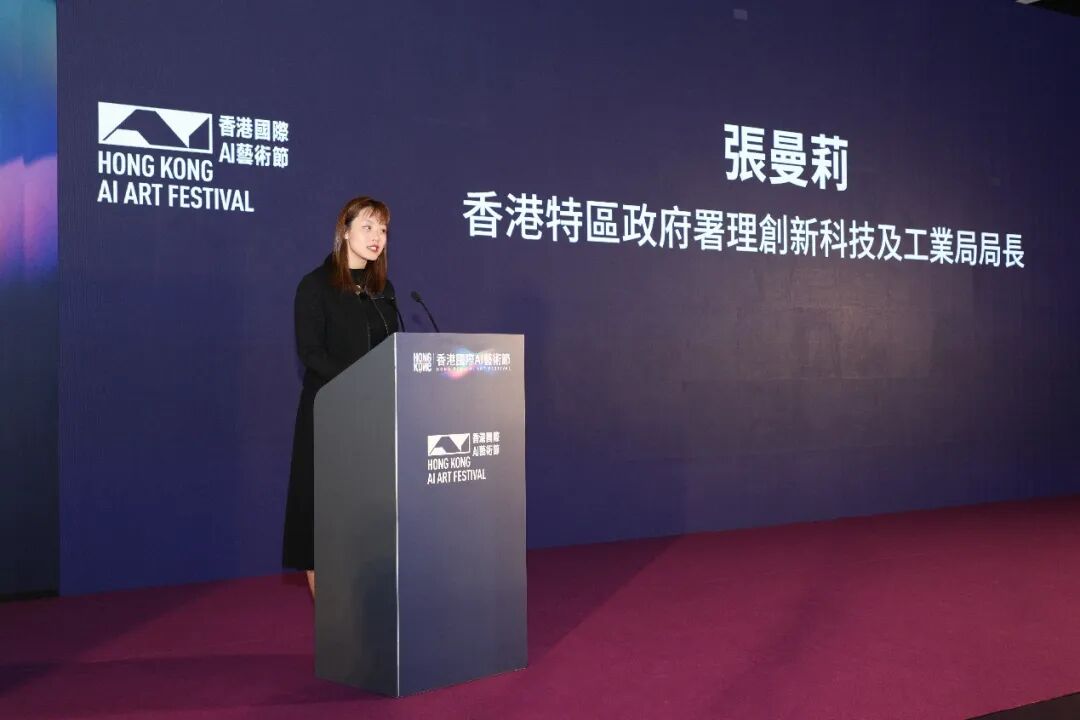
香港创科局张曼莉最新发声!
Zhong Guo Ji Jin Bao· 2025-12-20 06:26
【导读】香港创科局张曼莉:香港广纳人才布局 AI 生态圈,做好"超级联系人""超级增值人" 在12月19日开幕的香港国际AI艺术节,香港特区政府署理创新科技与工业局局长张曼莉致辞时表示,当前,全球正迈入人工智能和机器人技术为核心驱 动的新阶段。作为国际创新科技枢纽,香港高度重视这一趋势,并积极地推动AI与机器人产业在香港扎根成长壮大发展。 张曼莉同时指出,香港国际AI艺术节既让AI等科学技术拥有了人文表达的温度,也让文化艺术获得了科技赋能的新活力,完美诠释了"以创新促进高质量 发展"的内涵。 香港国际AI艺术节是香港 发挥创科优势、服务国家文化软实力范例 张曼莉指出,香港特区行政长官李家超今年的《施政报告》将AI提升为香港的关键产业,并将"AI产业化、产业AI化"作为核心策略,推动技术创新与产 业应用深度融合。香港国际AI艺术节"感能涌现"的核心命题,与这一部署高度契合。 张曼莉认为,本届国际AI艺术节正是推动香港AI产业发展的生动实践,加上国际AI艺术节有全球首个以艺术为核心叙事的"机器人嘉年华",亦有"香港AI 科普周"同步举行,既让大众直观感受AI的创意魅力,更为青少年播撒创新种子,助力香港培养更多未来 ...
多省份陆续公布地方版“十五五”规划建议 产业结构向“新”向“智”高质量发展
Yang Shi Wang· 2025-12-19 08:27
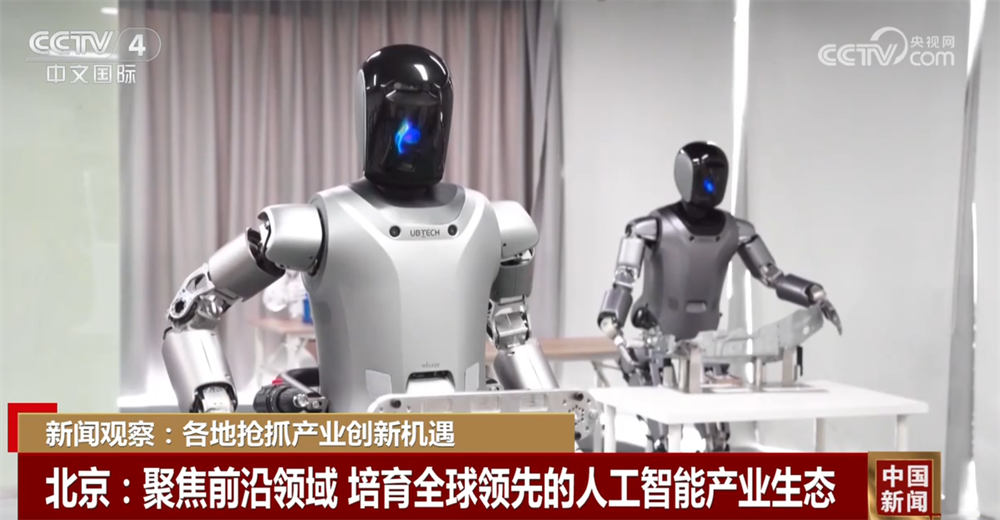
Core Insights - The "14th Five-Year Plan" emphasizes accelerating high-level technological self-reliance and the integration of technological and industrial innovation [1] - Various provinces are unveiling local versions of the "14th Five-Year Plan," focusing on cultivating new productive forces and detailed industrial innovation [1] Group 1: Strategic Focus Areas - Multiple regions are prioritizing cutting-edge fields such as artificial intelligence, quantum technology, and biomanufacturing, with significant projects being planned [1] - Beijing aims to cultivate a leading global AI industry ecosystem, focusing on high-end chips and foundational software [1] - Zhejiang is working to develop emerging pillar industries, accelerating clusters in AI, aerospace, and biomedicine [1] - Guangdong plans to create a high-tech, high-growth, large-scale industrial cluster around "AI + Robotics," with Shenzhen's "Robot Valley" already established as a complete ecosystem [1][4] Group 2: Policy and Industry Support - The Greater Bay Area has developed differentiated policy matrices, with Shenzhen focusing on "complete machines + chips" and Guangzhou on "robots + application scenarios," supported by provincial demonstration industry funds [6] - The integration of these policies is expected to comprehensively support industrial development [6] Group 3: Resource Allocation and Competitive Advantage - Regions are targeting national strategic needs to form differentiated competitive advantages, such as Inner Mongolia's goal to become the largest rare earth materials base and Guizhou's focus on computing power industries [8] - Hainan is enhancing its innovation capabilities in sectors like seed industry, deep-sea, and aerospace [8] Group 4: Comprehensive Development Framework - There is a consensus on building a full-chain development system from basic research to technology breakthroughs and industrial clustering to foster new productive forces and promote high-quality industrial chain development [11] - Shandong is implementing a ten-year action plan to increase investment in basic research, while Jiangsu is pushing for breakthroughs in key technologies in integrated circuits and biomanufacturing [11] Group 5: Economic Transition and Future Roadmap - The "14th Five-Year Plan" period is seen as a critical five years for achieving socialist modernization, with the development of emerging industries being the foundation for high-quality economic growth and the transformation of old and new driving forces [13] - Future development roadmaps are becoming clearer, indicating a significant trend towards the transformation of industrial structures to be more "new" and "intelligent" [13]
重磅刷屏!最新解读,信息量很大
中国基金报· 2025-12-15 00:57
Core Viewpoint - The Central Economic Work Conference emphasizes a more proactive fiscal policy and moderately loose monetary policy to stabilize the economy and promote high-quality development, aligning with the goals of the 14th Five-Year Plan [2][5][11]. Group 1: Positive Signals from the Conference - The conference released three major positive signals: strong policy continuity with a focus on "more proactive fiscal policy + moderately loose monetary policy," highlighting the importance of stable expectations; a focus on high-quality development emphasizing "stability while seeking progress and improving quality and efficiency"; and a targeted approach to key areas, reaffirming the dominance of domestic demand and risk prevention [5][7][8]. - The emphasis on "domestic supply being strong while demand is weak" indicates a shift in focus compared to previous years, addressing the need to rectify "involutionary competition" [6][7]. Group 2: Economic Work Focus - The economic work for the coming year will prioritize structural optimization, with policies designed to effectively connect short-term counter-cyclical measures and medium- to long-term cross-cyclical strategies [5][9]. - The conference introduced the concept of "improving quality and efficiency," marking a shift from quantity expansion to structural optimization, which is essential for sustainable development [10][11]. Group 3: Fiscal and Monetary Policy Coordination - The expectation for fiscal policy includes maintaining a deficit ratio around 4% and expanding special bond quotas to approximately 5 trillion yuan, while monetary policy should focus on maintaining ample liquidity and directing structural tools towards innovation and consumption [12][13]. - The anticipated coordination between fiscal and monetary policies aims to lower financing costs for the real economy and enhance policy effectiveness through a combination of existing and new policies [13][14]. Group 4: Expanding Domestic Demand - The conference places "expanding domestic demand" as the top priority, emphasizing the need for consumption to drive economic growth, supported by income increases and improved public services [15][16]. - Key strategies for expanding domestic demand include optimizing income distribution, enhancing public service guarantees, and fostering a favorable environment for consumption [18][19]. Group 5: Capital Market's Role in Innovation - The capital market is expected to play a crucial role in supporting innovation by providing financing, pricing, and merger functions, particularly in emerging sectors such as digital economy, artificial intelligence, and advanced manufacturing [20][21]. - The focus on "artificial intelligence +" and other strategic emerging industries highlights the need for a robust capital market to facilitate the growth of new economic drivers [22][23]. Group 6: Addressing Competition and Risk - The conference emphasizes the need to address "involutionary competition" and improve the quality of small financial institutions, aiming for a more efficient and fair market environment [24][25]. - Strategies for risk management include targeted measures to address risks in key areas, such as real estate and local government debt, while maintaining a balance between growth and risk prevention [25][26]. Group 7: Opportunities in International Cooperation - The conference highlights opportunities in digital trade, green energy, and high-end manufacturing as key areas for international cooperation, which are expected to open up investment opportunities in related sectors [27][28]. - The shift towards a rules-based approach in international trade and cooperation is anticipated to enhance the competitiveness of domestic companies in global markets [29][30].

中央经济工作会议在北京举行 “十五五”开局之年中国经济怎么干?
Yang Guang Wang· 2025-12-12 11:55
央广网北京12月12日消息(记者张棉棉 李思默 王泽华)据中央广播电视总台中国之声报道,中央 经济工作会议12月10日至11日在北京举行。会议指出,今年是很不平凡的一年,经济社会发展主要目标 将顺利完成。我国经济顶压前行、向新向优发展,现代化产业体系建设持续推进,改革开放迈出新步 伐,重点领域风险化解取得积极进展,民生保障更加有力。 会议认为,通过实践,我们对做好新形势下经济工作又有了新的认识和体会:必须充分挖掘经济潜 能,必须坚持政策支持和改革创新并举,必须做到既"放得活"又"管得好",必须坚持投资于物和投资于 人紧密结合,必须以苦练内功来应对外部挑战。 会议强调,做好明年经济工作,要坚持稳中求进工作总基调,更好统筹国内经济工作和国际经贸斗 争,更好统筹发展和安全,实施更加积极有为的宏观政策,增强政策前瞻性针对性协同性,持续扩大内 需、优化供给,做优增量、盘活存量,因地制宜发展新质生产力。 明年将纵深推进全国统一大市场建设,持续防范化解重点领域风险,着力稳就业、稳企业、稳市 场、稳预期,推动经济实现质的有效提升和量的合理增长,保持社会和谐稳定,实现"十五五"良好开 局。2026年中国经济怎么干? 会议认为, ...
实施城乡居民增收计划、降准降息等工具灵活高效运用、增加普通高中学位……深度解读中央经济工作会议
Mei Ri Jing Ji Xin Wen· 2025-12-12 10:01
Group 1 - The core viewpoint of the Central Economic Work Conference emphasizes the need to fully tap economic potential, combining policy support with reform and innovation, and integrating investment in both physical assets and human capital [2][3] - The fiscal policy will shift from increasing the fiscal deficit rate to maintaining necessary levels of fiscal deficit, total debt, and overall expenditure, while enhancing fiscal management and optimizing expenditure structure [23][24] - The monetary policy will focus on promoting stable economic growth and reasonable price recovery, utilizing various tools such as reserve requirement ratio cuts and interest rate reductions to maintain liquidity [29][30] Group 2 - A plan to increase urban and rural residents' income will be implemented, alongside actions to boost consumption and enhance the supply of quality goods and services [11][22] - The real estate market will be stabilized through targeted measures, including encouraging the acquisition of existing housing for affordable housing purposes and reforming the housing provident fund system [45][48] - The energy sector will focus on developing a new energy system, expanding green electricity applications, and implementing comprehensive waste management actions [51][54] Group 3 - The conference outlines eight key tasks for economic work in the coming year, including prioritizing domestic demand, driving innovation, and enhancing high-quality development [10] - The emphasis on a dual circulation development pattern highlights the importance of domestic markets while maintaining a balanced approach to external trade [19][44] - The need for a robust regulatory framework for emerging technologies, particularly in artificial intelligence, is underscored to ensure safety and ethical standards [35][41]

一图看懂|2025年中央经济工作会议,与去年相比有这些新动向
Xin Jing Bao· 2025-12-12 01:53
新京报贝壳财经记者对比往年内容发现,本次会议在政策取向上突出"稳中求进、提质增效",并提出"发挥存量政策和增量政策集成效应"。会议强调,要 着力稳就业、稳企业、稳市场、稳预期,传递出明年经济工作将更注重结构优化、风险化解与民生实质改善的新信号。 新京报记者 任娇 董怡楠 任婉晴 编辑 陈莉 中央经济工作会议12月10日至11日在北京举行。会议指出,我国经济发展中老问题、新挑战仍然不少,外部环境变化影响加深,国内供强需弱矛盾突出, 重点领域风险隐患较多。这些大多是发展中、转型中的问题,经过努力是可以解决的,我国经济长期向好的支撑条件和基本趋势没有改变。要坚定信心、 用好优势、应对挑战,不断巩固拓展经济稳中向好势头。 | | 财政与金融的配合,以政府投资 央预算内投资规模,优化实施 | | | --- | --- | --- | | 台湾 | 有效带动社会投资。及早谋划 | "两重"项目,优化地方政府专 | | | "十五五"重大项目。大力实施 | 项债券用途管理,继续发挥新型 | | | 城市更新。实施降低全社会物流 | 政策性金融工具作用,有效激发 | | | 成本专项行动。 | 民间投资活力。高质量推进城市 ...
