商业火箭

Search documents
如何看待当前军贸-商业航天的双轮驱动行情
2026-01-08 16:02
Summary of Key Points from Conference Call Records Industry Overview - The conference call discusses the military trade and commercial aerospace sectors, highlighting a significant increase in military spending proposed by the U.S. President, expected to reach $1.5 trillion by FY 2027, a 50% increase from FY 2026, indicating a historic turning point in global military spending and a surge in demand for military equipment [1][3][5]. Core Insights and Arguments - **U.S. Military Spending**: The proposed military budget increase is expected to stimulate U.S. and overseas defense stocks, indicating a substantial rise in global military equipment demand [1][3]. - **International Tensions**: Ongoing geopolitical instability, including U.S. actions in Venezuela and Greenland, as well as tensions in the Middle East, are driving countries to increase their military budgets, leading to a projected surge in military equipment demand [1][5]. - **China's Position in Global Military Trade**: China has significantly enhanced its position in the global military trade market, leveraging its political stance, weaponry capabilities, and cost-effectiveness, which is accelerating demand for Chinese military products [1][8]. - **Investment Recommendations**: Two categories of military assets are recommended for investment: strategic assets like AVIC and Shenyang Aircraft, and low-cost, sustainable order assets like Guangdong Hongda and Aerospace South Lake, which have high order certainty [1][9]. Commercial Aerospace Insights - **Space Investment Boom**: The global space investment trend, ignited by SpaceX, is supported by breakthroughs in domestic reusable rocket technology, national aerospace strategies, and local government policies, with 2026 anticipated as a pivotal year for space investments [1][10]. - **SpaceX Supply Chain**: The SpaceX supply chain is highlighted as a key area of focus, with significant potential for suppliers like Xinwei Communication, and the importance of space photovoltaics for supporting communication satellites and the Starship project [3][13][14]. Market Performance - **Defense Sector Performance**: The defense sector has seen a 10% increase year-to-date, with strong performances from commercial aerospace and military trade stocks, which account for 20-25% of total A-share trading volume [2]. - **Global Military Investment Trends**: The increase in U.S. military spending is positively impacting capital markets, with companies like Lockheed Martin and Raytheon experiencing stock price surges [4]. Future Outlook - **2026 Military Sector Predictions**: The military sector is expected to experience a significant rebound in 2026, driven by military trade and commercial aerospace, with a recommendation to monitor related ETF inflows for investment opportunities [17]. - **Satellite Industry Trends**: The satellite industry is facing cost reduction pressures, but the demand for carbon fiber is rising, indicating a potential value reassessment in the industry [3][16]. Additional Considerations - **Geopolitical Risks**: The increasing geopolitical risks are expected to enhance the long-term growth prospects of military-related companies, making them attractive investment opportunities [6][9]. - **Domestic Manufacturing Challenges**: The U.S. government is addressing domestic manufacturing capacity issues by urging defense contractors to reinvest profits into production capabilities [7]. This summary encapsulates the key points from the conference call, providing a comprehensive overview of the military trade and commercial aerospace sectors, their current performance, and future outlooks.


中国商业火箭的现状与展望
2026-01-08 02:07
Summary of Key Points from the Conference Call on China's Commercial Rocket Industry Industry Overview - The conference discusses the current status and future prospects of the commercial rocket industry in China, emphasizing the significant demand for large liquid launch vehicles capable of carrying over 10 tons, driven by satellite internet projects [1][4]. Core Insights and Arguments - **Regulatory Framework**: The new policies from the Sci-Tech Innovation Board require companies to demonstrate reusable technology and successful launches of medium to large liquid launch vehicles [1][3]. - **Market Demand**: The commercial space market in China is characterized by a high demand for satellite launches, with projections of 200-400 launches annually over the next 20 years, leading to a market size exceeding 100 billion RMB [1][4]. - **Global Comparison**: In 2025, SpaceX's Falcon 9 is expected to complete 165 launches, accounting for 90% of the global payload weight, highlighting the disparity in launch capabilities between China and the U.S. [1][5]. - **Cost Reduction Goals**: The company aims to reduce the cost of launching payloads to below 10,000 RMB per kilogram, significantly cheaper than the Falcon 9 [1][6]. Development Goals of the Company - The company, established in 2022, aims to develop medium to large liquid launch vehicles with a base capacity of 15 tons, upgradeable to 25 tons, and to become the lowest-cost rocket manufacturer globally [6]. Technical Innovations - **Recovery Technology**: The company proposes an innovative recovery method that increases recovery rates to approximately 85% and shortens assembly cycles, facilitating rapid and frequent launches [8]. - **Fuel and Material Choices**: The discussion includes the pros and cons of different rocket fuels and materials, emphasizing the need for a balance between cleanliness, density, and cost [7]. Challenges and Pain Points - The primary challenge in the commercial rocket industry is the manufacturing process, which has not kept pace with the increasing demand for frequent and cost-effective launches [10]. - Key technical challenges for reusable rockets include thrust control, guidance, and thermal protection during re-entry, which are more complex than those faced by traditional expendable rockets [15]. Future Outlook - The year 2026 is anticipated to be pivotal for China's space industry, with potential breakthroughs in reusable rockets and commercial listings [11][12]. - The U.S. market, particularly SpaceX's planned IPO in 2027, is expected to boost confidence in the global commercial space sector [13][14]. Additional Considerations - The conference highlights the importance of product competitiveness in the commercial space market, suggesting that the ability to provide cost-effective and reliable launch services will determine success [14]. - Despite potential price reductions due to technological advancements, the complexity of rocket systems means that costs will not decrease to the level seen in the electric vehicle market [16][17].
蓝箭航天正式冲刺“商业火箭第一股” 行业商业化拐点何时到来?
Xin Hua Cai Jing· 2026-01-07 06:03
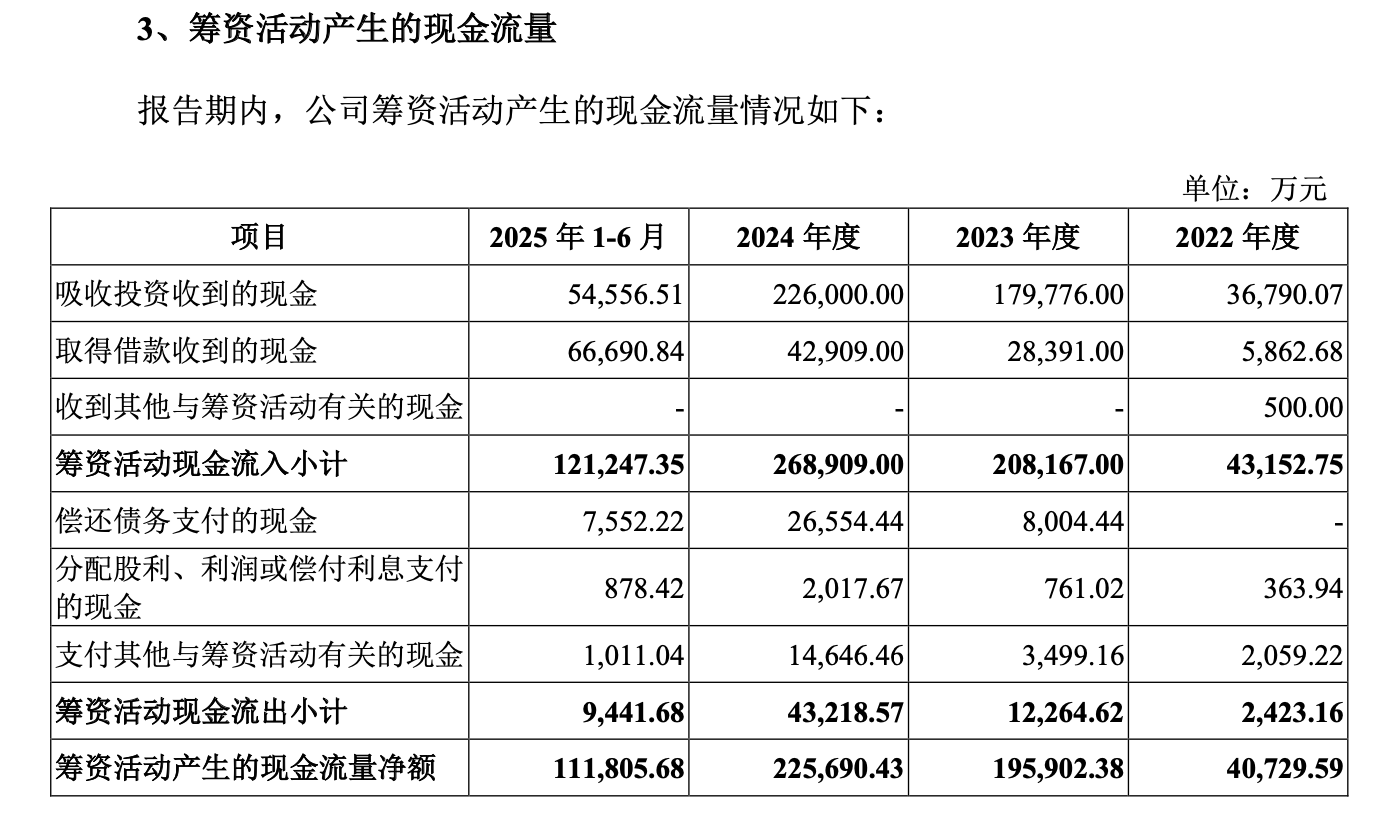
Core Viewpoint - Blue Arrow Aerospace is set to launch its IPO on the Sci-Tech Innovation Board, aiming to raise 7.5 billion yuan, marking a significant step towards becoming the "first commercial rocket stock" in China [1] Industry Overview - The commercial rocket industry is experiencing a development opportunity driven by policy benefits, increased capital confidence, technological breakthroughs, and surging market demand [1] - The market demand for commercial rockets is clear and urgent, with expectations for the industry to enter a period of large-scale realization as technology and policies mature [1] - The commercial space sector is characterized by high risk, high return, high investment, high technology, and long cycles, necessitating substantial long-term funding [2] Financial Highlights - In the first half of 2025, Blue Arrow Aerospace received cash inflows from investment totaling approximately 54.56 million yuan, with total cash inflows from financing activities reaching about 121.25 million yuan [3] - The company has seen significant increases in cash inflows from equity financing in 2023 and 2024, indicating strong investor interest [2][3] Market Dynamics - The Shanghai Stock Exchange has introduced new listing rules for commercial rocket companies, providing institutional support for firms that are not yet profitable but possess core technologies [4] - The commercial space sector is expected to be a hot investment theme in 2025, with significant stock price increases observed in related companies [4] Policy Support - The Chinese government has emphasized the acceleration of the commercial space industry in its work reports for 2024 and 2025, indicating strong policy backing [5] - The establishment of a dedicated regulatory body for commercial space by the National Space Administration marks a significant step in the industry's development [5] Technological Advancements - Reusable rocket technology is seen as a critical path for reducing launch costs, with expectations for significant advancements in 2026 [7] - Blue Arrow Aerospace's recent launches indicate progress in technology validation, although challenges remain in achieving successful recovery of rocket stages [7] Commercialization Challenges - Blue Arrow Aerospace has reported increasing revenues but also significant net losses, primarily due to high R&D expenditures and the early stage of its commercial launch services [8] - The company aims to achieve revenues of at least 500 million yuan in 2026 and 1 billion yuan in 2027, reflecting ambitious growth targets [8] Valuation Insights - Despite not yet being profitable, Blue Arrow Aerospace's valuation is estimated at 75 billion yuan, driven by its technological capabilities and market potential [9] - The valuation of commercial rocket companies is increasingly based on technological barriers and market opportunities rather than current profitability [9]

国内首家商业火箭公司将易主
3 6 Ke· 2026-01-07 01:00
据悉,科工火箭成立于2016年,是我国首家采用商业模式开展研发应用的火箭公司,注册资本约8.59亿 元。本次转让前,航天三江集团(航天科工集团全资子公司)持有科工火箭56.43%股权。转让 29.5904%股份后,其持股比例将降至26.84%,控股权随之转移。 科工火箭的整体估值约为112亿元。交易完成后,这家由央企孵化的商业航天领军企业将失 去"航天科工"的身份。 国内首家商业火箭公司即将易主。北京产权交易所信息显示,航天科工火箭技术有限公司(简称"科工 火箭")29.5904%的股权正以约32.99亿元的底价挂牌转让,转让方为其控股股东中国航天三江集团有限 公司。 以此计算,科工火箭的整体估值约为112亿元。交易完成后,这家由央企孵化的商业航天企业将失去"航 天科工"的身份。 这意味着,需要一个单一买方来完成这笔超过30亿的交易。 《科创板日报》记者注意到,市场上有不少传闻将买方指向了四川国资。2025年9月,全国公共资源交 易平台(四川省)挂出了一则公告,称四川省科技创新投资有限责任公司出于经营业务实际需求,现需 选聘财务顾问中介机构提供某商业火箭发射项目并购的财务顾问服务。 四川是中国航天重要战略基地 ...
金风科技“炼金术”
阿尔法工场研究院· 2026-01-07 00:04
Core Viewpoint - The article discusses the recent surge in stock prices of Goldwind Technology (金风科技) driven by the excitement surrounding the IPO of Blue Arrow Aerospace (蓝箭航天), highlighting the strategic investments and potential synergies between the two companies in the clean energy and aerospace sectors [4][19]. Group 1: Investment and Financial Performance - Goldwind Technology's stock price reached a historical high, with a nearly 21% increase on the first trading day of 2026 in Hong Kong, attributed to the IPO acceptance of Blue Arrow Aerospace [4]. - Blue Arrow Aerospace aims to raise approximately 7.5 billion RMB through its IPO, with an estimated valuation of 75 billion RMB, significantly benefiting Goldwind's investment, which has appreciated over five times since its initial investment of 500 million RMB in 2018 [8][19]. - Goldwind's investment strategy has evolved from early-stage investments to focusing on mid-to-late stage projects with clear technological paths and market prospects, reflecting a more mature investment approach [10][19]. Group 2: Strategic Synergies and Technological Innovations - The collaboration between Goldwind and Blue Arrow Aerospace highlights potential technological synergies, such as the application of aerospace lightweight carbon fiber technology in Goldwind's wind turbine blades [8]. - Goldwind is exploring the feasibility of using high-purity liquid methane produced from its green methanol and green hydrogen projects as rocket fuel, indicating a cross-industry innovation strategy [8][19]. - The investment in Blue Arrow Aerospace is seen as a strategic move to extend Goldwind's industrial capabilities and mitigate risks associated with its core wind energy business [20][22]. Group 3: Market Dynamics and Future Outlook - The wind energy sector is facing intense competition and pricing pressures, leading to a plateau in profitability for Goldwind's core business, while investment returns from ventures like Blue Arrow Aerospace are becoming increasingly significant [19][22]. - The article emphasizes the need for traditional manufacturing companies to adapt their investment strategies to navigate the challenges of low margins in manufacturing and leverage high-return opportunities in emerging technologies [22]. - Goldwind's approach to investing in hard technology sectors is positioned as a means to counterbalance the cyclical nature of its primary business, suggesting a shift towards a more diversified asset portfolio [19][22].

中国航天科技集团商业火箭公司注册资本增至13.96亿元
Zheng Quan Ri Bao Wang· 2026-01-06 13:49
(编辑 黄力) 本报讯 (记者袁传玺)天眼查工商信息显示,近日,中国航天科技集团商业火箭有限公司发生工商变更,注册资本由10亿 元增至13.96亿元。 ...

蓝箭航天IPO遭现场抽检,募资75亿押注可重复使用火箭,什么时候能盈利?
Xin Lang Cai Jing· 2026-01-06 05:32
Group 1 - Blue Arrow Aerospace Technology Co., Ltd. (Blue Arrow) is among the first batch of companies selected for on-site inspections by the China Securities Association for its IPO application on the Sci-Tech Innovation Board [2][20] - The company submitted its prospectus on December 31, 2025, aiming to become the first commercial aerospace company to list on the domestic capital market [20] - Blue Arrow plans to issue no less than 40 million shares, accounting for 10% of the total post-issue share capital, raising 7.5 billion yuan for projects focused on reusable rocket capacity and technology enhancement [20][13] Group 2 - Blue Arrow is a pioneer in the domestic liquid oxygen-methane reusable rocket sector, holding a leading position in technology and scale within the commercial rocket industry [20][21] - The company has completed 17 rounds of financing, with disclosed amounts totaling 3.5 billion yuan, and the latest round in December 2024 raised 900 million yuan from the National Manufacturing Transformation and Upgrade Fund [4][21] - The company has faced continuous losses, with revenues from 2022 to mid-2025 being 782,900 yuan, 3.9521 million yuan, 4.2783 million yuan, and 36.4319 million yuan, while net losses were 804 million yuan, 1.187 billion yuan, 876 million yuan, and 597 million yuan respectively [24][7] Group 3 - The company’s R&D expenses during the same period were 487 million yuan, 830 million yuan, 613 million yuan, and 360 million yuan, indicating a high cost structure typical of technology-intensive industries [9][27] - Blue Arrow's business model is still in its early stages, and it is expected to take at least five years to achieve profitability due to the high capital requirements and the need for reliable rocket recovery technology [21][28] - The company aims to achieve revenue of at least 500 million yuan in 2026 and 1 billion yuan in 2027, as indicated in its stock option incentive plan [28][10] Group 4 - The commercial aerospace sector in China is still developing, with Blue Arrow positioned as a key player among other companies like Tianbing Technology and Zhongke Aerospace, all of which have announced IPO guidance [34][17] - The market for low-orbit satellite networks in China remains largely untapped, with Blue Arrow expected to participate in significant satellite launch projects in the coming years [32][15] - The successful listing of Blue Arrow could set a benchmark for other companies in the commercial rocket sector, influencing their valuation and market positioning [34][17]
中国版SpaceX冲刺IPO,估值200亿,A股参投公司大涨,金风科技冲击涨停
2 1 Shi Ji Jing Ji Bao Dao· 2026-01-05 13:58
Core Viewpoint - Blue Arrow Aerospace's IPO application has been accepted, marking a significant step towards becoming China's first commercial rocket company listed on the stock market [1][5]. Group 1: IPO Details - Blue Arrow Aerospace plans to raise 7.5 billion yuan through its IPO, with 2.77 billion yuan allocated for enhancing reusable rocket production capacity and 4.73 billion yuan for improving reusable rocket technology [3]. - The IPO process has progressed rapidly, taking only five months from the start of guidance to acceptance [5]. - The company has been selected for a site inspection by the China Securities Association, which may impact its IPO timeline [5]. Group 2: Company Background - Blue Arrow Aerospace was founded in 2015 by Zhang Changwu, who has a background in finance, marking a departure from the typical model of aerospace research institutions [7]. - The company has faced challenges during its initial years due to a lack of industry infrastructure and a complex supply chain [8]. Group 3: Technological Advancements - Blue Arrow has developed a competitive edge in the liquid oxygen-methane rocket sector, which significantly reduces launch costs [9]. - The company successfully tested its 80-ton liquid oxygen-methane engine in May 2019, becoming the third in the world to complete full-system testing of a large thrust liquid oxygen-methane rocket engine [9]. Group 4: Financial Performance - Blue Arrow Aerospace has reported significant losses due to high R&D expenditures, with cumulative losses reaching 3.8 billion yuan over three and a half years [13]. - The company’s revenue from 2022 to 2025 is projected to be minimal compared to its R&D costs, which are expected to remain high as it seeks to maintain technological leadership [14]. Group 5: Market Position and Future Prospects - The company aims to capitalize on the growing demand for satellite internet services, with plans to establish production and testing bases in various locations [15]. - Blue Arrow has secured contracts with Chinese Star Network and Yuanxin Satellite for launch services, indicating its role as a key supplier in the market [15][16]. Group 6: Investment and Valuation - Blue Arrow Aerospace has attracted significant investment from various venture capital firms, with a valuation exceeding 20 billion yuan [18]. - The company has seen a shift in its funding sources from purely financial investments to strategic industrial investments, indicating strong market confidence [20][21]. Group 7: A-Share Market Impact - The acceptance of Blue Arrow's IPO has led to a surge in stock prices for several A-share companies that have invested in it, reflecting the market's optimism about the commercial aerospace sector [1][22]. - Multiple A-share companies have disclosed their investments in Blue Arrow, with varying degrees of ownership, indicating a broad interest in the company's potential [23][24].

国金证券:可回收火箭从0到1迈入黄金发展期 动力系统等组成环节有望受益
智通财经网· 2026-01-05 08:45
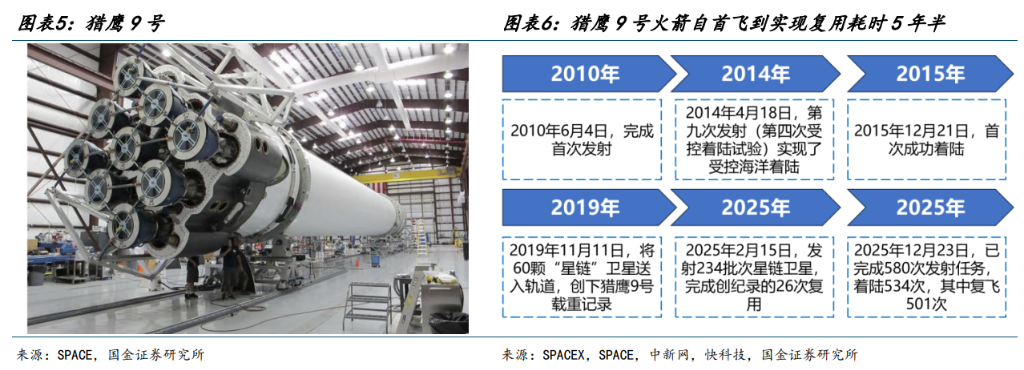
Core Insights - The report by Guojin Securities emphasizes that reusability is a key method to reduce launch vehicle costs and is crucial for overcoming bottlenecks in commercial space development [2][4] - The commercial rocket industry is entering a rapid iterative development phase, transitioning from 0 to 1, driven by the frequent launches of reusable rockets [1][4] Group 1: Reusable Rockets Development - Domestic reusable rockets are entering a phase of intensive launches, marking a new stage in low-cost exploration of commercial space [2] - The "Zhuque-3" rocket, developed by Blue Arrow Aerospace, successfully completed its maiden flight, while the Long March 12甲 rocket also attempted recovery during its first flight [2] - Current average launch costs for expendable rockets range from 110 million to 180 million yuan, while some reusable rockets are priced around 67 million USD; with full recovery, costs could drop to 2 to 5 million USD [2] Group 2: Global Competition and Cost Advantages - The Falcon 9 rocket, the world's first orbital-class reusable rocket, has completed 580 launches with a recovery success rate of 534 landings and 501 reuses [3] - Following the normalization of reusability, SpaceX's launch frequency increased significantly from 13 launches in 2019 to 138 in 2024 [3] - The launch cost for Falcon 9 is approximately 18,000 yuan/kg, and if fully reusable, it could drop to 5,000 yuan/kg, significantly lower than current operational rockets [3] Group 3: Demand from Satellite Internet Construction - The construction of satellite internet in China is accelerating, with plans to launch 44,816 satellites, leading to a projected demand for 150 commercial rocket launches per year [4] - Policy support for the commercial rocket industry is evident, with the Shanghai Stock Exchange issuing guidelines for the listing of commercial rocket companies on the Sci-Tech Innovation Board [4] - The commercial rocket industry is transitioning into a new phase of engineering and industrialization, poised for a golden development period alongside the satellite industry [4][6]

从0到1迈入黄金发展期:中国商业火箭产业链全景拆解
Hua Er Jie Jian Wen· 2026-01-05 08:34
Core Insights - China's commercial space industry is at a critical turning point similar to SpaceX in 2015, with the recent test flights of Zhuque-3 and Long March 12A marking the transition of reusable rocket technology from experimental to engineering implementation [1][2] - The opening of the fifth set of standards for the Sci-Tech Innovation Board has cleared obstacles for IPOs of rocket companies, indicating a significant market opportunity driven by the rigid demand for satellite internet and the cost revolution brought by reusable technology [1][10][13] Market Opportunity - The satellite internet construction is expected to create a trillion-dollar market, driven by the rapid deployment of satellite constellations such as GW and G60, which plan to deploy up to 44,816 satellites [1][7][9] - The annual replacement demand for nearly 9,000 satellites will create a substantial capacity gap, further fueling the demand for commercial launches [1][7] Technological Development - Reusable rocket technology is identified as the key to breaking the cost bottleneck in space transportation, with China currently in a phase similar to SpaceX's early technical ramp-up [2][18] - The recent test flights of Zhuque-3 and Long March 12A, despite not achieving complete recovery, signify the start of a concentrated exploration period for reusable rockets in China [2] Cost Advantages - The cost advantages of high-frequency reuse are significant, as demonstrated by SpaceX's Falcon 9, which has achieved a marginal reuse cost of $15 million per launch, compared to the average cost of $110 million to $180 million for expendable rockets [5] - If China's commercial rockets can achieve similar breakthroughs, launch costs could be drastically reduced, supporting the large-scale deployment of satellite internet [5] Investment Focus - Analysts suggest that investment should focus on the most valuable segments of the supply chain, particularly engine manufacturing and rocket structure, which will benefit first from high consumption before reusable technology matures [1][18] - The core components of a typical liquid rocket, such as engines and structures, account for a significant portion of hardware costs, with the first-stage engine and structure comprising 77.8% of the total [14][18] Policy and Capital Market - The improvement of policy frameworks and the opening of capital market exit channels are accelerating the transition of commercial space from a storytelling phase to a performance-driven phase [10][17] - The new IPO guidelines for the Sci-Tech Innovation Board directly pave the way for leading commercial rocket companies like Blue Arrow Aerospace and Interstellar Glory [10][13]