资管

Search documents
2025上市公司与金融机构可持续发展典型案例征集
清华金融评论· 2025-12-05 10:23
随着国家正式启动"十五五"规划的宏伟蓝图,可持续发展正从一项关键战略,升级为衡量未来经济高质量发展的重要标尺。在此承前启后的 关键时刻,2025年成为中国可持续发展进程从"理念构建"迈向"实践深化"的关键年份。 企业非财务信息披露正经历一场深刻的"范式迁移"。 国务院国资委、证监会及沪深北交易所密集出台《央企ESG专项行动指南(2025)》、《上市公司信息披露管理办法》、《上市公司自律监管指 引——可持续发展报告(试行)》等相关政策,明确要求将可持续发展纳入公司治理核心,推动信息披露从"可选披露"迈向"规范披露"。 在此新周期下,金融机构作为资源配置的核心,已从理念倡导者转变为关键行动者。银行、保险、资管等机构正将ESG深度融入其战略与业 务流程,通过大力发展绿色金融、创新可持续金融产品、践行负责任投资、强化环境风险管理等一系列努力,精准引导金融活水支持实体经 济绿色低碳转型。 为系统梳理并推广实践,《清华金融评论》正式启动"2025可持续发展典型案例征集"活动,旨在搭建一个高层次的实践交流平台,通过征 集、遴选并展示在绿色金融、社会责任及可持续发展治理等领域的优秀案例,树立行业标杆,促进经验共享,共同助力中 ...


十万亿级资管巨头发声:看好中国科技股
Shang Hai Zheng Quan Bao· 2025-12-05 09:13
Core Viewpoint - The global asset management giant Invesco has released its 2026 global investment outlook, indicating that artificial intelligence (AI) is not in a typical bubble state and that emerging markets are expected to outperform developed markets, particularly highlighting the attractiveness of Chinese tech stocks [1][2]. Group 1: AI Market Analysis - Invesco's strategist Zhao Yaoting argues that while there are concerns about an AI bubble, the current market dynamics differ significantly from the late 1990s internet bubble, as AI-related companies' valuations are more based on profits rather than revenue [2][3]. - The contribution of AI to the S&P 500's total returns has been substantial, with AI stocks currently accounting for approximately 28% to 29% of the index [2]. - Zhao notes that some behaviors in the market, particularly in data center investments, may indicate early signs of a bubble, as companies are increasingly using debt or complex equity instruments to fund capital expenditures [2]. Group 2: Emerging Markets Outlook - Emerging markets are projected to outperform the U.S. and developed markets by 2026, with historical patterns showing that emerging markets can experience periods of significant outperformance [4]. - Three key conditions for emerging markets to surpass developed markets include a weaker dollar, interest rate cuts in emerging market countries to release liquidity, and oil prices below $80 per barrel [4]. - Invesco plans to significantly increase its positions in emerging market stocks, believing they have the potential to consistently outperform the broader market based on valuation and other metrics [4]. Group 3: Focus on Chinese Tech Stocks - Invesco is particularly optimistic about the Chinese stock market, especially sectors like semiconductors, humanoid robots, and AI, which are expected to perform well by 2026 [5]. - Foreign investors continue to show strong interest in the Chinese stock market, with demand and attention for its stocks on the rise [5]. - The focus of foreign investment is shifting towards companies related to the global supply chain of U.S. tech giants, as well as the domestic AI industry in China, which is seen as having significant potential in application and implementation [5][6].
中泰期货晨会纪要-20251203
Zhong Tai Qi Huo· 2025-12-03 01:26
交易咨询资格号: 证监许可[2012]112 晨会纪要 2025 年 12 月 3 日 | | [Table_Finance] | | | | | | --- | --- | --- | --- | --- | --- | | 联系人:王竣冬 | 2025/12/3 | | 基于基本面研判 | | | | 期货从业资格:F3024685 | 趋势空头 | 震荡偏空 | 震 荡 | 震荡偏多 | 趋势多头 | | 交易咨询从业证书号:Z0013759 | | | | | | | | | 多晶硅 | 中证500股指期货 | 碳酸锂 | | | 研究咨询电话: | | 合成橡胶 | 上证50股指期货 | 白糖 | | | 0531-81678626 | | 纸浆 | 中证1000指数期货 | 棉花 | | | | | 铅 | 棉纱 | | | | 客服电话: | | 沥青 | 沪深300股指期货 | | | | 400-618-6767 | | 锌 | 二债 | | | | | | 燃油 | 烧碱 | | | | 公司网址: | | | | | | | | | 液化石油气 | 橡胶 | | | | www.ztqh ...
中俄举行战略安全磋商;亚马逊推出AI芯片Trainium 3|南财早新闻
2 1 Shi Ji Jing Ji Bao Dao· 2025-12-02 23:25
Group 1 - China and Russia held strategic security consultations, reaching new consensus on major issues related to their strategic security interests, including a strong stance against Japan's historical revisionism and militarism [1] - The launch of China's drug price registration system aims to support the establishment of a global pricing system for innovative drugs, benefiting both domestic and international pharmaceutical companies [1][6] - The National Development and Reform Commission, along with four other departments, issued opinions to strengthen the construction of data element disciplines and digital talent teams, proposing 12 specific measures to address the shortage of digital talent [1] Group 2 - The State Council's new measures to directly distribute maternity allowances to individuals in Hunan and Guangdong provinces will lead to over 90% of the country implementing direct payments, with only five provinces remaining [1] - The market supervision administration introduced a credit repair management method to provide standardized and efficient credit repair services for business entities, effective from December 25 this year [2] - The iron phosphate lithium industry is experiencing a collective price increase, with several leading companies issuing price hike notices to customers [2][4] Group 3 - Six major state-owned banks in China have completely stopped offering five-year large-denomination time deposit products, with some joint-stock banks and city commercial banks following suit [3] - Amazon Web Services (AWS) launched the next generation of AI training chips, Trainium 3, and announced plans for Trainium 4, aiming to challenge Nvidia and Google's dominance in the AI chip market [3] - BlackRock has turned bearish on U.S. long-term government bonds, downgrading its investment rating from neutral to underweight, while upgrading emerging market hard currency debt from underweight to overweight [2]

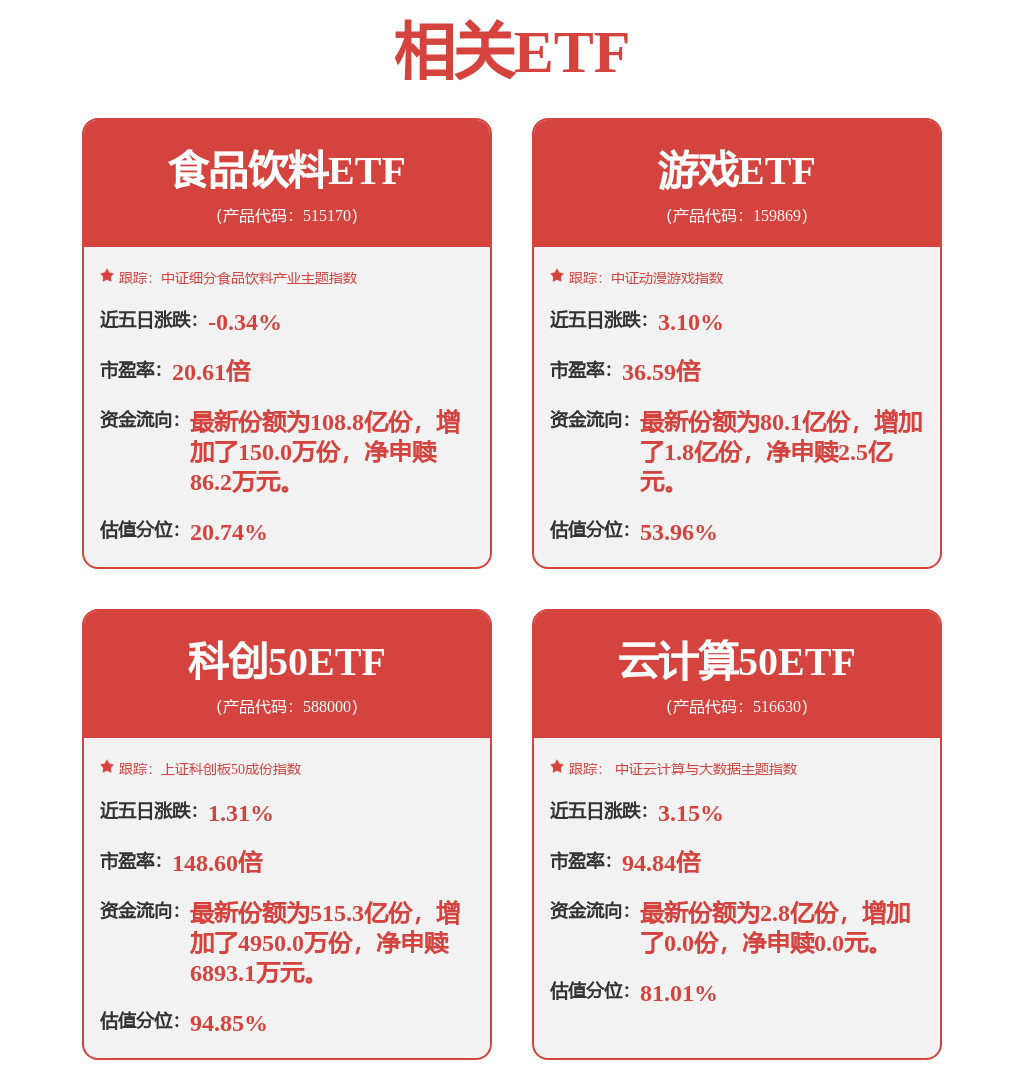
多家全球资管巨头发布2026年展望科技创新为核心投资主线
Shang Hai Zheng Quan Bao· 2025-11-30 14:09
Core Viewpoint - Major global asset management firms are optimistic about the performance of global risk assets in 2026, driven by a supportive monetary environment and ongoing technological innovation, particularly in artificial intelligence [2][3] Group 1: Global Market Outlook - Fidelity International's Matthew Quigley indicates a generally positive macroeconomic environment for 2026, with resilient economic growth and continued loose monetary and fiscal policies [2] - Schroders' 2026 market outlook predicts strong performance in U.S. equities, particularly the S&P 500 and Russell 2000 indices, and highlights opportunities in Asian technology and European banking and industrial sectors [2] - Wellington Management maintains an overweight stance on global equities, citing robust earnings fundamentals and a favorable policy environment [3] Group 2: Investment Themes - Fidelity International expects the AI investment boom to dominate the market in 2026, with AI-driven profit growth trends continuing, although investors should be aware of the risks associated with unverified commercialization paths [3] - Four main investment themes identified for the A-share market include: 1. Artificial Intelligence, with opportunities across the entire value chain from chips to industry applications [4] 2. Commercial Aerospace, reflecting China's advancement in manufacturing capabilities and the potential for satellite internet [4] 3. Low-altitude Economy, leveraging China's leadership in battery technology and drones for urban air mobility and logistics [4] 4. Innovative Consumption, driven by a shift in consumer demand towards quality, fostering new consumption patterns like smart homes and emerging brands [4]

李蓓:龙头企业寒冬开花利润率启动回升,正是核心指数ROE能够筑底、无明显向下风险的关键原因
Xin Lang Zheng Quan· 2025-11-30 02:07
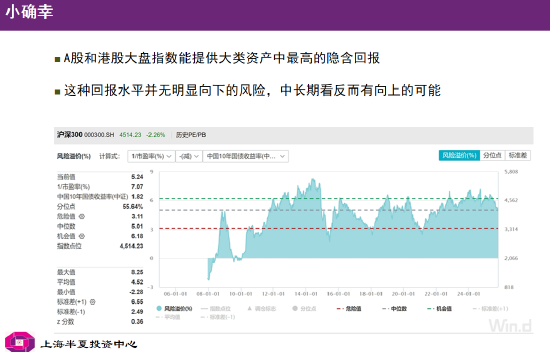
Core Viewpoint - The 2025 Analyst Conference highlighted that A-shares and Hong Kong stocks are currently among the most cost-effective high-return assets globally, with core indices' ROE stabilizing despite ongoing economic pressures and deflation [1][4]. Valuation Comparison - A-shares and Hong Kong stock indices exhibit significant return advantages compared to global assets, with the CSI 300 index's current PE ratio at approximately 13 times, implying a return of 7%, while some Hong Kong indices show even higher implied returns [1]. - Despite concerns about bubbles in certain sectors, the overall market's median valuation remains in a relatively low range, indicating that valuation risks have been largely released [1]. Profitability Concerns - The primary concern regarding profitability amidst economic decline and persistent deflation has been addressed, asserting that core indices' ROE will not significantly decline even if economic conditions do not improve [4]. - Historical data shows that during previous economic downturns, such as the 2008 financial crisis and the 2015 market adjustment, the ROE of core indices stabilized at current levels, receiving strong support [4]. Industry Dynamics - In economic downturns, many companies face losses, but leading firms maintain their ROE, reflecting the profitability gap between strong and weak companies. The index is primarily composed of leading firms, which helps stabilize the overall ROE [4]. - The construction materials industry serves as a case study, where leading companies are showing signs of profit improvement despite the sector's deep adjustment. For instance, only the top two companies in the industry remain profitable, while the third has incurred losses [4]. Investment Value of Leading Firms - Leading companies are expected to maintain their profitability levels even if industry demand continues to decline, as the exit of weaker firms will absorb downward pressure on the industry [4]. - The profit margins of leading firms have begun to recover from around 6%, while the second-ranked firm's net profit is only 1%, illustrating the resilience of core indices' ROE [4][5].
2025上市公司与金融机构可持续发展典型案例征集
清华金融评论· 2025-11-28 10:22
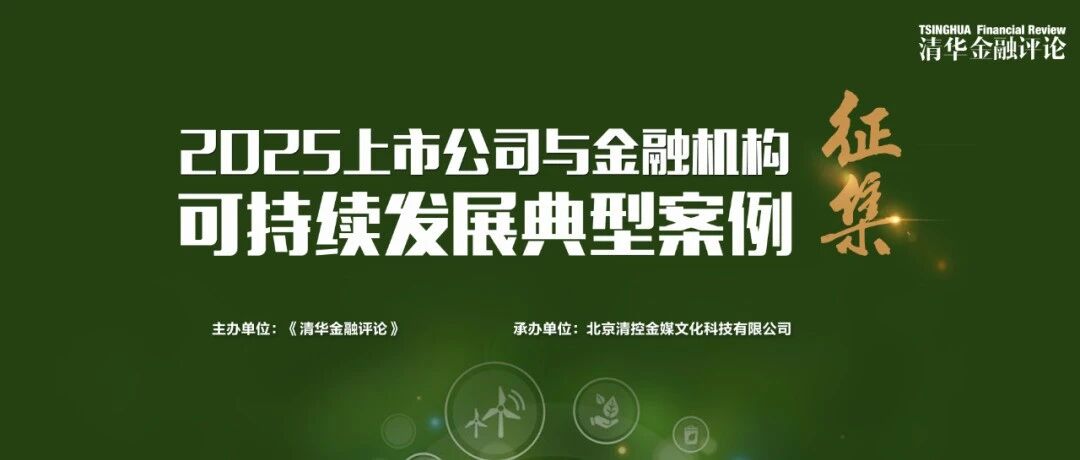
Core Viewpoint - The article emphasizes the transition of sustainable development from a strategic concept to a critical measure for high-quality economic growth in China, particularly highlighting 2025 as a pivotal year for deepening practical implementation of sustainability initiatives [3]. Group 1: Policy and Regulatory Framework - The Chinese government has introduced several policies, including the "Central Enterprise ESG Special Action Guidelines (2025)" and the "Management Measures for Information Disclosure of Listed Companies," mandating the integration of sustainable development into corporate governance and moving from optional to standardized disclosure of non-financial information [3]. - Financial institutions are evolving from advocates of sustainability to key actors, embedding ESG principles into their strategies and operations, and promoting green finance and responsible investment practices [3]. Group 2: Case Collection Initiative - Tsinghua Financial Review has launched a "2025 Sustainable Development Typical Case Collection" to create a high-level platform for sharing best practices in green finance and sustainability governance, aiming to establish industry benchmarks and facilitate experience sharing [4]. - The collection targets banks, insurance companies, securities firms, asset management institutions, and listed companies, encouraging submissions of innovative and impactful sustainability practices [6]. Group 3: Submission Themes and Requirements - The case collection focuses on three main dimensions: climate change response, social contributions, and corporate governance, with specific topics including pollution control, waste management, biodiversity protection, and supply chain safety [7]. - Submissions must reflect the positive efforts of financial institutions and listed companies in sustainability, with a requirement for authenticity and a good reputation, and should provide comprehensive data and outcomes [8][9].
沪市绿色债券累计发行规模近9000亿元 上交所扎实推进绿色及ESG债券市场建设
Shang Hai Zheng Quan Bao· 2025-11-27 18:20
Core Insights - The Shanghai Stock Exchange (SSE) is actively promoting the development of the green and ESG bond market, aligning with national green development strategies [1][2] - As of October 2025, the cumulative issuance of green bonds (including ABS) on the SSE has approached 900 billion yuan, with low-carbon transition bonds exceeding 80 billion yuan since their introduction in 2022 [1] - The market structure of green and low-carbon transition bonds is characterized by a diversified maturity profile, primarily mid-term, with issuers from key industries including large state-owned enterprises, local state-owned enterprises, and private companies [1] Market Mechanism Innovation - The SSE has facilitated smoother low-carbon financing for enterprises through innovative market mechanisms, enhancing financing convenience [3] - Companies like COSCO Shipping Development have successfully issued green bonds, demonstrating the effectiveness of SSE's financing mechanisms [3] - The SSE has lowered the threshold for green bonds to be included in benchmark market-making securities, improving liquidity and pricing efficiency in the secondary market [4] Future Development Directions - The SSE plans to continue advancing the green and ESG bond market under the guidance of the China Securities Regulatory Commission, aiming to provide stronger financing support for the green transition of real enterprises [2] - Discussions at the symposium highlighted the importance of enhancing the flexibility of fund usage and management, as well as optimizing incentive policies to expand the depth and breadth of the green bond market [6] - Investment institutions expressed a desire for a broader supply of green bonds to widen investment options, with expectations for more enterprises to issue green bonds on the SSE [6]
“2025资本市场高质量发展论坛”今天启幕 众多嘉宾聚首成都“论道” 共探高质量发展新机遇
Mei Ri Jing Ji Xin Wen· 2025-11-27 16:18
Core Insights - The Chinese capital market is entering a new development phase, focusing on serving the real economy and driving industrial upgrades as part of the "14th Five-Year Plan" [1][2] Group 1: Market Performance - As of November 11, the total market capitalization of A-shares reached 108.27 trillion yuan, an increase of 22.59 trillion yuan or 26.37% from the end of last year, marking the highest growth rate in nearly a decade [2] - In the first half of the year, foreign capital net increased holdings in domestic stocks and funds by 10.1 billion USD, with significant inflows of 18.8 billion USD in May and June, indicating a growing willingness to allocate capital to RMB assets [2] Group 2: Market Attractiveness - The increasing attractiveness of the A-share market is attributed to the continuous deepening of market openness, including the expansion of the Shanghai-Hong Kong Stock Connect and the steady increase in the inclusion factor of A-shares in international indices [2] - The structural advantages of the A-share market, particularly in emerging industries like new energy and artificial intelligence, complement the stable fundamentals in consumption and manufacturing, providing diverse investment options for foreign capital [2] Group 3: Forum Highlights - The "2025 Capital Market High-Quality Development Forum" held in Chengdu gathered industry leaders and experts to discuss the theme "Stabilizing Quality and Strengthening Foundations" [1][3] - The forum featured discussions on capturing market opportunities and promoting innovation in the capital market, with participation from leading institutions in securities, funds, and asset management [3][4] Group 4: Key Discussions - The forum included a roundtable discussion on wealth management opportunities and the embrace of the ETF era, focusing on integrating stable value growth with new tools for investors [5] - Another roundtable addressed market opportunities and challenges for 2026, discussing the macroeconomic context of "stabilizing growth" and the new directions for the financial industry in wealth management [5]
近9000亿元,上交所最新发声
Zheng Quan Shi Bao· 2025-11-27 11:03
Core Viewpoint - The Shanghai Stock Exchange (SSE) is actively promoting the development of the green and ESG bond market to support the green transformation of real enterprises and enhance the effectiveness of financing for the real economy [1][3]. Group 1: Market Development and Achievements - As of October 2025, the cumulative issuance scale of green bonds (including ABS) on the SSE has approached 900 billion yuan, with low-carbon transition bonds exceeding 80 billion yuan since their launch in 2022 [1]. - The market structure of SSE's green and low-carbon transition bonds features a diversified maturity profile, primarily mid-term, with issuers spanning key industries such as industrial, public utilities, and finance, including large state-owned enterprises, local state-owned enterprises, and private companies [1][3]. Group 2: Financing Mechanisms and Benefits - The SSE's green bonds provide a convenient financing mechanism that aligns well with companies' financing needs, as demonstrated by China Merchants Energy's successful issuance of a 1 billion yuan, 15-year low-carbon transition bond at a 2.18% interest rate [3]. - The ability to replace self-funded expenditures on green projects with raised funds enhances the flexibility of fund usage and reduces financing costs [3]. Group 3: Secondary Market Innovations - The SSE is continuously innovating mechanisms to support green bond issuance, including lowering the threshold for green bonds to be included as benchmark market-making securities, which improves liquidity and pricing efficiency in the secondary market [4]. - The introduction of a science and technology innovation bond ETF has effectively reduced financing costs and could further stimulate market activity if similar products are launched in the green bond market [4]. Group 4: Future Directions and Recommendations - Participants at the symposium emphasized the importance of enhancing the flexibility of fund management and optimizing incentive policies to expand the depth and breadth of the green bond market [6]. - Investment institutions called for a richer supply of green bonds to broaden investment choices, with expectations for more enterprises to issue green bonds on the SSE [7]. - The SSE plans to continue advancing the green and ESG bond market under the guidance of the China Securities Regulatory Commission, aiming to provide stronger financing support for the green transformation of real enterprises and better serve national strategic goals and high-quality economic development [6][7].