
AI芯片

Search documents
美股多板块股票“直线拉升” 18%标普500成分股年内涨超10% AI与政策变化成主推力
智通财经网· 2026-01-16 23:47
Group 1: Stock Market Trends - Approximately 18% of S&P 500 stocks have seen a year-to-date increase of 10% or more, doubling the average of 9.4% from the past five years [1] - The technology, financial, and metals mining sectors have seen dozens of stocks rise over 50% in the past year, with the total market capitalization of this "surging stock" group exceeding $4 trillion [1] - Notable examples include Micron Technology, Western Digital, and SanDisk, which have benefited from strong storage demand driven by the AI wave, with related storage stocks rising over 200% in the past year [1] Group 2: Semiconductor and Data Center Demand - The demand for computing power has surged as companies integrate AI agents into software systems, leading to an expansion of data centers and a direct increase in semiconductor demand [2] - Connector manufacturer Amphenol has seen its revenue from data centers rise significantly, with its stock price doubling in the past year [2] - Corning, a materials giant, has experienced an 88% increase in stock price due to rising demand from data center expansions [2] Group 3: Commodity Market Impact - Copper prices have risen approximately 30% in the past year, driven by increased demand from data centers, benefiting mining companies like Southern Copper, whose stock has increased by about 91% [2] - Gold mining stocks have also rebounded strongly, with Newmont Mining and Barrick Mining both doubling in stock price, coinciding with a 66% increase in gold prices [2] Group 4: Financial Sector Performance - Major U.S. investment banks, including Citigroup and Goldman Sachs, have seen stock prices rise over 50% in the past year, driven by expectations of a Fed rate cut and increased credit demand [3] - Regulatory changes, such as relaxed capital and reserve requirements, have boosted bank valuations and facilitated more lending and mergers [3] - The acceleration of merger review processes by the FTC and DOJ has reduced transaction costs and increased certainty in deal completions [3]





超百亿美元!OpenAI签下AI芯片大单
新华网财经· 2026-01-16 03:34
Core Viewpoint - OpenAI and Cerebras are collaborating to deploy a 750 MW wafer-scale system, which will become the world's largest high-speed AI inference platform by 2028, with a project value exceeding $10 billion [1]. Group 1: Collaboration and Market Demand - The partnership between OpenAI and Cerebras signifies a strong market demand for inference computing power and highlights the increasing importance of inference speed among tech giants [1]. - Cerebras, founded in 2015, aims to create the fastest AI inference and training platform, with its CS-2 and CS-3 systems already applied in various fields such as medical research and cryptography [4]. Group 2: Technological Advancements - Cerebras' unique system integrates massive computing power, memory, and bandwidth into a single giant chip, eliminating traditional hardware bottlenecks that limit inference speed [4]. - The response speed of large language models based on Cerebras technology can be up to 15 times faster than those based on GPU systems for code and voice chat tasks [4]. Group 3: Industry Trends - The tech industry's history shows that speed has played a crucial role in technology adoption, with significant advancements in processing frequency and internet connectivity driving the growth of personal computing and modern internet [5]. - Low-latency inference solutions provide faster response times and more natural interactions, enhancing productivity in the AI-driven market [5]. Group 4: Competitive Landscape - In December 2025, AI chip startup Groq announced a non-exclusive licensing agreement with NVIDIA, valued at $20 billion, marking NVIDIA's largest transaction to date [5]. - NVIDIA plans to integrate Groq's low-latency processors into its AI factory architecture to support a broader range of AI inference and real-time workloads [6].


超百亿美元!OpenAI签下AI芯片大单
Shang Hai Zheng Quan Bao· 2026-01-15 15:47
当地时间1月14日,OpenAI与美国AI芯片初创公司Cerebras宣布,将部署750兆瓦的Cerebras晶圆级系统。该合作将于2026年 起分阶段落地,并于2028年完成,建成后将成为全球规模最大的高速AI推理平台。据美国消费者新闻与商业频道 (CNBC)报道,该项合作的价值超过100亿美元。 Cerebras联合创始人兼首席执行官安德鲁·费尔德曼(Andrew Feldman)表示,与OpenAI合作,意味着将全球领先的AI模型 引入全球最快的AI处理器。实时推理将彻底变革AI领域,开启构建和交互AI模型的全新方式。 据悉,Cerebras系统的独特之处在于,其将海量计算能力、内存和带宽集成到单个巨型芯片上,从而消除了传统硬件上制 约推理速度的瓶颈。在代码及语音聊天任务上,基于Cerebras的大语言模型所给出的响应速度比基于GPU的系统快高达15 倍。 通常来说,重点面向逻辑推理的模型往往需要较长时间"思考"后才能生成回应。 但回溯科技行业的发展历程,"速度"在推动技术普及上发挥了重要作用。如果运行频率没有出现从千赫兹到兆赫兹再到吉 赫兹的飞跃,就不会有个人电脑产业;同样,如果没有从拨号上网到宽带网 ...


天普股份跌停!中昊芯英团队掌权引质疑
半导体芯闻· 2026-01-15 10:37
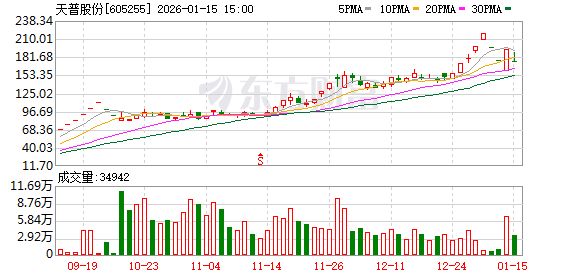
Core Viewpoint - Tianpu Co., Ltd. has faced scrutiny from regulatory authorities due to contradictions in its statements regarding the independence of its acquisition target, Zhonghao Xinying, and its own core automotive parts business [1][4][5]. Group 1: Board Restructuring - On January 14, Tianpu Co., Ltd. held its first extraordinary shareholders' meeting of 2026, electing a new board of directors, including Yang Gongyifan as chairman and several non-independent directors [3]. - The new board includes key members from Zhonghao Xinying, raising concerns about the independence of Tianpu's management and its commitment to maintaining its core business [4][5]. Group 2: Management Appointments - Key management appointments include Fan Jianhai as general manager and Chen Jiewen as vice general manager and CFO, both of whom lack experience in Tianpu's automotive parts sector [4][5]. - The appointment of Zhonghao Xinying's former board secretary and CFO to Tianpu's management contradicts previous commitments to maintain personnel independence [5][7]. Group 3: Regulatory Inquiry - The Shanghai Stock Exchange has issued an inquiry to Tianpu, requesting clarification on the rationale behind the new board appointments and their implications for the company's core business and independence [4][7]. - The inquiry also seeks to understand the potential impact of these appointments on Zhonghao Xinying's independent IPO plans and whether they conflict with prior disclosures [7]. Group 4: Market Reaction - Following the announcement of the new board, Tianpu's stock price fell sharply, hitting a limit down at 174.83 yuan per share on January 15 [1]. - The market has been closely monitoring the developments surrounding Zhonghao Xinying's AI chip business and the speculation regarding Tianpu's potential shift towards the AI sector, which has significantly influenced its stock price since the control change announcement in August 2025 [5][6].

天普股份跌停!中昊芯英团队掌权引质疑
Shang Hai Zheng Quan Bao· 2026-01-15 07:07
Core Viewpoint - The recent changes in the board of directors at Tianpu Co., Ltd. have raised concerns regarding the independence of the company and its acquisition partner, Zhonghao Xinying, especially in light of their conflicting statements about maintaining the company's core automotive parts business and the independence of personnel [2][4][5]. Group 1: Board Changes and Market Reaction - Tianpu Co., Ltd. held its first extraordinary shareholders' meeting of 2026 on January 14, where a new board of directors was elected, including members with ties to Zhonghao Xinying [2][4]. - Following the announcement, Tianpu's stock price fell sharply, hitting the daily limit down to 174.83 yuan per share by January 15 [2]. - The new board includes Yang Gongyifan as chairman and other members who lack experience in the automotive parts sector, raising questions about the company's strategic direction [4][5]. Group 2: Regulatory Scrutiny - The Shanghai Stock Exchange issued an inquiry to Tianpu regarding the rationale behind the new board appointments and the independence of the company in light of Zhonghao Xinying's IPO plans [4][7]. - The inquiry specifically requested clarification on whether the new appointments would affect the company's existing business operations and if they align with the company's interests [4][7]. - Tianpu is currently under investigation by the China Securities Regulatory Commission due to unusual stock price fluctuations and potential omissions in disclosures [7]. Group 3: Concerns Over Independence - The appointment of key management personnel from Zhonghao Xinying, including the former secretary and CFO, contradicts previous commitments to maintain the independence of Tianpu's management [5][7]. - There are concerns that these appointments may hinder Zhonghao Xinying's independent IPO plans, which were previously stated to be unrelated to Tianpu [5][7]. - The market is closely monitoring whether these changes will lead to a shift in Tianpu's business focus towards AI and technology sectors, as speculated since the control change began in August 2025 [5].

2026中国经济定调,内需加科技双轮驱动,这三大领域将迎来爆发?
Sou Hu Cai Jing· 2026-01-12 17:09
Economic Growth Target - The GDP growth target for 2026 is set at around 5%, which is considered a significant figure given the current economic challenges [3][30] - The target is primarily driven by the need to create jobs, as failing to meet growth expectations could lead to employment issues [5][30] - Structural constraints such as aging population and diminishing returns on capital are evident, but advancements in AI may help boost potential economic growth [5][30] Policy Measures - A coordinated approach between fiscal and monetary policies is essential, with an emphasis on active fiscal measures and reasonable debt arrangements [9] - Monetary policy is expected to be moderately accommodative, with potential interest rate cuts and liquidity support for key sectors [9] - Stability in the RMB exchange rate is crucial to avoid significant fluctuations [9] Domestic Demand Challenges - There is a notable lack of consumer confidence, leading to reduced spending by households and investment hesitance from businesses [11][30] - The real estate market is facing weakened demand, with changing demographics affecting purchasing power and urbanization slowing down [11][30] - Local government debt poses a significant constraint on growth, necessitating careful management of fiscal resources [11][30] Consumer Spending Dynamics - The marginal propensity to consume among Chinese residents is relatively low compared to international standards, with significant disparities across income groups [14][16] - Addressing income distribution and improving social security systems are critical to enhancing consumer spending [16][17] - Reducing mortgage interest rates could significantly release consumer spending potential [17] Technological Focus - The global competition in technology underscores the importance of self-sufficiency and domestic substitution [20][30] - There are substantial opportunities in AI infrastructure, including demand for servers, semiconductors, and optical technologies [21][23] - The advancement of new technologies is expected to enhance total factor productivity, which is vital for economic growth [24][30] Investment Opportunities - Key areas for investment include expanding domestic demand, technological self-reliance, and sectors experiencing a rebound in supply-demand dynamics [28][30] - The economic growth trajectory is anticipated to show a pattern of lower growth in the early quarters, followed by gradual recovery [28][30]

高盛闭门会-亚洲和中国经济2026展望-中国印度引领增长日本-闪辉谈中国新增长和结构性转型
Goldman Sachs· 2026-01-12 01:41
Investment Rating - The report maintains an optimistic outlook for global economic growth in 2026, projecting a growth rate of 2.8%, which is above the market consensus of 2.5% [2] Core Insights - The report highlights that the global economic growth in 2026 will benefit from a loose financial environment, reduced policy uncertainty, AI investments, and fiscal stimulus from tax and spending legislation passed in 2025 [1][2] - It emphasizes the resilience of the Indian economy, forecasting a GDP growth rate of 6.7% for 2026, which is higher than global consensus expectations [10] - The report notes that China needs to find new growth engines beyond real estate and expand into emerging markets outside the U.S., with actual export growth expected to remain at 5% to 6% annually [6][14] Summary by Sections Global Economic Outlook - The global economic growth is expected to exceed market consensus, driven by a favorable financial environment and AI investments [1][2] - Inflation pressures in emerging markets are anticipated to ease, aided by falling oil prices and reduced food price pressures [1] U.S. Economic and Policy Outlook - The Federal Reserve is expected to lower interest rates twice in the first half of 2026, supported by fiscal stimulus from the 2025 tax and spending legislation [3][2] Asian Economic Conditions - The report expresses optimism about the overall economic situation in Asia, with median and average growth rates around 5% [4] - It highlights strong performance in AI chip exports from China and India, which is expected to exceed market consensus [4] China’s Economic Transition - China is projected to maintain a 5% to 6% annual growth in actual exports, with a current account surplus expected to rise to 4.2% of GDP [6][14] - The "14th Five-Year Plan" focuses on integrating AI with manufacturing and modern industrial infrastructure, indicating a sustained investment in AI technologies [15] Japan’s Economic Outlook - Japan's growth rate is forecasted at 0.8% for 2026, supported by rising wages and easing inflation [7] - The Bank of Japan may accelerate interest rate hikes, with a potential increase of 25 basis points in July 2026 [7] India’s Economic Trends - India is expected to show strong resilience with a projected GDP growth rate of 6.7% for 2026, driven by rural and urban consumption recovery [10][12] - The Reserve Bank of India has implemented measures to support economic growth, including interest rate cuts and liquidity measures [9]

从汽车橡胶到AI芯片 天普股份718%涨幅引来监管铁拳
Jing Ji Guan Cha Wang· 2026-01-11 06:56
Core Viewpoint - The China Securities Regulatory Commission (CSRC) has initiated an investigation into Ningbo Tianpu Rubber Technology Co., Ltd. (Tianpu Co., 605255.SH) due to significant omissions in announcements related to abnormal stock trading fluctuations, marking a critical regulatory response to the company's stock price volatility since August 2025 [1][2]. Group 1: Company Background and Stock Performance - Tianpu Co. specializes in automotive rubber hoses and fluid pipeline systems, with a projected net profit of only 33.07 million yuan for the entire year of 2024, indicating its status as a low-valuation, low-volatility traditional manufacturing entity [1]. - Since late August 2025, the company's stock price surged dramatically by 718.39% to 218.02 yuan per share by December 30, 2025, despite no performance growth, asset injections, or business transformation announcements [1][3]. - The stock price increase was largely driven by market speculation regarding its new controlling shareholder, AI chip company Zhonghao Xinying, despite the company clarifying that it had not engaged in AI-related business or plans for asset injection [2][3]. Group 2: Regulatory Investigation and Market Reaction - The CSRC's investigation is focused on the compliance of information disclosure during the period of abnormal stock price fluctuations, specifically addressing whether the company fulfilled its obligations to disclose information accurately and completely [6]. - The company issued multiple announcements regarding stock trading anomalies and risk warnings, yet these did not align with the market's expectations, leading to a disconnect between official communications and investor sentiment [3][6]. - The investigation highlights the regulatory challenges in the A-share market regarding the integration of concepts and the need for clearer disclosure obligations when significant shareholder changes occur in companies linked to hot market trends [6]. Group 3: Implications for the Industry - The case illustrates a broader issue of "expectation arbitrage" driven by information asymmetry, where the new controlling party leveraged market enthusiasm for AI to influence stock prices without substantive business changes [5][6]. - The CSRC's actions may prompt a reevaluation of existing regulations, particularly concerning the disclosure of potential market misinterpretations and the effectiveness of current acquisition regulations in protecting shareholder interests [6]. - The outcome of the Tianpu Co. investigation could set a precedent for future cases involving similar circumstances in the A-share market, emphasizing the need for a balance between encouraging industry integration and preventing speculative bubbles [6].
帮主郑重:16倍牛股天普股份,一场“跨界神话”的崩塌
Sou Hu Cai Jing· 2026-01-10 05:50
Core Viewpoint - Tianpu Co., a traditional manufacturer of automotive rubber hoses, has seen its stock price surge over 16 times after announcing a transition to AI chip production, raising concerns about the legitimacy of this transformation and the accuracy of its disclosures [2][3]. Group 1: Company Background - Tianpu Co. originally focused on manufacturing automotive rubber hoses before announcing its intention to acquire an AI chip company, Zhonghao Xinying, in August of last year [3]. - Following the announcement, the company's market value skyrocketed to nearly 30 billion, reflecting a significant speculative interest in the AI sector [3]. Group 2: Regulatory Concerns - The Shanghai Stock Exchange issued a regulatory warning to Tianpu Co. due to inaccurate and incomplete information disclosures, particularly regarding the company's actual engagement in AI business activities [3]. - The China Securities Regulatory Commission (CSRC) has initiated an investigation into the company's stock price fluctuations, specifically looking into allegations of "major omissions" in its announcements [3]. Group 3: Investment Implications - Investors are cautioned to critically assess the viability of companies undergoing drastic transformations, questioning the robustness of their core technologies, talent acquisition, and actual business performance [4]. - The emphasis is placed on the importance of patience and discernment in long-term investments, favoring companies with solid business foundations and transparent management over those that rely on speculative narratives [4].

“物理AI”成CES热议新词
Jing Ji Ri Bao· 2026-01-09 21:57
Core Insights - The 2026 CES in Las Vegas highlighted "Physical AI" as a key term, indicating a shift in AI technology focus from algorithms to real-world applications [1][4] - NVIDIA's CEO emphasized "Physical AI" in his keynote, suggesting its importance in enabling autonomous systems to perceive, understand, and act in the physical world [1][4] Group 1: Definition and Applications of Physical AI - "Physical AI" refers to the capability of systems like cameras, robots, and autonomous vehicles to operate in the physical world, moving beyond mere information provision to actively changing environments [1][4] - Various companies showcased applications of "Physical AI," including home robots that assist with chores and public life solutions like urban infrastructure models that integrate AI for energy management and facility inspections [2][3] Group 2: Industry Perspectives on Physical AI - Qualcomm's China Chairman noted that "Physical AI" and "Personal AI" are evolving simultaneously, with the former focusing on real-world applications in vehicles and robotics [3] - Lenovo's CEO described "Physical AI" as "machines with brains," highlighting the transition of robots from simple mechanical tasks to complex decision-making capabilities [3] Group 3: Industry Consensus and Future Directions - The rise of "Physical AI" reflects a broader industry consensus that AI is becoming integral to real-world production, life, and public scenarios, serving as a bridge between digital and physical realms [4]