
外贸

Search documents
靠AI逃离苦旅的外贸人
3 6 Ke· 2025-05-23 11:26
Core Insights - The article highlights the transformative impact of AI on the foreign trade industry, showcasing how AI can facilitate significant transactions and streamline operations [1][3][17] Group 1: AI's Role in Foreign Trade - AI has enabled a $20 million order to be secured without human intervention, demonstrating its efficiency in handling customer inquiries and transactions [1][3] - The use of AI digital assistants allows businesses to overcome traditional barriers such as language, time zones, and cultural differences, significantly improving customer engagement [3][4][20] - AI-driven systems have increased email open rates to 70% and tripled inquiry conversion rates compared to traditional methods [8][10] Group 2: Challenges in Traditional Foreign Trade - Traditional foreign trade is fraught with challenges including language barriers, high customer acquisition costs, and complex logistics, which have historically made it a difficult endeavor [4][6] - The reliance on human experience for decision-making in foreign trade has led to inefficiencies and risks, such as inventory mismanagement [6][13] Group 3: Efficiency Gains from AI - AI enhances operational efficiency by automating repetitive tasks, allowing human workers to focus on higher-value activities [7][8] - The cost of producing marketing content has decreased by over 99.5% due to AI, enabling faster and more cost-effective product promotion [12] - AI systems can analyze vast amounts of data to provide insights for better decision-making, improving the accuracy of inventory and production planning [15][21] Group 4: The Future of Foreign Trade with AI - The integration of AI in foreign trade is not a replacement for human expertise but rather a tool that amplifies traditional strengths, emphasizing the need for skilled professionals who understand both trade and AI [18][21] - Building long-term relationships and trust remains crucial in foreign trade, as AI cannot replace the human element in business interactions [20]


商务部:积极帮助外贸企业拓内销,扎实推动各项政策惠及更广大外贸企业
news flash· 2025-05-22 07:46
Core Viewpoint - The Ministry of Commerce emphasizes the importance of helping foreign trade enterprises expand into domestic sales and effectively implement policies to benefit a broader range of foreign trade companies [1] Group 1: Policy Implementation - The Ministry of Commerce will focus on accelerating and enhancing efforts to strengthen domestic circulation and expand high-level opening-up to respond to uncertainties with high-quality development [1] - There is a commitment to integrate domestic and foreign trade, assisting enterprises in effectively coping with external shocks [1] Group 2: Support for Foreign Trade Enterprises - Active measures will be taken to help foreign trade enterprises tap into domestic markets, including organizing events like "Foreign Trade Quality Products China Tour" to connect associations, supermarkets, e-commerce platforms, and foreign trade companies for procurement [1] - The initiative aims to encourage more foreign trade enterprises in sectors such as automobiles, home appliances, and home decoration to participate in "old-for-new" exchange programs [1] Group 3: Market Capability Enhancement - The Ministry plans to deepen the integration of domestic and foreign trade pilot programs to enhance the operational capabilities of enterprises in both markets, better preparing them to face external risks and challenges [1]
外贸客户分类做不好?9个维度教你分辨高潜客户!
Sou Hu Cai Jing· 2025-05-22 07:06
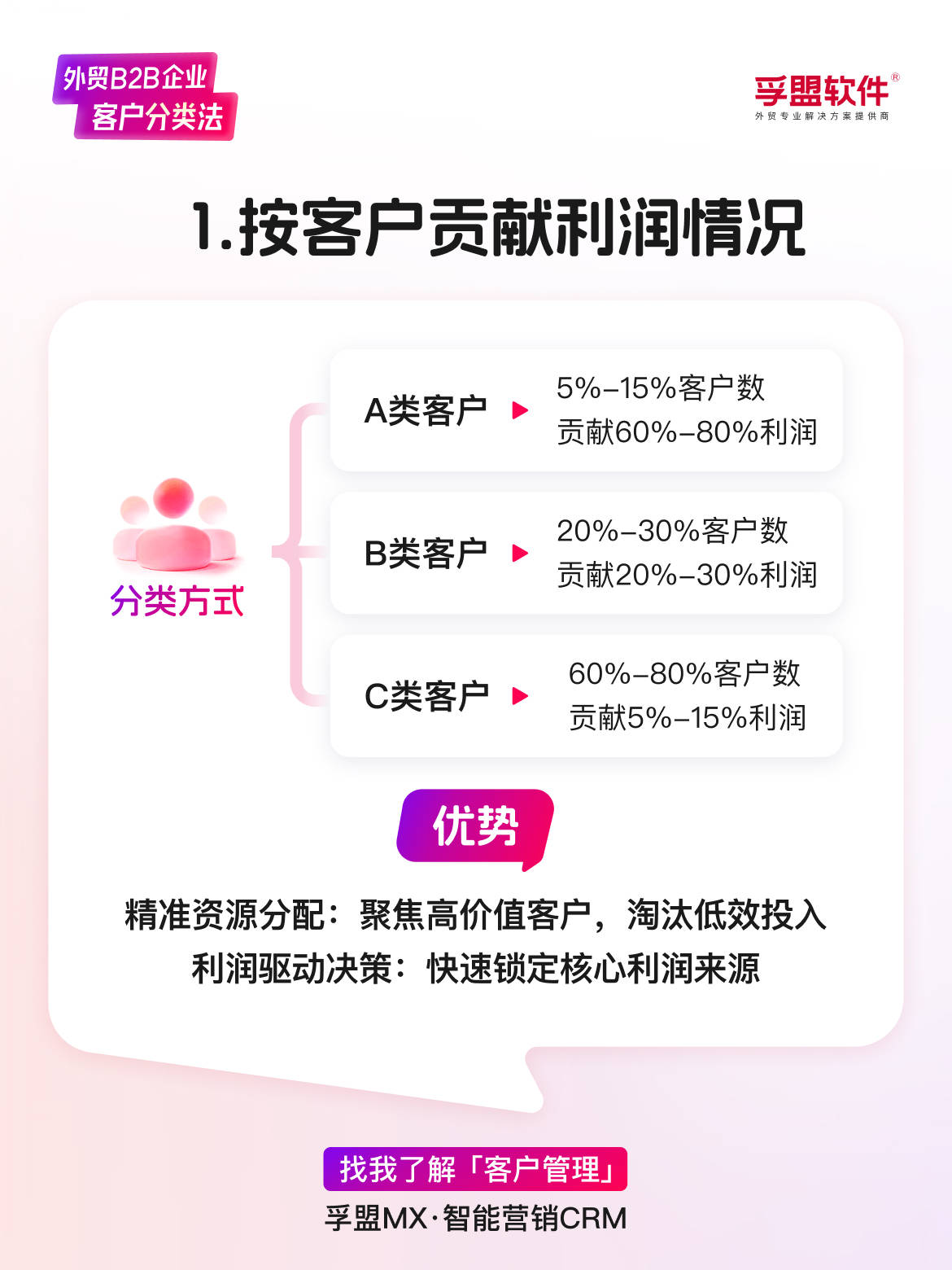
做外贸一定要学会的客户分类,你了解吗?今天分享9种客户分类方法。 一、9种客户分类方法 1.按客户贡献利润情况 A类客户:占客户总数的5%~15%左右,其创造的利润却占企业全部利润的60%~80%左右。 B类客户:占20%~30%左右,其创造的利润大致为总利润的20%~30%左右。 C类客户:占60%~80%左右,而其创造的利润只占 5%~15%左右。 3.按产品线或产品应用分类 这也是很多公司习惯的一种划分方法。比如一个母婴用品公司,首先就会把客户分为女性和婴儿,这对应的产品线是完全不同的。再细分一下,又会按照产 品的用途进行分类。 2.按照地理区域划分 北美客户、南美客户、东欧客户、西欧客户、南亚客户、东南亚客户、中东客户、非洲客户等。 4.按照客户询盘来源 展会客户、B2B平台客户、邮件开发客户、主动找上门客户等。 5.按照购买成交情况 5星-复购客户:长期合作的客户。 4星-订单客户:首次合作的客户。 3星-样单客户:在犹豫的客户。 2星-重潜客户:巨头、连锁等想要合作的客户。 1星-普潜客户:有可能成单的客户。 0星-无潜客户:没有合作可能的客户。 | 0星:无潜客户(永不回乡 | | --- | ...
把“法律条文”变为民企“发展红利”
Xin Hua Ri Bao· 2025-05-21 22:33
Group 1 - The "Promotion Law" marks a milestone in the legal status of the private economy in China, providing a solid legal guarantee for its development [1] - The law aims to address significant issues faced by private enterprises, such as hidden barriers to market entry, high financing costs, and inconsistent law enforcement [1] - Effective implementation of the law requires transforming legal provisions into practical reforms that private enterprises can perceive and benefit from [1] Group 2 - Jiangsu province, as a major player in the private economy, is encouraged to adopt a systematic approach to enhance the rights of private enterprises and stimulate their development [2] - The focus is on fostering innovation and creating a self-sufficient industrial system, while also addressing structural financing issues faced by private manufacturing enterprises [2] - There is an emphasis on expanding international competitiveness and providing comprehensive support for private enterprises venturing into foreign markets [2] Group 3 - The establishment of benchmark projects, such as the first private capital-participated nuclear power project in Jiangsu, serves as a model for breaking market entry barriers [3] - This project exemplifies how private enterprises can collaborate with state-owned enterprises in strategic sectors, signaling a shift towards more inclusive market access [3] - The implementation of the "Promotion Law" requires coordinated efforts among various departments to effectively address long-standing issues in the private economy [3]
新兴市场增长显著 长三角前四个月外贸强势不改
Shang Hai Zheng Quan Bao· 2025-05-21 19:14
Core Insights - The foreign trade performance of Jiangsu, Zhejiang, and Anhui provinces in the first four months of this year has outperformed the national average, indicating strong growth in exports and imports driven by emerging markets [3][5]. Group 1: Trade Performance - Jiangsu Province's total import and export value reached 1.85 trillion yuan, a year-on-year increase of 5.7%, accounting for 13.1% of China's total trade during the same period [5][6]. - Zhejiang Province's foreign trade import and export value was 1.75 trillion yuan, with a year-on-year growth of 6.6%, actively exploring emerging markets [5][6]. - Anhui Province's trade with the EU reached 38.39 billion yuan, growing by 17.4%, while trade with ASEAN increased by 31.3% to 37.92 billion yuan [6]. Group 2: Emerging Markets - Zhejiang's exports to ASEAN, Latin America, and the Middle East were 180.28 billion yuan, 145.06 billion yuan, and 123.01 billion yuan, with respective year-on-year growth rates of 9.2%, 21.5%, and 10.4% [5][6]. - The development of new markets has provided significant support for foreign trade growth in the Yangtze River Delta region [3][5]. Group 3: Export Trends - The first quarter saw Suzhou Port's Taicang Port area export 147,600 vehicles, marking an 18.35% increase year-on-year, with the largest single export batch of BYD electric vehicles heading to Brazil [5][6]. - Following the implementation of reciprocal tariffs in April, many companies shifted focus from the U.S. market to other countries, indicating a strategic pivot in export strategies [5][7]. Group 4: Future Outlook - The recent tariff adjustments have led to a surge in shipping demand, with container bookings from China to the U.S. increasing by 277% within a week [7]. - Experts suggest that the integration of domestic and foreign trade in the Yangtze River Delta has significant potential for growth, emphasizing the need for enhanced cooperation with countries involved in the Belt and Road Initiative [7].
“广交会+”如何赋能外贸企业?第137届广交会论坛活动给出答案
2 1 Shi Ji Jing Ji Bao Dao· 2025-05-21 15:15
Core Viewpoint - The 137th Canton Fair emphasizes China's commitment to openness and shared development opportunities amidst global trade barriers and unilateralism, showcasing resilience in foreign trade [1][2][3]. Group 1: Responding to Global Trade Challenges - The Canton Fair reflects China's strategy of openness in response to global trade challenges, particularly high tariffs, by promoting collaboration and stability in the economic order [3][4]. - The forum activities focus on key global issues such as economic growth, international logistics, and digital trade transformation, aiming to maintain stable global supply chains [4][5]. Group 2: Industry Insights and Reports - The forum released 11 significant reports, including the "China Foreign Trade Logistics Development Report" and "China Cross-Border E-Commerce B2B Export Development Report 2025," providing strategic guidance for foreign trade [7][8]. - These reports cover various dimensions such as foreign trade logistics, digital trade, and business environment trends, assisting enterprises in navigating complex international markets [8]. Group 3: Financial Support for Trade - Collaborative efforts between government, enterprises, and financial institutions resulted in initiatives like the "China Bank Guangdong Branch Support for Stable Foreign Trade Growth Action Plan," addressing urgent needs of foreign trade enterprises [9]. Group 4: Forum Effectiveness - The forum's integration of experts from government, academia, and industry leaders highlights the "Canton Fair+" effect, enhancing the overall impact of the event [10][11]. - Approximately 2,600 attendees participated in the forum activities, with a satisfaction rate exceeding 90%, indicating strong engagement and relevance [11]. Group 5: Media Influence and Public Engagement - The forum garnered extensive media coverage, enhancing the visibility and reputation of the Canton Fair, with participation from over 100 media outlets [14][15]. - Key industry figures and experts shared insights on high tariffs and strategies for enterprises, contributing to a broader discourse on foreign trade challenges [14][15].
义乌老板催债,关税压垮的美国商人还不起1万美金
凤凰网财经· 2025-05-21 13:36
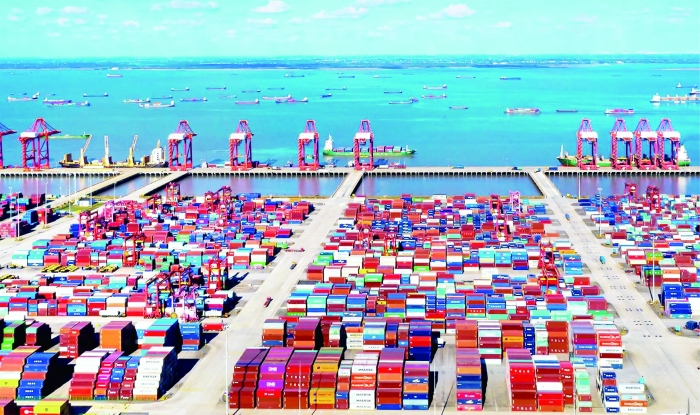
凤凰网《风暴眼》出品 作者|吕银玲 没有电视剧《风吹半夏》中女企业家许半夏绝处逢生的喜极而泣,和想象中不同,当5月13日,义乌外贸老板宋英坤接连收到几位美国客户的消息,通知重 启订单时,他来不及多作感慨,只是迅速对接工厂,安排起工期。 这200万美金的订单,已经停滞了一个月。有的此前只做了一半,就存放在仓库里;有的运到宁波港后,却被要求拖回。算上卸货费、仓储费等,一个柜子 就要损失2万元。此后,它们和外贸商一样,惶惶等待命运的安排。 宁波港 图片来源于网络 直到中美经贸高层在瑞士日内瓦谈判结果传来,美方取消了共计91%的加征关税,暂停实施24%的"对等关税"。持续40天,这场贸易摩擦迷雾终于散去了 一些。 从事外贸行业二十年来,宋英坤总是尽可能保持沉稳冷静,即使在最慌张的时期,他的微信签名也依然体面:"Stay easy! Stay calm"。 过去的40天,更像是一场压力测试,疾风过境,百草偃伏,"扛过去"——他心里只有一个声音。 这场关税危机以远超预期的速度成为了历史,回头看去,全球供应链在特朗普政治操弄下显得脆弱不堪。但特朗普还是小看了"世界超市",如今的宋英 坤,像是刚参加了一场战役的一线冲锋兵,甚 ...

助力“转场”内销,外贸优品“很热闹”
Guo Ji Jin Rong Bao· 2025-05-21 11:42
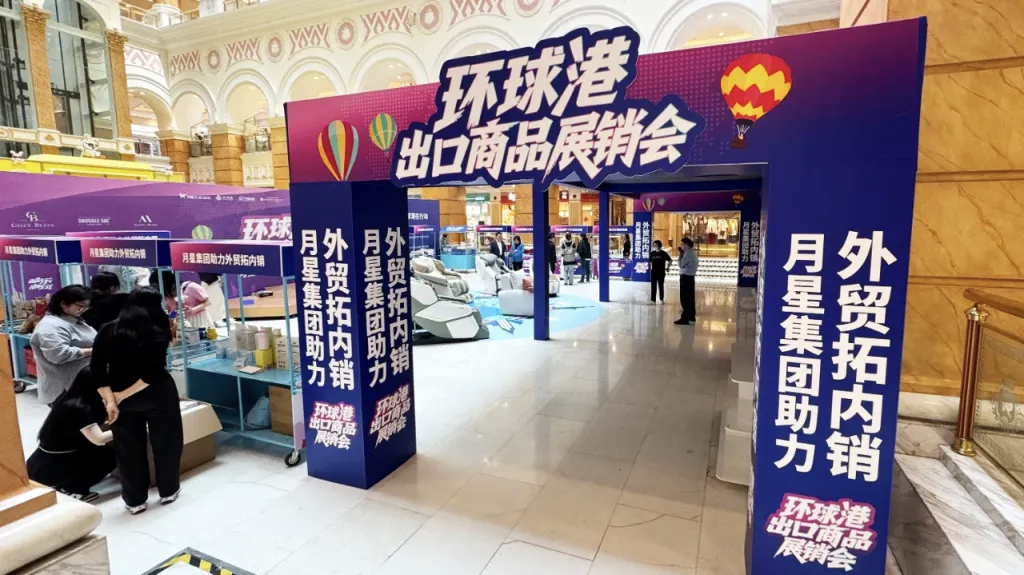
Group 1 - The foreign trade industry is experiencing renewed vitality with inventory clearance, resumption of new order negotiations, and increased cross-border logistics activity [1] - Foreign trade enterprises are cautious due to raw material price fluctuations and long-term policy uncertainties, preparing for potential challenges ahead [1] Group 2 - Shanghai is actively promoting the "export to domestic sales" initiative, with various districts responding to support foreign trade enterprises in tapping into the domestic market [2][4] - Supermarkets and large e-commerce platforms in Shanghai have launched "foreign trade to domestic sales zones" to facilitate this transition [2] Group 3 - The "foreign trade to domestic sales zone" at the Global Harbor in Shanghai has seen significant success, with over 100,000 orders in just 21 days, indicating strong domestic market potential [2][4] - Companies are adapting their strategies, such as a shoe brand shifting focus to domestic sales and exploring new markets in Europe [4] Group 4 - The Longzhimeng City Life Center in Changning District has introduced a "foreign trade quality goods market," showcasing various products at factory-direct prices [7] - The event aims to enhance brand visibility and sales for participating foreign trade enterprises while providing consumers with affordable options [11] Group 5 - The Shanghai Municipal Commerce Commission is facilitating connections between foreign trade enterprises and domestic market resources through multiple initiatives [13] - E-commerce platforms are offering support for foreign trade enterprises, including zero-commission policies and expedited onboarding processes [14] Group 6 - Challenges faced by foreign trade enterprises in transitioning to domestic sales include insufficient personnel, mismatched products, and supply chain limitations [15][16] - E-commerce platforms are positioned to assist foreign trade enterprises by leveraging their supply chain capabilities and digital tools to enhance market entry [16]
泰媒:泰国多举措应对美国关税影响
Huan Qiu Shi Bao· 2025-05-20 22:42
Group 1 - The Thai government is implementing measures to boost the economy in response to the potential impact of U.S. tariffs, including extending corporate income tax exemptions for SMEs from 3 to 5 years and increasing the exemption amount to 100% of the investment amount [1][2] - A total investment plan of 99.7 billion Thai Baht (approximately 21.76 billion RMB) has been approved for data centers and renewable energy, with strict requirements for foreign investments to ensure they bring high technology to Thailand [1] - The International Monetary Fund (IMF) has lowered Thailand's economic growth forecast for the year to 1.8% due to the impact of U.S. tariffs, emphasizing the need for Thailand to diversify trade and restructure its economy [2] Group 2 - Thailand is actively strengthening economic cooperation with other ASEAN countries, including elevating its relationship with Vietnam to a comprehensive strategic partnership and aiming to increase bilateral trade from over 20 billion USD to 25 billion USD [3] - The Thai government is also collaborating with Indonesia to promote ASEAN economic integration and address global geopolitical and economic uncertainties, with bilateral trade currently at 18 billion USD [3]
专家共话外贸企业出口转内销—— “内外兼修”提升经济内生动力与全球竞争力(经济聚焦·加快推动内外贸一体化)
Ren Min Ri Bao· 2025-05-20 21:45
当前,国际形势变乱交织,单边主义、保护主义逆流涌动,对国际经贸秩序造成严重冲击。我国外贸企 业出口承压,出口转内销成为不少企业解决当前困难的重要选择。促进出口转内销的重要意义体现在哪 些方面?企业在出口转内销过程中有哪些堵点、难点?各方如何综合发力助企业"两条腿"走路?记者连 线专家学者进行探讨。 董超:当前我国企业出口环境复杂严峻,出口转内销成为应对当前国际经贸形势、缓解外贸企业压力的 重要措施。 ——编者 对话嘉宾: 桑百川对外经济贸易大学中国开放经济理论研究院院长 董超商务部研究院流通与消费研究所所长 郭迎锋中国国际经济交流中心副研究员 出口转内销举措的重要意义体现在哪些方面? 郭迎锋:推动内外贸一体化发展,是我国构建新发展格局的战略选择。通过激活内需、升级产业、搭建 内外循环的"连接器",内外贸一体化发展正在提升中国经济的内生动力与全球竞争力。未来,随着市场 一体化发展、制度衔接和产业融合,"内外兼修"将成为我国高质量发展的一个显著特征。 出口转内销是我国外贸企业抵御外部冲击的关键手段,我国超大规模市场的战略纵深为外贸企业的出口 转内销提供了有效的转型缓冲。例如,我国电商平台正利用大数据、人工智能等技 ...