房地产业

Search documents
险资持续加大不动产投资力度
Zheng Quan Ri Bao· 2025-08-08 07:27
Core Viewpoint - Insurance capital institutions are increasingly diversifying their real estate investments, focusing on long-term returns and various investment methods, including debt investment plans and private equity funds [1][2][4]. Investment Trends - Insurance capital institutions are shifting from primarily investing in real estate stocks to a more diversified approach, emphasizing long-term investment returns [1][4]. - The establishment of various investment vehicles, such as debt investment plans and private equity funds, is becoming a significant asset allocation strategy for insurance capital [1][2]. Specific Investment Examples - Kunhua (Tianjin) Equity Investment Partnership has invested in 14 projects, all related to acquiring shares in Wanda Group's commercial real estate companies, with a 100% stake in 12 of them [1][2]. - New China Life Insurance holds a 99.9% stake in Kunhua Tianjin, indicating a strong commitment to real estate investments [2]. Focus on Rental Properties - There is a notable increase in investments in rental properties, including commercial complexes, long-term rental apartments, and healthcare real estate, reflecting a trend towards becoming "landlords" [4][5]. - The rental income from these properties is becoming a crucial path for insurance capital to achieve stable long-term investment returns [4][5]. Market Impact - The involvement of insurance capital in the real estate market is expected to stabilize market expectations and support the healthy development of the real estate sector [6]. - As the real estate market gradually recovers, insurance capital's investment scale is anticipated to maintain steady growth, optimizing overall asset allocation and reducing investment risks [5][6].



解码险资“囤楼”经济学: 收租型物业成抗周期利器
Zhong Guo Zheng Quan Bao· 2025-08-08 07:05
Core Viewpoint - The recent acquisition of the Yumi Community in Shanghai by AIA Insurance highlights the growing interest of insurance capital in real estate investments amid declining interest rates and a scarcity of quality assets [1][2]. Investment Trends - As of July 22, 2023, four insurance companies have disclosed 13 real estate investments totaling nearly 5 billion yuan, showing a significant increase compared to the same period last year [1][2]. - Insurance companies are increasingly focusing on rental-type properties such as shopping centers, office buildings, and long-term rental apartments to secure stable rental income [1][2]. - The need for insurance capital to alleviate the pressure of asset returns not covering liability costs is driving the shift towards real estate investments [1][3]. Investment Strategies - The investment approach of insurance capital has diversified from heavily investing in real estate stocks to various methods including equity direct investment, private fund establishment, and public REITs [4][5]. - Quality real estate can provide stable cash flow and long-term appreciation potential, making it an attractive option for insurance capital seeking to optimize asset-liability matching [5][6]. Research and Development Needs - The current allocation of insurance capital to real estate is relatively low, indicating potential for growth as the policy environment improves [6]. - Investment in real estate requires enhanced research and development capabilities, as it involves complex factors such as market conditions, financial management, operations, and legal compliance [6][7]. - The limited market size and liquidity of public REITs pose challenges for large-scale insurance capital participation, necessitating adjustments to risk factors to encourage investment [6][7]. Exit Strategies - The ability to exit real estate investments is a significant consideration for insurance capital, with public REITs and bulk transactions being the primary exit channels [7]. - Recommendations include easing the entry barriers for public REITs and accelerating the development of asset securitization products to enhance exit opportunities [7].
中国房地产研报:中央城市工作会议有关房地产的五点解读
克而瑞证券· 2025-08-08 06:55
Investment Rating - The report indicates a positive outlook for the real estate industry, emphasizing the importance of new urbanization and the demand for housing driven by population migration [3][11]. Core Insights - The central urban work conference highlighted the need to continue promoting the urbanization of agricultural transfer populations, which is essential for sustaining housing demand in the real estate sector [3][4]. - The transition from rapid urban growth to stable development is expected to enhance the quality of urban living and optimize urban space structures, thereby increasing the value of urban core areas [7][11]. - The report emphasizes the importance of high-quality urban renewal and the gradual improvement of existing housing stock, which will stimulate demand for upgraded living conditions [8][9]. Summary by Sections Urbanization and Housing Demand - The urbanization rate in China is projected to rise from 53.1% in 2012 to 67% by 2024, with 940 million people living in urban areas [3]. - The demand for housing will continue to be supported by the ongoing urbanization of agricultural populations, with a projected increase in urban per capita housing area to 40 square meters by 2024 [3][4]. Urban Development Strategy - The report outlines a strategy for coordinated development of urban clusters and metropolitan areas, focusing on enhancing the capacity of cities to accommodate population and economic growth [5][6]. - It notes that the future demand for real estate will be closely aligned with the core cities within urban clusters, particularly in regions like the Yangtze River Delta and the Greater Bay Area [6]. Supply-Side Adjustments - The report discusses the need for a structured approach to urban development, including the control of new real estate supply and the revitalization of existing urban areas [7][8]. - It highlights the importance of improving the quality of housing supply through urban renewal initiatives and the introduction of high-quality residential projects [10][11]. Housing Quality and Market Dynamics - The focus on "good housing" is expected to reshape the market, with new standards for residential construction aimed at enhancing safety, comfort, and sustainability [10][11]. - The report anticipates that the introduction of high-quality housing will stabilize the new housing market and create a new pricing benchmark, fostering a dynamic balance in supply and demand [11].
关税大消息,这一概念大涨
Zhong Guo Ji Jin Bao· 2025-08-07 11:57
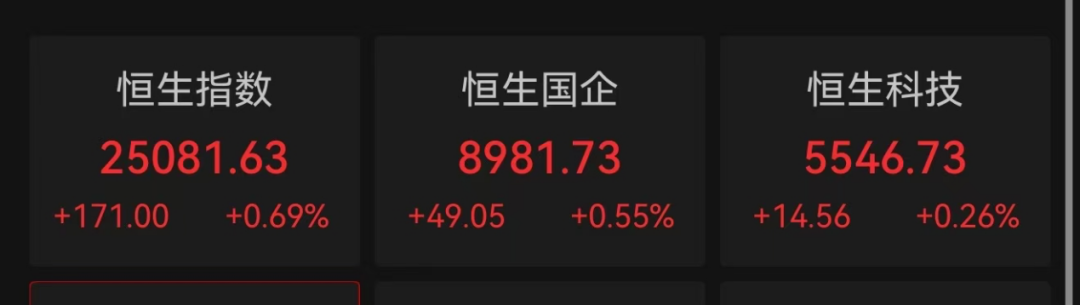
Market Overview - The Hong Kong stock market experienced fluctuations but closed higher, with the Hang Seng Index rising by 0.69% to 25081.63 points, the Hang Seng Tech Index increasing by 0.26% to 5546.73 points, and the Hang Seng China Enterprises Index up by 0.55% to 8981.73 points [1] Apple-Related Stocks - Apple-related stocks were boosted, with notable gains in companies such as Gao Wei Electronics, which rose by 9.62%, and Sunny Optical Technology, which increased by 3.30% [4] - The positive sentiment was driven by President Trump's announcement of a 100% tariff on imported semiconductors, exempting companies manufacturing in the U.S. [4] - Apple announced a new $100 billion investment plan in the U.S., increasing its total investment to $600 billion over four years, which is expected to positively impact related stocks [5] Semiconductor Sector - Semiconductor stocks also saw gains, with Huahong Semiconductor and SMIC rising by 2.52% and 0.76%, respectively [5][6] Gaming Sector - The gaming sector continued to rise, with companies like China Star Group and Sands China increasing by 7.43% and 5.01%, respectively [7][8] - Macau's gaming revenue for July reached 22.125 billion MOP, a year-on-year increase of 19%, marking a post-pandemic high [8] Real Estate Sector - The real estate sector showed signs of recovery, with New World Development rising by over 10% and other companies like Wharf Holdings and China Jinmao increasing by over 3% [10][11] - Recent policy adjustments in core cities are expected to support the real estate market, focusing on stabilizing measures [11] Pharmaceutical Sector - The pharmaceutical sector faced pressure, with companies like CanSino Biologics and Innovent Biologics experiencing declines of 8.06% and 7.16%, respectively [12][13] - President Trump's upcoming announcement regarding new tariffs on pharmaceuticals is contributing to the sector's downturn [12] Cao Cao Mobility - Cao Cao Mobility saw a significant increase of over 18% following the announcement of a strategic cooperation with Victory Securities regarding virtual asset collaboration [14][16]

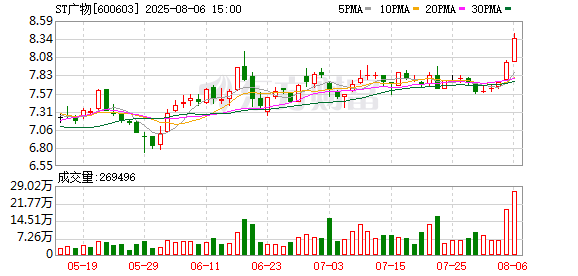
ST广物:公司及控股子公司对外担保余额为约30.39亿元
Mei Ri Jing Ji Xin Wen· 2025-08-06 11:59
Group 1 - The core point of the announcement is that ST Guangwu has a total external guarantee balance of approximately RMB 3.039 billion, which accounts for 43.57% of the company's latest audited net assets [2] - The company confirms that there are no overdue guarantees as of the announcement date [2] - The revenue composition for ST Guangwu for the year 2024 is as follows: Energy logistics services account for 69.0%, real estate sales for 27.91%, logistics park operations for 2.86%, and factoring business for 0.23% [2]

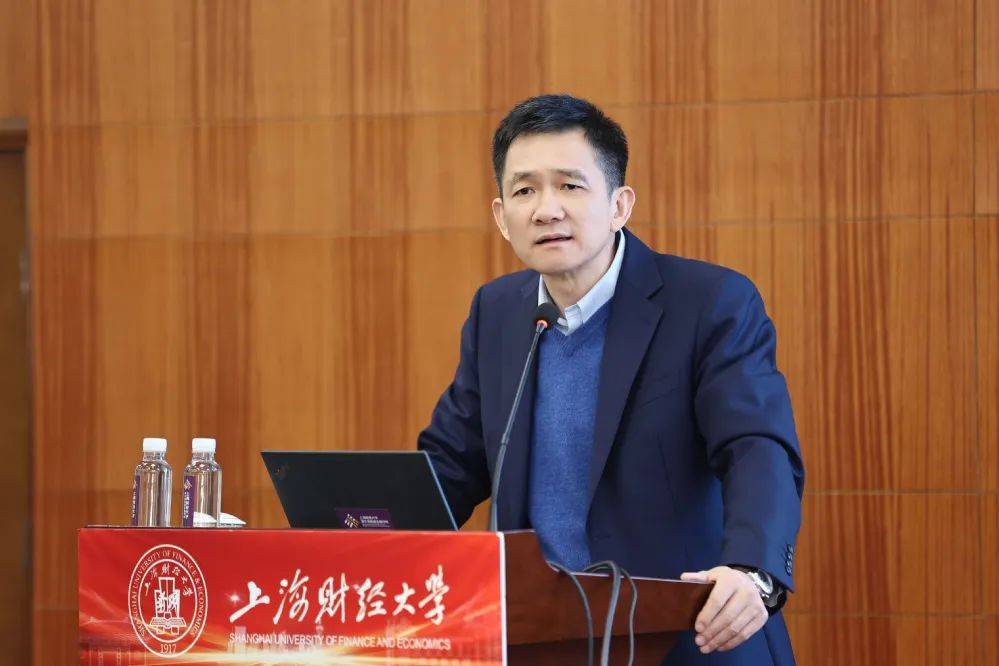
专访姚洋:建议成立中储房,先收下100万套房子
Sou Hu Cai Jing· 2025-08-06 11:58
Group 1: Real Estate Market - The number of foreclosed homes is expected to exceed 1 million this year, up from 750,000 last year, leading to a significant drop in market prices as many properties remain unsold and stuck in banks [1] - The current market situation is exacerbated by a large number of foreclosed homes being sold at half the market price, which further depresses overall market values [1][30] - A proposal suggests the establishment of a "Central Housing Reserve" to purchase these foreclosed properties, stabilizing the market and providing housing solutions for displaced homeowners [30] Group 2: Economic Demand and Consumption - The economist emphasizes that boosting demand is crucial, suggesting that government spending on real estate and local government expenditures, which together account for about 50% of total domestic demand, should be prioritized over individual consumption subsidies [2][28] - Current consumer spending is not driven by subsidies but by necessity, indicating that confidence in the economy is a significant factor affecting consumption patterns [28] - The economist advocates for issuing 4 trillion yuan in special government bonds annually for three years to alleviate local government financial deficits, which would help stimulate demand [29] Group 3: Financial Market and Investment - The financial market is in a phase of reconstruction following the deleveraging efforts from 2017 to 2018, with a significant decline in direct financing from over 30% to below 10% [17] - Venture capital (VC) fundraising has seen a drastic reduction, with its share of the U.S. market dropping from 90% to 30%, indicating a need for a re-evaluation of funding sources and strategies [18] - The economist argues for a reconnection between banks and venture capital systems to facilitate the flow of funds into innovative sectors, which could mitigate issues of market saturation and competition [19][22]
滨江集团等在杭州投资成立新公司
Sou Hu Cai Jing· 2025-08-06 07:40
Core Insights - A new real estate development company, Hangzhou Binguan West Station Real Estate Development Co., Ltd., has been established with a registered capital of 100 million yuan [1][2] - The company is co-owned by Binjiang Group (002244) and other stakeholders [1][3] Group 1: Company Information - The registered capital of Hangzhou Binguan West Station Real Estate Development Co., Ltd. is 100 million yuan [2] - The company is classified under the real estate industry (K70) and is located in Yuhang District, Hangzhou, Zhejiang Province [2] - The legal representative of the company is He Qunkang, and it is currently in an operational status [2] Group 2: Ownership Structure - Binjiang Group holds a significant stake in the new company, alongside Hangzhou West Station Hub Development Co., Ltd., which is a state-owned enterprise [3]

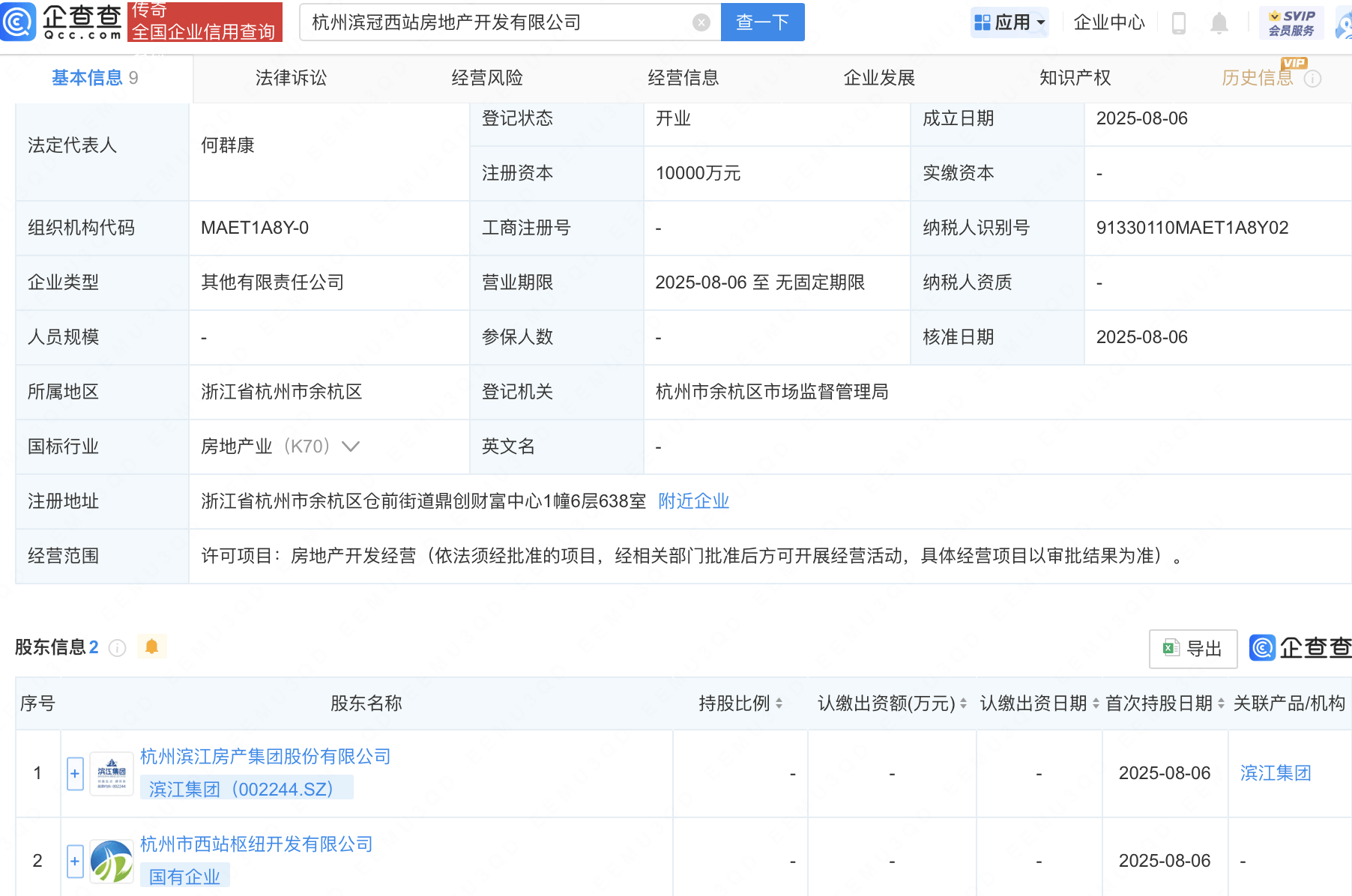
现在美国降息,其实就是怕两个方面,一个是资金流出美国,进入中国,中国股市、资产都尚在低点,如果现在降息,资本很可能就跑到中国来了
Sou Hu Cai Jing· 2025-08-05 14:18
Core Viewpoint - The relationship between U.S. interest rate changes and foreign capital flows into China has become increasingly evident, suggesting a direct correlation between the two [1][3][6]. Group 1: U.S. Interest Rate Changes - The Federal Reserve began raising interest rates in March 2022, with a significant increase from 0.25% to 4% by November 2022, which coincided with a decline in foreign capital inflows to China [3][5]. - In 2023, foreign capital inflows to China saw a year-on-year decrease for the first time in years, aligning with the Fed's rate hike to 5% in March [5][10]. - By September 2024, when the Fed indicated a potential rate cut, foreign capital inflows to China surged, demonstrating a strong market reaction to U.S. monetary policy [7][10]. Group 2: Capital Flow Dynamics - Foreign capital is primarily driven by where it can achieve better returns, rather than local conditions such as pandemic lockdowns [5][10]. - The Chinese stock market and real estate are currently perceived as attractive investment opportunities due to their low positions, especially if the Fed enters a prolonged rate-cutting phase [10][18]. - The potential for capital outflow from the U.S. to China is significant if the market believes in sustained lower interest rates from the Fed [18][20]. Group 3: Economic Indicators - U.S. retail sales growth, adjusted for inflation, is nearly stagnant, indicating a weakening domestic economy [11][13]. - The Fed faces a dilemma: lowering rates could reignite inflation, while maintaining rates could exacerbate domestic economic issues [11][13][16]. - Long-term U.S. Treasury yields are declining, suggesting market expectations of an end to the Fed's tightening cycle, which could further influence capital flows [16][18].

黑天鹅事件出现!市场行情要转向了
大胡子说房· 2025-08-05 13:02
Core Viewpoint - The article discusses the unexpected resilience of the Chinese stock market (A-shares) amidst global market declines following disappointing U.S. non-farm payroll data, suggesting that the anticipated U.S. interest rate cuts could benefit the Chinese market [1][3]. Group 1: Market Performance - The Shanghai Composite Index rose to 3617.60, gaining 34.29 points (+0.96%), while the Shenzhen Component and ChiNext also saw increases [2]. - Despite global market turmoil, the Chinese market experienced a two-day rally, defying expectations of a downturn [1]. Group 2: Economic Analysis - The article attributes the strength of the Chinese market to the potential shift in capital flows due to U.S. interest rate cuts, which could favor the Chinese economy [3]. - A significant factor in China's economic struggles is identified as the interest rate differential between China and the U.S., with the current U.S. federal funds rate at 4.25%-4.50% and China's 5-year LPR at 3.5%, creating a roughly 1% difference [4]. - The disparity in deposit rates is even more pronounced, with U.S. 1-year fixed deposit rates between 4%-4.6% compared to China's 0.95%, leading to a deposit rate differential exceeding 4% [4]. Group 3: Historical Context - Historically, China's interest rates were higher than those in the U.S., particularly during periods of robust economic growth, which attracted significant capital inflows and fueled real estate market prosperity [10]. - The shift in interest rates began around April 2022, when Chinese rates fell below U.S. rates, coinciding with a downturn in the Chinese real estate market and broader economic challenges [11]. Group 4: Future Outlook - The article posits that the current low valuation of Chinese capital markets is largely influenced by the ongoing U.S. interest rate hike cycle and the significant interest rate differential [15]. - A potential shift to a U.S. interest rate cut could lead to a recovery in Chinese asset prices, as seen during previous rate cut cycles [17].

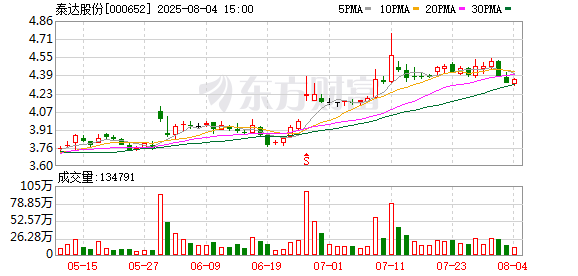
泰达股份:首次回购100万股
Mei Ri Jing Ji Xin Wen· 2025-08-04 11:41
Group 1 - The company, Teda Co., Ltd. (SZ 000652), announced a share buyback on August 4, 2025, purchasing 1 million shares, which represents 0.068% of its total share capital, with a total transaction amount of approximately 4.32 million yuan [2] - The highest transaction price for the repurchased shares was 4.36 yuan per share, while the lowest was 4.30 yuan per share [2] - For the fiscal year 2024, the company's revenue composition was as follows: wholesale industry accounted for 89.33%, environmental management 6.82%, construction 2.8%, real estate 0.74%, and textile and apparel 0.29% [2]