
商业地产

Search documents
商业不动产REITs来了!万亿级商业地产向投资者敞开大门
2 1 Shi Ji Jing Ji Bao Dao· 2025-12-01 13:05
Core Insights - The launch of commercial real estate REITs marks a significant expansion of China's REITs market, transitioning from infrastructure to commercial real estate, indicating a new phase of "dual-wheel drive" development [1][2][3] - This initiative is a key measure to implement the new "National Nine Articles" policy aimed at promoting high-quality development of the REITs market, facilitating equity financing for commercial real estate [1][3] Market Development - The commercial real estate REITs pilot is seen as a natural progression, building on nearly five years of experience with infrastructure REITs, which have established a mature regulatory and operational framework [2][3] - As of November 27, 2025, 77 REITs products have been listed, with a cumulative financing scale of 207 billion yuan and a total market value of approximately 220.1 billion yuan, demonstrating the feasibility of the REITs model in China [2] Policy Framework - The pilot's introduction reflects a high degree of policy coherence, aligning with the new "National Nine Articles" and the "Urban Commercial Quality Improvement Action Plan," which supports the issuance of REITs for commercial real estate projects [3][4] - The strategic significance of the pilot is highlighted by its potential to reshape the real estate development model, moving from high-leverage, high-turnover sales to long-term operations and professional asset management [3][4] Asset Management and Market Functionality - REITs are expected to enhance liquidity in the commercial real estate sector, converting large amounts of stagnant assets into standardized financial products that can be traded in the capital market [4][5] - The introduction of commercial real estate REITs will provide investors with new asset allocation options characterized by stable cash flows, catering to diverse investment needs [5][6] Regulatory Framework - The pilot's design emphasizes a market-oriented and legal framework, ensuring continuity and stability in regulations, which will facilitate a smooth integration into the existing market system [5][6] - Clear asset admission standards have been established to ensure that underlying assets are mature and of high quality, thereby protecting investor interests and setting a benchmark for high-quality issuance [6][7] Risk Management and Oversight - A comprehensive regulatory and risk prevention network has been established, delineating responsibilities among regulatory bodies, self-regulatory organizations, and fund managers to ensure effective oversight [7][8] - The dual-track development model aims to provide comprehensive financial services across key economic sectors, with infrastructure REITs focusing on public assets and commercial real estate REITs enhancing urban commercial spaces [8][9] Future Outlook - The dual-track strategy is expected to foster a more diverse and resilient REITs market, with potential expansions into new asset types such as data centers, logistics, and affordable rental housing [9][10] - This evolution will enrich China's capital market product offerings and cultivate local asset management institutions, driving the real estate industry towards a more refined, financialized, and sustainable development path [10]
万亿商业REITs来了,你能投什么?
2 1 Shi Ji Jing Ji Bao Dao· 2025-12-01 12:17
Core Viewpoint - The China Securities Regulatory Commission has officially launched a pilot program for commercial real estate REITs, allowing public investment in previously inaccessible large assets like shopping centers, office buildings, and hotels [1] Group 1: Market Expansion - This marks a historic expansion of the REITs market in China, transitioning into a new phase characterized by "infrastructure + commercial real estate" dual-driven growth [1] - Over the past five years, 77 infrastructure REITs have been successfully issued, indicating a robust foundation for the new commercial real estate segment [1] Group 2: Impact on Real Estate Companies - For real estate companies holding substantial properties, this initiative serves as a crucial transformation tool, providing a new equity financing channel [1] - It can effectively help companies optimize liabilities, activate existing assets, and facilitate their transition from "developers" to professional "asset operators" [1] Group 3: Opportunities for Investors - For individual investors, commercial REITs present a new asset allocation option with stable cash flow characteristics, alongside stocks and bonds [1] - This development allows individual investors to share in the rental income and appreciation potential of high-quality commercial real estate in first-tier cities, similar to institutional investors [1] Group 4: New Era - A new era connecting physical commerce with capital markets has begun, indicating significant changes in investment opportunities and market dynamics [1]
新华财经晚报:我国基础设施REITs再迈关键一步 扩围至酒店、商业办公设施等领域
Xin Hua Cai Jing· 2025-12-01 11:48
Key Points - China's infrastructure REITs have expanded to include hotels, commercial office facilities, and other sectors, marking a significant breakthrough in the types of underlying assets [1] - The annual express delivery volume in China has surpassed 180 billion pieces for the first time, averaging over 16 billion pieces per month, reflecting the robust vitality of the Chinese economy [2] - The State Administration for Market Regulation is advancing the regulatory framework for infant liquid milk products, aiming to enhance safety and quality standards in the industry [1] - The Chinese government has implemented a new policy to support housing for low-income workers, expanding assistance to include both newly built and existing homes [3] - President Putin has signed a decree allowing Chinese citizens to enter Russia without a visa for up to 30 days, effective until September 14, 2026, promoting tourism and business travel [4] Domestic News - The National Development and Reform Commission has published a new list of eligible projects for infrastructure REITs, which now includes sports venues, commercial complexes, and urban renewal projects [1] - The express delivery sector's growth is seen as a key driver for consumption and economic stability, with the industry experiencing significant scale effects [2] - The Guangdong Provincial Development and Reform Commission reported that 1,500 key projects are planned for 2025, with an investment target of 1 trillion yuan, achieving 96% of the annual investment goal by October [2] International News - The Eurozone's manufacturing PMI for November was reported at 49.6, slightly below expectations, indicating a contraction in the manufacturing sector [5] - Germany's manufacturing PMI for November was 48.2, also below expectations, suggesting ongoing challenges in the manufacturing landscape [6] - France's manufacturing PMI remained stable at 47.8, while Italy's PMI improved to 50.6, indicating a slight expansion in the manufacturing sector [7][8]


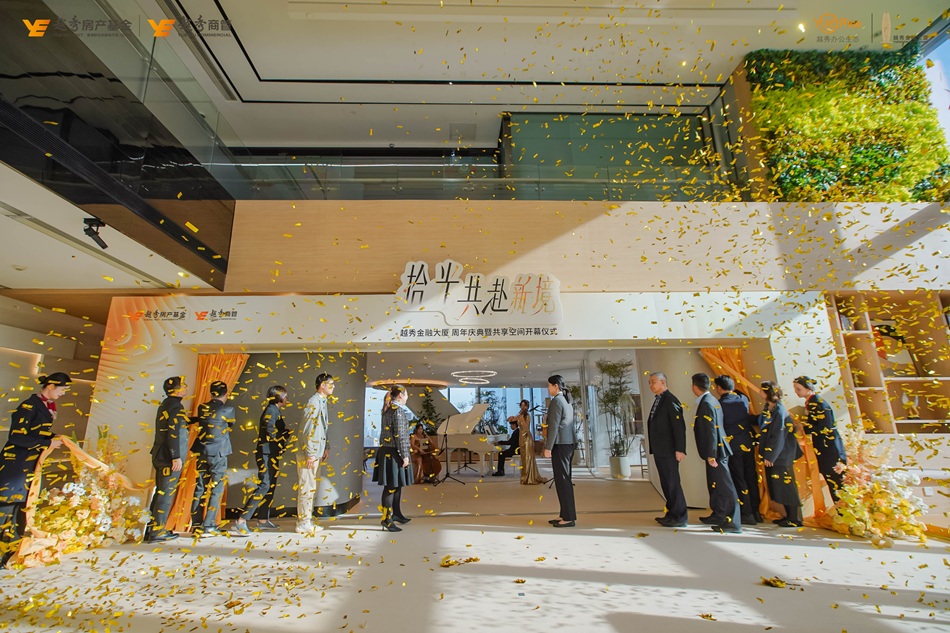
越秀金融大厦UNIMAX HUB焕新启幕,以共生之力重塑金融生态标杆
Cai Fu Zai Xian· 2025-12-01 09:27
Core Insights - The article highlights the evolution of Yuexiu Financial Tower from a traditional office building to a vital ecosystem for the financial industry, marking its tenth anniversary with the launch of UNIMAX HUB [1][2][4]. Group 1: Development and Milestones - Yuexiu Financial Tower has undergone significant transformations since its foundation in 2013, becoming the first venture capital building in China in 2017 and earning the title of a super Grade A office building in 2021 [2]. - The recent opening of UNIMAX HUB on the 35th floor signifies a new phase focused on "space empowerment ecology," enhancing the building's role as an engine for regional industrial aggregation [2][4]. Group 2: Ecosystem and Collaboration - The building has established itself as a core hub in the financial ecosystem of Zhujiang New Town, attracting numerous financial institutions and innovative enterprises, fostering a collaborative environment [4][12]. - Regularly held industry salons and resource matching events have facilitated partnerships among tenants, exemplifying the "upstairs and downstairs" ecological logic [12]. Group 3: Space Innovation and User Experience - UNIMAX HUB emphasizes innovative space design, featuring a multifunctional auditorium, panoramic tea room, and smart meeting rooms, catering to diverse business needs [5][10]. - The introduction of pets in the workspace aims to create a more relaxed and connected environment, reflecting a commitment to human-centered design [10]. Group 4: Future Vision and Strategic Goals - UNIMAX HUB is positioned to be a central hub for ecological empowerment, linking government policies with enterprise needs and enhancing resource accessibility through the "Yuexianghui Life" app [13]. - The overarching goal is to support the growth of enterprises and enhance the quality of life for professionals, contributing to Guangzhou's development as an international financial center [13].
华润万象生活(01209):依托母公司购物中心资源禀赋,商管业务演绎逆势增长
Orient Securities· 2025-12-01 06:10
Investment Rating - The report maintains a "Buy" rating for China Resources Vientiane Life [1] Core Views - The company is expected to benefit from its light asset management model, which allows it to enjoy operational benefits without significant capital investment, leading to lower risk and higher profit margins [5][24] - The company's strong bargaining power with merchants is supported by its parent company's stable growth and large-scale quality shopping centers, enhancing its ability to achieve long-term same-store growth [8][9] Financial Performance - The company's revenue is projected to grow from 14,767 million HKD in 2023 to 22,596 million HKD in 2027, with a compound annual growth rate (CAGR) of 8.1% [7] - The net profit attributable to the parent company is expected to increase from 2,929 million HKD in 2023 to 5,572 million HKD in 2027, reflecting a CAGR of 15.3% [7] - The earnings per share (EPS) forecast for 2025 and 2026 is adjusted to 1.73 HKD and 2.12 HKD, respectively, with a new estimate for 2027 at 2.44 HKD [6][12] Market Position and Competitive Advantage - The company operates under a light asset model, which allows it to leverage the parent company's extensive resources without the burden of heavy capital investment, thus maintaining a competitive edge in the market [18][24] - The parent company, China Resources Land, has a significant number of shopping centers, with 92 operational centers and 35 under construction, providing a stable and growing contract base for the company [41][42] - The company's ability to secure prime locations in high-tier cities enhances its market position and operational performance, leading to a strong upward trend in rental income [30][36] Growth Drivers - Key growth drivers include same-store sales growth exceeding expectations, new third-party contracts, and accelerated monetization of membership programs [11] - The company is expected to continue benefiting from the industry’s Matthew effect, where leading players gain more market share and operational advantages [10][36]

申万宏源证券晨会报告-20251201
Shenwan Hongyuan Securities· 2025-12-01 01:13
Group 1: Real Estate Industry - The China Securities Regulatory Commission (CSRC) has initiated a pilot program for commercial real estate REITs, indicating significant development potential for this sector. The market for public REITs in China is estimated to exceed 10 trillion yuan, with the current market size at 219.9 billion yuan, of which commercial real estate accounts for 130.9 billion yuan [12][27]. - The planned commercial real estate REITs will create a multi-tiered market for asset securitization, which will help to broaden financing channels for enterprises, optimize capital structures, and facilitate strategic transformations from developers to asset managers [12][27]. - The commercial real estate REITs are seen as a key practice for constructing a new development model in the real estate sector, focusing on quality and sustainability rather than mere quantity [12][27]. Group 2: Internet and Media Industry - Core consumer brands in the internet and media sector, such as gaming companies and lifestyle brands, are currently trading at a PE ratio below 20x for 2026, indicating a high margin of safety for investors. The structural consumption trend among young users in China remains a significant growth driver [11][12]. - The gaming sector is experiencing a demographic shift, with Generation Z users making up 65% of the market, and there is untapped potential in female-oriented gaming content. Companies like Giant Network are expected to benefit from this trend [11][12]. - The music industry is also highlighted as a growth area, with stable demand for subscription services among young users, and companies are expected to enhance their bargaining power in the face of a fragmented rights market [15]. Group 3: Energy Sector - Guangzhou Development (600098.SH) is positioned as a comprehensive energy service provider, with a diversified business model covering electricity, energy logistics, gas, and renewable energy. The company reported a net profit of 2.159 billion yuan for the first nine months of 2025, a year-on-year increase of 36.1% [14][19]. - The company has a strong dividend history, with a payout ratio consistently above 50% over the past three years, and plans to increase dividends further in 2025 [14][19]. - The energy sector is expected to benefit from stable pricing in coal and gas power generation, with ongoing projects set to enhance profitability [19][20].
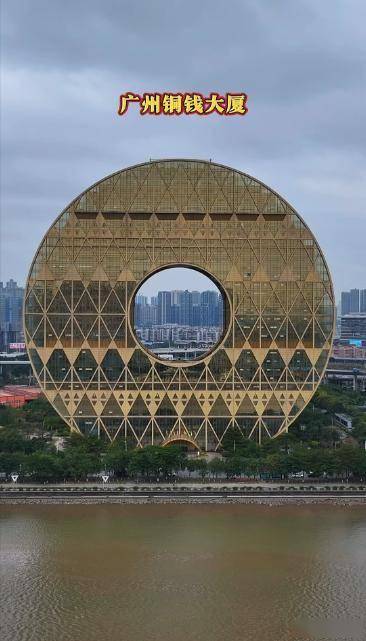
广州“铜钱大厦”降1.36亿元仍流拍,四次流拍,三万围观:广州圆大厦的生死局
Sou Hu Cai Jing· 2025-11-30 21:51
Core Viewpoint - The repeated failure to auction the Guangzhou Round Building reflects the shift in China's commercial real estate from a phase of enthusiasm to one of rationality, highlighting the challenges faced by unique architectural projects in a changing market landscape [1][11]. Group 1: Symbol of Wealth's Decline - The Guangzhou Round Building, once a symbol of wealth and ambition, has seen its auction price plummet from 5.589 billion to 1.224 billion yuan, a decrease of over 76%, yet it remains unsold despite significant interest [3][4]. - Originally completed in 2013 and hailed as the world's largest circular building, it has now become a liability due to the financial troubles of its parent company, Guangdong Xingye International Industrial Co., Ltd. [3][4]. Group 2: Debt Crisis and Corporate Collapse - Hongda Xingye Group, the parent company, is facing a financial disaster with debts amounting to 33.8 billion yuan and a negative net asset of 23.8 billion yuan, leading to its bankruptcy restructuring in August 2023 [4][6]. - The company's founder, Zhou Yifeng, once a prominent businessman, is now a discredited figure with significant financial and legal troubles [5][6]. Group 3: Design Flaws and Market Realities - The building's design, which prioritizes form over function, results in a 30% lower space utilization compared to conventional office buildings, alongside high maintenance costs due to its gold glass façade [8][10]. - The rising vacancy rates in Guangzhou's office market, reaching 22%, further complicate the prospects for the building, which is projected to generate insufficient rental income to justify its acquisition [10][13]. Group 4: Cultural and Aesthetic Controversies - The public perception of the Guangzhou Round Building is mixed, often criticized as one of China's ugliest buildings, despite its intended design inspiration [10][11]. - Historical parallels are drawn with other iconic buildings that faced initial criticism but later became celebrated landmarks, suggesting that public opinion can evolve over time [10][11]. Group 5: Restructuring Commercial Real Estate Logic - The failed auctions of the Guangzhou Round Building signify the end of an era where unique architectural designs were favored over sustainable financial models, as the market now prioritizes cash flow and operational efficiency [11][13]. - Other commercial properties have also seen significant price reductions in recent auctions, indicating a broader trend in the real estate market towards more cautious investment strategies [11][13]. Group 6: Potential for Future Revitalization - Despite its current challenges, the Guangzhou Round Building may have a future if it can be acquired at a sufficiently low price by a buyer willing to invest in its redevelopment [14][16]. - The surrounding area is undergoing development, which could enhance the building's value, but successful revitalization will require innovative approaches and government support [14][16].
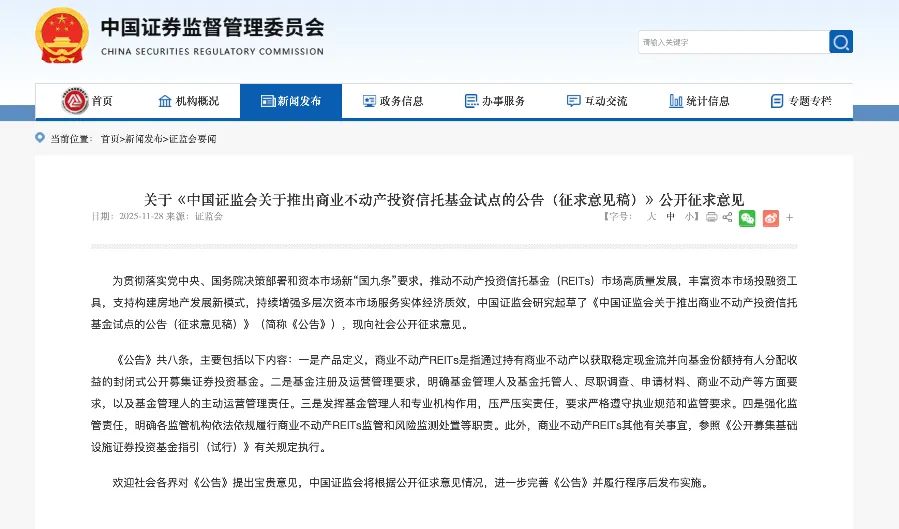
利好来了 证监会大动作 就重要新规征求意见
2 1 Shi Ji Jing Ji Bao Dao· 2025-11-29 02:34
Core Viewpoint - The announcement of the pilot program for Commercial Real Estate Investment Trusts (REITs) marks a significant innovation in China's capital market, aiming to connect commercial real estate with the capital market and provide standardized solutions for revitalizing trillions of yuan in existing assets [1][5]. Group 1: Institutional Design - The pilot program establishes a comprehensive market-oriented operational system, defining commercial real estate REITs as public funds that invest in real estate asset-backed securities to obtain ownership or operational rights, emphasizing the importance of active management [2][3]. - The announcement requires that the commercial real estate assets must have clear ownership and generate stable cash flows, ensuring asset quality for investors [2]. - Fund managers are mandated to actively manage and operate the assets, moving away from passive management to enhance asset value through professional operations [2][3]. Group 2: Market Impact - The introduction of commercial real estate REITs provides a new financing channel for companies holding substantial commercial properties, allowing them to convert illiquid assets into liquid capital without losing operational control [5][6]. - REITs are expected to transform the operational logic of commercial real estate, compelling managers to improve operational capabilities and enhance property value through refined management practices [6]. - The REITs model is anticipated to inject new vitality into the capital market, appealing to long-term investors and providing ordinary investors with access to quality commercial real estate investments [6][7]. Group 3: Future Outlook - The development of commercial real estate REITs is based on five years of experience with infrastructure REITs, aligning with international practices and market trends [7][8]. - The market is prepared for implementation, with exchanges revising rules and fund companies forming specialized teams to support the initiative [7]. - Successful pilot implementation will require supportive policies, including tax and state-owned asset transfer regulations, to create a conducive environment for the growth of the REITs market [8][9].
利好来了,证监会大动作,就重要新规征求意见
2 1 Shi Ji Jing Ji Bao Dao· 2025-11-29 02:21
Core Viewpoint - The announcement of the pilot program for Commercial Real Estate Investment Trusts (REITs) marks a significant innovation in China's capital market, aiming to connect commercial real estate with the capital market and provide standardized solutions for revitalizing trillions of yuan in existing assets [3][4]. Group 1: Pilot Program Overview - The pilot program is a key transition from infrastructure REITs to commercial real estate, aligning with the new "National Nine Articles" to promote high-quality development of the REITs market [3]. - The program aims to provide a new equity financing channel for the commercial real estate sector and transform the operational model of real estate development [3][6]. Group 2: Institutional Design - The pilot program features a comprehensive institutional design that establishes a market-oriented and standardized operational system, emphasizing the active management of REITs [4][5]. - The definition of commercial real estate REITs highlights their equity nature and the requirement for professional management to create value through operations [4]. - The program sets clear asset quality standards, ensuring that only properties with stable cash flows and clear ownership can be included [4]. Group 3: Market Impact - The introduction of commercial real estate REITs is expected to unlock dormant assets in prime urban areas, providing a new financing avenue for companies holding substantial commercial properties [6][7]. - REITs will shift the operational logic of commercial real estate from a focus on sales to a focus on management, enhancing property value through improved operational capabilities [7]. - The REITs model is anticipated to inject new vitality into the capital market, appealing to long-term investors such as insurance funds and pension funds due to its stable returns [7][8]. Group 4: Future Development and Opportunities - The development of commercial real estate REITs is based on five years of experience with infrastructure REITs, following a path from infrastructure to commercial real estate [8]. - The market is prepared for implementation, with exchanges revising rules and fund companies forming specialized teams [8]. - Successful implementation of the pilot program will require supportive policies, including tax and state-owned asset transfer regulations, to create a conducive environment for REITs [9].
利好来了,证监会大动作,就重要新规征求意见
21世纪经济报道· 2025-11-29 02:19
Core Viewpoint - The introduction of the commercial real estate REITs pilot program marks a significant breakthrough in China's capital market, aiming to connect commercial real estate with the capital market and provide standardized solutions for revitalizing trillions of yuan in existing assets [1] Group 1: Institutional Design - The pilot program establishes a market-oriented and standardized operational system, defining commercial real estate REITs as public funds that invest in commercial real estate asset-backed securities to obtain ownership or operational rights [2][3] - The announcement emphasizes the importance of clear asset ownership and stable cash flow for the assets held by the REITs, ensuring quality through a "safety filter" for investors [2] - A multi-layered responsibility system is constructed, involving the CSRC for regulation, exchanges and industry associations for self-regulation, and fund managers for operational management, ensuring market vitality while maintaining risk control [3] Group 2: Revitalizing Existing Assets - The pilot program coincides with a critical turning point in China's commercial real estate development, providing a new financing channel for companies holding substantial commercial properties [4] - REITs allow developers to achieve asset securitization without losing operational rights, effectively converting large amounts of capital tied in real estate into liquid capital, thus improving cash flow [4] - The introduction of REITs is expected to transform the operational logic of commercial real estate, pushing managers to enhance operational capabilities and property value through refined management practices [5] Group 3: Future Development and Market Opportunities - The development of commercial real estate REITs is based on five years of experience from infrastructure REITs, following a path from infrastructure to commercial real estate [6] - Market participants are prepared for implementation, with exchanges revising supporting rules and fund companies forming specialized teams [7] - The complementary relationship between commercial real estate REITs and infrastructure REITs will enhance the overall REITs market ecosystem in China [7] - The potential for new asset classes, such as logistics and data centers, to be listed through REITs presents additional investment opportunities [7] - Successful pilot implementation will require coordinated support from related policies, including tax and state-owned asset transfer regulations, to create a favorable environment for REITs market development [8]
