
油气

Search documents
中国能源这一年,加速跑!
中国能源报· 2025-12-29 03:28
Group 1 - The core viewpoint of the article emphasizes China's commitment to achieving a low-carbon economy by 2035, marking a significant step in global climate cooperation and showcasing the country's ability to balance climate responsibility with economic growth [2][3]. - The "14th Five-Year Plan" includes the goal of building an energy powerhouse, elevating energy from a foundational element of economic development to a core pillar of national strength, thus establishing a clear direction for high-quality energy development in the coming years [2][3]. Group 2 - China's energy strategy is characterized by a dual focus on security and development, with coal production expected to remain above 4.8 billion tons by 2025, and renewable energy capacity projected to exceed 2.2 billion kilowatts, highlighting a robust commitment to clean energy [3][4]. - The construction of a new energy system is anticipated to be flexible, reliable, and interconnected, moving beyond simple iterations of old and new energy sources [4]. Group 3 - In the first 11 months of the year, China's total electricity consumption reached 94,602 billion kilowatt-hours, a year-on-year increase of 5.2%, with projections indicating that total consumption will exceed 100 trillion kilowatt-hours for the first time [6]. - The energy supply security measures have proven effective, with record-high electricity loads during peak summer months and significant inter-provincial electricity support [6]. Group 4 - Oil and gas production has reached new heights, with crude oil output at approximately 215 million tons and natural gas production surpassing 260 billion cubic meters, marking a historic high [7][8]. - The oil and gas industry is expected to continue focusing on increasing reserves and production while ensuring a resilient and sustainable energy supply system [8]. Group 5 - The renewable energy sector is rapidly advancing, with installed capacity nearing 2.2 billion kilowatts and accounting for approximately 59.1% of total capacity, driven by strong policy support and technological breakthroughs [10]. - New energy storage capacity has also seen significant growth, exceeding 100 million kilowatts, representing over 40% of the global total [10]. Group 6 - The renewable energy industry is undergoing a transformation to address issues of price competition and market order, with government initiatives aimed at regulating low-price competition in the photovoltaic sector [11][12]. - The focus is shifting from scale expansion to value creation, emphasizing innovation and differentiation in product development and business models [12]. Group 7 - China's nuclear power sector is expanding, with five new projects approved this year, maintaining a leading position globally with 54 units under construction and 58 in operation [14]. - Significant advancements in nuclear technology, including the development of the "Hualong One" reactor and breakthroughs in thorium-based molten salt reactors, are enhancing the role of nuclear energy in achieving a low-carbon energy system [14]. Group 8 - The electricity market has seen substantial growth, with a total trading volume of 60,300 billion kilowatt-hours from January to November, representing a 7.6% increase year-on-year [19][20]. - The implementation of market reforms is facilitating the integration of renewable energy into the grid, with new policies promoting market-based pricing for renewable projects [21]. Group 9 - The national carbon market has expanded to include key industries such as steel, cement, and aluminum, covering over 60% of total carbon emissions, with significant trading volumes recorded [23]. - The integration of carbon markets with renewable energy markets is being strengthened, which is crucial for promoting low-carbon transitions in the economy [23]. Group 10 - The establishment of zero-carbon parks is underway, with a goal to create approximately 100 national-level parks, emphasizing the importance of these areas in achieving green transformation and carbon neutrality [24]. - Various regions are exploring innovative practices to enhance renewable energy consumption and industrial green transformation within these parks [24].


油气ETF汇添富(159309)开盘涨0.09%,重仓股杰瑞股份跌2.00%,中国海油跌0.39%
Xin Lang Cai Jing· 2025-12-29 01:37
Group 1 - The core point of the article highlights the performance of the oil and gas ETF Huatai Fuhua (159309), which opened with a slight increase of 0.09% at 1.139 yuan [1] - The major holdings of the oil and gas ETF include companies such as Jereh, CNOOC, PetroChina, Sinopec, and others, with varying performance on the opening day [1] - The ETF's performance benchmark is the CSI Oil and Gas Resource Index return rate, managed by Huatai Fuhua Fund Management Co., Ltd., with a return of 13.88% since its establishment on May 31, 2024, and a return of 5.61% over the past month [1] Group 2 - Jereh shares opened down by 2.00%, while CNOOC and PetroChina saw declines of 0.39% and 0.10% respectively [1] - Sinopec remained unchanged, while other companies like China Merchants Energy and Intercontinental Oil & Gas showed slight increases [1] - The overall performance of the ETF reflects the mixed performance of its underlying assets in the oil and gas sector [1]





勇攀科技高峰 促进高质量发展——2024年度海南省科学技术奖获奖情况
Hai Nan Ri Bao· 2025-12-29 01:16
Group 1 - The 2024 Hainan Provincial Science and Technology Awards are the first to be awarded after the revision of the "Hainan Provincial Science and Technology Award Measures" and implementation rules, with a 30% increase in nominated projects compared to the previous year and a control of the award-winning ratio below 35%, indicating a higher difficulty in winning and an increase in project quality [1] - Awarded projects demonstrate significant technological innovation and have a notable impact on industry advancement, generating substantial social and economic benefits, showcasing Hainan's effectiveness in attracting and nurturing innovative teams [1] Group 2 - The awarded projects align with the province's industrial layout and development needs, covering key areas such as deep sea, energy, nuclear power, oil and gas, information technology, new materials, ecological environment, tropical efficient agriculture, and healthcare, reflecting the province's strategic focus and the commitment of researchers to national strategies [1] - The innovation capability of enterprises in the province has significantly improved, with 16 projects led by enterprises winning awards, accounting for nearly one-third of the total, marking a historical high [1] - The total direct economic benefits generated by the awarded projects reached 118.95 billion, a 66.5% increase compared to the economic benefits of awarded projects in 2023, setting a new high in the past three years [1] Group 3 - The effectiveness of youth talent and team building is evident, with an increasing proportion of award-winning projects led by individuals under 45 years old, reflecting the province's ongoing optimization of support policies for young scientific talent [2] - The characteristic of open innovation is more pronounced, with 66.3% of awarded projects involving collaboration with external provinces, and 23.8% led by introduced talents, while 30.1% are led by returned talents, all reaching the highest levels in the past three years [2] - The proportion of award winners from outside the province reached 40.2%, also a record high in the last three years [2]
LPG早报-20251229
Yong An Qi Huo· 2025-12-29 01:03
部或部分材料、内容。对可能因互联网软硬件设备故障或失灵、或因不可抗力造成的全部或部分信息中断、延迟、遗漏、误导或造成资料传输 或储存上的错误、或遭第三人侵入系统篡改或伪造变造资料等,我们均不承担任何责任。 LPG = FA 台H 研究中心能化团队 2025/12/29 -P G 内院CFR华 山东烷基 CP预测合 丙烷CIF日本 纸面进口利润 日期 华南液化气 华东液化 山东液化气 山东醚后碳四 主力基差 同价 化油 E 2025/12/22 4480 4388 4370 536 4580 7150 -213 580 202 355 2025/12/23 4377 4370 | 4475 590 550 507 4580 7180 -291 444 2025/12/24 4392 4320 4570 7180 4480 590 543 510 -277 398 4520 2025/12/25 4505 4389 4310 590 539 510 7150 -245 413 4270 -233 2025/12/26 4510 4384 289 541 4500 7150 l 日度变化 -40 -1 N -20 ...
首艘、首条、首批!上周,大国工程好消息频传
Yang Shi Xin Wen· 2025-12-28 22:34
Group 1: Technological Breakthroughs - China has achieved a world record in superconducting electric magnetic levitation, accelerating a test vehicle weighing tons to 700 km/h in just two seconds, marking the fastest speed for this type of platform globally [1] - The world's first methanol dual-fuel intelligent super-large oil tanker, "Kai Tuo," has been successfully delivered, featuring a length of approximately 333 meters and a capacity to carry about 2.1 million barrels of crude oil [2] - The first near-zero carbon steel production line in China has been fully connected, capable of reducing carbon emissions by over 3.14 million tons annually, equivalent to reforesting 2,000 square kilometers [3] Group 2: Energy and Infrastructure Developments - China's largest offshore oil field, Bohai Oilfield, is projected to produce over 40 million tons of oil and gas equivalent by 2025, providing a solid guarantee for national energy security [6] - The "Linglong No. 1," the world's first land-based commercial modular small reactor, successfully completed its non-nuclear commissioning test, laying a solid foundation for future nuclear operations [8] - The first unit of China's largest pumped storage power station has been connected to the grid, marking a significant breakthrough in hydropower equipment and engineering [13] Group 3: Transportation Expansion - Multiple high-speed rail lines have been opened, including the Guangzhou-Zhanjiang high-speed rail, which can reach Zhanjiang in as little as 1 hour and 32 minutes [20] - The Shantou-Shantou South high-speed rail has officially commenced operations, with a total length of 162 kilometers and a design speed of 350 km/h [21] - The Baotou-Yinchuan high-speed rail has achieved full operation, bringing high-speed rail access to Inner Mongolia [23] - The Xi'an to Yan'an high-speed railway has been opened, contributing to a total high-speed rail network exceeding 50,000 kilometers [24] - The Wuhan to Yichang section of the Huhangyu Railway has been opened, enhancing rapid passenger transport in the Jianghan Plain and western Hubei [25] - The Hangzhou to Quzhou high-speed rail has been opened, adding a new artery to the Yangtze River Delta intercity rapid transit network [26] - The Ankang to Lanhua Expressway has been completed, becoming an important inter-provincial passage between Shaanxi and Chongqing [27] - The world's longest highway tunnel, the Tianshan Victory Tunnel, has been opened, significantly reducing travel time between Urumqi and Korla [28] - The Cangzhou-Zhao Expressway has been officially opened, ending reliance on ferry transport for over 10,000 residents [29] - The Guiyang to Beihai Expressway has been opened, providing a new north-south route to the Beibu Gulf [30] - The first "6-lane to 12-lane" expressway expansion project in China has been completed, enhancing the capacity of the Jing-Tai Expressway [31]

南华期货LPG产业周报:近端仍有支撑,预期承压-20251228
Nan Hua Qi Huo· 2025-12-28 14:19
1. Report Industry Investment Rating - Not provided in the document 2. Core Viewpoints of the Report - LPG prices mostly fluctuate following the trends of overseas propane and crude oil. Recently, the domestic PG has been affected by both current and expected factors. The current domestic fundamentals are moderately strong with continuous inventory reduction at ports and high PDH operation rates. However, in the future, overseas supply remains resilient, and domestic PDH profits are under significant pressure, with some enterprises expected to undergo maintenance. There is still short - term support, and marginal changes should be monitored [2] 3. Summary by Relevant Catalogs 3.1 Core Contradictions and Strategy Recommendations 3.1.1 Core Contradictions - Cost - end: The international crude oil market is volatile. It faces the pressure of oversupply and is continuously affected by geopolitical risks. This week, it continued to rebound at the beginning of the week due to the US - Venezuela issue and was mostly volatile in the second half of the week [1] - Overseas propane: The overseas propane market is relatively strong. In the US, shipments were low this week due to fog and holidays, and in the Middle East, the shipment volume remained at a low level, with the tight supply situation continuing. This week, FEI and CP prices continued to rise, with FEI premium at 18.75 and CP premium at 50, indicating structural support in the international market [1] - Domestic fundamentals: The domestic supply side saw a low arrival volume this week, and port inventories continued to decline. On the chemical demand side, the PDH operation rate increased to 76.32% this week, but the industry has been in a deep loss state. There are rumors that some PDH enterprises plan to undergo maintenance, and the actual maintenance situation should be monitored [1] 3.1.2 Trading Strategy Recommendations - Market positioning: Volatility. The price range for PG02 is 3800 - 4400 [20] - Basis strategy: Volatility [20] - Recent strategy review: Go short on PG2 - 3 spread at high prices; Hold the position of buying PP and shorting PG, as PDH is in a continuous loss state. Pay attention to the negative feedback. It is expected that some enterprises will undergo maintenance in the first quarter. Pay attention to widening the spread between 05PP and 03PG [20][21] - Monthly spread strategy: Volatility. Go short on the spread at high prices [23] - Hedging and arbitrage strategy: Narrow the internal - external price difference and widen the PP/PG price ratio at low prices [23] 3.1.3 Industrial Customer Operation Recommendations - LPG price range forecast: The price range is 3800 - 4400, the current volatility (20 - day rolling) is 18.73%, and the historical percentage of the current volatility (3 - year) is 21.34% [22] - Hedging strategy: For inventory management, when inventory is high and worried about price decline, short PG2602 futures to lock in profits and sell call options (PG2601C4400) to collect premiums. For procurement management, when the regular inventory is low and procurement is based on orders, buy PG2602 futures at low prices to lock in procurement costs and sell put options (PG2602P3900) to collect premiums [22] 3.2 This Week's Important Information and Next Week's Attention Events 3.2.1 This Week's Important Information - Bullish information: Overseas supply remains tight, and prices are strong, providing relative support. The domestic fundamentals are still relatively strong, with port inventories declining again after the decrease in arrival volume, and short - term PDH demand remaining stable, with the operation rate rising to 76.32% this week [24] - Bearish information: PDH is in continuous loss, and there are still expectations of maintenance [25] 3.2.2 Next Week's Important Events - On December 31, the Fed will release the minutes of the monetary policy meeting; On December 31, China's December PMI will be released [29] 3.3 Disk Interpretation 3.3.1 Price - Volume and Capital Interpretation - Domestic market: The PG02 contract fluctuated and rose this week. The net position of the main profitable seats decreased slightly; there were no obvious changes in the top 5 long and short positions in the dragon - tiger list; the net short position of the profitable seats increased slightly; the net long position of foreign capital increased slightly, and the net short position of retail investors increased slightly. Technically, PG02 was mostly volatile this week, oscillating between 4000 - 4200 on the daily chart [27] - Overseas market: FEI M1 closed at $522/ton (+$10), with a premium of $18.75/ton; CP M1 closed at $514/ton (+$10), with a CP premium of $50/ton; MB M1 closed at $342/ton (+$4). This week, the swaps rebounded in tandem with the rebound of crude oil, and the shipments from the US and the Middle East continued to be at a low level [33] 3.3.2 Basis - Monthly Spread Structure - Domestic: The monthly spread of LPG still showed a BACK structure, with the 1 - 2 monthly spread at 158 yuan/ton (+39) [31] - Overseas: This week, the FEI M1 - M2 spread was $21.54/ton (+$1.54); the CP M1 - M2 spread was $5.66/ton (-$0.87); the MB M1 - M2 spread was $1.3/ton (unchanged) [42] 3.4 Valuation and Profit Analysis 3.4.1 Up - and Downstream Profit Tracking in the Industrial Chain - Upstream profit: This week, the main refinery's gross margin was 664 yuan/ton (+50), and the Shandong local refinery's gross margin was 428 yuan/ton (-43). The profit fluctuated little this week [48] - Downstream profit: The PDH profit based on FEI cost was - 346 yuan/ton (-73), and the PDH profit based on CP cost was - 529 yuan/ton (-44). PDH has been in continuous loss. The MTBE gas - fractionation profit was - 81 yuan/ton (-1), the isomerization profit was - 252 (+13), and the alkylated oil profit was - 469 yuan/ton (+41). The recent profit fluctuations were small [50] 3.4.2 Import - Export Profit Tracking - This week, the overseas spot price strengthened again, while the domestic imported gas price remained stable, compressing the import profit again [53] 3.5 Supply - Demand and Inventory 3.5.1 Overseas Supply - Demand - US supply - demand: This week, the production decreased slightly, demand was weak recently, and exports were low due to fog and holidays. Overall, inventory was slowly decreasing. From January to November, the US exported a total of 62,703 kt of LPG, a year - on - year increase of 3.09%, with 9,693 kt shipped to China, a year - on - year decrease of 40% [56][63] - Middle East supply: From January to November, the Middle East exported a total of 44,850 kt of LPG, a year - on - year increase of 2.88%, with 19,238 kt shipped to India, a year - on - year decrease of 1.55%, and 16,833 kt shipped to China, a year - on - year increase of 27%. In November, domestic demand in the Middle East was strong, and shipments were generally low. Weekly data showed that Middle Eastern shipments have remained low in recent weeks [66] - Indian supply - demand: From January to November, India's LPG demand totaled 30,101 kt, a year - on - year increase of 6.26%, and LPG imports were 21,048 kt, a year - on - year increase of 7.49%. The second half of the year is the seasonal peak season in India, with demand and imports remaining high [71] - South Korean supply - demand: The seasonality of South Korea's LPG demand is not obvious, with most used in the chemical industry. From May to September, South Korea's LPG imports remained high. There was some re - export demand in May and June, and the propane cracking profit was better than that of naphtha from July to September, providing support at the cracking end. Currently, the propane cracking profit is still better than that of naphtha, and imports are expected to remain at a relatively high level. Some cracking maintenance has continued until December, and the cost - effectiveness of LPG cracking has decreased. South Korea's LPG imports in November increased slightly compared to October but were still at a low level, and the import volume has recently rebounded [82] - Japanese supply - demand: Japan is highly dependent on imported LPG, and the proportion of combustion demand is large, so the seasonality of demand and imports is relatively obvious. It is expected that imports will increase as the weather gets colder. After restocking in August, imports decreased in September, and overall, imports in August and September were moderate. Imports increased again in October. Normally, the average monthly import volume from November to February of the following year is around 1,000 kt [90] 3.5.2 Domestic Supply - Demand - Domestic supply - demand balance: Supply: With high refinery profits, the domestic LPG production is expected to remain at a high level, but the overall external supply volume is not high; from the shipping data, the import volume is not expected to be high. Demand: Based on profit and seasonal performance, chemical demand is decreasing, and combustion demand is increasing. Overall, the chemical demand in the fourth quarter was better than expected. Inventory: Overall, inventory is decreasing, mainly at ports [94] - Domestic supply: The operating rate of main refineries was 75.11% (unchanged), the operating rate of independent refineries was 56.22% (+0.32%), the utilization rate excluding large - scale refineries was 52.32% (+0.35%), the domestic LPG external sales volume was 52.44 tons (+0.61), and the arrival volume was 31.3 tons (-36.4). In terms of inventory, the factory storage capacity utilization rate was 24.06% (+0.41%), and the port inventory was 233.73 tons (-27.34) [97] - Domestic demand: PDH demand: Juzhengyuan and Shandong Binhua restarted and increased production. This week, Shandong Chengtai and Yuhuang Shengrong continued their maintenance. The internal - external price difference continued to shrink. MTBE demand: The operating rate and export situation need attention. Alkylation oil demand: Hubei Yuchu restarted this week, and others continued as before. Combustion demand: Attention should be paid to the sales - production ratio in different regions [107][110][116]
视频丨创历史新高塔里木油田年发绿电突破20亿度
Xin Lang Cai Jing· 2025-12-28 12:13
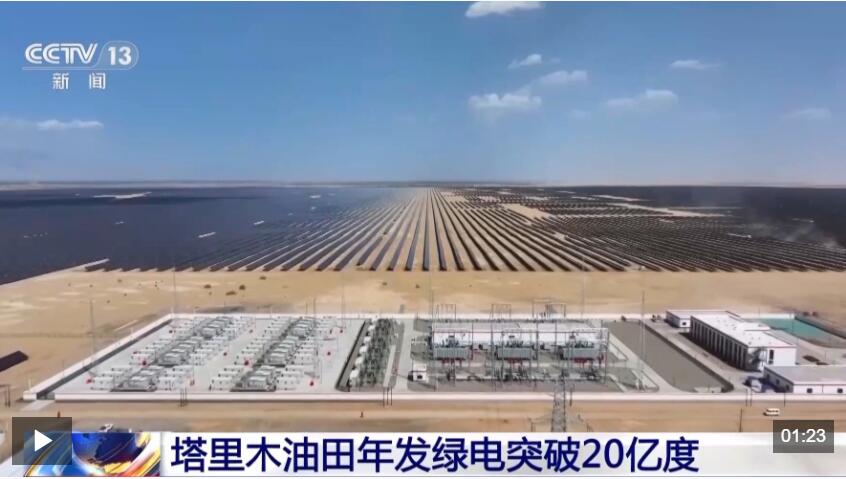
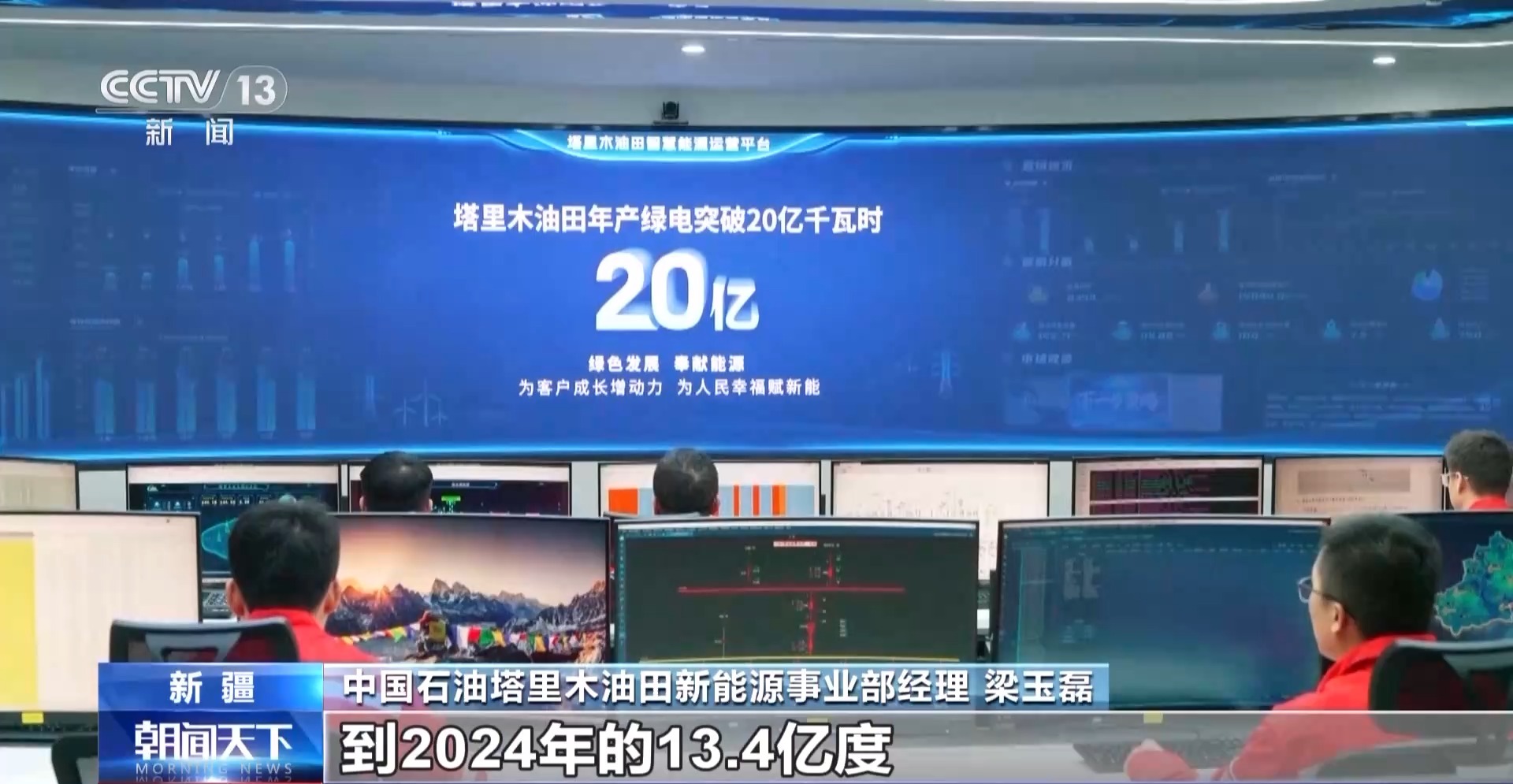
转自:央视新闻 记者今天(28日)从中国石油获悉,我国西气东输主力气源地——塔里木油田全年光伏发电量突破20亿度,单日最高发电量超1000万度,创年发电量、日发 电量历史新高,标志着塔克拉玛干沙漠腹地构建起油、气、新能源协同发展新格局。 位于塔克拉玛干沙漠北缘,轮台10万千瓦光伏项目近日全面开工,建成后每年可以发出绿电1.58亿度。目前,塔里木油田已建成尉犁、且末、叶城、伽师、 上库5座大型光伏电站,总装机规模达到260万千瓦。 中国石油塔里木油田新能源事业部经理 梁玉磊:我们的光伏发电量"三年三跨越",从2023年的2.6亿度到2024年的13.4亿度,再到今年突破20亿度,实现了 从无到有、从小到大的跨越式发展。 这些沙漠绿电8%用作油气生产,92%通过"疆电外送"电力通道对外输送。不仅使油田能耗和碳排放强度下降10%以上,还点亮了万家灯火。 来源:央视新闻 编辑:张俊 塔里木油田在塔克拉玛干沙漠腹地油气单井和场站,还建成了239项分布式光伏项目,建成的光伏项目已覆盖10万亩黄沙,实现了能源开发与生态保护的协 同推进。 中国石油塔里木油田新能源事业部执行董事 雷霆:我们通过在流沙上建设光伏板,不仅能在板上 ...
视频丨创历史新高 塔里木油田年发绿电突破20亿度
Huan Qiu Wang· 2025-12-28 01:07
Core Viewpoint - The Tarim Oilfield in China has achieved a significant milestone in solar power generation, with annual output surpassing 2 billion kilowatt-hours, marking a new era of collaborative development in oil, gas, and renewable energy in the Taklamakan Desert [1][3]. Group 1: Solar Power Generation Achievements - The Tarim Oilfield's solar power generation has seen a "three-year leap," increasing from 260 million kilowatt-hours in 2023 to 1.34 billion kilowatt-hours in 2024, and then exceeding 2 billion kilowatt-hours this year [3]. - The highest daily solar power generation reached over 10 million kilowatt-hours, setting historical records for both annual and daily output [1]. Group 2: Infrastructure Development - The Tarim Oilfield has established five large-scale solar power stations with a total installed capacity of 2.6 million kilowatts [1]. - A new 100,000-kilowatt solar project in Luntai has recently commenced construction, expected to generate 158 million kilowatt-hours of green electricity annually [1]. Group 3: Environmental and Energy Synergy - The oilfield has implemented 239 distributed solar projects across 100,000 acres of desert, promoting both energy development and ecological protection [5]. - The construction of solar panels on shifting sands not only generates electricity but also reduces wind speed and creates a cooler environment, while drip irrigation is used for biological sand control [7]. Group 4: Energy Utilization and Distribution - Of the green electricity generated, 8% is utilized for oil and gas production, while 92% is transmitted externally through the "Xinjiang Power Transmission" channel [9]. - The initiatives have led to a reduction of over 10% in energy consumption and carbon emission intensity from the oilfield, contributing to lighting homes [9].
新型能源体系加快建设(奋勇争先,决战决胜“十四五”)
Ren Min Ri Bao· 2025-12-27 22:11
Core Viewpoint - The development of a new energy system is crucial for achieving carbon peak and carbon neutrality goals, emphasizing the importance of both traditional and renewable energy sources [1][2]. Group 1: New Energy Projects - The Ningxia Tengger "Shagao Desert" renewable energy base has commenced construction, with the first batch of 3 million kilowatts of photovoltaic capacity put into operation in October [1]. - The Ningxia-Hunan UHV project, spanning over 1,600 kilometers, can transmit green electricity to Hunan in approximately 0.0054 seconds, enhancing energy consumption channels for Ningxia [1]. - The UHV project is expected to deliver over 36 billion kilowatt-hours of electricity annually to Hunan, increasing power supply by about one-sixth, with renewable energy accounting for over 50% of the total [1]. Group 2: Energy Supply and Consumption - During the 14th Five-Year Plan period, China's energy supply system has diversified, with non-fossil energy sources experiencing significant growth, while fossil energy is being utilized more cleanly and efficiently [2][3]. - The share of renewable energy generation capacity has increased from 40% to approximately 60%, indicating a substantial shift towards green energy [3]. - Non-fossil energy's share in national energy consumption is projected to exceed the 20% target set for the 14th Five-Year Plan, with green electricity accounting for nearly 40% of total electricity consumption [3]. Group 3: Technological Advancements - China has developed the world's largest and fastest-growing renewable energy system, with significant advancements in nuclear power and energy storage technologies [6]. - The third-generation nuclear power project "Guohe No. 1" has been completed and is fully domestically produced, showcasing technological breakthroughs in the energy sector [5]. - The application of innovative energy solutions, such as sodium-ion storage systems and flexible low-frequency transmission projects, is accelerating the energy industry's technological innovation [6].
(年终特稿)中国经济这一年:能源领域现三大突破
Zhong Guo Xin Wen Wang· 2025-12-27 06:36
Core Insights - In 2025, China's total electricity consumption is expected to exceed 10 trillion kilowatt-hours, surpassing the combined total of the EU, Russia, India, and Japan from the previous year, marking a significant milestone in China's energy development [1][2] - China's oil and gas production is projected to reach historical highs by 2025, with crude oil production around 215 million tons and natural gas production exceeding 260 billion cubic meters, reflecting the country's commitment to energy security [1][2] - The cumulative installed capacity of wind and solar power in China is expected to reach 1.482 billion kilowatts by March 2025, surpassing that of thermal power for the first time, with wind and solar expected to account for 22% of total electricity consumption [2] Group 1: Electricity Consumption - China's total electricity consumption is projected to exceed 10 trillion kilowatt-hours in 2025, a first globally [1] - In July and August, China's monthly electricity consumption surpassed 1 trillion kilowatt-hours, equivalent to Japan's annual consumption [1] - The stability of electricity supply during peak summer periods indicates a high level of energy supply resilience [1] Group 2: Oil and Gas Production - By 2025, China's crude oil production is expected to reach approximately 215 million tons, while natural gas production is projected to exceed 260 billion cubic meters [1][2] - The continuous increase in oil and gas production is supported by enhanced exploration and technological innovation [2] Group 3: Renewable Energy Development - By March 2025, China's cumulative installed capacity of wind and solar power is expected to reach 1.482 billion kilowatts, exceeding that of thermal power [2] - The addition of approximately 37 million kilowatts of wind and solar capacity in 2025 will contribute to 22% of total electricity consumption [2] - China aims to achieve six times the installed capacity of wind and solar power by 2035 compared to 2020 levels, targeting 3.6 billion kilowatts [2] Group 4: Policy and Future Outlook - The Chinese government plans to address new challenges in energy security, carbon reduction, and technological innovation by 2026, aiming for a new energy system by 2030 [3] - The transition to a dual control system for carbon emissions is expected to support high-quality green development and expand market opportunities for low-carbon industries [2][3]