
农产品种植

Search documents
12小时直达!新丰迷你小冬瓜热供港澳餐桌
Nan Fang Nong Cun Bao· 2025-07-17 07:33
Core Viewpoint - The article highlights the successful cultivation and market expansion of the mini winter melon from Xinfeng County, which is increasingly supplied to the Hong Kong and Macau markets, driven by quality certifications and strategic agricultural practices [12][30][50]. Group 1: Market Demand and Supply Chain - The mini winter melon is currently in peak season, with a significant portion (60%) of its production directed towards Hong Kong [12][16]. - The cooperative has expanded its market reach in the Greater Bay Area since introducing mini winter melon cultivation in 2023, with an annual production capacity exceeding 350,000 units [13][14]. - The logistics efficiency is enhanced by Xinfeng County's advantageous geographical location, allowing for rapid transportation to major markets [25][26][27]. Group 2: Quality Certification and Standards - The mini winter melon has achieved "Bay Area Certification," which includes stringent quality, safety, and traceability standards, surpassing EU benchmarks for pesticide residues and heavy metals [30][34][35]. - Following the certification, overall sales of mini winter melon increased by 50%, with long-term supply agreements leading to an annual order volume exceeding 2,000 tons [38][40]. Group 3: Economic Impact and Community Involvement - The cooperative model has created over 500 job opportunities and increased the average annual income of participating farmers by more than 15,000 yuan [40][44]. - The cultivation area for mini winter melon has expanded from 30 acres to over 600 acres, reflecting a growing interest in the crop [45][46]. Group 4: Brand Development and Market Integration - The "Xinfeng Flavor" regional public brand has been established to enhance market recognition and support the mini winter melon's branding efforts [20][63]. - The certification has not only boosted the mini winter melon's market presence but also positively impacted the sales of other crops cultivated by the cooperative, leading to a 20% increase in their production [44][45][59].


农业品种多震荡运行
Zhong Xin Qi Huo· 2025-07-16 05:37
1. Report Industry Investment Ratings - The report does not provide an overall industry investment rating. However, it gives individual outlooks for different agricultural products, including "oscillating" for most products, "oscillating and declining" for corn and starch, and "oscillating weakly" for logs [5][6][7]. 2. Core Viewpoints of the Report - Most agricultural products are expected to oscillate in the short - term, with different influencing factors for each product. The market is affected by various factors such as weather, supply and demand, trade relations, and macro - economic conditions [5][6][7]. 3. Summaries According to Relevant Catalogs 3.1 Market Views 3.1.1 Oils and Fats - **View**: The growth of US soybeans is good, and market sentiment has weakened. - **Logic**: As of July 13, 2025, the good - to - excellent rate of US soybeans was 70%, higher than expected. The US foreign trade tension has increased, and the US dollar rose on Monday. The expected increase in US biodiesel demand for US soybean oil and the increase in the biodiesel blending ratio in Brazil are positive factors. However, the large arrival volume of imported soybeans in China and the expected increase in palm oil production in Malaysia are negative factors. - **Outlook**: The oil market is expected to continue to oscillate and differentiate in the near future [5]. 3.1.2 Protein Meals - **View**: The good - to - excellent rate of US soybeans is higher than expected, and US soybeans are weaker than Dalian soybean meal. - **Logic**: International trade tensions are high. US soybeans are growing smoothly, but the export prospects are worrying. Brazilian soybean exports are still high. In China, the supply pressure dominates the weakness of the spot market, but concerns about Sino - US trade support the futures price. - **Outlook**: The domestic double - meal futures are stronger than US soybeans, and the domestic futures market is stronger than the spot market. The basis is expected to weaken. In the short - term, it will oscillate within a range, and in the long - term, it will be bullish [6]. 3.1.3 Corn/Starch - **View**: Pay attention to the risk of a periodic rebound. - **Logic**: The supply of ports and deep - processing enterprises has decreased slightly. The futures price rebounded slightly during the day and then fell back. The cumulative auction volume of imported corn is 137 million tons, and the transaction volume is about 82 million tons. - **Outlook**: It is expected to oscillate and decline in the short - term [7]. 3.1.4 Pigs - **View**: Supply and demand are stable, and pig prices oscillate. - **Logic**: In the short - term, large pigs are still being sold off, but the average weight has bottomed out and rebounded. The planned slaughter volume of group farms in July has decreased. In the medium - term, the number of new - born piglets from January to May 2025 has increased, and the slaughter volume is expected to increase in the second half of the year. In the long - term, the production capacity is still high. - **Outlook**: The reform expectation on the supply side boosts the sentiment of pig futures. The price is expected to oscillate, but there is still supply pressure in the medium - and long - term [9]. 3.1.5 Natural Rubber - **View**: It runs oscillating and strongly. - **Logic**: It is affected by capital sentiment at night and then adjusts with the market during the day. The trading logic follows the macro - sentiment. The supply in Asian producing areas is limited due to the rainy season, and the demand from tire enterprises has recovered. - **Outlook**: It may follow the overall commodity fluctuations before the fundamental situation provides guidance [11][13]. 3.1.6 Synthetic Rubber - **View**: The futures price oscillates within a range. - **Logic**: It follows the movement of natural rubber and the overall commodity market, but the amplitude is limited. There is no obvious upward driving force, but there is support from the macro - environment and the improvement of butadiene trading. - **Outlook**: It is expected to continue to oscillate within a range, and attention should be paid to device changes [14]. 3.1.7 Cotton - **View**: Cotton prices fluctuate within a narrow range. - **Logic**: According to the USDA's static balance sheet for the 25/26 season, the global, Chinese, and US cotton markets are all loose. The expected increase in Xinjiang's cotton production and the weak demand in the off - season are negative factors. However, the low inventory before the new cotton is listed provides support. - **Outlook**: It is expected to oscillate in the short - term, with a reference range of 13,500 - 14,300 yuan/ton. There is a risk of price decline when a large amount of new cotton is listed [15]. 3.1.8 Sugar - **View**: Pay attention to import changes. - **Logic**: In the medium - and long - term, sugar prices are weak and under downward pressure due to the expected oversupply in the 25/26 season. In the short - term, the decline in Brazil's sugar production and the high sales - to - production ratio in China support the price, but the increase in Brazil's production and exports and China's imports will increase the supply pressure. - **Outlook**: In the long - term, sugar prices are expected to oscillate weakly; in the short - term, they are expected to oscillate [17]. 3.1.9 Pulp - **View**: The macro - environment dominates the trend, and pulp prices are rising within a range. - **Logic**: The futures price rises with the macro - atmosphere. The supply and demand are in a stalemate, and the upward driving force comes from the macro - environment. The low US dollar price, high overseas pulp mill inventory, and weak downstream demand limit the upward space. - **Outlook**: The pulp futures are expected to oscillate due to the warm macro - atmosphere, weak supply - demand guidance, and low absolute valuation [18]. 3.1.10 Logs - **View**: The outbound volume has declined, and the inventory has increased. - **Logic**: The new - week outbound volume of logs has decreased, and the inventory has increased. The spot price is weak due to the impact of deliverable goods. The cost of both buyers and sellers has increased during the 07 delivery. The overall demand for logs this year is stable, and the inventory - reduction rhythm is slow. - **Outlook**: It is expected to oscillate weakly around the delivery cost in the short - term [19]. 3.2 Variety Data Monitoring - The report mentions variety data monitoring for oils and fats, corn and starch, pigs, cotton and yarn, sugar, pulp, and logs, but no specific data content is provided in the given text.
黄花之畔的别样“星光”
Zhong Guo Neng Yuan Wang· 2025-07-14 09:26
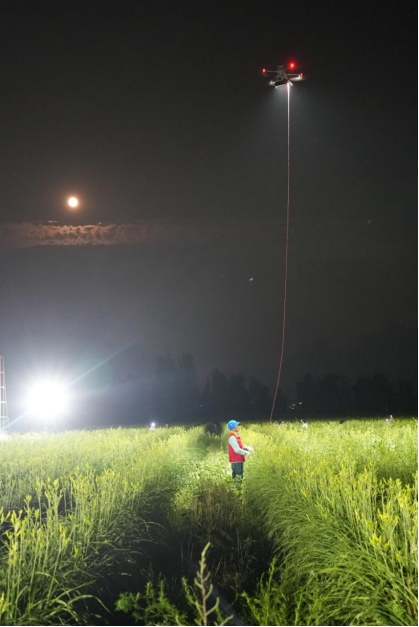
Core Viewpoint - The article highlights the significance of the night harvesting of daylilies in Yunzhou District, emphasizing the innovative use of technology and community efforts to enhance productivity and economic value of the crop [2][4][16]. Group 1: Night Harvesting Process - The night harvesting of daylilies is crucial as the flowers must be picked before they bloom to maintain their economic value [4][16]. - Over 500 farmers in Tangjiabao Village participate in the night harvesting, equipped with rain gear and headlamps to navigate the fields [4][5]. - The harvesting process is supported by emergency lighting provided by the State Grid Shanxi Electric Power Company, which enhances the efficiency of the workers [5][7]. Group 2: Technological Innovations - In Jijiacun Village, the use of drones equipped with emergency lighting is introduced to assist in the harvesting process, allowing for better visibility and efficiency [9][11]. - The drones can illuminate up to 3 acres of daylily fields, significantly increasing the amount harvested per worker [11][16]. - The collaboration between local power companies and farmers showcases a successful model of "technology assisting agriculture" [9][11]. Group 3: Economic Impact - The daylily industry in Dazhong City spans 260,000 acres, with local companies processing 1,800 tons of fresh daylilies annually [15]. - The direct sale model allows farmers to receive immediate payment, providing financial security and encouraging continued cultivation [13][15]. - The efforts of the State Grid Dazhong Electric Power Company in improving the power supply infrastructure have been pivotal in supporting the local daylily industry [15][16].
福建省仙游县市场监督管理局2025年第2期食品安全监督抽检信息通告
Zhong Guo Zhi Liang Xin Wen Wang· 2025-07-14 08:45
Group 1 - The core announcement from the Xianyou County Market Supervision Administration indicates that a total of 117 batches of food were tested, with 115 passing and 2 failing the safety standards [4] - The two categories of food involved in the inspection are catering food and edible agricultural products [4] - The report emphasizes the importance of compliance with food safety standards to prevent health risks associated with food consumption [4] Group 2 - The first non-compliant item identified was Enrofloxacin, a broad-spectrum antibiotic used in animals, which exceeded the maximum residue limit of 100 μg/kg in fish [5] - The second non-compliant item was Thiamethoxam, which had a residue level of 0.033 mg/kg in papaya, surpassing the maximum limit of 0.01 mg/kg [6] - The report outlines that the reasons for these exceedances may include improper use of veterinary drugs and pesticides during the farming process [5][6] Group 3 - The Xianyou County Market Supervision Administration has initiated corrective actions against the identified non-compliant products, including halting sales, recalling products, and enforcing legal obligations on producers [6] - Consumers are encouraged to report any non-compliant products they encounter in the market by calling the complaint hotline [6]
韩国:高温致农产品价格大涨,单个西瓜均价同比涨超36%
news flash· 2025-07-14 03:08
Core Insights - South Korea is experiencing a heatwave, leading to significant price increases in various agricultural products, including watermelon, cabbage, and radishes [1] Price Trends - The average retail price of watermelon reached 29,115 KRW (approximately 151 CNY) as of July 11, marking a 22.5% increase from the previous week, a 36.5% increase year-on-year, and a 38.5% increase compared to the average over the past five years [1] - The average retail price of cabbage is now 4,309 KRW (approximately 22.4 CNY), which is a 27.4% increase from the previous week [1] Market Expectations - Retail industry experts anticipate further increases in watermelon prices due to heightened demand driven by the ongoing heat and slow growth caused by insufficient sunlight in June [1]

韩国高温致农产品价格暴涨 政府投放储备白菜
news flash· 2025-07-13 12:14
Group 1 - South Korea is experiencing a heatwave, leading to a significant increase in the prices of agricultural products such as cabbage, watermelon, and radishes [1] - The average price of a watermelon is approaching 30,000 KRW (approximately 156 RMB) [1] - The South Korean government has implemented a series of measures to stabilize prices and has released reserve cabbage into the market [1]
【环球财经】巴西SLC公司预计2024/25年度第二季度玉米单产将超预期
Xin Hua Cai Jing· 2025-07-13 05:53
新华财经圣保罗7月12日电(记者杨家和)巴西大型农业企业SLC农业公司(SLC Agrícola)近日发布公 告称,2024/25年度第二季度玉米单产预计将达到每公顷7927公斤,较最初预算每公顷7542公斤高出 5.1%,并较第一季度预测上调7.8%。该公司还计划大幅扩展灌溉种植面积,以提升应对气候风险的能 力。 据公司披露,尽管2024/25年度第一季度棉花单产预计将同比下降7.5%,至每公顷1888公斤,但第二季 度棉花单产有望增长9.7%,达到2096公斤/公顷,有助于弥补前期损失。 同时,SLC农业公司对大豆产量的预测不变,预计单产为3958公斤/公顷,略低于原预算0.5%。 SLC农业公司是巴西最大和最主要的大宗农产品种植商之一,在全国多州拥有大量种植基地,核心业务 涵盖大豆、玉米、棉花等作物的规模化生产。 (文章来源:新华财经) 在另一份公告中,SLC农业公司表示其土地资产组合较去年同期升值7.1%,估值从115.9亿雷亚尔升至 近134亿雷亚尔。公告称据德勤会计师事务所评估,其可耕地平均每公顷价值为58960雷亚尔。 为进一步提升土地利用效率,SLC农业公司还计划将目前16025公顷的灌溉面积 ...
吉林磐石:昔日抗日根据地今变“金山银山”
Zhong Guo Qing Nian Bao· 2025-07-13 02:53
Core Insights - The article highlights the transformation of the Hongshilazi Anti-Japanese Base from a historical site into a vibrant tourist destination, emphasizing the importance of red tourism in revitalizing the local economy [1][3][4] Group 1: Historical Significance - The Hongshilazi Anti-Japanese Base is recognized as the first anti-Japanese guerrilla base established by the Chinese Communist Party in Northeast China, with notable figures such as General Yang Jingyu having fought there [1][2] - The site has been the focus of archaeological efforts, with over 3,300 relic points discovered and more than 900 artifacts unearthed, making it the largest and best-preserved anti-Japanese site in the country [2] Group 2: Economic Development - The integration of red tourism with local resources has led to significant economic benefits, with 1.7 million visitors expected in 2024 and a total tourism revenue of 850 million yuan, of which over 70% is attributed to red tourism [3][4] - The development of the Hongshilazi site has spurred local initiatives, including the revitalization of the Guanma New Village, which has become a hub for tourism and cultural activities [4] Group 3: Agricultural Innovation - The region is also focusing on agricultural development, particularly in the cultivation of high-value crops like Ganoderma lucidum (lingzhi), with a cultivation area of 5,000 greenhouses and an annual production of 125,000 pounds of spores [5] - The establishment of various agricultural brands and adherence to national organic standards are part of the strategy to enhance local agricultural output and attract new farmers back to the area [5] Group 4: Community Engagement - Local youth, such as Ma Chengming, are actively involved in promoting the history and spirit of the Northeast Anti-Japanese United Army to younger generations, indicating a commitment to preserving cultural heritage [6][7]
铭记历史 缅怀先烈丨山河回响
Xin Hua She· 2025-07-12 07:49
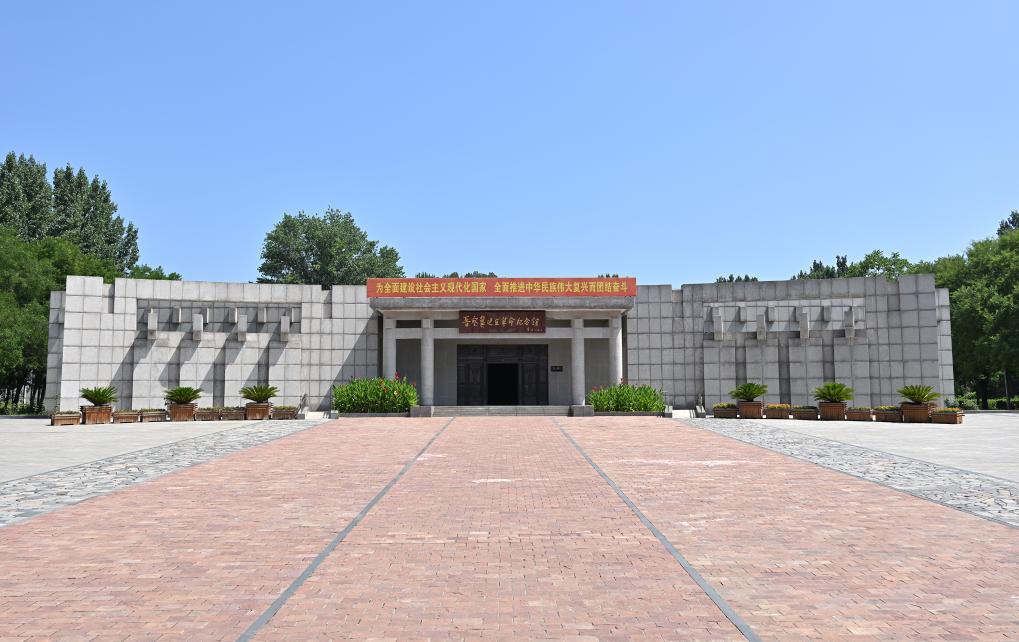
Core Viewpoint - The article emphasizes the heroic sacrifices made during the Anti-Japanese War, particularly in the Jin-Cha-Ji base area, highlighting the resilience and strength of the local military and civilians against brutal invaders [1][5][11]. Group 1: Historical Significance - The Jin-Cha-Ji base was the first anti-Japanese base established behind enemy lines, where numerous heroic stories are still celebrated today [1][2]. - The article recounts the tragic story of Zhang Li, a key figure who endured severe torture and ultimately sacrificed her life for her country at the age of 23 [3][6]. - The region is known for significant battles such as the Pingxingguan victory and the Hundred Regiments Offensive, which greatly inspired the national spirit during the war [11][13]. Group 2: Cultural Heritage and Tourism - The Jin-Cha-Ji Revolutionary Memorial Museum attracts numerous visitors, where stories of heroism continue to evoke strong emotions [2][4]. - The underground tunnels in the village of Ranzhuang, known as the "Underground Great Wall," were constructed by locals to protect themselves and fight back against the enemy [5][7]. - The memorials and museums serve as educational sites, fostering a deeper understanding of history among younger generations [25][26]. Group 3: Economic Development and Modernization - The article discusses the transformation of the region, particularly in Fuping County, where poverty rates have significantly decreased from 54.4% to a much lower figure since 2012, with per capita income increasing by 3.7 times [30][36]. - Fuping is now integrating red tourism with local agricultural experiences, enhancing the local economy through initiatives like mushroom cultivation and fruit orchards [28][34]. - The region is also diversifying its economy by introducing new industries, including photovoltaic and equipment manufacturing projects, to further boost economic growth [36].
美国农业部:将阿根廷2024/2025年度大豆产量预期上调至4990万吨,市场预期为4927万吨;将巴西2024/2025年度大豆产量预期维持1.69亿吨不变,市场预期为1.6925亿吨。
news flash· 2025-07-11 16:21
美国农业部:将阿根廷2024/2025年度大豆产量预期上调至4990万吨,市场预期为4927万吨;将巴西 2024/2025年度大豆产量预期维持1.69亿吨不变,市场预期为1.6925亿吨。 ...