
外贸

Search documents
物价率先反应外需变化——4月经济数据前瞻
一瑜中的· 2025-05-08 14:33
Core Viewpoint - The article emphasizes that in April, economic indicators will reflect changes influenced by external demand, with a potential state of "stable volume and weak price" expected in the economy [2][4]. Group 1: Export and Import Trends - Export resilience is indicated by a 7.3% year-on-year increase in container throughput at monitored Chinese ports as of April 27, compared to 8.9% in March [4] - Container shipping capacity from China to the U.S. shows a year-on-year increase of approximately 5% in April, down from 19.1% in March, suggesting some downward pressure on direct exports to the U.S. [4] - U.S. imports are expected to rise, with a 5.3% year-on-year increase in overall import value as of April 24, compared to 0.1% at the end of March [4][11] - Vietnam's imports in early April increased by 16.1% year-on-year, reflecting a "import grabbing" effect [4][11] Group 2: Consumer Spending and Investment - Retail sales growth is projected at around 5.3% in April, supported by the "trade-in for new" policy, with specific growth rates of 5.0% for dining and automotive sectors [5][13] - Fixed asset investment growth is expected to be 4.0% for January to April, with real estate investment declining by 10.5% and manufacturing investment increasing by 9.0% [5][14] Group 3: Financial Indicators - New social financing in April is expected to be around 660 billion, an increase of 1 trillion compared to the same period last year, with a social financing stock growth rate of approximately 8.6% [6][17] - M2 money supply is projected to grow by 7.2% year-on-year, while new M1 is expected to grow by 2.1% [6][17] Group 4: Price Trends - The Producer Price Index (PPI) is anticipated to be around -3% year-on-year in April, influenced by declining prices of major commodities such as copper and crude oil [7][19] - Consumer Price Index (CPI) is expected to be around -0.2% year-on-year, with food prices projected to rise by 0.1% month-on-month [8][18]


外贸优品“转内销” 内外循环加速畅通
Xin Hua She· 2025-05-08 13:23
Group 1 - The article highlights the disruption of global trade order due to the excessive imposition of tariffs by the United States, prompting various departments and industry associations to assist foreign trade enterprises in expanding domestic markets to navigate challenges [1] - The "Foreign Trade Quality Products China Tour" initiative has been launched in multiple locations since mid-April, with e-commerce platforms facilitating rapid onboarding for foreign trade companies and local chambers of commerce organizing production and sales matching activities [3][5] - A significant turnout of over 52,000 attendees was reported at the "Foreign Trade Quality Products China Tour" event in Nanjing, indicating strong interest and engagement from consumers [5] Group 2 - The article discusses the transition of foreign trade enterprises to domestic sales, emphasizing the need to adapt to different consumer habits and preferences between domestic and international markets [13] - Companies are increasingly training their foreign trade teams to operate on domestic e-commerce platforms, with expectations that domestic sales could account for 80-90% of total sales by the end of the year [14] - Financial support measures are being implemented by the Ministry of Commerce and other departments to assist foreign trade enterprises in expanding domestic sales and integrating domestic and foreign trade [16][18] Group 3 - The article mentions the establishment of a collaborative ecosystem for integrated domestic and foreign trade, with innovative models being developed in Yiwu to combine domestic channels with cross-border supply chains [23] - Statistics indicate that nearly 85% of export-oriented enterprises in China are also engaged in domestic sales, with domestic sales accounting for nearly 75% of total sales [29] - The integration of domestic and foreign trade is expected to enhance the resilience of the industrial chain, drive value chain upgrades, and stimulate domestic demand [30]
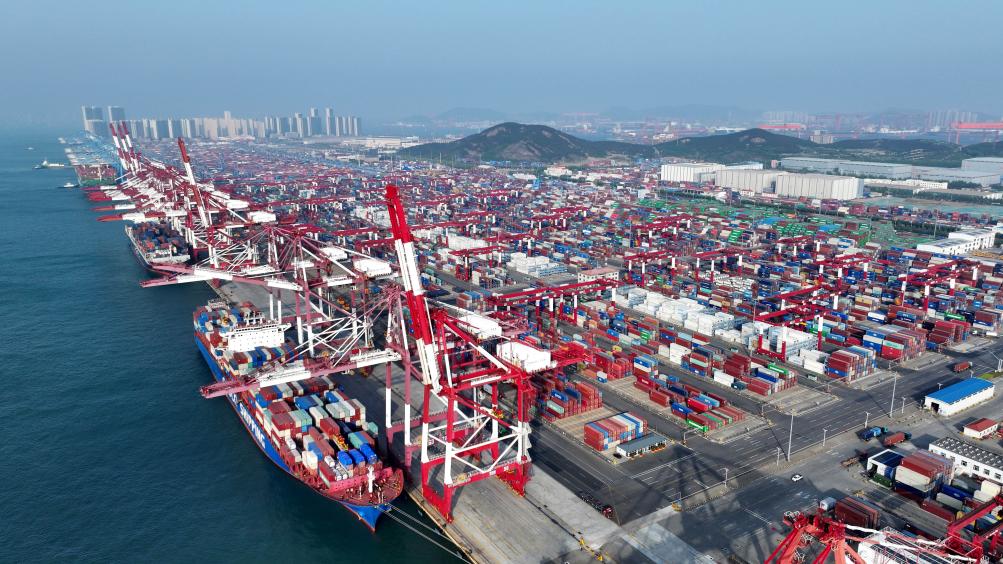
广交会出口成交254.4亿美元,关税冲击下外贸订单不减反增!
Sou Hu Cai Jing· 2025-05-08 13:14
Core Insights - The 137th Canton Fair showcased a significant increase in foreign buyers, with 280,000 overseas purchasers from 219 countries and regions, marking a 17.3% rise compared to last year, indicating strong global interest in "Made in China" products despite ongoing U.S. tariffs [1] - Chinese enterprises secured $25.44 billion in intended export orders, a 3% increase year-on-year, with over 60% of the transaction volume coming from countries involved in the Belt and Road Initiative, reflecting the expansion of China's foreign trade network [1] - The fair highlighted a surge in demand for traditional products like toys and textiles, as well as a notable increase in inquiries for smart and eco-friendly products, showcasing the adaptability of Chinese manufacturers [1] Trade Challenges - The implementation of reciprocal tariffs by the U.S. in April has caused significant challenges for Chinese exporters, particularly those reliant on the North American market, leading to inventory buildup and halted production in some factories [3] - The Chinese Ministry of Commerce has emphasized the need for integrated domestic and foreign trade strategies to assist exporters facing obstacles, promoting online and offline channels to facilitate access to the domestic market [3] Market Adaptation - Some foreign trade companies have successfully transitioned to domestic sales, with notable examples including Shuguang Toothbrush Factory selling 2 million units through e-commerce platforms and Jiamili Ceramic's sales exceeding 20,000 yuan on the first day of their promotion [5] - However, challenges remain for many exporters in adapting products for the domestic market, including brand development and supply chain adjustments [5] Diplomatic Developments - Following the Canton Fair, there were indications of a potential thaw in U.S.-China trade relations, with China agreeing to engage in discussions with the U.S. regarding tariff issues, signaling a willingness to negotiate [5] Future Outlook - The resilience of China's foreign trade sector is underscored by its ability to innovate and explore new markets, suggesting that with continued innovation and market engagement, the industry can navigate current pressures and emerge stronger [7]

外贸企业拓内销按下“快进键”
Xin Hua Cai Jing· 2025-05-08 08:59
"和外贸企业接洽时,我们注意到,消化库存、回笼资金,寻找国内市场定位是不少企业的急切诉求; 而不熟悉国内规则、缺乏线上运营经验是企业面临的共性难题。"1688商家发展中心总经理王强表示, 为助力外贸企业转型,1688制定了"春雷计划2025",从包销库存、提供贷款、推动转型、减免年费、开 放AI产品等五方面助力外贸企业拓内销。其中,对于资金紧张的外贸厂商,1688将提供订单货款提前 回款服务,并联合网商银行等金融机构提供专项信用贷款。 新华财经北京5月8日电(记者丁雅雯、朱程)"在国际经贸环境波动与外部挑战增加的背景下,我们将 坚定发展内贸业务。一方面,通过电商、外贸优品内销对接活动等渠道消化库存;另一方面,面向附加 值较高的国内市场创新产品,并广泛参与商超的招投标。"浙江众鑫环保科技集团股份有限公司负责人 滕步相说。 记者了解到,面对充满不确定性的国际环境,不少外贸企业调整方向,大力开拓国内市场。他们借 助"外贸优品中华行"、电商等渠道实现了去库存、寻找市场定位等目标,拓内销按下"快进键"。 "国际经贸环境的波动起伏让我们有些措手不及,国内市场将成为未来重点。我们计划先通过电商平台 消化库存、回笼资金,后续 ...
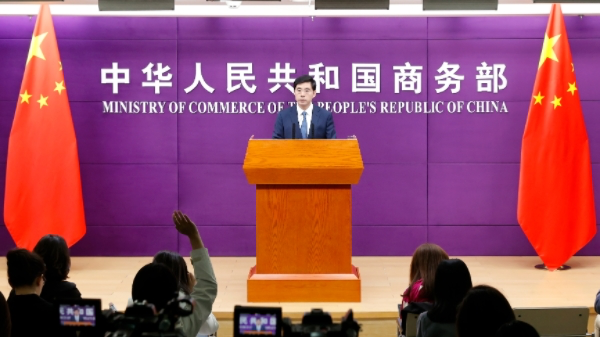
商务部答一财:“五一”假期全国消费市场繁荣活跃,外国游客来华消费明显增长
Di Yi Cai Jing· 2025-05-08 08:12
优化离境退税政策落实落地 何亚东表示,各地按照国际消费季总体安排,聚焦国际精品和国货潮品,组织开展丰富多彩的特色活 动,细化完善本地离境退税的措施,用足用好优化退税商店备案,起退点从500元降至200元,现金退税 限额从1万元上调至2万元等政策,扩商店、增商品优服务,推动扩大入境消费。 "五一"假期全国重点零售和餐饮企业销售额同比增长了6.3%。 何亚东举例称,上海举办第六届"五五购物节","五一"期间全市离境退税销售额同比增长1.2倍;北京 发布多语种的离境退税指南和离境退税商店电子地图,"五一"期间重点监测离境退税商店销售额同比增 长了73%;深圳推出离境退税"一单一包"便利化模式,大幅缩短退税的等待时间。 本月初,"2025国际消费季暨第六届上海五五购物节"启动仪式在上海举行。 何亚东称,下一步,商务部将会同有关部门持续组织开展"购在中国"系列活动,让国内消费者和境外游 客惠购全球好物,惠享优质服务,既满足国内居民多元化的需求,也丰富和便利外国游客"购在中国"。 5月8日,商务部新闻发言人何亚东在例行新闻发布会上对第一财经记者表示,商务部于5月1日启动了 2025国际消费季,这是"购在中国"二季度的重点 ...
火爆,受青睐!产业联动畅通“外转内” 外贸优品加速“海归”上新
Yang Shi Wang· 2025-05-08 08:10
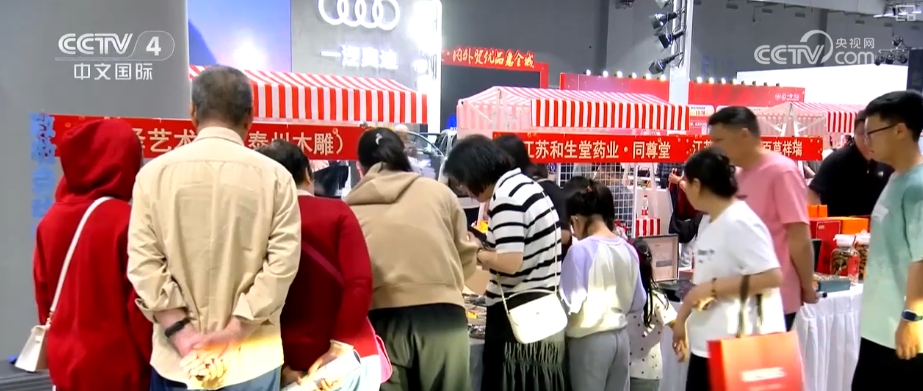
Core Insights - The article highlights the ongoing efforts by various regions in China to facilitate foreign trade enterprises in expanding their domestic market presence through trade fairs and exhibitions [1][4][16] - The strategy involves a combination of offline exhibitions and online marketing to create a mutually beneficial cycle between consumers and foreign trade companies [1][4] Group 1: Trade Fair Activities - Jiangsu province is actively hosting foreign trade product supply and demand matching events, showcasing a wide range of products including smart technology and household appliances [4][2] - During the "May Day" holiday, cities like Changzhou, Xuzhou, and Yangzhou organized multiple events to promote quality foreign trade goods to domestic consumers [4][2] Group 2: Market Expansion Strategies - Changzhou's Commerce Bureau plans to establish a database of foreign trade enterprises transitioning to domestic sales, aiming to host over 200 large-scale events by the end of June [7] - In Shanghai, supermarkets are increasingly opening sections dedicated to foreign trade products, which are gaining popularity among consumers [9][11] Group 3: Sales Performance - A foreign trade company specializing in the U.S. market reported selling out several products during the trade fairs, indicating strong domestic demand [11][13] - Another company noted that on the first day of the "May Day" holiday, they received over 1,000 sales orders, prompting plans to extend the event due to high demand [15] Group 4: Online and Offline Integration - In Guangzhou, over ten e-commerce platforms and retail supermarkets are providing support for foreign trade enterprises to facilitate domestic sales through integrated online resources [18]
商务部部长王文涛:2024年消费品以旧换新销售额超1.3万亿元 2025年将乘势而上、加力扩围
news flash· 2025-05-08 08:00
Core Viewpoint - The article emphasizes the importance of boosting consumer demand and expanding domestic consumption to support economic recovery, with a focus on upgrading product consumption and addressing insufficient effective demand [1] Group 1: Consumer Demand and Sales Projections - The sales revenue from the "old-for-new" consumer goods program is projected to exceed 1.3 trillion yuan in 2024, contributing significantly to the recovery of consumer spending [1] - The program is expected to gain momentum in 2025, with further expansion and support measures [1] Group 2: Policy Measures and Support - The issuance of special long-term government bonds will increase to 300 billion yuan, doubling from the previous year, to support the expansion of consumer goods [1] - The subsidy categories for the "old-for-new" program will expand from "8+N" to "12+N," including new subsidies for digital products like mobile phones and a broader range of eligible vehicles for scrapping [1] - The process for consumers to claim subsidies will be improved to enhance accessibility and efficiency [1] Group 3: Automotive and Foreign Trade Initiatives - Pilot programs for automotive circulation consumption reform will be launched, encouraging local governments to explore and implement measures to remove restrictions on automotive consumption and develop the aftermarket [1] - Initiatives will be taken to promote high-quality foreign trade products in the domestic market through events and expanded online and offline channels [1] Group 4: Domestic Brand Promotion - Continuous efforts will be made to innovate and develop time-honored brands, with events like the "Time-Honored Brand Carnival" aimed at creating growth points for domestic product consumption [1]
济南|济南助力外贸企业开拓国际市场
Da Zhong Ri Bao· 2025-05-08 01:22
政策护航+市场导航 政企联动破困局 济南助力外贸企业开拓国际市场 济南市商务局党组书记、局长武毅在会上表示,鼓励广大外贸企业坚定信心、沉着应对,打好"产 品+市场+渠道"组合拳,注重抱团发展、抱团出海,积极开拓多元市场。 现场,泉城海关带来"海关课堂"。工作人员张明明向企业普及了自贸协定等基本知识,现场演示了 原产地证书国外传输状态查询和电子信息交换流程,讲解如何通过合规申报提升产品竞争力。智中投资 贸易促进会负责人张希忠对智利市场进行了全方位介绍,为参会的外贸企业带来了一条发展新路径。 中国信保山东分公司业务承保处承保人张天翱对亚洲、欧洲、非洲、北美洲、拉丁美洲等区域的15 个热点国别市场实践,以案例解析的形式开展了区域业务经验分享及风险评价。中国信保市场开发和客 户服务部主管顾蓉蓉,以6个判断层面为切入点,带着与会企业了解学习如何精准选择和开发其他国别 市场。 中国信保山东分公司党委委员、总经理助理刘刚表示,公司全力支持外经贸企业防风险、抢订单、 稳经营,今年一季度支持服务外经贸企业超1700家,累计向12家出口企业支付赔款超940万元,为18家 出口企业提供融资增信支持超1亿元。"我们将积极履行政策性职 ...
国家金融监管总局局长李云泽: 加力支持“助小微”“保外贸”
Shen Zhen Shang Bao· 2025-05-07 17:37
"稳住楼市、股市对提振社会预期、畅通内需循环具有重要意义。"在5月7日举行的国务院新闻办新闻发 布会上,国家金融监管总局局长李云泽表示,4月25日中央政治局会议再次对稳定楼市和股市提出了明 确要求。金融监管总局坚决贯彻落实党中央、国务院部署要求,协同打好"组合拳",积极做好相关工 作。对"助小微""保外贸""科技金融"等方面也均进一步健全制度及加大支持力度。 稳楼市:"白名单"贷款增至6.7万亿元 谈及"稳楼市"方面,李云泽透露,将扎实推动城市房地产融资协调机制扩围增效,支持打赢保交房攻坚 战。他表示,目前,商业银行审批通过的"白名单"贷款增至6.7万亿元,支持了1600多万套住宅的建设 和交付,有力保障了广大购房人的合法权益,为房地产市场止跌回稳提供了重要支撑。 与此同时,房地产市场的积极变化在信贷数据上也有所体现。据李云泽透露,今年一季度,房地产贷款 余额增加7500多亿元,其中新增个人住房贷款创2022年以来单季最大增幅,住房租赁贷款同比增长 28%。最近一些来华的头部国际投资机构也认为中国房地产市场的投资价值正在逐步显现。 "下一步,我们将加快完善与房地产发展新模式相适配的系列融资制度,包括房地产开发 ...
【深度】如何纾解关税战影响?国新办这场发布会给出答案
Xin Lang Cai Jing· 2025-05-07 12:59
Core Viewpoint - The Chinese government is implementing targeted financial support measures for businesses significantly impacted by tariffs, focusing on "one enterprise, one policy" precision services to stabilize operations and expand markets [1][2]. Group 1: Financial Support Measures - The government aims to provide precise services to market entities heavily affected by tariffs, particularly small and private enterprises facing financing difficulties [2][8]. - A financing coordination mechanism has been established, with over 67 million businesses visited and loans amounting to 12.6 trillion yuan issued, one-third of which are credit loans [2][8]. - The People's Bank of China announced an increase in re-lending quotas for small and micro enterprises to 3 trillion yuan, with a reduction in re-lending rates to enhance financial support [8][9]. Group 2: Identification of Affected Enterprises - Accurate identification of enterprises affected by tariffs is crucial, focusing on those primarily engaged in exports, especially those with a high proportion of exports to the U.S. [2][3]. - Supply chain enterprises, although not directly exporting, also face indirect impacts due to reliance on export orders and should be included in the identification process [3][4]. - Factors such as the nature, scale, employment impact, and financial status of enterprises should be considered to prioritize support [3][4]. Group 3: Export Stability and Domestic Sales Expansion - Policies to stabilize exports include ensuring continuous lending to affected enterprises and supporting cross-border e-commerce and overseas warehouses [6][7]. - Measures to assist in expanding domestic sales involve providing financing guarantees for export-to-domestic sales transitions and reducing barriers for pure foreign trade enterprises entering domestic markets [7][8]. - The government emphasizes the need to streamline domestic certification and approval processes to facilitate quicker market entry for products transitioning from export to domestic sales [7][8]. Group 4: Focus on Small and Micro Enterprises - Small and micro enterprises are identified as a key focus for support due to their significant role in employment and their vulnerability to tariff impacts [8][9]. - The overall export volume for 2024 is projected at 3.58 trillion USD, with private enterprises accounting for 64.6% of this, highlighting their importance in stabilizing foreign trade [8][9]. - Policies aim to enhance the financing environment for small and micro enterprises by improving credit access and reducing financing costs [9][10].