
油气

Search documents
1-11月阿塞拜疆吸引外资同比增长28.7%
Shang Wu Bu Wang Zhan· 2025-12-25 02:26
Group 1 - The total foreign direct investment in Azerbaijan's fixed capital reached 3.66 billion manats (215 million USD) from January to November 2025, representing a year-on-year increase of 28.7% [1] - The total fixed asset investment in Azerbaijan during the same period was 16.66 billion manats (980 million USD), showing a year-on-year growth of 3% [1] - Investment in the oil and gas sector decreased by 8.5%, while investment in the non-oil sector increased by 8.3%, indicating a gradual diversification of Azerbaijan's economy [1]
LPG早报-20251225
Yong An Qi Huo· 2025-12-25 01:08
Group 1: Report Industry Investment Rating - No relevant information provided Group 2: Core Viewpoints of the Report - The PG futures price has rebounded. The Middle East resources are tight, the premium is still rising, and the winter price is hard to fall. The official January CP price is approaching. The internal and external valuations are high, but the driving force is weak, and the internal and external trading logics are differentiated. The upward driving force of FEI is limited, and the domestic market needs to focus on the negative feedback between warehouse receipts and PDH, with high uncertainty [4] Group 3: Summary by Relevant Catalogs Market Price Data - On Tuesday, for civil LPG, the price in East China was 4377 (-11), in Shandong was 4370 (+0), and in South China was 4475 (-5). The price of etherified C4 was 4580 (+0). The lowest delivery location was Shandong, with a basis of 135 [4] - The daily changes were: basis (+51), 01 - 02 spread 147 (-7), 03 - 04 spread -194 (-1). As of 21:00, FEI was 526 (+5) and CP was 506 (+0) dollars/ton [4] - The PG futures price rebounded. The 01 basis was 162 (-187), the 01 - 02 spread was 119 (+35), and the 03 - 04 spread was -206 (+33). The number of warehouse receipts was 3368 lots (-108) [4] - The domestic civil LPG market was differentiated. The cheapest delivery product was in Shandong at 4380 (-50); in East China at 4398 (-21), and in South China at 4500 (+80) [4] Market Relationship Data - The FEI monthly spread strengthened, the CP monthly spread weakened, and the oil - gas ratio fluctuated. The internal and external relationships strengthened. PG - CP reached 99.6 (+28); PG - FEI reached 85.6 (+20); FEI - MB reached 170 (+6), and FEI - CP reached 14 (+8) [4] - The arrival premium of propane in East China was 83 (-7). The FOB premiums of propane in the Middle East and the US were 13 (-24.25), 51 (+9), and 43 dollars (-4) respectively. FEI - MOPJ was -19.25 [4] Profit and Inventory Data - The spot profit of PDH was weak, and the futures profit rebounded. The arrivals decreased by 7.64%, and the port inventory decreased by -7.89%. The commercial volume of refineries increased by +0.82%, and the refinery inventory decreased by -0.03% [4] - The PDH operating rate was 75% (+2.13 pct) [4]
2025年科尔尼行业系列回顾|制造业与能源化工
科尔尼管理咨询· 2025-12-24 10:07
Core Viewpoint - In 2025, the manufacturing and energy-chemical industries will enter a rebalancing phase under multiple structural pressures, with geopolitical changes and trade rules reshaping global layouts. The focus will shift from "betting on growth" to "realizing value" as companies seek sustainable returns through asset optimization, capability restructuring, and operational upgrades [1]. Group 1: Manufacturing "15th Five-Year" Layout - The "15th Five-Year" plan (2026-2030) is a critical period for China's modernization by 2035, emphasizing the need for manufacturing enterprises to anticipate socio-economic and technological trends, plan high-quality development paths, and enhance international competitiveness amid geopolitical tensions [4]. Group 2: Asset Operation Restructuring - Energy and chemical companies must optimize asset layouts through normative analysis to enhance long-term decision-making certainty and return rates, particularly in the context of geopolitical and demand structure changes [7]. Group 3: Digital Transformation - Oil and gas companies face limitations in AI potential due to data quality and system fragmentation. Establishing a high-quality data foundation and governance mechanisms is essential to unlock the value of AI and digitalization in supply chain and operational transformations [9]. Group 4: Chemical M&A Recovery - The chemical industry is witnessing a gradual recovery in M&A activities, driven by overcapacity, weak demand, and tariff uncertainties. Companies and private equity are seeking growth paths through portfolio restructuring and regional diversification [11]. Group 5: Accelerated Power M&A - The demand for large data centers is driving a new wave of M&A in the U.S. power sector, compelling power companies to enhance scale, delivery capabilities, and clean energy supply to compete for core customers [13]. Group 6: Electrification Investment Decisions - The electrification trend brings substantial capital investments, but profitability is not guaranteed. Investment returns depend on asset utilization rates, contract structures, and service models, necessitating a careful balance between infrastructure and digital platforms [15]. Group 7: Renewable Value Realignment - The renewable energy sector is transitioning from a narrative of rapid growth to one focused on capability and return realization. Factors such as subsidy reductions, grid constraints, and rising capital costs are pushing companies to reshape their competitive edge through market-oriented capabilities [17]. Group 8: CCUS Commercial Breakthrough - Carbon capture, utilization, and storage (CCUS) is emerging as a viable decarbonization pathway in high-emission industries, but its adoption is constrained by economic viability and carbon pricing mechanisms. Innovative business models and policy collaboration are crucial for large-scale implementation [19]. Group 9: Industrial Aftermarket Opportunities - The industrial aftermarket is becoming a significant profit engine for OEMs, with growth rates of 7.8% in China and 6.5% globally. Companies can achieve steady and high-quality growth through network expansion, complexity management, and pricing capability upgrades [21]. Group 10: CBAM Cost Restructuring - The EU's Carbon Border Adjustment Mechanism (CBAM) is reshaping competitive rules in high-carbon industries like steel. Importers need to proactively manage emissions accounting, supply chain adjustments, and cost transfer mechanisms to mitigate the impacts of visible carbon costs [23]. Group 11: Infrastructure Innovation - Modern construction methods (MMC) are significantly enhancing efficiency, sustainability, and resilience in the global construction industry. Despite higher initial investments, the long-term value of MMC is becoming evident in global capital projects [25].

新能源供给比重持续提升 绿色转型成果显著
Jing Ji Ri Bao· 2025-12-23 03:40
Core Viewpoint - The Chinese energy sector has shown resilience and progress in 2023, with a focus on stable supply, expansion of renewable energy capacity, and advancements in energy technology, contributing to high-quality economic development amidst global supply chain challenges [1] Group 1: Supply Assurance - The electricity load in China reached new highs during the summer, with total electricity consumption exceeding 1 trillion kilowatt-hours in July and August, marking a historical milestone [2] - The total installed power generation capacity is expected to exceed 3.8 billion kilowatts, a year-on-year increase of 14%, with total electricity consumption surpassing 10 trillion kilowatt-hours [2] - The coal production is projected to exceed 4.8 billion tons, maintaining a reasonable supply margin, while oil and gas production is set to reach historical highs by 2025 [2][3] Group 2: Green Transition Achievements - As of September 2023, the total installed capacity of renewable energy reached 2.198 billion kilowatts, a year-on-year increase of 27.2%, accounting for 59.1% of the total power generation capacity [4] - The Dashi Gorge Hydropower Project, a significant water conservancy project, is expected to generate over 1.8 billion kilowatt-hours of clean electricity annually, meeting the needs of 650,000 households [4] - The government aims to achieve a total installed capacity of wind and solar power reaching six times the 2020 level by 2035, requiring an annual addition of approximately 200 million kilowatts over the next decade [5][6] Group 3: Winter Peak Preparation - The energy supply for winter is a top priority, with significant investments in power grid infrastructure to ensure reliable electricity and heating supply [7] - The average daily coal production has remained above 12 million tons since October, indicating a solid foundation for coal supply during the winter peak [8] - Natural gas supply is stable, with continuous production increases and enhanced storage capabilities, ensuring adequate supply during peak demand [8]
12.23犀牛财经早报:股市或迎来“增量资金潮”
Xi Niu Cai Jing· 2025-12-23 01:41
Group 1 - The public fund annual report for 2025 is expected to show that over 90% of actively managed equity funds achieved positive returns, with 39 funds doubling their net value [1] - In December, stock ETFs saw a net subscription of over 400 billion shares, with broad-based ETFs attracting significant investor interest, totaling a net inflow of 11.137 billion yuan [1] - Analysts predict a "new capital influx" in 2026 for A-shares and Hong Kong stocks, driven by both domestic and foreign investments, reflecting improved funding expectations [1] Group 2 - The Shenzhen stock market has seen over 1,100 disclosed mergers and acquisitions this year, with a total value of 553.7 billion yuan, marking a 54% and 55% year-on-year increase respectively [2] - The trend of "industrial mergers and new productive forces" is evident, with 80% of major asset restructurings being industrial mergers, particularly in sectors like semiconductors and information technology [2] - Companies are increasingly using various strategies to avoid delisting, focusing on substantial improvements rather than technical maneuvers, as regulatory scrutiny intensifies [2] Group 3 - The artificial intelligence sector is experiencing a wave of IPOs, with companies like Zhiyu and MiniMax preparing to list, indicating a critical juncture for capitalizing on AI technologies [3] - The AI industry is projected to exceed 1.2 trillion yuan in scale by 2025, with a growth rate of 24%, although challenges remain regarding high costs and low returns [3] - China's largest offshore oil field, Bohai Oilfield, has achieved a record production of over 40 million tons of oil equivalent in 2025, contributing significantly to national energy security [4] Group 4 - Zhiyu has released its new flagship model GLM-4.7, achieving top performance in various benchmarks, indicating advancements in AI capabilities [4] - Geely Automobile has completed the privatization of its subsidiary, Zeekr, which will now be fully integrated into the group's financial statements [4] - Blue Arrow Aerospace has completed its IPO counseling for the Sci-Tech Innovation Board, indicating readiness for public listing [5] Group 5 - Four companies, including HeRun Electronics, have initiated IPO counseling, signaling ongoing interest in capital market participation [6] - Trina Solar has won a bid for a 240MW distributed photovoltaic project, showcasing its competitive position in the renewable energy sector [7] - JunDa Co. has signed a strategic cooperation agreement with Shangyi Optoelectronics to explore applications of perovskite battery technology in space energy [7] Group 6 - ST Dongtong has received a decision for stock delisting, with its shares entering a delisting transition period, reflecting ongoing challenges in the A-share market [8][9] - Tianpu Co. has completed a tender offer, resulting in a significant increase in share control, indicating strategic consolidation efforts [10] Group 7 - Traders are heavily betting on U.S. Treasury options, anticipating a drop in the 10-year yield to 4%, reflecting market sentiment regarding future interest rates [11] - U.S. stock indices have collectively risen, driven by technology stocks, with significant gains in companies like Tesla and Nvidia, indicating a strong market performance [11] - Demand for U.S. Treasury auctions has been weak, leading to increased yields, while commodities like gold and silver have reached historical highs [12]

推动实现更高水平能源安全保障
Sou Hu Cai Jing· 2025-12-23 01:37
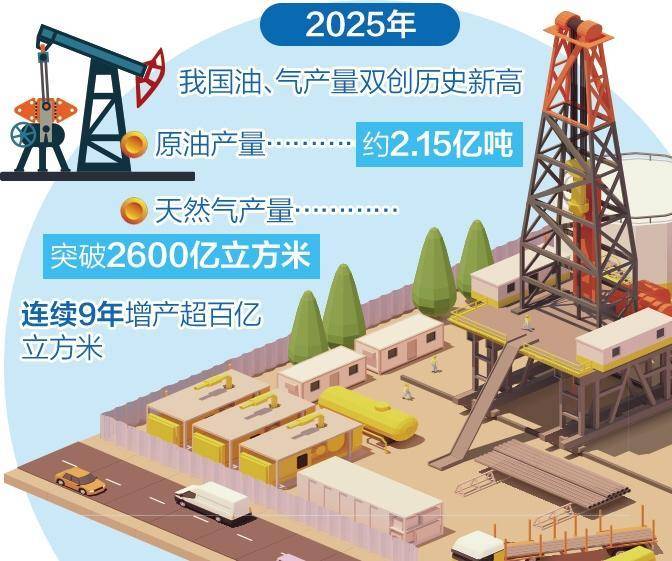
Group 1 - The total installed power generation capacity in China is expected to exceed 3.8 billion kilowatts this year, representing a year-on-year growth of 14%, with total electricity consumption projected to surpass 10 trillion kilowatt-hours for the first time [2] - Oil and gas production has reached historical highs, with crude oil production around 215 million tons and natural gas production exceeding 260 billion cubic meters, marking nine consecutive years of over 10 billion cubic meters increase [2] - The energy security guarantee this year is reported to be the best since the 14th Five-Year Plan, with stable coal production and supply, and effective responses to peak summer electricity load challenges [2] Group 2 - The proportion of non-fossil energy consumption is expected to exceed the target of 20%, with strong investment trends towards green and innovative energy sources [3] - Significant advancements in energy technology and innovation are being made, with the integration of artificial intelligence into the energy sector and the development of new business models [3] - The government is focusing on enhancing energy security, optimizing energy infrastructure, and improving the quality of electricity supply for high-reliability users [4] Group 3 - The goal is to establish a new energy system by 2030, balancing economic development with energy structure, and promoting a comprehensive green transition in society [5] - The emphasis is on fostering energy technology innovation and upgrading the energy industry to support the carbon peak target by 2030 [5]
LPG早报-20251223
Yong An Qi Huo· 2025-12-23 01:05
部或部分材料、内容。对可能因互联网软硬件设备故障或失灵、或因不可抗力造成的全部或部分信息中断、延迟、遗漏、误导或造成资料传输 或储存上的错误、或遭第三人侵入系统篡改或伪造变造资料等,我们均不承担任何责任。 台H 研究中心能化团队 2025/12/23 -P G 内院CFR华 CP预测合 山东烷基 纸面进口利润 日期 华南液化气 华东液化 山东液化气 丙烷CIF日本 山东醚后碳四 主力基差 目尖 化油 南 2025/12/16 4460 4440 520 4408 285 203 4570 7130 -276 240 2025/12/17 4410 523 7110 4490 4398 586 504 4600 -254 282 2025/12/18 4500 4398 4380 203 500 4610 7130 576 -165 389 2025/12/19 4398 4500 4380 573 504 497 4610 7150 -142 399 2025/12/22 4480 4388 4370 536 4580 7150 355 l I l ll B 32 日度变化 -20 -10 -10 -30 0 ...
强韧性、创新高、向绿色——推动实现更高水平能源安全保障
Jing Ji Ri Bao· 2025-12-23 00:23
Group 1: Energy Production and Consumption - The total installed power generation capacity in China is expected to exceed 3.8 billion kilowatts this year, representing a year-on-year growth of 14% [1] - The total electricity consumption in the country is projected to surpass 10 trillion kilowatt-hours for the first time, which is approximately double the total electricity consumption in 2015, setting a new world record [1] - Oil and gas production has reached historical highs, with crude oil production around 215 million tons and natural gas production exceeding 260 billion cubic meters, marking nine consecutive years of production increases of over 10 billion cubic meters [1] Group 2: Energy Security and Supply - The year 2025 is expected to showcase strong resilience in the energy sector, with coal production projected to exceed 4.8 billion tons and imports around 470 million tons, ensuring stable supply and pricing [1] - The energy security measures have effectively responded to peak summer electricity load challenges, with 20 instances exceeding last year's peak [1] - The energy resource complementarity and mutual assistance levels have continuously improved, maintaining a stable safety situation in the power system [1] Group 3: Green Energy Transition - The proportion of non-fossil energy consumption is expected to exceed the target of 20%, with significant investments in green energy and new energy achieving higher quality development [2] - The construction of major hydropower and nuclear power projects is accelerating, and the clean and efficient utilization of fossil energy is making progress [2] - In 2026, over 20 million kilowatts of new wind and solar power capacity will be added, alongside orderly advancement of major hydropower projects and safe development of nuclear power [2] Group 4: Technological Innovation and Policy - The government plans to promote the integration of artificial intelligence with the energy sector through pilot projects and standardization actions [3] - There will be a focus on reforming energy systems and mechanisms, enhancing the construction of a unified national electricity market, and improving regulatory frameworks for new energy [3] - The goal is to establish a new energy system by 2030, balancing economic development with energy structure, supply security with energy conservation, and technological innovation with industry transformation [3]
强韧性、创新高、向绿色 推动实现更高水平能源安全保障
Jing Ji Ri Bao· 2025-12-22 23:27
Group 1 - The total installed power generation capacity in China is expected to exceed 3.8 billion kilowatts this year, representing a year-on-year growth of 14% [1] - The total electricity consumption in China is projected to surpass 10 trillion kilowatt-hours for the first time, which is approximately double the total electricity consumption in 2015, marking a new world record [1] - Oil and gas production in China has reached historical highs, with crude oil production around 215 million tons and natural gas production exceeding 260 billion cubic meters, continuing a trend of over 10 billion cubic meters of annual growth for nine consecutive years [1] Group 2 - The proportion of non-fossil energy consumption is expected to exceed the target of 20%, with strong investment trends towards green and innovative energy sources [2] - Significant advancements in energy technology and innovation are being made, including the integration of artificial intelligence with the energy sector and the development of new energy models and business formats [2] - The National Energy Administration emphasizes the need for higher levels of energy security, focusing on coal supply stability, electricity supply enhancement, and oil and gas production capacity [2] Group 3 - The government plans to promote the integration of artificial intelligence with energy through pilot projects and standardization initiatives, while also advancing major technological breakthroughs in smart grids and future energy industries like hydrogen and nuclear energy [3] - The National Development and Reform Commission aims to balance economic development with energy structure, ensuring energy security while promoting green transformation and innovation in the energy sector [3]
新能源供给比重持续提升
Jing Ji Ri Bao· 2025-12-22 22:00
Core Insights - The Chinese energy sector has shown resilience and progress amidst global supply chain disruptions, focusing on stable supply and green transformation to drive high-quality development [1] Group 1: Supply Assurance - The electricity load in China reached new highs during the summer, with national electricity consumption exceeding 1 trillion kilowatt-hours in July and August, marking a historical first [2] - Total installed power generation capacity is expected to exceed 3.8 billion kilowatts, a year-on-year increase of 14%, with total electricity consumption surpassing 10 trillion kilowatt-hours [2] - The coal production is projected to exceed 4.8 billion tons, maintaining a reasonable supply margin, while oil and gas production is set to reach historical highs by 2025 [2][3] Group 2: Green Transition Achievements - As of September 2023, the total installed capacity of renewable energy reached 2.198 billion kilowatts, a year-on-year increase of 27.2%, accounting for 59.1% of the total power generation capacity [4] - The Dashi Gorge Hydropower Project, a significant water conservancy project, is expected to generate over 1.8 billion kilowatt-hours of clean electricity annually, meeting the needs of 650,000 households [4] - The government aims to achieve a total installed capacity of wind and solar power reaching six times the 2020 level by 2035, requiring an annual addition of approximately 200 million kilowatts over the next decade [5][6] Group 3: Winter Supply Readiness - The energy supply for the winter peak is a top priority, with significant improvements in power grid reliability and efficiency through innovative maintenance practices [7] - Coal supply remains robust, with daily production levels exceeding 12 million tons since October [8] - Natural gas supply is stable, with continuous production increases and enhanced storage capabilities, ensuring adequate supply during peak demand [8]