家电

Search documents
上海将首次开展有奖发票试点,持续推进家电汽车等购新换新补贴
Xin Lang Cai Jing· 2026-02-07 07:23
祝碧晨 设计 2月7日,上海市人民政府主题记者会在上海世博中心举行,市发展改革委、市经济信息化委、市商务 委、市科委、市民政局、市人力资源和社会保障局负责人出席,回答中外记者关心的问题。 二是持续丰富消费新场景。精心办好新春消费季、"五五购物节"、"上海之夏"国际消费季、环球美食汇 等扩消费活动。壮大新型消费发展,同时今年还将挖掘高端定制服装、黄金工艺大师作品等特色化消费 潜力点。 三是持续释放政策红利。通过政策激活消费场景,释放乘数效应。今年将持续推进家电手机汽车等购新 换新补贴,今年还将首次开展有奖发票试点,"请大家稍微等待几天,我们的正式公告即将发布"。同时 今年各区春节期间会发放总额达1.5亿元的消费券。我们是诚意满满,也是诚心诚意欢迎大家来上海消 费。 四是持续优化消费环境。推动入境旅游、离境退税和跨境支付便利化,打造一批入境消费友好型商圈和 离境退税特色集聚区。临近中国农历新年,在此我们诚挚邀请广大市民、全球新老朋友欢聚上海,在上 海过大年,逛逛上海的商圈,体会上海的年味,品全球美食,尽情体验上海消费市场的巨大魅力。 有记者提问,过去一年,上海持续推动了一系列促消费的政策和活动。2025年在社零数 ...
汽车以旧换新补贴下周一启动
Xin Lang Cai Jing· 2026-02-07 06:21
Group 1: Automotive Subsidy Policy - The Beijing Municipal Government has officially released the 2026 automotive trade-in subsidy policy, which includes two types of subsidies: "scrapping and updating" and "trading and updating" [1] - Consumers can receive a maximum subsidy of 20,000 yuan for purchasing new vehicles under the "scrapping and updating" category, with 12% of the new vehicle sales price for electric vehicles and 10% for fuel vehicles with an engine size of 2.0 liters or less [1] - The "trading and updating" subsidy offers 8% of the new vehicle sales price, with a maximum of 15,000 yuan for consumers trading in old vehicles for new electric cars [1][2] Group 2: Application Process and Eligibility - The application system for the automotive subsidies will open on February 9 at 10 AM, and consumers must submit their applications online through designated platforms [1] - Eligibility requirements include that the old vehicle must be registered in the applicant's name by January 8, 2025, and the necessary documentation must be obtained from January 1, 2026 [2] - Each consumer can only receive one "scrapping and updating" subsidy or one "trading and updating" subsidy in 2026 [2] Group 3: Home Appliance and Digital Product Subsidy Policy - The Beijing Municipal Government has announced an upgrade to the home appliance and digital product trade-in subsidy policy, effective February 9, 2026, with a subsidy standard of 15% of the final sales price after discounts [3] - The policy covers six categories of home appliances and four categories of digital products, with a maximum subsidy of 1,500 yuan for home appliances and 500 yuan for digital products [3] - Consumers can apply for subsidies through the "Jingtong" mobile app and must ensure that any previously obtained but unused subsidy qualifications will expire on February 8, 2026 [3][4] Group 4: Optimization of Subsidy Implementation Rules - The subsidy implementation rules have been optimized to enhance consumer participation and improve funding efficiency, with a unified qualification retrieval time starting at 10 AM daily [4] - Online subsidy qualifications will be valid until 24:00 on the same day, while offline qualifications will be valid until 24:00 on the following Sunday [4]
国补福利“沉下去”乡村烟火气“旺起来” 京东率先启动全国首个乡村国补活动
Zhong Jin Zai Xian· 2026-02-07 02:08
Core Insights - The first national rural subsidy event in 2026 was launched in Jinan, aimed at stimulating rural consumption through direct subsidies and immersive offline experiences [1] - The event featured over 100 products from more than 30 mainstream brands, including Haier, Midea, and Huawei, focusing on home appliances and 3C digital products [1][3] - The initiative is part of JD's long-term strategy to enhance rural market engagement, with a planned investment of nearly 30 billion yuan in rural areas by 2025 [5] Group 1 - The event attracted significant consumer participation, with many villagers actively engaging in product consultations and experiences [3] - JD's offline stores in Jiyang also participated, offering additional promotions such as a rebate of 200 yuan for every 3000 yuan spent, with some products available at 50% off [3] - The selection of products tailored to rural needs, such as energy-efficient air conditioners and integrated washing machines, aligns with national green consumption goals and villagers' quality of life aspirations [5] Group 2 - JD provides comprehensive services including delivery, installation, and recycling of old appliances, addressing common concerns of rural consumers [5] - The establishment of a permanent "JD National Subsidy Exchange Station" in Jiyang aims to sustain the momentum of rural offline consumption [5] - The successful execution of the "National Subsidy Down to the Countryside" event is expected to enhance the intrinsic motivation for rural consumption and promote market growth [8]


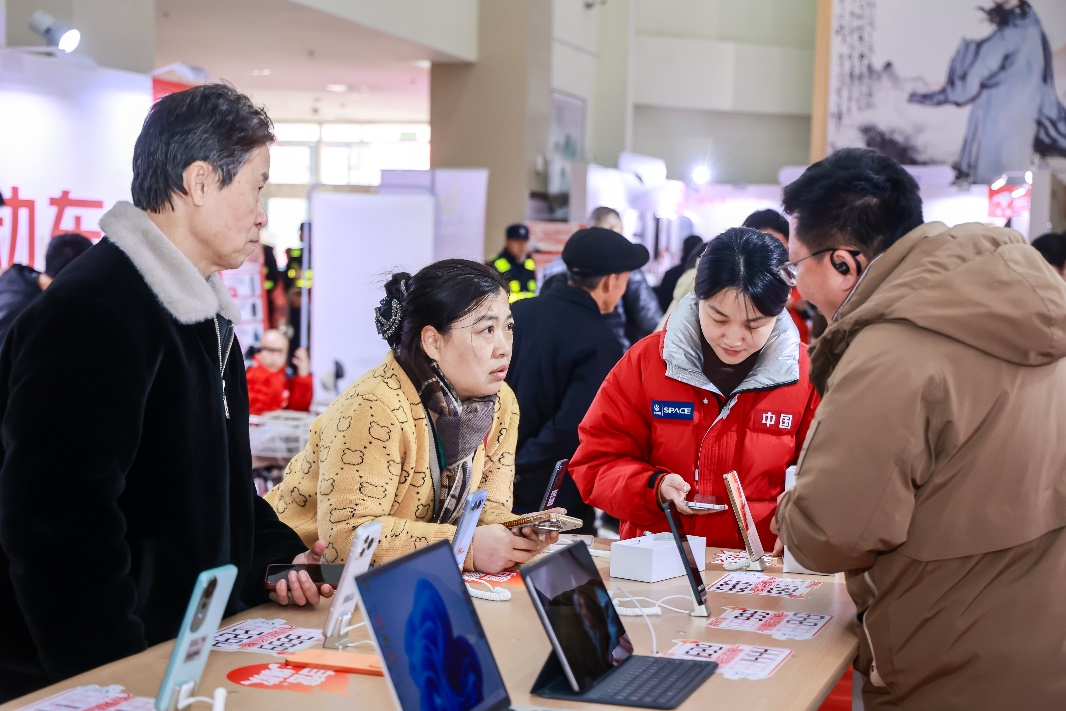
“新国补”落地首月 消费市场热气腾腾
Ren Min Ri Bao· 2026-02-07 01:40
Group 1 - The new "old-for-new" policy is set to stimulate consumer demand and enhance the retail market, particularly for energy-efficient and smart home appliances, as well as new energy vehicles [1][2] - The implementation of the "new national subsidy" has led to significant increases in sales, with over 150 million units sold in January alone, generating nearly 59 billion yuan in revenue [2][4] - The policy has resulted in a remarkable increase in foot traffic and sales in physical retail stores, with some stores reporting sales growth exceeding 800% and customer traffic increasing over 110% [2][3] Group 2 - The 2026 "old-for-new" policy has been optimized to include a unified subsidy standard for key appliances and new energy vehicles, aiming to support high-quality development in the industry [3][4] - The sales of high-performance appliances have surged, with online sales of first-class energy-efficient water heaters and televisions increasing by 35.7% and 28.9% respectively [4] - The policy is evolving from a temporary measure to a long-term institutional support, addressing consumer demand for quality products while promoting economic growth [4][5]
“新国补”落地首月销售近590亿元,你家换新了吗
Sou Hu Cai Jing· 2026-02-07 00:22
Core Viewpoint - The "New National Subsidy" policy has significantly stimulated consumer demand in the market, particularly in the home appliance and automotive sectors, as evidenced by increased sales and consumer engagement during the initial month of its implementation [1][2][3]. Group 1: Consumer Market Impact - The implementation of the "New National Subsidy" has led to a surge in consumer purchases, with notable sales figures such as 13.36 million transactions and a total sales amount of 5.9 billion yuan in Hebei province alone during the first two days of January [1] - In Fuzhou, the old-for-new policy generated nearly 16 million yuan in sales, contributing to a total consumption increase of 1.25 billion yuan [1] - The overall sales of six categories of home appliances and four categories of digital and smart products exceeded 15 million units, with sales revenue approaching 59 billion yuan in January [2] Group 2: Retail Sector Performance - The "New National Subsidy" has revitalized offline retail, with stores like Suning experiencing an over 800% increase in sales and a 110% rise in customer traffic during the first week of January [2] - The sales of energy-efficient home appliances have surged, with first-level energy-efficient products accounting for 92% of sales in certain stores, indicating a strong consumer preference for high-efficiency products [2] - The policy has also positively influenced cross-sector consumption, driving growth in leisure, transportation, and dining sectors as consumers engage in multiple spending activities [2] Group 3: Policy Optimization and Future Trends - The 2026 old-for-new policy has been optimized to include a unified subsidy standard for key appliances and vehicles, aiming to provide stable expectations for businesses [3] - The policy expansion to include new smart devices like smart glasses and a focus on high-efficiency products reflects a strategic alignment with consumer trends and industry innovation [3][4] - Data indicates a shift towards high-end, intelligent, and green vehicles, with 81.2% of fuel vehicle users opting for new energy models during trade-ins, showcasing a significant transformation in consumer preferences [3]
经济新方位:“新国补”落地首月,消费市场热气腾腾
Ren Min Ri Bao· 2026-02-06 23:17
Core Insights - The "New National Subsidy" policy has significantly boosted consumer spending in the first month of its implementation, particularly in the home appliance and automotive sectors [4][16][19] - The policy has led to a notable increase in sales of energy-efficient and smart appliances, as well as new energy vehicles, indicating a shift in consumer preferences towards upgraded products [7][18] Group 1: Consumer Market Impact - The implementation of the "New National Subsidy" has resulted in a surge in consumer activity, with sales of home appliances and digital products reaching 13.36 million transactions and a total sales volume of 5.9 billion yuan in Hebei province alone during the first two days of January [7][16] - In Fuzhou, the old-for-new policy generated nearly 16 million yuan in sales, contributing to a total consumption increase of 1.25 billion yuan during the New Year holiday [16] - The overall sales volume of six categories of home appliances and four categories of digital products exceeded 15 million units, with total sales nearing 59 billion yuan in January [7][19] Group 2: Retail Sector Growth - The policy has revitalized offline retail, with stores like Suning experiencing an eightfold increase in sales and over 110% growth in customer traffic in early January [8][17] - The sales of first-level energy-efficient appliances have surged, with their proportion in sales rising to 92%, indicating a strong consumer shift towards energy-efficient products [8][17] - The offline sales of home appliances and digital products accounted for nearly 80% of total sales, reflecting a year-on-year growth of approximately 20% [8][17] Group 3: Policy Optimization and Future Trends - The 2026 policy revision includes a unified subsidy standard for key appliances and vehicles, providing stability and encouraging consumer confidence [9][18] - The subsidy scope has expanded to include new smart devices like smart glasses, aligning with current consumer and industry trends [9][18] - Data indicates a strong preference for new energy vehicles among consumers, with 81.2% of fuel vehicle users opting for electric or hybrid models during trade-ins, highlighting a trend towards high-end, intelligent, and green automotive solutions [9][18]
海尔去年全球收入达4268亿元
Zheng Quan Ri Bao· 2026-02-06 16:42
Core Insights - Haier reported a global revenue of 426.8 billion yuan in 2025, representing a year-on-year growth of 6.3%, and a total profit of 32.2 billion yuan, with a growth of 6.7%, indicating a steady and high-quality growth trend [1] - The company aims to enhance its ecological competitiveness and innovation efficiency by focusing on three main strategies: ecological collaboration, user connection, and global depth in 2026 [1][2] - Haier's AI application year in 2025 introduced a three-tier system of AI, including "large models," "intelligent agents," and "AI terminals," leading to advancements in smart home solutions and digital transformation for enterprises [1] Group 1: Business Performance - In 2025, Haier achieved a global revenue of 426.8 billion yuan, a 6.3% increase from the previous year [1] - The total profit for 2025 was 32.2 billion yuan, reflecting a 6.7% year-on-year growth [1] Group 2: Strategic Focus - Haier will focus on three main lines in 2026: ecological collaboration, user connection, and global depth, aiming to transition from "parallel fleets" to "organic life forms" in ecological collaboration [2] - The company plans to evolve from "transactional users" to "lifetime partners" in user connection and deepen its local presence globally [2] Group 3: AI and Innovation - 2025 marked the year of AI application for Haier, with the launch of "AI Eye" for smart home solutions, moving from "household chores" to "no household chores" [1] - The company has committed to a minimum of 100 billion yuan in R&D investment over the next five years, focusing on AI, chips, and IoT security [3] Group 4: Capital Market and Ecosystem - Haier has established eight listed companies under its umbrella, covering various sectors including smart home, health, digital economy, and automotive [3] - The company is initiating the listing process for Haier New Energy and has submitted a listing application for Kaos to the Hong Kong Stock Exchange [3]

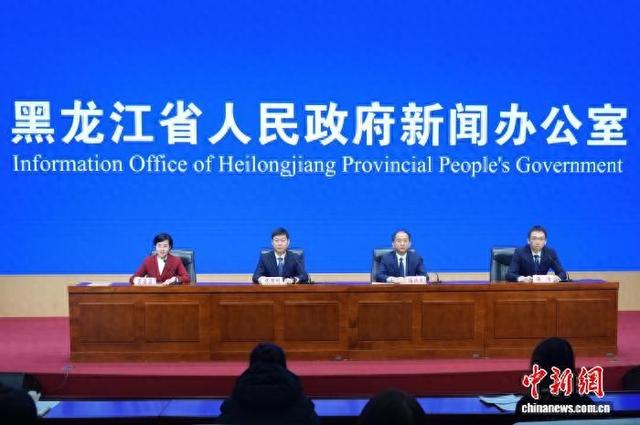
黑龙江:2025年“以旧换新”直接拉动消费超570亿元
Xin Lang Cai Jing· 2026-02-06 14:47
Group 1 - The core viewpoint is that Heilongjiang Province aims to achieve a retail sales total of 562.2 billion yuan by 2025, with a year-on-year growth of 3.2%, accelerating by 1.3 percentage points compared to the previous year [1] - The "trade-in" policy has significantly boosted sales of automobiles and home appliances, with over 4.75 million units sold, directly driving consumption by more than 57 billion yuan [1] Group 2 - During the Spring Festival, Heilongjiang Province will implement a dual-driven strategy of "policy + activities," launching over 200 promotional events and distributing consumption vouchers totaling more than 200 million yuan [3] - Major themed events such as the "Automobile Carnival" and "Digital Home Appliance Festival" will be held, with local promotional funding exceeding 50 million yuan to stimulate large-scale consumption [3] - The province will focus on cultivating the first-store economy and brand economy, optimizing tax refund services for outbound shopping, and accelerating the development of night economy and ice and snow economy [3]
轻工产品数字身份管理进入标准化、平台化新阶段
Zhong Guo Jing Ji Wang· 2026-02-06 13:52
中码院副院长、统一标识代码注册管理中心执行主任王楠围绕MA国际标识体系及中国轻工行业产品数 字代码注册管理平台作主题分享。他介绍,MA标识体系将为轻工产品提供统一、安全、国际兼容的编 码基础,支持数字护照的落地实施。轻工业各细分行业中心、协会组织及相关产业支撑机构,是推动 MA标识体系与行业深度融合、实现数据互联互通的重要力量。MA标识将全面赋能轻工业生产、流 通、回收等各产业环节链路,构建开放、协同、可持续的数字化发展生态,加速轻工行业整体数字化进 程。 中国轻工业信息中心处长李双双就中轻联团体标准《轻工产品数字护照技术要求》的编制背景、现状、 意义及框架进行了专题介绍。她介绍,该标准旨在为轻工产品赋予"数字身份证",实现全生命周期数据 贯通,为行业智慧化转型奠定基础,预计2027年初发布实施。 会议举行"中国轻工行业产品数字代码注册管理平台"上线仪式,标志着轻工产品数字身份管理进入标准 化、平台化新阶段。 在轻工企业案例分享环节,内蒙古沙漠之花生态产业科技有限公司代表介绍基于MA标识的一物一码追 溯系统,实现从原料到消费的全流程可信追溯。家电行业代表则分享MA标识在供应链协同、生产管 理、质量控制等方面的 ...
家电行业专题:汇率升值,出海后势如何?
Guolian Minsheng Securities· 2026-02-06 11:37
Investment Rating - The report maintains a "Recommended" rating for the home appliance industry [1] Core Insights - The report highlights that the nominal appreciation of the RMB is expected to have limited impact on export recovery and external sales profitability, as leading brands have strong pricing power, overseas production capacity, and effective foreign exchange hedging [8][11] - The report emphasizes that the home appliance sector is likely to benefit from increased foreign capital inflow due to RMB appreciation, with the sector's valuation and holdings at historical lows, indicating significant upside potential [7][8] Summary by Sections 1. Industry: Nominal Appreciation and Dollar Price Elasticity - Since Q2 2025, the RMB has appreciated approximately 5% due to the easing of trade tensions and economic recovery expectations, with the CFETS index remaining close to its 3-5 year average [11][12] - The report discusses the impact of exchange rates on export volume and pricing, noting that during appreciation phases, exporters may adjust dollar prices or lower RMB prices to mitigate the effects of appreciation [12][22] 2. Financial Statements: External Sales Profitability and Hedging - External sales gross margins have been under pressure, with historical data showing that external sales margins are generally weaker than domestic sales margins [4][6] - The report indicates that major companies have high foreign exchange hedging ratios, which effectively mitigate the impact of exchange rate fluctuations on their financials [4][6] 3. Capital: High Foreign Ownership Proportion - The report notes a strong correlation between RMB appreciation and net inflows of foreign capital, with the home appliance sector consistently attracting significant foreign investment [7][8] - The sector's Northbound trading and public fund holdings are at historical lows, suggesting ample room for upward movement [7] 4. Industry Perspective and Investment Recommendations - The report suggests that under the expectation of moderate appreciation, the competitive edge of leading companies backed by domestic supply chain advantages and proactive overseas capacity expansion will remain intact [8] - Recommended stocks include high-quality white goods leaders such as Midea Group, Haier Smart Home, Gree Electric Appliances, and Hisense Home Appliances, as well as TV leader Hisense Visual and global leaders in robotic vacuum cleaners like Roborock and Ecovacs [8]