
网约车

Search documents
《湖南省网约车市场全景分析报告(2025)》
Sou Hu Cai Jing· 2025-10-09 08:03
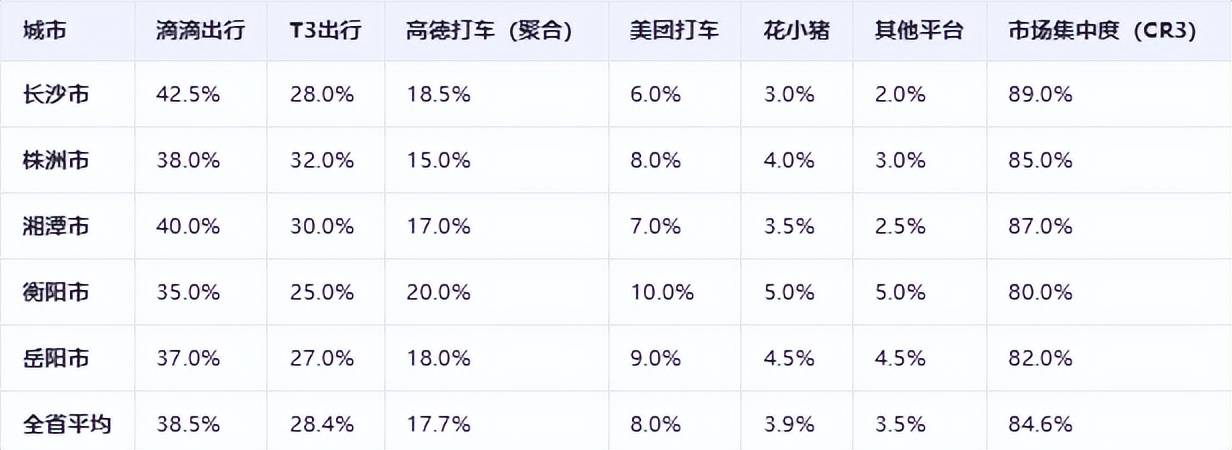
Core Insights - The Hunan Province ride-hailing market is experiencing rapid growth, with 208 licensed companies and 62,028 compliant vehicles as of June 2025, and an expected order volume of 3.5 billion in 2024, indicating strong market demand [1][2]. Market Overview - The ride-hailing industry in Hunan has transitioned from disorderly expansion to regulated development, with compliance rates increasing from 33.81% in 2021 to 69.52% in 2024, reflecting enhanced government oversight [2]. - The market is characterized by a national platform dominance and regional competition, with Changsha, the provincial capital, accounting for nearly half of the province's capacity and order volume [2][11]. Competitive Landscape - The competition between traditional taxis and ride-hailing services is intense, with ride-hailing orders surpassing those of traditional taxis in Changsha [3][10]. - Major challenges for traditional taxis include high operational costs and poor user experience, while ride-hailing platforms leverage technology to optimize operations and reduce idle time [3][6]. Platform Market Share - In Changsha, the market share of major ride-hailing platforms is concentrated, with the top three platforms accounting for 89% of the market [4][5]. Compliance and Regulation - The compliance rate for ride-hailing services in Changsha is 72.27%, ranking second in the province, indicating a high level of regulatory adherence [11][31]. - The Hunan government has implemented measures to ensure compliance and protect driver rights, including the cancellation of low-price products to prevent predatory pricing [6][25]. Service Innovations - The ride-hailing market is diversifying its service offerings, including customized transport for specific scenarios, night services, and special discounts during off-peak hours [22][23]. - Digital technologies are being utilized to enhance operational efficiency, such as real-time demand heat maps for drivers [21][37]. Future Trends - The market is expected to see a gradual increase in order volume, with projections of approximately 3.8 billion orders in 2025 and 4.4 billion by 2027, reflecting a moderate growth rate [28][29]. - The penetration of electric vehicles in the ride-hailing sector is anticipated to rise, with expectations of over 30% by 2026 due to policy incentives [30][27]. Regional Disparities - There are significant regional disparities in the ride-hailing market, with first-tier cities like Changsha experiencing robust growth, while third-tier cities face saturation and declining driver incomes [18][31].

滴滴:双节假期打车需求同比上涨14%,站点巴士累计运送旅客超100万人次
Xin Lang Ke Ji· 2025-10-09 07:24
Core Insights - During the National Day and Mid-Autumn Festival holidays, Didi Chuxing reported a 14% year-on-year increase in average daily ride-hailing demand, with significant growth in cross-city and long-distance travel [1][2][3] - The demand for pre-booked rides surged by 58% compared to the period before the holidays, with notable increases in trips to transportation hubs and tourist attractions [1][2] - The demand for Didi's bike and e-bike services saw a significant rise, particularly in major cities, while the demand for delivery services also experienced substantial growth [3] Group 1: Ride-Hailing Demand - Average daily ride-hailing demand increased by 14% year-on-year during the holidays [1] - Cross-city ride-hailing demand rose by 89% compared to the pre-holiday period, with 68% of this demand coming from users outside the province [1] - Long-distance ride-hailing demand from users traveling over 800 kilometers increased by 22% year-on-year, with younger generations (post-2000s and post-1995) contributing 47% of this demand [1] Group 2: Bus and Group Travel - Didi's bus service saw an 86% increase in passenger volume compared to the pre-holiday period, transporting over 1 million passengers [2] - The demand for chartered vehicles during the holidays grew by 88% year-on-year, with family travel being a significant driver [2] - The demand for 7-seat vehicles for family outings increased by 123% year-on-year [2] Group 3: Delivery and Bike Services - Didi's bike and e-bike services experienced a notable increase in demand, particularly in cities like Chengdu and Tianjin [3] - The volume of Didi's delivery orders grew by 202% year-on-year during the holidays, with significant increases in demand for flowers, cakes, and pet deliveries [3] - Rental car orders surged by 212% year-on-year, with an average rental duration of 2.5 days and a 12% increase in daily spending [3] Group 4: International Travel - The number of Didi ride-hailing orders from inbound users increased by 139% year-on-year during the holidays, reflecting a growing interest in travel to China [3] - The demand for overseas travel surged, with daily demand exceeding 100% compared to the summer peak [3]

滴滴国庆中秋出行报告出炉:异地打车需求上涨89%,租车订单突破历史峰值
Feng Huang Wang· 2025-10-09 05:32
Core Insights - Didi Chuxing reported a 14% increase in average daily ride-hailing demand during the recent "Golden Week" compared to the same period last year, indicating a robust growth in both long-distance travel and local consumption [1] Group 1: Long-Distance Travel Trends - Cross-city and cross-province travel surged, with intercity ride-hailing demand increasing by 89% compared to pre-holiday levels, with over two-thirds of this demand coming from users outside the province [1] - Demand for long-distance travel exceeding 800 kilometers rose by 22% year-on-year, with the "Post-95" and "Post-00" generations accounting for 47% of this demand, establishing themselves as the primary drivers of long-distance travel [1] - Chongqing emerged as the city with the highest ride-hailing demand, surpassing many first-tier cities [1] Group 2: Local Consumption Trends - A shift towards local leisure activities was observed, with ride-hailing demand for sports venues and indoor leisure places increasing by 36% and 35% year-on-year, respectively [2] - The impact of festive events on local travel was significant, with ride-hailing demand around venues for lantern festivals during the Mid-Autumn Festival rising by over 85% compared to pre-holiday levels, and demand near music festivals and concerts skyrocketing by over 10 times [2] - Instant retail services saw a remarkable growth, with Didi's delivery orders increasing by 202% year-on-year, driven by high demand for personalized deliveries such as flowers, cakes, and luggage [2] Group 3: Tourism and International Travel - The integration of culture and tourism has led to new consumption hotspots, with ride-hailing demand for tourist attractions surging by 185% compared to pre-holiday levels [2] - Non-traditional tourist cities and unique cultural tourism projects showed impressive performance, such as Jingdezhen, where ride-hailing demand around a popular food stall increased by 616% year-on-year [2] - The inbound tourism market is recovering, with a 139% year-on-year increase in ride-hailing orders from foreign tourists during the holiday, particularly a 293% surge in orders from Russian users due to visa-free policies [2] - Domestic travel demand also saw a significant increase, with average daily demand more than doubling compared to the summer period [2]
科特迪瓦成为美国优步网约车公司正式退出的首个非洲国家
Shang Wu Bu Wang Zhan· 2025-10-08 17:28
Core Insights - Uber has officially exited the Ivorian market after six years of operation, marking it as the first African country from which the company has withdrawn [1] - The decision aligns with Uber's overall strategy to concentrate resources on key markets for long-term growth [1] - Industry experts speculate that factors such as competitive pricing strategies from local companies like Yango and Heetch, lengthy payment cycles, and increasing regulatory pressures contributed to Uber's challenges in Côte d'Ivoire [1] Summary by Categories Company Strategy - Uber's withdrawal from Côte d'Ivoire is part of a broader strategy to focus on key markets to ensure sustainable growth [1] - The company launched its services in Côte d'Ivoire in December 2019, with Abidjan being the first city in West Africa to adopt the app [1] Market Dynamics - The exit highlights the competitive landscape in Côte d'Ivoire, where local players have implemented aggressive pricing strategies that have made it difficult for Uber to maintain its market position [1] - The increasing regulatory environment has also posed challenges for Uber's operations in the region [1] Industry Insights - Experts suggest that Uber's exit underscores the importance of adapting to local market conditions and understanding user habits rather than merely replicating its business model [1]

陈震再谈劳斯莱斯车祸后续:对方为网约车,会全力支付该负担的赔偿
Di Yi Cai Jing Zi Xun· 2025-10-06 07:51
Core Points - The incident involved a well-known car reviewer, Chen Zhen, who expressed his commitment to cover all necessary compensation for the victims of a traffic accident involving a Didi ride-hailing vehicle [2][3] - Chen Zhen confirmed that all Didi ride-hailing vehicles have passenger insurance, providing a double insurance for the injured parties regarding medical expenses and vehicle damage [2][3] - Chen Zhen reached out to the family of the injured party to apologize and discuss the situation, indicating a willingness to cooperate with authorities for further resolution [2][3] Incident Details - The accident occurred on October 3, 2023, at the intersection of Zhugezhang Road and Wanshou Road in Haidian District, Beijing, involving Chen Zhen's vehicle and another car [7] - Initial reports indicated that both drivers were not under the influence of drugs or alcohol, and Chen Zhen was found to be fully responsible for the accident [7] - A subsequent statement from the family of the other party involved highlighted their need for support due to multiple injuries and dependents, which Chen Zhen acknowledged by sharing their message on social media [5][7]

从厨房到小巷,新加坡与中国游客同迎黄金周
Xin Hua Wang· 2025-10-04 12:40
Core Insights - The article highlights the significant increase in Chinese tourist arrivals in Singapore during the Golden Week, with a notable rise in demand for local food and retail services [1][2] - Businesses across Singapore are actively preparing for the influx of tourists, enhancing services and inventory to meet the expected demand [1][2] Group 1: Tourism and Visitor Trends - Chinese tourists have become the largest group of visitors to Singapore, with 2.3 million arrivals recorded in the first eight months of the year [1] - The interest of Chinese tourists is shifting from traditional landmarks to exploring local cafes, bookstores, and unique experiences, indicating a trend towards more personalized travel [3][4] - Social media platforms like Xiaohongshu (Little Red Book) are influencing tourist choices, with many visitors sharing their experiences and recommendations online [2][4] Group 2: Business Adaptations - Retailers and restaurants are increasing their staff and inventory in anticipation of the Golden Week, with specific examples like the increase in chicken leg sales at the Coconut Club [1][2] - High-end retail locations, such as Takashimaya, are enhancing customer service and security measures to accommodate the expected surge in shoppers [1][2] - Payment services are being upgraded, with Alipay now accepted in over 500 stores, aiming to redefine the retail experience for Chinese tourists [2] Group 3: Cultural Events and Local Experiences - The Mid-Autumn Festival celebrations, including lantern displays, are attracting tourists and enhancing their cultural experience in Singapore [4][5] - Local artisans from Sichuan, China, are involved in creating the lantern displays, showcasing the cultural exchange between Singapore and China [4][5]
享道出行假期前三日出行需求同比增长55.49%
Xin Jing Bao· 2025-10-04 09:51
Core Insights - The demand for ride-hailing services from Xiangdao Travel surged during the National Day and Mid-Autumn Festival holiday, with a year-on-year increase of 55.49% from October 1 to October 3 [1] - The peak travel day was October 1, with significant demand spikes observed between 13:00-14:00, 17:00-18:00, and 20:00-21:00 [1] - The proportion of users traveling to different locations accounted for approximately 41.88%, showing a slight year-on-year growth, with October 3 recording the highest demand for intercity travel [1] User Behavior Insights - Cities such as Xi'an, Nanping, Quzhou, Zhoushan, Zibo, Longyan, and Guilin exhibited high demand for intercity travel among users of Xiangdao Travel [1] - Orders related to transportation hubs, including airports, train stations, and bus stations, increased by 19.63% compared to the previous year [1]
通讯丨从厨房到小巷,新加坡与中国游客同迎黄金周
Xin Hua She· 2025-10-04 03:29
Core Insights - The article highlights the significant increase in Chinese tourist arrivals in Singapore during the Golden Week, with a notable rise in demand for local food and retail services [1][2] - Businesses across Singapore are actively preparing for the influx of tourists, enhancing their services and inventory to cater to the increased demand [1][2] Group 1: Tourism and Visitor Trends - Chinese tourists have become the largest source of visitors to Singapore, with 2.3 million arrivals recorded in the first eight months of the year [1] - The interest of Chinese tourists is shifting from traditional landmarks to unique experiences, such as local cafes, bookstores, and cooking classes [3][4] - Social media platforms like Xiaohongshu (Little Red Book) are influencing tourist choices, with many visitors seeking recommendations for lesser-known attractions [2][4] Group 2: Business Adaptations - Retailers and restaurants are increasing their staff and inventory in anticipation of the Golden Week, with specific examples like the increase in chicken leg sales at the Coconut Club [1][2] - High-end retail locations, such as Takashimaya, are enhancing customer service and security measures to manage the expected surge in shoppers [1][2] - Payment services are being upgraded to accommodate Chinese tourists, with Alipay being introduced in over 500 stores [2] Group 3: Cultural Events and Local Experiences - The Mid-Autumn Festival celebrations, including lantern displays, are attracting tourists and enhancing their cultural experience in Singapore [4][5] - Local artisans from Sichuan, China, are involved in creating the lanterns for the festival, showcasing the cultural exchange between Singapore and China [4][5]
从查路线到算时间,还能约到“空气清新的老司机车” AI成了我的“长假出行搭子”
Mei Ri Jing Ji Xin Wen· 2025-10-02 09:55
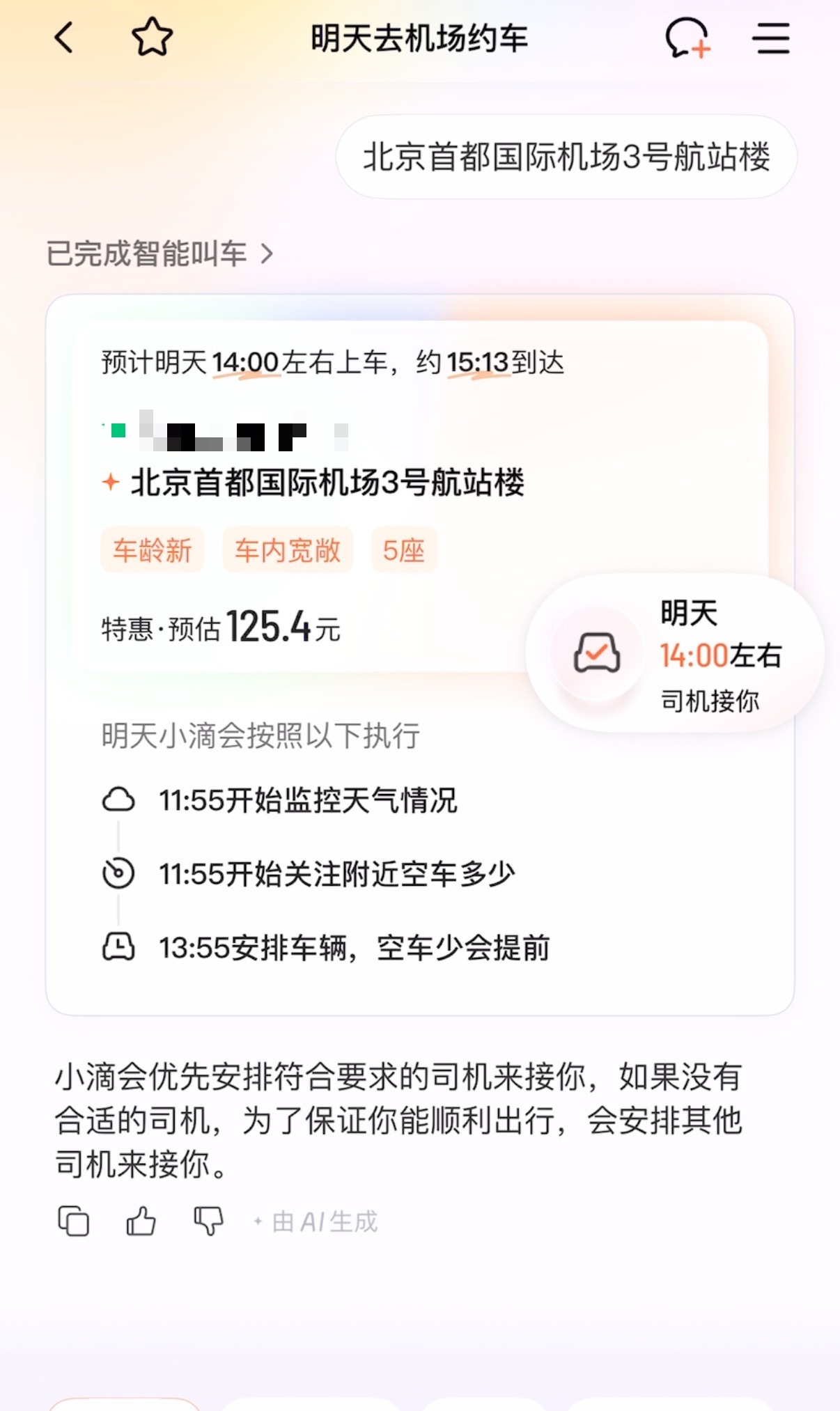
Core Insights - The article discusses the launch and functionality of Didi's AI travel assistant "Xiao Di," which aims to enhance user experience during peak travel times by providing personalized travel solutions [1][9]. Group 1: AI Travel Assistant Features - "Xiao Di" analyzes user requests and generates a complete travel plan after approximately 30 seconds of data processing, suggesting optimal departure times and monitoring conditions [1]. - The assistant can respond to vague requests, such as recommending nearby tourist attractions and matching users with suitable vehicles based on specific preferences [3][8]. - Users can describe their travel needs in detail, allowing the AI to present up to three vehicle options for manual confirmation, moving beyond traditional ride-hailing methods [8]. Group 2: Integration and Future Prospects - Didi has launched the MCP (Model Context Protocol) service, enabling other applications to integrate its AI travel capabilities, potentially allowing users to plan and book rides without opening the Didi app [9]. - The article highlights the broader trend of AI integration in travel and transportation, with other companies like T3 and Gaode also developing AI-driven solutions [9]. - Despite the promising advancements, Didi acknowledges that "Xiao Di" is still in its early stages and requires continuous learning from real-world scenarios to improve its service [9]. Group 3: User Experience and Perception - The AI assistant's ability to understand nuanced user needs, such as preferring a vehicle with a fresh atmosphere, signifies a shift from mere execution of commands to a more empathetic interaction [10]. - The article emphasizes the potential for AI to create a more human-like relationship in the travel experience, enhancing efficiency and user satisfaction [10]. - The ongoing development of AI in travel is seen as a significant step towards a more personalized and responsive service model, with users contributing to its evolution through feedback [10].
国庆逢中秋,出行迎高峰,每秒2000人同时打滴滴
Ge Long Hui· 2025-10-01 09:45
Core Insights - Didi Chuxing's data indicates a peak in ride-hailing demand on September 30, with an average of approximately 2000 users requesting rides every second [1] - The day before the holiday, popular destinations included dining, shopping, and entertainment venues, as well as major transportation hubs like airports and train stations, accounting for 43% of total ride requests [1] - There was a significant year-on-year increase of 56% in cross-city ride bookings, and a 241% increase compared to regular days [1] - The trend of "early holiday travel and staggered trips" was evident, with non-peak hour ride requests rising by 18% year-on-year, which helped alleviate traffic pressure before the holiday [1]