
石化

Search documents
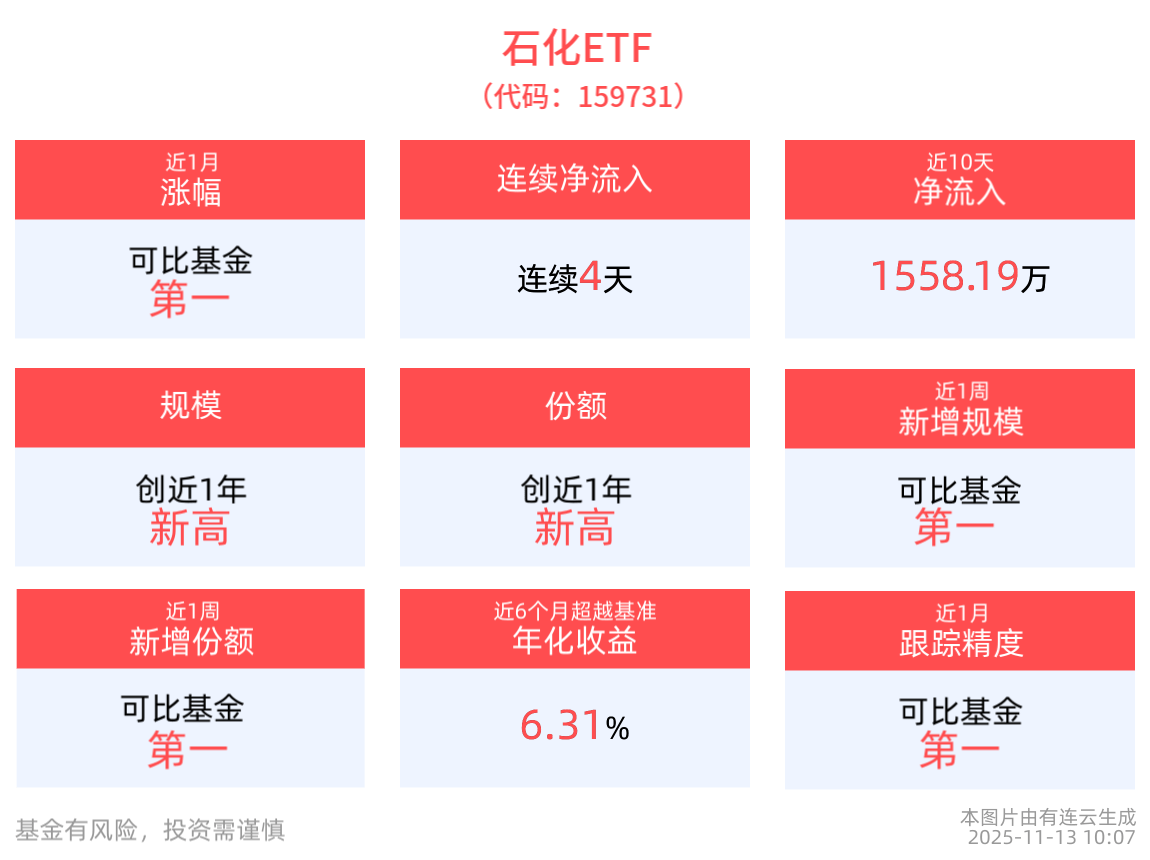
石化ETF(159731)连续4天获资金净流入,成分股联泓新科一字涨停
Sou Hu Cai Jing· 2025-11-13 02:35
Core Insights - The China Petroleum and Chemical Industry Index has shown a positive trend, with a 0.98% increase as of November 13, 2025, and significant gains in constituent stocks such as Lianhong Xinke and Cangge Mining [1] - The Petrochemical ETF (159731) has also performed well, with a 0.95% increase and a notable 6.83% rise over the past week, indicating strong investor interest [1][4] - The ETF has seen a net inflow of 8.41 million yuan over the last four days, reaching a total share count of 201 million and a scale of 170 million yuan, both marking a one-year high [1] Performance Metrics - The Petrochemical ETF has recorded a 27.44% increase in net value over the past six months, with a maximum monthly return of 15.86% since its inception [4] - The ETF has outperformed its benchmark with an annualized excess return of 6.31% over the last six months [4] - The top ten weighted stocks in the index account for 56.05% of the total, with Wanhua Chemical and China Petroleum being the most significant contributors [4] Stock Performance - Key stocks and their performance include: - Wanhua Chemical: +0.04%, 10.47% weight - China Petroleum: -0.80%, 7.63% weight - Salt Lake Co.: +6.06%, 6.44% weight - China Petroleum & Chemical: -1.05%, 6.44% weight - Cangge Mining: +6.30%, 3.82% weight [6]


PP日报:震荡运行-20251112
Guan Tong Qi Huo· 2025-11-12 11:52
Report Industry Investment Rating - No relevant content provided Core Viewpoints - PP downstream demand is in the peak season, but the follow - up of orders such as plastic weaving is limited, and the market lacks large - scale centralized procurement. With the restart of some maintenance devices and the increase in enterprise operating rates, it is expected that PP will fluctuate weakly in the near future [1] Summary by Directory Market Analysis - PP downstream operating rate increased by 0.52 percentage points to 53.14% week - on - week, at a relatively low level in the same period over the years. The plastic weaving operating rate increased by 0.26 percentage points to 44.46% week - on - week, with a slight increase in orders, slightly lower than the same period last year. On November 12, some maintenance devices such as a line of Guangxi Petrochemical restarted, and the PP enterprise operating rate rose to about 84%, at a neutral level, and the production ratio of standard drawstrings increased to about 26%. Petrochemical inventory is at a neutral - to - high level in the same period in recent years. The cost side is in a narrow - range shock. The supply has increased, while the downstream demand has limited follow - up, and there is no actual anti - involution policy in the PP industry [1] Futures and Spot Market Conditions - Futures: The PP2601 contract decreased in positions and oscillated. The lowest price was 6434 yuan/ton, the highest was 6474 yuan/ton, and it finally closed at 6460 yuan/ton, below the 20 - day moving average, with a decline of 0.11%. The position decreased by 4959 lots to 636592 lots [2] - Spot: The spot prices of PP in various regions were mostly stable, with drawstrings quoted at 6260 - 6570 yuan/ton [3] Fundamental Tracking - Supply: On November 12, some maintenance devices such as a line of Guangxi Petrochemical restarted, and the PP enterprise operating rate rose to about 84%, at a neutral level [4] - Demand: As of the week of November 7, the PP downstream operating rate increased by 0.52 percentage points to 53.14% week - on - week, at a relatively low level in the same period over the years. The plastic weaving operating rate increased by 0.26 percentage points to 44.46% week - on - week, with a slight increase in orders, slightly lower than the same period last year [4] - Inventory: On Wednesday, the early petrochemical inventory decreased by 20,000 tons to 690,000 tons week - on - week, 10,000 tons higher than the same period last year. Petrochemical inventory is at a neutral - to - high level in the same period in recent years [4] Raw Material End - Brent crude oil contract 01 oscillated around $64 per barrel, and the CFR propylene price in China remained flat week - on - week at $710 per ton [6]
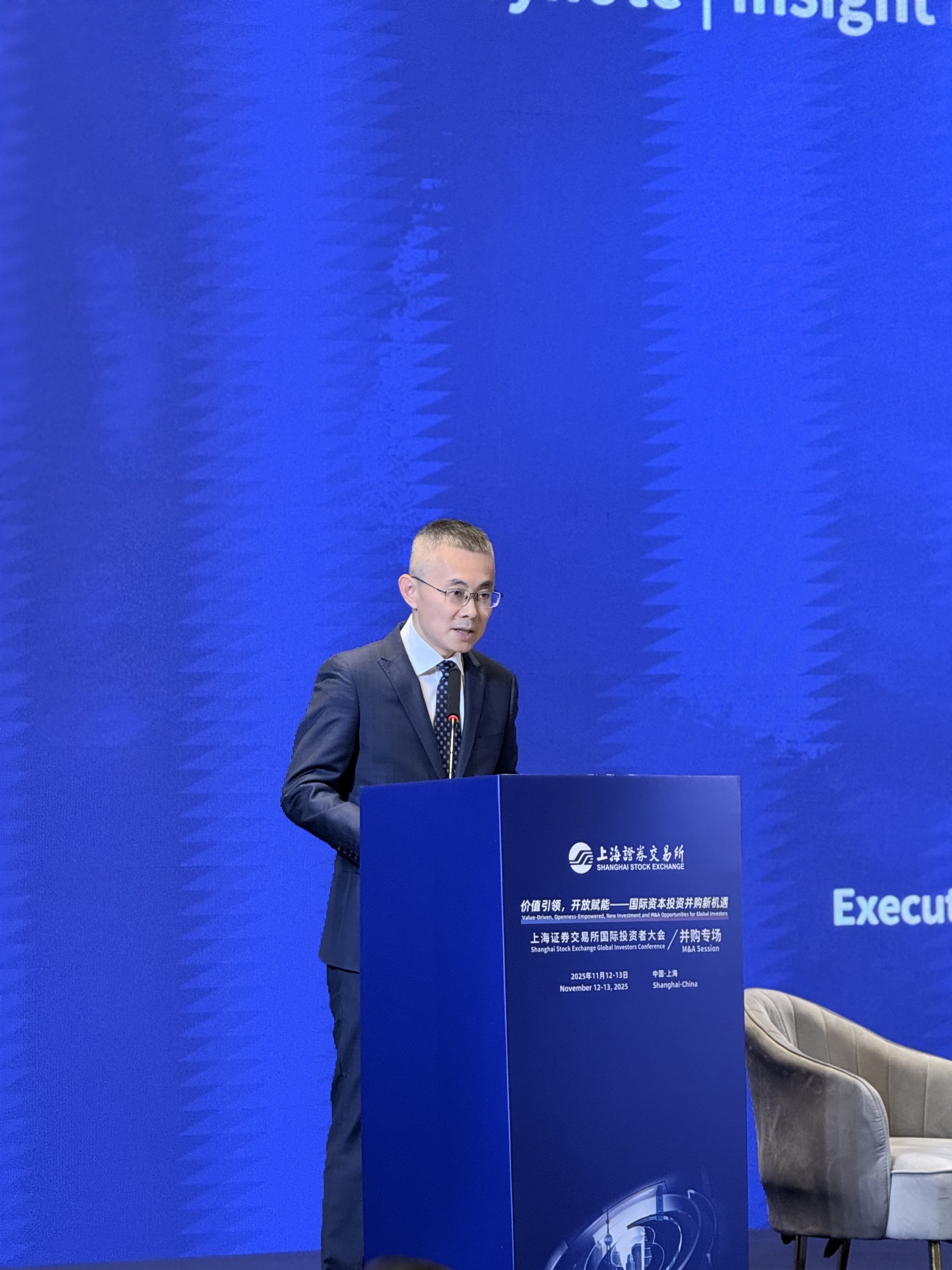
上海证券交易所副总经理王泊:并购市场是发现企业价值的投资蓝海
Zheng Quan Ri Bao Wang· 2025-11-12 07:04
Core Insights - The A-share merger and acquisition (M&A) market has entered a new active cycle since last year, reflecting the overall trend of China's economy towards stability and quality improvement [1] - The M&A market serves as an important window for observing China's economic conditions and corporate vitality [1] Group 1: M&A Market Dynamics - The M&A market is seen as a blue ocean for discovering corporate value, with significant enhancements in the resilience and vitality of China's economy and capital markets due to systematic reforms [6] - Global investors have reached a consensus on investing deeply in China, with M&A being a crucial method for optimizing resource allocation and enhancing the quality and investment value of listed companies [6] Group 2: Sector-Specific Trends - A-share technology companies are accelerating their breakthroughs through M&A to achieve technological upgrades and market expansion, particularly in future industries like AI, quantum information, and biotechnology [6] - Traditional industries such as textiles, light industry, steel, and petrochemicals are facing performance and valuation pressures, prompting them to strengthen their core businesses and accelerate transformation through M&A [6] Group 3: Strategic M&A by Industry Leaders - A-share industry leaders are shifting from simple scale expansion to strategic M&A for industry chain integration and global layout, thereby enhancing their core competitive advantages [7] - For instance, China Shipbuilding's merger with China Shipbuilding Industry Corporation has created the world's largest and most complete shipbuilding enterprise, with a market value steadily increasing to 270 billion yuan [7]
这个国家级石化产业基地,拟扩区!
Xin Lang Cai Jing· 2025-11-12 04:38
Core Viewpoint - The Jiangsu Provincial Department of Industry and Information Technology has announced the preparation for the expansion of the Lianyungang Petrochemical Industrial Base, which is one of the seven major petrochemical industrial bases in China [1] Summary by Relevant Sections Expansion Details - The current planned area of the Lianyungang Petrochemical Industrial Base is 61.34 square kilometers, with an additional planned area of 9.8 square kilometers for the expansion [1] - The expansion area is defined by the boundaries: east to National Highway 228, south to No. 9 Road, west to Jinkang Road, and north to Taihe Road [1] - After the expansion, the total area will be 71.14 square kilometers, divided into two sections [1] Industry Structure - The Lianyungang Petrochemical Industrial Base has established an industrial structure characterized by "refining and chemical integration + high-end new materials + green energy" [1] - The base has attracted three leading enterprises, including: - Shenghong's refining and chemical integration project, representing the "aromatic and olefin" dual-chain petrochemical industry [1] - The high-end petrochemical industry chain represented by the Lianyungang Petrochemical Light Hydrocarbon Comprehensive Utilization Project, invested by Satellite Chemical [1] - The Sinochem Lianyungang Circular Economy Industrial Park, which utilizes upstream and downstream products within the base to form a mutually supportive composite industrial chain [1]
泉州石化高端透明聚丙烯首车发货
Zhong Guo Hua Gong Bao· 2025-11-12 02:02
Core Viewpoint - The strategic collaboration between Quanzhou Petrochemical Co., Ltd. and Chenghe Technology Co., Ltd. has successfully developed a high-end transparent polypropylene product, RP340R, marking a significant advancement in domestic production capabilities for high-end applications such as food packaging [1] Group 1: Product Development - The RP340R product features high transparency, rigidity, and excellent processing performance, with significantly optimized haze index, meeting both domestic and international standards for food contact materials and environmental requirements [1] - The product is suitable for various applications, including food containers and high-end household goods, providing a strong domestic alternative to imported products [1] Group 2: Company Capabilities - Quanzhou Petrochemical leverages advanced polypropylene facilities and an integrated "production-sales-research-application" operational model, having previously developed multiple high-value transparent polypropylene products and accumulated substantial process optimization experience [1] - Chenghe Technology, a leading enterprise in the field of polymer material additives, possesses internationally advanced nucleating agent technology that significantly enhances the optical performance and processing stability of resins [1] Group 3: Industry Challenges - The collaboration has successfully addressed the industry challenge of balancing transparency and mechanical performance, which has been a significant hurdle in the development of high-end polymer products [1]

Braskem(BAK) - 2025 Q3 - Earnings Call Transcript
2025-11-11 16:30
Financial Data and Key Metrics Changes - In Q3 2025, consolidated recurring EBITDA was $150 million, a 104% increase compared to the previous year [7] - Operating cash consumption was approximately $62 million, with a cash position of about $1.3 billion at the end of the quarter, sufficient to cover debt maturities over the next 27 months [7][20] - Corporate leverage stood at approximately 14.7x at the end of Q3 2025, primarily due to lower EBITDA over the last twelve months [21] Business Line Data and Key Metrics Changes - In Brazil, the utilization rate at petrochemical plants was lower due to a scheduled shutdown, with recurring EBITDA of $205 million, a 35% increase from the previous quarter [10] - The utilization rate of the green ethylene plant was 40%, down 31 percentage points from the previous quarter, impacted by lower demand from Asian markets [11] - The United States and Europe segment saw a higher utilization rate due to normalization of operations, but results remained negative due to weakened demand [12] Market Data and Key Metrics Changes - The global macroeconomic scenario in 2025 was marked by moderate growth, decelerating inflation, and high interest rates, impacting industrial activity and resin processing demand [8][9] - Most international petrochemical spreads fell to historically low levels due to excess installed capacity and weakened demand [9] - In Brazil, resin sales decreased due to higher polyethylene imports and lower polypropylene demand, although this was offset by increased sales of key chemicals [10] Company Strategy and Development Direction - The company is focused on implementing a global resilience and transformation program to generate sustainable value and mitigate cash consumption [22] - The transformation program includes initiatives to optimize naphtha-based production, increase gas base flexibility, and migrate to renewable products [22] - The company plans to expand the Rio de Janeiro plant's capacity, adding 220,000 tonnes per year of ethylene capacity, with an estimated investment of BRL 4.2 billion [30] Management's Comments on Operating Environment and Future Outlook - Management highlighted the prolonged downturn in the petrochemical industry, with expectations of a challenging environment until at least 2030 [36][38] - The company anticipates a modest recovery in the petrochemical sector towards the end of the decade, driven by structural excess supply and moderate demand growth [38] - Management emphasized the importance of resilience initiatives to mitigate the impacts of the downturn and ensure competitiveness [40] Other Important Information - The company signed an agreement related to the Alagoas geological event, with a total payment of BRL 1.2 billion, of which BRL 139 million has already been paid [18] - The company has established 79 action plans globally, with the potential to capture around $400 million in EBITDA and $500 million in cash generation for 2025 [23] - The chlor soda plant in Alagoas was hibernated to enhance the competitiveness of PVC production by importing EDC [28] Q&A Session Summary Question: When will a decision on the restructuring be made? - The company is currently completing diagnostics and discussions regarding its capital structure, with no options discarded or confirmed at this time [50][51] Question: What was the main economic driver for weak volumes this quarter? - The demand for resins is closely tied to Brazilian GDP, with a projected drop of about 4% for PE and PP in the coming months, but a 3% growth expected for PVC due to the sanitation law [53][55] Question: What is the timeline and expected impact of the Transforma Rio project? - The project will begin its engineering phase now and is expected to be completed by 2028 or 2029, potentially adding just under $200 million per year to EBITDA [58][59] Question: What is the status of the agreement in Alagoas? - The agreement involves a total payment of BRL 1.2 billion over ten years, with initial installments aligned with the company's projected financial condition [63][64] Question: How does the company view the impact of movements in China on the market? - China is expected to increase its ethylene and propylene production significantly, which will impact global supply and demand dynamics, leading to a prolonged downward cycle [78][79]

国泰海通|石化:石化行业2025年三季报总结
国泰海通证券研究· 2025-11-11 11:33
Core Viewpoint - The petrochemical industry listed companies are categorized into four sub-sectors: oil and gas resources, oil service equipment, petrochemicals, and downstream materials. In Q3 2025, the average price of Brent crude oil was $68.17 per barrel, showing a year-on-year decline. The performance of each sub-sector is as follows: (1) upstream oil and gas resources saw a decline in profitability year-on-year but maintained a certain level of profit; (2) the oil service equipment sector achieved positive year-on-year net profit growth; (3) the petrochemical sector overall saw an increase in profitability year-on-year; (4) in the downstream materials sector, products like photovoltaic film, carbon fiber, synthetic biology, biodegradable plastics, and inkjet materials experienced significant year-on-year profit improvements [1]. Oil and Gas Resources - In Q3 2025, the upstream oil and gas extraction sector achieved a net profit attributable to shareholders of 85.341 billion yuan, a year-on-year decrease of 7% but a quarter-on-quarter increase of 6%. The three major oil companies increased cost reduction and efficiency efforts, achieving a net profit of 83.225 billion yuan, down 6.9% year-on-year but up 6.2% quarter-on-quarter [1]. Oil Service Equipment - The oil service equipment sector saw steady profit growth, with a total net profit attributable to shareholders of 3.598 billion yuan in Q3 2025, representing a year-on-year increase of 12% but a quarter-on-quarter decrease of 14%. The petrochemical sector continued to grow, with a total net profit of 7.233 billion yuan, a year-on-year increase of 299.67% and a quarter-on-quarter increase of 12% [2]. Petrochemical Sector - The petrochemical sector's overall profitability continued to grow, with a total net profit of 7.233 billion yuan in Q3 2025, reflecting a year-on-year increase of 299.67% and a quarter-on-quarter increase of 12%. The private refining sector saw profit growth, achieving a net profit of 2.615 billion yuan, up 23.28% quarter-on-quarter. However, the light refining sector experienced a profit decline, with a net profit of 0.851 billion yuan, down 29.46% quarter-on-quarter. The coal chemical sector also saw a slight profit decrease, with a net profit of 4.037 billion yuan, down 2.55% quarter-on-quarter [2]. Downstream Materials - In Q3 2025, the downstream materials sector achieved a total net profit of 0.555 billion yuan, a year-on-year increase of 73.27% and a quarter-on-quarter increase of 47.30%. Specific products such as photovoltaic film, polyester bottle sheets, electrolytes, carbon fiber, and polyester films saw significant quarter-on-quarter profit growth of 68.11%, 38.75%, 37.17%, 3.30%, and 50.51%, respectively. Conversely, synthetic biology, biodegradable plastics, and inkjet materials experienced quarter-on-quarter profit declines of 17.31%, 36.78%, and 22.47%, respectively [3].
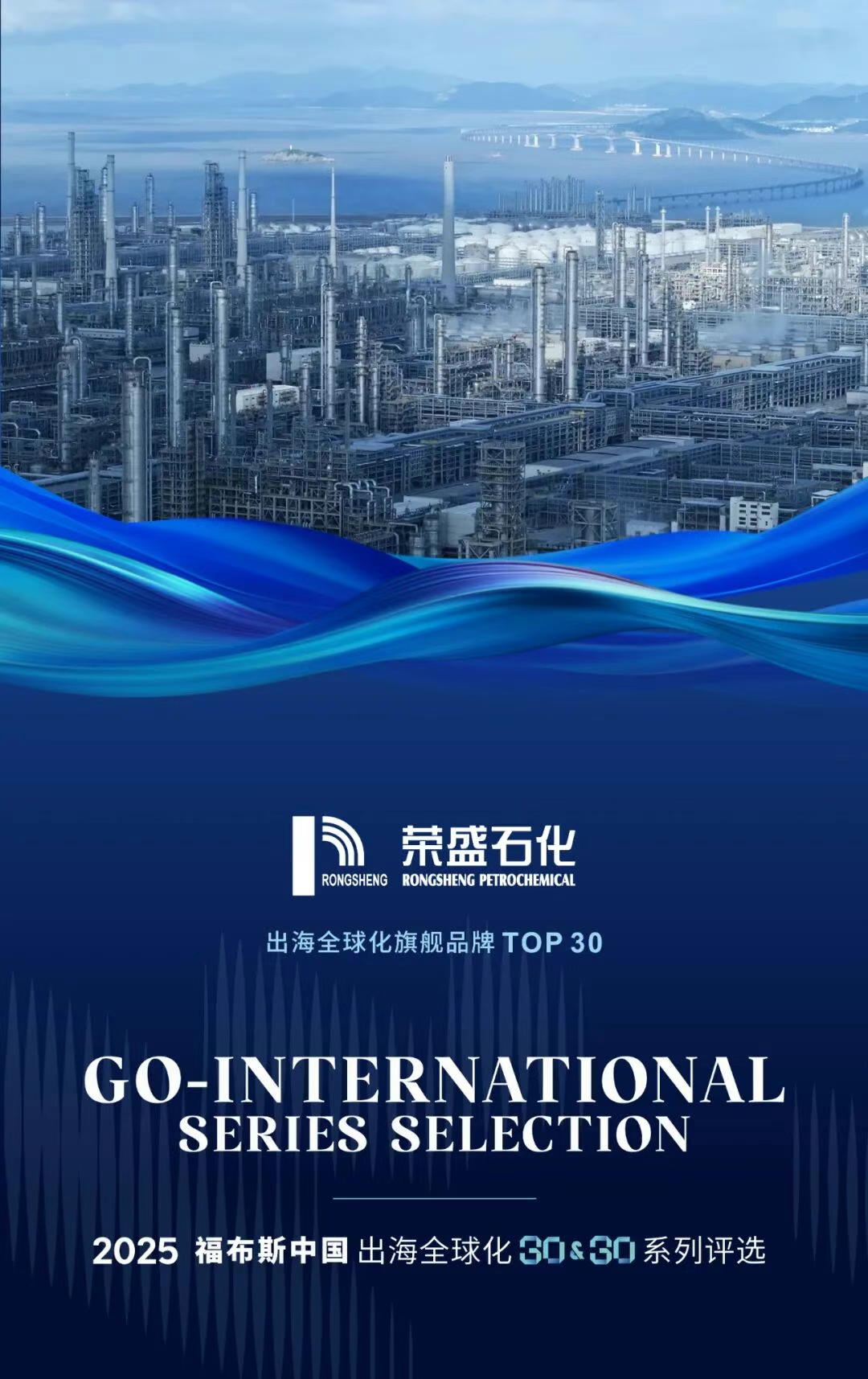
荣盛石化上榜2025福布斯中国出海全球化旗舰品牌TOP30
Zhong Guo Hua Gong Bao· 2025-11-11 10:03
Core Insights - Rongsheng Petrochemical has been recognized in the "Forbes China Globalization Flagship Brands TOP 30" list, highlighting its significant role in China's global expansion efforts [1][4] Group 1: Company Overview - Rongsheng Petrochemical is a leading player in the petrochemical industry, operating the world's largest integrated refining and chemical project with a capacity of 40 million tons per year [4] - The company holds the largest production capacity globally for PX and PTA, and ranks among the top producers for polyethylene and other chemical products [4] Group 2: Global Operations - In 2024, Rongsheng Petrochemical's import scale is projected to be approximately $30 billion, with export sales exceeding $3 billion, covering nearly 50 countries and regions worldwide [4] - The company's overseas revenue reached 45.73 billion yuan, accounting for 14% of its total revenue [4] Group 3: Strategic Partnerships - The strategic collaboration with Saudi Aramco has strengthened Rongsheng Petrochemical's refining sector competitiveness and international expansion opportunities, marking a milestone in China-Saudi energy cooperation [4] Group 4: Future Outlook - Rongsheng Petrochemical aims to leverage this recognition as a new starting point to deepen its global layout and sustainable development strategy, contributing to the robust growth of China's petrochemical industry [4]

构建石化行业央企ESG评价体系:核心在于能源环境管理和安全生产:A股央企ESG评价体系白皮书系列报告之十九
Shenwan Hongyuan Securities· 2025-11-11 09:07
Investment Rating - The report does not explicitly state an investment rating for the petrochemical industry or its central enterprises [32]. Core Insights - The petrochemical industry is crucial for national economic stability and is focused on achieving green and sustainable development alongside safe production practices [3][6]. - The report emphasizes the importance of constructing an ESG evaluation system for central enterprises in the petrochemical sector, highlighting energy transition and safety production as core indicators [8][27]. Summary by Sections 1. ESG Policies in the Petrochemical Industry - The industry primarily involves the processing and sale of crude oil and natural gas into various chemical products, with a significant focus on green and sustainable development [3][6]. - Recent government policies aim to guide the industry towards a green low-carbon transition and high-quality development, emphasizing strict energy efficiency constraints and enhanced management [7][8]. 2. Construction of the ESG Evaluation System - The ESG evaluation system for central enterprises in the petrochemical industry includes five additional secondary indicators: New Energy Business Transformation, Oil Leak Risk Management, Public Awareness Investment, Overseas Community Development, and Safety Production [8][10]. - The evaluation system consists of general indicators, environmental indicators, social indicators, and governance indicators, totaling 18 primary indicators and 45 secondary indicators [8][10]. 3. Environmental Indicators - Environmental indicators are designed under the guidance of dual carbon policies, with a focus on new energy business transformation and oil leak risk management as unique indicators for the petrochemical sector [10][12]. - The system includes metrics for waste management, biodiversity protection, and compliance with environmental regulations, reflecting the industry's commitment to ecological sustainability [10][11]. 4. Climate Change Response Indicators - The climate change response indicators assess the commitment of petrochemical central enterprises to global climate change management and domestic dual carbon policies, comprising one primary indicator and four secondary indicators [16][18]. - The report highlights the importance of aligning with national goals for carbon peak and neutrality, urging the industry to transition towards cleaner energy sources [16][18]. 5. Social Responsibility Indicators - Social indicators reflect the responsibilities of petrochemical central enterprises, particularly in public environmental safety awareness and employee training, with three primary indicators and nine secondary indicators [18][19]. - The report emphasizes the need for enterprises to integrate social responsibility into their operations, especially in overseas projects [19][20]. 6. Governance Indicators - Governance indicators are fundamental for sustainable development, focusing on corporate governance structures, mechanisms, and norms, with a total of 34 points available [23][24]. - The report does not introduce specific indicators unique to the petrochemical sector under governance but maintains a focus on overall governance quality [23][24].
750家中企先行,IPO数量与外资流入创新高,沙特正成为中国资本新绿洲
Xin Lang Zheng Quan· 2025-11-11 06:35
Group 1 - The core viewpoint of the article highlights the strengthening economic partnership between China and Saudi Arabia, with bilateral trade exceeding 1 trillion Saudi Riyals and significant Chinese investments in high-value sectors [1][2] - The Saudi capital market is the largest in the MENA region, with a total market capitalization exceeding $2.5 trillion, and is recognized as one of the fastest-growing capital markets globally [2] - In the past year, Saudi Arabia completed 44 IPOs, with 50 companies planning to go public by 2025, covering various cutting-edge industries such as technology and healthcare [2] Group 2 - The participation of foreign capital in the Saudi capital market has surged to $108 billion, marking a 140% increase and maintaining a growth trend for five consecutive years [2] - The Saudi Capital Market Authority plans to promote the first offshore securities business license to enhance cross-border exchanges [2]