
保险业

Search documents
温情守护 服务提速 人保财险“心服务”护航千家万户团圆路
Jin Rong Jie· 2026-02-28 03:06
Core Viewpoint - The company, People's Insurance Company of China (PICC), has implemented extensive service initiatives during the 2026 Spring Festival, focusing on providing efficient and warm support to travelers, regardless of their customer status, thereby enhancing customer experience and satisfaction [1][2][12]. Group 1: Claims Service Efficiency - PICC launched a series of service commitments themed "Fast Claims for the Year of the Horse," emphasizing speed and efficiency in claims processing, including "immediate compensation, immediate advance payment, and immediate connection" [2]. - During the Spring Festival, the company processed over 360,000 quick claims and 145,000 online car insurance cases, with 47,000 cases falling under the "immediate compensation and advance payment" category [2]. - The online claims team, consisting of over 1,000 members, operated without breaks during the holiday to ensure instant response for claims [2]. Group 2: Warmth Stations - Nearly 600 "Warmth Stations" were established nationwide, providing accessible services to travelers, including non-PICC customers, offering a place to rest and various amenities [4]. - These stations served over 57,000 customers during the Spring Festival, with 11,000 being non-PICC clients, and provided over 26,000 consultations and free vehicle maintenance services [4]. Group 3: Support for New Citizens - PICC set up around 400 "New Citizen Care Stations" to support those who remained in the city during the holiday, offering free refreshments, rest areas, and essential supplies [6]. - The company conducted over 2,300 "energy refills" and distributed nearly 1,000 safety packages during the Spring Festival [6]. Group 4: Customer Service and Online Support - The customer service hotline operated continuously during the holiday, achieving a call connection rate of over 99% and a customer satisfaction rate of 99.9% [8]. - The hotline served 1.01 million customers during the Spring Festival, while over 700 physical service centers provided various community services [8]. Group 5: Emergency Response - PICC demonstrated rapid response capabilities during emergencies, activating emergency plans for over 10 incidents, including fires and explosions, with nearly 20 million yuan in advance payments for claims related to these incidents [12]. - The company emphasized its commitment to "people first" and "life first," ensuring timely support and compensation during critical situations [12]. Group 6: Online Engagement - The company engaged in online activities to promote safety and awareness during the holiday, attracting over 160,000 participants through interactive content on social media platforms [10]. - Collaborative live broadcasts on platforms like Douyin reached over 260,000 views, enhancing public awareness of risk prevention [10].


86亿圈地“现金牛”,险资集体当起“包租公”
阿尔法工场研究院· 2026-02-28 00:04
Core Viewpoint - As traditional investment avenues for insurance funds become constrained, there is a shift towards private equity markets to seek alternative assets [4][9]. Group 1: Investment Trends - Insurance funds are seeking new "ballast" as bond yields decline and stock market volatility increases, with a recent investment of 8.601 billion yuan in a private equity fund focused on shopping centers in Beijing, Wuxi, and Wuhan [5][9]. - The investment structure involves multiple insurance companies as limited partners, with a focus on stable cash flow from mature shopping centers, which resemble high-grade perpetual bonds in cash flow characteristics [6][10]. Group 2: Cash Flow Characteristics - The cash flow from rental income of mature shopping centers is predictable and sustainable, aligning with the liability characteristics of insurance companies that require consistent cash inflows to meet future obligations [6][12]. - The selected projects have been operational for over ten years, demonstrating stable cash flows and resilience through various market cycles, making them attractive to insurance funds [10][12]. Group 3: Risk Management and Governance - The investment strategy reflects a defensive choice for cash flow assets, allowing insurance companies to isolate market valuation fluctuations from their profit and loss statements, focusing instead on stable rental income [13][16]. - The involvement of foreign and joint venture insurance companies brings stricter cash flow and governance standards, enhancing the reliability of the investment [16]. Group 4: Future Challenges - The investment will face several pressure tests, including consumer behavior, operational quality, interest rates, and governance effectiveness, which will determine the resilience of cash flows through economic cycles [17][18]. - The liquidity and exit strategies, particularly concerning the potential listing of REITs, will also be critical in assessing the long-term viability of this investment approach [18][19].



每日债市速递 | 地方化债成绩单出炉
Sou Hu Cai Jing· 2026-02-27 23:46
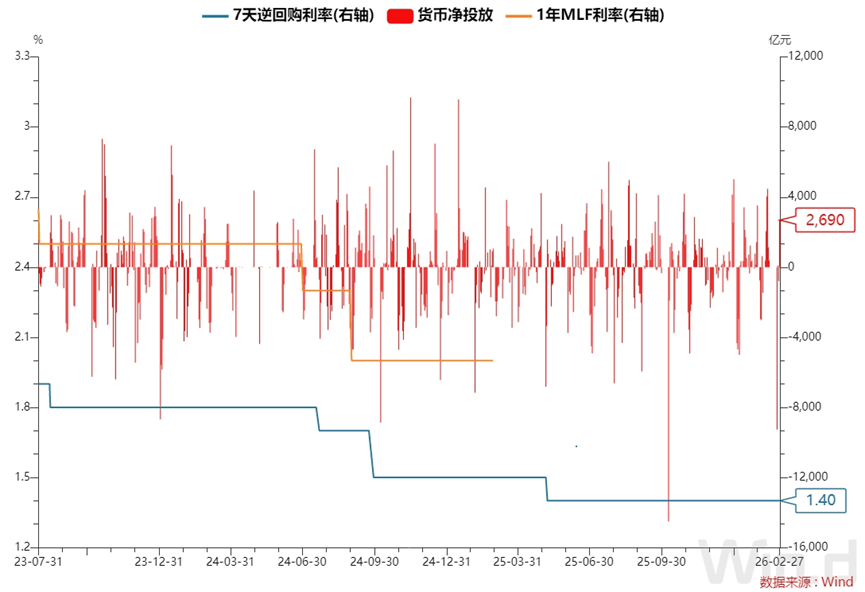
Monetary Policy Operations - The central bank announced a 7-day reverse repurchase operation on February 27, with a fixed rate and quantity tendering, amounting to 269 billion yuan at an interest rate of 1.40%, resulting in a net injection of 269 billion yuan for the day [1] Market Liquidity - The interbank market liquidity remains stable and slightly easing, with the DR001 weighted average rate declining by 2 basis points to around 1.34%. Overnight quotes on the anonymous click system (X-repo) fell to 1.33%-1.34%, indicating ample supply [3] - Non-bank institutions needed to borrow funds for three days in advance due to a holiday, quoting around 1.55%-1.58% using credit bonds as collateral, reflecting a balanced supply and demand [3] Interbank Certificates of Deposit - The latest transaction for one-year interbank certificates of deposit among major banks is around 1.58%, showing a slight decrease from the previous day [7] Government Bonds and Futures - The closing prices for government bond futures showed mixed results, with the 30-year main contract down by 0.07%, while the 10-year, 5-year, and 2-year main contracts increased by 0.05%, 0.04%, and 0.03% respectively [9] Local Government Bonds - As of February 25, the issuance of local government bonds has exceeded 2 trillion yuan, with several provinces planning to issue approximately 2.28 trillion yuan in bonds in the first two months of the year, representing a 22% increase compared to the same period last year [10][11] - Specific bond issuances include 449.76 billion yuan in refinancing special bonds from Fujian Province and 182.48 billion yuan in general bonds from Henan Province, with various maturities [11] Global Economic Insights - Federal Reserve Governor Milan advocates for early and significant interest rate cuts, suggesting a need for a 100 basis point reduction by 2026 to mitigate potential economic downturn risks [12] - A White House official indicated that executives from major tech companies will participate in a meeting to ensure that energy demands from new AI data centers do not increase electricity prices for ordinary Americans [12]
平安人寿增资计划落地,注册资本已达360亿
Hua Er Jie Jian Wen· 2026-02-27 12:45
Core Insights - Ping An Life has made substantial progress in its capital replenishment efforts, with registered capital increasing from 33.8 billion to 36.003 billion RMB, indicating the gradual implementation of its previously announced capital increase plan [1][2] Group 1: Capital Increase Details - The increase in registered capital is part of a commitment made in April 2025, where all shareholders planned to inject approximately 20 billion RMB into the company, with 2.2 billion RMB directly added to registered capital and the remaining 17.8 billion RMB expected to enhance net assets through capital reserves [2] - This approach of allocating a small portion to registered capital and a larger portion to capital reserves is common in the insurance industry, aimed at rapidly increasing the company's net asset scale and solidifying actual capital [2] Group 2: Industry Context and Implications - The life insurance sector has been facing dual pressures on both asset and liability sides, with low interest rates compressing asset yields and stricter capital recognition regulations leading to accelerated core capital consumption [4] - As a core profit engine of China Ping An Group, the capital adequacy of Ping An Life is crucial for the overall risk resilience of the group. The 20 billion RMB injection will significantly enhance its comprehensive and core solvency ratios, providing a stronger buffer against potential macroeconomic fluctuations and capital market volatility [4] Group 3: Strategic Importance of Capital - Ample capital is essential for business expansion and strategic transformation, especially as the industry shifts from scale-oriented to value-oriented strategies. This includes deepening the "product + service" model, advancing the construction of a healthcare and elderly care ecosystem, and making longer-term equity asset allocations [5] Group 4: Management Transition - Alongside the capital replenishment, there has been a smooth transition in Ping An Life's senior management, with the retirement of Chairman Yang Zheng and the appointment of Vice Chairman Cai Ting as acting chairman [6] - Cai Ting's rise is seen as a significant step towards the younger and more professional management team, indicating a shift in management focus from deep reforms to a stable and high-quality development phase [7] Group 5: Overall Assessment - The gradual implementation of the 20 billion RMB capital increase and the stable transition of leadership form the current fundamentals of Ping An Life. In a complex environment of rigid liability costs and fluctuating asset yields, a stronger capital base combined with a younger management team positions the company for future growth [8]
一篇价值2000亿美元的终局论:AI在2028年带来席卷世界的经济危机
Xin Lang Cai Jing· 2026-02-27 10:31
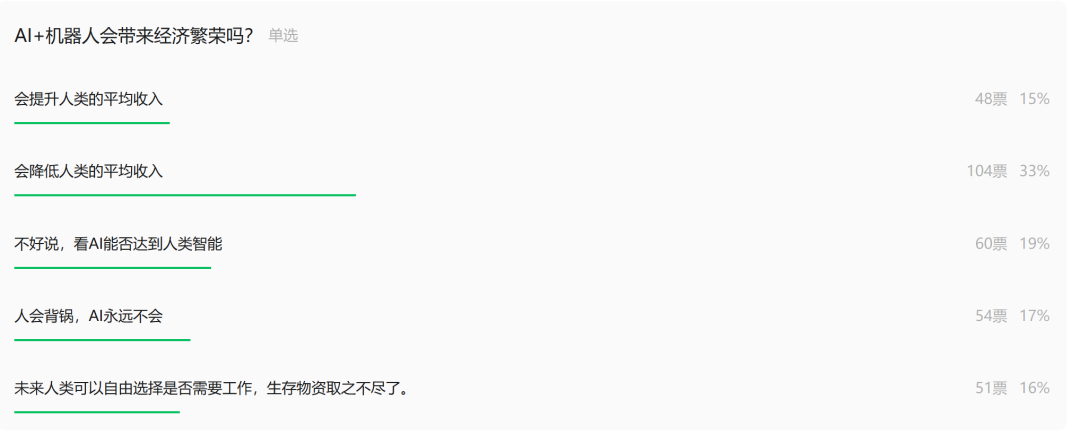
Group 1 - The core argument presented by Citrini Research suggests that the anticipated economic prosperity from AI advancements may not materialize, potentially leading to systemic crises in the economy and financial systems [1][2][6] - A recent poll indicated that 33% of respondents believe AI will lower average human income, while only 15% think it will enhance it, reflecting widespread concern about AI's impact on employment [1] - The concept of "ghost GDP" emerged, highlighting that AI's productivity gains may not translate into real economic benefits for consumers, as many outputs may not circulate in the economy [10][11] Group 2 - By mid-2028, the unemployment rate reached 10.2%, exceeding market expectations and contributing to a 2% market decline, indicating a significant shift in economic conditions [8] - The economic structure evolved from manageable risks to a system that no longer aligns with historical growth experiences, leading to a crisis in consumer spending and credit defaults [8][9] - AI's rapid advancement has resulted in a significant reduction in white-collar jobs, with many workers forced into lower-paying positions, thereby eroding their income and spending power [11][12] Group 3 - The feedback loop created by AI's efficiency leads to a cycle where reduced labor costs result in further AI investments, exacerbating job losses and consumer spending declines [10][49] - The financial implications of AI's impact on employment are profound, as the white-collar workforce, which constitutes a significant portion of consumer spending, faces unprecedented challenges [39][58] - The shift towards AI-driven business models has led to a structural change in the economy, where traditional job roles are increasingly threatened, and new roles created often offer lower compensation [43][44] Group 4 - The private credit market, which expanded significantly, is now facing challenges as assumptions about stable revenue growth for software companies are being questioned due to AI disruptions [60][61] - The crisis in the software sector is exemplified by the case of Zendesk, which failed to meet debt obligations due to AI-driven automation, marking a significant event in private credit defaults [63][64] - The interconnectedness of financial systems means that losses in one sector can trigger broader economic repercussions, highlighting the systemic risks posed by AI advancements [73]



陈刚在香港出席“智联桂港,融通东盟”人工智能+金融合作新机遇交流会
Guang Xi Ri Bao· 2026-02-27 01:52
Core Viewpoint - The "AI + Finance" cooperation conference held in Hong Kong highlights the significant opportunities for collaboration between Guangxi, Hong Kong, and ASEAN countries in the realm of artificial intelligence and financial services [1][2]. Group 1: Event Overview - The conference featured speeches from key figures including Chen Gang, Secretary of the Guangxi Autonomous Region, and Sun Yu, Vice Chairman and President of Bank of China (Hong Kong) [1]. - Representatives from various financial institutions showcased the latest applications of "AI + Finance" [1]. Group 2: Strategic Insights - Chen Gang emphasized that artificial intelligence is reshaping the global economy and financial industry, and Guangxi aims to leverage its position as a gateway to ASEAN for AI cooperation [2]. - The conference aimed to establish platforms for cross-border data flow, financial collaboration, and the creation of a financial corpus for ASEAN countries [2]. Group 3: Collaborative Agreements - A series of cooperation agreements were signed among Guangxi, Hong Kong, and ASEAN financial institutions focusing on AI and financial service innovations [3]. - The agreements include initiatives for cross-border settlement and the establishment of a financial technology strategic cooperation framework [3].

百企千岗搭建家门口就业快车道
Xin Lang Cai Jing· 2026-02-26 22:50
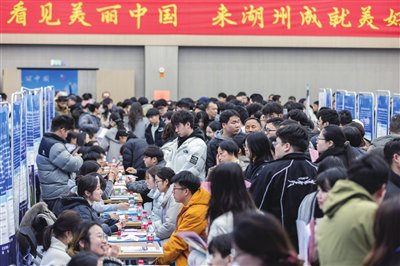
Group 1 - The core event is the 2026 Huzhou local college graduate job fair, featuring over 130 companies offering more than 2,000 job positions, with a focus on local employment opportunities for graduates [3] - The participating companies include major state-owned enterprises and listed companies, with job positions spanning emerging industries such as new energy, intelligent equipment, and semiconductors, offering an average salary of 90,000 yuan and a maximum salary of 800,000 yuan [3] - The job fair is part of a series of recruitment activities organized by local authorities, with over 400 companies providing more than 5,000 job opportunities for college graduates from March 2 to March 3 [3] Group 2 - The job fair reflects the city's efforts to promote the "Youth Innovation City" initiative, which has seen the addition of 2,321 new youth innovation projects in the past year, successfully completing the three-year construction task [4] - Local human resources departments are implementing a combination of policies to attract and retain young talent, including outreach activities to universities and the provision of various support policies such as housing subsidies and entrepreneurial assistance [4] - Online platforms are being utilized to facilitate job postings and matching services, ensuring that job seekers can access employment opportunities conveniently in their local areas [4]
分红险保底利率腰斩,行业探索“低保证+高浮动”新周期
Xin Lang Cai Jing· 2026-02-26 16:37
Core Viewpoint - The insurance industry is experiencing a significant shift in the pricing of participating insurance products, with guaranteed interest rates dropping to 1.25%, indicating a transition from a "certain premium" era to a "flexible premium" new cycle [1][3][4]. Group 1: Market Changes - The current market has seen the introduction of participating insurance products with a guaranteed interest rate of 1.25%, down from the previous standard of 2.5% [1][3]. - The trend of lowering guaranteed interest rates is a proactive measure by insurance companies to mitigate the pressure of interest rate spreads, especially in a low-yield environment [4][5]. - The shift in guaranteed rates reflects a broader industry expectation of regulatory changes that may further limit guaranteed rates in the future [5][6]. Group 2: Product Strategy - China Life Insurance has launched a participating insurance product with a guaranteed interest rate of 1.25%, positioning itself as a pioneer in adopting a "growth-oriented" dividend strategy [3][4]. - The industry is moving towards a multi-tiered dividend system that accommodates different risk preferences, indicating a strategic shift in product offerings [3][6]. - The transition from "high guarantee + low floating" to "low guarantee + high floating" is aimed at aligning with changing consumer expectations and investment behaviors [7][8]. Group 3: Consumer Education and Investment Capability - The success of the new "low guarantee + high floating" model depends heavily on the investment capabilities of insurance companies, particularly in managing equity investments and risk control [8]. - There is a need for consumer education to enhance understanding of "non-guaranteed dividends" and to adjust expectations regarding insurance products [8]. - Over the next 3 to 5 years, the "low guarantee + high floating" model is expected to become the mainstream form of participating insurance, with competition focusing on investment management and customer service [8].

江苏常州:AI融入日常烟火,“高大上”科技化身生活“小帮手”
Xin Lang Cai Jing· 2026-02-26 13:33
Group 1: AI in Consumer Experience - AI has significantly enhanced the consumer shopping experience during the Spring Festival, allowing users to place nearly 200 million orders through voice commands [2] - The AI shopping feature has simplified the purchasing process, leading to a substantial increase in instant retail orders, with over 3,000 tons of eggs and more than 100 million cups of beverages ordered [2] - AI tools like virtual makeup and clothing fitting have improved product selection accuracy, helping consumers avoid poor purchases [3] Group 2: AI in Financial Services - AI is transforming traditional wealth management by providing personalized investment strategies based on user input regarding risk tolerance and financial goals [4] - Major banks have integrated AI models to offer comprehensive financial services, including fund selection and risk alerts, enhancing the efficiency of wealth management [4] - AI is also being utilized in the insurance sector to create personalized insurance plans and streamline claims processes, improving customer service during peak times like the Spring Festival [4] Group 3: AI in Financial Inclusion - AI tools are enabling banks to better understand customer needs and provide tailored financial solutions, exemplified by a quick loan approval process for a tire company [5] - The integration of AI in banking services is addressing the diverse financing needs of industries, moving away from traditional inquiry methods to more efficient and precise service delivery [5] - Banks are focusing on using AI to free employees from repetitive tasks, allowing them to concentrate on customer service and relationship management [6]
中国外汇 | 谢亚轩:也谈“存款搬家”
Xin Lang Cai Jing· 2026-02-26 08:39
Core Viewpoint - The movement of deposits, referred to as "moving house," is a choice made by the resident sector based on a comprehensive consideration of the risk, return, and liquidity of various financial assets [1][6]. Group 1: Deposit Movement and Financial Asset Allocation - A significant amount of resident wealth, formed through bank time deposits, will mature in 2026, leading to potential "moving house" of deposits to purchase stocks, bonds, funds, and insurance due to low deposit rates and an active capital market [2][7]. - The financial assets of the Chinese resident sector include cash and deposits (50.2%), bonds (8.8%), stocks and equity (19.5%), securities investment funds (11.7%), and insurance (9.8%) as of the end of 2022 [2][7]. - The choice of whether to "move" deposits is fundamentally about whether to continue holding deposits or to switch to other major financial assets like bonds and insurance [2][7]. Group 2: International Comparisons and Trends - Research has often referenced international experiences, suggesting that by 2024, the U.S. financial asset structure will show a significant reduction in bank deposits, with a notable increase in stocks and investment funds [3][8]. - However, countries like the UK, Japan, South Korea, and Germany maintain a cash and deposit holding ratio above 30%, indicating that the U.S. model may be an exception rather than a trend applicable to China [3][8]. Group 3: Demographic and Economic Influences - An important factor influencing the financial asset choices of Chinese residents is the aging population, which tends to increase the proportion of risk-free assets in their portfolios [4][9]. - The lifecycle investment theory suggests that older individuals prefer more risk-averse investments, leading to a higher allocation in cash and deposits as they age [4][9]. - Low interest rates encourage residents to seek returns through various channels, but whether they will directly invest in stocks or indirectly through funds and insurance remains uncertain [4][9][10]. Group 4: Market Performance and Investment Behavior - International experience indicates a correlation between the proportion of residents holding stock assets and the long-term performance of the stock market [5][10]. - From 2013 to 2024, residents in the U.S., Japan, and Germany have consistently increased their holdings in stocks and funds, while the UK and South Korea have not shown similar trends [5][10]. - The stability of the Chinese stock market and the increase in residents' holdings of stocks and equity financial assets are interrelated issues that need to be addressed for sustainable market growth [5][10].