
商业火箭

Search documents
国金证券:2026年商业火箭公司可回收发射元年 看好火箭铲子股及新技术
智通财经网· 2026-01-05 03:34
Core Insights - The report from Guojin Securities emphasizes the strategic importance of seizing space resources for China, highlighting the current bottleneck in rocket capacity and predicting that 2026 will be the year of reusable commercial rockets, while also focusing on key stocks in the rocket sector and investment opportunities arising from new 3D printing technologies [1] Group 1: Urgency in Satellite Launches - The limited resources in low Earth orbit necessitate urgent satellite launches, as per the International Telecommunication Union's "first come, first served" rule, which pressures China to accelerate its satellite launches [2] - The theoretical capacity of near-Earth orbit is estimated to accommodate only about 60,000 satellites, with SpaceX's Starlink already having launched over 10,000 satellites and aiming for a total of 42,000, thereby occupying a significant portion of low Earth orbit resources [2] - Domestic plans, such as those from Xingwang and "G60," aim to deploy nearly 30,000 satellites, with a requirement to complete 10% of the constellation within nine years to avoid losing resources [2] Group 2: Cost Efficiency in Rocket Launches - High costs currently limit rocket launch efficiency, making reusable rockets a crucial technology for cost reduction, as demonstrated by SpaceX's Falcon 9, which has reduced costs by 60% through first-stage rocket reuse [3] - The cost of satellite launches in China has decreased from 115,000 yuan per kilogram in 2020 to 75,000 yuan per kilogram in 2024, indicating a trend towards lower launch costs [3] - The U.S. leads in rocket launches due to lower costs, with SpaceX's Falcon 9 having a per-kilogram launch cost of 14,000 to 18,000 yuan, and the U.S. is projected to conduct 158 rocket launches in 2024 [3] Group 3: Future of Reusable Rockets - The year 2026 is anticipated to mark the beginning of the era of reusable commercial rockets, with both state-owned and private companies making strides in this technology [3] - Recent attempts to launch reusable rockets, such as Long March 12A and Zhuque 3, indicate progress in this area, with future launches from commercial entities like Tianlong 3 and Lijian 2 also planned for 2026 [3] Group 4: Investment Opportunities in Rocket Components - The core components of rockets, including engines and structural elements, account for over 60% of total costs, making companies involved in these areas attractive investment targets [4] - 3D printing technology is seen as a key trend in the engine sector, with domestic companies actively adopting it to reduce costs and improve efficiency [4] - SpaceX's Raptor engine, which utilizes 3D printing, has achieved a 21% increase in thrust and a 40% reduction in weight, showcasing the potential benefits of this technology [4]

华创证券:卫星组网建设进入加速期 看好火箭链投资机会
智通财经网· 2026-01-05 03:07
Core Viewpoint - The report from Huachuang Securities indicates that China's two major satellite constellations are expected to enter a rapid networking phase by 2026, contingent on the successful recovery and reuse of rockets, which would significantly lower satellite launch costs and accelerate the networking process [1][2]. Demand Side - The satellite internet industry is gaining attention from the Chinese government, with policies being introduced to support its development. The satellite internet aims to provide global broadband access and enhance terrestrial communication networks, forming the basis for the Internet of Things [2]. - The competition for orbital and frequency resources is intensifying, with the U.S. SpaceX's Starlink leading the way by launching over 10,000 satellites. China's two core satellite internet projects, GW constellation and Qianfan constellation, are projected to have a total of 13,000 and 15,000 satellites, respectively [2]. Supply Side - Rocket capacity is crucial for the accelerated construction of satellite networks, with China's current rocket fleet primarily consisting of the Long March series, facing capacity constraints. The bottleneck is attributed to launch frequency, payload capacity, and launch costs [3]. - Several commercial rocket companies, such as Blue Arrow and Tianbing, are developing new models with larger payload capacities, which are expected to take on more launch tasks for the two major constellations. The successful recovery and reuse of rockets is seen as a key method to reduce launch costs [3]. Components - The main components of launch vehicles include structural systems (fairings, tanks, inter-stage sections, engine frames, and tail sections), propulsion systems (propellant delivery pipelines and engines), and control systems. According to statistics, engines account for the largest share of rocket manufacturing costs at 54%, followed by the rocket structure at 24% [4].
他,中国民营火箭卷王
3 6 Ke· 2026-01-04 23:52
Core Viewpoint - The article highlights the rapid development and success of the private aerospace company Star River Dynamics, particularly its "Vesta-1" rocket, which has achieved multiple successful launches, marking a significant shift in China's commercial space industry [3][24]. Group 1: Company Overview - Star River Dynamics has established itself as a leader in China's private rocket sector, achieving 20 successful commercial launches by September 2025, making it the most frequently launching private rocket company in the country [23][24]. - The "Vesta-1" rocket has become a representative product for Star River Dynamics, successfully completing various milestones, including the first commercial satellite launch into a 500 km sun-synchronous orbit by a private company in China [22][23]. Group 2: Industry Context - The commercial space industry in China has gained momentum since the 2014 policy encouraging private investment in space infrastructure, leading to a surge in private rocket companies [9][10]. - The success of SpaceX in the U.S. has influenced the global commercial rocket competition, prompting a shift in China's approach to private space ventures [6][8]. Group 3: Financial Developments - Star River Dynamics has attracted significant investment, completing a record 2.4 billion yuan D-round financing in September 2025, the second-highest single financing amount in China's commercial space sector [25]. - The company has initiated the process for an IPO, positioning itself alongside other private rocket firms in the race for the title of "first private rocket stock" in China [25].

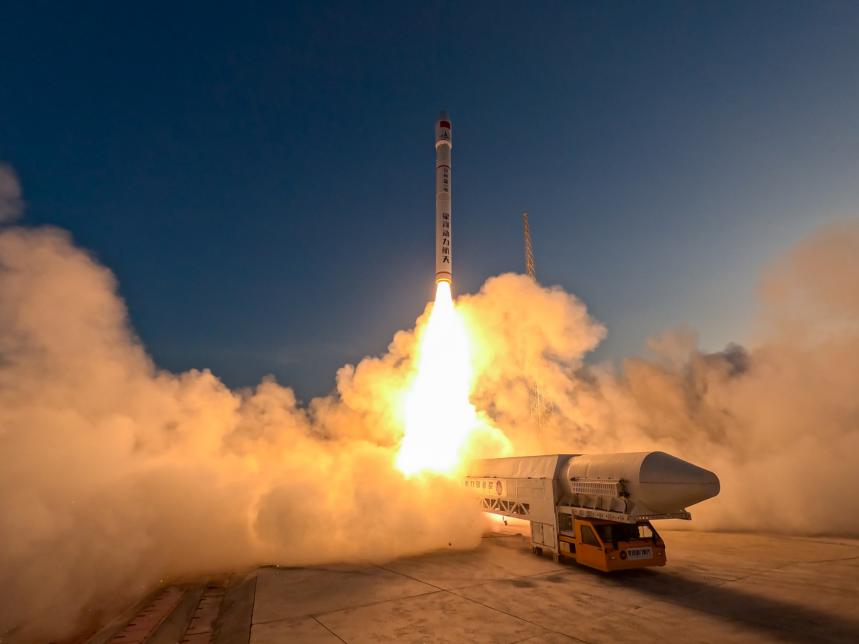
商业火箭专题电话会
2026-01-04 15:35
Summary of Commercial Rocket Conference Call Industry Overview - The conference focused on the commercial rocket industry, discussing various companies and their technologies related to rocket recovery and manufacturing processes. Key Points and Arguments Rocket Recovery Technologies - The recovery of rockets like Zhuque Mountain, Changshi Erjia, and Tianlong Mountain primarily utilizes Vertical Takeoff and Landing (VTVL) technology, which involves three ignition phases during landing to control the landing position and ensure precision [3][5][21]. Manufacturing Strategies - Companies adopt a strategy of self-design combined with external production to ensure product quality and reliability. They leverage military system experiences and advanced manufacturing techniques like 3D printing to enhance performance and reduce costs [3][8]. Cost Structure and Supplier Information - The electrical system of rockets accounts for approximately 10%-15% of the total cost, with key suppliers including Aerospace Electronics Institute and Aerospace Electric [6][14]. - The core components of rocket engines, such as turbine pumps and combustion chambers, utilize high-temperature alloys produced through 3D printing, with costs for these components making up 70%-80% of the total engine cost [15][17]. Engine Technology - The Raptor engine employs full-flow staged combustion technology, achieving a vacuum thrust of up to 300 tons, indicating significant potential for development [17]. - Different companies have varying configurations for their first-stage engines, with Zhuque 3 using nine engines with a total thrust of approximately 7,200 kN, while Tianlong 3 exceeds 800 tons of thrust [5][10]. Testing and Development Cycles - The development cycle for rocket engines typically spans about three years, involving multiple testing phases including ignition system tests and reliability verification [12][19]. Launch and Operational Updates - Tianlong Mountain rocket is currently conducting launch operations at the Jiuquan launch site, with the first flight of Zhuque 3 expected by the end of January [19][20]. Challenges and Failures - The failure of the Changsha Erjia rocket recovery was attributed to issues with the ignition sequence and propellant delivery, leading to engine failure and crash [21]. Future Technologies - Electromagnetic catapult technology is still in conceptual research stages for space applications, facing challenges in system design and engine compatibility [22]. Additional Important Information - The cost of the first-stage storage tanks for Tianlong 3 is estimated between 25 million to 30 million yuan, constituting about 30% of the total rocket cost, with expectations for future cost reductions [20]. - The companies involved are focusing on strict supply chain management and quality control to mitigate risks associated with component failures [16].
商业航天再走强!2025年卫星通信相关企业注册量涨近50%
Qi Cha Cha· 2026-01-04 09:06
企查查数据显示,截至1月4日,我国现存6.18万家卫星通信相关企业,区域分布上,华东、华南地区均 现存1.5万家卫星通信相关企业,合计占比47.4%,其次是西南地区,占比13.1%。 (原标题:商业航天再走强!2025年卫星通信相关企业注册量涨近50%) 近日,国家国防科工局党组理论学习中心组召开扩大会议。会议提出,要促进商业航天发展,推动航天 产业化。此前2025年12月26日,上交所发布《商业火箭企业适用科创板第五套上市标准指引》,标志着 商业火箭企业登陆资本市场的通道正式打通、标准全面明确。 根据《中国商业航天产业研究报告》的数据,2025年以来我国完成航天发射87次,其中民营商业火箭企 业执行23次,成功入轨航天器324颗。应用场景持续拓宽,中国电信披露截至 2025 年 11 月,支持直连 卫星功能的手机终端销量超2500 万台。随着卫星物联网商用试验启动、可回收火箭技术迭代,空天地 一体化通信网络加速成型,为数字经济发展注入强劲动能。 企查查数据显示,截至1月4日,我国现存6.18万家卫星通信相关企业,区域分布上,以华东、华南地区 为主,合计占比47.4%;注册量方面,2025年全年,我国累计注册 ...
科技周报|国内最大DRAM存储芯片厂商冲刺科创板;智能眼镜首次进入国补范围
Di Yi Cai Jing· 2026-01-04 03:39
Group 1: Fire Engine as AI Cloud Partner - Fire Engine has officially become the exclusive AI cloud partner for the 2026 Spring Festival Gala of the Central Radio and Television Station [2] - The partnership will leverage cutting-edge multimodal large models and cloud computing technology to enhance the Gala's programs, online interactions, and video live streaming [2] - Fire Engine has provided technical support for Douyin's Spring Festival Gala live broadcasts over the past five years, demonstrating high concurrency capacity and stability [2] Group 2: Changxin Technology's IPO - Changxin Technology's IPO application has been accepted, aiming to raise 29.5 billion yuan [3] - The company has experienced continuous revenue growth over the past three years, but it is projected to incur significant losses exceeding 30 billion yuan from 2022 to 2024 [3] - As the largest DRAM manufacturer in China, Changxin holds a 3.97% global market share, but it still lags behind major international competitors [3] Group 3: Blue Arrow Aerospace's IPO - Blue Arrow Aerospace's IPO application has been accepted, with plans to raise 7.5 billion yuan [4] - The funds will be allocated for enhancing reusable rocket capacity and technology [4] - The company has reported increasing revenues but also significant net losses from 2022 to 2025 [4] Group 4: National Subsidy Policy for Smart Glasses - The 2026 national subsidy policy includes smart glasses for the first time, aiming to promote product innovation and market growth [7] - The subsidy for digital and smart products is set at 15% of the product price, with a cap of 500 yuan per item [7] - The inclusion of smart glasses is expected to lower consumer barriers and stimulate short-term sales, with projected significant growth in AR and AI glasses sales by 2025 [8] Group 5: Launch of 2026 National Subsidy - The 2026 national subsidy program officially commenced on January 1, with the first order successfully placed by a consumer in Guangzhou [9] - The program aims to enhance consumption convenience in rural areas and promote economic growth [9] - JD.com has committed to investing nearly 30 billion yuan to support the national subsidy initiative in rural areas [9]
蓝箭航天 IPO:中国 SpaceX启航!一位前普华永道会计师任副总拥有 1.1402%股份, 一位金杜律师任董秘拥有0.0366%股份,很亮眼!
Xin Lang Cai Jing· 2026-01-04 01:29
Core Viewpoint - Blue Arrow Aerospace is set to launch its IPO on the last day of 2025, positioning itself as China's version of SpaceX, with a target valuation of 75 billion yuan from the issuance of 40 million shares [1][3]. Company Overview - The company is recognized as a leader in reusable rocket technology in China, aligning with the recent guidelines issued by the Shanghai Stock Exchange for commercial rocket enterprises [1][6]. - The board of directors includes notable figures such as Zhang Changwu, the founder and chairman, and Zhang Chen, the vice president, both of whom have significant experience in finance and management [2][16]. Financial Highlights - The IPO aims to raise 7.5 billion yuan, with a total valuation of 75 billion yuan based on the issuance [3]. - As of June 30, 2025, the company reported total assets of approximately 635.35 million yuan, with a net profit attributable to the parent company of -596.54 million yuan [11][14]. - The company has not yet achieved profitability, with net losses reported for the past several years, primarily due to high R&D costs and the early stage of its commercial launch services [14][15]. R&D and Innovation - The company has made substantial investments in R&D, with expenditures amounting to 487.22 million yuan in the first half of 2025, representing a significant percentage of its revenue [12][14]. - Blue Arrow Aerospace has successfully launched its Zhuque-3 rocket, demonstrating its capability in the commercial space sector [9]. Market Context - The Chinese government has emphasized the importance of developing the commercial aerospace industry, which is seen as a critical component of national strategy [6][7]. - The recent guidelines from the Shanghai Stock Exchange aim to support the growth of commercial rocket enterprises, enhancing their access to capital markets [6][7]. Future Plans - The funds raised from the IPO will be allocated to projects aimed at enhancing the production capacity and technology of reusable rockets, with a total investment plan of approximately 846.17 million yuan [24].

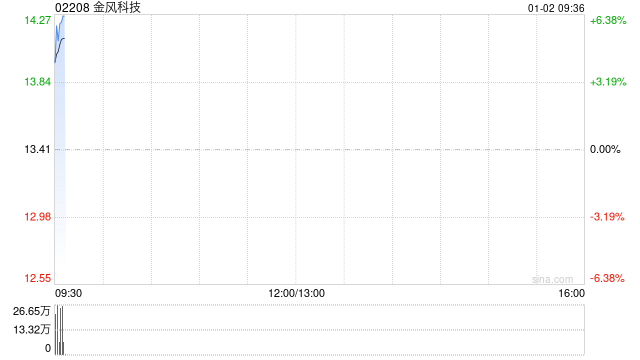
金风科技(02208)高开逾4% 蓝箭航天科创板IPO申请获受理 公司持有其部分股权
智通财经网· 2026-01-02 02:21
Group 1 - The core point of the article highlights that Goldwind Technology (02208) opened over 4% higher, currently trading at 14 HKD with a transaction volume of 1.3412 million HKD [1] - On December 31, the Shanghai Stock Exchange announced that the IPO application of Blue Arrow Aerospace Technology Co., Ltd. has been accepted, marking its attempt to become the first commercial rocket company listed on the Sci-Tech Innovation Board [1] - Blue Arrow Aerospace is currently in a loss-making state and plans to adopt the fifth set of listing standards on the Sci-Tech Innovation Board, which has now expanded to include the commercial aerospace sector [1] Group 2 - Goldwind Technology holds an 8.3% stake in Blue Arrow Aerospace, which was established in 2015 and is one of the first private commercial rocket companies in China [1] - In 2023, Blue Arrow's Zhuque-2 rocket successfully entered orbit, becoming the world's first liquid methane rocket to achieve this milestone [1] - The Zhuque-3 rocket is scheduled to complete its first flight test phase from October 18 to 20, 2025, at the Dongfeng Commercial Aerospace Innovation Test Area [1]

金风科技高开逾6% 蓝箭航天科创板IPO申请获受理公司持有其部分股权
Xin Lang Cai Jing· 2026-01-02 01:36
Core Viewpoint - JinWind Technology (02208) saw its stock price rise by 5.82% to HKD 14.19, with a trading volume of HKD 15.606 million, following the news of Blue Arrow Aerospace's IPO application acceptance on the Sci-Tech Innovation Board, marking a significant step for commercial space ventures in China [1][5]. Group 1 - Blue Arrow Aerospace's IPO application has been accepted, aiming to become the "first commercial rocket stock" on the Sci-Tech Innovation Board [1][5]. - The company is currently in a loss-making state and plans to adopt the fifth set of listing standards for its IPO, which now includes the commercial aerospace sector [1][5]. - JinWind Technology holds an 8.3% stake in Blue Arrow Aerospace, indicating a strategic investment in the burgeoning commercial space industry [1][5]. Group 2 - Blue Arrow Aerospace was established in 2015 and is one of the first private commercial rocket companies in China [1][5]. - In 2023, Blue Arrow's Zhuque-2 rocket successfully entered orbit, becoming the world's first liquid methane rocket to achieve this milestone [1][5]. - The Zhuque-3 rocket is scheduled for its first flight test from October 18 to 20, 2025, at the Dongfeng Commercial Aerospace Innovation Test Area [1][5].
科创板第五套上市标准扩围落地 蓝箭航天IPO申请获受理
Xin Lang Cai Jing· 2026-01-01 03:18
Core Viewpoint - Blue Arrow Aerospace's IPO application has been accepted, marking the expansion of the fifth listing standard of the Sci-Tech Innovation Board to the commercial aerospace sector, positioning the company to potentially become the first "commercial rocket stock" in A-shares [1][5]. Group 1: Company Overview - Blue Arrow Aerospace was established in 2015 and is one of the leading private aerospace companies in China, focusing on the research and operation of medium to large launch vehicles using liquid oxygen and methane propellants [1][6]. - The company primarily offers commercial rocket launch services and technical development services, with its core products being the "Zhuque" series of liquid oxygen and methane launch vehicles [6]. Group 2: Financial Performance - As of June 30 of the previous year, Blue Arrow Aerospace had total assets of 6.353 billion yuan and a debt-to-asset ratio of 40.36% [6]. - The company has been operating at a loss, with a net profit attributable to shareholders of -597 million yuan, despite achieving revenue of 36.43 million yuan in the first half of the previous year [6]. Group 3: Market Potential - The global demand for commercial launch vehicles is significant, with over 60,000 satellites planned for deployment in China, indicating a vast market space for commercial rockets [3][6]. - The company plans to raise 7.5 billion yuan through its IPO, which will be entirely allocated to projects aimed at enhancing the capacity and technology of reusable rockets [1][5]. Group 4: Industry Context - In the past year, several commercial rocket companies have pursued IPOs, with Blue Arrow Aerospace being the fastest in the process, having moved from broker guidance to acceptance in approximately five months [3][7]. - Other companies in the IPO pipeline include Zhongke Aerospace, Tianbing Technology, Xinghe Power, and Interstellar Glory, indicating a growing interest in the commercial aerospace sector [3][7].