
智能设备

Search documents
银发人群洞察报告:3.51亿活跃人群带来三大变化,商机持续涌现……
Tai Mei Ti A P P· 2026-01-15 10:18
Core Insights - The active user base of the silver-haired population in China reached 351 million by November 2025, marking a year-on-year growth of 5.8% [2][12] - This demographic is transitioning from passive internet users to deeply engaged participants, with average monthly usage time increasing to 135 hours and usage frequency to 1,345 times, reflecting growth rates of 11.1% and 6.5% respectively [15][14] Group 1: User Engagement and Behavior - The silver-haired population's engagement has led to a shift in active usage patterns, with a peak activity rate of 75.4% around 4 PM, indicating a preference for off-peak usage times [17] - There is a notable change in application usage across different sectors, with online video consumption rising by 63.5% year-on-year, while short video usage declined by 2% [2] - The adoption of AIGC and smart living applications is increasing, showcasing a growing acceptance of technology among this demographic [2] Group 2: Consumption Patterns - The proportion of silver-haired individuals with moderate online consumption willingness has reached 48.9%, an increase of 2.1% year-on-year [3] - Key areas of growth in active user numbers include mobile gaming (16%), travel services (15.4%), smart devices (13.5%), life services (13.1%), and office business applications (10.4%) [3] - Major e-commerce platforms like Taobao, Pinduoduo, and JD.com have seen significant user engagement from this demographic, with Taobao's active user count reaching 205 million [3] Group 3: Health and Lifestyle - The silver-haired population is increasingly focusing on health management, utilizing health management apps for monitoring key health indicators like blood sugar and blood pressure [37] - There is a growing interest in health and wellness products, with a shift towards proactive health management rather than reactive medical care [37] Group 4: Digital and Technological Adoption - The silver-haired demographic is embracing higher-end smartphones, with 46.6% of users opting for devices priced above 3,000 yuan, reflecting a 9.1% increase [23] - This group is also becoming content creators, leveraging platforms like Douyin and Kuaishou, with active user numbers reaching 214.58 million and 106.74 million respectively [56] Group 5: Emotional and Social Engagement - The silver-haired population is increasingly engaging in social and emotional consumption, with a strong preference for nostalgic and light social gaming experiences [46] - Travel services tailored for this demographic are on the rise, with platforms like Ctrip and Tongcheng Travel seeing significant growth in user engagement [43]


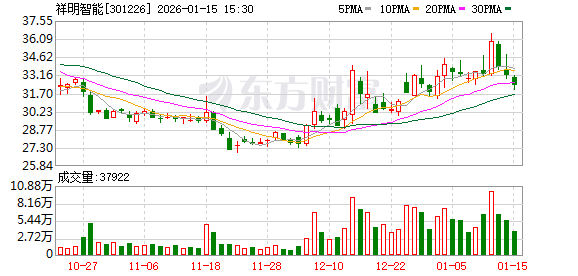
祥明智能:公司具有30年以上的研发、检测和产业化保障体系
Zheng Quan Ri Bao· 2026-01-15 08:38
Group 1 - The company has over 30 years of research, testing, and industrialization support systems, which enhance its self-research and manufacturing capabilities in the field of embodied intelligence [2] - The company is advancing its business work in the field of embodied intelligence by focusing on product performance planning and market development [2] - The company has submitted applications for 1 software copyright, 3 invention patents, and 5 utility model patents related to intellectual property in the field of embodied intelligence [2]
携程被市场监管总局立案调查,追觅CEO高调宣布进军酒旅对标携程
Sou Hu Cai Jing· 2026-01-15 06:55
Core Viewpoint - The National Market Supervision Administration has officially launched an investigation into Ctrip Group for suspected abuse of market dominance under the Anti-Monopoly Law, while Ctrip has stated it will cooperate with regulatory authorities to maintain fair market order [2] Group 1: Ctrip Group - Ctrip Group is under investigation for alleged abuse of market dominance, which may impact its operations and market position [2] - Ctrip has committed to cooperating with regulatory authorities to ensure a fair market environment [2] Group 2: Chasing Technology - Chasing Technology has announced the establishment of a ticket and hotel tourism division, launching products that directly compete with Ctrip [2] - The founder and CEO of Chasing Technology, Yu Hao, emphasized the goal of "breaking the monopoly to make the market more vibrant" [2] - Chasing Technology, originally focused on smart cleaning devices, has expanded into personal care, consumer electronics, and automotive sectors [2] - Yu Hao has articulated a long-term vision for the company to create the "first trillion-dollar enterprise ecosystem in human history," asserting that this vision is serious and will be elaborated in future writings [2]

中国外贸“含智量”凸显创新驱动成效
Xin Lang Cai Jing· 2026-01-14 19:42
Core Insights - China's foreign trade demonstrates remarkable resilience amidst a global slowdown, with exports reaching 26.99 trillion yuan, a year-on-year increase of 6.1% [1][2] - The country has transitioned from "Made in China" to "Intelligent Manufacturing in China," focusing on high-value, differentiated products [1][3] - Innovation is identified as the key driver for China's foreign trade, enabling the country to overcome uncertainties and enhance competitiveness [2][3] Export Performance - Exports of specialized equipment, high-end machine tools, and industrial robots grew by 20.6%, 21.5%, and 48.7% respectively, with industrial robots becoming a net export for the first time [1] - The export of smart robots and other high-tech products has seen significant growth, with some categories experiencing over 60% increase in exports [2] Market Adaptation - Chinese companies are successfully integrating traditional craftsmanship with modern innovation, as seen in the examples of ceramic decorations and desert air conditioners [2] - The shift in focus from quantity and price competition to intelligence and innovation reflects a strategic move towards higher value in the global supply chain [3] Economic Transition - China's economy is undergoing a critical phase of transformation, moving away from investment-driven growth towards innovation-driven development [3] - The emphasis on innovation is crucial for maintaining stable growth in foreign trade and accelerating economic transformation [3]
八部门发文促银发经济发展 14项举措培育养老服务经营主体
Shang Hai Zheng Quan Bao· 2026-01-13 23:34
Core Viewpoint - The Ministry of Civil Affairs and seven other departments have jointly issued measures to cultivate the elderly care service sector and promote the silver economy, focusing on brand development and technological empowerment [1][2]. Group 1: Policy Measures - The measures include 14 specific initiatives aimed at optimizing the development environment for elderly care services and stimulating operational vitality [1]. - There is a strong emphasis on brand building, with support for brand creation, protection, and promotion to foster well-known brands in the elderly care sector [1]. - The measures aim to enhance market supply and demand matching by optimizing the supply of elderly care services and age-friendly products, encouraging community-supported home care through chain operations [1]. Group 2: Technological Empowerment - The measures advocate for the integration of big data, artificial intelligence, and Beidou technology in health monitoring and personalized services for the elderly [2]. - There is encouragement for the development of elderly care robots and smart devices, with a focus on improving the service experience for older adults [2]. - The initiative aims to transition the elderly care service system from traditional care to a more intelligent and quality-enhanced model, addressing labor shortages and improving service efficiency [2][3]. Group 3: Industry Development Focus - The Ministry of Industry and Information Technology plans to focus on key areas such as elderly care robots, smart footwear, and easy-to-swallow foods, enhancing product development [3]. - There will be a collaborative effort between production and application enterprises to advance core technology and product development in elderly care [3]. - The Ministry of Commerce will work on five key areas, including the development of home care services for the elderly and creating platforms for supply and demand matching in elderly care [3].
促进银发经济发展 八部门发文培育养老服务经营主体 推动大数据、人工智能、北斗技术运用到老年人健康监测和个性化服务等场景
Zheng Quan Shi Bao· 2026-01-13 18:10
Core Viewpoint - The Ministry of Civil Affairs and eight other departments issued measures to cultivate the elderly care service industry and promote the silver economy, proposing 14 specific initiatives to enhance the elderly care system in China and address the challenges of an aging population [1][2]. Group 1: Policy Measures - The measures focus on brand development, supply-demand platform construction, and optimizing the development environment for elderly care services [1]. - By the end of 2024, the elderly population aged 60 and above in China is expected to exceed 310 million, highlighting the urgency of developing a suitable elderly care system [1]. - The measures aim to optimize the supply of elderly care services and age-friendly products, encouraging community-supported home care through chain operations [1]. Group 2: Consumer Protection and Regulation - The measures emphasize enhancing elderly individuals' risk recognition and self-protection capabilities while addressing issues of elder abuse and misleading marketing practices [2]. - There is a focus on regulating administrative oversight to minimize disruptions to normal operations of elderly care institutions, promoting a "double random, one public" regulatory approach [2]. Group 3: Technological Innovation - Technological innovation and supply optimization are identified as key drivers to address labor shortages in elderly care and improve service efficiency and quality [2]. - The measures promote the application of big data, artificial intelligence, and Beidou technology in health monitoring and personalized services for the elderly [2]. - Support for the development of elderly care robots and smart devices is encouraged to enhance the quality of elderly care services [3].
第一创业晨会纪要-20260112
First Capital Securities· 2026-01-12 06:25
Macro Economic Group - In December, China's CPI increased by 0.8% year-on-year, matching expectations, and up from 0.7% in November. Core CPI also remained stable at 1.2% year-on-year [5] - December's PPI decreased by 1.9% year-on-year, slightly better than the expected decline of 2% [6] - The U.S. non-farm payrolls increased by 50,000 in December, below the expected 60,000, while the unemployment rate fell to 4.4% [7][8] Industry Comprehensive Group - TSMC reported a revenue of NT$335 billion in December 2025, a 2.5% decrease from November but a 20.4% increase year-on-year. The fourth quarter revenue reached NT$1.05 trillion, approximately US$33.1 billion, exceeding market expectations [10] - The competition for satellite orbital resources between China and the U.S. has officially begun, with significant implications for satellite manufacturing and commercial rocket industries [11] Advanced Manufacturing Group - Starting April 1, 2026, China will cancel the VAT export rebate for photovoltaic products and reduce the rebate for battery products from 9% to 6%. This is expected to stabilize export prices and enhance product structure upgrades in the battery industry [13] - In December, the retail sales of new energy passenger vehicles reached 1.337 million units, a year-on-year increase of 2.6%, with a penetration rate of 59.1% in the domestic market [14] Consumer Group - Mao Geping has launched new products and formed a strategic partnership with LVMH's investment firm, aiming to enhance its global presence in the beauty market. This collaboration focuses on expanding high-end retail channels and establishing a beauty investment fund [16] - The CES 2026 highlighted the importance of LiDAR technology, which is expected to drive the growth of smart lawn mowers and other intelligent devices, with the global market projected to reach US$4 billion by 2028 [17]
黄仁勋、杨元庆,给人工智能划了两个重点丨2026 CES观察
3 6 Ke· 2026-01-11 23:36
Core Insights - The article discusses the evolving narratives around artificial intelligence (AI) showcased at CES 2026, emphasizing two main themes: "AI is physical" and "AI is personal" [3][12]. Group 1: AI is Physical - CES has historically focused on the next technological advancements, transitioning from electric vehicles (EVs) to "physical AI," which integrates AI with physical entities like cars and robots [5][11]. - General Motors (GM) announced advancements in its Super Cruise system, allowing for "eyes-off driving" by 2028, and plans to integrate a Google Gemini-powered AI assistant in vehicles to enhance user interaction [7][8]. - The concept of physical AI is exemplified by vehicles acting as personal assistants, capable of managing tasks and providing support, thus transforming traditional transportation into intelligent, interactive machines [8][11]. - NVIDIA's CEO Jensen Huang highlighted the significance of physical AI, stating that breakthroughs in understanding the real world are opening new application scenarios, supported by NVIDIA's advancements in training and inference technologies [9][10]. Group 2: AI is Personal - Companies like General Motors and Sony Honda Mobility are developing AI assistants for vehicles, enhancing user experience through personalized interactions and management of applications and settings [13][14]. - Lenovo introduced Qira, a personal ambient intelligence system that operates across various devices, providing context-aware assistance and creating a dynamic model of user interactions [16][18]. - The trend towards personalized AI is evident in the development of systems that learn from user behavior and preferences, aiming to integrate seamlessly into daily life and enhance productivity [21][22]. - Privacy considerations are emphasized in the design of personal AI products, ensuring user data is handled securely and allowing users to maintain control over their information [23]. Group 3: Future Directions - The article identifies two key paths for the evolution of AI: the embodiment of AI in physical devices and the deep personalization of AI in individual lives, both of which are crucial for the next stage of intelligent systems [24].



节后机构调研股曝光
Xin Lang Cai Jing· 2026-01-10 23:49
Core Viewpoint - The article highlights the recent institutional research activities focusing on specific companies, particularly emphasizing the advancements and market potential of companies like Entropy Technology and Superjet Co. [1] Group 1: Entropy Technology - Entropy Technology has been the subject of research by 132 institutions, including 38 fund companies, 8 securities firms, 21 private equity firms, and 13 insurance companies [1] - The company is exploring intelligent brain-machine technology through its Entropy Cloud Brain Machine, focusing on sectors such as elderly care, healthcare, and education to support industrial intelligence upgrades [1] - The prototype of the brain-machine is progressing as planned, with initial efforts concentrated on marketing and brand promotion, which is not expected to significantly impact overall revenue in the short term [1] - While the company is optimistic about the market potential of the brain-machine business, there remains uncertainty regarding its future contribution to revenue and performance [1] Group 2: Superjet Co. - Superjet Co. has attracted research interest from over 100 institutions [1] - In terms of market performance, stocks that have undergone institutional research have seen an average increase of nearly 8% over the past week, with specific companies like Pulit, Chengdu Xian Dao, Leo Holdings, and Borui Communication experiencing gains exceeding 30% [1]

深圳市道通科技股份有限公司 2025年年度业绩预告
Zheng Quan Ri Bao· 2026-01-09 23:52
Core Viewpoint - The company anticipates significant growth in net profit for the year 2025, driven by advancements in AI technology and its applications in various sectors [1][5]. Group 1: Performance Forecast - The company expects a net profit attributable to shareholders of 900 million to 930 million yuan for 2025, representing an increase of 259 million to 289 million yuan compared to the previous year, with a year-on-year growth of 40.42% to 45.10% [1][3]. - The projected net profit, excluding non-recurring gains and losses, is estimated to be between 870 million and 900 million yuan, reflecting an increase of 329 million to 359 million yuan from the previous year, with a growth rate of 60.88% to 66.43% [1][4]. Group 2: Previous Year Performance - In the previous year, the net profit attributable to shareholders was 640.93 million yuan [3]. - The net profit, excluding non-recurring gains and losses, was 540.77 million yuan [4]. Group 3: Reasons for Performance Change - The company has embraced AI comprehensively, utilizing smart vehicle diagnostic terminals and intelligent energy hubs to provide services globally, which has driven rapid growth in performance [5]. - In the AI + diagnostic field, the company has deepened its application of AI multimodal voice models and AI agents, leading to high customer recognition and rapid growth, particularly in TPMS products [5]. - In the AI + charging sector, the company has enhanced its end-to-end system capabilities, solidifying its "smart energy charging model" and delivering projects to top global clients across various industries [5][6].
