
服装业

Search documents
美印谈判计划取消 50%关税还有转机吗
Bei Jing Shang Bao· 2025-08-18 14:45
Group 1 - The trade relationship between the US and India is rapidly deteriorating, with the cancellation of the US trade representative's visit to New Delhi and the postponement of bilateral trade negotiations [2][3] - The US has announced a 25% tariff on Indian exports as a penalty for India's purchase of Russian oil, which is set to take effect on August 27 [3][4] - India's exports to the US accounted for nearly 20% of its total exports, valued at $86.51 billion in the last fiscal year ending March 2025 [5] Group 2 - The proposed bilateral trade agreement negotiations have stalled after five rounds, primarily due to India's refusal to open its agricultural and dairy markets, which are critical to its economy [4][6] - The imposition of high tariffs by the US could severely impact India's manufacturing ambitions and economic growth, with potential negative effects on small and medium-sized enterprises in the apparel sector [5][6] - Despite the trade conflict, both countries are still open to negotiations, with India having made several concessions, including tariff exemptions on industrial goods [7][8]

甘肃通渭:多元产业铺就增收振兴路
Zhong Guo Fa Zhan Wang· 2025-08-18 14:03
Group 1: Livestock Industry - Tongwei County focuses on upgrading agricultural structure through livestock farming, aiming to expand cattle and sheep farming while stabilizing pig and poultry production [2] - The establishment of a grass-livestock circular industry park promotes integrated development of breeding, processing, and sales [2] - The local market for livestock has seen a transaction volume exceeding 60 million yuan, with a new slaughterhouse and meat storage facility set to enhance processing capabilities [2] Group 2: Fruit and Vegetable Industry - The county has achieved significant yields in highland summer vegetables, with local peppers yielding 8,000 to 10,000 pounds per acre, generating net incomes of approximately 3,000 yuan [3] - A cooperative model has been implemented to enhance apple production, with 36,000 acres of orchards generating an annual output value of 130 million yuan [3] - The vegetable planting area has reached 80,000 acres, with an annual production value exceeding 800 million yuan, supported by cold storage and logistics facilities [3] Group 3: Traditional Chinese Medicine Industry - Tongwei County has a robust traditional Chinese medicine sector, with 350,000 acres dedicated to medicinal herbs, generating an estimated annual output of over 160,000 tons and a total industry value of 3.3 billion yuan [4] - Recent investments in the industry include 19 projects worth 3.19 billion yuan aimed at enhancing the processing and development of traditional medicine [4][5] - The county is also integrating traditional medicine with wellness tourism, planning to launch over five health products this year with a projected output value exceeding 20 million yuan [5] Group 4: Renewable Energy Sector - The county is developing a wind power project with an investment of 560 million yuan and a capacity of 100 MW, expected to generate 200 million kWh annually [6] - Total installed renewable energy capacity in Tongwei County has reached 1.4624 million kW, making it a significant clean energy production base in Gansu [6] - The county is also investing in energy storage solutions to stabilize power supply, including a 100 MW/400 MWh independent storage project [6] Group 5: Textile and Apparel Industry - The textile and apparel sector is becoming a key driver of employment and economic growth, with several companies achieving significant production outputs [7][8] - A new garment industrial park has been established with an investment of 55 million yuan, aiming to produce over 5 million garments annually and create more than 1,500 stable jobs [8] - The apparel industry has generated over 400 million yuan in output value in the first half of the year, providing employment opportunities for over 2,000 individuals [8]
上市公司理财生变:资金转向A股市场
Zhong Guo Jing Ying Bao· 2025-08-15 18:50
Group 1 - The core viewpoint of the articles highlights a shift in the funding allocation of listed companies due to the dual effects of a low interest rate environment and a recovery in market confidence, leading to increased equity investments and a decrease in traditional low-risk financial products [1][3][4] - As of August 14, 2023, the total amount of financial products subscribed by listed companies was 526.298 billion, a significant decrease from 748.026 billion in the same period last year, while investments in equity funds have increased, indicating a shift in investment strategy [1][2] - Analysts suggest that the decline in yields of traditional low-risk financial products, which now range from 1.5% to 2%, has prompted companies to seek higher returns through equity investments, particularly in undervalued A-share assets [1][3] Group 2 - Companies like Liou Co. and Seven Wolves have announced plans to use substantial amounts of idle funds for securities investments, with Liou Co. planning to invest up to 3 billion and Seven Wolves up to 2 billion, reflecting a growing optimism in the A-share market [2][3] - The regulatory environment has also supported this trend, with measures introduced to optimize IPO schedules and encourage insurance funds to enter the market, enhancing the risk appetite of companies [3][4] - The investment behavior of companies is characterized by a focus on efficiency and risk control, with many firms viewing equity investments as a complement to their core business, while also being cautious of the high volatility in the A-share market [4][6]


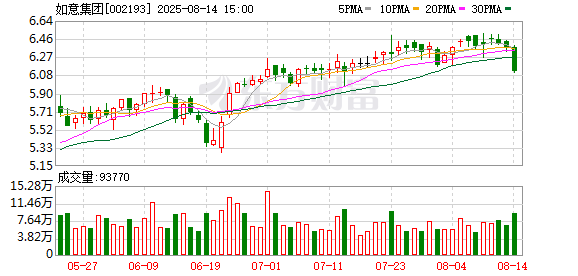
如意集团:8月14日召开董事会会议
Mei Ri Jing Ji Xin Wen· 2025-08-14 12:45
Group 1 - The company, RuYi Group, announced that its 17th board meeting of the 9th session was held on August 14, 2025, to review the rectification report regarding the warning letter issued by the Shandong Securities Regulatory Bureau [2] - For the year 2024, RuYi Group's revenue composition is as follows: 68.18% from the apparel industry, 27.25% from the textile industry, and 4.57% from other sectors [2]

详解美国7月CPI背后的关税阴影 “消费者还将看到价格进一步上涨”
Di Yi Cai Jing· 2025-08-13 14:34
Group 1 - The July Consumer Price Index (CPI) in the U.S. increased by 2.7% year-on-year, with a notable decline in gasoline prices helping to moderate overall inflation, while rising prices for other goods indicate the impact of the Trump administration's expansionary tariffs on consumers [1][2] - The core CPI, excluding food and energy, rose by 3.1% year-on-year, surpassing June's 2.9% and significantly exceeding the Federal Reserve's 2% target [1][2] - The prices of non-food and non-gasoline commodities increased for the second consecutive month by 0.2% in July, with specific categories like footwear experiencing a notable rise of 1.4%, the highest monthly increase in over four years [3] Group 2 - The tariffs are expected to lead to significant price increases for consumers, with projections indicating a 40% rise in shoe prices and a 38% rise in clothing prices by 2025 due to the tariffs [3][5] - Furniture and bedding prices rose by 0.9% in July, while outdoor equipment prices surged by 2.2%, marking the highest increase in over two years [3] - The overall inflation rate in the U.S. is anticipated to reach around 3.5% by the end of the year, driven by rising retail prices for imported goods such as furniture, toys, and appliances [5] Group 3 - The average tariff rate in the U.S. is projected to reach 17.3%, the highest level since 1935, due to the series of tariffs imposed by the Trump administration [6] - Economists expect that the high tariffs will lead to a gradual increase in prices rather than an immediate spike, indicating a slow decline in purchasing power for consumers [7][8] - The impact of tariffs on prices is expected to be more of a one-time adjustment rather than a continuous acceleration in inflation, as companies will recalibrate costs and share the burden with consumers [8]
以城之名 农银筑就
Jiang Nan Shi Bao· 2025-08-13 14:01
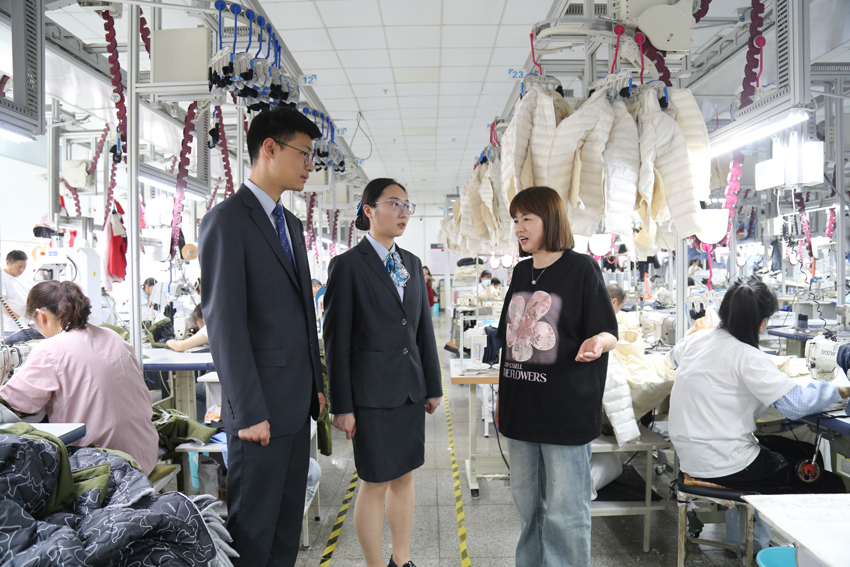
Core Viewpoint - Agricultural Bank of Suzhou Branch is actively contributing to the modernization of urban development in Suzhou by providing high-quality financial services and supporting urban renewal projects, particularly in the fashion industry [2][4]. Group 1: Urban Development and Financial Support - The Suzhou Branch of Agricultural Bank is focused on promoting high-quality urban development, emphasizing the importance of urban connotation and renewal as key strategies [2][3]. - The bank has successfully organized a syndicate loan of 2.98 billion yuan to support urban renewal projects, with 1.05 billion yuan disbursed in 2025 and a total of 9.36 billion yuan over five years [4][6]. - The bank has approved 17 urban renewal projects in the Changshu area, providing over 21 billion yuan in credit support [6]. Group 2: Fashion Industry Transformation - Changshu Garment City, established in 1985, is undergoing modernization to address challenges posed by the internet economy and resource scarcity, with a focus on urban area renewal [3][4]. - The bank is facilitating the transformation of Changshu Garment City by supporting the construction of creative districts, theme markets, and modern logistics [3][4]. - The "Yunshang Town" project, previously an industrial area, is being revitalized to attract fashion design and brand headquarters, with the bank providing 1.49 billion yuan in credit support [5][6]. Group 3: Digitalization and E-commerce - Digitalization is becoming a hallmark of Changshu Garment City, with smart production systems enhancing efficiency in garment manufacturing [2][3]. - The integration of online and offline trading systems is being promoted, with online transaction volumes exceeding 100 billion yuan [4][6].

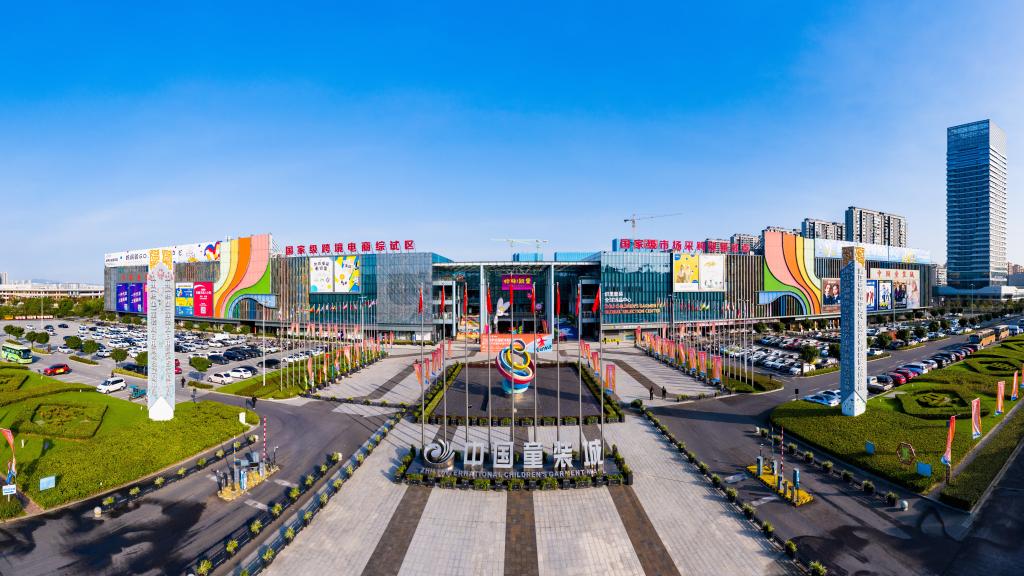
中国经济样本观察·“镇”了不起丨20亿件近千亿元!这个小镇给全球儿童做衣服
Xin Hua Wang· 2025-08-12 05:58
新华社杭州4月7日电(记者林光耀)时装看巴黎,童装看织里。位于浙江省湖州市吴兴区的织里镇,是全球儿童服装的主要生产地。这里每 年生产童装20亿件,销售额近1000亿元,童装远销165个国家和地区。 从一条0.8平方公里的"扁担街"起步,到如今25平方公里的现代化城镇,40余年来,织里的童装市场进化了8代,完成了由一条街扩展成一个 镇,又由一个镇成长为产、城、人融合发展的"中国童装之都"的华丽转身。 仲春时节,走在浙江省湖州市吴兴区织里镇街头,童装零售店里挂满了五颜六色的春装,批发店里夏装早已上市,而童装工厂则已为秋、冬 装订货会"摩拳擦掌"。 图为织里中国童装城全景。新华社发 "扁担街""挑"出来的大产业 40多年前,为养家糊口,一批织里人靠着纺织、刺绣等老手艺生产些床罩、枕套,挑到镇上售卖。"一根扁担两个包,天南海北闯天涯",正 是20世纪80年代初不少织里人走南闯北的写照。 在这个过程中,有人将制作枕套的零碎布绣上花,加工成儿童连衣裙。没想到,这些无心插柳的儿童连衣裙,反而比枕套更畅销。于是,从 绣制品转向童装生产的人逐渐增多,织里童装业开始起步。 到20世纪90年代时,织里的童装产业在全国已小有名气。随 ...
“新中式”穿搭成潮流
Ren Min Ri Bao· 2025-08-02 10:27
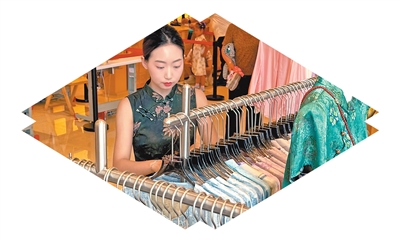
Group 1: Market Trends in "New Chinese" Clothing - The demand for "New Chinese" clothing has surged, with various regions leveraging their unique characteristics to expand market opportunities [4][5][6] - In Shenyang, the average daily foot traffic in a flagship qipao store reached 2,000 to 3,000, with total sales exceeding 1 million yuan since its opening [5] - The average annual growth rate of qipao customization has been nearly 30%, indicating a shift towards personalized consumer preferences [5][6] Group 2: Innovations in Fabric and Design - In Suzhou, the monthly sales of "New Chinese" clothing can exceed 1 million yuan, driven by innovative fabric production [7][8] - Companies like Wujiang Dingsheng Silk Co. have developed popular fabrics such as "Han Palace Autumn Moon," showcasing the importance of material innovation in the market [8] - The integration of traditional patterns with modern aesthetics is crucial for appealing to contemporary consumers, as demonstrated by designers like Jiang Liping and Wu Shaohua [9][10][11] Group 3: Cultural Integration and Tourism - The rise of immersive cultural tourism activities centered around qipao has positively impacted the clothing industry and related sectors [6] - Shenyang's annual qipao cultural festival has transformed the industry from a niche market to a broader national trend, with visitor numbers increasing by 50% during the event [6] - The "New Chinese" clothing industry in Chengdu is projected to exceed 8 billion yuan in market size by 2024, with expectations to reach 10 billion yuan by 2025 [11]
“对等关税”2.0来袭:最高税率41%,谈判进展缓慢
Guo Ji Jin Rong Bao· 2025-08-02 09:07
Core Points - The U.S. government has announced new "reciprocal tariffs" that will take effect on August 7, following President Trump's executive order signed on July 31 [1][2] - The new tariff rates reflect a more protectionist and isolationist trade policy, with significant implications for global trade dynamics [1][11] - The average tariff rate is expected to rise from 13.3% to 15.2% [6] Tariff Rates Summary - The maximum tariff rate is set at 41%, with a general rate of 10% for countries with a trade surplus with the U.S. [2] - Countries with a trade deficit will face a minimum tariff rate of 15%, affecting approximately 40 countries [2][3] - Specific countries have been assigned varying tariff rates, with Cambodia's rate dropping from 49% to 19%, while Switzerland's rate increased from 31% to 39% [4][3] Impact on Trade Partners - Canada will see its tariff rate increase from 25% to 35%, which has been met with disappointment from Canadian officials [5][4] - The U.S. has implemented a 40% additional penalty on goods deemed to be transshipped from high-tariff countries to low-tariff countries [3][4] - The new tariffs are expected to significantly impact industries such as textiles and automotive in affected countries [4][5] Negotiation and Agreements - The U.S. has only reached a limited number of trade agreements, with only 7 out of over 200 proposed agreements finalized [7][9] - Recent agreements with countries like Japan and South Korea have resulted in reduced tariff rates, but many details remain under negotiation [8][9] - The ongoing negotiations with China have resulted in a temporary extension of tariff suspensions, indicating a complex and evolving trade landscape [10][13] Legal and Economic Implications - Trump's tariff policies are facing legal challenges, with questions raised about the extent of presidential power in modifying tariff rates without congressional approval [11][12] - Economists warn that the new tariffs could have long-term negative effects on the global economy, particularly for Asian economies [13]
抛出“对等关税”新表格,引发全球市场再动荡,美蛮横加剧全球贸易战
Huan Qiu Shi Bao· 2025-08-01 22:27
Core Viewpoint - The U.S. government has announced new tariffs ranging from 10% to 41% on imports from approximately 70 countries, effective August 7, indicating a significant escalation in the global trade war [1][2][4]. Tariff Details - Countries with trade agreements with the U.S., such as Japan, South Korea, and the EU, will face a 15% tariff, while India will incur a 25% tariff due to the lack of an agreement [1][2]. - Syria faces the highest tariff at 41%, followed by Myanmar and Laos at 40%, with Switzerland's tariff increasing to 39% from a previously announced 31% [3][4]. - South Africa will be subjected to a 30% tariff, highlighting the low priority given to African nations in U.S. trade agreements [3]. Economic Impact - The average tariff on U.S. imports is projected to rise from approximately 2.5% to 18.4% once the new tariffs are implemented, leading to increased costs for American consumers [4]. - The new tariffs are expected to disrupt global supply chains and may lead to a shift towards regional trade agreements as countries seek to mitigate the impact of U.S. policies [6][9]. Political and Strategic Implications - The tariffs are seen as a tool for the U.S. to exert geopolitical pressure, with the intention of forcing countries to accept U.S.-led trade rules [8][9]. - The ongoing trade tensions may accelerate the fragmentation of the global trade system, pushing countries towards regional agreements like RCEP and CPTPP [9]. Market Reactions - Following the announcement of the tariffs, stock markets in Asia and Europe experienced declines, reflecting investor concerns over the potential economic fallout [7].