消费行业

Search documents
金融市场流动性与监管动态周报:历史上PPI回升阶段何种风格占优?-20251112
CMS· 2025-11-12 14:01
Group 1 - The report indicates that during the PPI recovery phase, small-cap value stocks tend to outperform, with small-cap growth also showing potential for good performance [4][10][12] - Historical analysis shows that in previous PPI recovery phases, the market style favored small-cap value and small-cap growth stocks, particularly when liquidity remains loose [10][11] - The report highlights that the cyclical sector tends to outperform during PPI recovery phases, as its performance is closely tied to PPI movements and investment demand [12][14] Group 2 - The report notes that the recent market sentiment has shifted towards cyclical and consumer staples sectors, with increased attention on these indices [4][39] - In terms of industry preference, sectors such as electric equipment, pharmaceuticals, and non-bank financials have seen significant net inflows, while sectors like electronics and non-ferrous metals experienced net outflows [47] - The report emphasizes that the upcoming years, particularly 2026, may witness a significant investment boost due to the alignment of China's five-year plans and the U.S. election cycle, potentially benefiting related sectors [4][9]
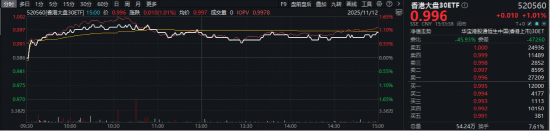
红利打底+科技进攻!香港大盘30ETF(520560)量价齐升涨1%,短线多头信号确立
Xin Lang Ji Jin· 2025-11-12 09:04
Core Viewpoint - The Hong Kong stock market continues its rebound, with all three major indices closing in the green, driven by the performance of the Hang Seng China (Hong Kong-listed) 30 Index [1] Group 1: Market Performance - The Hong Kong stock market saw a significant increase in trading volume, with the Hong Kong Large Cap 30 ETF (520560) rising over 1% and achieving a trading volume exceeding 54 million HKD, indicating a strong bullish sentiment [1] - Southbound funds have consistently net bought for 16 consecutive trading days, with a net inflow of 4.2 billion HKD on November 12, bringing the total net inflow for the year to over 1.3 trillion HKD [2][3] Group 2: Investment Strategy - The sustained inflow of southbound funds is expected to drive the capital market back to fundamentals and value-driven investments, supporting a "slow bull" market for Hong Kong stocks [3] - Analysts suggest a "barbell strategy" for investment, focusing on technology stocks for growth and dividend-paying stocks for stability [5] - Key sectors to watch include consumer discretionary, utilities, and sectors benefiting from policy support, such as the AI industry and consumer sectors [5] Group 3: ETF and Index Composition - The Hong Kong Large Cap 30 ETF passively tracks the Hang Seng China (Hong Kong-listed) 30 Index, which includes major companies like Alibaba (18.07% weight) and Tencent (15.44% weight) [6] - The top ten holdings of the index account for 72.84% of its total weight, indicating a concentrated investment in a few large-cap stocks [6]

关税突发:美最高法院展开辩论!特朗普:美股将再创新高!美联储理事最新表态
Qi Huo Ri Bao· 2025-11-06 00:01
Group 1: U.S. Employment Data and Market Reactions - The ADP report indicated an addition of 42,000 jobs in October, surpassing the Dow Jones expectation of 22,000 jobs, while September's data was revised from a loss of 29,000 jobs to a loss of 3,000 jobs [2] - Despite a slowdown in job growth, wages continue to rise, providing a mixed signal for the labor market [2] - The Federal Reserve is facing internal divisions regarding interest rate cuts, with a 62.5% probability of a 25 basis point cut in December, down from the previous day [3] Group 2: U.S. Tariff Policy and Legal Debates - The U.S. Supreme Court is debating the legality of the Trump administration's large-scale tariffs, which could impact global economic conditions [4] - If the Supreme Court rules against the tariffs, it could force the U.S. government to refund approximately $140 billion in tariffs, significantly affecting the federal budget deficit [5] Group 3: A-Share Market Trends - In the first ten months of the year, the number of new A-share accounts increased by 10.57% year-on-year, indicating a growing interest in the market [6][8] - The Shanghai Composite Index closed at 3969.25 points, with a slight increase of 0.23%, while the Shenzhen Component Index rose by 0.37% [6] - Analysts suggest that the A-share market is likely to continue its upward trend, supported by policy measures and capital inflows, despite recent volatility [7][8]
专访霸菱马丁·霍恩:中国科技股成全球配置热门,将继续加大投资
Di Yi Cai Jing Zi Xun· 2025-11-04 09:13
Core Viewpoint - The Chinese market presents significant investment opportunities, particularly in technology stocks, consumer sectors, and renewable energy, as highlighted by Barings' increased asset allocation in these areas [1][3][5]. Group 1: Investment Opportunities - Barings has identified two main investment opportunities in the Chinese market: gold and technology stocks, with a notable increase in asset allocation towards Chinese technology companies [1][3]. - The Chinese technology sector is recognized for its strong manufacturing and R&D capabilities, supported by government policies that foster technological development [3][4]. - Consumer demand in China is on the rise, driven by policy support aimed at enhancing domestic consumption and reducing reliance on foreign markets [5]. Group 2: Market Dynamics - External factors, such as tariff policies, have previously caused market volatility, but Barings believes that the impact of these tariffs will diminish over time as trade structures are adjusted [6][7]. - The ongoing negotiations regarding tariffs are expected to lead to a more pragmatic agreement that balances the interests of both the U.S. and China, reducing extreme tariff scenarios [7][8]. - The global financial market's uncertainty is increasing the demand for diversified investments, with emerging market funds and gold gaining attention as safe-haven assets [8]. Group 3: Future Outlook - Barings anticipates that by 2026, the influence of tariff issues on global markets will gradually decrease, allowing for a more stable investment environment [8]. - The firm emphasizes the importance of AI leaders in the market, predicting that these companies will significantly drive market development and attract investment [4].

每日钉一下(消费行业还会有行情吗?)
银行螺丝钉· 2025-11-02 13:59
Core Viewpoint - The consumer sector has been experiencing a downturn since 2025, similar to the period from 2013 to 2017, with concerns about profitability and market conditions [2][4]. Group 1: Historical Comparison - The current situation mirrors the 2013-2017 period, characterized by declining profits and a sluggish consumer market [3][4]. - In 2013, the consumer sector faced its lowest historical valuations, exacerbated by a bear market and fundamental issues such as food safety scandals [4]. - The first wave of recovery in 2014 was driven by securities, while the upcoming recovery in late 2024 is expected to see significant gains in brokerage stocks [4]. Group 2: Economic Correlation - The consumer industry is closely tied to the real economy, with notable bull markets occurring in 2017 and 2021 during periods of strong economic fundamentals [5][6]. - The current low performance in the consumer sector is attributed to weak fundamentals, with profit growth expected to slow in early 2025 [7]. Group 3: Market Dynamics - A weak fundamental environment often leads to a "double whammy" of declining valuations and profits, while a strong environment can result in simultaneous valuation increases and profit growth [7]. - The consumer sector is currently in a low fundamental phase, but a potential recovery could lead to improved profitability and higher valuations [9]. Group 4: Investment Strategy - For those optimistic about consumer stocks, a long-term investment approach is necessary, waiting for a fundamental recovery [10]. - It is advisable to limit exposure to a single industry to 15%-20% to manage volatility effectively [10].

Fed Chair Powell: Downside risks to employment have risen in recent months
Youtube· 2025-10-29 18:57
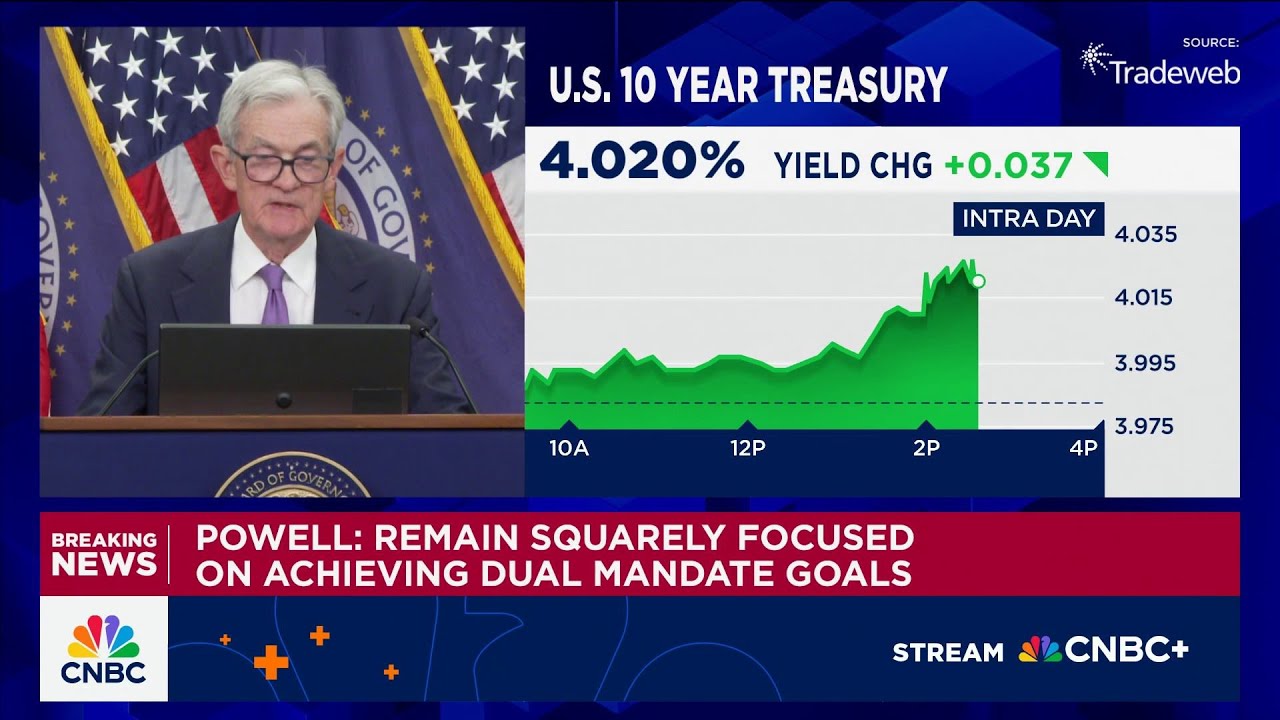
Economic Outlook - The labor market is gradually cooling, and inflation remains elevated, prompting the Federal Open Market Committee to lower the policy interest rate by a quarter percentage point [2] - Economic activity is expanding at a moderate pace, with GDP growth at 1.6% in the first half of the year, down from 2.4% the previous year [3] - Growth in economic activity may be firmer than expected, driven by stronger consumer spending, although business investment continues to expand and the housing sector remains weak [4] Labor Market - The unemployment rate has remained low, but job gains have significantly slowed, reflecting a decline in labor force growth due to lower immigration and participation [5][6] - Layoffs and hiring remain low, with perceptions of job availability and hiring difficulty declining, indicating a softer labor market [6] Inflation Trends - Inflation has eased from mid-2022 highs but remains elevated, with total PCE prices rising 2.8% over the past year, including core PCE prices [7] - Disinflation is continuing for services, while inflation expectations have increased due to tariffs, although long-term expectations align with the 2% inflation goal [8] Monetary Policy - The Federal Reserve's monetary policy actions are focused on promoting maximum employment and stable prices, with the target range for the federal funds rate lowered to 3.75% to 4% [9] - The impact of higher tariffs is contributing to increased prices in certain goods, leading to higher overall inflation [9] - There is a reasonable expectation that inflationary effects may be short-lived, but there is a risk that they could become persistent, which needs to be managed [10]
前三季度GDP增长5.6%,首都经济成绩单预示了怎样的未来?
Bei Ke Cai Jing· 2025-10-27 13:24
Core Viewpoint - Beijing's economy has shown unexpected resilience and vitality in 2023, with a GDP growth of 5.6% in the first three quarters, marking the second-highest point since 2022 [1] Economic Performance - In the first three quarters, Beijing's GDP reached 3.8 trillion yuan, growing 5.6% year-on-year, which is 0.4 percentage points higher than the national average [4] - Fixed asset investment in Beijing increased by 9% year-on-year, achieving 80.4% of the annual target, with a significant investment structure optimization [4] - The three major industries—manufacturing, information transmission, software and IT services, and finance—contributed over 80% to the GDP growth, solidifying their role as the economic "ballast" [4][5] Sectoral Insights - The information transmission, software, and IT services sector was the strongest growth driver, contributing 2.5 percentage points to GDP growth, with profits in this sector rising by 21.3% year-on-year [5] - Strategic emerging industries in the industrial sector grew by 17.9%, contributing 116.5% to industrial growth, while high-tech service industries saw a growth of 13.2% [7] - New quality productivity is accelerating industry upgrades, with equipment investment surging by 83.1% and digital product manufacturing value-added increasing by 22.4% [8] Consumer Trends - Consumer upgrades are evident, with significant growth in inbound tourism and spending, increasing by 42.9% and 48.3% respectively in the first three quarters [9] - The rise of intelligent consumption and personalized trends is notable, with experience-based consumption becoming a key direction for upgrades [10][11] Future Actions - Six major special actions will be implemented in the fourth quarter to ensure economic stability, including actions to activate consumption potential and enhance industrial momentum [12] - The government plans to launch 160 key projects and promote urban renewal, with a total investment of no less than 200 billion yuan for the year [13]
【招银研究】海外降息预期强化,国内市场情绪升温——宏观与策略周度前瞻(2025.10.27-10.31)
招商银行研究· 2025-10-27 10:05
Group 1: U.S. Macro Strategy - The Federal Reserve is expected to lower interest rates by 25 basis points in both October and December meetings, bringing the year-end policy rate to a range of 3.5-3.75% [2] - September's U.S. CPI data was weaker than expected, with a year-on-year increase of 3.0% and a month-on-month increase of 0.3%, indicating short-term inflation concerns may be alleviated [2] - The U.S. economy is facing downward pressure, with a significant tightening in fiscal stance reflected in a surplus of $25.4 billion for week 42, compared to the same period last year [3] Group 2: U.S. Equity Market - The S&P 500 index rose by 1.9% last week, supported by strong corporate earnings and the expectation of continued rate cuts from the Federal Reserve [3] - Despite the current resilience in the U.S. stock market, uncertainties are rising, with high valuations primarily driven by AI narratives and tech giants' earnings [3] - The risk premium in the U.S. stock market is low, which may not align with potential credit and geopolitical risks [3] Group 3: U.S. Debt Market - Due to lower-than-expected inflation, expectations for rate cuts have strengthened, leading to a forecasted decline in U.S. Treasury yields [4] - The long-term interest rates face pressure from concerns over U.S. fiscal sustainability and the independence of the Federal Reserve, limiting their downward potential [4] Group 4: Chinese Macro Strategy - High-frequency data indicates a contraction in durable goods consumption and real estate transactions, with new home sales in 30 major cities down by 23.6% year-on-year [7] - Industrial enterprise profit growth accelerated to 21.6% year-on-year in September, supported by low base effects and recovery in upstream product prices [8] - Exports are expected to remain stable in October, with positive signals from recent U.S.-China trade discussions [9] Group 5: Chinese Equity Market - The A-share market saw a 2.9% increase last week, driven by liquidity support and stable economic fundamentals [11] - Growth and small-cap stocks are expected to outperform, with technology sectors showing high investment interest [11] - The Hong Kong stock market rebounded by 3.6%, benefiting from improved U.S.-China trade relations and favorable policies for the technology sector [12]
突传降息99%概率消息,释放啥关键信号?下周A股重演924吗?
Sou Hu Cai Jing· 2025-10-26 18:12
Core Insights - The probability of a Federal Reserve interest rate cut has surged to 99%, indicating a strong likelihood of monetary easing, which has led to a significant rally in global markets, particularly in U.S. equities reaching historical highs [1][3]. Economic Indicators - Recent U.S. economic data shows a 0.2% month-over-month increase in the core Consumer Price Index (CPI) for September, marking a decline for three consecutive months, suggesting easing inflation pressures [1]. - The decline in inflation provides the Federal Reserve with the necessary space to consider interest rate cuts, which were previously resisted due to inflation concerns [1][3]. Market Reactions - The U.S. dollar index has shown signs of weakness, and U.S. Treasury yields have decreased, creating additional pressure on the Federal Reserve to lower interest rates [3]. - The employment market, while not experiencing a significant rise in unemployment, still shows a high unemployment rate, indicating a need for economic stimulus through interest rate cuts [3]. A-Share Market Outlook - Historical context suggests that the A-share market may not replicate the previous year's rally following a Federal Reserve rate cut signal, as the current market conditions differ significantly [4][5]. - The Shanghai Composite Index is currently around 3900 points, compared to last year's lower starting point, making a rapid ascent to 5000 points more challenging [5][7]. - The driving forces behind market movements have shifted; last year's rally was fueled by both policy support and U.S. rate cuts, while current market sentiment is less responsive to external stimuli [7]. Investment Implications - A potential interest rate cut by the Federal Reserve is viewed as a medium-term positive for the market, with expectations that global risk appetite may increase, potentially benefiting emerging markets, including A-shares [9]. - The market may experience a gradual upward trend, with a focus on breaking through the psychological barrier of 4000 points, contingent on sustained confidence and capital inflows [9]. - Investment strategies should prioritize low-valued stocks and solid growth companies, avoiding overvalued speculative stocks [10].

[10月24日]指数估值数据(大盘上涨;消费行业还会有行情吗;港股指数估值表更新;抽奖福利)
银行螺丝钉· 2025-10-24 13:59
Core Viewpoint - The article discusses the current market trends, particularly focusing on the performance of growth and value styles, the recovery of the A-share market, and the potential for consumer sector recovery in the future. Group 1: Market Performance - The overall market opened low but closed higher, reaching a rating of 4.2 stars, close to 4.1 stars [1] - Growth style saw a significant increase today, while value style experienced a slight decline [2][7] - The ChiNext index experienced a correction of over 10% after reaching high valuations post the National Day holiday [3] - Recent earnings reports from leading companies in the ChiNext indicate good profit growth, contributing to the index's rise [4] Group 2: Style Rotation - The A-share market is characterized by style rotation, with growth style recently outperforming value style [5][6] - In the past few days, growth style had declined while value style was on the rise [6] Group 3: Consumer Sector Analysis - The current low performance in the consumer sector is attributed to a weak fundamental backdrop, similar to the period from 2013 to 2017 [10] - The consumer sector's valuation is at historical lows, comparable to the lowest levels seen in 2013 [12][13] - If the economic fundamentals improve and the consumer sector enters a growth cycle, profit growth for listed companies in this sector is expected to rise, leading to a potential recovery [32][35] Group 4: Future Outlook - The timing of a potential recovery in the consumer sector remains uncertain, with predictions ranging from this year to the next two years [34] - Investors looking at consumer stocks should be prepared for long-term investments, as the sector may experience significant volatility [36] Group 5: Hong Kong Market Insights - The Hong Kong stock market has also seen an overall increase, with technology stocks leading the gains [8] - The article provides a summary of the valuation of Hong Kong stock indices for reference [9][37]