
邮政

Search documents
国家统计局:10月制造业PMI为49% 比上月下降0.8个百分点
Guo Jia Tong Ji Ju· 2025-10-31 07:16
Manufacturing PMI Overview - In October, the Manufacturing Purchasing Managers' Index (PMI) was 49.0%, a decrease of 0.8 percentage points from the previous month, indicating a decline in manufacturing activity [1][17] - The PMI for large, medium, and small enterprises was 49.9%, 48.7%, and 47.1%, respectively, all below the critical point [1][18] - The production index was 49.7%, down 2.2 percentage points, signaling a slowdown in manufacturing production [2][18] - The new orders index was 48.8%, a decrease of 0.9 percentage points, reflecting a drop in market demand [3][18] - The raw materials inventory index was 47.3%, down 1.2 percentage points, indicating a continued reduction in inventory levels [4][18] - The employment index was 48.3%, a slight decrease of 0.2 percentage points, suggesting a minor decline in employment levels within the manufacturing sector [5][18] Non-Manufacturing PMI Overview - The Non-Manufacturing Business Activity Index was 50.1%, an increase of 0.1 percentage points, indicating expansion in the non-manufacturing sector [6][17] - The service sector's business activity index was 50.2%, up 0.1 percentage points, showing a slight recovery in service sector activity [6][20] - The new orders index for non-manufacturing was 46.0%, unchanged from the previous month, indicating weak market demand [6][20] - The input prices index was 49.4%, an increase of 0.4 percentage points, suggesting a narrowing decline in input prices for non-manufacturing businesses [6][20] - The employment index for non-manufacturing was 45.2%, a slight increase of 0.2 percentage points, indicating a minor improvement in employment conditions [7][20] Composite PMI Overview - The Composite PMI Output Index was 50.0%, a decrease of 0.6 percentage points, indicating overall stability in production and business activities [8][21] - The manufacturing production index was 49.7%, while the non-manufacturing business activity index was 50.1%, contributing to the composite index's position at the critical point [21]
2025年前三季度宏观政策“三策合一”研究报告
Sou Hu Cai Jing· 2025-10-24 08:51
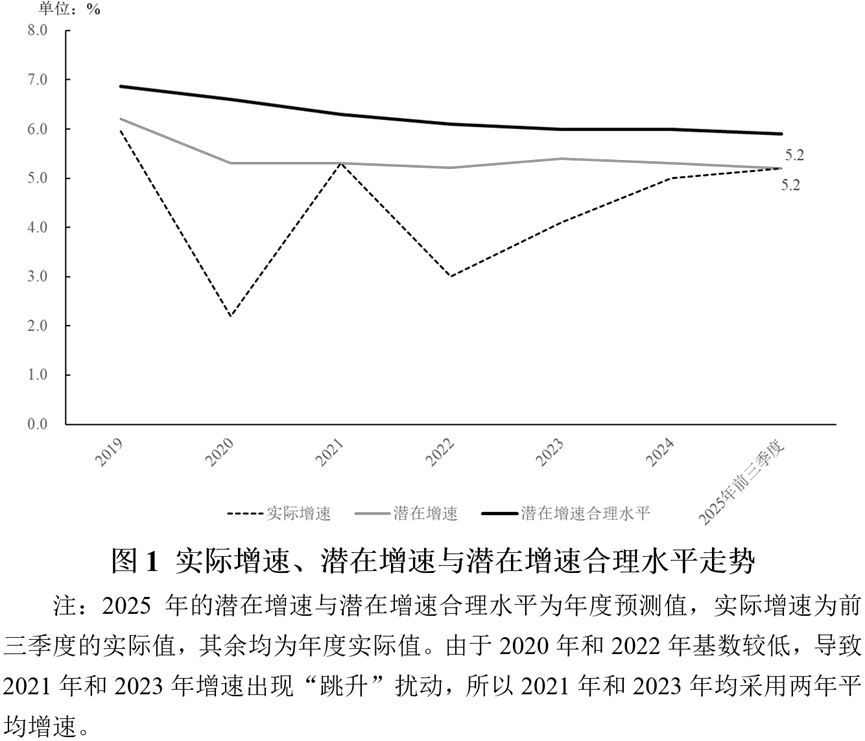
Core Viewpoints - The main contradiction in the current macroeconomic environment is insufficient domestic demand, particularly in consumer spending, highlighting the strategic importance of enhancing consumption [2][9] - It is recommended to maintain the actual GDP growth rate above the potential growth rate of 5.2% for 2025 and set the 2026 GDP growth target around 5% to signal stability [2][37] - A gradual approach to price level control is suggested, aiming for a three-step process to achieve a core CPI growth target of 2% over two to three years [2][38] Macroeconomic Overview - The GDP growth rate for the first three quarters of 2025 is 5.2%, aligning closely with the potential growth rate, indicating a stable economic operation [6] - Industrial profits have shown positive improvement, with a 0.9% year-on-year increase in profits for large industrial enterprises from January to August 2025 [7] - The service sector has also experienced growth, with a 5.4% year-on-year increase in value added, particularly in modern service industries [8] Current Economic Contradictions - The primary contradiction in the macroeconomy is on the demand side, characterized by insufficient consumer demand, with retail sales growth slowing to 4.5% year-on-year in the first three quarters [9][11] - Investment demand has also declined, with fixed asset investment showing a -0.5% year-on-year growth, a drop of 3.3 percentage points from the first half of the year [9] Macroeconomic Policy Evaluation - The monetary policy index for the first three quarters of 2025 is 44.0, indicating a slight increase in policy strength, with M2 growth at 8.4% by the end of September [12] - The fiscal policy index stands at 57.9, reflecting an increase in fiscal policy strength, with public budget expenditure growing by 3.1% year-on-year [13] - The overall efficiency of stabilization policies is rated at 50.0, showing a positive trend in policy effectiveness [26] Policy Recommendations - It is advised to enhance stabilization policies to address the lack of effective domestic demand, with a focus on both monetary and fiscal measures [38] - Growth policies should prioritize the development of new productive forces, with an emphasis on employment-friendly industrial policies [39] - Structural policies need to optimize investment, industrial, and income distribution structures to better balance total supply and demand [39]

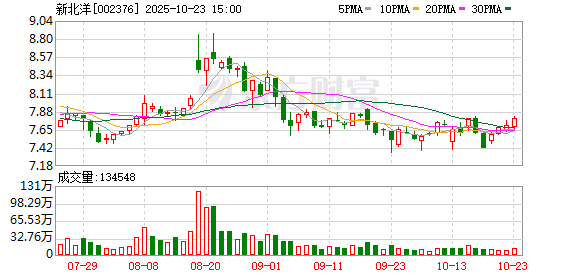
新北洋:控股子公司收到《中标通知书》
Zheng Quan Ri Bao· 2025-10-23 13:39
Group 1 - The core announcement is that New Beiyang's subsidiary, Weihai New Beiyang Zhengqi Robot Co., Ltd., has received a bid notification for a project with China Post Group in Jilin Province, specifically for the mail processing facility [2] - The total bid amount is 105 million yuan, which will be settled based on actual business volume and service quality assessments [2]

新北洋子公司中标中国邮政1.05亿元项目 服务期限5年
Xin Lang Cai Jing· 2025-10-23 09:44
Core Viewpoint - Shandong New Beiyang Information Technology Co., Ltd. announced that its subsidiary, Weihai New Beiyang Zhengqi Robot Co., Ltd., has won a bid for a project with China Post Group, with a total contract value of 105 million yuan over five years [1][2] Project Information Disclosure - The project, numbered 03-07-04A-2025-D-F-E23662, involves a "equipment + sorting service" business model, with the final settlement amount to be determined based on actual business volume and service quality assessments [2] Business Model as a Second Growth Curve - The "equipment + sorting service" model has been gradually implemented since 2019 and is a core part of the company's "second strategic growth curve - service operation business" [3] - This model leverages the company's self-developed "Kunlun Intelligent Sorting" software platform and core component technology to provide a comprehensive sorting solution for logistics clients [3] - The logistics industry is facing rising sorting costs, and the company aims to help clients enhance service quality and brand value through a combination of equipment and services [3] Deepening Cooperation with China Post - In 2023, the company has expanded its cooperation with China Post Group, winning multiple bids for mail processing projects in various regions, including Henan, Guizhou, and Jiangsu [4] - Successful implementation of these projects is expected to positively impact market expansion and operational performance in the logistics sorting sector [4]
英媒称英国皇家邮政计划告别“邮票时代”
Huan Qiu Wang· 2025-10-20 01:00
Core Points - The Royal Mail is planning to modernize its services by eliminating stamps and address fields on envelopes, introducing a digital code or barcode system for postage payment [1][2] - The initiative is led by CEO Martin Seidenberg, aiming to adapt the company to the digital age and reduce operational costs [1] - The volume of mail processed by Royal Mail has significantly decreased from 20 billion letters two decades ago to an expected 7 billion in 2024, prompting the need for cost-saving measures [1] Group 1 - The Royal Mail will develop an app that generates a scannable digital code or barcode for postage, which can be printed and affixed to mail [1] - The price of a first-class stamp has risen to £1.70, contributing to the rising operational costs of maintaining daily delivery services [1] - The transition to a digital system is expected to save the Royal Mail between £250 million and £425 million annually [1] Group 2 - To enhance postal infrastructure, the Royal Mail has recruited a top engineer from the Formula 1 Williams team to upgrade 115,000 mailboxes with solar power and package scanning capabilities [2] - The company aims to have 45,000 upgraded postal points within the next five years to improve security and attract urban residents [2] - Despite the modernization efforts, the Royal Mail will continue to issue special edition stamps, as they hold sentimental value for senders [2]
刘宁王凯会见中国邮政集团董事长刘爱力
He Nan Ri Bao· 2025-10-16 13:50
Core Points - The meeting between the Henan provincial leaders and the chairman of China Post Group focused on enhancing cooperation in logistics, inclusive finance, and rural-urban integration to support high-quality development in Henan [1][2] - China Post aims to leverage its integrated advantages in commerce, logistics, finance, and information to deepen collaboration with Henan in various sectors, including transportation and rural revitalization [2] Group 1 - Henan provincial leaders expressed gratitude for China Post's support in grassroots services and financial supply, emphasizing the importance of aligning with national market construction [1] - The provincial government is committed to creating a favorable business environment and accelerating the development of Zhengzhou as a global logistics hub [1] Group 2 - China Post plans to enhance investment in key projects and expand its operational scope in Henan, focusing on practical cooperation in logistics and e-commerce [2] - The meeting included participation from various provincial leaders and executives from China Post, indicating a strong commitment to collaborative efforts [2]

中国邮政集团雄安研发中心项目落地雄安
Zhong Guo Xin Wen Wang· 2025-10-13 10:48
Core Insights - China Post Group has successfully acquired a plot of land in Xiong'an New Area for the establishment of its R&D center, covering an area of 55.5 acres [1] - The R&D center will integrate various innovative business segments of China Post Group, focusing on financial and technological research and development [1] - This project signifies the market-oriented relocation of another central enterprise's innovative business segment to Xiong'an New Area [1] Company Overview - China Post Group is a large central enterprise primarily engaged in postal services, express logistics, finance, and e-commerce, offering a comprehensive range of services including domestic and international mail delivery, package express, publishing, postal remittance, and logistics [1] Industry Context - The Xiong'an New Area's Internet Industry Park has already attracted several major projects, including China Star Network Headquarters and State Grid Energy Internet Innovation Center, focusing on strategic emerging industries such as aerospace information, energy internet, and artificial intelligence [2] - The establishment of the China Post Group R&D center is expected to synergize with existing projects in the area, enhancing technological innovation and supporting the development of Xiong'an New Area [2]
英媒:英国皇家邮政计划告别“邮票时代”
Huan Qiu Shi Bao· 2025-10-12 22:46
Core Viewpoint - The UK Royal Mail is planning to modernize its services by eliminating stamps and address fields on envelopes, transitioning to a digital system that generates scannable codes or barcodes for postage payment [1][3]. Group 1: Modernization Plans - The initiative is led by CEO Martin Seidenberg, aiming to adapt the 500-year-old postal service to the digital age [3]. - Users will input recipient addresses into an app, which will generate a digital code or barcode for postage, removing the need for physical stamps [3]. - The price of a first-class stamp has risen to £1.70, reflecting the increasing operational costs of maintaining traditional postal services [3]. Group 2: Declining Mail Volume - The volume of mail processed has significantly decreased from 20 billion letters annually two decades ago to an expected 7 billion in 2024 [3]. - To manage costs, the delivery of second-class mail has shifted from daily to every other day, projected to save Royal Mail between £250 million and £425 million annually [3]. Group 3: Infrastructure Upgrades - Royal Mail is hiring a top engineer from the F1 Williams team to enhance its postal infrastructure, including upgrading 115,000 mailboxes with solar power and package scanning capabilities [4]. - The goal is to create 45,000 smart delivery points over the next five years to address the issue of package theft [4]. Group 4: Continued Stamp Issuance - Despite the modernization, Royal Mail will continue to issue special edition stamps featuring popular themes and characters, as stamps hold sentimental value for senders [4].

9月PMI表现温和,节后债市延续震荡
Ge Lin Qi Huo· 2025-10-10 13:49
Report Summary 1. Report Industry Investment Rating No information provided. 2. Core Viewpoints - The Treasury bond futures showed a pattern of rising and then falling after the National Day holiday, with the market expected to fluctuate in the short - term, and trading - type investors are advised to conduct band operations [4][45][46]. - The official manufacturing PMI in September was 49.8%, still below the boom - bust line, with production expanding and demand slightly weak. The non - manufacturing business activity index decreased slightly, and different industries showed varying degrees of prosperity [10][27]. - During the National Day and Mid - Autumn Festival holiday, domestic tourism and consumption increased, while the year - on - year decline in commercial housing transactions in 30 large - and medium - sized cities in early October widened, and the agricultural product wholesale price was relatively low year - on - year [33][36]. 3. Summary by Related Catalogs Treasury Bond Market - **Treasury Bond Futures Performance**: After the National Day holiday, Treasury bond futures rose on Thursday and fell on Friday. The 30 - year Treasury bond fell 0.03% for the week, the 10 - year rose 0.09%, the 5 - year was flat, and the 2 - year fell 0.02% [4]. - **Treasury Bond Yield Curve**: Compared with September 30, the 2 - year and 30 - year Treasury bond yields rose slightly on October 10, while the 10 - year yield decreased slightly, and the 5 - year yield remained unchanged [7]. Manufacturing PMI - **Overall PMI**: In September, the official manufacturing PMI was 49.8%, remaining below the boom - bust line for six consecutive months. Large enterprises continued to expand slightly, medium - sized enterprises remained stable, and the decline in small - enterprise sentiment narrowed [10]. - **Production and Demand**: The production index was 51.9%, indicating accelerated expansion. The new order index was 49.7%, showing improved demand. Some industries such as automobile manufacturing had rapid production and demand release, while others were below the critical point. The procurement volume index rose to 51.6% [13]. - **Price Index**: The raw material purchase price index was 53.2%, and the ex - factory price index was 48.2%. The former was in the expansion range for three consecutive months, while the latter declined, which may suppress corporate profits. It is expected that the year - on - year decline of PPI in September will narrow [16]. - **Export and Inventory**: The new export order index was 47.8%, and the import index was 48.1%, both showing an increase. The raw material and finished - product inventory indexes increased. The cumulative year - on - year growth of manufacturing profits from January to August was 7.4% [19][22]. - **Business Expectation**: The employment index and the production and business activity expectation index increased slightly, indicating that enterprises' expectations for future prosperity improved slightly [25]. Non - manufacturing Business Activity Index - **Overall Index**: In September, the non - manufacturing business activity index was 50.0%, slightly lower than the previous value. The construction industry index was 49.3%, and the service industry index was 50.1% [27]. - **Construction Industry**: The new order index, employment index, and business activity expectation index all showed some changes, with the overall prosperity slightly rising but still weak [29]. - **Service Industry**: The new order index decreased, the employment index remained unchanged, and the business activity expectation index decreased slightly. The input price index and the sales price index both declined [31]. Other Economic Data - **Holiday Consumption**: During the National Day and Mid - Autumn Festival holiday, the number of domestic tourists and total tourism spending increased. The daily average sales revenue of national consumption - related industries increased by 4.5% year - on - year, with service consumption growing faster [33]. - **Commercial Housing Transactions**: The year - on - year decline in commercial housing transactions in 30 large - and medium - sized cities in early October widened, and it is expected that the decline in the fourth quarter may exceed that in the third quarter [36]. - **Agricultural Product Prices**: In early October, the agricultural product wholesale price fluctuated narrowly, and it is expected that the year - on - year decline will narrow significantly in the next two months [39]. - **Funding Rate**: After the National Day holiday, the overnight funding rate fell to a low level. The central bank carried out a 1100 - billion - yuan repurchase operation to maintain market liquidity [43].
9月PMI点评:预计基本面对债市定价权逐步抬升
Changjiang Securities· 2025-10-09 02:43
1. Report Industry Investment Rating No relevant content provided. 2. Core Viewpoints of the Report - In September 2025, the manufacturing PMI increased by 0.4 pct month - on - month to 49.8%, slightly exceeding expectations but still below the boom - bust line, while the non - manufacturing PMI dropped by 0.3 pct to 50.0%. The supply - demand relationship needs optimization, and whether production is "front - loaded" remains to be seen. External demand is stable, domestic demand recovers slowly, and the gap between the "purchase price of major raw materials - ex - factory price" continues to widen, putting pressure on enterprise profit restoration. Small - scale enterprise sentiment has significantly improved, and the sentiment of emerging manufacturing industries has also improved. Service industry sentiment has declined, and the construction industry has improved but is still at a relatively low level. The sustainability of PMI restoration needs to be observed. The bond market priced the fundamentals further on the day the data was released, and it is expected that as the pricing power of fundamentals on the bond market gradually increases, the bond market performance in the fourth quarter may be better than that in the third quarter [2][7]. 3. Summary by Related Catalogs 3.1 Event Description - In September 2025, the manufacturing PMI was slightly better than expected but below the boom - bust line, rising 0.4 pct month - on - month to 49.8% (Bloomberg consensus forecast: 49.6%), basically in line with seasonality. The non - manufacturing PMI dropped 0.3 pct to 50.0% (Bloomberg consensus forecast: 50.2%), remaining at a seasonal low. Among them, the service industry PMI dropped 0.4 pct to 50.1%, and the construction industry PMI rose slightly by 0.2 pct to 49.3%, both weaker than seasonality [5]. 3.2 Event Comment - **Manufacturing Industry** - Manufacturing sentiment has moderately recovered, but the supply - demand relationship needs optimization, and whether production is "front - loaded" remains to be seen. In September, the manufacturing PMI improved more than expected, rising 0.4 pct to 49.8%. The production index rose 1.1 pct to 51.9%, reaching a new high since Q2 this year, while the new order index only increased 0.2 pct to 49.7%. The gap between the "production - new order" index widened to 2.2 pct, indicating that the supply recovery intensity may be greater than the demand improvement. Enterprises' willingness to replenish inventory has increased, but there are signs of inventory accumulation, and production may be "front - loaded" [7]. - There are differentiations in external and internal demand and price structure. External demand is stable, domestic demand recovers slowly, and the price indicators have generally improved, but the gap between the "purchase price of major raw materials - ex - factory price" continues to widen, which may still restrict enterprise profit restoration. In September, the purchase price index of major raw materials remained in the expansion range of 53.2%, while the ex - factory price index dropped to 48.2%, and the gap between the two widened to 5.0 pct. External demand remained resilient, with the new export order index rising to 47.8%, while domestic demand recovery was still relatively slow, with the new order index only increasing 0.2 pct to 49.7% [7]. - Small - scale enterprise sentiment has significantly improved, and the sentiment of emerging manufacturing industries has also improved. In September, the PMI of large - scale enterprises reached 51.0%, remaining in the expansion range. Small - scale enterprises improved significantly, with the PMI rising 1.6 pct month - on - month, while the sentiment of medium - scale enterprises declined. In terms of industries, the PMI of the equipment manufacturing and high - tech manufacturing industries remained in the high - sentiment range above 51%, with significant improvements in industries such as automobiles and railway, ship, and aerospace equipment. The PMI of the consumer goods industry also rose to 50.6% [7]. - **Non - manufacturing Industry** - Service industry sentiment has declined, and the construction industry has improved but is still at a seasonal low. In September, the non - manufacturing business activity index dropped 0.3 pct to 50.0%, and the service industry index dropped 0.4 pct to 50.1%. The end of the summer vacation effect is an important factor, with the sentiment of consumer - related industries such as catering and cultural and entertainment significantly declining, while modern service industries such as finance and telecommunications maintained high sentiment. The business activity index of the construction industry rose slightly by 0.2 pct, but the absolute level of 49.3% was still below the boom - bust line, indicating that real estate and infrastructure investment may continue to be under pressure [7]. - **Bond Market Outlook** - The sustainability of PMI restoration needs to be observed. On the day the data was released, the bond market priced the fundamentals further, with the yield of the 10 - year active treasury bond dropping 2 BP. A series of growth - stabilizing policies have been implemented recently, and the investment of 500 billion yuan in new policy - based financial instruments may support infrastructure investment. The expectation of optimizing real estate market regulation policies in many places has increased, but whether the economy will continue to improve in an environment of weak domestic demand and prices remains to be seen. It is expected that as the pricing power of fundamentals on the bond market gradually increases, the bond market performance in the fourth quarter may be better than that in the third quarter [7].