电子信息

Search documents
五大产业方向,香港百亿母基金招GP了
母基金研究中心· 2025-11-21 02:54
Summary of Key Points Core Viewpoint The article discusses the recent developments in China's mother fund industry, highlighting the establishment of various funds across different regions, with a total management scale of 732 billion yuan. The focus is on sectors such as semiconductors, life sciences, and new materials, indicating a strategic push towards innovation and industrial development. Group 1: Hong Kong Developments - The Hong Kong Innovation and Technology Commission announced the launch of a 10 billion HKD "Innovation and Technology Industry Guiding Fund," which aims to attract social capital into the innovation and technology sector by leveraging government funds [2][3]. - The fund will focus on five major investment themes: life and health technology, artificial intelligence and robotics, semiconductors and smart devices, digital transformation, and sustainable development [3]. Group 2: Beijing Initiatives - The Zhongguancun Science City Technology Growth Fund has been established to support the diversified layout of the modern industrial system in Haidian District, with a focus on early-stage, growth-stage, and acquisition funds [5][6]. Group 3: Sichuan Fund Establishment - Sichuan's guiding fund has launched a 10 billion yuan electronic information sub-fund, which is the largest in the province's guiding fund system, aiming to support strategic projects in the electronic information industry [9][10]. Group 4: Shandong and Jiangsu Developments - The Yantai Happiness New City Mother Fund has been established with a capital of 1 billion yuan, focusing on private equity investments and asset management [11]. - The Yangzhou Jiangdu Industrial Investment Mother Fund has successfully completed registration, marking a significant step in supporting industrial transformation in the region [12]. Group 5: Hubei and Zhejiang Initiatives - Hubei has registered a 10.5 billion yuan humanoid robot industry investment mother fund, aimed at promoting the industrialization of humanoid robots [13][14]. - The Hangzhou West Science and Technology Innovation Corridor Industry Fund plans to invest in two general partners (GPs) to support local innovation [15][16]. Group 6: Other Regional Funds - Jiangsu's Silicon-based Micro-display Industry Fund is seeking GPs with a target scale of 200 million yuan, focusing on the micro-display industry [17]. - The Lishui New Intelligent Productivity Industry Fund in Zhejiang has a total scale of 6 billion yuan, supporting various sub-funds and projects [19]. - The Hainan Tropical High-efficiency Agriculture New Quality Productivity Fund aims to raise 1.6 billion yuan, focusing on tropical agriculture and related sectors [20][21].


上海交通大学:全球城市产业创新指数报告2025
Sou Hu Cai Jing· 2025-11-21 02:15
Core Insights - The report reveals a dynamic shift in global industrial innovation, with a notable transfer of innovation focus towards Asia, particularly highlighted by Tokyo and Shenzhen leading the rankings [1][2][8]. Group 1: Overall Ranking and Analysis - Tokyo ranks first with a score of 46.84, followed closely by Shenzhen at 46.79, and New York, San Francisco, and Beijing in the top five [17][18]. - Six out of the top ten cities are from Asia, indicating a significant regional advantage in industrial innovation capabilities [18][19]. - The majority of cities fall within the 20-40 score range, with only six cities scoring between 40-50 [19][20]. Group 2: Single Indicator Rankings - Boston, Singapore, San Francisco, New York, and Shenzhen are identified as the top five cities for industrial innovation environment [29][30]. - San Francisco, London, Zurich, Seattle, and New York lead in innovation investment, with San Francisco ranking first in funding [31][32]. - Tokyo, Shenzhen, Seoul, Beijing, and Shanghai are the top five cities for innovation output, with Tokyo leading in technical output [34][35]. - New York, Tokyo, Beijing, Shanghai, and San Francisco are recognized for their strong innovation performance [36][37]. Group 3: Recommendations for Shenzhen - The report suggests that Shenzhen should focus on enhancing its foundational research and core technology capabilities while optimizing its innovation ecosystem [2][8]. - It emphasizes the importance of a "dual-chain integration" approach, which combines innovation and industrial chains to improve overall innovation efficiency [2][25][27].

227个项目(人)获省科学技术奖
Nan Fang Ri Bao Wang Luo Ban· 2025-11-21 01:51
盘点2024年度广东省科学技术奖三大奖(自然科学奖、技术发明奖、科技进步奖)特等奖和一等奖项 目,按照主要完成单位以及主要完成人的单位计算,合并大学与附属医院后,获奖最多的是南方医科大 学。 南方医科大学共摘得7项一等奖,其中马建华等为主要完成人的"非理想采样下诊断级CT高分辨成像理 论与方法"获自然科学奖一等奖,黎庆初等为主要完成人的"脊柱内镜系统的基础研究与开发应用"获技 术发明奖一等奖。南方医科大学马骊、张惠杰、邵龙泉3位专家,以及广东省人民医院(南方医科大学 附属广东省人民医院)陈汝福、刘再毅2位专家牵头的项目,分别获得科技进步奖一等奖。 11月20日,2024年度广东省科学技术奖获奖名单正式公布,共有227个项目(人)获奖,包括突出贡献 奖2名、自然科学奖32项、技术发明奖16项、科技进步奖127项、科技合作奖5名、青年科技创新奖24 名、科技成果推广奖21项。 其中,突出贡献奖授予中国科学院院士陈和生、中国科学院院士唐本忠。科技进步奖特等奖授予"高性 能智能插电式混合动力乘用车关键技术及产业化"和"超宽深埋钢壳混凝土跨海沉管隧道建设关键技术与 装备研发",2项成果均由企业牵头完成。 值得一提的是, ...
两院院士增选结果公布,144位专家当选
半导体行业观察· 2025-11-21 01:43
中国科学院、中国工程院11月21日公布2025年院士增选结果,分别选举产生中国科学院院士73人,中国工程院院士71人。 院士是我国科学技术方面和工程科技领域的最高荣誉称号,院士制度是党和国家为树立尊重知识、尊重人才导向,凝聚优秀人才服务国家设立的一 项重要制度。本次增选后,我国院士队伍的结构进一步优化。 新当选的中国科学院院士平均年龄57.2岁,最小年龄44岁,最大年龄66岁,60岁(含)以下的占67.1%,女性科学家有5人当选。新当选的中国工程 院院士中,有6位扎根西部边远地区的专家,有8位女性科学家。 据悉,本次两院院士增选突出国家战略需求导向,突出以科技创新引领新质生产力的发展要求。增选工作中,中国科学院、中国工程院坚持院士增 选纪律严的基调,强化纪律要求和全过程监督,对候选人学术学风、道德品行、遵规守纪等方面进行了严格把关,积极接受社会监督,严防说情打 招呼,切实把好院士队伍"入口关"。 本次增选后,我国现有中国科学院院士共908人,现有中国工程院院士共1002人。 | 序号 | 姓名 | 年龄 | 工作单位 | 研究方向 | | --- | --- | --- | --- | --- | | 1 | ...

121家深企成立不到十年即上市
Sou Hu Cai Jing· 2025-11-20 23:06
Core Insights - Shenzhen has seen the emergence of 121 young companies that have gone public within less than 10 years, with 87 listed on A-shares and 34 on Hong Kong stocks, reflecting a strong innovation ecosystem [2][5] - These companies are primarily concentrated in high-tech and strategic emerging industries, indicating a clear trajectory towards high-end, intelligent, and green industrial transformation [2][3] Group 1: Company Performance - YingShi Innovation, established 8 years ago, has achieved a global market share of 67.2% in panoramic cameras, maintaining its position as the global leader for six consecutive years [3][4] - JiangBolong, a storage chip company, has reached a market value exceeding 100 billion yuan within its first decade, with enterprise storage and overseas business as key growth drivers [3][4] - CloudWalk Technology and Orbbec dominate the AI and robotics sectors, with Orbbec holding a 70% market share in the Chinese service robot vision market [3][4] Group 2: Industry Trends - The semiconductor sector has seen rapid growth with companies like ZhongKe FeiCe, which focuses on high-end semiconductor quality control equipment, achieving international leading technology [3][4] - The renewable energy sector is represented by companies like Manste and Shenghong, which are key players in lithium battery applications and power electronics technology [3][4] - Shenzhen's manufacturing sector contributes over 50.73% of revenue among listed companies, with electronics and automotive industries leading in market value [6] Group 3: Market Overview - As of Q3 2025, Shenzhen's A-share listed companies totaled 424, with a total market value exceeding 11 trillion yuan, ranking second nationwide [5][6] - The revenue for these companies reached 5.20 trillion yuan, with a year-on-year growth of 7.36%, outpacing the national average [5][6] Group 4: Innovation and R&D - Over 80% of the 121 young companies possess core invention patents, with average R&D investment exceeding the A-share average, highlighting a focus on hard-core innovation [4][9] - Companies have established efficient closed loops for technology transformation, rapidly converting laboratory innovations into market competitiveness [4][9] Group 5: Supportive Ecosystem - Shenzhen has developed a comprehensive nurturing system for enterprises, focusing on different stages of development and providing targeted support through policies and funding [9][10] - The private equity fund management scale reached nearly 2 trillion yuan by Q3 2025, providing ample initial capital for startups [9][10]

聚力畅通西部引才良性循环
Jing Ji Ri Bao· 2025-11-20 22:14
Group 1 - The core viewpoint of the articles emphasizes the importance of attracting and retaining talent in the western regions of China to support its development and modernization efforts [1][2][3] - The western region is crucial in the national reform and development landscape, and attracting young talent is essential for its growth [1][2] - The western region has a variety of advantageous industries such as intelligent connected new energy vehicles, electronic information, big data, and biomedicine, which provide ample opportunities for young professionals [1][2] Group 2 - Creating a livable environment is vital for attracting young talent, focusing on improving the overall experience of work and life in western cities [2] - Enhancing public services in education, healthcare, and housing is necessary to provide a better quality of life for talent [2] - A vibrant and supportive development ecosystem is essential to foster a sense of belonging among young professionals [2] Group 3 - The spirit of hard work and dedication inherent in the western development narrative should be promoted to inspire young talent [2][3] - Telling compelling stories about the potential and opportunities in the western region can motivate young professionals to contribute to national goals [2][3] - The articles suggest that a continuous cycle of attracting, retaining, and nurturing talent will lead to significant contributions to the western region's development [3]
全国首个!广东GDP突破14万亿元,经济大省的全球新坐标
Nan Fang Du Shi Bao· 2025-11-20 10:33
Core Insights - Guangdong has achieved a significant economic milestone by becoming the first province in China to surpass a GDP of 14 trillion yuan, reaching 141,633.81 billion yuan in 2024, marking a 3.5% increase from the previous year [4][6][14] - This achievement underscores Guangdong's status as China's leading economic province, contributing over 10.5% to the national economy, and reflects the resilience and growth of its industrial system [4][6][9] Economic Performance - Guangdong's GDP growth of 3.5% in 2024 positions it as a critical player in China's macroeconomic landscape, maintaining its top position for 36 consecutive years [4][6] - The province's economic contribution is significant, with a population of over 127 million providing a robust domestic market and human resource advantage [6][12] Global Standing - In a global context, Guangdong's economy surpasses that of countries like Australia, South Korea, and Spain, indicating its competitive stature on the world stage [9][11] - When compared to U.S. states, Guangdong ranks closely with California, Texas, and New York, highlighting its emergence as a formidable economic entity [9][11] Industrial Strength - Guangdong's economic foundation is built on its manufacturing prowess, with industrial revenue reaching 19.41 trillion yuan in 2024, the highest in the country [12][13] - The province hosts nine trillion-yuan industrial clusters and 77,000 high-tech enterprises, driving innovation and structural upgrades in various sectors [12][13] Future Outlook - The province is poised for continued growth, with predictions indicating a potential GDP increase of around 5% by 2025, aiming to surpass 15 trillion yuan [14] - Emerging industries such as artificial intelligence, digital economy, and advanced manufacturing are expected to play a crucial role in Guangdong's economic transformation towards higher quality development [12][14]

佛山,离千万人口大市还有多远?
Sou Hu Cai Jing· 2025-11-20 09:53
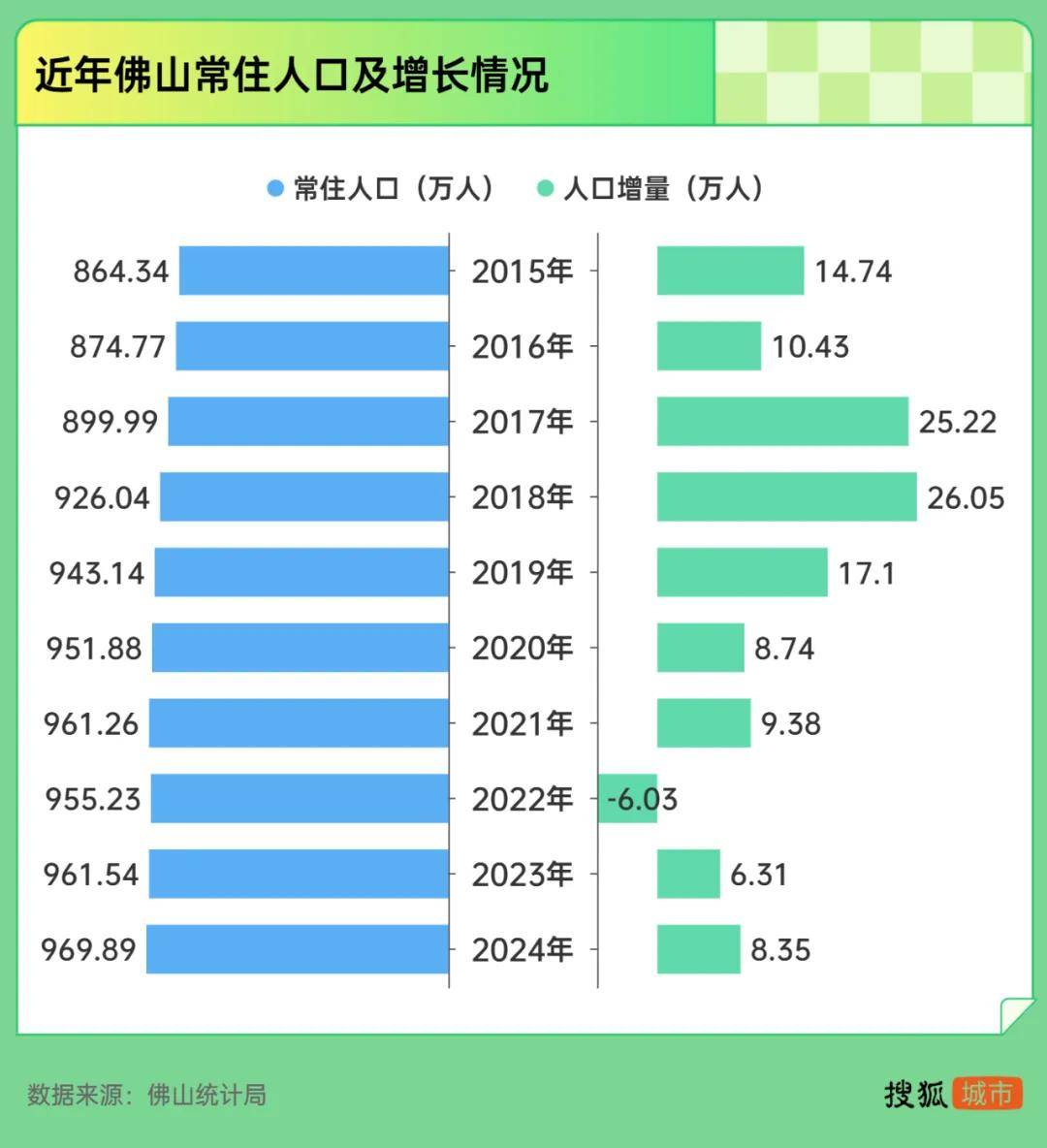
Core Viewpoint - The article discusses the population development plan of Foshan, aiming to reach a permanent population of 10.16 million by 2030, highlighting the challenges and strategies involved in achieving this goal [1][12]. Population Growth Analysis - As of 2024, Foshan's permanent population is 9.6989 million, with a gap of 301,100 to reach 10 million and 461,100 to reach 10.16 million by 2030. An average annual population increase of over 50,000 is needed to join the "10 million club," while over 76,000 is required to meet the 10.16 million target [2]. - Foshan's population growth has declined from first to fourth in Guangdong over the past four years, with significant growth in 2017 and 2018 due to relaxed housing policies attracting migrants [2][5]. Economic Performance - Foshan's GDP growth has lagged behind other major cities, ranking last among cities with a GDP over 1 trillion yuan in 2023. The city has faced negative growth in industrial output, investment, foreign trade, and consumption due to its traditional industrial structure heavily linked to real estate [7][8]. - In 2024, Foshan's traditional industries saw a decline in added value by 1.6%, with significant drops in construction materials and metal products. The total export value decreased by 20.5%, indicating a need for industrial transformation [8]. Industrial Transformation Initiatives - The "Recreate a New Foshan" initiative aims to upgrade traditional industries and develop emerging sectors, targeting the creation of "10+N" trillion-yuan industrial clusters. This includes existing clusters in manufacturing and plans for new clusters in strategic emerging industries [11][12]. - In the first three quarters of the year, Foshan signed 253 projects in emerging industries, with a total investment of 143.92 billion yuan, representing 62.5% of the total investment in manufacturing projects [11]. Future Outlook - If Foshan successfully transforms its industries and achieves a population of over 10 million by 2030, it will join Guangzhou, Shenzhen, and Dongguan as a key pillar in the Greater Bay Area, enhancing its economic and service sector growth [12].
黄文涛:重构增长动能——“十五五”视角下的中国经济展望
Sou Hu Cai Jing· 2025-11-20 08:38
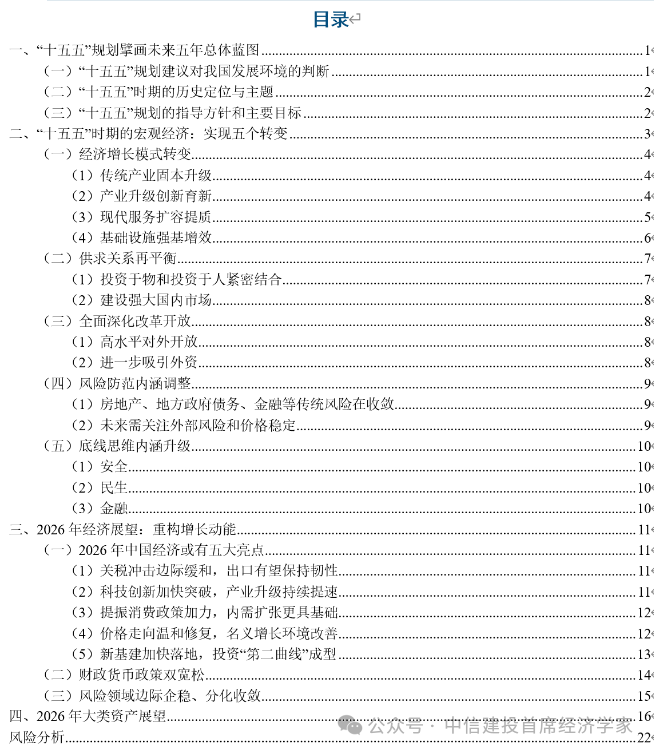
Core Viewpoints - The "15th Five-Year Plan" period will achieve five transformations in macroeconomic growth models, supply-demand relationships, reform and opening up, risk prevention, and bottom-line thinking [1][4]. Group 1: Economic Transformations - The economic growth model will shift towards high-quality development, emphasizing innovation and modernization of industries [29]. - Supply-demand relationships will be rebalanced, focusing on expanding domestic demand and integrating investments in both physical and human capital [42]. - Comprehensive deepening of reform and opening up will be prioritized, with a focus on high-level external openness and attracting foreign investment [48][49]. - Risk prevention will adjust its focus, with traditional risks in real estate and local government debt converging, while external risks and price stability will be monitored [51][53]. - The concept of bottom-line thinking will be upgraded, emphasizing safety, livelihood, and financial stability [56]. Group 2: 2026 Economic Outlook - The year 2026 is expected to be a year of transformation and upgrading, with a focus on boosting domestic demand and risk mitigation [2]. - Key highlights for 2026 include a gradual easing of tariff impacts, allowing exports to maintain resilience [58]. - Accelerated breakthroughs in technological innovation will drive industrial upgrades, enhancing overall productivity and corporate profitability [63]. - Policies aimed at boosting consumption will be strengthened, creating a more robust foundation for domestic demand [66]. - A moderate recovery in prices is anticipated, with CPI expected to rise above 0.5% and PPI narrowing its decline [69]. - The new infrastructure initiative will gain momentum, providing mid-term support for growth through significant project implementations [71].
深圳有多拼?121家深企不到十年即上市,科技新生代崛起
Nan Fang Du Shi Bao· 2025-11-20 05:59
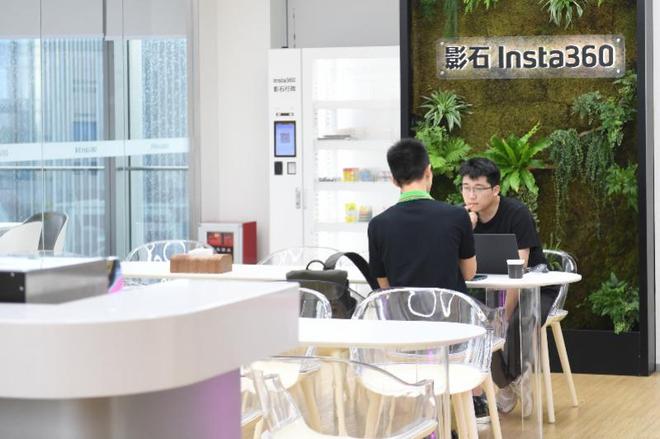
成立不足10年便登陆资本市场,这样的企业深圳已有121家。这批年轻的上市企业中,87家登陆A股、 34家挂牌港股,覆盖电子信息、半导体、新能源等多个高新领域。 从影石创新领跑全球,到中科飞测的技术攻坚;从江波龙市值跃阶,再到奥比中光赛道突围。这些年轻 企业的成长,始终与深圳的培育生态同频共振。 这121家"年轻上市公司"植根于"个转企、小升规、规做精、优上市、市做强"的全周期培育土壤,既是 深圳科创沃土结出的硕果,更是城市创新基因的见证。如今,他们正撑起深圳新质生产力发展的脊梁, 成为现代化产业体系建设的核心力量。 锚定硬核科技,高新集群撑起年轻上市军团 121家成立不到10年的上市企业,勾勒了深圳产业结构向高端化、智能化、绿色化转型的清晰轨迹。从 行业分布来看,这些企业高度集中于高新技术产业与战略性新兴产业,形成了以电子信息为核心,半导 体、智能硬件、新能源、人工智能等多点支撑的产业格局。 新华社记者 毛思倩 摄 新能源与前沿科技领域同样亮点纷呈。曼恩斯特、盛弘股份分别深耕锂电池应用与电力电子技术,成为 新能源产业变革的重要参与者;在人工智能与机器人赛道,奥比中光以70%的市场占有率主导中国服务 机器人视觉 ...