
家电

Search documents
雪祺电气(001387) - 2026年2月5日投资者关系活动记录表
2026-02-05 09:22
Group 1: Financial Performance - In the first three quarters of 2025, the company achieved operating revenue of 141,205.37 million CNY, a year-on-year increase of 0.52% [2] - The net profit attributable to shareholders for the same period was 4,639.62 million CNY, with a net profit of 6,164.40 million CNY after excluding share-based payment impacts, reflecting a growth of 12.96% year-on-year [2] - The net profit excluding non-recurring gains and losses was 5,822.06 million CNY, marking a year-on-year increase of 13.35% [3] Group 2: Development Plans - The company is focused on "large-capacity refrigerators + commercial cold chain" and aims to expand upstream in the industry chain and into global markets [4] - In 2024, a new subsidiary, Wuliang Intelligent, will be established, focusing on PCBA processing and electronic component support [4] - The company plans to enhance its core competitiveness through business synergy and will continue to expand its overseas market presence [4] Group 3: Shareholder Matters - The 5% shareholder, Anhui Zhidao Investment Co., Ltd., plans to reduce its holdings due to personal funding needs, but this is not expected to significantly impact the company's governance or ongoing operations [5] - The company emphasizes shareholder returns and plans to balance operational development with shareholder benefits [9] Group 4: Project Updates - The company has completed two fundraising projects: the "annual production of 1 million embedded refrigerators" and the "R&D center construction project" [7] - The "refrigerator component self-manufacturing capability enhancement project" has been changed to the "Electronic Technology Park and High-end Smart Home Industrial Park Project," which is currently progressing normally [8] Group 5: Market and Sales - The company’s overseas business revenue grew by approximately 20% in the first three quarters of 2025, with international sales accounting for about 45% of total revenue, up from 18.81% in 2022 [14] - The company is actively expanding into new markets and plans to continue product innovation to meet diverse customer needs globally [14] Group 6: Risk Management - To mitigate the impact of exchange rate fluctuations, the company has established a foreign exchange hedging management system and engages in various foreign exchange derivative transactions [15] Group 7: Long-term Value Management - The company aims to enhance its intrinsic value through innovation, product development, and effective communication with investors [16] - It plans to maintain a regular dividend mechanism to improve investor recognition and align market perception with the company's value [16]
“新国补”实施首月带动产销两旺
Zhong Guo Qi Che Bao Wang· 2026-02-05 09:08
Core Insights - The implementation of the "New National Subsidy" policy has led to a significant increase in consumer participation in the trade-in program, benefiting 16.13 million people in its first month [1] - The total sales from the trade-in program for automobiles, home appliances, digital, and smart products reached 92.56 billion yuan [1] - The combination of the "New National Subsidy" and the Spring Festival promotional offers has created a surge in consumer enthusiasm for upgrading products [1] Summary by Category - **Policy Implementation** - The 2026 consumer goods trade-in policy has been fully rolled out, contributing to a nationwide trend of product upgrades [1] - **Consumer Impact** - The trade-in program has positively impacted over 16 million consumers, indicating strong market engagement [1] - **Sales Performance** - Sales figures from the trade-in initiative reached 92.56 billion yuan, showcasing robust demand across various product categories [1]
中广电器年终营销大会:增量狙击聚合力,同心筑梦启新程
Sou Hu Cai Jing· 2026-02-05 08:36
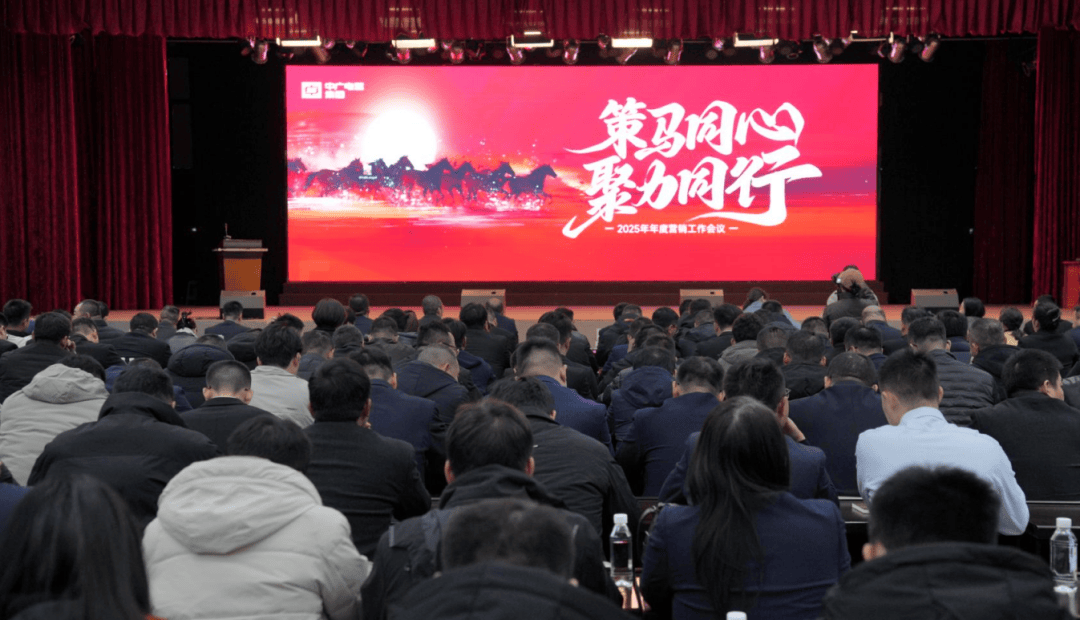
Core Insights - The annual marketing conference of Zhongguo Electric Group was held with the theme "Riding Together, Moving Forward Together," focusing on reviewing the achievements and challenges of 2025 and strategizing for 2026 [1] - Key executives, including Chairman Zhu Jianjun and Vice President Zhang Shuqian, delivered speeches to boost confidence and provide direction for the company's development in the new year [3] Group Performance and Strategy - Zhang Shufeng highlighted that from Q4 2025 to the present, the group's shipment volume and payment collection have exceeded expectations, indicating a positive market trend [5] - The company plans to enhance its core competitiveness through various dimensions, including product differentiation, channel incentives, service standardization, and team empowerment [5] - Zhang Shuqian emphasized the company's return to normal operations after overcoming challenges in 2025 and outlined a strategic collaboration with Philips Air Conditioning to focus on heat pump business over the next three years [7] Future Goals and Market Focus - Chairman Zhu Jianjun stated that the market fundamentals remain robust, with significant recovery momentum, and expressed gratitude to employees for their support [9] - The company aims to enhance product strength, brand power, and team capabilities, with a sales target set for the upcoming year [10] - The conference concluded with a unified commitment to tackle new market opportunities and challenges, fostering a collaborative environment for high-quality development in the green heat pump sector [10]

港股收评:恒指微涨0.14%、科指涨0.74%止步五连跌,大消费概念股全天强势,科网股午后回暖,有色金属及芯片股普跌
Jin Rong Jie· 2026-02-05 08:30
Market Overview - The Hong Kong stock market showed a rebound after an initial decline, with the Hang Seng Index closing up 0.14% at 26,885.24 points, the Hang Seng Tech Index up 0.74% at 5,406.13 points, and the China Enterprises Index up 0.50% at 9,093.34 points. Southbound funds recorded a net inflow of over 22 billion HKD [1] - Major technology stocks, including Xiaomi and Baidu, saw gains of nearly 3%, while Meituan rose nearly 2%. Other sectors such as restaurants, dairy, and beer stocks also performed well, indicating a recovery in industry operations [1] Company Highlights - Yurun Dairy (09858) rose nearly 5% after announcing a share placement to raise approximately 2.33 billion HKD (about 2.07 billion RMB), primarily from its major shareholder, Yili, increasing its stake from 33.93% to 36.07% [2] - Baidu Group (09888) increased by over 3% following the announcement of a new stock buyback plan with a maximum amount of 5 billion USD, effective until December 31, 2028, and the approval of a dividend policy expected to be announced in 2026 [2] - Xindong Company (02400) saw a rise of nearly 5% due to the launch of its AI game creation product "Taptap Maker," which is expected to lower development barriers in the gaming industry [2] - CloudTop New Horizon (01952) gained over 4% after signing an exclusive commercialization agreement for a new peptide drug, strengthening its position in the Asian market for kidney and autoimmune diseases [3] - Mao Geping (01318) rose over 5% as it climbed to the 4th position in the Douyin beauty rankings, indicating strong brand performance [3] - Horizon Robotics (09660) increased by over 3% after being recognized as a market leader in the ADAS sector with a 47.66% market share [4] Investment Insights - BNP Paribas maintains a positive outlook on the Chinese stock market, expecting no significant impact from the recent appreciation of the RMB on equity returns, valuations, and stock performance [6] - Huatai Securities emphasizes the importance of mid-term perspectives, suggesting that the current market sentiment is optimistic, with key drivers for the first quarter being liquidity improvement and enhanced profit expectations [7] - CCB International remains bullish on H-shares in the banking sector, noting that the average price-to-book ratio is at a historical low, making it attractive for long-term investors [8] - CICC forecasts a mild recovery in the consumer building materials sector, with leading companies expected to improve margins due to recent price increases in various sub-sectors [9]

高位成立难回本 东方品质消费一年基金不到5年亏6成
Zhong Guo Jing Ji Wang· 2026-02-05 08:09
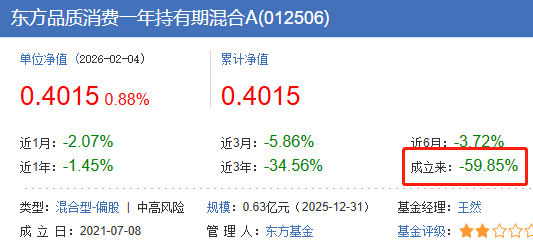
Core Insights - The article discusses the performance of actively managed equity funds established in 2021, revealing that over 50% of these funds are currently at a loss, with significant declines in value for many [1] Fund Performance Summary - A total of 667 actively managed equity funds established in 2021 were analyzed, with approximately 362 funds showing negative returns since inception, representing over 54% of the sample [1] - Among these, 86 funds have experienced declines of over 30%, and 34 funds have seen declines exceeding 40% [1] - The "Oriental Quality Consumption One-Year Holding Period Mixed Fund," established in July 2021, has recorded a cumulative decline of approximately 60.6%, making it one of the worst performers in the sample [1][3] Specific Fund Data - The "Oriental Quality Consumption One-Year Holding Period Mixed Fund A" has a current net value of 0.4015, with a cumulative return of -59.85% since its inception [2] - The fund's performance over the past year shows a decline of -1.45%, and over three years, it has decreased by -34.56% [2] - The fund's top ten holdings include major companies such as Yili Group, Midea Group, and Tencent Holdings, but it has consistently underperformed compared to its peers and the CSI 300 index [3][4] Comparative Performance Analysis - In 2025, the fund's annual return was -0.53%, while the average return for similar funds was 33.12%, and the CSI 300 index returned 17.66% [4] - The fund's ranking among peers has been poor, with significant drops in its position over the years, indicating a consistent underperformance [4][6]
东方证券:家电中高端卡位机会显现 推荐经营稳健龙头公司
智通财经网· 2026-02-05 07:40
Core Viewpoint - Home appliance companies are announcing price increases to pass on raw material costs downstream, leading to a more stable market position for leading companies, particularly those targeting mid-to-high-end consumers [1][2]. Group 1: Price Increases and Market Dynamics - The LME copper price increased by 32% from July 1, 2025, to January 30, 2026, prompting major brands like Hisense and Midea to raise prices on their air conditioning products by 5%-10% and over 6% respectively [1]. - Historical data shows that price increases do not significantly impact overall sales volume in the home appliance sector, which is more influenced by real estate policies, replacement cycles, and external subsidy policies [2]. - Following price hikes, the industry tends to consolidate, with leading companies gaining market share, as seen in the air conditioning and refrigerator sectors during previous raw material price increases [2]. Group 2: Opportunities in Mid-to-High-End Segments - The Producer Price Index (PPI) is rising, signaling positive trends for industrial companies and economic stabilization, which presents opportunities in mid-to-high-end segments such as 3D printing and AI glasses [3]. - Mid-to-high-end brands are less sensitive to price changes, allowing them to better pass on costs during periods of rising raw material prices, thus enhancing their market share [3].

中国智能家电市场趋势洞察
益普索· 2026-02-05 05:35
Investment Rating - The report does not explicitly provide an investment rating for the smart home appliance industry Core Insights - The Chinese home appliance market is transitioning from scale expansion to quality upgrades, with a focus on deep competition driven by changing demand structures [3] - The Z generation, accounting for nearly 20% of the population and contributing about 40% of consumption, is driving a shift in consumer logic towards emotional value, personalization, and aesthetic appeal [4] - Consumers are moving from "external display" to "internal experience," emphasizing the need for brands to innovate based on local user demands [5] - Companies must build a forward-looking insight system to identify future opportunities through macro and micro trend research [5] - The focus on sustainable growth and core competitiveness is essential, guiding product innovation, brand communication, and marketing strategies [6] Market Trends - The market is experiencing a "micro-segmentation" wave, moving away from universal products to innovative categories that match the evolving lifestyle and spatial needs of consumers [9][19] - The design philosophy is shifting from "highlighting presence" to "small and refined," maximizing functional value through technology stacking in limited spaces [10][62] - Aesthetic integration is becoming crucial, with appliances designed to blend seamlessly into home environments, transforming them into art pieces rather than mere functional devices [11][35] - The importance of aesthetics is highlighted, with 84% of consumers considering appearance when purchasing appliances, and 69% willing to pay more for high-quality designs [36] Consumer Behavior - Consumers are increasingly prioritizing emotional value and personalized experiences over mere functionality, with 88% considering functionality as a key purchasing factor [12][86] - The demand for "zero-maintenance" solutions is rising, with users seeking appliances that require minimal effort and provide seamless integration into their lives [13][99] - Health has become a core value in appliance offerings, with consumers looking for products that enhance both physical and mental well-being [15][111] Product Innovation - The trend towards multi-functional products is replacing standalone devices, with integrated solutions becoming mainstream [75][81] - The report emphasizes the need for appliances to provide not just utility but also emotional and sensory experiences, bridging the gap between product functionality and user lifestyle [86][92] - The shift towards proactive health management solutions is evident, with consumers willing to invest in appliances that offer comprehensive health benefits [113][116] Future Outlook - The report suggests that brands must adapt to the evolving consumer landscape by offering personalized, aesthetically pleasing, and health-oriented products [18][126] - The integration of AI and smart technology is expected to enhance user experiences, with a focus on seamless, intuitive interactions [135][140] - The future of home appliances lies in creating ecosystems that connect various devices, providing a cohesive and intelligent living environment [138][139]
“围剿”中国工厂
3 6 Ke· 2026-02-05 05:27
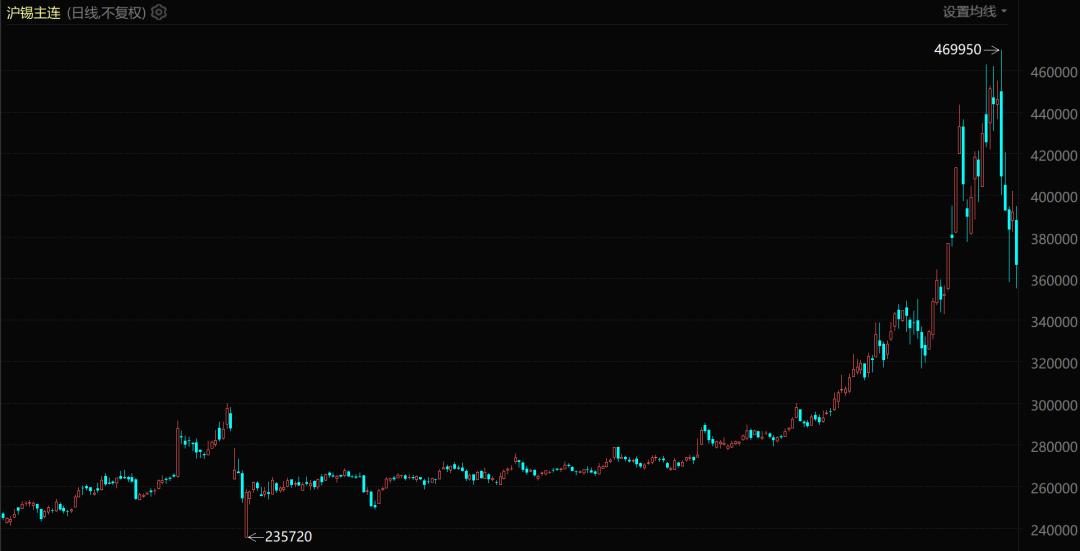
Core Viewpoint - The surge in metal prices, particularly copper, is significantly impacting downstream manufacturing industries in China, leading to squeezed profit margins for manufacturers while upstream companies benefit from rising raw material prices [3][5][9]. Group 1: Price Surge in Raw Materials - In 2025, copper prices increased by 34.34%, and the upward trend continued into 2026 [2]. - The price of lithium carbonate, essential for electric vehicle batteries, skyrocketed from 75,700 yuan per ton in January 2025 to 175,250 yuan per ton by January 23, 2026, marking a 131.4% increase [7]. - Tungsten concentrate prices surged to 520,000 yuan per ton, while tungsten carbide prices rose from approximately 300,000 yuan per ton to 1,200,000 yuan per ton [7]. Group 2: Impact on Manufacturing Industries - The home appliance industry is heavily affected by rising copper prices, with copper accounting for over 20% of the total cost of air conditioners. The copper price reached 105,020 yuan per ton in February 2026, up 42.25% from early 2025, leading to an 8.45% increase in air conditioner costs [10]. - The electric vehicle industry faces significant cost inflation, with UBS reporting that the cost increase for pure electric vehicles (BEVs) due to metal prices alone is approximately 5,600 yuan per vehicle, primarily driven by lithium price increases [12]. - The automotive industry's single vehicle gross profit was only 13,000 yuan in 2025, making it challenging for manufacturers to pass on rising costs to consumers amid fierce competition [13]. Group 3: Upstream vs. Downstream Dynamics - Upstream mining companies are experiencing explosive profit growth due to rising raw material prices, with Zijin Mining forecasting a net profit of 51 to 52 billion yuan for 2025, a year-on-year increase of 59% to 62% [8]. - In contrast, manufacturing companies are facing unprecedented cost pressures, leading to a decline in profit margins. The manufacturing sector's profit margin was only 4.7% in 2025, compared to 15.9% for the mining sector [21][19]. - The overall revenue of China's industrial enterprises has been increasing, but profit margins have been declining, indicating a challenging environment for manufacturers [19][21]. Group 4: Strategies for Survival and Growth - Many Chinese manufacturing companies are exploring ways to extend their business scope internationally, moving beyond low-end products to high-value items like electric vehicles and industrial robots [24]. - Some companies are actively integrating vertically by acquiring upstream resources, such as copper mines, to mitigate the impact of rising raw material prices [24]. - Technological advancements are also being pursued, with companies investing in alternatives to reduce dependency on expensive raw materials, such as the development of sodium-ion batteries [26].






家居消费再获政策力挺,2026年有哪些机会值得把握?
Sou Hu Cai Jing· 2026-02-05 04:44
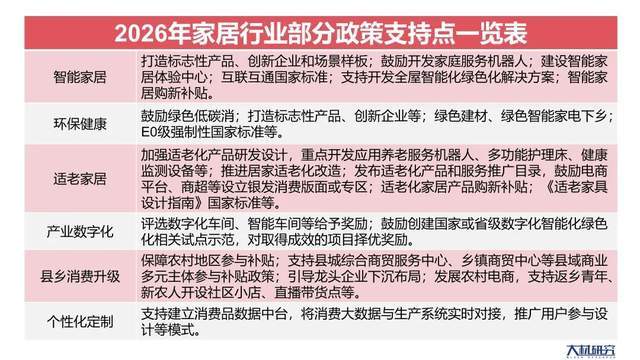
Core Viewpoint - The home furnishing industry is set to benefit from a series of supportive policies aimed at promoting consumption, particularly in the areas of smart home technology, green materials, and elderly care products, with significant financial backing from the government [1][4][5]. Policy Support Overview - The government plans to inject 500 billion yuan in special bonds to support the "Two New" initiatives in 2025, which will stimulate the home furnishing market [1]. - Retail sales of furniture are projected to reach 209.2 billion yuan in 2025, marking a 14.6% year-on-year increase [1]. - The home appliance replacement program has seen over 12.84 million units replaced in 2025, with kitchen and bathroom renovations exceeding 120 million items [1]. Key Focus Areas for 2026 - Smart Home: Development of flagship products, innovation in enterprises, and establishment of smart home experience centers are prioritized [2][3]. - Environmental Health: Promotion of green low-carbon consumption and the introduction of mandatory national standards for E0-level materials [4][9]. - Elderly Care: Emphasis on the development of elderly-friendly products and services, including home modifications and the introduction of elderly care robots [2][15]. - Digital Transformation: Support for digital workshops and smart manufacturing initiatives to enhance production efficiency [3][18]. - Rural Consumption Upgrade: Policies to facilitate rural participation in subsidy programs and support local commerce [2][18]. Market Opportunities - The shift towards E0-level materials will benefit companies that have already adapted to higher environmental standards, pushing the industry towards greener practices [9]. - The smart home sector is experiencing growth due to technological advancements and increased consumer acceptance, with a focus on products like smart beds and cleaning robots [11][12]. - The elderly care market is gaining traction, with numerous brands launching products tailored for elderly needs at the upcoming China International Furniture Fair [16][18]. Industry Trends - The 2026 China International Furniture Fair will align with government policies, showcasing innovations in smart home technology, green health, and digital solutions [8][19]. - Local policies are emerging to enhance the home furnishing ecosystem, including initiatives to promote smart home integration and support for renovation projects [7][18]. - The overall market is expected to see a convergence of policy support, digital transformation, and consumer demand, creating a favorable environment for growth [19].
金银巨震-风格切换-策略周中谈
2026-02-05 02:21
Summary of Key Points from Conference Call Records Industry Overview - The records primarily discuss the **gold and silver markets**, highlighting their volatility and the impact of macroeconomic factors on prices [1][2][3]. Core Insights and Arguments 1. **Volatility in Gold and Silver Prices**: The significant fluctuations in gold prices are attributed to excessive prior gains and the involvement of leveraged funds, which triggered a chain reaction of sell-offs when stop-loss mechanisms were activated. Silver, due to its dual financial and industrial nature, exhibited even greater volatility [1][2]. 2. **Weakening Dollar**: The decline of the US dollar is identified as a crucial factor driving up international metal prices, stemming from issues related to US fiscal discipline and global capital's distrust in the dollar system. Events like the Greenland purchase and rumors surrounding the Federal Reserve chairmanship have intensified expectations of dollar depreciation [1][3][4]. 3. **Potential Policies under Walsh**: The new Fed chair, Walsh, is expected to implement a combination of balance sheet reduction and interest rate cuts aimed at controlling inflation, reducing government debt burdens, and encouraging productive investment. This could lead to a stronger dollar in the long term, which may suppress resource prices but benefit high-growth sectors like AI [5][8]. 4. **European Capital Flows**: There has been a notable shift in European capital away from US assets towards European and emerging market assets, driven by US fiscal issues and geopolitical risks. This trend has weakened demand for US equities and bonds, further exacerbating dollar depreciation pressures [4][6]. 5. **Challenges of Balance Sheet Reduction**: The feasibility of the Fed's balance sheet reduction remains uncertain, as it involves managing a large volume of government debt while maintaining liquidity stability. Successful implementation could raise long-term interest rates, limit government debt expansion, and lead to a decline in risk assets [7][11]. 6. **Impact on High-Growth Sectors**: While the balance sheet reduction and interest rate cut policy may pose some negative impacts, the interest rate cuts are seen as beneficial for high-growth sectors like AI, as they lower financing costs and stimulate investment [8][9]. 7. **Market Reactions to New Fed Chair**: Historical data indicates that new Fed chairs often lead to increased market volatility, with significant declines in the S&P 500 index observed in the months following their appointment. This suggests potential risks for the market following Walsh's confirmation [12]. Other Important Insights 1. **ETF Sell-offs by National Team**: Recent concentrated sell-offs of broad-based ETFs by the national team resulted in a significant outflow of approximately 913.4 billion yuan, accounting for 60% of the total market value held at year-end. However, it is anticipated that further sell-offs will not occur, maintaining a relatively ample liquidity environment [15]. 2. **Investment Opportunities Post-Spring Festival**: The upcoming spring season is expected to present investment opportunities, particularly in technology growth sectors such as power equipment and AI, as well as in the financial sector, which has been under pressure from previous ETF sell-offs [16][18]. 3. **Sector-Specific Insights**: - The coal industry is affected by policy adjustments in Indonesia, while the food and beverage sector is under scrutiny due to low institutional positions and changing sales expectations during the Spring Festival [20]. - The long-term investment focus for 2026 is on technology and resource sectors, with a particular emphasis on TMT (AI, semiconductors) and resource commodities undergoing revaluation [21][22][23]. 4. **Strategic Value of Gold**: The current favorable outlook for gold is linked to the perceived decline of US power, suggesting that as long as Trump remains in power, gold prices may continue to rise [22]. 5. **New Valuations in Chemical and Machinery Sectors**: The chemical sector, especially large refining capacities, is seen as having strategic value that requires revaluation. Similarly, the machinery sector is expected to find new value positioning in the current environment [23].