
服务业

Search documents
加纳2025年外国投资增长382%
Shang Wu Bu Wang Zhan· 2025-10-18 15:55
Core Insights - Foreign direct investment (FDI) in Ghana has significantly rebounded, with inflows rising from $17.907 million in the first half of 2024 to $86.296 million by June 2025, marking a year-on-year increase of 382% [1] Investment Projects - In the first half of this year, a total of 76 new investment projects were registered across various sectors, including manufacturing, services, general trade, and agriculture [1] - The manufacturing sector accounted for the highest number of projects, with 32 registered, while general trade attracted the largest investment amount of $62.29 million, representing over 72% of total FDI during the same period [1] Source Countries - China remains the leading source of new projects in Ghana, contributing 22 projects, followed by India with 14 projects, Nigeria with 8, and the UAE and the UK with 4 each. The US registered 3 projects, with additional investors from Liberia, Mauritius, Singapore, and Turkey [1] Geographic Distribution - Most of the registered projects are concentrated in the Greater Accra Region and the Ashanti Region [1]
中国宏观经济向上结构性盘整拐点出现:核心CPI重返1%浅析
Sou Hu Cai Jing· 2025-10-18 05:52
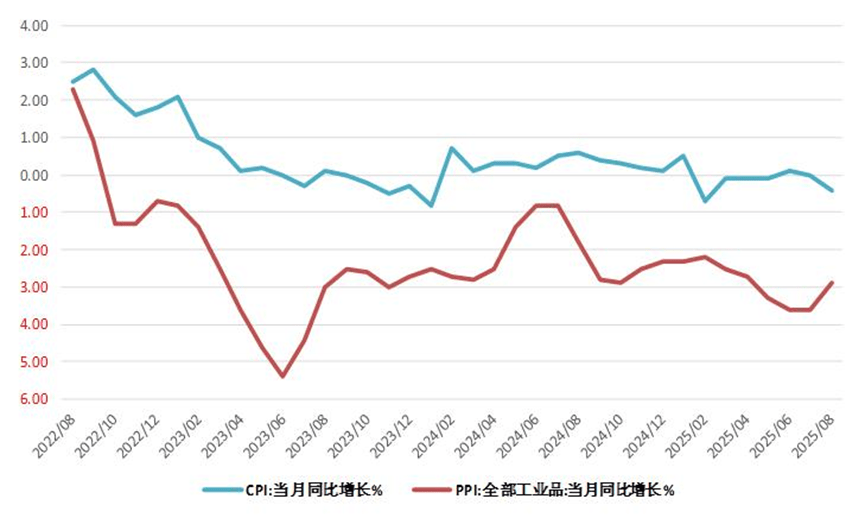
Core Insights - The report indicates that China's economy has passed its most difficult adjustment period and is entering a new phase characterized by structural optimization and demand-driven growth, rather than a traditional V-shaped recovery [2][30] - Key indicators such as core CPI returning to 1%, narrowing PPI-CPI gap, stabilization of the real estate market, and adjustments in the labor market signal this upward trend [2][30] Group 1: Core CPI and Consumer Demand - In September 2025, China's core CPI rose by 1.0% year-on-year, marking the first time it exceeded 1% in 19 months, with a continuous increase over five months [3][5] - The CPI's month-on-month increase of 0.1% indicates a positive shift in price momentum, while the year-on-year decline of 0.3% shows a narrowing of the downward pressure [3][5] - The rise in core CPI reflects a recovery in domestic demand and enhanced consumer market dynamics [3][5] Group 2: PPI-CPI Gap and Economic Resilience - The narrowing of the PPI-CPI gap is a critical indicator of improved economic efficiency, driven by both supply and demand factors [8][9] - Supply-side policies have stabilized prices in key industries, while demand-side recovery has led to a continuous rise in core CPI [8][9] - The structural changes in the economy, including the decline in food prices, have also contributed to the narrowing of the gap [8][9] Group 3: Consumption Upgrade as an Economic Engine - The recovery in core CPI is fundamentally linked to the release of consumer potential, with a clear trend of structural upgrades in consumption rather than a broad rebound [13][15] - Policies such as the "old-for-new" consumption initiative have significantly boosted retail sales in various sectors, indicating a robust market response [15][20] - The shift from survival-oriented consumption to development-oriented consumption is evident, with a decrease in the Engel coefficient from 33% in 2012 to 29.8% in 2024 [16][27] Group 4: Real Estate and Employment Market Stabilization - The real estate market is showing signs of bottoming out, with a significant reduction in the year-on-year decline of new home sales in early 2025 [17][18] - The employment market is also stabilizing, with the urban unemployment rate declining from its peak earlier in the year, indicating a search for new equilibrium [18][19] - Structural adjustments in the labor market are evident, with policies aimed at supporting employment for key demographics [19][20] Group 5: Macroeconomic Policy Effectiveness - China's proactive macroeconomic policies in 2025, including fiscal and monetary measures, have effectively supported economic stability and growth [20][21] - The implementation of the "old-for-new" policy has been enhanced by significant financial support, reflecting a strategic approach to stimulate consumption [20][21] - Future policy directions will focus on sustaining internal demand and fostering innovation, with an emphasis on coordinated macroeconomic policies [22][27]

遥米领先(深圳)科技有限公司成立 注册资本50万人民币
Sou Hu Cai Jing· 2025-10-16 05:48
Core Viewpoint - Recently, a new company named Yaomi Leading (Shenzhen) Technology Co., Ltd. was established, focusing on various sectors including electric bicycles, automotive parts, and technology services [1] Company Overview - The legal representative of the company is Lü Langbo, with a registered capital of 500,000 RMB [1] - The company engages in a wide range of activities, including research and development of hardware products, sales of electric bicycles, and manufacturing of assistive vehicles [1] Business Scope - General business activities include: - R&D of hardware products - Sales of electric bicycles and assistive vehicles - Manufacturing and wholesale of automotive parts and accessories - Sales of new energy vehicle components and batteries - Second-hand vehicle brokerage and automotive sales [1] - The company also provides various technical services, including consulting, development, and technology transfer [1] Licensing and Regulatory Compliance - The company has specific licensed activities, such as: - Production of road motor vehicles - Road freight transportation (excluding hazardous goods) - Operations are subject to approval from relevant authorities, and specific business activities will be conducted based on the necessary permits [1]
9月PMI数据点评:年内扩内需政策或仍值得期待
Bank of China Securities· 2025-10-16 01:29
Manufacturing Sector Insights - The manufacturing PMI for September is 49.8%, a month-on-month increase of 0.4 percentage points, indicating a slight recovery within the contraction zone[3] - The new orders index stands at 49.7%, up 0.2 percentage points from the previous month, while the new export orders index increased by 0.6 percentage points to 47.8%[3] - The production index rose to 51.9%, reflecting a month-on-month increase of 1.1 percentage points, indicating active manufacturing activities[3] Price and Demand Dynamics - The major raw material purchase price index remains high at 53.2%, despite a month-on-month decline of 0.1 percentage points[8] - The "anti-involution" policy has supported the prices in certain manufacturing sub-sectors, with the specialized equipment manufacturing price index rising by 2.2 percentage points[2] - However, the overall demand remains weak, as evidenced by declines in finished goods inventory and new orders in the electrical machinery and general equipment manufacturing sectors[2] Non-Manufacturing Sector Overview - The non-manufacturing PMI for September is 50.0%, down 0.3 percentage points, indicating stagnation at the threshold level[4] - The new orders index for non-manufacturing is at 46.0%, a decrease of 0.6 percentage points, while the new export orders index improved to 49.8%, up 1.0 percentage points[10] - The employment index in the non-manufacturing sector is at 45.0%, reflecting a contraction with a month-on-month decline of 0.6 percentage points[10] Sector-Specific Performance - The construction sector's PMI is at 49.3%, with a new orders index of 42.2%, indicating continued contraction despite a slight month-on-month improvement[14] - The service sector PMI is at 50.1%, showing a slight decline of 0.4 percentage points, but still within the expansion zone[14] - Notably, the metal products and automotive manufacturing sectors have shown significant month-on-month improvements in their economic performance[16]
透视“中国跨国100大”:制造和基建领风骚
Zheng Quan Shi Bao· 2025-10-13 18:19
Core Insights - The "Top 100 Chinese Multinational Companies" list represents China's integration into the global economy and highlights the achievements of Chinese multinational enterprises across various industries [1] - Analyzing the development and characteristics of these companies can provide valuable insights and benchmarks for other Chinese enterprises looking to expand internationally [1] Group 1: Technology Manufacturing - Technology manufacturing companies constitute over one-third of the "Top 100 Chinese Multinational Companies" list, primarily driven by private enterprises such as Huawei, Lenovo, Haier, TCL, and Midea [2] - These companies aim to capture larger markets by leveraging product technology and after-sales service, with a notable increase in solar and renewable energy firms like Sungrow and JinkoSolar recently joining the ranks [2] - State-owned enterprises in this category focus on heavy machinery and power manufacturing, with companies like China National Machinery, Weichai Power, and Shanghai Electric leading the way [2] - The internationalization strategies of these firms are diverse, including direct sales, cross-border mergers, and local production, allowing for flexible market entry [2] Group 2: Resource Production - Resource production companies also make up over one-third of the list, predominantly consisting of large state-owned enterprises, with few private firms [3] - These companies focus on energy and mineral resources, with significant investments in oil, electricity, steel, and non-ferrous metals, as well as agricultural firms like COFCO and Bright Food [3] - Their overseas operations are often limited to specific resource locations, resulting in a point-based distribution of investments, which are substantial but operate independently [3] Group 3: Infrastructure - Infrastructure companies account for just over ten percent of the list, primarily consisting of state-owned enterprises involved in transportation, power engineering, petrochemicals, and urban construction [3] - These firms support the internationalization of other Chinese companies by providing essential infrastructure projects [3] Group 4: Service Industry - The service industry is represented by traditional and emerging internet services, currently making up less than ten percent of the list [4] - Traditional service firms include the three major telecom operators and China Eastern Airlines, with limited international market expansion [4] - The internet service sector is rapidly growing, with companies like Tencent, Ant Group, and Didi joining the list, indicating a shift towards more internationalized operations [4] Group 5: International Logistics - The international logistics category includes two state-owned enterprises: China COSCO Shipping and China International Marine Containers, which are essential for supporting global supply chains [5] - These companies are recognized as "naturally internationalized" entities within traditional industries [5] Group 6: Comprehensive Holdings - Comprehensive holding companies exhibit unstable rankings on the list, influenced by the addition or removal of overseas subsidiaries [5] - The collective representation of Chinese multinational enterprises on the global stage emphasizes China's identity as a manufacturing powerhouse and infrastructure expert [5] - While traditional service industries lag in internationalization, emerging internet service firms are rapidly catching up [5]
【企业风景】 透视“中国跨国100大”:制造和基建领风骚
Zheng Quan Shi Bao· 2025-10-13 18:07
Core Insights - The "Top 100 Chinese Multinational Companies" list represents China's integration into the global economy and highlights the achievements of Chinese multinational enterprises [1] - Analyzing the development and characteristics of these companies can provide valuable insights and benchmarks for other Chinese enterprises looking to expand internationally [1] Group 1: Technology Manufacturing - Technology manufacturing companies constitute over one-third of the "Top 100" list, primarily driven by private enterprises like Huawei, Lenovo, and Haier [2] - These companies aim to capture larger markets by leveraging product technology and after-sales service, with a notable increase in solar and new energy firms joining the ranks [2] - The internationalization strategies of these firms are diverse, including direct sales, cross-border mergers, and local production, allowing for flexible market entry [2] Group 2: Resource Production - Resource production companies also make up over one-third of the list, predominantly consisting of large state-owned enterprises [3] - These companies focus on energy and mineral resources, with their overseas operations being more localized and independent compared to technology manufacturers [3] - The investment and operational scale at each overseas site are significant, but the overall global integration is lower [3] Group 3: Infrastructure - Infrastructure companies account for just over 10% of the list and are primarily state-owned, providing essential support for other Chinese enterprises venturing abroad [3] - Their operations include transportation, power engineering, and urban construction, acting as international partners for technology and resource companies [3] Group 4: Service Industry - The service industry, including traditional and emerging internet services, currently represents less than 10% of the list [4] - Traditional service firms are limited in their international expansion, while internet companies are increasingly becoming a new force in internationalization, with notable entries in recent years [4] - Internet firms tend to pursue international growth through cross-border mergers and equity investments, although their overseas revenue remains low compared to their foreign assets [5] Group 5: International Logistics - International logistics companies, such as China COSCO Shipping and China International Marine Containers, are also represented on the list, highlighting their role as inherently international enterprises [5] - These firms support China's global supply chain and have significant operational capabilities, including shipping and port operations [5] Group 6: Comprehensive Holdings - Comprehensive holding companies show fluctuating rankings on the list, influenced by changes in their overseas holdings [5] - The collective representation of these multinational enterprises underscores China's image as a manufacturing powerhouse and infrastructure expert on the global stage [5]
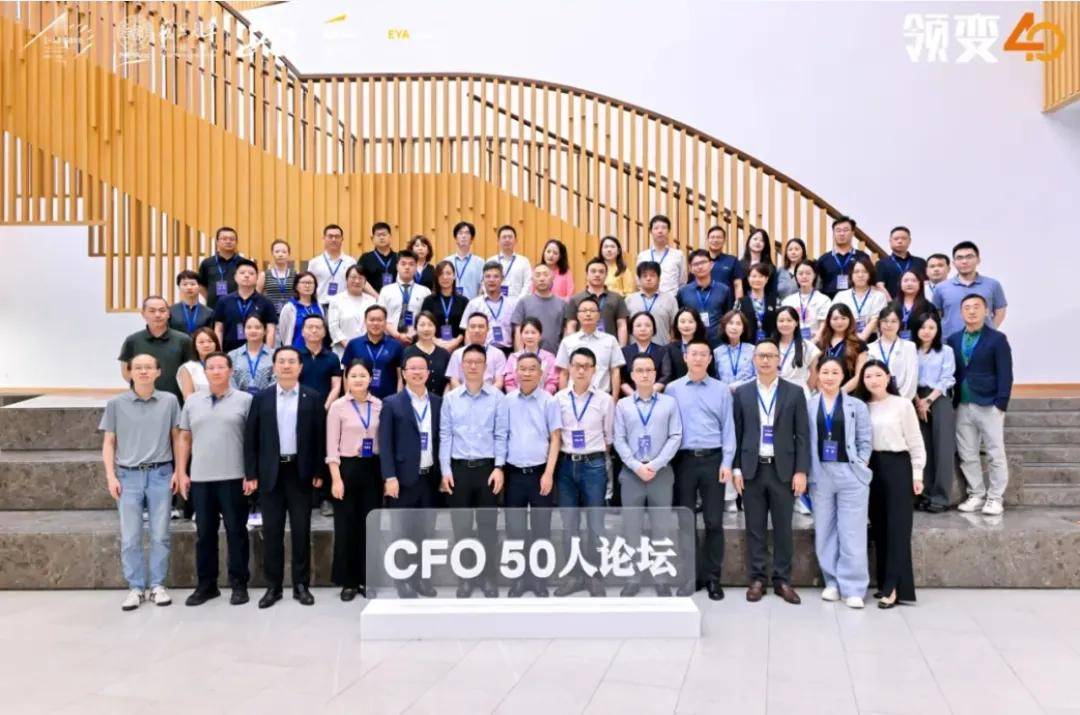
聚焦“变革与转型”,顶尖CFO齐聚探讨“韧性增长” CFO 50人+论坛(第二季)回顾
Sou Hu Cai Jing· 2025-10-13 10:08
Core Insights - The forum "CFO 50+ Forum" focused on exploring resilient growth strategies amid global economic turbulence and industrial restructuring [1] - Keynote speaker Li Zhiguo emphasized the dual-track development of advanced manufacturing and high-level services in China's economic transformation towards becoming a moderately developed country by 2035 [3][5] Group 1: Industry Transformation and Corporate Strategy - Li Zhiguo identified three major labels for future industrial development: technology, health, and green initiatives [5] - Chinese companies' global competitiveness is defined by market control, resource allocation, talent integration, and cultural influence [5] - The "outbound strategy 3.0" for Chinese enterprises emphasizes a shift towards "demand thinking" and "high-end value output," focusing on customer-centric approaches [7] Group 2: AI Integration in Finance - The "2025 AI Application Status Report" highlighted the widespread adoption of AI in financial processes, particularly in operational tasks like invoice recognition and financial reporting [11] - Despite high acceptance of AI tools among finance professionals, there is a noted lack of AI penetration in strategic forecasting and complex decision-making [11] - Future trends indicate a deepening integration of AI with finance, moving from automation to intelligence, and emphasizing human-machine collaboration [13] Group 3: CFO Role Evolution - CFOs are transitioning from traditional roles focused on control to becoming growth drivers, actively participating in business decisions like pricing and market expansion [26] - The need for CFOs to design flexible financial plans in response to macroeconomic scenarios was emphasized, particularly in managing risks related to currency fluctuations and geopolitical tensions [26] - The forum underscored the importance of CFOs in navigating uncertainties and leveraging technology to enhance financial management [30] Group 4: Financial Strategies for Global Expansion - The discussion highlighted the necessity for companies to utilize financial tools to build robust industry ecosystems and manage cash flow effectively [18][20] - CFOs are encouraged to establish a "global financial hub" for centralized data management and to adopt a dual approach of localization and standardization in financial structures [31] - The emphasis on creating agile and sustainable global financial systems was reiterated as a key strategy for navigating the complexities of international markets [30]
万业企业:三林万业累计质押6336万股股份
Mei Ri Jing Ji Xin Wen· 2025-10-13 09:48
每经AI快讯,万业企业(SH 600641,收盘价:23.25元)10月13日晚间发布公告称,截至2025年10月10 日,上海万业企业股份有限公司第二大股东三林万业(上海)企业集团有限公司持有公司约6662万股股 份,占公司总股本的7.16%。截至本公告披露日,三林万业累计质押6336万股股份,占其持有公司股份 总数的95.11%,占公司总股本的6.81%。 2024年1至12月份,万业企业的营业收入构成为:房地产业占比48.34%,制造业占比41.44%,服务业占 比8.72%,其他业务占比1.49%。 截至发稿,万业企业市值为216亿元。 每经头条(nbdtoutiao)——AI技术滥用调查:明星可被"一键换装","擦边"内容成流量密码,技术防 线为何形同虚设? (记者 曾健辉) ...

悦达投资:10月13日召开董事会会议
Mei Ri Jing Ji Xin Wen· 2025-10-13 09:30
Core Viewpoint - Yueda Investment (SH 600805) announced a board meeting held on October 13, 2025, to review proposals for modifying certain governance systems [1] Financial Performance - For the first half of 2025, Yueda Investment's revenue composition was as follows: manufacturing accounted for 73.79%, services for 9.51%, other businesses for 7.51%, electricity and heat production and supply for 7.43%, and commodity circulation for 1.76% [1] Market Position - As of the report, Yueda Investment's market capitalization stood at 4.4 billion yuan [1]

东莞举办2025年高校毕业生招聘会 提供优质岗位近600个 吸引超2000人现场求职
Nan Fang Ri Bao Wang Luo Ban· 2025-10-13 08:32
Group 1 - The event "Million Talents Gathering in South Guangdong: Dongguan Employment and Youth Creation" was held on October 11, attracting over 2000 attendees and resulting in 2561 resumes submitted and 538 preliminary employment intentions reached [1] - More than 150 local well-known companies participated in the recruitment fair, including Sanyou Lianzhong Group and Jiu Long Paper, offering nearly 600 quality job positions across various key industries in Dongguan, with a demand for over 2500 candidates [1] - High-paying technical positions such as robot algorithm engineers and data analysts can offer annual salaries up to 420,000 yuan [1] Group 2 - Dazhu Yuedong Laser Group presented five positions, with the highest comprehensive monthly salary reaching 8000 yuan, indicating strong demand for technical, research, and sales talents in the equipment manufacturing sector [2] - A new employment model job area was established at the event, allowing graduates to choose flexible employment roles such as live stream hosts and freelance designers, with support for registering for flexible employment to access government subsidies [2] - The Dongguan Human Resources and Social Security Bureau plans to continue supporting unemployed graduates through a series of services, including policy briefings, career guidance, job recommendations, and skills training, ensuring ongoing recruitment activities [2]