
纺织

Search documents
烟台市外贸进出口由2020年3243.1亿元增至2024年4723.4亿元
Da Zhong Ri Bao· 2025-09-19 04:16
Core Insights - Yantai's foreign trade import and export increased from 324.31 billion yuan in 2020 to 472.34 billion yuan in 2024, with actual foreign investment exceeding 9.5 billion USD [1] - The city has implemented various policies to enhance its open economy, including measures for foreign trade stability and integrated investment [2] - Yantai has focused on attracting major projects and enhancing its global investment network, resulting in significant foreign investment and project approvals [3] - The development of industrial parks has been prioritized, with several parks recognized for their unique characteristics and contributions to the local economy [4] Group 1: Foreign Trade and Investment - Yantai's total foreign trade import and export is projected to reach 472.34 billion yuan by 2024, up from 324.31 billion yuan in 2020, with a growth of 18.2% in the first seven months of this year [1] - Actual foreign investment in Yantai reached 6.86 million USD in the first seven months of this year, ranking third in the province [1] - The city has cumulatively attracted 72.7 million USD in foreign investment and 13.7 million USD in outbound investment, reflecting a growth of 6.7% [1] Group 2: Policy and Structural Reforms - Yantai has established a comprehensive open economy framework, integrating internal and external trade, investment, and resource sharing [2] - The city has introduced seven policy measures aimed at stabilizing foreign trade and optimizing its structure, with over 200 policy trials and 2.25 billion yuan in funding secured during the "14th Five-Year Plan" period [2] - The implementation of the "Double Hundred Project" has supported the growth of key enterprises, with an average of over 1,000 new foreign trade companies established annually [2] Group 3: Investment Attraction - Yantai has focused on 16 key industrial chains to attract significant projects, hosting over 30 major investment activities annually [3] - The city has signed agreements with 132 business associations globally, enhancing its international investment network [3] - A total of 366 foreign enterprises have expanded their investments in Yantai, with a contractual foreign investment of 4.93 billion USD during the "14th Five-Year Plan" [3] Group 4: Industrial Park Development - Yantai has prioritized the development of industrial parks, with five parks recognized for their unique characteristics, leading the province in this regard [4] - The Yantai Development Zone ranked eighth nationally in comprehensive development performance evaluation for 2024 [4] - The establishment of the "Blue Granary" marine economic development zone has set a precedent for national marine construction [4]
印尼混乱经济学:暴动、怒火与热钱
虎嗅APP· 2025-09-18 10:27
Core Viewpoint - Indonesia, as the largest economy in Southeast Asia, faces significant social unrest due to wealth disparity and political centralization, which has led to violent protests and public dissatisfaction with government policies [5][10][12]. Group 1: Economic Overview - Indonesia has a population of 283 million and is the fourth most populous country globally, with a GDP per capita of approximately $4,940.55 in 2023, indicating a moderately high-income level [6][7]. - The country attracted $220.5 billion in foreign investment in 2023, with Singapore and China being the top two sources. Notably, a significant portion of Singapore's investments is from Chinese companies [7][8]. - The Indonesian government aims for an annual GDP growth rate of 8%, although the current rate is around 5% [7]. Group 2: Social Issues - The wealth gap in Indonesia is stark, with the richest 10% controlling 30% to 35% of the national income, while the poorest 40% hold only about 15% [10][12]. - The poverty rate in Indonesia is reported at 68.3% based on a daily consumption threshold, highlighting the significant portion of the population living in poverty [10][12]. - Corruption and centralization of power have historically exacerbated inequality, with the political system being described as one of the most centralized globally [11][12]. Group 3: Trade and Investment - Indonesia's trade history has shaped its culture, with a long-standing tradition of hospitality rooted in commercial interactions [14][15]. - Chinese investments have significantly impacted Indonesia's economy, particularly in sectors like nickel processing and infrastructure development, including the Jakarta-Bandung high-speed rail project [16][17]. - The Indonesian government has implemented reforms to improve the business environment, such as the Omnibus Law, which simplifies regulations and offers tax incentives [18]. Group 4: Future Outlook - The potential for a more developed Indonesia hinges on balancing social unrest with economic growth, as the country navigates its path towards becoming the fifth-largest economy by 2045 [7][18]. - The presence of Chinese enterprises in Indonesia is seen as both a risk and an opportunity, with their investments playing a crucial role in the country's development trajectory [18].


《中国—东盟工业部长圆桌会议南宁倡议》聚焦区域工业合作
Zhong Guo Xin Wen Wang· 2025-09-17 20:30
Group 1 - The China-ASEAN Industrial Ministers' Roundtable Meeting was held in Nanning, Guangxi, focusing on enhancing industrial cooperation between China and ASEAN countries [1] - The meeting resulted in the adoption of the "Nanning Initiative," which outlines eleven specific cooperation directions to invigorate regional industrial collaboration [1] - Key areas of cooperation include strengthening industrial policy dialogue, building regional innovation ecosystems, and promoting digital, green, and intelligent transformations in industries [1] Group 2 - The Chinese Minister of Industry and Information Technology, Li Lecheng, expressed China's commitment to higher levels of openness and collaboration with ASEAN countries to enhance industrial cooperation [2] - The meeting featured a promotional event for emerging industries, with nearly 300 representatives from governments, think tanks, and enterprises discussing sectors like new energy vehicles, new materials, and artificial intelligence [2] - China aims to support ASEAN enterprises in participating deeply in global supply chains and to advance the "AI+" initiative for cross-border data flow [2]
Europe textile sector seeks urgent action against ultra-fast fashion
Yahoo Finance· 2025-09-17 11:06
The declaration against fast fashion by European textile and clothing federations was signed at the Première Vision trade event in Villepinte, France. The organisations are calling for a tax on small-parcel deliveries and to end the current exemption that waives customs duties on goods under €150 ($177.70). According to the federations, there is a need for stronger regulation and sanctions as provided by the Digital Services Act (DSA) and Digital Markets Act (DMA). Their stance is that e-commerce compani ...
中企出海求新,金融叙事改写
3 6 Ke· 2025-09-17 09:32
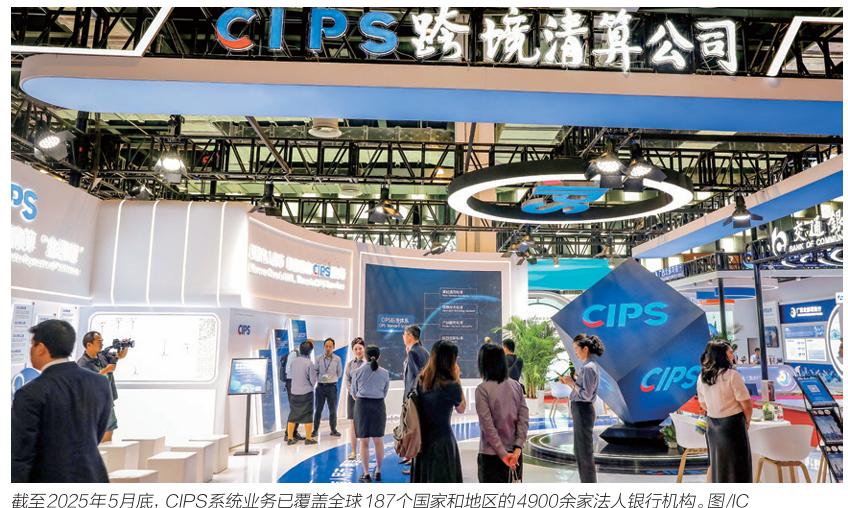
Core Viewpoint - The article discusses the increasing importance and benefits of cross-border RMB settlement for Chinese foreign trade enterprises, highlighting the resilience of China's foreign trade amidst external pressures and the evolving landscape of cross-border financial services. Group 1: Cross-Border RMB Settlement - A Zhejiang foreign trade enterprise found that using cross-border RMB settlement significantly reduced exchange rate risks and improved operational efficiency compared to traditional USD settlements [1] - The People's Bank of China has been actively promoting the convenience of cross-border RMB settlement, enhancing cooperation with foreign central banks [1][9] - The RMB's global payment function has strengthened, with its internationalization level steadily increasing, supported by policy and market forces [3][12] Group 2: Financial Institutions' Role - Chinese financial institutions are evolving from single service providers to ecosystem hubs, responding to the diverse needs of enterprises in cross-border financial services [2][15] - The establishment of the Cross-Border Interbank Payment System (CIPS) has optimized payment pathways, reducing transaction times and costs [6][10] - Banks are increasingly offering tailored financial solutions, such as currency risk hedging and supply chain financing, to meet the specific needs of enterprises [16][19] Group 3: Market Trends and Challenges - The shift in trade flows towards Southeast Asia and other emerging markets has led to a growing demand for multi-currency settlement options among foreign trade enterprises [9][10] - Despite the progress, challenges remain, including the need for improved financial infrastructure in certain regions and the complexities of international regulations [22][32] - The competitive landscape in cross-border financial services is intensifying, with institutions needing to innovate to maintain a competitive edge [35] Group 4: Future Outlook - The article emphasizes the necessity for banks to enhance their cross-border financial ecosystems and to integrate data systems with customs, tax authorities, and logistics providers for better service delivery [34] - There is a call for more supportive policies to facilitate cross-border financing and to lower barriers for small and medium-sized enterprises in accessing financial products [35]

关税突发!美印重启谈判!
证券时报· 2025-09-17 05:20
Core Viewpoint - The trade relationship between the United States and India is showing signs of thawing as new rounds of bilateral trade agreement negotiations have been restarted, although India remains cautiously optimistic about the outcomes [2][4][6]. Group 1: Trade Negotiations - On September 16, a new round of bilateral trade agreement negotiations was initiated in New Delhi, marking a positive signal in the previously strained relationship [4]. - The U.S. delegation, led by Brendan Lynch, aims to engage with Indian officials to restart trade discussions [4]. - The negotiations were originally scheduled for late August but were postponed due to the imposition of high tariffs on Indian goods by the U.S. [5]. Group 2: Tariff Impact - The U.S. has imposed a total tariff rate of 50% on Indian imports, significantly affecting trade dynamics [5][10]. - In August, India's exports to the U.S. dropped from $8.01 billion in July to $6.86 billion, indicating the immediate impact of the tariffs [11]. - Overall, India's total exports fell to $35.1 billion in August, the lowest in nine months, with a trade deficit narrowing to $26.49 billion [12]. Group 3: Economic Projections - Analysts predict that the U.S. tariff policy could result in a loss of approximately $8 billion in exports for India, particularly affecting sectors like gems, jewelry, textiles, and chemicals [14]. - A think tank estimates that India's exports to the U.S. could decline by over 40% by 2026, potentially dropping to around $50 billion [13]. - The tariffs are expected to threaten hundreds of thousands of jobs in key export sectors, including textiles and jewelry [13].

突传缓和信号!美印重启贸易谈判
Zheng Quan Shi Bao· 2025-09-16 23:53
Group 1 - The US and India have resumed bilateral trade agreement negotiations on September 16, signaling a potential thaw in their previously tense trade relations [1][2] - The US has imposed a total tariff rate of 50% on Indian imports, significantly higher than tariffs on other Asia-Pacific countries, which has led to a decline in India's exports to the US [2][4] - India's exports to the US fell from $8.01 billion in July to $6.86 billion in August, indicating the immediate impact of the US tariff policy [4][5] Group 2 - The overall export value of Indian goods decreased from $37.24 billion in July to $35.1 billion in August, marking a nine-month low [5] - The US is India's largest trading partner, with a total trade value of $78.35 billion in the first half of 2025, where India exported $56.3 billion and imported approximately $22 billion [5] - The imposition of high tariffs is expected to reduce India's exports to the US by over 40% by 2026, potentially dropping to around $50 billion [5][6] Group 3 - Key export sectors for India include textiles, jewelry, and gemstones, which are likely to face significant declines in export volumes due to the US tariffs [6] - Analysts estimate that the US tariff policy could cost the Indian economy billions of dollars, with approximately $8 billion worth of exports at risk [6] - The punitive trade measures by the US may negatively affect the stability of US-India relations, potentially inciting nationalist sentiments in India, which could pressure the Indian government to respond to the tariffs [6]
砥砺奋进七十载 天山南北谱华章|坚持以人民为中心推进新疆各项事业发展——完整准确全面贯彻新时代党的治疆方略之富民兴疆篇
Xin Hua She· 2025-09-16 13:57
Core Viewpoint - The article emphasizes the importance of a people-centered approach in promoting development in Xinjiang, highlighting the significant improvements in the quality of life for various ethnic groups in the region since the 18th National Congress of the Communist Party of China [2][8]. Economic Development - Xinjiang has accelerated high-quality economic development by leveraging its resource advantages, with a focus on industries such as oil and gas production, clean coal utilization, and food processing, contributing positively to national energy and food security [3][4]. - The industrial output value in the Xinjiang Economic and Technological Development Zone is expected to exceed 100 billion yuan in 2024, creating over 20,000 new jobs [3]. Employment and Income - The cotton and textile industry has become a crucial livelihood sector in Xinjiang, with an average monthly salary of 3,500 yuan for skilled workers [4]. - By 2024, the total employment in Xinjiang is projected to reach 13.91 million, an increase of 1.45 million since 2012, with urban residents' per capita disposable income at 42,820 yuan and rural residents at 19,427 yuan, showing significant growth [4]. Infrastructure and Public Services - Major infrastructure projects have been completed, including the 825-kilometer railway from Hotan to Ruoqiang, significantly reducing travel distances for local residents [5]. - Over 75% of Xinjiang's fiscal spending is dedicated to improving public welfare, addressing issues related to healthcare, education, and housing [5]. Environmental Improvements - The government has prioritized ecological improvements, with a target of achieving 90% of good air quality days in the Tianshan North Slope urban cluster by 2024, alongside significant reductions in PM2.5 and PM10 concentrations [6]. Regional Coordination and Development - The development gap between southern and northern Xinjiang is narrowing, with infrastructure projects like the 750 kV power transmission project enhancing connectivity [7]. - The establishment of the Xinjiang Free Trade Zone in Kashgar has led to the registration of 1,168 new enterprises, contributing to a growing industrial system [7]. Overall Progress - Xinjiang is characterized by stability, harmony, and prosperity, with various ethnic groups working together to share development benefits and build a better community [8].
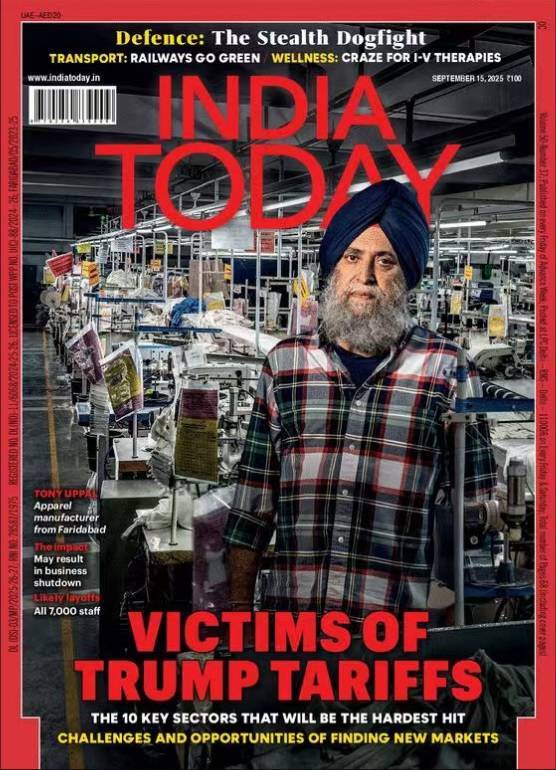
参考封面 | 美关税将重创印度经济
Sou Hu Cai Jing· 2025-09-16 09:41
Core Viewpoint - The U.S. government has imposed a 50% tariff on goods imported from India, significantly impacting the Indian economy and its exporters [1] Group 1: Economic Impact - The tariff increase places India in the highest tax rate bracket alongside Brazil, making Indian goods approximately 30% more expensive overnight [1] - Exports worth around 420 billion rupees, including gems, engineering products, textiles, seafood, and leather, are affected, potentially reducing India's economic growth by 0.5 to 1 percentage points [1] - A large number of workers are at risk of unemployment due to the tariff [1] Group 2: Industry Response - Exporters are forced to lower prices or extend credit, leading to tight cash flow, particularly affecting small and medium-sized enterprises [1] - The industry is calling for the Indian government to extend interest subsidies, restart market development funds, and accelerate free trade negotiations with countries like Japan, the UK, Australia, and the EU [1] Group 3: Economic Recommendations - Economists suggest short-term subsidies to maintain orders, mid-term strategies to diversify markets, and long-term reforms in land and labor to enhance competitiveness [1]
盛泰集团:9月16日召开董事会会议
Mei Ri Jing Ji Xin Wen· 2025-09-16 08:50
Company Overview - Sheng Tai Group (SH 605138) announced its third board meeting on September 16, 2025, held in a hybrid format [1] - The company has a current market capitalization of 4.5 billion yuan [1] Revenue Composition - For the year 2024, the revenue composition of Sheng Tai Group is as follows: - Apparel industry: 62.05% - Textile industry: 25.88% - Other businesses: 7.1% - Cotton spinning industry: 4.62% - Other: 0.34% [1]
