
纺织

Search documents
东盟首次跃居浙江宁波第二大贸易伙伴
Zhong Guo Xin Wen Wang· 2025-09-15 19:52
中新社宁波9月15日电 (张斌)宁波海关15日发布消息称,今年1至8月,宁波市与东盟进出口贸易总额 1396.2亿元(人民币,下同),同比增长16.6%,东盟首次跃居宁波市第二大贸易伙伴。 随着《区域全面经济伙伴关系协定》(RCEP)深入实施,宁波凭借港口优势和完善的汽车产业链,正成 为东盟地区汽车零配件进入中国市场的首选通道。同时,宁波及周边地区发达的制造业基础,特别是纺 织、电子等产业体系,也与东盟国家产业形成互补。 作为宁波开拓东盟市场的企业代表之一,宁波艾思科汽车音响通讯有限公司同泰国、越南等东盟市场已 经建立稳定经贸往来。企业负责人叶丹表示,东南亚汽车零配件产业已较为成熟,产品的性价比也较 高。 宁波新乐电器有限公司生产的全自动洗衣机等产品,正不断销往马来西亚等东盟国家。"我们今年对马 来西亚等东盟国家出口近1.6亿元,同比增长了31.9%。"企业业务负责人介绍说。 "东盟跃升为宁波第二大贸易伙伴,反映了区域产业链供应链深度融合的新趋势。"宁波海关所属海曙海 关副关长张家幸表示,随着RCEP红利持续释放和区域经济一体化深入推进,宁波与东盟经贸合作有望 再上新台阶。(完) (文章来源:中国新闻网) ...
5G+工业互联网,滨州联通助力企业数字化蝶变
Qi Lu Wan Bao· 2025-09-15 10:22
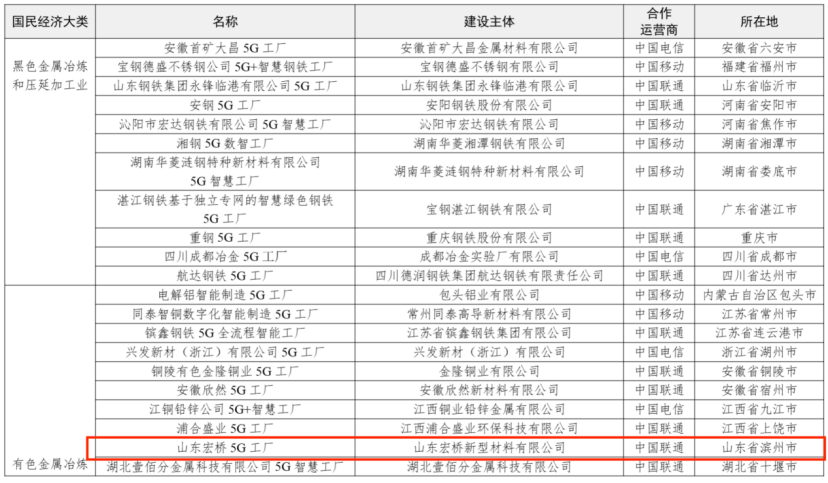
Group 1 - The Ministry of Industry and Information Technology announced the "2025 5G Factory Directory," featuring 560 projects across 48 industries, highlighting the digital transformation of companies like Yuyue Home Textiles, Binyue Textiles, and Hongqiao New Materials in Binzhou [1][3] - Binzhou Unicom has successfully collaborated with these companies to implement "5G + Industrial Internet" integration, showcasing significant achievements in digital transformation [1][3] - The selected companies demonstrate strong development potential and deep industry roots, benefiting from tailored solutions that leverage 5G, IoT, big data, and edge computing technologies [1][3] Group 2 - Binzhou Unicom has invested in 5G network construction, achieving continuous coverage in towns and over 93% coverage in administrative villages, laying a solid foundation for the application of 5G technology in the industrial sector [3] - In 2024, Binzhou Unicom plans to expand GPU computing power to meet the increasing computational demands of industrial enterprises, enhancing the capabilities of the "Unicom Cloud (Binzhou) Computing Center" [3] - The company has formed a team of over 50 digital specialists to study industry-specific production characteristics and digital needs, providing consulting and solutions for digital transformation [3] Group 3 - Binzhou Unicom aims to deepen the integration of "5G + Industrial Internet" and promote the digital and intelligent transformation of more enterprises, contributing to high-quality economic development in Binzhou [3]

中国宏观周报(2025年9月第2周)-20250915
Ping An Securities· 2025-09-15 07:33
Industrial Production - China's industrial production shows marginal stabilization with daily average pig iron output and cement clinker capacity utilization rates increasing[2] - The operating rates for asphalt and most chemical products have rebounded, while only steel and construction materials show slight adjustments in output and apparent demand[2] - The textile and polyester operating rates have seasonally increased, along with the operating rates for both radial and bias tires[2] Real Estate - New home sales in 30 major cities increased by 7.2% year-on-year as of September 12, with a 5.7 percentage point increase from the previous week[2] - The new home sales area in these cities has shown a 9.8% year-on-year growth since September, reversing from negative growth last month[2] - The listing price index for second-hand homes decreased by 0.59% month-on-month as of September 1[2] Domestic Demand - Movie box office revenue continues to outperform last year's figures, with a 41.0% year-on-year increase in daily average revenue of 51.14 million yuan as of September 12[2] - Domestic flight operations increased by 3.9% year-on-year, with a 4.5 percentage point increase from the previous week[2] - The volume of postal express deliveries grew by 11.0% year-on-year, although this was a slight decline of 1.1 percentage points from the previous week[2] External Demand - Port cargo throughput increased by 5.8% year-on-year, while container throughput rose by 10.5% year-on-year as of September 7[2] - The export container freight rate index decreased by 2.1% week-on-week, with Shanghai and Ningbo's export container rates also declining[2] - South Korea's export value increased by 3.8% year-on-year in the first ten days of September, a 2.5 percentage point increase from August[2] Price Trends - The Nanhua Industrial Index fell by 0.5%, while the Nanhua Black Materials Index and Nanhua Nonferrous Metals Index rose by 0.3% and 0.4%, respectively[2] - Rebar futures closed down by 0.5%, with spot prices also decreasing by 0.4%[2] - Coking coal futures dropped by 1.2%, and Shanxi coking coal spot prices fell by 1.4%[2]
“人工智能+”行动推动我国制造业以“智”提“质”、加“数”转型
Yang Shi Wang· 2025-09-15 06:03
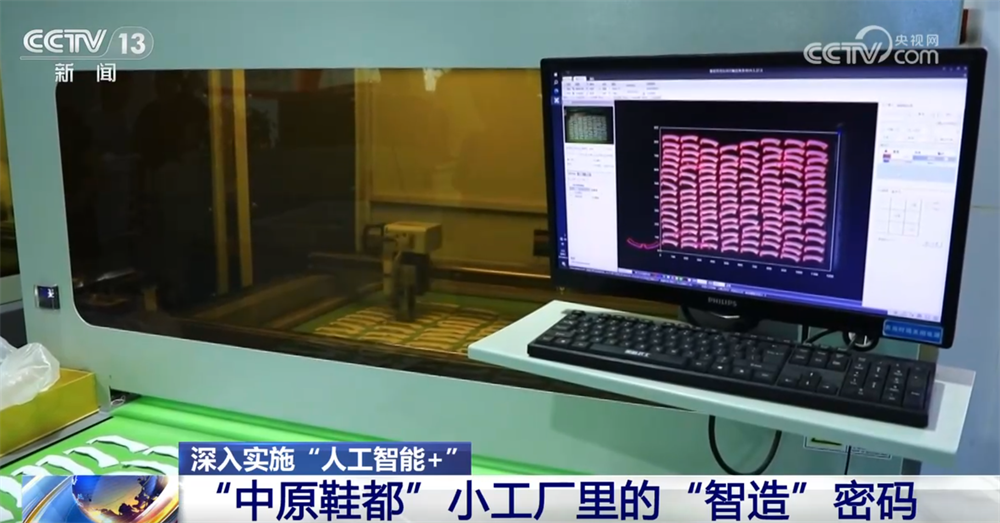
Core Insights - China is implementing the "Artificial Intelligence +" initiative, focusing on the intelligent upgrade of the manufacturing industry, with over 35,000 basic-level, 7,000 advanced-level, and 230 excellent-level smart factories established [1] Group 1: Smart Factory Development - The smart factory initiative includes a gradient cultivation action, emphasizing the establishment of various levels of smart factories to enhance manufacturing capabilities [1] - A small shoe factory in Henan has transformed its production process with intelligent cutting equipment, reducing material waste and labor requirements significantly [2][4] - A 40-year-old textile factory in Shandong has adopted smart technology for quality control, leading to improved efficiency and profitability [6][10] Group 2: Digital Transformation Support - The "Small, Fast, Light, Accurate" program is aiding small and medium-sized enterprises (SMEs) in their digital transformation, allowing for rapid adjustments in production lines [11] - The local government is providing targeted support for SMEs, integrating nearly 200 service providers to assist with digital upgrades [11][14] - In Hangzhou, 592 enterprises have initiated transformation projects, with nearly half completing the verification process, indicating a significant move towards digitalization [14] Group 3: Technological Advancements - The core of basic-level smart factories involves deploying CNC equipment and automation devices in key processes, enhancing production monitoring and sensing capabilities [16]
申万宏源研究晨会报告-20250915
Shenwan Hongyuan Securities· 2025-09-15 00:44
Group 1: Market Overview - The current market indicates increased pressure in the bond market, with risks surpassing the influences of fundamentals and liquidity [2][13] - The bond market adjustment is largely seen as a preparation for a potential bull market around the end of 2024 [2][13] - Observations are needed for signals indicating a turning point in market sentiment, particularly regarding deposit rates and credit spreads [13] Group 2: Company Analysis - Jianfa Hecheng (建发合诚) - Jianfa Hecheng is positioned for growth under the Jianfa Group, with expected net profits of 122 million, 140 million, and 160 million yuan for 2025-2027, reflecting year-on-year growth rates of 27.4%, 14.7%, and 14.3% respectively [2][19] - The company is enhancing its construction business through collaboration with its major shareholder, with significant associated transaction amounts projected for the coming years [14][15] - The shift towards urban renewal and business extension is seen as a key opportunity for growth in the current market environment [15] Group 3: Industry Trends - Cloud Computing - The cloud computing market is witnessing a divergence in capital expenditure (Capex) expectations, with major cloud providers expected to collectively exceed 350 billion yuan in FY25, marking a 54% year-on-year increase [16][17] - Emerging cloud computing firms are benefiting from high growth in remaining performance obligations (RPO), with Oracle reporting a 359% year-on-year increase in RPO [17][20] - The competition landscape is evolving with the introduction of ASIC chips, which are becoming increasingly relevant in AI applications [18][20] Group 4: Automotive Industry Insights - The automotive sector is experiencing a shift towards high-end and intelligent electric vehicle manufacturing, with companies like Jianghuai Automobile collaborating with tech giants like Huawei [25][27] - The company anticipates significant revenue growth with the launch of its high-end brand, aiming for a notable increase in sales volume in the coming years [27] - The overall automotive market is seeing fluctuations in sales and material costs, with a focus on maintaining competitive positioning amid changing consumer demands [32][34]
恒天海龙:中国恒天集团拟减持3.00%股份
Xin Lang Cai Jing· 2025-09-12 12:41
Group 1 - The core point of the announcement is that China Hengtian Group Co., Ltd. plans to reduce its stake in Hengtian Haolong by selling up to 25.92 million shares, which represents 3.00% of the total shares [1] - The reduction will occur between October 15, 2025, and January 14, 2026, through centralized bidding and block trading [1] - The company currently holds 88.05 million shares, accounting for 10.19% of Hengtian Haolong [1]

中方:希望墨西哥慎之又慎
Huan Qiu Shi Bao· 2025-09-12 10:30
Group 1 - Mexico plans to increase import tariffs on approximately 1,400 products, including automobiles, toys, steel, textiles, and plastic products, to a range of 10%-50% for countries that have not signed free trade agreements with Mexico, including China [1] - The Chinese government expresses concern that Mexico's tariff increase aligns with the U.S.'s long-standing strategy to contain China and may affect future trade negotiations between Mexico and its North American partners [1] - The Chinese Ministry of Commerce emphasizes the importance of maintaining free trade and multilateralism, stating that unilateral tariff increases by Mexico could harm the interests of relevant trade partners, including China, and negatively impact the business environment in Mexico [1][2] Group 2 - The Chinese government advocates for resolving trade disputes through equal dialogue and negotiation, opposing unilateralism, protectionism, and discriminatory measures [2] - The Chinese Foreign Ministry highlights the mutual benefits of China-Mexico economic cooperation and expresses hope for Mexico to act cautiously and collaboratively with China to promote global economic recovery and trade development [3]
墨西哥拟对中国等国征收50%关税,商务部、外交部回应来了
Di Yi Cai Jing· 2025-09-11 23:19
Group 1 - Mexico plans to increase import tariffs on approximately 1,400 products, including automobiles, toys, steel, textiles, and plastic products, to a range of 10% to 50% for countries that have not signed free trade agreements with Mexico, including China [1] - The Chinese Ministry of Commerce expressed concern that Mexico's tariff increase aligns with the U.S.'s long-standing strategy to contain China and could affect future trade negotiations between Mexico and its North American partners [1][3] - The Ministry emphasized the importance of maintaining free trade and multilateralism, stating that unilateral tariff increases by Mexico would be seen as a concession to unilateral bullying [1][3] Group 2 - China and Mexico are important trade partners, and the Chinese government hopes that Mexico will reconsider its tariff increases to avoid negative impacts on bilateral trade [3] - The Chinese government advocates for resolving trade disputes through equal dialogue and opposes any form of unilateralism and protectionism [3] - China's foreign trade has shown resilience, with a 3.5% year-on-year increase in total trade value in the first eight months of the year, despite global economic uncertainties [5][6] Group 3 - In the first eight months of the year, China's total goods trade value reached 29.57 trillion yuan, with exports growing by 6.9% to 17.61 trillion yuan and imports declining by 1.2% to 11.96 trillion yuan [6] - In August, China's goods trade value was 3.87 trillion yuan, with exports at 2.3 trillion yuan (up 4.8%) and imports at 1.57 trillion yuan (up 1.7%), marking three consecutive months of growth in both exports and imports [6]
商务部深夜发声
中国基金报· 2025-09-11 16:18
Core Viewpoint - Mexico plans to increase import tariffs on approximately 1,400 product categories, including automobiles, toys, steel, textiles, and plastic products, to a rate of 10%-50% for countries that have not signed free trade agreements with Mexico, including China [1] Group 1: Mexico's Tariff Increase - The proposed tariff increase aligns with the U.S.'s long-standing strategy to contain China and may serve Mexico's future trade negotiations with North American partners [1] - The Chinese government expresses concern that Mexico's unilateral tariff increase could harm the interests of relevant trade partners, including China, and negatively impact the business environment in Mexico, reducing investment confidence [1] Group 2: China's Response - China advocates for resolving trade disputes through equal dialogue and opposes unilateralism, protectionism, and discriminatory measures [2] - The Chinese government emphasizes the importance of mutual benefit in China-Mexico economic cooperation and hopes for collaborative efforts to promote global economic recovery and trade development [4]

中方希望墨西哥慎之又慎,三思后行
Sou Hu Cai Jing· 2025-09-11 16:14
Core Viewpoint - Mexico plans to increase import tariffs on approximately 1,400 products, including automobiles, toys, steel, textiles, and plastic products, to a range of 10% to 50% for countries that have not signed free trade agreements with Mexico, including China [1] Group 1: Mexico's Tariff Increase - The proposed tariff increase aligns with the U.S.'s long-standing strategy to curb China's influence and may facilitate future trade negotiations between Mexico and its North American partners [1] - The Chinese government expressed concern that Mexico's unilateral tariff actions could harm trade relations and the business environment, potentially reducing investment confidence in Mexico [1] Group 2: China's Response - China advocates for resolving trade disputes through equal dialogue and opposes unilateralism, protectionism, and discriminatory measures [2] - The Chinese government emphasizes the importance of mutual benefit in China-Mexico economic cooperation and hopes for collaborative efforts to promote global economic recovery and trade development [4]