
电动车

Search documents
亿纬全固态产能投产,8月国内储能招采创新高 | 投研报告
Zhong Guo Neng Yuan Wang· 2025-09-08 02:44
Group 1: Solar Power - The prices of silicon materials, battery cells, and modules have slightly increased this week, indicating a resurgence of supply-side reform expectations [2][3] - Strong demand from overseas markets has supported orders from downstream battery manufacturers, leading to a rise in battery cell prices following news of potential export tax cancellations in July and August [2] Group 2: Wind Power - Recent announcements of successful bids for offshore wind projects include a 1000MW project by Huadian Group, a 1300MW project by Longyuan Power, and a 2500MW project by Huaneng Jiangsu Company, indicating a rapid increase in gigawatt-level offshore wind projects [3] Group 3: Energy Storage - In August, domestic energy storage procurement reached a record high of 82.7GWh, while Australia's household storage also hit a new high of 423MWh [4] - Rising prices of energy storage cells confirm strong downstream demand, supported by favorable provincial policies in China and ongoing robust bidding activity in Europe [4] Group 4: Power Grid Equipment - The construction preparation for the ultra-high voltage direct current project from Inner Mongolia to Beijing-Tianjin-Hebei has commenced, highlighting investment opportunities in ultra-high voltage infrastructure [5] Group 5: Electric Vehicles - EVE Energy has launched a solid-state battery, and the pre-sale of the new AITO M7 has been highly successful, causing server crashes [8] - The market is advised to focus on stable profit-generating battery and structural component sectors, with long-term attention on materials benefiting from solid-state battery advancements [8] Group 6: Automotive Parts - The automotive market is expected to stabilize in August, with a decrease in aggressive pricing and promotions due to a wave of new car launches in Q3 [9] - The importance of certainty in performance, new products, and customer relationships is increasing, suggesting a focus on automotive parts with higher certainty in the second half of the year [9]
九号电动车国内出货量突破900万台,再破行业增长新纪录-财经-金融界
Jin Rong Jie· 2025-09-08 01:34
Core Insights - Ninebot has achieved a cumulative shipment of over 9 million smart two-wheeled electric vehicles in the Chinese market, setting a new industry growth record [1][3] - The company has demonstrated accelerated growth, taking only 52 days to move from 8 million to 9 million units, compared to 64 days for the previous milestone [1] - This achievement marks a new phase of high-quality growth as Ninebot aims for the target of 10 million units [1][3] Company Strategy - Since entering the electric two-wheeler market in December 2019, Ninebot has adhered to a development philosophy centered on product focus, user orientation, innovation-driven, and safety as a baseline [3] - The company emphasizes long-term strategic execution, strong organizational resilience, and user trust as key factors for its rapid growth [3] Market Position - Ninebot has been the global leader in smart electric vehicle sales for three consecutive years (2022-2024) and has maintained the top position in the high-end electric vehicle market (over 4000 yuan) for two years (2023-2024) [3] - The company holds the highest market penetration rate in China's smart electric vehicle sector, with 70% of sales coming from Ninebot [3] - Ninebot has been recognized as the leading brand in user satisfaction for smart two-wheeled electric vehicles, reflecting its strong product experience and service quality [3] Sales and Service Network - Ninebot has established over 9,000 stores nationwide, creating a comprehensive sales and service network that enhances user experience [4] - The company aims to provide convenient access to "true smart" riding services across various cities and scenarios [4] Innovation and Technology - The company's growth is supported by a robust R&D system and intelligent manufacturing capabilities, with a focus on safety, intelligence, endurance, and technology [4] - Ninebot is investing in cutting-edge technologies such as NimbleOS, AI, and self-balancing technology to enhance the smart mobility experience [7] Future Goals - Ninebot aims to achieve annual sales of 7 million units and solidify its brand presence among young consumers by the end of 2027 [7] - The company plans to strengthen its channel construction, user operations, and service upgrades to better meet the needs of young consumers [8]


硅谷观察:特斯拉董事会造了根金链子,如果业绩实现,马斯克最高可拿价值9000亿美元特斯拉期权!将成全球首个万亿美元富翁
Sou Hu Cai Jing· 2025-09-08 01:16
Core Viewpoint - Elon Musk has the opportunity to become the world's first trillionaire, contingent on his continued leadership at Tesla for the next ten years and achieving ambitious performance and market value targets [2][12]. Group 1: Compensation Plan - Tesla's board has proposed a new compensation plan for Musk, which will be voted on at the upcoming shareholder meeting on November 6 [3]. - If Musk meets all performance targets, he could earn up to $900 billion in Tesla stock options, effectively doubling his stake in the company to 25% [6][12]. - The plan requires Musk to lead Tesla to a market value of $8.5 trillion over the next decade, which is more than double the current highest market cap of Nvidia [8][10]. Group 2: Shareholder Dynamics - Tesla has a high retail investor ownership rate of 42%, the highest among companies with a market cap over $1 trillion, compared to less than 20% for Google and Meta [5]. - Retail investors have historically supported Musk's high compensation due to their belief in his vision for the company [5]. Group 3: Performance Milestones - Musk must achieve several operational milestones, including increasing operating profit from $17 billion to $400 billion, delivering 20 million Tesla vehicles, and achieving 10 million active Full Self-Driving subscriptions [10][11]. - The performance milestones are structured in a tiered manner, with specific market cap and operational goals linked to stock option awards [9][11]. Group 4: Business Strategy and Future Outlook - Tesla is undergoing a strategic transformation, moving away from traditional electric vehicle sales, which have seen a decline, towards autonomous driving and robotics as future growth drivers [15][16]. - Musk's vision includes significant contributions from autonomous driving and robotics, with expectations that these sectors will account for 80% of Tesla's future value [18][25]. - The recent "Master Plan IV" emphasizes AI and robotics without mentioning new electric vehicle models, indicating a shift in focus for the company [19][21]. Group 5: Challenges Ahead - Achieving the ambitious targets set forth in the new compensation plan may be more challenging than previous plans, especially given the current decline in Tesla's electric vehicle sales [13][15]. - The company faces intense competition in key markets like China and Europe, where local electric vehicle manufacturers are gaining ground [15][16]. - Despite political controversies affecting Tesla's brand, the board has not imposed restrictions on Musk's political activities, indicating a desire to keep him focused on the company's future [25].

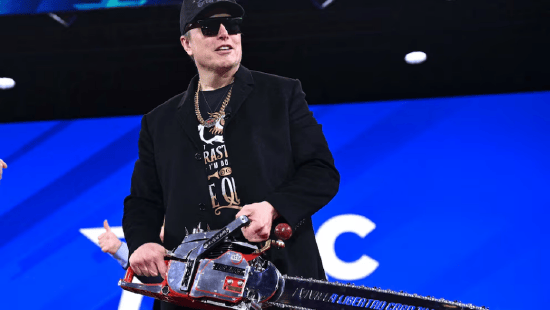
特斯拉董事会造了根金链子 要给马斯克万亿美元薪酬
Xin Lang Ke Ji· 2025-09-08 00:41
Core Viewpoint - Elon Musk has the potential to become the world's first trillionaire, contingent on a new performance-based compensation plan from Tesla that requires him to lead the company for the next ten years and achieve ambitious financial targets [1][4][15]. Group 1: Compensation Plan - Tesla's board has proposed a new compensation plan for Musk, which will be voted on at the shareholder meeting on November 6. The plan is expected to pass due to high retail investor support [2]. - If Musk meets all performance targets, he could earn up to $900 billion in Tesla stock options, effectively doubling his stake in the company to 25% [2][4]. - The plan requires Musk to drive Tesla's market capitalization to $8.5 trillion over the next decade, which is more than double the current valuation of Nvidia [4][5]. Group 2: Performance Targets - Musk must achieve several performance milestones, including increasing operating profit from $17 billion to $400 billion, delivering 20 million Tesla vehicles, and reaching 10 million active Full Self-Driving (FSD) users [5]. - The board emphasizes that retaining Musk is crucial for achieving these ambitious goals and becoming the most valuable company in history [5]. Group 3: Business Strategy and Challenges - Tesla is undergoing a strategic transformation, with its traditional electric vehicle business facing significant challenges, including declining sales in key markets like China, the U.S., and Europe [8][10]. - Analysts have shifted their focus from electric vehicle sales to potential growth in autonomous driving and robotics, which Musk believes will account for 80% of Tesla's future value [10][11]. - The latest "Master Plan IV" released by Musk does not mention new electric vehicle models but focuses on ambitious future visions involving humanoid robots and autonomous taxi services [11][12]. Group 4: Market Position and Competition - Tesla's electric vehicle sales have seen a decline, with a 1% drop last year and a 7% drop in the first half of this year, indicating a challenging market environment [8][9]. - The company faces increasing competition from domestic electric vehicle manufacturers in China, which has further complicated its market position [8][9]. Group 5: Future Outlook - The ambitious goals set forth in the new compensation plan may be difficult to achieve, especially given the current challenges in the electric vehicle market [6][8]. - Despite the challenges, the board's intention appears to be to keep Musk firmly in place as CEO, ensuring his focus on Tesla's future operations, particularly in autonomous driving and robotics [14][15].
硅谷观察:特斯拉董事会造了根金链子,要给马斯克万亿美元
Xin Lang Ke Ji· 2025-09-07 23:26
Core Viewpoint - Elon Musk has the opportunity to become the world's first trillionaire, contingent on his continued leadership at Tesla for the next ten years and achieving ambitious performance and market capitalization targets [2][12]. Group 1: Compensation Plan - Tesla's board has proposed a new compensation plan for Musk, which will be voted on at the upcoming shareholder meeting [3]. - If Musk meets all performance targets, he could earn up to $900 billion in Tesla stock options, effectively doubling his stake in the company [6][12]. - The plan requires Musk to lead Tesla to a market cap of $8.5 trillion over the next decade, which is more than double the current highest market cap of Nvidia [8][10]. Group 2: Shareholder Dynamics - Tesla has a high retail investor ownership rate of 42%, significantly higher than competitors like Google and Meta, which have less than 20% [5]. - Retail investors have historically supported Musk's high compensation due to their belief in his vision for the company [5]. Group 3: Operational and Market Milestones - Musk must achieve several operational milestones, including delivering 20 million vehicles and reaching $400 billion in adjusted EBITDA [10][11]. - The milestones are structured in a way that each achievement will unlock additional stock options for Musk [9][11]. Group 4: Business Strategy and Future Outlook - Tesla is undergoing a strategic transformation, moving away from traditional electric vehicle sales, which have seen a decline, towards autonomous driving and robotics [15][16]. - Musk envisions that 80% of Tesla's future value will come from autonomous driving and robotics, indicating a shift in focus from electric vehicles [18][25]. - The recent "Master Plan IV" emphasizes AI and robotics without mentioning new electric vehicle models, suggesting a pivot in Tesla's long-term strategy [19][21]. Group 5: Challenges Ahead - Achieving the ambitious targets set forth in the new compensation plan may be more challenging than previous plans, especially given the current market conditions and competition [13][15]. - Tesla's electric vehicle sales have declined, and the company faces increasing competition in key markets like China and Europe [15][16]. - The board's intention behind the compensation plan may be to ensure Musk remains focused on Tesla's future operations, particularly in autonomous driving and robotics, despite external challenges [25].
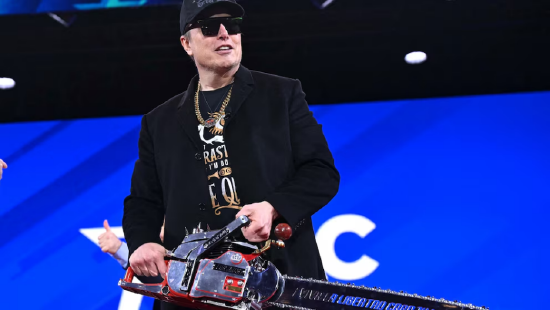
中方重拳反制仅一周,加拿大要派人来求情,希望中方取消高额关税
Sou Hu Cai Jing· 2025-09-06 04:06
Core Viewpoint - Canada is seeking to negotiate with China to lift high tariffs imposed on its canola seed exports after facing significant economic pressure from China's recent trade actions [1][3]. Group 1: Trade Actions and Economic Impact - China has imposed a 75.8% anti-dumping duty on Canadian canola seeds, which is a critical agricultural product for Canada, valued at CAD 43 billion and supporting 200,000 jobs [3][5]. - Historically, Canada exported 75% of its canola seeds to China, generating an annual revenue of CAD 5 billion [3][5]. - The recent tariffs are part of a broader strategy by China, which previously imposed 100% tariffs on related products like canola oil and soybean meal, signaling a calculated response to Canada's trade practices [5][6]. Group 2: Canadian Response and Political Pressure - Following the imposition of tariffs, Canadian trade officials and provincial leaders are urgently calling for the government to repair relations with China [6][7]. - The Premier of Saskatchewan, a major agricultural province, expressed a desire to personally appeal to China to ease tensions [7]. - The rapid response from Canada indicates the significant economic distress caused by China's trade measures, highlighting the importance of canola to the Canadian economy [6][8]. Group 3: Future Negotiations and Conditions - China emphasizes that any discussions to lift tariffs will depend on Canada addressing its own unreasonable tariffs and bans on Chinese companies [9][10]. - The situation illustrates a broader message from China regarding the consequences of trade disputes, indicating a firm stance against perceived unfair practices [10][12].

雅迪控股(01585.HK)2025年中报点评:收入表现重回高增 业绩超过预告上限
Ge Long Hui· 2025-09-05 20:17
Group 1 - The company reported a revenue of 19.17 billion yuan for the first half of 2025, representing a year-on-year increase of 33.0%, driven by national subsidy policies that boosted industry demand [1] - The net profit attributable to shareholders reached 1.65 billion yuan, up 59.5% year-on-year, exceeding previous forecasts due to continuous product structure optimization and an increase in the proportion of mid-to-high-end products [2] - The company achieved a gross profit margin of 19.6%, an increase of 1.6 percentage points year-on-year, with a significant improvement in single-unit profitability, reflecting effective sales and brand investment strategies [2] Group 2 - The company is expected to benefit from the transition to new national standards, having prepared multiple new standard products and aiming to expand its product price range [2] - The company has established a leading position in the industry, with successful integration of the upstream four-electric system supply chain and expansion into the Southeast Asian market [3] - The earnings per share (EPS) forecasts for 2025 and 2026 have been adjusted to 0.96 yuan and 1.11 yuan respectively, with a new forecast for 2027 set at 1.23 yuan, indicating strong long-term growth potential [3]

除了美元和比特币,美国几乎所有领域都在被中国反转
Sou Hu Cai Jing· 2025-09-05 13:57
Group 1: Manufacturing Strength - China's "Made in China 2025" initiative aims to increase the localization rate of core components in high-tech manufacturing to 70% by 2025, up from 40% in 2020 [1] - China is significantly advancing in high-end sectors like electric vehicles and batteries, dominating global exports, while the U.S. manufacturing sector is shrinking due to supply chain disruptions and increased tariffs [3][5] - By 2025, China's electric vehicle market is expected to account for over 50% of the global market, with companies like BYD leading in battery technology [7] Group 2: Technological Advancements - China is leading in advanced materials and automation, with the highest global usage of robots and significant improvements in factory efficiency [5] - China's investment in AI accounts for 25% of the global total, with rapid iteration and application in various fields, including 5G technology [14][18] - Reports indicate that by 2029, China's computing market is projected to grow eight times larger than that of the U.S., marking a significant shift in technological capabilities [10] Group 3: Social and Economic Dynamics - China's social stability and effective governance attract global talent, while the U.S. faces challenges such as rising violence and social unrest, impacting its competitiveness [20][24] - China's economic policies focus on sustainable development and improving living standards, transitioning rapidly from a middle-income to a high-income economy by 2023 [26] - The perception of China's stability and vibrancy is changing among experts, with many acknowledging the effectiveness of China's infrastructure and governance [28] Group 4: Future Outlook - The ongoing advancements in manufacturing, technology, and social stability suggest that China's momentum is unlikely to diminish, while the U.S. is adjusting to these changes [30] - Collaboration between China and the U.S. could yield global benefits, although disparities remain in the financial sector, particularly regarding the dominance of the U.S. dollar [31]

东南亚国别观察2025第5期:出口保持高增长
GUOTAI HAITONG SECURITIES· 2025-09-05 13:13
Economic Trends - Indonesia's exports grew by 11.3% in July, maintaining high growth levels, while imports fell by -5.3%, resulting in a trade surplus of over $4.1 billion[7] - Thailand's retail sales averaged a growth rate of 31.3% over the past five months, despite a slight decline in production in July[12] - Vietnam attracted $11.72 billion in foreign direct investment (FDI) in the first half of the year, marking an 8.1% increase, the highest level for the same period in five years[22] - Malaysia's exports rebounded in July with a growth rate of 6.8%, significantly improving from the previous two months[23] Policy Developments - Indonesia launched the world's largest village-level solar energy project, aiming for a total installed capacity of 100GW over five years[28] - Thailand relaxed electric vehicle policy conditions, leading to a 52% year-on-year increase in new electric vehicle registrations in the first half of 2025[29] - Vietnam abolished its long-standing gold monopoly, allowing commercial banks and qualified enterprises to trade gold freely[31] - Malaysia introduced its first AI processing chip, the MARS1000, to compete in the global AI component market[32] Geopolitical Relations - Thailand's trade promotion department implemented measures to counteract the 19% tariffs imposed by the U.S., including low-interest loans and market expansion initiatives[33] Risk Factors - The report highlights geopolitical risks and economic downturn risks as potential challenges for the Southeast Asian markets[34]
繁荣假象:补贴即将结束,美国电动车或现硬着陆
Guan Cha Zhe Wang· 2025-09-05 11:06
Core Viewpoint - The sales surge of new energy vehicles (NEVs) in the U.S. market is expected to rapidly decline after the expiration of government subsidies [1][2]. Group 1: Sales Performance - In August, U.S. new car sales increased by 3.7% year-on-year, with NEVs significantly contributing to this growth [1]. - NEVs accounted for 11% of total sales in August, up from 8% in previous months [1]. Group 2: Impact of Subsidy Expiration - The U.S. government’s electric vehicle subsidies, which provide up to $7,500 for new cars and $4,000 for used cars, will end on September 30 [1][2]. - Major automakers are taking preemptive measures in response to the anticipated decline in NEV sales, including layoffs and production cuts [2]. Group 3: Company Responses - General Motors plans to halve the production of electric vehicles at its Spring Hill, Tennessee plant starting December and will halt production for two weeks in October and November [2][3]. - Volkswagen is also reducing production of its electric SUV ID.4 in Tennessee and temporarily laying off 160 employees to align production with market demand [3]. - Rivian has laid off over 200 employees and plans to introduce a lower-priced SUV model next year to counter policy risks and boost sales [3]. Group 4: Regulatory Changes - The "Big and Beautiful" tax and spending bill signed by Trump also ends penalties for automakers that fail to meet fuel economy standards, which could significantly impact revenue for companies like Tesla and Rivian that rely on carbon credit sales [3]. - The automotive industry has faced turmoil over the past year, with tariffs reducing profits by over $12 billion and policy changes further weakening the outlook for electric vehicles [4].

