
制造业

Search documents
2025年中国工业经济顶压前行、向新向优
Ke Ji Ri Bao· 2026-01-22 01:55
Core Viewpoint - The industrial economy in China is expected to achieve effective qualitative improvements and reasonable quantitative growth by 2025, with major goals successfully completed [1] Group 1: Industrial Growth and Achievements - The added value of industrial enterprises above designated size is projected to grow by 5.9% year-on-year, with the manufacturing sector likely to maintain its position as the world's largest for 16 consecutive years [1] - The added value of equipment manufacturing and high-tech manufacturing industries increased by 9.2% and 9.4% year-on-year, respectively [1] - 5G and gigabit optical networks have been integrated into 91 out of 97 categories of the national economy, with industrial internet achieving full coverage across 41 industrial categories [1] - Over 140,000 specialized and innovative small and medium-sized enterprises have been cultivated, with 504,000 high-tech enterprises currently valid [1] Group 2: Economic Contribution and Development Strategies - The industrial and information sectors contribute over 40% to economic growth, acting as a stabilizing force [2] - The development of intelligent, green, and integrated manufacturing has led to the establishment of over 35,000 basic-level and 8,200 advanced-level smart factories, along with 500 excellent-level smart factories [2] - Significant advancements in technology and industry innovation have been made, with the added value of integrated circuits and electronic materials growing by 26.7% and 23.9% year-on-year, respectively [2] - The production of industrial robots increased by 28% year-on-year, and new energy vehicle sales rose by 28.2% [2] Group 3: Artificial Intelligence Industry Development - The artificial intelligence industry is expected to thrive in 2025, with over 6,000 AI companies projected and the core industry scale anticipated to exceed 1.2 trillion yuan [3] - The smart computing power scale reached 1,590 EFLOPS, and the market for AI glasses saw shipments exceeding 1.78 million units in the first three quarters of 2025 [3] - The establishment of a national AI industry investment fund with a scale of 60 billion yuan is underway [3] Group 4: Emerging and Future Industries - The cultivation of emerging and future industries has accelerated, with innovations like brain-computer interface technology expanding into various fields [4] - The government plans to implement actions to develop and strengthen emerging industries, including the creation of national demonstration bases for emerging industry development [4][5] - There will be a focus on supporting local governments to establish future industry pilot zones and increasing government investment fund allocations [5]
工业和信息化领域对经济增长贡献超四成 人工智能产业亮点纷呈
Ren Min Ri Bao· 2026-01-22 00:02
Core Insights - In 2025, China's industrial added value is expected to grow by 5.9% year-on-year, with the manufacturing sector maintaining a stable share of GDP, and the manufacturing scale likely to remain the largest globally for 16 consecutive years [1] Group 1: Industrial and Economic Growth - The industrial and information technology sectors are projected to contribute over 40% to economic growth [1] - The added value of integrated circuits and electronic materials increased by 26.7% and 23.9% respectively, while industrial robot production rose by 28% [3] - New energy vehicle sales reached 16.49 million units, marking a year-on-year growth of 28.2% [3] Group 2: Technological Advancements - The global AI technology is accelerating innovation and integration across various industries, with significant advancements in materials like perovskite and permanent magnet materials [2] - New products such as intelligent robots and biomanufacturing products are rapidly entering the market, supported by new scenarios like "5G+" and "industrial internet+" [2] Group 3: Smart and Green Transformation - The first batch of 15 leading factories has been showcased, achieving an average production efficiency increase of 29% and a reduction in product defect rates by 47% [4] - The average renewable energy utilization rate for national green computing facilities is expected to exceed 70% by 2025 [5] Group 4: Digital Economy Integration - By the end of 2025, China's digital industry revenue is projected to reach approximately 38.3 trillion yuan, with profits of 3.1 trillion yuan, reflecting growth rates of 39.5% and 48.4% respectively compared to 2020 [6] - The number of connected industrial devices has surpassed 100 million, with significant improvements in production capacity and quality due to the integration of digital technologies [7] Group 5: Consumer Goods Sector - The added value of the consumer goods industry is expected to grow by 3.7% year-on-year, accounting for 26.1% of total industrial output [8] - Initiatives to enhance supply and meet consumer demand have led to the release of numerous innovative products and the establishment of a quality safety traceability system for infant formula [8][9]
财经早报:中美将举行另一轮贸易谈判?外交部回应,事关格陵兰岛,特朗普改口了丨2026年1月22日
Xin Lang Cai Jing· 2026-01-21 23:29
Group 1 - China and the US are expected to hold another round of trade negotiations, emphasizing the need to implement the consensus reached by the two countries' leaders [2][24] - The Chinese government expressed serious concerns over the EU's new cybersecurity policy, which aims to exclude Chinese companies from the European mobile communication network, arguing that Chinese enterprises have contributed positively to the European telecom industry [3][25] - French President Macron's statement at Davos highlighted the need for more Chinese direct investment in Europe, with China emphasizing its commitment to mutual benefits and not pursuing trade surpluses [4][26] Group 2 - The Ministry of Housing and Urban-Rural Development plans to implement urban renewal actions to promote high-quality development in the real estate sector, aiming to create modern, livable cities [7][28] - The Ministry of Industry and Information Technology reported significant growth in emerging industries, with industrial robot production increasing by 28% and the AI core industry expected to exceed 1.2 trillion yuan [8][29] - The National Taxation Bureau of Shanghai imposed a fine of 100,000 yuan on Pinduoduo for failing to report tax-related information as required [15][37] Group 3 - Moore Threads released its first performance forecast post-IPO, expecting revenue between 1.45 billion and 1.52 billion yuan for 2025, representing a growth of 230.70% to 246.67% year-on-year [16][38] - The financial reports from various companies indicate a mixed outlook, with some expecting significant profit increases while others anticipate losses, reflecting the diverse performance across sectors [20][44]





不同类型企业都能享有政策红利
Xin Hua Ri Bao· 2026-01-21 23:23
Group 1 - The core viewpoint of the news is the introduction of eight supportive policies aimed at enhancing enterprise development in Jiangsu Province, combining both existing and new financial support measures [1][2][3] - The manufacturing loan interest subsidy policy has been optimized and expanded, allowing two types of enterprises to directly benefit from interest subsidies, specifically "C manufacturing" enterprises and recognized "little giant" enterprises [1] - The modern service industry loan interest subsidy policy has seen improvements, with a budget of 150 million yuan for 2026, increasing the subsidy rate from 1% to 1.5%, and expanding the eligible sectors to include various service industries [2] Group 2 - Jiangsu has implemented a "fiscal + financial" strategy to address enterprise financing challenges, resulting in significant financial support for sectors such as technology innovation and advanced manufacturing [3] - The province has introduced a comprehensive framework of 20 measures and over 60 policy points to support high-quality economic development, with 4.6 billion yuan allocated for fiscal subsidies [3] - The policies aim to leverage financial resources, with over 600 billion yuan mobilized to support various sectors, including small and micro enterprises [3]
【环时深度】毛里求斯:从“印度洋钥匙”到“发展典范”
Huan Qiu Shi Bao· 2026-01-21 22:56
Core Viewpoint - The strategic significance of the Indian Ocean region, particularly Mauritius, is highlighted through recent diplomatic visits and its role as a key player in global trade and geopolitics [1][2]. Group 1: Geopolitical Importance - Mauritius is referred to as the "key to the Indian Ocean," attracting attention from major powers like France and India due to its strategic location and historical ties [2][7]. - The island's geopolitical relevance is underscored by its historical colonial past and ongoing territorial disputes, particularly regarding the Chagos Archipelago, which remains under British control [4][5]. Group 2: Economic Development - Mauritius has transitioned from a sugar-dependent economy to a diversified one, with key sectors including manufacturing, financial services, tourism, and information technology, leading to what is termed the "Mauritius Miracle" [8]. - The GDP of Mauritius is projected to be approximately $14.044 billion in 2024, with a per capita GDP exceeding $11,700, positioning it among the top economies in Africa [8]. Group 3: Diplomatic Relations - Mauritius maintains a pragmatic foreign policy, engaging in selective cooperation with multiple countries, including France, India, and the United States, to balance its geopolitical interests [7][10]. - The country has established strong economic ties with China, benefiting from infrastructure projects and technology transfer, which are crucial for its development goals [10][12]. Group 4: Cultural and Human Exchange - Tourism serves as a vital cultural link between Mauritius and China, with initiatives aimed at attracting Chinese tourists and promoting cultural exchanges through film and other media [11][12]. - The collaboration extends beyond tourism to include technology and environmental cooperation, particularly in addressing climate change challenges faced by the island nation [12].
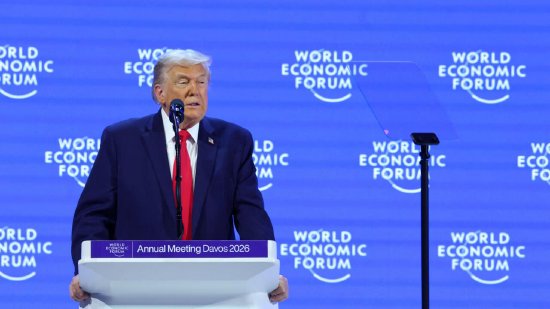
特朗普在达沃斯就美国经济发表了哪些言论
Xin Lang Cai Jing· 2026-01-21 21:13
Trade and Tariff Policy - The trade and tariff policies have led to a surge in factory construction and favorable trade agreements with multiple countries. However, overall factory spending is projected to decline in the first eight months of 2025 from its peak in 2024. Since the announcement of the "liberation day" tariffs in April, manufacturing jobs in the U.S. have been decreasing monthly. Tariffs have reduced the monthly trade deficit by 77% without causing inflation, with the trade deficit in October reaching its lowest level since 2009, down 39% from September. Inflation has cooled, but prices continue to rise [2][13]. Tax Reform - The economic policy enacted this summer as part of a major tax and spending plan includes tax cuts, tips tax reductions, and a permanent extension of 100% bonus depreciation for eligible properties, which is expected to encourage production relocation to the U.S. The majority of tax cut benefits will flow to middle and upper-income households [3][14]. Housing Affordability - The statement emphasizes that homes are built for people, not corporations, asserting that the U.S. will not become a nation of renters. Following an executive order targeting Wall Street buyers for driving up housing costs, there is a call for Congress to pass a ban on large institutional investors purchasing single-family homes [4][16]. Credit Card Rates - There is a renewed call for Congress to set a temporary cap of 10% on credit card interest rates for one year. The banking industry opposes this idea, arguing it would force them to significantly tighten credit support. Concerns have been raised about potential economic disaster if such a cap is implemented, although pilot programs are suggested in Vermont and Massachusetts, home states of supportive senators [5][17]. Gas Prices - Since returning to the White House, there has been a focus on lowering gas prices, with reports indicating that in many states, prices have reached or fallen below $1.99 per gallon. The national average gas price is currently $2.83 per gallon, down from $3.13 a year ago [6][7][18]. Energy Policy - There is a strong criticism of wind power, with a statement indicating that the U.S. is significantly developing nuclear energy [8][19]. Drug Prices - The healthcare policy aims to reduce drug costs in the U.S. by 90% or more, depending on the calculation method. A proposal known as "most favored nation" pricing is mentioned, which would allow the U.S. to purchase drugs at lower prices paid by other countries. An executive order from May aims to align U.S. drug prices with those of comparable developed countries [9][20]. Defense Industry - Efforts to restrict stock buybacks by defense companies are reiterated, with the intention that these funds will be used to build manufacturing plants to accelerate military equipment production [10][21].
深入推进衢江临港产业区建设
Xin Lang Cai Jing· 2026-01-21 18:31
在国家"双循环"新发展格局和"双碳"战略深入推进背景下,内河航运绿色、低碳、低成本优势凸显。 2025年2月,衢州入选陆港型国家物流枢纽承载城市。衢江港作为核心区,凭借要素集聚的地理优势和 良好的发展环境,有望成为衢州打造长三角内陆开放桥头堡的关键力量。 市人大代表姜继法建议,市级层面出台专项扶持政策、设立发展基金,加强资源整合与统筹协调,形成 支持衢江港区提能的合力;完善多式联运体系,拓宽320国道衢江段、建设港区铁路专用线,推进港区 数智化转型,联合沿线城市优化船闸调度,打通水上快速通道;优先布局物流需求大、附加值高的产 业,引导"前港后厂""前港后仓"模式落地,强化"物流+制造"市域协同,支持重点企业共建物流、仓储 设施,打造"港口+产业集群"的融合发展样板。 (来源:衢州日报) 转自:衢州日报 记者 胡灵萍 ...
中国城市人才吸引力排名:2025
泽平宏观· 2026-01-21 16:29
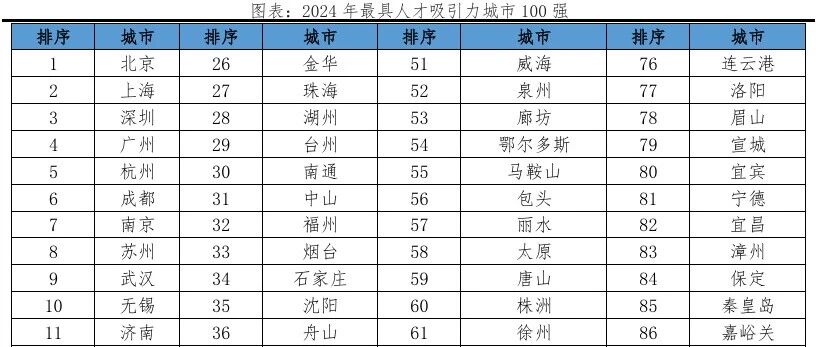
Core Insights - The article emphasizes the ongoing trend of talent migration towards major cities and metropolitan areas in China, highlighting the importance of population and talent as fundamental resources for economic activities [1][4]. Group 1: Data Overview - Zhilian Recruitment has over 374 million workplace users, with approximately 80% holding a college degree or higher, significantly exceeding the national employment population average of 22.1% [1][9]. - Among job seekers, about 25% are cross-city job seekers, indicating a notable trend in talent mobility [1][9]. Group 2: Talent Characteristics in 2024 - In terms of gender, 61% of mobile talent are male, higher than the overall job seeker demographic of 56% [2][10]. - Age distribution shows that 67% of mobile talent are aged 18-30, compared to 61% of the overall job seeker population, indicating younger individuals are more likely to seek cross-city opportunities [3][13]. - Educationally, 54% of mobile talent hold a bachelor's degree or higher, surpassing the overall job seeker average of 47% [3][16]. - Industry-wise, 55% of mobile talent are concentrated in IT, real estate, and manufacturing, with a slight decrease of 0.5 percentage points from 2023 [3][17]. Group 3: Talent Attraction Rankings - The top three cities for talent attraction in 2024 remain Beijing, Shanghai, and Shenzhen, with no changes in ranking from 2023 [4][21]. - The talent attraction index is defined by factors such as talent inflow and outflow ratios, indicating the ability of cities to attract and retain talent [4][20]. Group 4: Talent Flow Trends - Talent continues to concentrate in eastern cities, with 60% of talent flowing towards five major city clusters, particularly the Yangtze River Delta and Pearl River Delta [4][30]. - In 2024, the net inflow of talent in eastern regions is 13.4%, while central, western, and northeastern regions show negative net inflows [25][26]. - The net inflow of talent in first-tier cities has been declining for three consecutive years, while second-tier cities have seen a positive net inflow for two years [28][36]. Group 5: Key City Insights - In first-tier cities, Beijing, Shanghai, and Guangzhou have seen slight declines in net inflow, while Shenzhen remains stable [5][36]. - In second-tier cities, Hangzhou leads with a net inflow of 1.3%, attributed to rapid industrial development and a favorable living environment [6][72]. - Talent outflow from Guangzhou is significant, with 41.6% of its talent flowing to other cities within the Pearl River Delta [65][66].
贵州2025年规上工业增加值同比增长7.0% 工业用电量同比增长7.9%
Xin Hua Cai Jing· 2026-01-21 14:57
Core Insights - In 2025, Guizhou Province's industrial added value is projected to grow by 7.0% compared to the previous year, with industrial electricity consumption increasing by 7.9%, an improvement of 2.0 percentage points [1][2] - From January to November, the total profit of industrial enterprises above designated size reached 136.148 billion yuan, marking a 9.0% increase year-on-year [1] Economic Performance by Type - State-owned enterprises are expected to see a 5.9% increase in added value, while joint-stock enterprises will grow by 7.3%, and private enterprises by 5.8% [1] - The mining sector's added value is anticipated to grow by 9.4%, with non-ferrous metal mining increasing by 14.9% and coal mining by 8.8% [1] Manufacturing Sector Growth - The manufacturing sector's added value is projected to rise by 7.2%, with significant growth in the automotive manufacturing sector at 42.3%, and electrical machinery and equipment manufacturing at 41.1% [1] - Other notable increases include computer and electronic equipment manufacturing at 35.9%, textiles at 27.1%, and chemical manufacturing at 17.0% [1] Product-Specific Growth - Automotive production is expected to increase by 94.9%, with other products like chili products and electronic components also showing substantial growth [2] - The equipment manufacturing sector's added value is projected to grow by 26.6%, outpacing the overall industrial growth by 19.6 percentage points [2] Contribution to GDP - In 2025, the industrial added value is expected to account for 25.5% of GDP, an increase of 0.6 percentage points from the previous year, contributing 35.1% to Guizhou's economic growth [2] Green Production Initiatives - Guizhou Province is advancing in green production, with the output of new energy vehicles expected to exceed 250,000 units, a 147.7% increase year-on-year [2] - The production of lithium-ion batteries for vehicles is projected to reach 20.8134 million kilowatt-hours, growing by 90.0% [2]
2025年工业和信息化领域对经济增长贡献超四成 发挥“压舱石”作用
Zhong Guo Jing Ying Bao· 2026-01-21 14:11
对于2026年的工业发展形势,北京市社会科学院副研究员王鹏对《中国经营报》记者表示,预计2026年 工业增长将呈现"稳中提质"的态势。一方面,高基数效应可能导致年初增速波动,但政策持续发力与新 质生产力释放有望推动下半年回升;另一方面,高技术制造业占比进一步提升,传统产业智能化改造提 速,未来产业布局打开新空间。此外,出口依托竞争力保持份额,内需政策逐步释放消费潜力,将对工 业增长形成助力。 近年来,在政策和市场的双重推动下,我国制造业与人工智能正在加速融合。1月7日,工业和信息化 部、中央网信办、国家发展改革委等八部门联合发布的《"人工智能+制造"专项行动实施意见》(以下 简称"《意见》")提出,到2027年,我国人工智能关键核心技术实现安全可靠供给,产业规模和赋能水 平稳居世界前列。推动3—5个通用大模型在制造业深度应用,形成特色化、全覆盖的行业大模型。 中经记者 孙丽朝 北京报道 1月21日,国务院新闻办举行新闻发布会,介绍2025年工业和信息化发展成效。工业和信息化部副部长 张云明在会上介绍,2025年,我国规模以上工业增加值同比增长5.9%,制造业增加值占GDP比重保持 稳定,制造业规模有望连续16 ...