地产

Search documents
环球数码创意(08271.HK)6月19日收盘上涨10.0%,成交2.94万港元
Jin Rong Jie· 2025-06-19 08:42
6月19日,截至港股收盘,恒生指数下跌1.99%,报23237.74点。环球数码创意(08271.HK)收报0.055 港元/股,上涨10.0%,成交量59万股,成交额2.94万港元,振幅12.0%。 最近一个月来,环球数码创意累计跌幅16.67%,今年来累计跌幅37.5%,跑输恒生指数18.2%的涨幅。 财务数据显示,截至2024年12月31日,环球数码创意实现营业总收入6522.28万元,同比增长0.35%;归 母净利润-5735.89万元,同比减少253.54%;毛利率-21.38%,资产负债率50.26%。 (以上内容为金融界基于公开消息,由程序或算法智能生成,不作为投资建议或交易依据。) 本文源自:金融界 作者:行情君 机构评级方面,目前暂无机构对该股做出投资评级建议。 行业估值方面,地产行业市盈率(TTM)平均值为4.87倍,行业中值-0.15倍。环球数码创意市盈 率-1.21倍,行业排名第170位;其他百仕达控股(旧)(02983.HK)为0.5倍、百仕达控股(新) (01168.HK)为0.51倍、恒达集团控股(03616.HK)为1.71倍、中国新城市(01321.HK)为2.29倍、瑞 森 ...
行业景气观察:5月社零同比增幅扩大,集成电路产量同比增幅扩大
CMS· 2025-06-18 14:32
Group 1: Overall Economic Trends - In May, the total retail sales of consumer goods increased by 6.4% year-on-year, exceeding market expectations, indicating the continued effect of consumption expansion policies [1][13][20] - The cumulative retail sales from January to May reached 20.3171 trillion yuan, with a year-on-year growth rate of 5.0%, up from 4.7% in the previous period [1][13] - The growth in essential consumption categories improved, driven by holiday demand and promotional activities, with food and beverage retail sales showing significant increases [1][17][20] Group 2: Information Technology Sector - The Philadelphia Semiconductor Index and the Taiwan Semiconductor Industry Index both declined, while the DXI Index increased by 7.77% [1][23] - The price of DDR4 DRAM memory rose by 25.11% week-on-week, with the 8GB DDR4 DRAM priced at $4.28 [1][26] - The production of integrated circuits showed a rolling year-on-year increase, indicating a recovery in the semiconductor sector [1][23][26] Group 3: Manufacturing Sector - The production of industrial robots saw a rolling year-on-year increase, while sales of major engineering machinery companies mostly slowed down [1][3] - The price index for photovoltaic products decreased week-on-week, but the production of solar cells showed a rolling year-on-year increase [1][3][22] - The automotive production and sales growth rates have narrowed, indicating a potential slowdown in the automotive sector [1][3][22] Group 4: Consumer Demand - Retail sales in the home appliance sector continued to recover, driven by the "old-for-new" policy, with significant increases in sales of communication equipment [1][20] - The retail sales of gold and silver jewelry maintained a high growth rate, benefiting from demand for value preservation amid rising gold prices [1][21] - The average price of fresh milk and sugar has decreased, while the average price of live pigs has increased, reflecting mixed trends in agricultural products [1][3][21] Group 5: Resource Sector - The price of Brent crude oil increased, while the prices of various chemical products mostly rose, indicating a positive trend in the resource sector [1][22] - The inventory levels of industrial metals showed mixed trends, with most inventories declining, suggesting a tightening supply [1][22] - The national cement price index increased, reflecting a recovery in construction-related materials [1][22]
6.20到账!A股+H股双市场红利同时收息有多爽?
Sou Hu Cai Jing· 2025-06-18 06:58
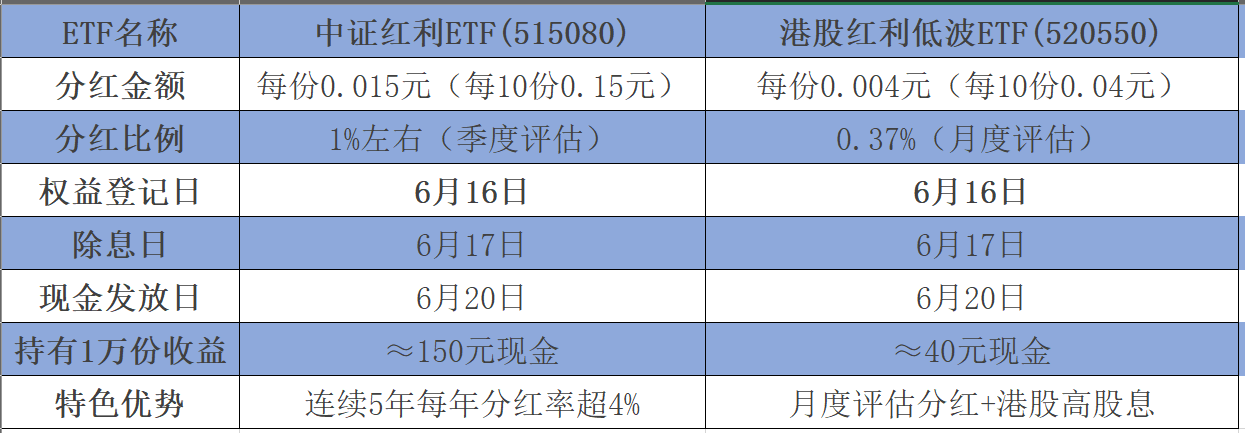
如果你正在寻找一种"不费心也能有稳定回报"的投资方式,那A+H两地红利ETF确实值得好好关注。 特别是6月20日中证红利ETF(515080)和港股红利低波ETF(520550)现金发放日即将到来,对于已经持有的朋友来说就像提前插好"收租日"的标记,时 间一到,账户就能自动"落袋"一笔分红收益,体验非常好。 | ETF名称 | 中证红利ETF(515080) | 港股红利低波ETF(520 | | --- | --- | --- | | 分红金额 | 每份0.015元(每10份0.15元) | 每份0.004元(每10份0.0 | | 分红比例 | 1%左右(季度评估) | 0.37%(月度评估) | | 权益登记日 | 6月16日 | 6月16日 | | 除息目 | 6月17日 | 6月17日 | | 现金发放日 | 6月20日 | 6月20日 | | 持有1万份收益 | ~150元现金 | ~40元现金 | | 特色优势 | 连续5年每年分红率超4% | 月度评估分红+港股高 | 【用"包租公"模式来理解红利ETF】 如果我们把红利ETF想象成一套"自动收租组合"的话,那持有后咱们就相当于"包租婆"和"包 ...

香港3-5月季节性调整失业率上升至3.5% 就业不足率上升至1.4%
智通财经网· 2025-06-17 09:04
Group 1 - The unemployment rate in Hong Kong increased from 3.4% to 3.5% between February-April 2025 and March-May 2025, respectively [1] - The underemployment rate also rose from 1.3% to 1.4% during the same period [1] - Total employment decreased by approximately 12,400 individuals, from 3,677,100 to 3,664,700 [1] - The total labor force declined by about 6,000, from 3,806,500 to 3,800,500 [1] - The number of unemployed individuals increased by around 6,400, from 129,400 to 135,800 [1] - The number of underemployed individuals rose by approximately 6,000, from 47,600 to 53,600 [1] Group 2 - The Secretary for Labour and Welfare noted that the slight increase in the unemployment rate reflects ongoing uncertainties in the external environment and changes in consumer behavior [2] - The labor market may be further impacted by the influx of new graduates and school leavers in the coming months [2] - Despite these challenges, the local economy is expected to grow by 2% to 3% this year, supported by a record number of local and foreign registered companies [2]
太和控股(00718.HK)6月17日收盘上涨17.86%,成交15.23万港元
Jin Rong Jie· 2025-06-17 08:31
(以上内容为金融界基于公开消息,由程序或算法智能生成,不作为投资建议或交易依据。) 本文源自:金融界 作者:行情君 机构评级方面,目前暂无机构对该股做出投资评级建议。 行业估值方面,地产行业市盈率(TTM)平均值为5.07倍,行业中值-0.15倍。太和控股市盈率-0.19 倍,行业排名第230位;其他百仕达控股(新)(01168.HK)为0.49倍、百仕达控股(旧)(02983.HK)为 0.5倍、恒达集团控股(03616.HK)为1.71倍、中国新城市(01321.HK)为2.33倍、瑞森生活服务 (01922.HK)为2.82倍。 资料显示,太和控股有限公司主要从事物业投资、地板材料及医疗设备贸易、采矿及勘察天然资源、及 金融服务及资产管理业务。 6月17日,截至港股收盘,恒生指数下跌0.34%,报23980.3点。太和控股(00718.HK)收报0.033港元/ 股,上涨17.86%,成交量480.5万股,成交额15.23万港元,振幅17.86%。 最近一个月来,太和控股累计涨幅7.69%,今年来累计跌幅17.65%,跑输恒生指数19.95%的涨幅。 财务数据显示,截至2024年12月31日,太和控股实 ...
系好安全带!A股,会复制“924行情”了吗
Sou Hu Cai Jing· 2025-06-17 04:59
Group 1 - The current performance of the liquor market is influenced by external interventions, leading to a halt in the downward trend, but further declines may still occur [1] - The Hong Kong stock market has been stagnant, trading within the range of 3200 to 3400 points for eight months, causing widespread pessimism among investors [1] - The A-share market is expected to experience a rebound, particularly if capital flows from the Hong Kong market into A-shares, potentially leading to a simultaneous surge in both markets [3] Group 2 - The current market conditions may replicate the "924 market" scenario, with expectations of reaching above 3500 points, although the scale of the increase may not be as significant [5] - The concentration of trading chips is high, making a direct downward trend less likely, while a rapid upward movement could occur as chips are redistributed [5] - The complexity of individual stock performances is notable, especially in technology sectors where many investors are trapped, indicating that index growth is necessary for volume expansion [5] Group 3 - The market does not exhibit signs of a significant downturn, with expectations of a quick correction followed by a rebound, suggesting a comfortable state for investors holding positions [7] - The current market dynamics indicate that patience is required, as there has not been a substantial rally this year, and maintaining positions is advised [7]

无惧变化,转型延续——经济数据与当下宏观热点
2025-06-16 15:20
Summary of Key Points from Conference Call Records Industry Overview - The conference call discusses the macroeconomic environment in China, focusing on industrial growth, consumer spending, and investment trends for 2025. [1][2][8] Core Insights and Arguments - **Industrial Growth**: In May 2025, industrial added value exceeded expectations with a month-on-month growth rate higher than previous years, indicating resilience in the production sector. The probability of GDP growth exceeding 5% in the first half of the year is high. [1][2] - **Investment Trends**: Real estate investment continues to decline, with a drop of 10.7% in May 2025. However, manufacturing and infrastructure investments show growth, with manufacturing up 8.5% and infrastructure up 10.4%. Adjustments in local government debt limits are expected to support major project construction in the second half of the year. [5][8] - **Consumer Spending**: Retail sales growth reached 6.4% year-on-year in May 2025, the first time exceeding 6% since last year. The "trade-in" policy and promotional events significantly boosted sales, particularly in home appliances and communication equipment. [6][9] - **Employment Stability**: The urban surveyed unemployment rate remains stable at 5%, consistent with the previous year, indicating a solid overall employment situation that supports economic development. [7][8] - **Economic Outlook**: The economic growth in the second half of 2025 is expected to be weaker than the first half, but fluctuations are anticipated to be minor. The foundation laid in the first half, along with increased local budgets and expanded major project space, supports the likelihood of achieving annual targets. [8][11] Additional Important Insights - **Impact of Policies**: The "trade-in" policy has led to significant sales, with total sales reaching 1.1 trillion yuan from January to May 2025, supported by approximately 130 billion yuan in fiscal funding. However, some regions have adjusted or paused the policy due to rapid fund usage. [4][10] - **Trade Dynamics**: Exports showed a mixed performance, with a 34.5% decline in exports to the U.S. attributed to extreme tariff impacts. Despite this, the reliance of the U.S. on Chinese imports remains high, suggesting a potential for recovery in trade. [15][16] - **Financial Data**: The growth rate of social financing has narrowed, with weak credit performance. Government bond issuance has become a key factor in supporting the economy, and the financial system's support for the real economy has strengthened. [19][20] - **Macroeconomic Policy**: There is a call for maintaining macroeconomic policy stability while promoting domestic demand to foster long-term growth. The necessity of existing policies is emphasized, even with some economic data exceeding expectations. [21] This summary encapsulates the key points discussed in the conference call, providing insights into the current economic landscape and future expectations for the industry.
国泰海通证券:5月外需修复,内需分化
Ge Long Hui· 2025-06-16 13:43
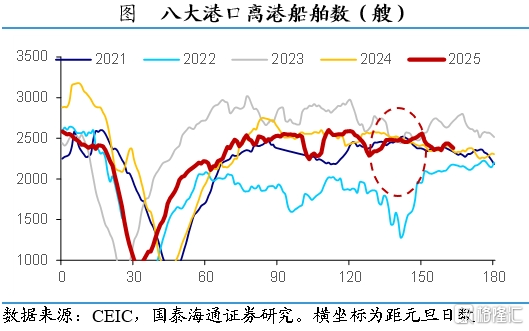
Economic Overview - In May, external demand showed signs of recovery while internal demand remained mixed, supported by policy measures and holiday effects [3][5] - The industrial added value in May grew by 5.8% year-on-year, slightly down from 6.1% in April, but still above 5% [5][7] - Service sector production index increased by 6.2% year-on-year, driven by information technology and retail sectors [9] Production Insights - The production recovery was evident, with industrial added value showing a month-on-month increase of 0.61%, higher than the previous month [5][7] - Export-oriented industries and those benefiting from favorable policies exhibited divergent performance, with transportation equipment and electrical machinery facing significant declines [7] - The automotive sector saw a notable rebound, with production growth increasing by 2.4 percentage points, attributed to policy incentives and market demand [7] Consumption Trends - Retail sales growth in May reached 6.4%, with significant contributions from the "old-for-new" policy and pre-holiday promotions [13][14] - Online retail sales surged by 11.5%, reflecting the impact of early promotions and policy support [14] - Categories benefiting from the "old-for-new" initiative, such as home appliances and communication equipment, experienced substantial growth rates of 53% and 33% respectively [14] Investment Dynamics - Fixed asset investment growth slowed to 2.9% year-on-year in May, marking a decline from 3.6% in April [17][18] - Manufacturing, infrastructure, and real estate investments showed weakening trends, with real estate investment declining by 12.0% [17][21] - Infrastructure investment requires acceleration in physical work volume formation, with current construction PMI readings indicating slower growth [18] Real Estate Market - The real estate market showed mixed signals, with sales area and sales revenue declining by 3.3% and 6.0% year-on-year respectively [21] - New housing starts and completion areas also saw significant declines, although the rate of decline has narrowed [21] - The demand side of the real estate market is showing signs of weakening, necessitating ongoing policy support [21]

万事昌国际(00898.HK)6月16日收盘上涨10.59%,成交2.93万港元
Sou Hu Cai Jing· 2025-06-16 08:31
Group 1 - The Hang Seng Index rose by 0.7% to close at 24,060.99 points on June 16 [1] - Wanchai International (00898.HK) closed at HKD 0.94 per share, up 10.59%, with a trading volume of 32,000 shares and a turnover of HKD 29,300 [1] - Over the past month, Wanchai International has seen a cumulative increase of 1.14%, while it has a year-to-date decline of 2.27%, underperforming the Hang Seng Index by 19.11% [1] Group 2 - For the fiscal year ending December 31, 2024, Wanchai International reported total revenue of HKD 265 million, a year-on-year increase of 0.77%, and a net profit attributable to shareholders of HKD 218 million, a year-on-year increase of 31.22% [1] - The gross profit margin for Wanchai International stands at 83.31%, with a debt-to-asset ratio of 25.56% [1] - Currently, there are no institutional investment ratings for Wanchai International [2] Group 3 - The average price-to-earnings (P/E) ratio for the real estate industry is 4.99 times, with a median of -0.14 times [2] - Wanchai International has a P/E ratio of 3.02 times, ranking 9th in the industry [2] - Other companies in the industry include Bestway Global Holdings (01168.HK) and Bestway Holdings (02983.HK), both with P/E ratios of 0.45 times, and Meilian Group (01200.HK) with a P/E ratio of 2.8 times [2]
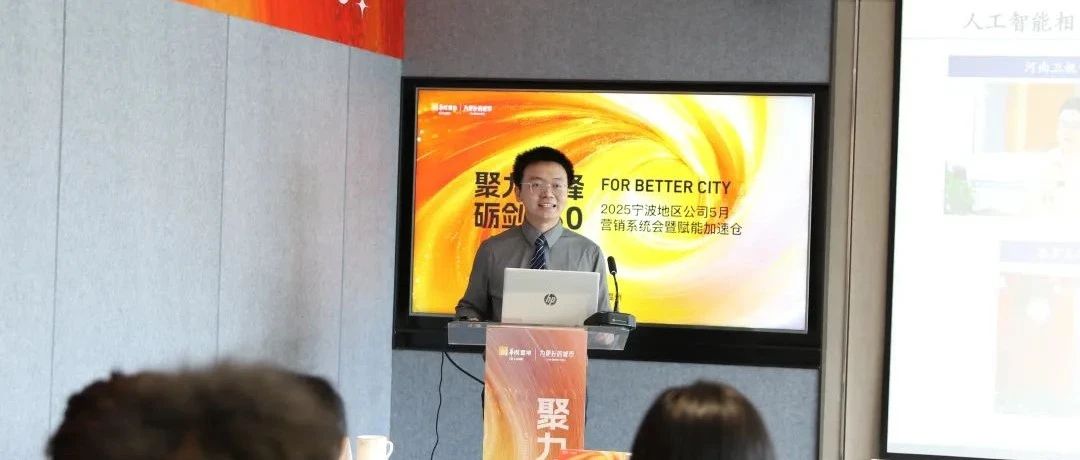
企业培训 | 未可知 x 华润置地:地产科技趋势洞察与DeepSeek赋能地产业的AI提效
未可知人工智能研究院· 2025-06-14 03:40
Core Viewpoint - The training session led by Zhang Ziming aimed to enhance the understanding of AI applications in the real estate sector, improve work efficiency, and drive industry innovation [2][11]. Group 1: AI Development and Applications - Zhang Ziming introduced the evolution of AI technology and its current applications in the real estate industry, highlighting the transition from traditional decision-making AI to generative AI and emerging technologies like the metaverse and Web3 [6]. - The training showcased various AI applications in areas such as architectural design, construction process optimization, market positioning, customer analysis, and smart property management, providing attendees with a clearer understanding of AI's role in real estate [6]. Group 2: DeepSeek AI Product - DeepSeek was presented as a unique domestic AI product, emphasizing its advantages over other AI tools, including its deep thinking model, strong problem-solving capabilities in engineering and science, and a profound understanding of Chinese language and culture [6]. - Attendees experienced practical demonstrations of DeepSeek's capabilities in generating marketing content, formulating marketing strategies, and solving complex problems, which sparked interest in AI technology [6]. Group 3: Research Institute's Contributions - The Unseen AI Research Institute shared its extensive experience and achievements in AI training, solution development, and consulting research [7]. - The institute is committed to cultivating AI innovation talent through deep collaboration with enterprises, governments, and educational institutions, facilitating the application of AI technology across various industries [8]. Group 4: Recommendations for Real Estate Professionals - Zhang Ziming encouraged real estate professionals to actively learn AI technology, understand its basic principles and application scenarios, and utilize AI tools to enhance work efficiency, such as using DeepSeek for precise information searches and generating marketing documents [10]. - Employees were motivated to experiment with AI technology in their work, explore its potential applications in different fields, and discover new business models and solutions [10]. Group 5: Interactive Engagement - The training concluded with an interactive Q&A session where employees engaged with Zhang Ziming on topics related to AI applications in real estate, practical operations of DeepSeek, and personal career development [10].