
建筑业

Search documents
国家统计局服务业调查中心高级统计师赵庆河解读2025年8月中国采购经理指数
Guo Jia Tong Ji Ju· 2025-08-31 01:36
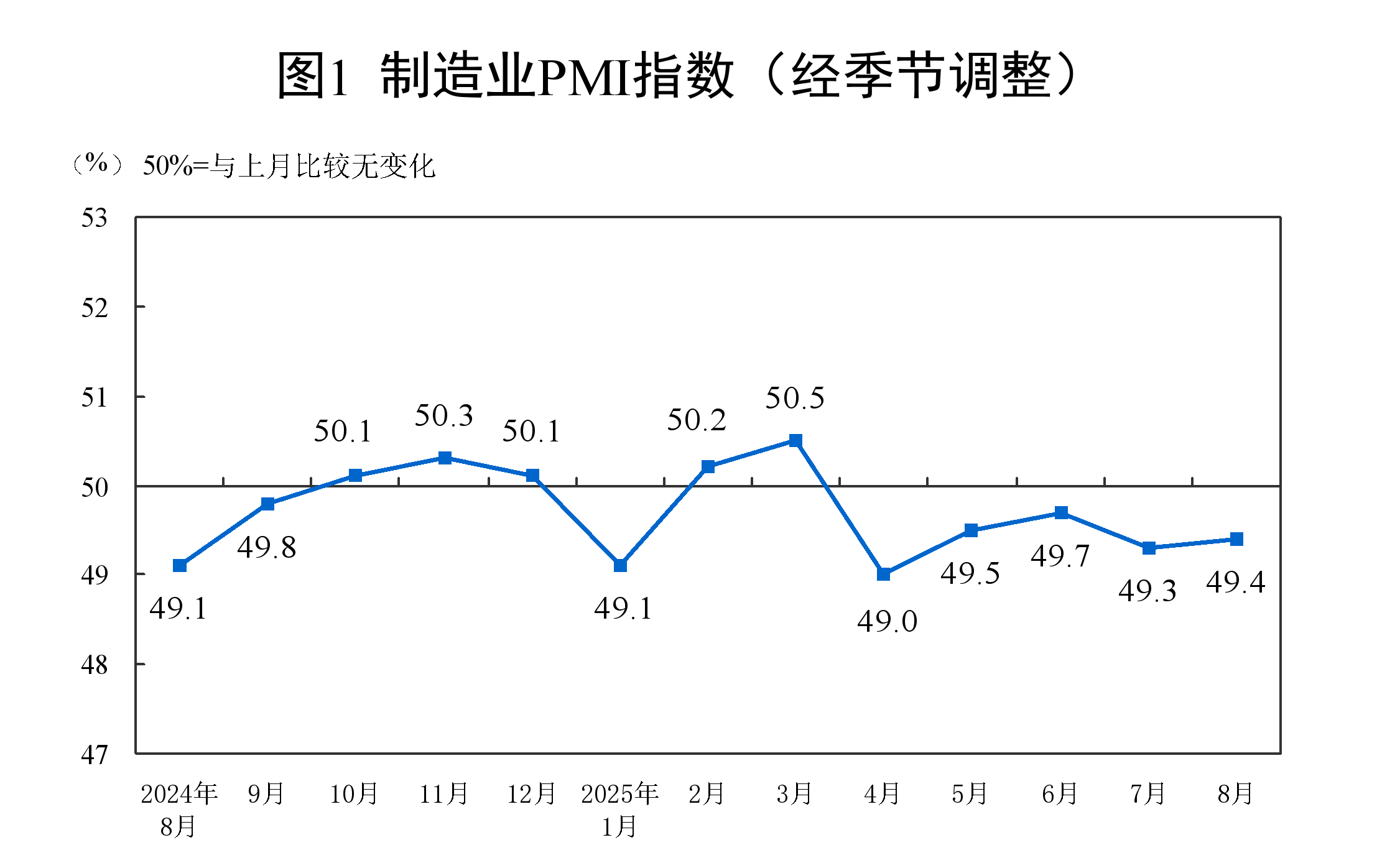
Group 1: Manufacturing PMI Insights - In August, the Manufacturing PMI rose to 49.4%, indicating an improvement in economic conditions compared to the previous month [2] - The production index reached 50.8%, up by 0.3 percentage points, marking four consecutive months above the critical point, suggesting accelerated manufacturing production [2] - The new orders index increased to 49.5%, reflecting a slight rise in demand [2] - Large enterprises showed a PMI of 50.8%, up by 0.5 percentage points, indicating sustained expansion, while medium and small enterprises experienced declines [3] - High-tech manufacturing and equipment manufacturing PMIs were 51.9% and 50.5%, respectively, indicating strong performance in these sectors [3] Group 2: Non-Manufacturing PMI Insights - The Non-Manufacturing Business Activity Index was 50.3%, up by 0.2 percentage points, continuing its expansion [4] - The service sector's business activity index reached 50.5%, the highest point of the year, with significant growth in capital market services and transportation sectors [4] - The construction sector's business activity index fell to 49.1%, down by 1.5 percentage points, due to adverse weather conditions [4] Group 3: Comprehensive PMI Insights - The Comprehensive PMI Output Index stood at 50.5%, up by 0.3 percentage points, indicating overall expansion in production and business activities [5] - The manufacturing production index and non-manufacturing business activity index were 50.8% and 50.3%, respectively, contributing to the comprehensive index's growth [5]
2025年8月中国采购经理指数运行情况
Guo Jia Tong Ji Ju· 2025-08-31 01:31
Group 1: Manufacturing PMI Overview - In August, the Manufacturing Purchasing Managers' Index (PMI) was 49.4%, an increase of 0.1 percentage points from the previous month, indicating a slight improvement in manufacturing sentiment [1] - The PMI for large enterprises was 50.8%, up 0.5 percentage points, while medium-sized enterprises saw a PMI of 48.9%, down 0.6 percentage points, and small enterprises had a PMI of 46.6%, up 0.2 percentage points [4] - The production index was 50.8%, an increase of 0.3 percentage points, suggesting accelerated production expansion in the manufacturing sector [4] Group 2: New Orders and Inventory - The new orders index was 49.5%, up 0.1 percentage points, indicating a slight improvement in market demand within the manufacturing sector [5] - The raw materials inventory index was 48.0%, an increase of 0.3 percentage points, still below the critical point, suggesting a narrowing decline in major raw material inventory levels [6] - The employment index was 47.9%, down 0.1 percentage points, indicating a slight decline in employment sentiment among manufacturing enterprises [7] Group 3: Supplier Delivery and Non-Manufacturing PMI - The supplier delivery time index was 50.5%, up 0.2 percentage points, indicating that the delivery times from raw material suppliers are continuing to improve [8] - In August, the non-manufacturing business activity index was 50.3%, an increase of 0.2 percentage points, indicating continued expansion in the non-manufacturing sector [12] - The construction industry business activity index was 49.1%, down 1.5 percentage points, while the services industry index was 50.5%, up 0.5 percentage points [15] Group 4: Employment and Price Indices in Non-Manufacturing - The new orders index for non-manufacturing was 46.6%, up 0.9 percentage points, indicating improved market demand [19] - The input price index was 50.3%, unchanged from the previous month, indicating that input prices for non-manufacturing enterprises continue to rise [19] - The sales price index was 48.6%, up 0.7 percentage points, indicating a narrowing decline in overall sales prices in the non-manufacturing sector [19] Group 5: Comprehensive PMI Output Index - The comprehensive PMI output index for August was 50.5%, an increase of 0.3 percentage points, indicating an overall acceleration in production and business activities across industries [25]

2025山东住建行业职业技能竞赛济南选拔赛举行
Qi Lu Wan Bao· 2025-08-30 13:30
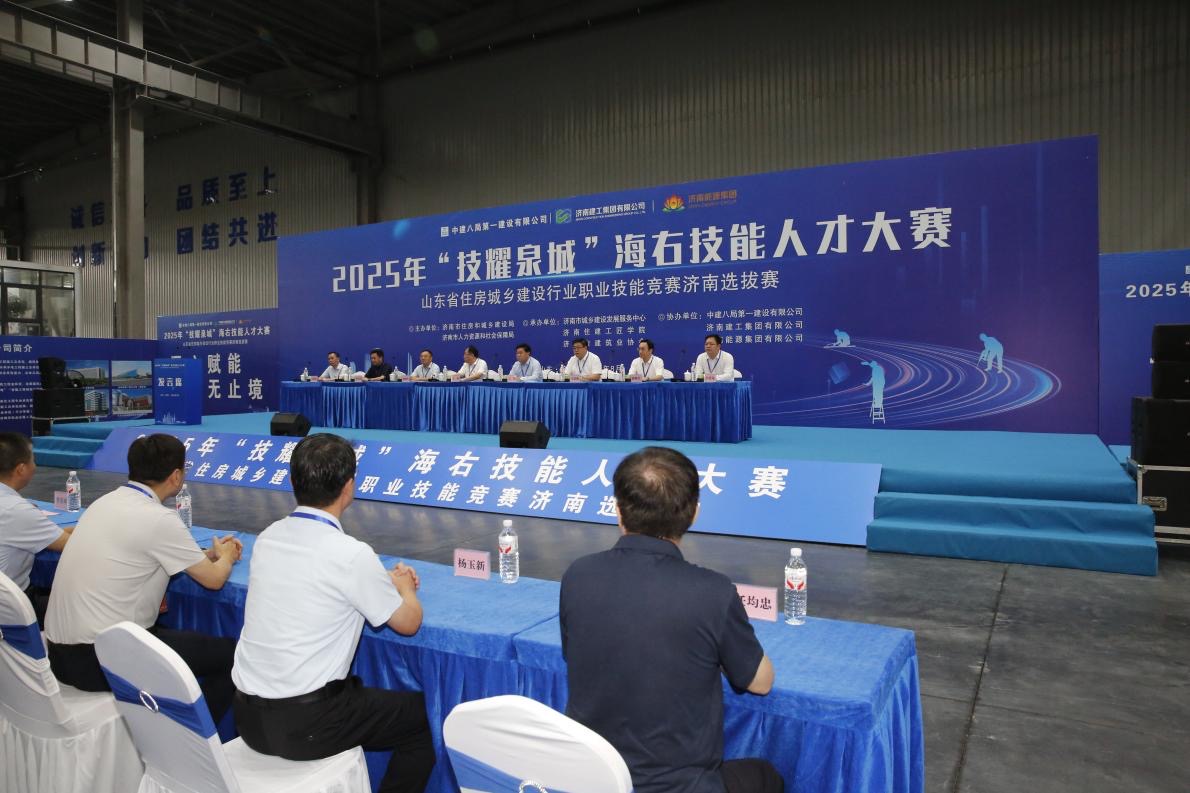
Core Viewpoint - The "Skill Talent Competition" in Jinan aims to strengthen the foundation of skilled talent in the construction industry for high-quality development [1] Group 1: Competition Overview - The competition took place from August 29 to 30, 2025, at two venues in Jinan, featuring 55 skilled talents from 10 teams [1] - It included three main categories: welding, manual woodworking, and decoration (tiling), with a dual assessment of theory and practical skills [3] Group 2: Participant Performance - Participants demonstrated solid theoretical knowledge and exceptional practical skills, reflecting the professional quality and craftsmanship spirit of Jinan's construction workforce [4] Group 3: Objectives and Impact - The competition aims to promote learning and skill enhancement among construction industry professionals, fostering a culture that respects labor, values skills, and encourages innovation [6] - It is expected to create a social effect of "cultivating a group, driving a region, and enhancing a domain," contributing to the transformation and high-quality development of the construction industry [6]
刚刚,中共中央、国务院,重磅发布
Zhong Guo Ji Jin Bao· 2025-08-30 09:07
Core Viewpoint - The document outlines the central government's opinions on promoting high-quality urban development, emphasizing the transition from rapid urbanization to stable development and the need for enhancing existing urban quality and efficiency by 2030 and 2035 [2][4]. Overall Requirements - The document stresses the importance of adhering to Xi Jinping's thoughts on socialism with Chinese characteristics, focusing on people-centered urban development, and promoting urban quality improvement through innovation, livability, and resilience [5]. Urban System Optimization - The plan includes promoting the integration of urban clusters and metropolitan areas, enhancing the competitiveness of mega cities, and improving the capacity of small and medium-sized cities and towns [6][7]. New Urban Development Momentum - The document calls for tailored strategies to enhance urban development dynamics, fostering innovation ecosystems, and activating existing urban resources [8]. Sustainable Urban Financing - It emphasizes the establishment of a sustainable urban construction and operation financing system, encouraging the involvement of social capital and innovative financial policies [9]. High-Quality Urban Living Space - The document advocates for the construction of quality housing and complete communities, improving urban infrastructure, and enhancing public services to create a better living environment [10][11]. Green and Low-Carbon Transition - It outlines initiatives for energy conservation and carbon reduction in production, promoting green lifestyles, and improving urban ecological environment management [12][13]. Urban Safety Resilience - The plan includes measures to strengthen safety management of buildings and infrastructure, enhance public health emergency response capabilities, and improve disaster prevention and mitigation systems [14][15]. Cultural Prosperity - The document promotes the protection and utilization of urban historical culture, enhancing the unique cultural identity of cities, and enriching urban spiritual and cultural life [16][17]. Urban Governance Improvement - It emphasizes the need for a comprehensive urban governance system, promoting digital transformation and community participation in urban management [18][19]. Implementation Strengthening - The document stresses the importance of centralized leadership from the Party, establishing a scientific evaluation system for urban development, and enhancing the capabilities of urban management personnel [20].
财政部:2025年1-7月全国国有及国有控股企业经济运行情况
Sou Hu Cai Jing· 2025-08-29 11:35
Group 1 - The total operating revenue of state-owned enterprises (SOEs) in China for the first seven months is 47,311.09 billion yuan, remaining flat compared to the same period last year [3] - The total profit of SOEs for the same period is 2,478.64 billion yuan, showing a year-on-year decline of 3.3% [3] - The taxes payable by SOEs amount to 3,469.46 billion yuan, which is a decrease of 0.4% year-on-year [3] Group 2 - As of the end of July, the asset-liability ratio of SOEs stands at 65.1%, an increase of 0.3 percentage points compared to the previous year [2] - The report includes various types of SOEs, such as those under the State-owned Assets Supervision and Administration Commission (SASAC), the Ministry of Finance, and local state-owned enterprises across 36 provinces and regions [2]
《中共中央 国务院关于推动城市高质量发展的意见》发布 建立可持续的城市建设运营投融资体系
Zhong Guo Zheng Quan Bao· 2025-08-28 22:09
Core Viewpoint - The document outlines a comprehensive plan by the Central Committee and the State Council to promote high-quality urban development, emphasizing sustainable financing, urban infrastructure, and enhanced city governance by 2030 and 2035 [1][4]. Group 1: Urban Financing and Debt Management - The plan aims to establish a sustainable urban construction and operation financing system, emphasizing the need to curb new local government hidden debts [1][4]. - It encourages the integration of fiscal funds, social capital, and financial channels, with increased central government support for major safety and basic livelihood projects [4]. Group 2: Urban Development and Infrastructure - The document proposes 23 policy measures to enhance urban development, focusing on optimizing urban systems, fostering new development drivers, and promoting green low-carbon transitions [2][3]. - It highlights the importance of developing modern urban clusters and metropolitan areas, enhancing inter-city cooperation, and improving urban governance capabilities [2][3]. Group 3: Housing and Community Development - The plan emphasizes the need for a new model of real estate development to meet diverse housing demands, including safety, comfort, and sustainability [5][6]. - It advocates for the renovation of old urban areas and the construction of integrated communities with improved public services [6]. Group 4: Technological and Infrastructure Advancements - The document calls for the enhancement of urban infrastructure, including the rollout of 5G networks and the optimization of transportation systems to improve commuting efficiency [6]. - It stresses the importance of developing new urban infrastructure to support modern living and economic activities [6].
重磅!中共中央 国务院最新发布!
Zheng Quan Ri Bao Wang· 2025-08-28 12:26
Core Viewpoint - The document outlines the "Opinions on Promoting High-Quality Urban Development" by the Central Committee of the Communist Party of China and the State Council, emphasizing the transformation of urban development towards high quality by 2030 and the establishment of modern urban systems by 2035 [1][3][4]. Group 1: Overall Requirements - The document stresses the importance of adhering to Xi Jinping's thoughts on socialism with Chinese characteristics, focusing on human-centered urban development, and promoting urban renewal as a key strategy [4][3]. - Key goals include significant progress in modern urban construction by 2030, with improvements in living quality, green transformation, and governance levels [4][3]. Group 2: Urban System Optimization - The document advocates for the integration of urban clusters and metropolitan areas, enhancing the competitiveness of mega cities while controlling their scale [5][6]. - It emphasizes the need to improve the capacity of small and medium-sized cities and county towns, promoting urbanization and rural economic development [6]. Group 3: New Development Drivers - The document highlights the importance of fostering innovation ecosystems tailored to local resources, enhancing technological innovation, and developing advanced manufacturing clusters [7][8]. - It calls for activating the potential of existing urban resources and establishing a sustainable financing system for urban construction and operation [8]. Group 4: High-Quality Urban Living Spaces - The document promotes the construction of "good houses" and complete communities, aiming to meet diverse housing needs and improve service quality [10]. - It emphasizes the need for urban infrastructure optimization and the enhancement of public services to ensure equitable access [11][12]. Group 5: Green and Low-Carbon Transformation - The document outlines strategies for energy conservation and carbon reduction in production, promoting green buildings and sustainable urban living practices [12][13]. - It stresses the importance of ecological environment governance and the improvement of urban air quality [13]. Group 6: Urban Safety and Resilience - The document emphasizes the need for robust safety management of buildings and infrastructure, enhancing disaster prevention and response capabilities [14][15]. - It highlights the importance of public health emergency management and the establishment of a comprehensive disaster risk management system [15]. Group 7: Cultural Prosperity - The document encourages the protection and utilization of urban historical and cultural heritage, promoting a unique urban identity [16][17]. - It calls for the enhancement of public cultural services and the integration of culture with tourism and technology [17]. Group 8: Governance Improvement - The document advocates for a coordinated urban governance system, enhancing the role of community participation in urban management [18][19]. - It emphasizes the need for digital transformation in urban governance, improving efficiency and service delivery [18]. Group 9: Implementation and Organization - The document stresses the importance of centralized leadership from the Party and government in urban development, establishing a collaborative framework for implementation [20].
重磅利好!中共中央、国务院,最新发布!
券商中国· 2025-08-28 11:19
Core Viewpoint - The article emphasizes the importance of urban development in China's modernization and the transition from rapid urbanization to stable development, focusing on enhancing existing urban quality rather than expanding urban areas [1][3]. Group 1: Overall Requirements - The guiding principles include adherence to Xi Jinping's thoughts, promoting urban high-quality development, and ensuring a people-centered approach [4]. - Key goals include significant progress in modern urban construction by 2030, with improvements in policy systems, living quality, green transformation, cultural charm, and governance levels [4]. Group 2: Optimizing Urban Systems - The article advocates for the integration of urban clusters and metropolitan areas, enhancing their competitiveness and supporting the development of world-class urban clusters [5]. - It highlights the need to strengthen the capabilities of mega cities while controlling their scale and promoting innovation [5]. Group 3: Cultivating New Urban Development Momentum - The focus is on fostering innovation ecosystems tailored to urban resources and enhancing the synergy between technological and industrial innovation [7]. - It calls for activating existing urban resources and establishing a sustainable financing system for urban construction and operation [8]. Group 4: Creating High-Quality Urban Living Spaces - The article stresses the importance of constructing quality housing and complete communities to meet diverse housing needs [9]. - It emphasizes the need for improved urban infrastructure and public services to enhance living standards [10]. Group 5: Promoting Green and Low-Carbon Urban Transformation - The article outlines strategies for energy conservation and carbon reduction in production sectors, promoting green buildings and sustainable living practices [11]. - It also discusses the importance of ecological environment governance and enhancing urban resilience against environmental challenges [12]. Group 6: Enhancing Urban Safety and Resilience - The article highlights the need for robust safety management in housing and municipal infrastructure, as well as improved public health emergency response capabilities [13][14]. Group 7: Promoting Cultural Prosperity - The article advocates for the protection and utilization of urban historical and cultural heritage, enhancing the unique cultural identity of cities [16]. - It encourages the development of vibrant cultural life and public cultural spaces to enrich urban experiences [17]. Group 8: Improving Urban Governance Capabilities - The article emphasizes the establishment of a comprehensive urban governance system that encourages public participation and collaboration among various stakeholders [18][19]. - It calls for the digital transformation of urban governance to enhance efficiency and responsiveness [18]. Group 9: Strengthening Organizational Implementation - The article stresses the importance of centralized leadership in urban work and the need for a coordinated approach among different levels of government [20].
招商证券:基建正增速略收窄 关注财政发力与重大工程建设提速进展
Zhi Tong Cai Jing· 2025-08-28 07:05
Group 1 - The new regulations for existing PPP projects are expected to accelerate construction progress and alleviate operational debts for construction companies [1] - The cumulative growth rate of funds in place for fixed asset investment from January to July is 1.0%, showing improvement compared to previous months [1] - The growth rate of budgetary funds increased by 9.4% in the same period, indicating a positive trend in fiscal revenue [1] Group 2 - New signed orders in the construction industry are under pressure, with a year-on-year decrease of 1.6% in the first half of 2025 [2] - The cumulative investment in projects that have commenced construction from January to July reached 24.2 trillion yuan, with a growth rate of 8.8% [2] Group 3 - The physical workload in key sectors such as energy, transportation, and water conservancy is showing marginal weakness, with production declines in cement, steel, glass, and asphalt [3] - The price of steel increased by 2.1% month-on-month, while cement and asphalt prices decreased [3] Group 4 - The growth rate of broad infrastructure investment from January to July is 7.3%, slightly slowing down compared to previous months [4] - Fixed asset investment completion reached 28.8 trillion yuan, with a year-on-year increase of 1.6% [4] - Specific sectors like electricity and water supply are seeing significant investment growth, while transportation and water management are maintaining lower growth rates [4] Group 5 - The report suggests focusing on state-owned enterprises with strong fundamentals and low valuations under a more proactive fiscal policy [5] - It highlights three paths for industry maturation: competition among existing players, regional investment opportunities, and the development of new productive forces [5] - Recommended companies for investment include China State Construction, China Railway, and China Communications Construction [5]

柬埔寨工业增长面临外部挑战xa0多元化出口市场成增长关键
Shang Wu Bu Wang Zhan· 2025-08-27 15:39
Core Insights - Cambodia's industrial sector is projected to achieve a growth rate of 7.1% by 2025, despite external challenges, with the garment industry being a significant contributor [2] - The garment industry is expected to grow by 10.1%, although growth may weaken towards the end of the year due to new export tariffs imposed by the U.S. [2] - Non-garment manufacturing is anticipated to grow by 6.9%, falling short of initial expectations due to supply chain disruptions and tariff impacts [2] Industry Performance - The automotive assembly and food and beverage sectors are maintaining stable growth, while the construction industry is gradually recovering [2] - Significant growth in non-garment exports was observed in the first half of 2025, with electronic components up by 24.3%, furniture by 39.4%, automotive parts by 10.1%, bicycles by 41.6%, tires by 80.4%, and wires and cables by 194.9% [3] - Conversely, solar panel exports plummeted by 98.9% due to increased tariffs in the U.S. market [3] Market Diversification - Cambodia's ability to diversify its export markets is crucial for sustaining growth, particularly as it expands into the EU and China to mitigate the impact of declining U.S. market demand [3] - The Cambodian government emphasizes that the diversification of export markets is a key driver for economic stability and growth in the face of trade friction and tariff disputes [3]