
网约车

Search documents
一周港股IPO:思格新能源、潮宏基等4家递表;不同集团、紫金黄金等3家通过聆讯
Cai Jing Wang· 2025-09-15 10:41
Group 1: Company Filings - Four companies submitted applications to the Hong Kong Stock Exchange from September 8 to September 14, with three companies passing the hearing [1][6] - Sig Energy (Shanghai) Co., Ltd. submitted its listing application on September 8, aiming to be a global leader in distributed energy storage systems, with a projected market share of 28.6% in 2024 [2] - Shengwei Times Technology Co., Ltd. submitted its application on September 11, ranking 14th in China's ride-hailing service market, with revenues projected to grow from approximately 8.16 billion RMB in 2022 to 15.94 billion RMB in 2025 [3][4] - Shenzhen Maiketian Biomedical Technology Co., Ltd. submitted its application on September 11, with a product reach in over 140 countries and revenues expected to increase from 9.17 billion RMB in 2022 to 13.99 billion RMB in 2025 [4] - Guangdong Chaoshan Industrial Co., Ltd. submitted its application on September 12, leading the jewelry market in mainland China with a projected market share of 1.4% in 2024 [5] Group 2: Companies Passing Hearings - Different Group passed the hearing on September 11, focusing on mid-to-high-end parenting products, with a market share of 4.2% in China [7] - Zijin Gold International Limited passed the hearing on September 14, being a leading global gold mining company with a compound annual growth rate of 21.4% in gold production from 2022 to 2024 [8] - Botai Internet of Vehicles Technology (Shanghai) Co., Ltd. passed the hearing on September 14, ranking third in China's smart cockpit solutions market with a market share of 7.3% [9] Group 3: Companies Going Public - Hesai Technology (02525.HK) is set to launch its IPO from September 8 to September 11, with a global offering of 17 million shares and a maximum price of 228.00 HKD per share [10] - Jinfang Pharmaceutical (02595.HK) will have its IPO from September 11 to September 16, offering 77.6 million shares at a price of 20.39 HKD per share [11] - Health 160 (02656.HK) plans its IPO from September 9 to September 12, offering 33.65 million shares at a price range of 11.89 to 14.86 HKD per share [12] Group 4: New Stock Listing - Dahang Science and Technology (02543.HK) was listed on September 9, closing at 56.90 HKD per share, with a price increase of 14.95% [13]

司机反馈问题改进、抽成公开讨论 滴滴开放日聚焦这些核心问题
Yang Guang Wang· 2025-09-15 09:58
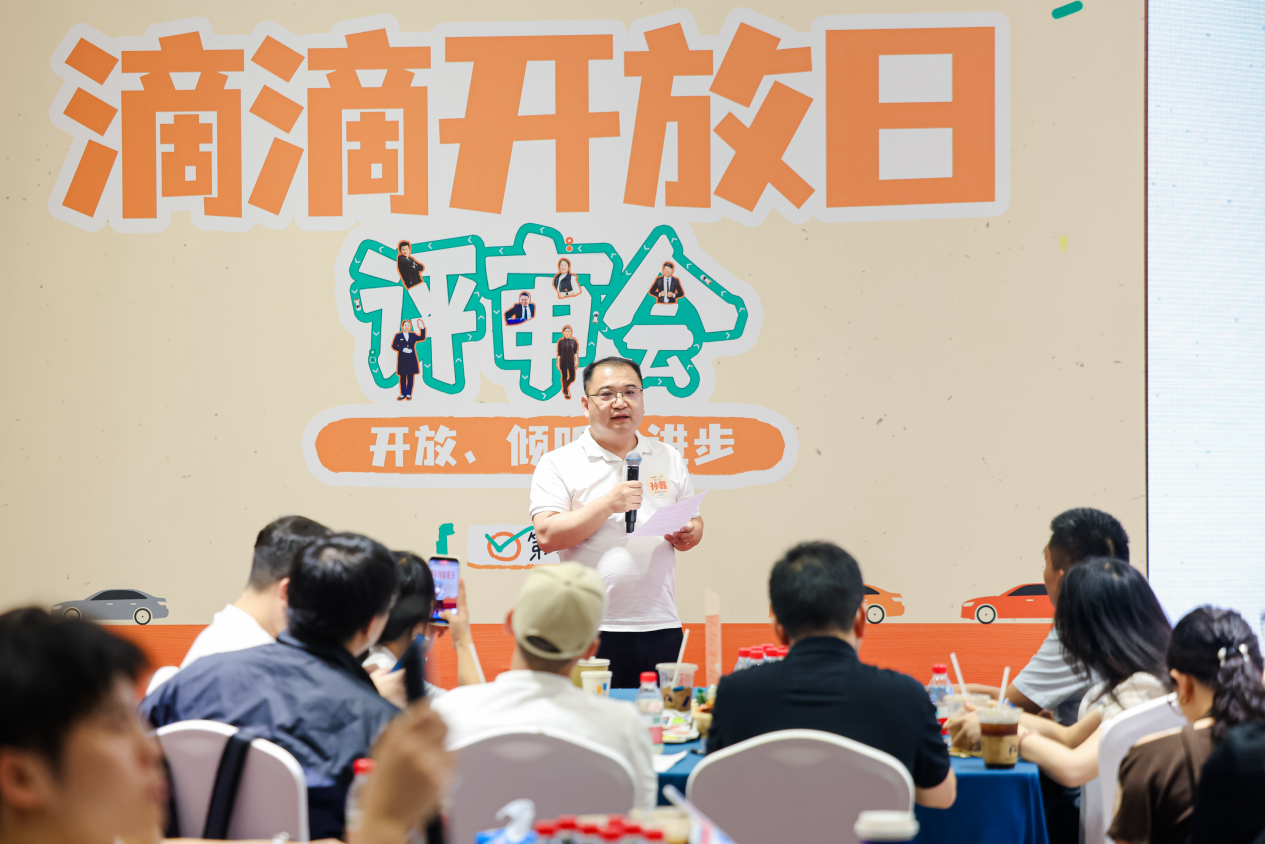
Core Viewpoint - Didi's recent open day event focused on driver feedback and commission issues, highlighting the platform's commitment to improving driver experiences and addressing concerns regarding commission rates [1][2][3] Group 1: Event Overview - The third session of Didi's open day, titled "Driver Experience Supervisor Review Meeting," was held in Beijing with over 60 participants, including drivers, media, and experts [1] - This event marks the third open day held by Didi in 2025, emphasizing ongoing engagement with drivers and stakeholders [1] Group 2: Commission Discussion - Drivers shared their commission experiences, with reported rates of 6.9% and 18% for different drivers in August [1] - Didi's average commission rate for all orders in 2024 is projected to be 14%, with the company clarifying that commission does not equate to profit, as most funds are reinvested into driver and passenger incentives [2] Group 3: Feedback and Suggestions - Attendees provided constructive feedback, suggesting improvements such as enhanced bill visualization, audio notifications for non-commission orders, and automatic calculations of total earnings for drivers [2] - The consensus among participants was that both the platform and drivers should work together to enhance service quality and expand market demand, fostering a sustainable ride-hailing ecosystem [3] Group 4: Commitment to Improvement - Didi's CTO expressed the company's intention to continue hosting open day events to address driver issues, emphasizing a culture of openness, listening, and progress [3]


曝法拉第股价靠虚假订单、换标中国MPV拉升,贾跃亭回应;滴滴24年平均抽成14%,官方:抽成不等于利润;微信将关闭京东购物入口
雷峰网· 2025-09-15 00:23
Key Points - Didi announced an average commission rate of 14% for all orders in 2024, clarifying that commission does not equate to profit as most funds are used for subsidies and platform maintenance [4] - Didi's platform saw a year-on-year growth of 12.4% in Q2, reaching 3.376 billion orders, with an average daily order volume of 37.1 million [4] - Faraday Future (FF) faces allegations of using fake orders to support its stock price, with the company’s founder, Jia Yueting, denying these claims and stating that legal action will be taken [7] - Neta Auto held its first creditor meeting after announcing bankruptcy restructuring, revealing a total debt of approximately 51 billion yuan with only 15.5 million yuan in cash [8] - Lingxin Qiaoshou aims to reduce the price of its dexterous hands to below 500 yuan within three years, having recently completed a multi-hundred million yuan angel round of financing [9] - Alibaba's acquisition of AutoNavi is highlighted as a strategic move to compete against Meituan, with significant developments in local services and map integration [10] - WeChat will close the JD shopping entry as of September 30, following the expiration of a three-year strategic cooperation agreement [11] - Xiaopeng Motors plans to invest 500 billion yuan annually in R&D, with 300 billion yuan allocated to AI, aiming for profitability in Q4 [14] - Tesla is accused of favoring visa employees over American citizens to reduce labor costs, with a lawsuit filed alleging systematic discrimination [22] - Amazon is set to launch consumer-grade AR glasses by late 2026 or early 2027, with plans for a specialized version for delivery drivers [24]


多家平台算法协议逐步取消“超时扣款”
Ren Min Ri Bao· 2025-09-14 22:03
Group 1 - The core viewpoint of the articles highlights the proactive measures taken by labor unions in China to promote algorithm negotiations with platform companies, aiming to cover over 20 million new employment form workers this year [1][2] - The national trade union system has initiated a concentrated action for collective negotiations in 2025, focusing on algorithm negotiations with major platform companies, with 15 leading companies already included in the initiative [1] - Seven companies, including T3 Travel, Jitu, and Didi, have successfully signed special agreements on algorithms and labor rules, with all remaining companies expected to complete negotiations by the end of September [1] Group 2 - The algorithm negotiations focus on labor rights such as remuneration, rest, labor safety, and transparency in algorithmic processes, leading to clearer understanding of labor conditions for workers [2] - In the ride-hailing industry, there are agreements to publicly disclose pricing rules and reduce commission rates, alongside enhancements in fatigue prevention measures and features for intercepting abnormal orders [2] - Several platforms have established regular negotiation systems with labor unions and workers, committing to hold periodic algorithm negotiation meetings and provide advance notice of algorithm changes [2]
各级工会推进平台算法和劳动规则协商 多家平台算法协议逐步取消“超时扣款”
Ren Min Ri Bao· 2025-09-14 22:01
Group 1 - The core viewpoint of the articles highlights the proactive measures taken by labor unions in China to promote algorithm negotiations within platform companies, aiming to cover over 20 million new employment form workers this year [2][3] - The national labor union has initiated a concentrated action for collective negotiations in 2025, focusing on algorithm negotiations with major platform companies, with 15 leading companies already included in the initiative [2] - Seven companies, including T3 Travel, Jitu, and Didi, have successfully signed special agreements on algorithms and labor rules, with all remaining companies expected to complete negotiations by the end of September [2] Group 2 - The algorithm negotiations focus on workers' rights related to labor remuneration, rest periods, labor safety, and transparency in algorithmic processes, leading to clearer understanding of earnings for workers [3] - In the ride-hailing industry, there are agreements to publicly disclose pricing rules and reduce commission rates, alongside enhancements to fatigue prevention measures and features for intercepting abnormal orders [3] - Several platforms have established regular negotiation systems with labor unions and workers, committing to hold periodic algorithm negotiation meetings and provide advance notice of algorithm changes [3]
汽车视点 | 司机抽成、作弊治理、返程费改进,滴滴披露平台治理最新进展
Xin Hua Cai Jing· 2025-09-13 08:32
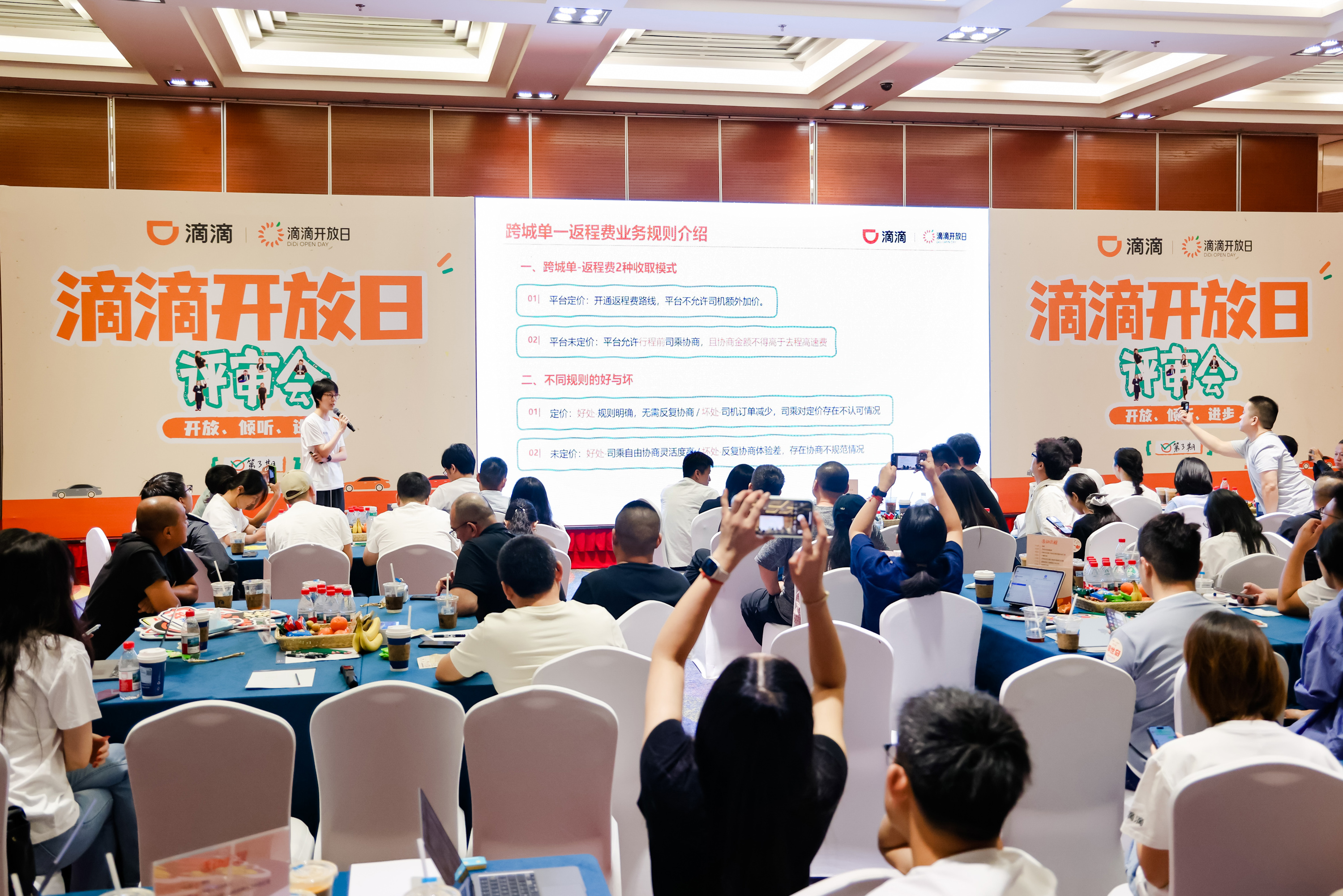
Core Viewpoint - Didi is actively engaging with drivers and stakeholders through its "Driver Experience Supervisor Review Meeting" to address issues such as cheating at stations and cross-city return fees, aiming to improve platform rules and driver experiences [1][5]. Group 1: Cheating and Governance - Didi has established a special project to combat cheating at stations, collaborating with multiple departments to quickly address system vulnerabilities [2] - In 2025, Didi assisted law enforcement in 10 criminal cases and took down 14 criminal groups related to cheating software, resulting in the arrest of 43 suspects [2] - New measures include requiring drivers to stay on the listening page at stations and implementing facial recognition and multi-algorithm dispatch to ensure fairness in order acceptance [2] Group 2: Cross-City Return Fees - Didi is testing two approaches for cross-city return fees, including a fixed fee for specific routes and allowing drivers to negotiate fees with passengers before the trip [2] - The app will display highway fees as a reference for passengers, who can choose from three fee options, with all fees going to the driver [2] - This pilot program will soon be launched in several cities, including Jiangmen and Zhaoqing, with plans for nationwide rollout based on trial results [2] Group 3: Commission Structure - The "Commission Treasure" feature launched in July allows drivers to see their average commission rate after completing over 50 rides [3] - Driver commission rates reported by drivers from Xi'an and Shenzhen were 6.9% and 18% respectively for August [3] - Didi explained that commissions are influenced by supply and demand, with adjustments made during peak and off-peak times to encourage order fulfillment [3] Group 4: Financial Transparency and Feedback - Didi clarified that commissions do not equate to profit, as most funds are reinvested into driver and passenger incentives, system maintenance, and compliance costs [4] - Suggestions from participants included enhancing bill visibility, providing audio notifications for negative commissions, and improving overall driver income through increased order volume [4] - Didi expressed commitment to ongoing optimization based on feedback from drivers and stakeholders [4][5]
司机抽成、作弊治理、返程费改进,滴滴开放日聚焦这些核心问题
Di Yi Cai Jing· 2025-09-13 05:24
Core Insights - The article discusses Didi's ongoing efforts to improve driver experience and address key issues such as cheating at pick-up stations and cross-city return fees through open discussions and feedback sessions with drivers, media, and experts [1][15][20] Group 1: Cheating at Pick-up Stations - Didi has established a special task force to combat cheating at pick-up stations, quickly addressing system vulnerabilities [2] - Since 2015, Didi has collaborated with law enforcement to tackle illegal activities, resulting in 10 criminal cases and the dismantling of 14 criminal gangs in 2025 alone [2] - New rules have been piloted in some cities to ensure fairness in order allocation, including requiring drivers to stay on the order page and enhancing facial recognition [2] Group 2: Cross-City Return Fees - Didi currently has two methods for handling cross-city return fees, including a negotiation option for drivers and passengers, but issues with communication and pricing clarity have been noted [3] - A new app feature will allow for transparent negotiation of return fees, displaying highway costs as a reference for passengers, with the option for drivers to accept or decline the ride [3] Group 3: Commission Rates - Drivers shared their commission rates during the meeting, with examples showing rates of 6.9% and 18% for different drivers [7] - Didi clarified that the average commission rate for all orders in 2024 is 14%, emphasizing that commissions are not pure profit but are used for subsidies, system maintenance, and other operational costs [9] - Suggestions from drivers included improving bill visibility and reducing commission rates to enhance driver earnings [12] Group 4: Open Dialogue and Continuous Improvement - The event highlighted Didi's commitment to open dialogue and continuous improvement, with a focus on addressing driver concerns and enhancing service quality [17][20] - Didi aims to maintain the open review sessions to foster communication and gather constructive feedback for ongoing enhancements [17][20]
滴滴:2024年所有订单平均抽成为14%,抽成不等于利润,大部分通过补贴反馈司乘和服务生态建设
Xin Lang Ke Ji· 2025-09-13 03:32
Core Insights - Didi held its third "Driver Experience Supervisor Review Meeting," focusing on driver feedback and revenue sharing issues [2][3] - The company reported improvements in combating cheating and addressing cross-city order return fees [2][3][4] Group 1: Cheating Prevention - Didi has established a special team to combat cheating, addressing system vulnerabilities quickly [2] - Since 2015, Didi has collaborated with law enforcement, leading to the arrest of 43 suspects involved in cheating activities [2] - New rules have been piloted in some cities to ensure fairness in order allocation for drivers [2] Group 2: Cross-City Order Return Fees - Didi currently employs two methods for return fees, allowing drivers to negotiate with passengers while capping the fee at the highway cost [3] - A new app feature will enable clearer negotiations for return fees, displaying highway costs and allowing passengers to choose from three fee options [3] - This trial will be implemented in cities like Jiangmen and Zhaoqing, with plans for nationwide rollout based on feedback [3] Group 3: Revenue Sharing Concerns - Drivers shared their experiences regarding revenue sharing, with reported commission rates of 6.9% and 18% for different drivers [3][4] - Didi clarified that the commission is not purely profit, as it funds various operational costs and driver incentives [5] - The average commission for all orders in 2024 is projected to be 14% [5] Group 4: Driver Feedback and Suggestions - Attendees provided constructive feedback, including the need for clearer bill visualization and automatic income calculations [5] - Didi's CTO emphasized the importance of ongoing dialogue with drivers to address their concerns and improve services [5]

滴滴试点返程费自主议价
Di Yi Cai Jing· 2025-09-13 03:01
Core Viewpoint - The company is addressing the issue of return trip costs for drivers by introducing a new pricing mechanism that allows for negotiation within the app, ensuring transparency for passengers while compensating drivers for their return journey expenses [1] Group 1: Driver Compensation - Drivers face challenges with return trips due to empty runs and highway costs, seeking compensation for these expenses [1] - The platform has introduced an in-app negotiation feature for return fees, allowing drivers to receive full compensation for their return costs [1] Group 2: Passenger Transparency - The app will display highway costs to passengers as a reference for return fees, offering three pricing tiers for passengers to choose from [1] - This initiative aims to maintain reasonable and transparent pricing for passengers while supporting drivers [1] Group 3: Pilot Program - The pilot program for the new return fee mechanism will be launched in cities including Jiangmen, Zhaoqing, Kaifeng, Quanzhou, and Jinan [1] - The company plans to refine and expand the program nationwide based on the results of the pilot [1]
滴滴2024年所有订单平均抽成14%
Di Yi Cai Jing· 2025-09-13 02:23
Group 1 - The average commission rate for Didi's orders in 2024 is projected to be 14% [1] - Didi's representative clarified that the commission does not equate to profit, as a significant portion of the commission is allocated to subsidies for drivers and riders [1] - The funds from the commission are also used for various expenses, including platform system maintenance, payment and settlement security, customer service, insurance and claims, compliance, and taxes [1]