债券

Search documents
深交所:2025年记账式贴现(七十九期)国债12月22日上市交易
Sou Hu Cai Jing· 2025-12-18 08:18
12月18日,深交所发布公告,关于2025年记账式贴现(七十九期)国债上市交易的通知。 来源:市场资讯 2025年记账式贴现(七十九期)国债已发行结束,根据财政部有关规定,本期债券于2025年12月22日起 在深交所上市交易。本期债券为28日期贴现式国债,证券编码"110185",证券简称"贴债2579",发行总 额400亿元。 ...
为拉票强忍“翻空”,排名仍低?某固收首席不满新财富评选结果
Xin Lang Cai Jing· 2025-12-18 07:02
答:上午,亚太地区股市普遍回调,主要是交易昨晚的美股,具体一早做过详细解读《美股AI昨晚又 崩了》,近期AI板块全球市场的相关性很高,建议大家关注一下聊海外的账号。 A股这边,光模块等AI硬件顺势领跌,但整体还算是独立行情,上涨个股占比70%。 来源:债券今天有蛋吗 原标题:太好笑了哈哈哈 1、一段话介绍今天上午的债市? 债券这边,整体小幅震荡下行。 | 利率债二级 | | 信用债二级 | 同业存单二级 | | 同业存单一级 ... | 地方债 | 3 " | | --- | --- | --- | --- | --- | --- | --- | --- | | | 1Y | 2Y | 3Y | 5Y | 7Y | 10Y | 超长 | | | 259978.IB | 250024.IB | 250015.IB | 250014.IB | 250018.IB | 250016.IB | 2500006.IB | | 国债 | 1.3650 | 1.3950 | 1.3975 | 1.5600 | 1.7160 | 1.8375 | 2.2330 | | | ▼ 1.00 | ▼ 0.50 | 0.00 | ▼ ...

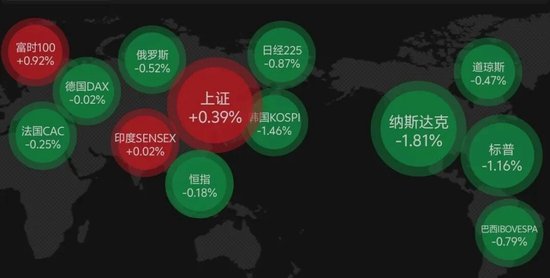
日本央行购债不及预期 日债收益率飙升倒逼汇市
Jin Tou Wang· 2025-12-18 02:26
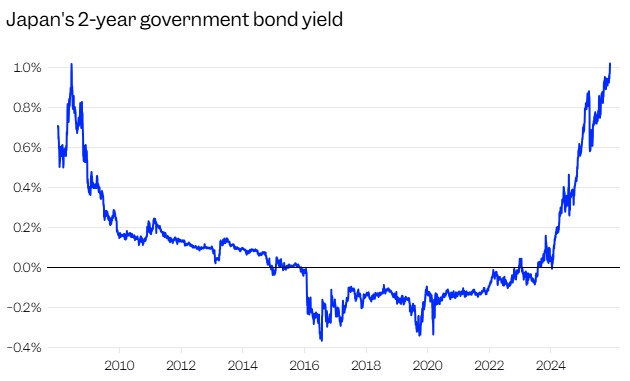
周四(12月18日)回溯12月17日市场动态,日本国债市场遭遇显著抛售潮,10年期日债收益率一举突破关 键阻力位,触及2007年6月以来的18年新高,与此同时,美元兑日元汇率在155.50附近震荡上行。 在这两股力量的共同驱动下,抛压在10年期日债品种上表现得尤为剧烈。午后时段,10年期基准收益率 一度冲高至1.98%,刷新18年以来的峰值。值得注意的是,盘中30年、40年期等超长期债券,曾因投资 者从低息旧券换仓至高息新券的技术性操作获得短暂买盘支撑,但这种局部性的调整未能扭转债市整体 的下行颓势。 结合技术面信号来看:日债收益率正测试布林带上轨阻力,而美元兑日元汇率同步走高,MACD指标显 示汇价上涨动能趋于积极,二者呈现出鲜明的正向联动关系,契合"日债收益率上升→日美利差收窄压 力缓和→日元贬值压力加大(美元兑日元上涨)"的传统传导逻辑。不过需要警惕的是,当前日债收益率 的快速上冲,带有显著的"测试政策底线"与"财政担忧发酵"双重色彩,其上涨趋势的持续性,以及日本 央行后续可能采取的干预措施,将成为下一阶段债市与汇市联动关系能否延续的核心关键。 日本国债市场在周三承受的抛售压力并非孤立行情,而是近期多重 ...
上交所:上海奉贤发展(集团)有限公司债券12月19日上市,代码244413
Sou Hu Cai Jing· 2025-12-18 02:13
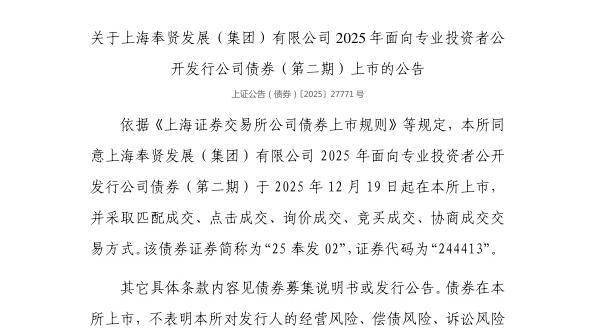
12月18日,上交所发布关于上海奉贤发展(集团)有限公司2025年面向专业投资者公开发行公司债券 (第二期)上市的公告。 依据《上海证券交易所公司债券上市规则》等规定,上交所同意上海奉贤发展(集团)有限公司2025年 面向专业投资者公开发行公司债券(第二期)于2025年12月19日起在上交所上市,并采取匹配成交、点 击成交、询价成交、竞买成交、协商成交交易方式。该债券证券简称为"25奉发02",证券代码 为"244413"。 来源:市场资讯 ...
加息周期开启,日本国债成家庭理财“新宠”:零售销售额创18年纪录
Zhi Tong Cai Jing· 2025-12-18 01:15
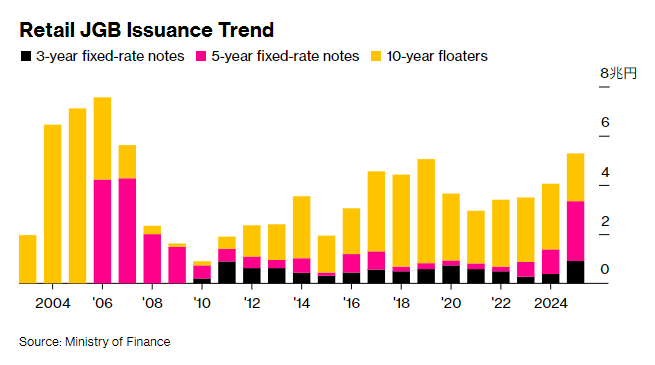
Core Insights - The Bank of Japan's tightening policy is driving household funds from bank deposits to the government bond market, with sales to individual investors surpassing 5 trillion yen (approximately 32 billion USD), marking the highest level since 2007 [1] - The total issuance of government bonds from January to December reached 5.28 trillion yen, with the five-year retail bond issued in November having a coupon rate of 1.22%, nearly 2.7 times the 0.46% rate from the previous year [1] Group 1 - The issuance of government bonds this year includes approximately 1.9 trillion yen of ten-year floating-rate bonds, which adjust their coupon rates based on overall market interest rates, providing unique investment value during the monetary tightening cycle [2] - A household investor expressed that government bond rates are higher than bank deposit rates, and the floating interest structure offers the potential for increasing returns over time, despite acknowledging that these returns may not outpace inflation [2] - The interest rate for ten-year fixed deposits at banks like Mizuho is only about 0.5%, explaining why some savers are shifting their funds to significantly higher-yielding government bonds [2] Group 2 - The coupon rates for retail government bonds set for settlement in January next year are confirmed: 1.1% for three-year fixed-rate bonds, 1.35% for five-year fixed-rate bonds, and 1.23% for ten-year floating-rate bonds, with the five-year rate reaching a new high since 2007 and the ten-year floating rate hitting the highest since its introduction in 2003 [2] - The final issuance scale of retail government bonds will be determined based on the cumulative subscription amounts from individual investors [2]
经济日报财经早餐【12月18日星期四】
Jing Ji Ri Bao· 2025-12-17 23:33
Group 1 - The National Development and Reform Commission and the National Energy Administration have issued a notice to establish a national unified electricity market evaluation system, focusing on market operation effectiveness, market role, sustainable development of operating entities, and market competition adequacy [1] - The Ministry of Finance, in collaboration with the National Healthcare Security Administration, has allocated 416.6 billion yuan for basic medical insurance subsidies and medical assistance funds for urban and rural residents for 2026, with a total of over 3 trillion yuan invested in healthcare from 2018 to 2025 [1] - The Ministry of Education has issued a notice to strengthen daily exam management in primary and secondary schools, aiming to reduce exam frequency, enhance exam quality, and alleviate students' academic burden [1] Group 2 - The national service industry production index has increased by 5.6% year-on-year in the first eleven months, with high business activity indices in railway transportation and monetary financial services [2] - The State Administration for Market Regulation has released a draft for public consultation on antitrust compliance for internet platforms, warning against practices that may constitute abuse of market dominance [2] - The National Standardization Administration's proposal for a marine energy conversion system standard has been successfully established in the International Electrotechnical Commission, receiving strong support from countries like the US, Canada, and the UK [2] Group 3 - The new 10-year government bond yield in Japan has risen to 1.975%, the highest level since June 2007 [3] - The US Trade Representative's office has indicated potential retaliatory measures against the EU if it continues to restrict US service providers' competitiveness [3] - The National Health Commission has announced a public consultation on the revised draft of the Blood Donation Law, marking the first major amendment since its implementation in 1998 [3]
没有商量的余地,我国继续抛售美债,美新发1.8万亿美债谁敢接盘
Sou Hu Cai Jing· 2025-12-17 17:28
Core Viewpoint - China is gradually reducing its holdings of US Treasury bonds, reflecting a shift in its foreign exchange reserve strategy and raising concerns about the implications for global economic stability [1][3][4]. Group 1: China's Actions - China, as the largest holder of US Treasury bonds, has been decreasing its holdings over the past few years, indicating a clear trend despite the decline not being drastic [3][4]. - The reasons for China's decision to sell US Treasuries include declining yields, currency risk associated with a depreciating dollar, and a desire for greater economic independence and strategic signaling to the US [4][6][8]. - The reduction in US Treasury holdings is part of China's broader strategy to diversify its foreign exchange reserves and establish a payment system based on the renminbi [7][10]. Group 2: US Treasury Situation - The US government announced the issuance of $1.8 trillion in new bonds to finance its substantial annual expenditures, which include military spending, social welfare, and infrastructure [6][8]. - The US public debt has surpassed its GDP, raising concerns about the sustainability of its debt levels and the reliability of the US government's creditworthiness [6][8]. - The challenge for the US is finding buyers for the new bonds, as traditional buyers, including foreign central banks and domestic investors, are becoming hesitant due to the increasing debt burden and declining attractiveness of US Treasuries [7][8]. Group 3: Global Implications - The issues surrounding US Treasuries are not only a concern for the US but also for the global economy, as many countries hold significant amounts of US debt in their foreign exchange reserves [7][10]. - There is a trend among various countries to reassess their foreign exchange reserve structures, with some increasing gold reserves and seeking alternative currencies for investment [7][10]. - The ongoing situation with US Treasuries could lead to broader changes in the global financial system, as trust in the US government and the dollar is being reevaluated [10].

飙升的日债收益率:美股的灰犀牛?
智通财经网· 2025-12-17 08:35
Core Viewpoint - Japan's long-term bond yields have reached multi-year highs, indicating weak investor demand due to concerns over increased government spending and a potential interest rate hike on December 19 [1][4]. Group 1: Market Dynamics - The Japanese bond market, valued at $7.5 trillion, has experienced unusual volatility in recent months, starting from May when a poorly received 20-year bond auction led to soaring yields [1][4]. - The Bank of Japan (BOJ), which holds over half of the country's sovereign bonds, has begun to gradually reduce its balance sheet and decrease bond purchases, leaving a gap in the market that other buyers have not filled [1][4]. - Despite recent weak demand, there are signs of recovery, with a 30-year bond auction on December 4 attracting the strongest demand since 2019, particularly from foreign buyers seeking higher yields [5]. Group 2: Economic Implications - The BOJ's exit from the market coincides with Japan's transition out of a deflationary period, which has historically involved heavy bond purchases to stimulate the economy [4]. - Concerns over rising yields are compounded by a significant economic stimulus plan approved by the Japanese government, amounting to ¥21.3 trillion (approximately $1.37 billion), which may necessitate increased borrowing and bond issuance [8][9]. Group 3: Central Bank Response - The BOJ is aware of the increasing volatility in bond yields and plans to slow its exit from the bond market, reducing monthly bond purchases by ¥200 billion instead of ¥400 billion starting next fiscal year [7]. - The government is also attempting to mitigate yield pressure by relying on short-term debt issuance rather than long-term bonds to fund its stimulus plan [9]. Group 4: Global Market Impact - Rising Japanese bond yields are significant for global financial markets, as Japan has been a major player in the low-interest-rate environment that has influenced global investment strategies [11]. - The narrowing yield spread between Japanese and U.S. bonds could lead to a reversal of "yen carry trades," where investors borrow in yen to invest in higher-yielding assets, potentially causing market disruptions [11][14]. - Analysts warn that a significant unwinding of Japanese carry trades could impact U.S. markets, especially given the current fiscal challenges faced by the U.S. government [14].
债市日报:12月17日
Xin Hua Cai Jing· 2025-12-17 08:05
Core Viewpoint - The bond market showed slight strengthening on December 17, with long-term bonds performing better, as government bond futures rose across the board and interbank bond yields fell by approximately 2 basis points [1][2]. Market Performance - Government bond futures closed higher, with the 30-year main contract up by 0.63% to 112.14, the 10-year main contract up by 0.10% to 108.005, and the 5-year main contract up by 0.06% to 105.84 [2]. - The yield on the 30-year government bond "25超长特别国债06" decreased by 2.5 basis points to 2.254%, while the 10-year government bond "25附息国债16" yield fell by 0.95 basis points to 1.843% [2]. International Bond Market - In North America, U.S. Treasury yields fell across the board, with the 10-year yield down by 3.12 basis points to 4.143% [3]. - In Asia, Japanese bond yields rose, with the 10-year yield increasing by 2.1 basis points to 1.974% [4]. Primary Market - The Ministry of Finance reported weighted average winning yields for 28-day and 91-day government bonds at 1.1220% and 1.2957%, respectively, with bid-to-cover ratios of 2.09 and 2.69 [5]. Liquidity Conditions - The central bank conducted a 7-day reverse repo operation of 468 billion yuan at a rate of 1.40%, resulting in a net withdrawal of 1430 billion yuan for the day [6]. - Short-term Shibor rates mostly declined, with the overnight rate down by 0.1 basis points to 1.275% [6]. Institutional Views - Huaxi Fixed Income noted that the bond market's short-term fundamentals are not the main pricing driver, with concerns over redemption fee regulations and long-term bond supply overshadowing expectations for loose monetary policy [7]. - Zheshang Bank indicated that the overall liquidity is stable, and there are no significant adverse policies or events affecting the bond market, suggesting that further declines are unlikely [8]. - CITIC Securities mentioned that seasonal factors may lead to a slight contraction in the scale of wealth management products, but this is expected to recover quickly in early January [8].
刚刚,猛烈抛售!加息,突传大消息!
券商中国· 2025-12-17 07:59
Core Viewpoint - The Japanese government bond market is experiencing significant sell-offs, with the 10-year bond yield reaching its highest level since June 2007, driven by rising interest rate expectations from the Bank of Japan and concerns over the government's fiscal policies [1][3][5]. Group 1: Rising Bond Yields - The 10-year Japanese government bond yield peaked at 1.978%, nearing the psychological 2% barrier not breached in nearly 20 years [1][3]. - Analysts attribute the continuous rise in yields to the Bank of Japan's increasing interest rate hike expectations [1][5]. Group 2: Bank of Japan's Rate Hike Expectations - The market anticipates a 25 basis point rate hike in the upcoming policy meeting, raising short-term rates from 0.5% to 0.75%, the highest in 30 years [5]. - Bank of Japan Governor Kazuo Ueda is expected to emphasize the commitment to further rate increases, with the pace depending on the economic response to each hike [5]. Group 3: Government Fiscal Policies - Prime Minister Fumio Kishida's expansionary fiscal policies are raising concerns about Japan's fiscal discipline, contributing to the pressure on government bonds [8]. - The approved supplementary budget for fiscal year 2025 amounts to 18.3 trillion yen, with over 60% of the funding sourced from new bond issuances [9]. - The supplementary budget is the largest post-pandemic, aimed at addressing rising prices and promoting economic growth, with significant allocations for subsidies and defense spending [9].