
集成电路

Search documents
在临港 打造青年创业理想城 “临港科创城”建设方案发布 建设国际科创中心重要基地
Jie Fang Ri Bao· 2026-01-22 01:31
Core Points - The "Lingang Science and Technology Innovation City" construction plan aims to leverage the innovative advantages of the new area, promoting innovation and entrepreneurship, and establishing Lingang as a key hub for technology transfer, emerging industries, and youth entrepreneurship [1] - The plan sets two phased goals for 2027 and 2030, including the establishment of at least 7 high-level laboratories and research institutions, maintaining R&D expenditure at over 5.5% of GDP, nurturing over 2,000 high-tech enterprises, and attracting over 40,000 innovative talents [1] Group 1: Goals and Communities - The plan outlines four benchmark science and technology innovation communities: 1. Dishui Lake AI Innovation Port focusing on digital culture, automotive electronics, and smart terminals 2. Dishui Lake IC Innovation Port concentrating on integrated circuits, brain-machine science, and new materials 3. Dishui Lake Financial Bay targeting overseas services and cross-border finance 4. Dishui Lake International Data Port emphasizing digital services and e-commerce live streaming [2] Group 2: Action Plans - Five major action plans are proposed: 1. Strengthening technology transfer by leveraging high-level research institutions and major scientific facilities, focusing on key industries like integrated circuits and civil aviation [3] 2. Leading frontier industries by nurturing future industry tracks such as fourth-generation semiconductors and controlled nuclear fusion [3] 3. Attracting innovative and entrepreneurial talent through the "Blue Whale Plan" targeting digital nomads and entrepreneurs [3] 4. Accelerating capital empowerment with a 600 million yuan fund to support innovative projects in civil aviation and biomedicine [3] 5. Building an innovation ecosystem by providing over 300,000 square meters of low-cost entrepreneurial space and 5,000 youth apartments within five years [4]

工业和信息化领域对经济增长贡献超四成 人工智能产业亮点纷呈
Ren Min Ri Bao· 2026-01-22 00:02
Core Insights - In 2025, China's industrial added value is expected to grow by 5.9% year-on-year, with the manufacturing sector maintaining a stable share of GDP, and the manufacturing scale likely to remain the largest globally for 16 consecutive years [1] Group 1: Industrial and Economic Growth - The industrial and information technology sectors are projected to contribute over 40% to economic growth [1] - The added value of integrated circuits and electronic materials increased by 26.7% and 23.9% respectively, while industrial robot production rose by 28% [3] - New energy vehicle sales reached 16.49 million units, marking a year-on-year growth of 28.2% [3] Group 2: Technological Advancements - The global AI technology is accelerating innovation and integration across various industries, with significant advancements in materials like perovskite and permanent magnet materials [2] - New products such as intelligent robots and biomanufacturing products are rapidly entering the market, supported by new scenarios like "5G+" and "industrial internet+" [2] Group 3: Smart and Green Transformation - The first batch of 15 leading factories has been showcased, achieving an average production efficiency increase of 29% and a reduction in product defect rates by 47% [4] - The average renewable energy utilization rate for national green computing facilities is expected to exceed 70% by 2025 [5] Group 4: Digital Economy Integration - By the end of 2025, China's digital industry revenue is projected to reach approximately 38.3 trillion yuan, with profits of 3.1 trillion yuan, reflecting growth rates of 39.5% and 48.4% respectively compared to 2020 [6] - The number of connected industrial devices has surpassed 100 million, with significant improvements in production capacity and quality due to the integration of digital technologies [7] Group 5: Consumer Goods Sector - The added value of the consumer goods industry is expected to grow by 3.7% year-on-year, accounting for 26.1% of total industrial output [8] - Initiatives to enhance supply and meet consumer demand have led to the release of numerous innovative products and the establishment of a quality safety traceability system for infant formula [8][9]
人工智能产业亮点纷呈
Xin Hua Wang· 2026-01-21 23:41
Core Insights - The Chinese industrial economy is projected to achieve a year-on-year growth of 5.9% in industrial added value by 2025, with manufacturing's contribution to GDP remaining stable and maintaining its position as the world's largest manufacturing sector for 16 consecutive years [1] Group 1: AI Industry Development - The global AI technology is accelerating innovation and integration across various sectors, with China's AI industry showing significant vitality and innovation since the 14th Five-Year Plan [2] - High-quality innovative results are emerging, including advancements in perovskite materials, permanent magnet materials, and power batteries, with technologies like quantum computing and brain-computer interfaces expanding into new fields [2] Group 2: Competitive Industries - Key industries such as integrated circuits and electronic materials have seen substantial growth, with added value increasing by 26.7% and 23.9% respectively, while industrial robot production rose by 28% [3] - New energy vehicle sales reached 16.49 million units, marking a year-on-year increase of 28.2% [3] Group 3: Smart and Green Transformation - The initiative aims to create "Chinese models" of smart manufacturing, with 15 pilot factories showcasing high efficiency and quality, achieving an average production efficiency increase of 29% and a reduction in defect rates by 47% [4] - AI has penetrated over 70% of operations in these pilot factories, leading to the development of over 6,000 vertical models and the application of more than 1,700 key smart manufacturing equipment and industrial software [4] Group 4: Digital Economy Integration - By the end of 2025, China's digital industry revenue is expected to reach approximately 38.3 trillion yuan, with profits of 3.1 trillion yuan, reflecting growth rates of 39.5% and 48.4% compared to the end of the 13th Five-Year Plan [6] - The industrial internet has achieved comprehensive coverage, with over 100 high-level 5G factories leading globally, resulting in a 25% increase in average capacity and a 21% improvement in product quality [7] Group 5: Consumer Goods Industry - The consumer goods industry is projected to grow by 3.7% by 2025, accounting for 26.1% of total industrial output, with efforts focused on expanding domestic demand and optimizing supply [8] - Initiatives to enhance product quality and brand strategy are underway, including the launch of 93 consumer brands and 43 regional brands, aimed at boosting domestic consumption [8] Group 6: Industry Upgrading Foundations - Implementation of digital transformation plans for various sectors, including textiles and food, is being prioritized to strengthen the consumer goods industry's unique clusters [9]
“压舱石”作用愈发凸显 创新动能持续壮大
Xin Lang Cai Jing· 2026-01-21 22:36
Core Viewpoint - The industrial economy in China is showing steady growth, with significant contributions to overall economic performance, and the government is committed to advancing new industrialization by 2025 [1][8]. Group 1: Industrial Growth and Performance - The industrial added value of large-scale enterprises increased by 5.9% year-on-year, with manufacturing value added maintaining the world's top position for 16 consecutive years [1]. - The added value of equipment manufacturing and high-tech manufacturing increased by 9.2% and 9.4% year-on-year, respectively [2]. - The telecommunications business volume grew by 9.1% year-on-year, indicating robust performance in the industrial and information sectors [1]. Group 2: Support for Small and Medium Enterprises - The government is implementing reforms to reduce burdens on enterprises and ensure the implementation of policies that benefit businesses, fostering a supportive environment for development [3]. - A total of 17,600 specialized and innovative "little giant" enterprises have been cultivated, along with over 140,000 specialized and innovative small and medium enterprises [3]. Group 3: Innovation and New Growth Drivers - Significant advancements in technology are highlighted, including breakthroughs in humanoid robots and major equipment like large-diameter shield machines [4]. - The added value of industries such as integrated circuits and electronic materials is projected to grow by 26.7% and 23.9% year-on-year, respectively, by 2025 [5]. - The scale of artificial intelligence computing power in China has reached 1,590 EFLOPS, with applications expanding across key industries [5]. Group 4: Digital Economy and Industrial Upgrading - The integration of the digital economy with the real economy is enhancing industrial transformation, with over 23,000 "5G + industrial internet" projects established [6]. - New business models such as "black light factories" and "smart ports" are emerging as key drivers for upgrading traditional industries [6]. Group 5: Future Industrial Strategy - The government aims to stabilize growth, strengthen innovation, promote integration, optimize governance, and prevent risks as part of the new industrialization strategy [8]. - Focus areas include enhancing the adaptability of consumer goods supply and demand, promoting green and low-carbon transitions, and developing new energy solutions [8].
人工智能产业亮点纷呈(权威发布)
Ren Min Wang· 2026-01-21 22:32
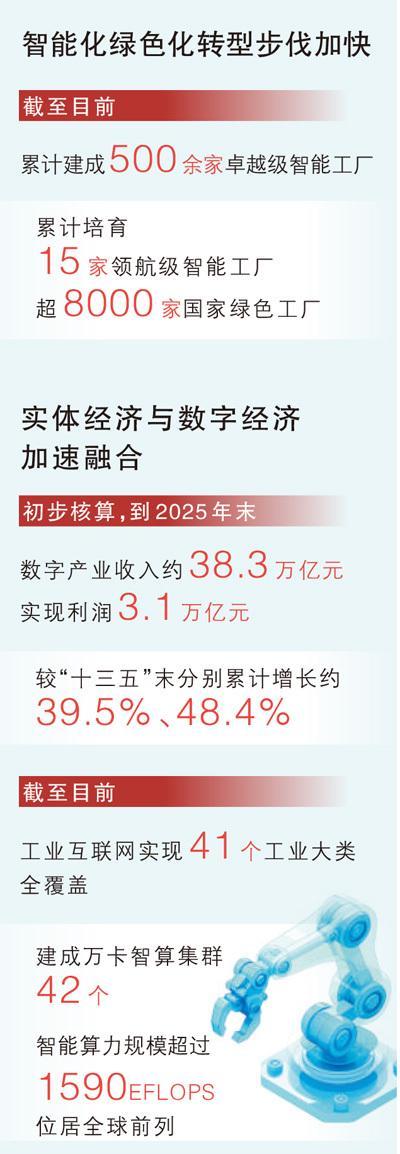
Group 1: Industrial Transformation and Growth - As of now, over 500 exemplary smart factories have been established, with 15 leading smart factories cultivated and more than 8,000 national green factories built [1] - By the end of 2025, the digital industry revenue is expected to reach approximately 38.3 trillion yuan, with profits of 3.1 trillion yuan, representing cumulative growth of about 39.5% and 48.4% compared to the end of the 13th Five-Year Plan [6] - The industrial internet has achieved full coverage across 41 industrial categories, with the establishment of 42 smart computing clusters [1] Group 2: High-Quality Development and Innovation - By 2025, the added value of large-scale industrial enterprises is projected to grow by 5.9% year-on-year, with the manufacturing sector's contribution to GDP remaining stable [2] - New production capabilities are leading to high-quality development, with significant advancements in materials and technologies such as perovskite materials, permanent magnet materials, and power batteries [2] - The production efficiency of leading factories has improved by an average of 29%, and the defect rate of products has decreased by 47% [4] Group 3: Market Expansion and Consumer Goods - The consumer goods industry is expected to see a 3.7% year-on-year increase in added value by 2025, accounting for 26.1% of total industrial output [8] - A series of promotional activities have been organized to enhance the supply of quality products, including the release of 35 bio-manufacturing products and 1,321 innovative textile products [8][9] - The strategy to enhance brand development is being implemented, with the selection of 93 national consumer brands and 43 regional brands to stimulate domestic consumption [8]

GDP破5万亿,北京新动能挑大梁
Xin Lang Cai Jing· 2026-01-21 16:27
Core Insights - Beijing's GDP is projected to exceed 5 trillion yuan by 2025, achieving a growth rate of 5.4% compared to the previous year, marking a significant milestone in the "14th Five-Year Plan" period [2] - The economic growth is achieved amidst a backdrop of reducing non-capital functions and transitioning from extensive to refined development, indicating a high-quality leap in the capital's economy [2] Economic Performance - The manufacturing sectors, particularly computer, communication, and automotive industries, experienced substantial growth rates of 20.2% and 17.7%, respectively, driven by new energy vehicles, consumer electronics, and integrated circuits [3] - The added value of strategic emerging industries and high-tech manufacturing increased by 15.5% and 7.5%, with production of new energy vehicles and lithium-ion batteries surging by 1.4 times and 1.2 times, respectively [3] Industry Dynamics - The modern service sector grew by 5.8%, nearing 4.5 trillion yuan, reinforcing its role as a stabilizing force in Beijing's economy, showcasing the deep integration of manufacturing and service industries [4] - The growth in high-tech manufacturing is accompanied by a simultaneous boom in productive service industries, indicating a robust industrial ecosystem that enhances resilience against external uncertainties [4] Future Outlook - Despite the rapid growth in emerging sectors, sustained policy support and market cultivation are essential for these sectors to become the backbone of a trillion-yuan economy [5] - Maintaining strategic focus on high-precision and high-tech development is crucial, ensuring the continued leadership of industries like computing and automotive while proactively positioning for future industries [6]
工业和信息化部:创建国家新兴产业发展示范基地 加快培育新兴支柱产业
Zheng Quan Ri Bao· 2026-01-21 16:26
Core Insights - The development of the industrial and information sector in China by 2025 is characterized by four key features: stability, progress, new momentum, and vitality [1] Group 1: Industrial Growth - The added value of industrial enterprises above designated size is expected to grow by 5.9% year-on-year in 2025, with the manufacturing sector maintaining a stable share of GDP [1] - The added value of equipment manufacturing and high-tech manufacturing is projected to increase by 9.2% and 9.4% year-on-year, respectively, outpacing the overall industrial growth by 3.3 and 3.5 percentage points [1] - The production of industrial robots is anticipated to rise by 28% year-on-year, while new energy vehicle sales are expected to reach 16.49 million units, reflecting a year-on-year growth of 28.2% [1] Group 2: Emerging Industries - The added value of industries such as integrated circuits and electronic special materials is forecasted to grow by 26.7% and 23.9% year-on-year, respectively [1] - The government plans to implement actions to develop and strengthen emerging industries, including the establishment of national demonstration bases for emerging industry development [1] Group 3: Support for SMEs - The government aims to optimize the business environment for small and medium-sized enterprises (SMEs) by implementing a development plan for SMEs during the 14th Five-Year Plan period [2] - A three-year action plan will be initiated to cultivate more specialized and innovative SMEs, along with the establishment of specialized empowerment centers [2] - The government will enhance public services for SMEs, focusing on market expansion, digital empowerment, financing, talent development, management improvement, and international cooperation [2]
中国经济年报丨2025年A股价值重塑 估值核心转向“硬科技”
Sou Hu Cai Jing· 2026-01-21 14:52
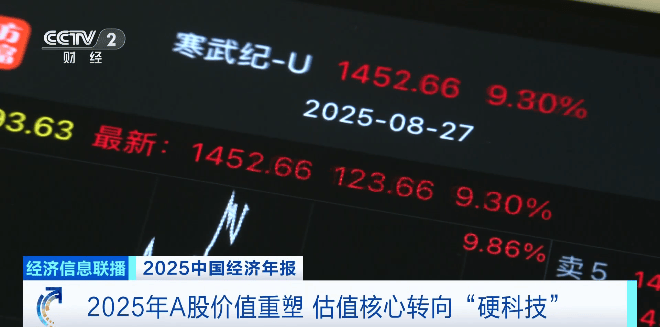
(央视财经《经济信息联播》)2025年,在中国资本市场,科技板块表现亮眼,折射出中国经济的创新 底色。透过资本市场感受2025年中国科技创新的活力。 复旦大学国际金融学院执行院长 钱军:硬科技已成为中国经济增长的核心驱动力,将激励更多企业投 身硬科技研发和发展。 "股王"易主的背后,是硬科技赛道的全面爆发与资本配置的深度重构。2025年10月28日,科创板科创成 长层首批新注册公司——禾元生物、西安奕材、必贝特正式上市,这是A股时隔两年多再次迎来未盈利 企业上市。截至目前,科创板已支持60家未盈利企业上市,其中22家未盈利企业在上市后实现盈利并摘 U,"摘U"不仅标志财务改善,更反映企业技术突破和市场认可度提升。 2025年,A股科创板上市公司总量突破600家,总市值超10万亿元,形成覆盖集成电路、生物医药、新 能源等领域的"硬科技"全产业链集群。以制造业、科学研究和技术服务业为代表的高新技术企业市值变 化最突出,总市值较年初分别增长33.3%和32.1%。市值格局的转型,离不开顶层设计的精准引导。科 创板设立、创业板改革、退市制度优化等一系列举措,逐步畅通了科技、资本与实体经济的高水平循 环。 2025年8 ...
上海去年增速超预期:工业投资为何激增20%?高出口能否延续?
2 1 Shi Ji Jing Ji Bao Dao· 2026-01-21 14:44
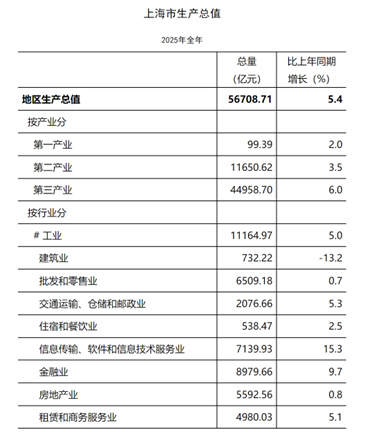
Economic Overview - In 2025, Shanghai's GDP reached 5.67 trillion yuan, growing by 5.4% year-on-year, surpassing the initial target of 5% and the national average growth rate of 5.0% [1][2] - The primary industry added value was 99.39 billion yuan (2.0% growth), the secondary industry was 11,650.62 billion yuan (3.5% growth), and the tertiary industry was 44,958.70 billion yuan (6.0% growth) [1][3] Income and Employment - The per capita disposable income in Shanghai was 91,987 yuan, a 4.1% increase from the previous year, which is lower than the GDP growth rate [1] - The average urban unemployment rate was 4.2%, better than the national average of 5.2% [1] Key Economic Drivers - Shanghai's economic growth is primarily supported by advanced manufacturing, new foreign trade products, and modern service industries [1][2] - The three leading manufacturing sectors (integrated circuits, biomedicine, and artificial intelligence) saw a 9.6% increase in output, while the new energy sector grew by 12.9% [6] Investment Trends - Fixed asset investment in Shanghai grew by 4.6%, which is below the GDP growth rate [7] - Industrial investment surged by 20.0%, the highest in over a decade, while real estate investment declined by 3.1% [10] - Urban infrastructure investment increased by 11.2%, indicating a structural optimization in investment [10] Consumption Patterns - The total retail sales of consumer goods reached 1.66 trillion yuan, growing by 4.6% year-on-year, reversing a decline from the previous year [11] - The increase in inbound tourism, with 9.36 million visitors, contributed significantly to the consumption market [12] Trade Performance - Shanghai's total import and export volume reached 4.51 trillion yuan, a 5.6% increase, with exports growing by 10.8% [13] - The export of "new three samples" products increased by 17.4%, with electric vehicle exports rising by 13.8% [6][13] Future Outlook - For 2026, Shanghai aims for a GDP growth target of around 5%, considering external uncertainties and internal structural adjustments [16] - Key factors influencing future economic performance include exports, investments, and consumption [17] - The "14th Five-Year Plan" emphasizes synchronized growth of resident income and economic growth, along with improving labor remuneration and productivity [20]
聚焦“从1到10”,临港未来5-10年建成国际一流科创城
Di Yi Cai Jing· 2026-01-21 14:34
Core Viewpoint - The establishment of the "Lingang Innovation City" aims to transform Lingang from an "industrial highland" to an "innovation and entrepreneurship highland," supporting Shanghai's development as an international technology innovation center [1][2]. Group 1: Development Goals - By the end of 2027, Lingang aims to establish at least 7 world-class research institutions, over 2,000 high-tech enterprises, and attract more than 40,000 innovative talents [3]. - By 2030, Lingang seeks to solidify its strategic technological capabilities and significantly enhance its technology transfer capabilities, becoming an important base for Shanghai's international technology innovation center [3]. Group 2: Unique Advantages - Lingang's strengths lie in its robust industrial foundation and open institutional environment, making it an ideal area for the transformation of results from "1 to 10" and the industrial expansion from "10 to 100" [2]. - The region contributes over 1/9 of the city's industrial output value, gathers about 1/5 of manufacturing fixed asset investment, and accounts for 2/5 of major advanced manufacturing projects [2]. Group 3: Solutions for Technology Transfer - Lingang proposes a solution characterized by "low cost, supportive environment, and practical scenarios" to facilitate technology transfer [4]. - The area offers attractive low-cost entrepreneurial spaces, with 100,000 square meters of "zero rent" incubation space and 200,000 square meters of low-cost development space [4]. Group 4: Financial Support and Ecosystem - A comprehensive financial support system covering the entire lifecycle of enterprise development has been established, including the Lingang Qihang Fund and various specialized support programs [4]. - The region encourages major enterprises to open application scenarios and engage in "challenge-based" initiatives to help startups quickly secure initial orders [4]. Group 5: Future Industry Layout - Lingang Innovation City has outlined five major action plans focusing on technology transfer, leading edge industries, talent aggregation, capital acceleration, and innovation ecosystem construction [6]. - The region aims to leverage its strengths in integrated circuits, civil aviation, smart vehicles, and high-end equipment to foster future industry sectors such as fourth-generation semiconductors and controlled nuclear fusion [6][7]. Group 6: Support for Emerging Technologies - Lingang will support existing successful models like the "photovoltaic hydrogen production and hydrogen integration" demonstration project to accelerate the application and commercialization of new technologies [7]. - A collaborative approach will be taken in the fourth-generation semiconductor field to establish specialized transformation platforms and industry clusters [8].