半导体

Search documents
国产GPU,集体交卷
半导体行业观察· 2026-03-31 02:23
Core Viewpoint - The recent annual reports from local GPU companies, including TianShu ZhiXin, MoEr Thread, MuXi, and BiRan, indicate a significant increase in both revenue and market presence, reflecting the growing demand for AI computing power and GPU solutions in China [1]. Group 1: TianShu ZhiXin - TianShu ZhiXin, a leading provider of general-purpose GPU products and AI computing solutions in China, reported a revenue of RMB 1,033.6 million for 2025, a year-on-year increase of 91.6%, with a gross profit of RMB 558.0 million, up 110.5% [3][5]. - The company has focused on self-developed principles and a research and development rhythm of producing, designing, and pre-researching, which has strengthened its position in the domestic GPU and AI computing market [3][6]. - The general-purpose GPU products generated revenue of RMB 922.6 million, representing a 149.6% increase year-on-year, accounting for 89.3% of total revenue [6][7]. Group 2: MoEr Thread - MoEr Thread reported a revenue of RMB 150,552.51 million, a 243.37% increase year-on-year, with a net loss of RMB 102,431.13 million, narrowing by 36.70% compared to the previous year [11][13]. - The company launched the flagship MTTS5000 GPU, achieving market-leading performance and large-scale production, supporting trillion-parameter model training [11][13]. - MoEr Thread signed a significant product sales agreement worth RMB 660 million, indicating strong market demand and operational growth [14]. Group 3: MuXi - MuXi reported a net loss of RMB 78,944.63 million for the reporting period, with a focus on self-innovation and increasing R&D investment, which accounted for 62.49% of revenue [16][17]. - The company aims to achieve profitability by optimizing costs and stabilizing gross margins, with expectations for revenue growth to continue [17][18]. - MuXi is dedicated to developing high-performance GPU chips and computing platforms, targeting various industries including education, finance, and healthcare [18][19]. Group 4: BiRan Technology - BiRan Technology recorded a revenue of RMB 1,034.6 million, a 207.2% increase year-on-year, with a gross profit of RMB 557.0 million, up 210.8% [22][23]. - The company has made significant investments in R&D, amounting to RMB 1,476.1 million, reflecting its commitment to product innovation and market readiness [23][24]. - BiRan has successfully delivered large-scale computing clusters and established partnerships with leading AI model companies, enhancing its market presence and technological capabilities [25][26].

AI芯片公司,融资30亿
半导体行业观察· 2026-03-31 02:23
Core Viewpoint - Rebellions, a South Korean AI chip startup, has raised $400 million (approximately 3 billion RMB) to expand into the U.S. market before its IPO, with a valuation of $2.34 billion [1][9]. Group 1: Funding and Market Expansion - The funding round was led by Future Asset Financial Group and the Korean National Growth Fund, which is part of the government's initiative to boost the domestic semiconductor industry [1][3]. - Rebellions aims to target large labs like Meta and xAI as primary customers, rather than large-scale data center operators like Amazon and Microsoft [1][2]. - The company is currently conducting active proof-of-concept trials with several clients in the U.S. [1]. Group 2: Product and Technology - Rebellions focuses on inference capabilities, providing higher energy efficiency and performance compared to competitors like Nvidia [2]. - The company sells server systems composed of its Rebel100 NPU chips, which are designed for high-performance AI applications [2][5]. - The Rebel100 processor can perform petaFLOP dense 16-bit floating-point operations and has a total memory bandwidth of 4.8 TB/s [6]. Group 3: Competitive Landscape - Rebellions competes not only with Nvidia but also with other startups like Cerebras and Groq [2]. - The company claims to have a strong revenue source, although it faces challenges in securing memory chip supplies due to high demand and limited availability [2][6]. - Rebellions benefits from its close relationships with major memory manufacturers like Samsung and SK Hynix, which are also investors in the company [2][3]. Group 4: Strategic Initiatives - The South Korean government launched the "K-Nvidia" initiative to invest in companies designing advanced AI chips, with Rebellions being a key player [3]. - Rebellions has established offices in Japan, Saudi Arabia, Taiwan, and the U.S. to promote its technology globally [5]. - The company is developing a new rack-level computing platform that does not require liquid cooling or ultra-high power density racks, aiming to make deployment easier in existing enterprise data centers [4][7]. Group 5: Software and Integration - Rebellions' software stack operates on open-source frameworks like vLLM, PyTorch, and Triton, facilitating ease of use for clients familiar with these technologies [8]. - The company is a member of the PyTorch Foundation, which is relatively uncommon among AI chip startups, indicating a commitment to open-source collaboration [9].

快手、腾讯、京东、阿里,集体上涨
Di Yi Cai Jing Zi Xun· 2026-03-31 01:43
Group 1 - The Hang Seng Index opened up by 0.27%, while the Hang Seng Tech Index increased by 0.08% [1] - Several large tech stocks rebounded, with Midea Group rising over 4%, NIO up more than 1%, and other companies like Kuaishou, Tencent, JD Group, Alibaba, and NetEase also experiencing gains [1] Group 2 - Semiconductor and chip stocks weakened, with Zhaoyi Innovation dropping nearly 5%, and companies like Lanke Technology, Tianyue Advanced, SMIC, and Huahong Semiconductor also showing significant declines [2] Group 3 - Most electrical equipment stocks increased, with Yihuatong rising over 5%, and companies such as Junda Co., Ningde Times, and Zhongchuang Innovation also seeing upward movement [3]


国海证券晨会纪要-20260331
Guohai Securities· 2026-03-31 01:41
Group 1 - Huawei held a spring product launch event, officially launching the Leap A10, a pure electric small SUV priced between 65,800 to 86,800 yuan, aiming to penetrate the competitive market segment with advanced driving technology [5][4] - The automotive sector in A-shares outperformed the Shanghai Composite Index during the week of March 23-27, 2026, with the automotive index declining only 0.4% compared to the overall market [4] - The report indicates a positive outlook for the automotive industry in 2026, driven by the high-end upgrade of domestic brands and the acceleration of intelligent technology integration [6] Group 2 - Credit bond ETF size increased to 544.66 billion yuan as of March 27, 2026, marking a month-on-month increase of 21.97 billion yuan, with the Sci-Tech bond ETF ending a 10-week contraction [9][10] - The report highlights a shift in the credit bond ETF holdings structure, with a preference for mid to long-term securities during the recent expansion phase [10] - The report anticipates that the current low premium levels of Sci-Tech bond ETFs may rise if market preferences shift positively [11] Group 3 - Sanhuan Group reported a 22.1% year-on-year increase in revenue for 2025, reaching 9.007 billion yuan, and a 19.5% increase in net profit, amounting to 2.618 billion yuan [11][13] - The company’s electronic components business saw a significant revenue increase of 43.95% year-on-year, driven by strong demand in the MLCC product segment [13][14] - The report emphasizes the potential of the SOFC market, with the company positioned to benefit from the growing applications of solid oxide fuel cells [15][16] Group 4 - Siwei achieved a revenue of 9.031 billion yuan in 2025, reflecting a 51.32% year-on-year growth, with net profit soaring by 154.94% to 1.001 billion yuan [20][21] - The company’s revenue growth was driven by four key sectors, including smart security, smartphones, automotive electronics, and AI applications, with automotive electronics experiencing a remarkable 113.02% increase [21][23] - Siwei is focusing on building a comprehensive product matrix centered around AI, enhancing its competitive edge in the market [23] Group 5 - Great Wall Motors reported total revenue of 222.8 billion yuan in 2025, a 10.2% increase year-on-year, but net profit fell by 22.1% to 9.87 billion yuan [25][26] - The company is set to launch the V9X, a luxury six-seat SUV, in the second quarter of 2026, which features advanced technology and a competitive performance profile [27] - Great Wall Motors aims to achieve overseas sales of 600,000 vehicles in 2026, reflecting a 40.4% year-on-year increase in early 2026 sales [28][29] Group 6 - Huai Bei Mining reported a revenue of 41.1 billion yuan in 2025, a 37% decline year-on-year, with net profit dropping by 69% to 1.5 billion yuan [30][31] - The company’s coal production decreased by 15.4% year-on-year, while the average selling price of coal fell by 26.7% [32] - The report anticipates a potential recovery in 2026, with expectations of increased production and pricing in the coal sector [30] Group 7 - G-bits achieved a revenue of 6.205 billion yuan in 2025, a 67.89% increase year-on-year, with net profit rising by 89.82% to 1.794 billion yuan [37][38] - The company plans to distribute a cash dividend of 7 yuan per share, reflecting a strong commitment to shareholder returns [36] - G-bits' self-developed games launched in 2025 significantly contributed to revenue growth, indicating a robust pipeline for future releases [37][39] Group 8 - HuiLiang Technology, a leader in AI and programmatic advertising, processes over 300 billion ad requests daily and has a strong presence in over 250 countries [41][42] - The report forecasts a significant growth trajectory for the programmatic advertising market, with a projected CAGR of 20.5% from 2025 to 2030 [42] - HuiLiang's competitive advantages stem from its advanced bidding strategies and a robust operational model that enhances profitability [43][44]
一天4个IPO,港股2026年最忙星期一
36氪· 2026-03-31 00:55
Core Viewpoint - The article highlights the significant activity in the Hong Kong IPO market, particularly on March 30, 2026, when four companies went public simultaneously, reflecting a resurgence in the market and investor interest in technology sectors such as robotics, AI, and semiconductors [4][19]. Group 1: IPO Highlights - On March 30, 2026, four companies—Hua Yan Robotics, De Shi Bio, Han Tian Tian Cheng, and Ji Shi Jiao—were listed on the Hong Kong Stock Exchange, marking a notable event in the IPO landscape [4][7]. - Han Tian Tian Cheng's stock surged by 44% to HKD 110 per share, with a market capitalization of HKD 46.8 billion; Ji Shi Jiao increased by 49.88% with a market cap of approximately HKD 7 billion; De Shi Bio skyrocketed by 121.21% to a market cap of around HKD 20 billion; and Hua Yan Robotics opened at HKD 16.8 per share, valued at about HKD 9 billion [4][8]. Group 2: Company Profiles - Hua Yan Robotics, established in 2017, is the second-largest collaborative robot company in China, holding a 10.3% market share domestically and 3.5% globally as of 2024. The company uniquely sells both complete robots and core components, creating a competitive edge [8][11]. - Han Tian Tian Cheng is a leading global supplier of silicon carbide epitaxial wafers, with over 30% market share in 2024. The company shifted its IPO plans from the STAR Market to Hong Kong, reducing its fundraising target by over 50% [9][10]. - Ji Shi Jiao has developed an "AI visual algorithm mall" platform, showcasing 1,517 algorithms across various industries, with a project delivery rate exceeding 80% since its inception [10][11]. - De Shi Bio, recognized as the first stock focused on medical imaging AI, has developed the iMedImage® model, which supports 19 imaging modalities and covers over 90% of clinical scenarios [11][12]. Group 3: Market Trends and Reforms - The Hong Kong IPO market has seen a revival, with 39 new listings in 2026, raising over HKD 100 billion by March 30. This resurgence is attributed to regulatory reforms and improved liquidity [19][21]. - The Hong Kong Stock Exchange is undergoing reforms to enhance its competitiveness, including relaxing financial thresholds for listings and increasing the voting rights cap for different share classes, which benefits tech startups [19][23]. - The successful IPOs of these four companies reflect a broader trend of institutional investment in technology sectors, with significant backing from venture capital and private equity firms [14][15][16].

4die 改2die 没啥好说的
小熊跑的快· 2026-03-31 00:47
Core Viewpoint - The article discusses the current status and future implications of NVIDIA's chip production strategy, particularly focusing on the transition from Rubin Ultra 4 die to 2 die configurations while maintaining overall performance and capacity [1]. Group 1 - NVIDIA's current wafer capacity at TSMC for the N3 process is 60%, which the company aims to retain [1]. - The introduction of LPU using SF4X (Samsung) does not impact TSMC's capacity, indicating a strategic move to optimize production without reducing output [1]. - The overall computational power remains unchanged despite the reduction in die packaging, suggesting that the performance metrics will not be adversely affected [1]. Group 2 - Attention is drawn to the upcoming Google Next 2026 conference, hinting at potential developments or announcements that could influence the industry [1].

内存涨价潮要结束了?“最痛苦的时刻还没来”
虎嗅APP· 2026-03-31 00:31
Core Viewpoint - The article discusses the recent price fluctuations in memory chips, particularly DDR5 and DDR4, highlighting a significant price drop in DDR5 but a mixed market response, indicating that the decline is not widespread and may not reflect a true supply-demand shift [5][6]. Group 1: Price Trends and Market Dynamics - Recent reports indicate that DDR5 memory prices have dropped by hundreds to over a thousand yuan, but this is not a universal trend across the market [5]. - The average transaction price for DDR5 on the second-hand market is around 1000 yuan, reflecting a decrease of 80 yuan from the previous week, while DDR4 prices have increased by 30 yuan to 415 yuan [5]. - Analysts suggest that the slight price decrease is influenced by market supply-demand dynamics and inventory holding behavior rather than a fundamental shift in supply-demand balance [6]. Group 2: Future Outlook and Industry Insights - Silicon Motion's CEO predicts that 2026 will be a challenging year for shortages and price increases, with 2027 expected to be even worse [6][16]. - The price of DRAM and NAND Flash has reached the highest levels since 2016, with some models experiencing cumulative increases of up to 369% [8]. - The rising costs of memory chips are significantly impacting the BOM (Bill of Materials) for smartphones, with memory now accounting for over 20% of costs, and in some mid-range models, this figure approaches 30-40% [9]. Group 3: Impact on Major Companies - Major smartphone manufacturers like Xiaomi are feeling the pressure from rising memory prices, with forecasts indicating that global memory chip prices in Q1 are approximately four times higher than the same period last year [9]. - Price adjustments have been observed across various smartphone brands, with Samsung, OPPO, and vivo all announcing price increases for their models [9]. - The ongoing memory price surge has led to strategic shifts, with some companies like Meizu halting new product development due to unsustainable costs [9]. Group 4: AI's Role in Market Changes - The rapid growth of AI infrastructure is driving unprecedented demand for storage solutions, leading to severe shortages in DRAM and NAND [12][13]. - North American cloud service providers are significantly impacting the supply chain by purchasing large quantities of memory resources, exacerbating shortages for other sectors [13]. - The shift in demand towards high-bandwidth memory (HBM) is causing traditional consumer electronics to face resource allocation challenges, as major manufacturers prioritize HBM production over standard memory chips [13][14]. Group 5: Long-term Industry Challenges - The cyclical nature of the memory market is being disrupted, with traditional analysis frameworks failing to predict the current crisis [16]. - Supply chain constraints and cautious capital expenditure from NAND manufacturers are expected to prolong the current shortage and price increases [16][17]. - The article emphasizes that the ongoing crisis is fundamentally a resource "crowding out" effect caused by AI infrastructure demands, leading to significant challenges for traditional consumer electronics [17][21].



中原证券晨会聚焦-20260331
Zhongyuan Securities· 2026-03-31 00:19
Core Insights - The report highlights the performance of various sectors in the A-share market, with the battery and non-ferrous metals industries leading the gains, while sectors like insurance and banking showed weaker performance [4][12][15] - The macroeconomic environment is characterized by a recovery in industrial output and consumer spending, with national industrial value-added increasing by 6.3% year-on-year in January-February 2026 [9][11] - The report emphasizes the importance of policy support for economic recovery, with the government planning to implement measures to enhance consumer spending and optimize tax refund processes for foreign tourists [6][8] Domestic Market Performance - The Shanghai Composite Index closed at 3,923.29, with a slight increase of 0.24%, while the Shenzhen Component Index fell by 0.25% [3] - The average price-to-earnings ratios for the Shanghai Composite and ChiNext indices are 16.08 and 46.21, respectively, indicating a favorable environment for medium to long-term investments [13][15] Industry Analysis - The report discusses the brokerage sector's performance, noting a decline in the brokerage index by 2.08% in February 2026, underperforming the CSI 300 index [18] - The gaming industry is highlighted as a growth area, with major companies like Google and Apple reducing revenue share percentages, benefiting game developers [21][23] - The smart home appliance market is projected to grow significantly, with a forecasted market size of approximately $180 billion by 2026, driven by advancements in technology and consumer demand [30][31] Economic Data Insights - In January-February 2026, Henan Province's industrial value-added increased by 7.8%, with retail sales growing by 3.6%, indicating a stable economic performance [9][10] - The report notes that the automotive industry faced challenges in February 2026, with production and sales declining due to seasonal factors and policy changes [33][34] Investment Recommendations - The report suggests focusing on sectors such as batteries, non-ferrous metals, and energy equipment for short-term investment opportunities [13][16] - In the brokerage sector, it is recommended to monitor leading firms with strong wealth management capabilities and those with valuations below the sector average [20] - For the smart home appliance sector, companies like Haier, Midea, and Gree are recommended for their high dividend yields and low valuations [31][32]

美股存储板块,集体重挫
财联社· 2026-03-30 23:54
Group 1: Market Overview - The U.S. stock market faced pressure due to conflicting signals from President Trump regarding Iran, with oil prices rising significantly, as WTI crude oil futures surpassed $100 per barrel for the first time since July 2022 [1] - The Dow Jones Industrial Average closed up 49.50 points, or 0.11%, at 45,216.14; the Nasdaq fell 153.72 points, or 0.73%, to 20,794.64; and the S&P 500 dropped 25.12 points, or 0.39%, to 6,343.73 [3] Group 2: Sector Performance - Among the 11 sectors of the S&P 500, the industrial sector fell by 1.61%, technology by 1.49%, and energy by 0.87%, while the financial sector rose by 1.1% [4] - In sector-specific ETFs, the semiconductor ETF declined by 3.13%, global airline ETF by 2.03%, and technology ETFs by up to 1.86%, while the banking and financial ETFs saw slight increases of 0.36% and 1.15%, respectively [4] Group 3: Notable Stock Movements - Major tech stocks mostly declined, with Meta up 2.03%, Amazon up 0.81%, and Microsoft up 0.61%, while Tesla fell by 1.81% and Nvidia by 1.4% [5] - U.S. aluminum companies saw significant gains, with Alcoa up over 8% and Century Aluminum up over 7%, following attacks on a major aluminum production facility in the UAE [6] - Fannie Mae surged by 51% and Freddie Mac by 47%, as investor Bill Ackman highlighted their undervaluation [7] - Sysco, the largest food distributor in the U.S., dropped 15% after announcing a $29 billion acquisition of Restaurant Depot [8]

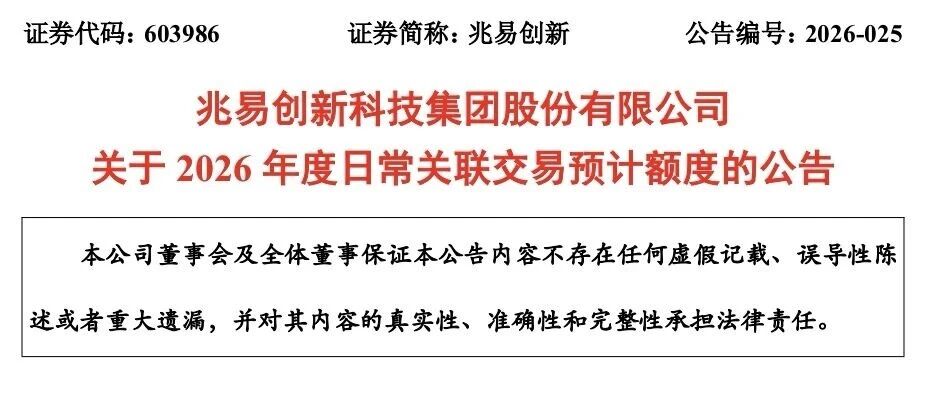
兆易创新拟向长鑫采购DRAM超57亿元
是说芯语· 2026-03-30 23:32
Core Viewpoint - The announcement from Zhaoyi Innovation (603986) regarding the expected daily related transactions for 2026 indicates a significant increase in procurement of DRAM-related products from Changxin Technology Group, with an estimated transaction amount of $825 million, equivalent to approximately 5.711 billion RMB, pending shareholder approval [1][4]. Group 1 - The expected transaction amount for 2026 is a substantial increase compared to the actual transaction of 1.182 billion RMB in 2025, driven by increased business demand from niche new products and solutions, along with rising wafer foundry costs due to the uptrend in the niche DRAM market prices [4]. - As of March 30, 2026, Zhaoyi Innovation has already engaged in related transactions amounting to 581 million RMB with Changxin Group this year [4]. - The transaction was approved unanimously by non-related directors, with independent directors also recognizing the fairness of the transaction, while related director Zhu Yiming abstained from voting due to his position as chairman of Changxin Technology Group [4]. Group 2 - Changxin Group's latest operational data shows a revenue of 24.178 billion RMB for 2024, with a net loss attributable to shareholders of 7.145 billion RMB; for the first half of 2025, revenue was 15.438 billion RMB with a net loss of 2.332 billion RMB, indicating a stable operational and financial condition [5]. - Zhaoyi Innovation emphasizes that Changxin Group is a rare domestic DRAM IDM enterprise and an important foundry partner for its niche DRAM business, with the transaction being based on normal commercial practices and market fair pricing [4].