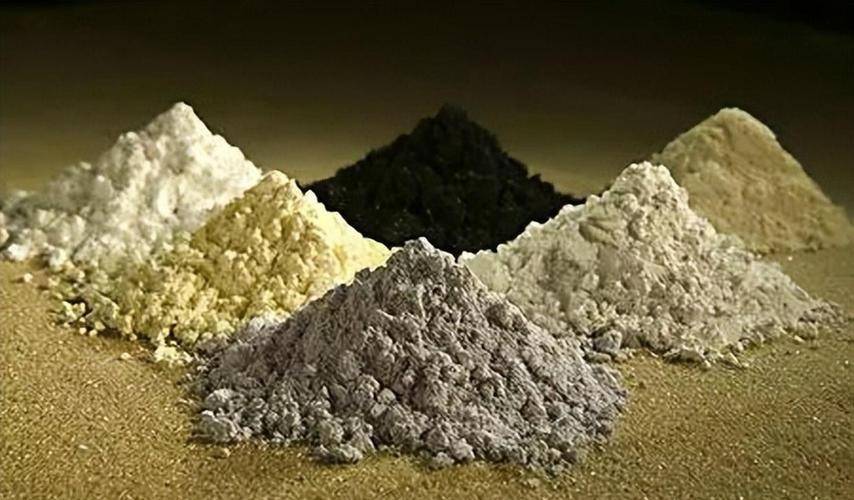
稀土产业

Search documents
投资别折腾!我们可能没那么聪明
雪球· 2025-10-09 08:05
Group 1 - The core viewpoint emphasizes the importance of not overtrading in the investment strategy for the fourth quarter, suggesting that maintaining a steady approach is crucial for enhancing investment experience [7][10]. - The article highlights the current market trends, noting that sectors such as artificial intelligence, Hong Kong innovative pharmaceuticals, and new energy batteries are performing well, while consumer sectors are lagging [8][10]. - It discusses the upcoming "15th Five-Year Plan" as a significant document for long-term investors, indicating that understanding this plan is essential for identifying investment opportunities and risks in the context of China's economic transformation [11][12]. Group 2 - The article raises the question of whether the market's main focus will shift from technology growth to resource cycles, suggesting that sectors like rare earths, non-ferrous metals, and new energy batteries may become the next focal points [13][14]. - It expresses concerns about the rapid rise in resource cycles, particularly in non-ferrous metals, which may face resistance at historical high levels [16]. - The article argues against the need for a defensive strategy in the fourth quarter, asserting that the dual themes of "valuation reassessment of Chinese assets" and "improvement in company quality" will likely continue to develop [18][19].


川普公开宣告:稀土到不了美国就加征200%关税!可惜威胁不了中国
Sou Hu Cai Jing· 2025-10-02 05:02
"吃中国的饭,还要砸中国的锅?"——这句话或许正好点出了当前的尴尬局面。 据路透社报道,G7成员国和欧盟正在酝酿一系列针对中国稀土产业的限制 措施。他们计划设定稀土价格下限、对部分中国稀土产品加征关税,甚至打着环保旗号征收所谓"碳税",试图削弱中国的价格优势,同时占据"道德高地"。 知情人士透露,G7内部还在讨论更多办法:比如提高外国资本投资中国关键矿产企业的门槛,避免资金流入中国;再比如设定稀土进口配额,限制从中国 采购的数量,迫使成员国更多依赖本土或"友好国家"的稀土。 西方的担忧与分歧 今年4月,中国对钐、钆、铽等关键稀土元素实施出口管制。中国方面强 调,这是为了保护资源、维护环境,属于国际通行做法。但在西方眼中,这被解读为可能"切断供应链"的信号。于是,在G7的"关键矿产计划"会议上,各国 提出上述对华限制,核心目的就是削弱中国在全球稀土链上的主导地位。 然而,内部意见并不统一。 - 美国最为强硬,积极推动设定价格下限和加征关 税。数据显示,中国收紧管控后,美国进口稀土磁铁的审批率骤降至42%,军工和高科技产业都出现原料紧缺。甚至在阅兵前夕,特朗普还威胁:"如果中 国不保证稀土磁铁出口,美国将对所有中 ...
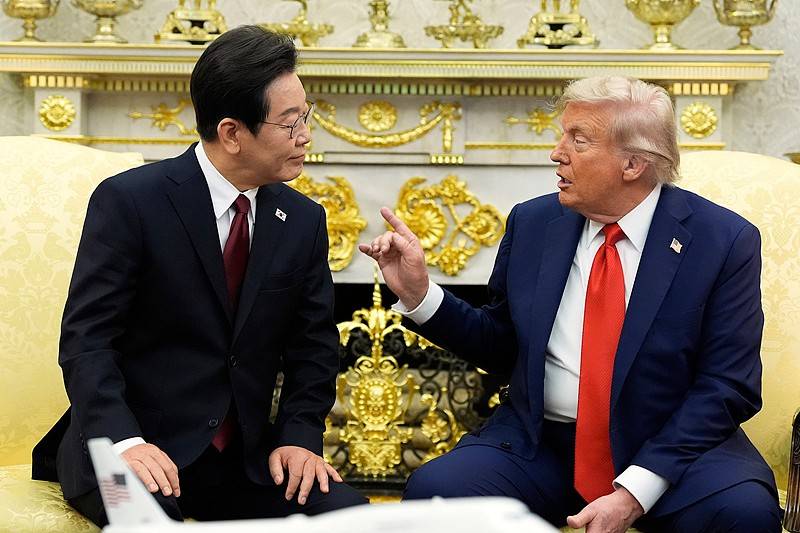
【ETF观察】9月17日行业主题ETF净流入39.78亿元
Sou Hu Cai Jing· 2025-09-17 23:58
Summary of Key Points Core Viewpoint - On September 17, a total of 39.78 billion yuan net inflow was recorded for industry-themed ETF funds, with a cumulative net inflow of 124.46 billion yuan over the past five trading days, indicating strong investor interest in these funds [1]. Fund Inflows - A total of 123 industry-themed ETF funds experienced net inflows on September 17, with the leading fund being the Guotai CSI All-Share Securities Company ETF (512880), which saw an increase of 9.36 million shares and a net inflow of 11.88 billion yuan [1][3]. - Other notable funds with significant net inflows include: - Huabao CSI Financial Technology Theme ETF (159851) with a net inflow of 5.25 billion yuan [3]. - Huaxia CSI Robotics ETF (562500) with a net inflow of 5.01 billion yuan [3]. - Guotai Securities ETF (512000) with a net inflow of 3.59 billion yuan [3]. Fund Outflows - On the same day, 164 industry-themed ETF funds experienced net outflows, with the Guotai CSI Coal ETF (515220) leading the outflows, which saw a reduction of 4.21 million shares and a net outflow of 4.6 billion yuan [4][5]. - Other funds with significant net outflows include: - Huabao CSI Medical ETF (512170) with a net outflow of 1.50 billion yuan [5]. - Penghua CSI Sub-Segment Chemical Industry ETF (159870) with a net outflow of 1.49 billion yuan [5]. - Huatai-PineBridge CSI Rare Earth Industry ETF (516780) with a net outflow of 1.36 billion yuan [5].
内蒙古:科技政策红利从“纸上”落到“账上”
Ke Ji Ri Bao· 2025-09-15 12:10
Core Insights - The Inner Mongolia Autonomous Region's technology transaction post-subsidy program has allocated 68.92 million yuan to support 856 technology transfer projects, enhancing the conversion of scientific achievements into practical applications [1] - The program aims to provide incentives for technology transfer and related services, targeting three main entities: technology demanders, suppliers, and transfer service institutions [1] - The funding is designed to stimulate technological upgrades in local enterprises, fostering high-quality economic development in the region [1] Group 1: Company Initiatives - Inner Mongolia Jinyu Baoling Biological Pharmaceutical Co., Ltd. has received 1.436 million yuan in post-subsidy funding, which will be directed towards ongoing R&D projects and capacity expansion [2] - The company is collaborating with Guangdong Lanyu Biotechnology Co., Ltd. and Shanghai Blue Magpie Biopharmaceutical Co., Ltd. to develop advanced vaccines, enhancing its technological capabilities and market competitiveness [2] - The funding is expected to support the health of the livestock breeding industry by ensuring the effective application of new technologies [2] Group 2: Industry Impact - The post-subsidy program has been tailored to meet the diverse innovation needs across various sectors, including pharmaceuticals, rare earths, and financial services [3][4] - In the pharmaceutical sector, companies like Lianbang Pharmaceutical (Inner Mongolia) Co., Ltd. are using the subsidies for process upgrades and green technology adoption, aiming to improve product quality and sustainability [3] - The rare earth industry is also benefiting, with companies like China Northern Rare Earth Group investing in new materials and technologies to enhance product value [3] Group 3: Policy Effectiveness - The policy is designed to ensure that subsidies are allocated to key innovation areas, such as green processes and digital transformation in service industries [4] - The program facilitates a seamless integration of academic research and industrial needs, exemplified by Inner Mongolia Mengniu Dairy Group's project that combines university resources with market demands [6] - The funding not only reduces innovation risks for companies but also promotes a virtuous cycle of research output, industrial application, and market feedback [7]


土耳其想用6.94亿吨稀土换中国技术,可供全球千年,是不是骗局?
Sou Hu Cai Jing· 2025-09-02 10:15
Core Viewpoint - The article discusses the implications of Turkey's discovery of nearly 700 million tons of rare earth minerals and the potential for Turkey to become a major exporter, while highlighting the challenges it faces in technology acquisition and geopolitical dynamics with China and the West [1][3][6]. Group 1: Turkey's Rare Earth Discovery - Turkey has discovered approximately 700 million tons of rare earth minerals, which could position it as a significant player in the global rare earth market [1][6]. - The theoretical reserves of rare earths in Turkey are substantial, but the actual mining value remains uncertain due to the lack of technology and infrastructure [5][6]. Group 2: Geopolitical Dynamics - Turkey's desire to collaborate with China for technology in rare earth mining is complicated by its existing partnerships with Western nations [10][11]. - The U.S. has been attempting to establish a new rare earth supply chain independent of China, but this process is lengthy and complex [22][20]. Group 3: Challenges in Rare Earth Processing - Even if Turkey successfully mines rare earths, the lack of local processing facilities means that the minerals may still need to be sent to China for refinement [24][22]. - The development of a rare earth processing industry in Turkey would require significant time and investment, similar to past failed attempts in other countries [20][22]. Group 4: Strategic Considerations - Turkey's strategic position allows it to balance relationships between East and West, but this may hinder decisive action in the rare earth sector [28][30]. - The global demand for rare earths is limited compared to other resources, which may affect Turkey's ability to leverage its reserves effectively [32][34]. Group 5: U.S. Interests - The U.S. is more focused on other potential rare earth sources, such as Greenland, rather than collaborating with Turkey, due to concerns about Turkey's geopolitical balancing act [38][42]. - The U.S. is currently facing a depletion of its domestic rare earth reserves, which increases its reliance on China [47][49].
特朗普通告各国:美国筹码比中方厉害!话音未落,中方专机将抵美
Sou Hu Cai Jing· 2025-09-01 09:55
Group 1 - The U.S. has significant rare earth resources, but processing and refining are heavily reliant on China, which holds 85% of global separation capacity [3][4] - Trump's proposed 200% tariffs on Chinese rare earth products may harm U.S. industries, including chips, batteries, and consumer electronics, exacerbating inflation [4][6] - The U.S. manufacturing sector is already feeling the impact, with companies like Ford halting production due to rare earth shortages [4][8] Group 2 - China's delegation to the U.S. is not seeking to appease but aims for equal negotiations, leveraging its complete rare earth supply chain and growing technological independence [6][9] - The U.S. aerospace industry, particularly Boeing, is vulnerable due to its reliance on the Chinese market, as evidenced by the suspension of orders for Boeing 737MAX [8][9] - The ongoing U.S.-China competition is fundamentally about the strength of their respective industrial bases, with China focusing on long-term advantages in key sectors like chips and renewable energy [9][11]
中国抢走美国稀土?鲁比奥:中国不喜欢赚钱,美国人做不到
Sou Hu Cai Jing· 2025-08-31 10:13
Group 1 - The U.S. has imposed tariffs of up to 54% on Chinese goods, indicating a shift towards a more pragmatic approach in trade relations with China [1] - Many U.S. companies rely heavily on Chinese supply chains, and increasing tariffs could lead to higher costs for these companies, affecting their competitiveness and potentially leading to higher prices for American consumers [1] - The U.S. Secretary of Commerce's comments on rare earths reflect a misunderstanding of the historical context and the current competitive landscape, as the U.S. once led in rare earth production but shifted focus due to higher costs and regulatory challenges [3] Group 2 - The contrasting statements from U.S. officials highlight a tension between recognizing the economic interdependence with China and the desire to maintain a competitive edge [5] - U.S. officials express concern over China's long-term strategic focus in key industries like rare earths, contrasting with the U.S. approach that prioritizes short-term profits [8] - The U.S. has lost its capabilities in rare earth processing due to outsourcing and a lack of investment in the necessary technologies, leading to vulnerabilities in critical resource supply [8][11]

特朗普表示“对华关税或提高到200%”,除非中国答应美国一个条件
Sou Hu Cai Jing· 2025-08-26 03:38
Group 1 - The core issue revolves around the U.S. reliance on China for rare earth magnets, which are critical for electric vehicles, wind turbines, military equipment, and electronics [2][3][6] - Trump's ultimatum for China to provide rare earth magnets or face a 200% tariff highlights the strategic anxiety of the U.S. regarding its dependence on Chinese resources [6][10] - Over 90% of high-end neodymium-iron-boron magnets are produced in China, indicating China's dominant position in the rare earth supply chain, built over decades [5][6] Group 2 - Despite Trump's threats, data shows that China's exports of rare earth magnets to the U.S. have actually increased, with July exports reaching 5,577 tons, marking a 75.5% month-over-month increase [12] - The trade war has escalated, with the U.S. imposing fluctuating tariffs since 2018, and the current proposed 200% tariff being the highest in history [8][10] - Historical evidence suggests that trade wars do not yield winners, as seen in past U.S. tariff policies that resulted in job losses in downstream industries [17][19] Group 3 - The U.S. faces dual pressures of layoffs and declining consumer purchasing power, while China maintains a more stable economic position with a complete industrial chain and extensive trade partnerships [16][14] - China's approach to the trade conflict emphasizes strategic stability and a commitment to multilateral trade, contrasting with the U.S.'s unilateral actions [24][26] - The ongoing trade tensions may lead to a scenario where the U.S. undermines its own market trust and international standing if it continues down the path of protectionism [26][28]

市场有望延续上行趋势!
Sou Hu Cai Jing· 2025-08-26 02:54
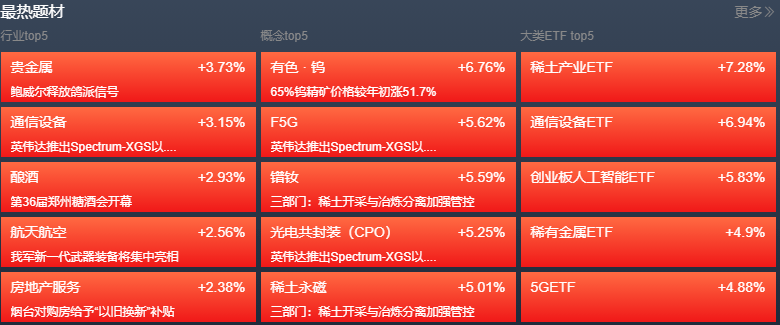
Market Overview - The market continued to rise with the Shanghai Composite Index approaching 3900 points, and a total trading volume of 3.18 trillion yuan, marking the second-highest trading volume in history, an increase of over 600 billion yuan compared to the previous trading day [1] - Over 3300 stocks closed higher, with northbound capital totaling 404.54 billion yuan [1] Sector Performance - Major sectors that saw gains include rare earths (+6.76%), communication equipment (+3.15%), and aerospace (+2.56%) [2] - The rare earth industry saw a significant price increase, with the price of 65% tungsten box mines rising by 51.7% since the beginning of the year [2] - Conversely, sectors such as electronic chemicals and biomedicine experienced slight declines [2][3] External Influences - The market's upward trend is attributed to external factors, particularly dovish signals from Federal Reserve Chairman Jerome Powell, which have significantly increased expectations for a rate cut in September [3] - This dovish stance is expected to lead to a substantial easing of global liquidity, benefiting financial markets worldwide [4] Future Outlook - Short-term market trends indicate a continued expansion of profit-making effects, likely attracting more external capital [4] - In the medium term, the Federal Reserve is anticipated to initiate a major rate-cutting cycle, with Powell suggesting potential rate cuts due to rising employment market risks [4] - The upcoming 2025 China Operating System Industry Conference on August 26 is expected to release the new generation of the Chinese operating system, which may stimulate related concepts [5]
让美国战机飞不起来!中国的绝地反击,外媒:这比芯片更严重
Sou Hu Cai Jing· 2025-08-22 04:56
Core Viewpoint - The recent trade conflict initiated by Trump in April 2025 has escalated into a global tariff war, affecting multiple countries and leading to significant retaliatory measures from China, particularly in the rare earth sector [1][5]. Group 1: Tariff War and Retaliation - Trump's new tariff policy targets not only China but also extends to other countries, marking a departure from the 2016 approach [1]. - China's response includes a comprehensive counterattack, which has garnered international media attention for its potential to disrupt global supply chains more severely than previous measures like chip bans [1][5]. Group 2: Importance of Rare Earth Elements - Rare earth elements are critical for U.S. military technology, with significant quantities used in advanced weaponry, including F-35 fighter jets and submarines [3][5]. - The U.S. has recognized the strategic importance of rare earths, leading to restrictions on military procurement from China, although compliance issues have arisen [3][5]. Group 3: Historical Context and Industry Dynamics - The U.S. and Europe initially led in rare earth applications, but China gained a competitive edge post-1978, particularly in refining technologies [6][7]. - Environmental regulations in the U.S. have hindered domestic rare earth production, allowing China to dominate the market with lower operational costs [7][8]. Group 4: Current Market Position and Future Outlook - China currently controls approximately 61% of global rare earth production and holds about 92% of the refining market [7]. - The U.S. faces significant challenges in reducing its reliance on Chinese rare earths, with estimates suggesting it may take at least 20 years to break this dependency [8].