
肉牛养殖

Search documents
散奶价格短期反弹难改去化大势,奶价拐点仍可期
Tianfeng Securities· 2025-10-14 14:41
Investment Rating - Industry rating is maintained at "Outperform the Market" [5] Core Viewpoints - The short-term rebound in raw milk prices does not change the ongoing destocking trend, but a price turning point is anticipated [1] - After significant destocking, beef cattle prices are gradually recovering, with September average prices reaching 25.99 CNY/kg, up 10.7% from the beginning of the year [2] - The rise in beef cattle prices is positively impacting the prices of cull cows, which in September averaged 19.33 CNY/kg, up 19.2% year-to-date [3] Summary by Sections 1) Raw Milk Price Analysis - Despite a short-term price rebound due to holiday stocking and school milk demand, overall prices remain below cost levels, leading to continued industry losses and destocking [1] - The September cow inventory decreased by 0.18% month-on-month, with a cumulative reduction of approximately 8% [1] 2) Beef Cattle Price Analysis - The average price of beef cattle in September was 25.99 CNY/kg, reflecting a 10.7% increase since the start of the year and a 15.6% increase from previous lows [2] - The average price of calves rose to 32.42 CNY/kg, marking a 39% increase from the lowest point in 2024 [2] 3) Impact of Beef Prices on Dairy Companies - The increase in beef cattle prices has led to a rise in cull cow prices, which is expected to improve the financial performance of dairy companies [3] - The trend of narrowing losses from cull cows is likely to continue for an extended period due to the long replenishment cycle in the beef industry [3] 4) Investment Recommendations - The core logic of the sector remains unchanged, with expectations for a price turning point and attractive valuations [4] - Recommended stocks include: Yuran Dairy, China Shengmu, Aoyuan Group, Modern Dairy, and Tianrun Dairy for dairy; and China Shengmu, Guangming Meat, and Fucheng Co. for beef [4]
花江峡谷大桥通车后 外来客流激活本地经济
Yang Guang Wang· 2025-10-13 00:44
Group 1 - The Huajiang Grand Canyon Bridge has become a new landmark for local tourism, receiving over 10,000 visitors daily since its opening on September 28 [1] - The bridge significantly reduces travel time between two banks from 2 hours to just 2 minutes, enhancing connectivity and logistics for local businesses [1] - The bridge has facilitated the establishment of a modern beef trading facility in the region, with an expected daily transaction volume of 3,000 heads of cattle [1] Group 2 - There are currently 11,000 households engaged in beef cattle farming in Guanling County, with a stable cattle inventory exceeding 100,000 heads [2] - The local government has proactively registered the "Huajiang Grand Canyon Bridge" trademark across 10 industries, including agricultural products, traditional Chinese medicine, catering, and beverages [2] - The bridge symbolizes not only a new height in China's infrastructure but also serves as a bridge for industry, livelihood, and openness in the region [3]
融入京津冀 北疆草原的“破圈”之路
Xin Jing Bao· 2025-10-04 07:39
Core Insights - The article discusses the transformation of Inner Mongolia through technological innovation and collaboration with Beijing, enhancing agricultural productivity and ecological restoration [1][3][19]. Group 1: Technological Innovation - The establishment of the National Technology Innovation Center in Hohhot has facilitated the integration of cutting-edge technologies into local industries, with 27 disruptive technology projects initiated [3][5]. - Smart farming technologies, such as intelligent cattle collars and edge computing devices, are being developed to enhance livestock management and renewable energy monitoring [5][15]. - The National Dairy Technology Innovation Center is addressing critical technological challenges in the dairy industry, including gender selection in cattle breeding, significantly reducing reliance on imported technologies [15][16]. Group 2: Ecological Restoration - The ecological restoration of the Chahan Nuur National Wetland has led to increased biodiversity and improved water conditions, attracting millions of tourists from the Beijing-Tianjin-Hebei region [6][7][11]. - Various ecological projects have been implemented since 2020 to combat desertification and restore wetland areas, resulting in a resurgence of wildlife and plant life [7][11]. Group 3: Agricultural Development - The transformation of rural areas, such as the establishment of modern beef cattle farms, has created job opportunities and increased incomes for local residents [11][12]. - The logistics infrastructure for agricultural products has improved, allowing for rapid distribution of Inner Mongolian agricultural goods to Beijing, with a promise of delivery within 12 hours [14][15]. Group 4: Educational and Medical Collaboration - Educational initiatives, including the establishment of a branch of Beijing 101 Middle School in Hohhot, are enhancing local education quality through resource sharing and modern teaching methods [19][21]. - Medical collaboration has seen over 320 experts from Beijing hospitals providing services in Inner Mongolia, significantly improving healthcare access for local populations [22].


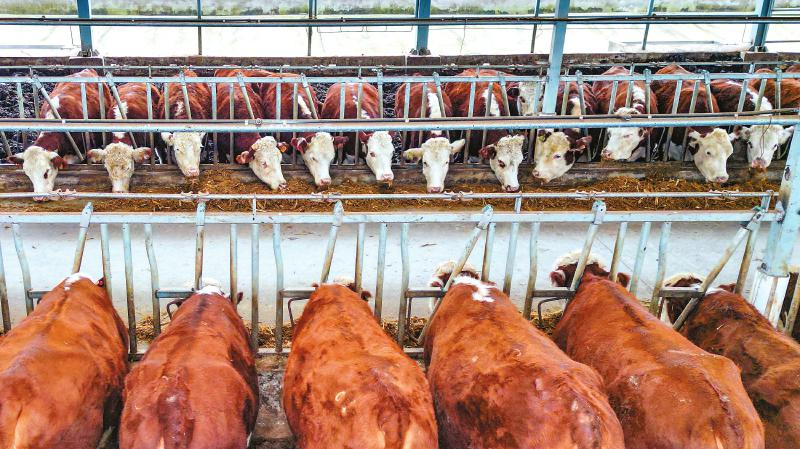
让肉牛产业“牛”起来 中国人民银行固原市分行推动肉牛产业“智能融通”
Jin Rong Shi Bao· 2025-09-25 03:35
Core Viewpoint - The beef cattle farming industry in Guyuan City, Ningxia, is a key agricultural sector that supports poverty alleviation and rural revitalization, with a projected cattle population of 1.06 million by the end of 2024, accounting for 43.27% of the region's total [1] Financial Support and Policy Measures - The People's Bank of China (PBOC) in Guyuan has implemented targeted financial policies to support the healthy development of the beef cattle industry, including measures to prevent financial institutions from withdrawing loans from farmers and agricultural enterprises [2] - As of the end of August, the balance of loans for the beef cattle industry reached 17.57 billion yuan, with a weighted average interest rate of 4.20% [1][2] - The city has established a mechanism for government and financial institutions to connect with key projects, enhancing the financing capabilities for small and micro enterprises [2] Credit System Development - The PBOC has expanded its credit system by implementing a "credit + loan" model, with 25 credit towns, 445 credit villages, and 130,500 credit users established, resulting in a loan balance of 879 million yuan for new agricultural entities [3] - The Agricultural Bank of China has promoted a model of "integrated village credit" to support cattle farmers, leading to the establishment of credit archives for 1,841 new agricultural entities [3] Innovative Financing Products - The local government has introduced policies to facilitate live cattle collateral loans, enhancing risk management and efficiency in financing [4] - As of now, approximately 5,500 cattle have been registered in the collateral system, with 44 million yuan in live cattle collateral loans issued [4] - Innovative loan products like "Smart Animal Husbandry Loan" have been developed, providing low-cost financing while promoting digital management of livestock [4] Risk Prevention and Coordination - Financial institutions are encouraged to conduct on-site investigations to assess funding needs and monitor loan quality, aiming to prevent potential defaults [6] - A comprehensive financing model combining government support, bank loans, collateral, insurance, and re-loans has been proposed to mitigate credit risks [6] - As of the end of August, 169,300 cattle have been insured, providing risk coverage of 1.645 billion yuan for 10,200 farmers [6]
让肉牛产业“牛”起来
Jin Rong Shi Bao· 2025-09-25 03:00
Core Viewpoint - The beef cattle farming industry in Guyuan City, Ningxia, is a key agricultural sector that supports poverty alleviation and rural revitalization, with a projected cattle population of 1.06 million by the end of 2024, accounting for 43.27% of the region's total [1] Financial Support and Policy Measures - The People's Bank of China (PBOC) in Guyuan has implemented targeted financial policies to support the healthy development of the beef cattle industry, including measures to prevent banks from indiscriminately withdrawing loans from farmers and agricultural enterprises [2] - As of the end of August, the total loan balance for the beef cattle industry in Guyuan reached 17.57 billion, with a weighted average interest rate of 4.20% [1][2] - The PBOC has established a mechanism for government and financial institutions to connect with key projects, enhancing the financing capabilities for small and micro enterprises in the beef cattle sector [2] Credit System Development - The PBOC has expanded its credit system by implementing a "credit + loan" model, resulting in the establishment of credit archives for 1,841 new agricultural entities and a loan balance of 879 million [3] - A total of 25 credit towns and 445 credit villages have been recognized, with 130,500 credit users identified [3] Innovative Financing Products - The local government has introduced policies to facilitate live cattle collateral loans, enhancing risk management and efficiency in financing [4] - The PBOC has recorded the identification information of approximately 5,500 cattle and issued live cattle collateral loans totaling 44 million [4] - Innovative loan products like "Smart Animal Husbandry Loan" have been developed, utilizing digital identification and monitoring of livestock to provide low-cost financing [4] Risk Prevention and Coordination - Financial institutions are encouraged to conduct on-site investigations to assess funding needs and monitor loan quality, aiming to prevent potential defaults [5][6] - A comprehensive credit model involving government, banks, collateral, insurance, and refinancing has been proposed to mitigate credit risks [6] - As of the end of August, 169,300 cattle have been insured, providing risk coverage of 1.645 billion for 10,200 farming households [6]
肉牛:大周期、大周期、大周期
2025-09-24 09:35
Summary of the Conference Call on the Beef Cattle Industry Industry Overview - The beef cattle industry is experiencing significant capacity reduction due to deep losses in 2024, leading to the culling of young and pregnant cows. The trend of capacity reduction is expected to continue into 2025, albeit at a slower pace. The southern regions have seen an 8% decline in cow inventory, with some areas experiencing reductions of up to 30% [1][2][3] - The supply of calves has noticeably decreased, with calf prices doubling at the beginning of 2025, indicating a future tightening of beef supply [1][2] Key Supporting Factors for the Beef Cattle Cycle 1. **Capacity Reduction**: The domestic beef cattle farming industry has faced supply shocks, leading to the culling of inefficient cows and the introduction of new breeding stock. The trend of culling continues into 2025, with calf supply significantly reduced [2][3] 2. **Global Price Transmission**: Major beef-producing countries like the US, Brazil, and Australia have also undergone capacity reductions. The CME live cattle futures price has doubled since 2020, and this global price increase is transmitted to the domestic market, supporting domestic beef prices [2][3] 3. **Policy Support**: The Chinese government is implementing measures to protect domestic farming, including an investigation into import safeguards that has affected import volumes, allowing the domestic market time to adjust [3] Market Conditions for 2025 and Beyond - In 2025, there will be a shortage of calves but an adequate supply of fattened cattle and finished meat. The impact of previous capacity reductions has not fully materialized, leading to a continued influx of cow meat into the market [4] - The price uptrend is expected to officially begin in 2026, with prices anticipated to rise significantly due to the effects of the severe capacity reduction in 2024, continuing through 2027 and possibly into 2028 [4] Characteristics of the Beef Cattle Industry Chain - The beef cattle industry chain includes upstream feed, midstream fattening and slaughter, and downstream consumption. Feed costs account for 50%-70% of farming costs, with a long growth cycle and low breeding efficiency [5] - The industry is characterized by low concentration, with the top 50 companies holding a small share of total inventory [5] Global and Domestic Meat Trade Dynamics - The top ten beef-producing countries account for 87% of global production, with the US being the largest producer at over 12 million tons. China produces around 8 million tons but still imports approximately 2.8 million tons, primarily from South America [6] - China's demand significantly influences global trade structures, with Brazil being the largest supplier, followed by Argentina and Australia [6] Cost Disparities in Beef Cattle Farming - Domestic beef cattle farming costs are significantly higher than in Brazil due to factors such as scarce pasture resources and high feed and labor costs. Domestic costs range from 10,000 to 20,000 yuan, while Brazilian costs are between 5,000 to 8,000 yuan [8] - The low level of industrialization and efficiency in domestic beef production contributes to these high costs [7][8] Historical Price Trends - Since 2000, domestic beef prices have generally trended upward, with a notable decline in 2023 due to increased supply and reduced consumption growth. This marked the first historical price drop, with inventory levels declining for two consecutive years [9] Current and Future Supply-Demand Situation - Domestic per capita beef consumption remains low compared to countries like Japan and South Korea, indicating significant growth potential. The consumption of high-quality beef is growing faster than that of regular beef, with premium varieties seeing growth rates of up to 30% [10] Investment Opportunities - The current phase represents a critical price turning point in the Chinese beef cattle market. Companies such as YouRan MuYe, China Shengmu, and Modern Farming are recommended for investment due to their ability to generate cash flow through the culling of dairy cows and their growth potential in the beef market [11][12]
9月24日证券之星午间消息汇总:官媒最新发文!“一揽子”举措支持资本市场回稳向好
Sou Hu Cai Jing· 2025-09-24 03:45
Macro News - Financial regulatory authorities announced a series of measures to support the stability of the capital market, which have shown effectiveness over the past year [1] - In August, the total market value of A-shares exceeded 100 trillion yuan, indicating the success of capital market reforms [1] - The capital market is expected to transition from being policy-driven to being driven by internal dynamics, better serving high-quality economic development [1] Industry News - The State Administration for Market Regulation has drafted a consultation document focusing on regulating platform fees and merchant entry in the food delivery sector, aiming to enhance service quality and reduce merchant burdens [4] - The draft prohibits platforms from forcing merchants to share promotional costs and mandates fair compensation for delivery personnel, including limits on working hours and fatigue alerts [4] - The National Energy Administration is addressing "involution" competition in the photovoltaic industry to promote quality upgrades and enhance the competitiveness of renewable energy sources [5] - The price of live pigs has reached a yearly low due to oversupply, with prices dropping to 12.59 yuan per kilogram, a 10.4% decrease from earlier in the month and a 24.4% drop from the year's peak [7][6] Sector Opportunities - A report from China International Capital Corporation indicates that the upgrade to 800V HVDC in AI power supply architecture may position SST as the optimal technology route, with certain companies already applying SST products in mixed microgrid projects [8] - CITIC Securities highlights that a significant reduction in breeding cows since 2024 has led to a shortage in supply, driving up live cattle prices, with expectations for continued price increases due to supply pressures anticipated by 2026 [8]
2025年8月全国活牛(中等)集贸市场价格当期值28.15元/公斤,同比增长4.8%
Chan Ye Xin Xi Wang· 2025-09-23 03:32
Group 1 - The core point of the article indicates that the price of medium live cattle in the national market reached 28.15 yuan per kilogram in August 2025, reflecting a month-on-month increase of 0.3 yuan per kilogram, which corresponds to a growth rate of 1.1% [1] - The year-on-year growth rate for the same period is reported at 4.8%, with a decrease in the decline rate by 0.5 percentage points compared to the previous year [1] Group 2 - The data source for the national medium live cattle market price statistics is the National Bureau of Statistics [2]

首个空山牛专用育种芯片发布 育种有芯 产业发展更有牛劲
Si Chuan Ri Bao· 2025-09-17 03:38
R&D Timeline - The joint research team initiated the development of the "Kongshan Cattle 1" breeding chip in October 2023, with the first batch expected to be completed by May 2025 [2][4] Development Goals - By 2027, the plan includes establishing 100 beef cattle characteristic towns, creating 1,000 demonstration villages for cow breeding, supporting 25,000 breeding households, increasing the cow stock by 160,000, and achieving a self-sufficiency rate of over 80% for breeding sources [2][5] Industry Achievements - Two beef cattle breeding farms have been established, with 209 large-scale farms and 1,296 moderately sized farms developed, alongside 53 key beef cattle development towns and 17 provincial standardized breeding farms [3][6] - The "Kongshan Cattle 1" breeding chip is the first of its kind in China and was recognized as a local breed by the National Animal Genetic Resources Committee in 2024 [3][5] Cost Reduction and Efficiency - The breeding chip is expected to reduce breeding costs by approximately 40% and shorten the breeding cycle by 10 to 15 years, providing a scientific basis for breeding direction [4][5] Industry Chain Development - The region has established a comprehensive industry chain encompassing breeding, slaughtering, processing, and marketing, with two large beef cattle trading markets and a specialized slaughterhouse capable of processing 30,000 cattle annually [7][8] - The local market has seen the successful cultivation of national standard grade 4 snowflake beef, with research on feed formulas achieving significant results [8]
农业板块2025半年报业绩综述:拨云见日
ZHESHANG SECURITIES· 2025-09-15 13:48
Investment Rating - The industry investment rating is "Positive" [3] Core Viewpoints - The report highlights that the agricultural sector is experiencing a recovery, with specific segments such as the pig and beef industries showing signs of improvement. Cost reduction and efficiency enhancement are key drivers for performance improvement in the pig sector, while the beef sector is witnessing a rebound from a cyclical low [6][7][47]. Summary by Sections 1. Pig Industry - The pig sector has shown significant improvement in performance, with 15 listed pig companies achieving a revenue of 196.98 billion yuan in the first half of 2025, a year-on-year increase of 19%. The net profit attributable to shareholders reached 16.33 billion yuan, up 625% year-on-year [9]. - The average pig price has been under pressure, dropping to a low of 13.96 yuan/kg in June 2025. However, leading companies like Muyuan and Wens continue to maintain high profitability per head due to their efficiency advantages [15][42]. - Recommendations include focusing on low-cost, high-certainty leaders such as Muyuan and Wens, as well as high-growth small pig companies like Shennong Group and Juxing Agriculture [7][43]. 2. Beef Industry - The beef sector is experiencing a cyclical recovery, with live cattle prices increasing significantly since mid-February 2025. As of September 8, 2025, the prices for fattened bulls, calves, and cull cows have risen by 2.39, 8.33, and 3.18 yuan/kg respectively [47]. - The report notes that the overall beef market is supported by a trend towards protein upgrading, which is expected to continue despite economic fluctuations [57]. 3. Animal Health Sector - The animal health sector is stabilizing, with a focus on the development of pet business. The rapid release of pet vaccines is anticipated to enhance valuations across companies [7]. 4. Seed Industry - The seed market is shifting from quantity to quality competition, with a focus on superior varieties as the core competitiveness of seed companies. The report emphasizes the importance of resource integration and mergers in the seed industry [7]. Companies with strong variety reserves, such as Dabeinong and Longping High-Tech, are expected to benefit [7].