
资产管理

Search documents
每日投资策略-20260224
Zhao Yin Guo Ji· 2026-02-24 03:48
Global Market Overview - The Hang Seng Index closed at 27,082, up 2.53% for the day and 5.66% year-to-date, driven by strong performances from major stocks like Tencent and Hong Kong Exchanges [3] - The Hang Seng Technology Index rose by 3.34%, indicating a renewed interest in technology stocks [3] - Southbound capital saw a net inflow of approximately HKD 20.2 billion, highlighting a shift towards "core assets + technology" allocation [3] - The offshore RMB strengthened, breaking through 6.89, nearing a three-year high, amidst calls from the Ministry of Commerce for the U.S. to lift unilateral tariffs [3] Sector Performance - The Hang Seng Financial Index increased by 2.29%, with a year-to-date rise of 8.12% [2] - The Hang Seng Industrial Index rose by 2.77%, reflecting a year-to-date increase of 3.03% [2] - The Hang Seng Real Estate Index saw a 2.25% increase, with a significant year-to-date rise of 23.95% [2] - The Hang Seng Utilities Index gained 0.90%, with a year-to-date increase of 9.27% [2] U.S. Market Reaction - Major U.S. indices, including the Dow Jones, S&P 500, and Nasdaq, all fell over 1%, influenced by renewed tariff uncertainties and concerns over AI impacts [3] - The 10-year U.S. Treasury yield dropped over 5 basis points to 4.02%, marking a near three-month low as investors sought safe-haven assets [3] - Gold prices surged over 2%, while silver rose approximately 4%, reflecting a flight to safety amid market volatility [3] Investment Sentiment - The report indicates a cautious sentiment among investors due to the resurgence of tariff risks and AI-related fears, leading to significant sell-offs in high-valuation sectors [3] - The uncertainty surrounding trade policies has weakened investor confidence in U.S. assets, contributing to a decline in the U.S. dollar index over two consecutive days [3]
【债市观察】节前资金面平稳十债稳定运行在1.80%下方 海外市场动荡美债收益率下行逾10BP
Xin Hua Cai Jing· 2026-02-24 02:30
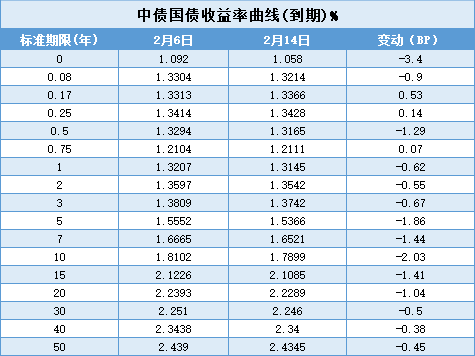
Core Viewpoint - The central bank has increased liquidity support ahead of the Spring Festival, leading to a stable funding environment and a downward trend in bond yields, with the 10-year government bond yield dropping below 1.80% [1][4]. Market Overview - During the last trading week before the Spring Festival (February 9 to February 14, 2026), the central bank's actions resulted in a stable funding environment, with a strong willingness among institutions to hold bonds over the holiday [1]. - The 10-year government bond yield fell to a low of 1.7675% before rebounding slightly due to profit-taking [1][4]. - The bond yield curve showed declines across various maturities, with the 10-year yield decreasing by 2.03 basis points to 1.7899% as of February 14 [2][3]. Bond Market Activity - The bond market exhibited strong performance, with the 10-year government bond yield reaching a three-month low of 1.793% before stabilizing [4]. - The central bank conducted significant liquidity injections, including a 4000 billion yuan reverse repurchase operation, contributing to a positive sentiment in the bond market [4][12]. Issuance in the Primary Market - In the week leading up to the Spring Festival, a total of 69 bonds were issued, amounting to 649.14 billion yuan, including 3 government bonds worth 200 billion yuan [6]. - For the upcoming week (February 24 to February 28, 2026), a planned issuance of 34 bonds totaling 660.42 billion yuan is expected, with 3 government bonds worth 385 billion yuan [6]. International Market Context - The U.S. bond market saw a decline in yields, with the 10-year U.S. Treasury yield dropping by 19 basis points to 4.03% as of February 23, influenced by lower inflation data and increased risk aversion [7]. - The U.S. consumer price index (CPI) for January showed a lower-than-expected increase, which may pave the way for lower interest rates in the future [9][10]. Institutional Perspectives - Analysts suggest that the bond market may experience seasonal opportunities in the first half of the year, driven by stable funding conditions and increased allocation from insurance and wealth management products [18][19]. - The bond market's performance post-Spring Festival will depend on macroeconomic fundamentals, policy signals, supply-demand dynamics, and stock market performance [19].

道指跌超800点,金银大涨
Jin Rong Jie· 2026-02-24 01:31
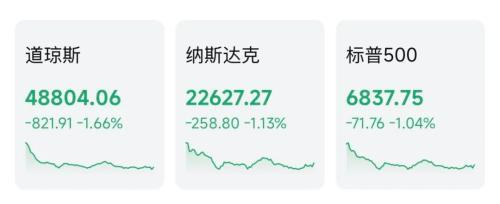
Market Overview - On February 23, US stock indices faced pressure due to uncertainty surrounding tariff rulings and concerns over AI development, resulting in a collective decline. The Dow Jones fell by 1.66% to 48,804.06 points, the S&P 500 dropped by 1.04% to 6,837.75 points, and the Nasdaq decreased by 1.13% to 22,627.27 points [1] Company-Specific Developments - IBM's stock plummeted over 13%, marking its largest single-day drop since October 2000. This decline is attributed to competitive pressures from Anthropic's Claude Code, which targets IBM's reliance on legacy COBOL systems [3][7] - Other notable stock movements included Novo Nordisk, which fell over 16%, and a 32.75% drop in the 2x Long Novo Nordisk ETF, following disappointing clinical trial results for its product CagriSema compared to Eli Lilly's Zepbound. Conversely, Arcellx's stock surged over 77% due to a reported acquisition by Gilead Sciences at $115 per share [8] Tariff and Economic Policy - The US Customs and Border Protection (CBP) announced the cessation of tariffs imposed under the International Emergency Economic Powers Act (IEEPA) following a Supreme Court ruling deeming them illegal. This change is expected to influence market dynamics throughout the year [4][5] - Market analysts have differing views on the impact of tariffs. Michael Landsberg from Landsberg Bennett Private Wealth Management suggests that ongoing tariff negotiations may continue to disrupt the market, while Edward Jones' Angelo Kourkafas downplays the potential economic impact of increasing tariffs to 15% [5] Commodity Market Reaction - In response to the tariff situation, precious metals experienced gains, with COMEX gold futures rising by 0.7% to $5,262.3 and COMEX silver futures increasing by 2.18% to $88.46 [9]

关于财通证券资产管理有限公司旗下公募基金在直销渠道 开展认(申)购费率优惠活动的公告
Zhong Guo Zheng Quan Bao - Zhong Zheng Wang· 2026-02-23 22:37
Group 1 - The company is launching a fee waiver promotion for its public fund products sold through direct sales channels to better serve investors [1] - The promotion will start on February 24, 2026, and will waive subscription fees for all public fund products when purchased through the company's direct sales channels, including online platforms and direct counters [2] - This adjustment does not affect other fees and charging models associated with the funds [3] Group 2 - The company reserves the right to interpret the promotion details and may adjust the applicable fund range and related rules during the promotion period, with announcements to be made accordingly [4] - The start, end, and adjustments of the promotion will be subject to the company's announcements [5] - Investors can inquire about the promotion details through the company's website, customer service hotline, or email [6]

华尔街顶级分析师最新评级:谷歌、英伟达获上调
Xin Lang Cai Jing· 2026-02-23 16:35
Core Viewpoint - The article summarizes significant rating changes from Wall Street that could impact market trends, highlighting upgrades, downgrades, and new coverage by various financial institutions [1][5]. Upgrades - Wells Fargo upgraded Alphabet (GOOGL) from Hold to Buy, raising the target price from $354 to $387, citing Google's leading position in key AI traits such as user data, channels, and computing power [7]. - Aletheia upgraded NVIDIA (NVDA) from Hold to Buy with a target price of $250, stating the stock is "too cheap to ignore" ahead of its quarterly earnings report [7]. - Lake Street upgraded Tandem Diabetes (TNDM) from Hold to Buy, increasing the target price from $14 to $50, believing the shift to a pharmacy model will yield stable growth and higher profit margins [7]. - UBS upgraded BlackRock (BLK) from Neutral to Buy, setting a target price of $1,280, based on strong Q4 performance and positive outlook from the UBS Financial Conference [7]. - Baird upgraded Henry Schein (HSIC) from Neutral to Outperform, raising the target price from $78 to $100, citing growth potential in its dental-related business [7]. Downgrades - Jefferies downgraded Workday (WDAY) from Buy to Hold, lowering the target price from $325 to $150, noting that application software stocks have underperformed the overall software sector [8]. - Bank of America downgraded General Mills (GIS) from Buy to Neutral, reducing the target price from $55 to $48, stating that previous growth expectations for the pet business and North American retail have failed [8]. - Baird downgraded Arcellx (ACLX) from Outperform to Neutral, with a target price adjustment from $106 to $115, following Gilead's acquisition announcement at $115 per share [8]. - JPMorgan downgraded VF Corporation (VFC) from Neutral to Underweight, lowering the target price from $19 to $18, and reducing earnings forecasts for 2027 and 2028 below market consensus [8]. - Jefferies downgraded Deere (DE) from Hold to Underperform, raising the target price from $475 to $550, indicating that the agricultural cycle is expected to bottom out this year [8]. New Coverage - Citigroup initiated coverage on York Space Systems (YSS) with a Buy rating and a target price of $37, describing it as a high-risk, high-reward opportunity in the space trend [9]. - Oppenheimer initiated coverage on Public Policy Holding Co (PPHC) with an Outperform rating and a target price of $16, noting its expansion into state and international lobbying [9]. - Citigroup initiated coverage on PicPay (PICS) with a Buy rating and a target price of $28, projecting an 85% potential upside due to its credit-related business growth [9]. - JPMorgan initiated coverage on Ethos (LIFE) with a Buy rating and a target price of $13, believing there is still growth potential through agency channels [9]. - DA Davidson initiated coverage on Bob's Discount Furniture (BOBS) with a Buy rating and a target price of $26, citing a large and fragmented industry poised for recovery [9].


HSBC Global Asset Management (Hong Kong) Limited增持金力永磁(06680)94.7万股 每股均价约23.19港元
智通财经网· 2026-02-23 11:21
智通财经APP获悉,香港联交所最新资料显示,2月12日,HSBC Global Asset Management (Hong Kong) Limited增持金力永磁(06680)94.7万股,每股均价23.1947港元,总金额约为2196.54万港元。增持后最新 持股数目为1241.46万股,最新持股比例为5.28%。 ...

策略聚焦|代码膨胀,实物稀缺
Xin Lang Cai Jing· 2026-02-23 08:49
Core Insights - The rapid advancement in AI coding capabilities has led to an exponential increase in the scale of effective code globally, outpacing the growth of physical production value and total income [1][10] - The market is expected to experience a phase of code expansion, excess execution capacity, intensified competition, and diminished returns on capital investment [1][11] - Industries can be categorized based on physical dependency and regulatory/emotional barriers into four quadrants: damaged, reshaped, fortress, and benefited [1][12] Industry Analysis - The global electricity generation is projected to grow from approximately 30,000 TWh in 2024 to about 32,000 TWh in 2026, with a compound growth rate of only 3.3% [2][11] - Data center energy consumption is expected to rise significantly, from around 600 TWh in 2024 to 1,050 TWh in 2026, reflecting a compound growth rate of 32.3% [2][11] - The ratio of GitHub code repository total (in millions) to global GDP (in trillion USD) is anticipated to increase from 3.93 in 2023 to 6.29 by 2026 [2][11] Impacted and Benefited Industries - Industries categorized as "damaged" (low physical dependency, low regulatory barriers) include basic code outsourcing, general SaaS, and marketing [3][12] - "Reshaped" industries (low dependency, high barriers) include legal litigation, high-end strategic consulting, and asset management, where AI acts as a "super lever" rather than a disruptive force [4][12] - "Fortress" industries (high dependency, high barriers) involve monopolistic assets or scarce resources, such as core minerals and military manufacturing [4][12] - "Benefited" industries (high dependency, low barriers) include copper, aluminum, and energy metals, as well as AI hardware manufacturing [4][12] Market Dynamics - The A-share market, primarily focused on manufacturing and finance, is less affected by AI disruptions compared to US and Hong Kong markets [5][13] - The cumulative return gap between benefited and damaged sectors in the US market has widened by 64 percentage points since 2026 [13] - A-share market's excess return for "benefited" sectors over "damaged" sectors has only increased by 3 percentage points, indicating a less pronounced divergence [13][14] Investment Trends - The trend of capital inflow remains unchanged, with a notable shift in deposit forms towards investment products, which may channel funds into equity markets [5][14] - The sentiment index for A-share investors has shown a significant drop, indicating a potential for capital replenishment post-holiday [5][14] - Price increases are expected to be a key focus for investment strategies in the first quarter [6][15]
全球资金涌入,助推拉美股市迎来史上最强开局
Xin Lang Cai Jing· 2026-02-23 08:44
来源:环球市场播报 全球投资者正以十年来最快速度涌入拉美股市,推动该地区全线市场创下多年新高。 巴西、哥伦比亚、墨西哥股市迎来海外资金大举买入,助力MSCI 新兴市场拉美指数创下 11 年新高, 2026 年至今涨幅已超 20%,创下1991 年以来最强开年表现。该指数上周五实现连续第九周上涨,为 2017 年以来最长连涨纪录。 投资者对这一长期被忽视地区重新燃起兴趣,主要是押注巴西、哥伦比亚即将到来的总统大选,市场预 期当地政策可能转向、利率有望下调。上周五美国最高法院驳回特朗普全球关祱后,本轮涨势再添动 力,投资者认为这是拉美股市反弹的又一利好。 "拉美重新回到投资视野,关注度达到10—15 年来未见水平," 瑞银全球财富管理美洲新兴市场首席投 资官阿莱霍・切沃恩科表示,"新兴市场长期处于低配状态,而拉美尤甚。" 尽管全球资金从美国资产分散、整体利好新兴市场,但拉美资金流入尤为突出。 不过这并非稳赢赌注。前总统博索纳罗之子弗拉维奥・博索纳罗去年末参选,削弱了市场青睐的圣保罗 州长塔西西奥参选的预期,一度引发股市抛售。不少投资者选择等到 4 月(官员必须卸任参选)再大举 押注。 哥伦比亚方面,5 月总统大选 ...
华尔街日报报道,即便特朗普威胁要以10%的全球关税取代被最高法院否决的关税,美国股市涨幅仍得以维持,标普500指数本周上涨1.1%
Sou Hu Cai Jing· 2026-02-21 15:39
我问你个问题,你有没有发现现在的股市逻辑已经彻底变异了。放在几年前,如果有个总统跳出来说要对全球征收10%的关税,市 场大概率要当场躺平给你看。但就在2026年2月21日的今天,华尔街日报的报道却像是在抽所有传统经济学家的耳光。 即便特朗普威胁要用这10%的全球关税来取代那个刚被最高法院否决掉的旧关税,美国股市居然连眉头都没皱一下,标普500指数 这周稳稳当当地涨了1.1%,道指涨了0.3%,纳指更是像打了鸡血一样冲了1.5%。 我昨晚盯着这些数据看了半天,真觉得这事儿荒诞得有点意思。 大家都在聊关税,都在担心贸易壁垒,可资金的动作却诚实得可怕。我查了下最新的数据,这哪里是关税在左右市场,这分明就是 一场赤裸裸的资金狂欢。你想想,现在全球的流动性已经松到了什么程度。 就在当地时间2026年2月20日,美国商务部公布的2025年12月个人消费支出物价指数同比增长2.9%,虽然通胀还在那儿晃悠,但市 场那帮玩钱的早就认定降息是板上钉钉的事。 现在的市场逻辑就是,坏消息只要能变相催生出流动性,那就是好消息。最高法院判特朗普败诉,本该是政令不通的利空,但因为 涉及退款,变成了利好。特朗普威胁加征新关税,本该是贸易摩擦 ...
资管巨头,全面加码AI!
Zhong Guo Zheng Quan Bao· 2026-02-21 10:28
Group 1 - BlackRock submitted its Q4 2025 13F report, showing a total U.S. equity holding value of $5.92 trillion, an increase of approximately $210 billion or 3.67% from the previous quarter [1] - The firm's holdings have shifted towards the AI industry, with significant increases in weight for AI-related stocks across storage and computing sectors [1] - In Q4 2025, BlackRock established new positions in 247 U.S. stocks, increased holdings in 3,309 stocks, while liquidating 165 stocks and reducing positions in 1,546 stocks [1] Group 2 - The top five increased positions included Alphabet-A, Alphabet-C, Eli Lilly, Micron, and Apple, with Micron seeing a 7.33% increase in holdings [2] - The top five reduced positions were SPDR S&P 500 ETF call options, ServiceNow, Strategy, AT&T, and Kellanova, with the largest decrease in SPDR S&P 500 call options [2] - The top ten holdings remained stable, with Nvidia, Apple, Microsoft, Amazon, Alphabet-A, Broadcom, Alphabet-C, Meta, Tesla, and Eli Lilly collectively accounting for 30.41% of total holdings [2] Group 3 - BlackRock views AI as a transformative technology revolution that is still ongoing, expecting structural trends in the AI sector to continue into 2026 [3] - The firm anticipates a shift from hardware infrastructure to more applications of AI technology in traditional and emerging industries [3] - Investors are advised to monitor the alignment of valuation levels with cash flow improvements in the tech growth sector, particularly in AI, despite some stocks appearing overvalued [3]
