
资管

Search documents
韩国基民投资理财新趋势:偏好高杠杆ETF
Zheng Quan Shi Bao· 2025-10-19 18:06
Core Insights - The rise of retail investors, referred to as the "Ant Army," is significantly influencing the South Korean capital market, with many young investors viewing investment as a means to change their fortunes amid economic challenges [1][5] - South Korean investors are increasingly favoring high-risk leveraged products, including ETFs and derivatives, despite the associated risks [2][3] Investment Trends - South Korean investors have a long-standing preference for high-risk assets, with the introduction of leveraged ETFs in 2010 marking the beginning of this trend [2] - Recent data shows that during a market closure, South Korean investors invested approximately $1.2 billion globally, with significant net inflows into leveraged ETFs like the Direxion Daily Tesla Bull 2X ETF [3] - The total credit trading balance in the South Korean stock market reached a new high of 23.83 trillion KRW as of mid-October 2023, approaching the historical peak of 25.65 trillion KRW set in 2021 [3] ETF Market Growth - The South Korean ETF market has seen rapid growth, with the number of listed ETFs surpassing 1,000 for the first time in July 2023, and the total asset size reaching 260 trillion KRW by mid-October 2023 [5][6] - Individual investors have net bought 21.3 trillion KRW worth of ETFs in 2023, while institutional investors have shown a net outflow during the same period [6] Focus on Chinese Assets - Since 2025, there has been a noticeable increase in South Korean investors' interest in Chinese assets, particularly in Hong Kong tech stocks, with China becoming the second-largest overseas stock market for South Korean investors [8][9] - The net buying of Chinese assets by South Korean investors reached $393 million since 2025, with a significant focus on technology giants and emerging industries [8][9] Notable Investments - The top five net bought A-shares by South Korean investors include companies like Cambricon and WuXi AppTec, while the top five net bought Hong Kong stocks include Xiaomi and NIO [9]
从高端论坛到产业崛起,静安金融如何解锁创新发展“密码”?
Guo Ji Jin Rong Bao· 2025-10-18 08:49
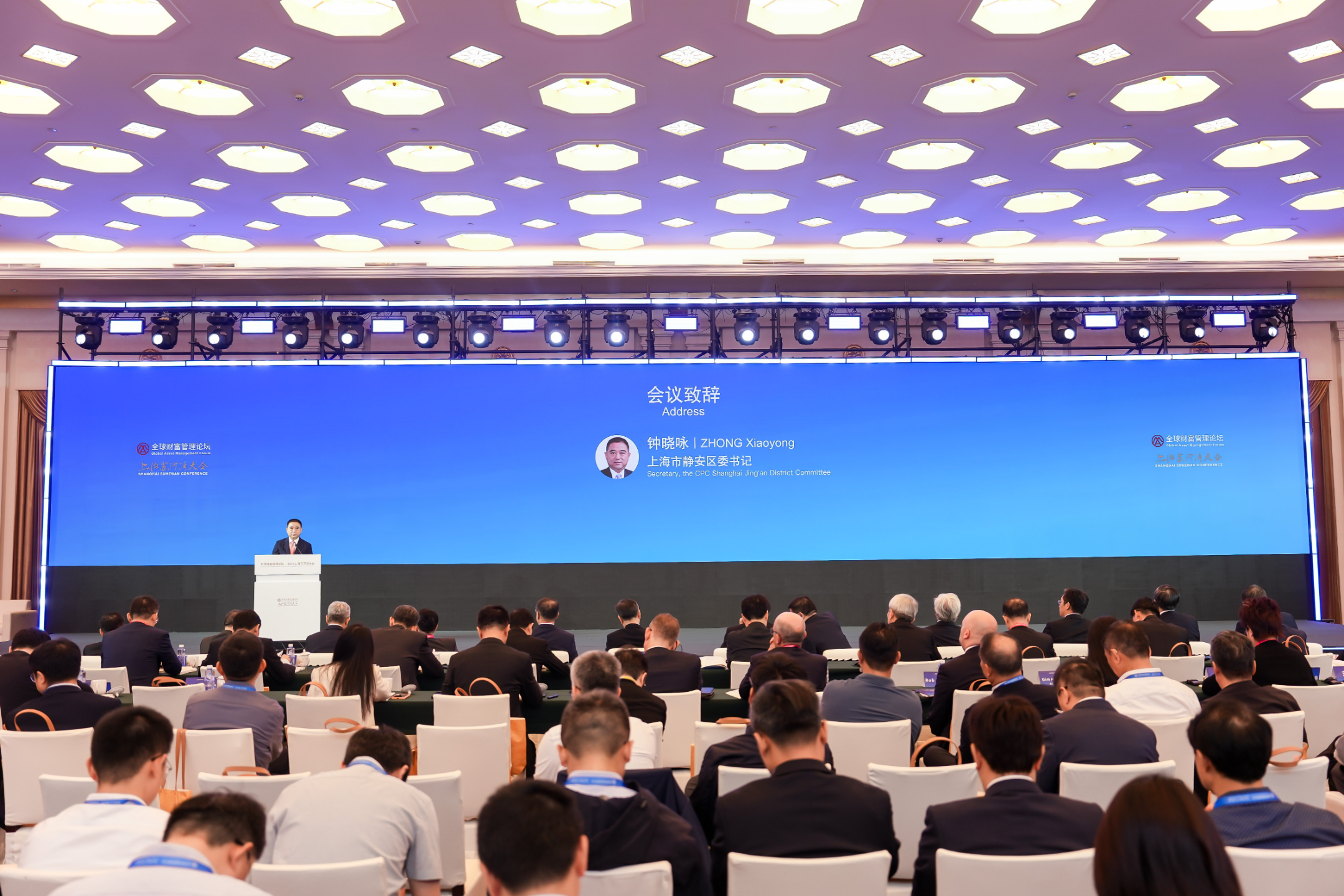
Core Insights - The Global Wealth Management Forum 2025 was held in Shanghai, focusing on high-end asset management dialogue and communication [1][3] - The forum gathered over a hundred prominent guests to discuss topics such as digital transformation, technological benefits, global financial cooperation, and investment outlooks [3] Group 1: Technological Integration in Finance - Tim Cook, CEO of Apple, discussed the integration of AI and digital technology in financial innovation, emphasizing how technology can expand financial services and wealth management [4] - The establishment of the "Shanghai AI-FI Laboratory" aims to promote the deep integration of AI technology with the financial industry, focusing on key issues in the "AI+Finance" sector [4][6] Group 2: Financial Growth in Jing'an District - Jing'an District reported a financial services industry value-added of 28.817 billion yuan in the first half of the year, maintaining a leading growth rate in Shanghai [8] - The district has seen significant developments with global asset management firms establishing a presence, including the full acquisition of private equity firms and the completion of new rounds of capital increase by foreign public funds [8] Group 3: Investment and Mergers - Jing'an District has actively engaged in the equity investment sector, establishing the Shanghai Jing'an Capital Investment Operation Company to enhance investments in strategic emerging industries [9] - The district has witnessed notable mergers and acquisitions, including the acquisition of a controlling stake in a major retail company and the control of a beverage company by KKR Group [9] Group 4: Financial Technology Ecosystem - The integration of financial and technological sectors is being accelerated in Jing'an, with various technology service providers supporting the digital transformation of financial institutions [11] - The district has implemented a talent policy to attract high-level financial professionals, enhancing its international financial talent ecosystem [11][12] Group 5: Future Development Goals - Jing'an District aims to leverage the influence of the Suhewan Conference to strengthen its international financial position and promote deeper, higher-quality financial innovation [12]

原银监会主席尚福林:技术浪潮下金融边界演变值得持续探究
Guo Ji Jin Rong Bao· 2025-10-18 08:49
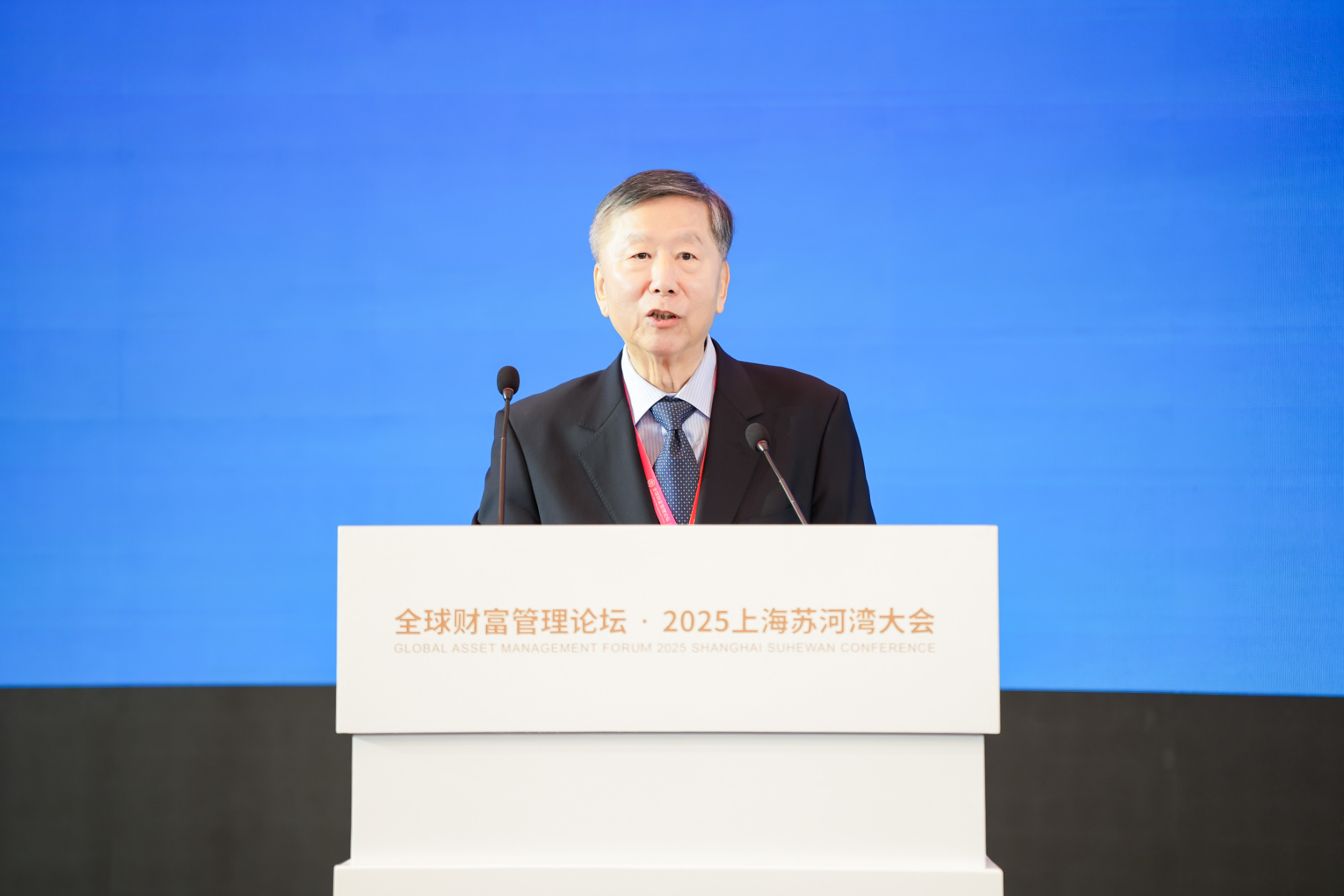
Core Insights - The 2025 Shanghai Suhewan Conference highlighted the importance of technology and finance in China's economic development, with the "new economy" contributing 18% to GDP and the financial sector accounting for 8% [1] Group 1: Technological Impact on Finance - The financial industry is expected to undergo digitalization, intelligence, and scenario-based trends, leading to a more diverse range of financial activities and blurred boundaries between financial services and products [3][4] - A new wave of technological revolution is anticipated to create new financial business models, expanding the scope of financial services, as seen in historical shifts from metal currency to paper money and the rise of cross-border financial services [3][4] - The integration of technologies such as AI, big data, and cloud computing is reshaping the financial service landscape, necessitating collaboration between financial institutions and external tech companies [4] Group 2: Changing Consumer Behavior - Public financial consumption behaviors are increasingly characterized by online, platform-based, and scenario-driven interactions, leading to a complex interplay between financial and non-financial services [4][5] - The accumulation of high-frequency data from daily activities allows for precise analysis of customer financial needs, enabling a seamless transition from data processing to financial service provision [5] Group 3: Regulatory Recommendations - To address the challenges posed by technological advancements in finance, it is recommended to apply equal regulatory standards across similar financial activities and to maintain a focus on risk management [5]
中欧资管合作提速,中国银行助力全球资管枢纽建设
Di Yi Cai Jing· 2025-10-18 07:54
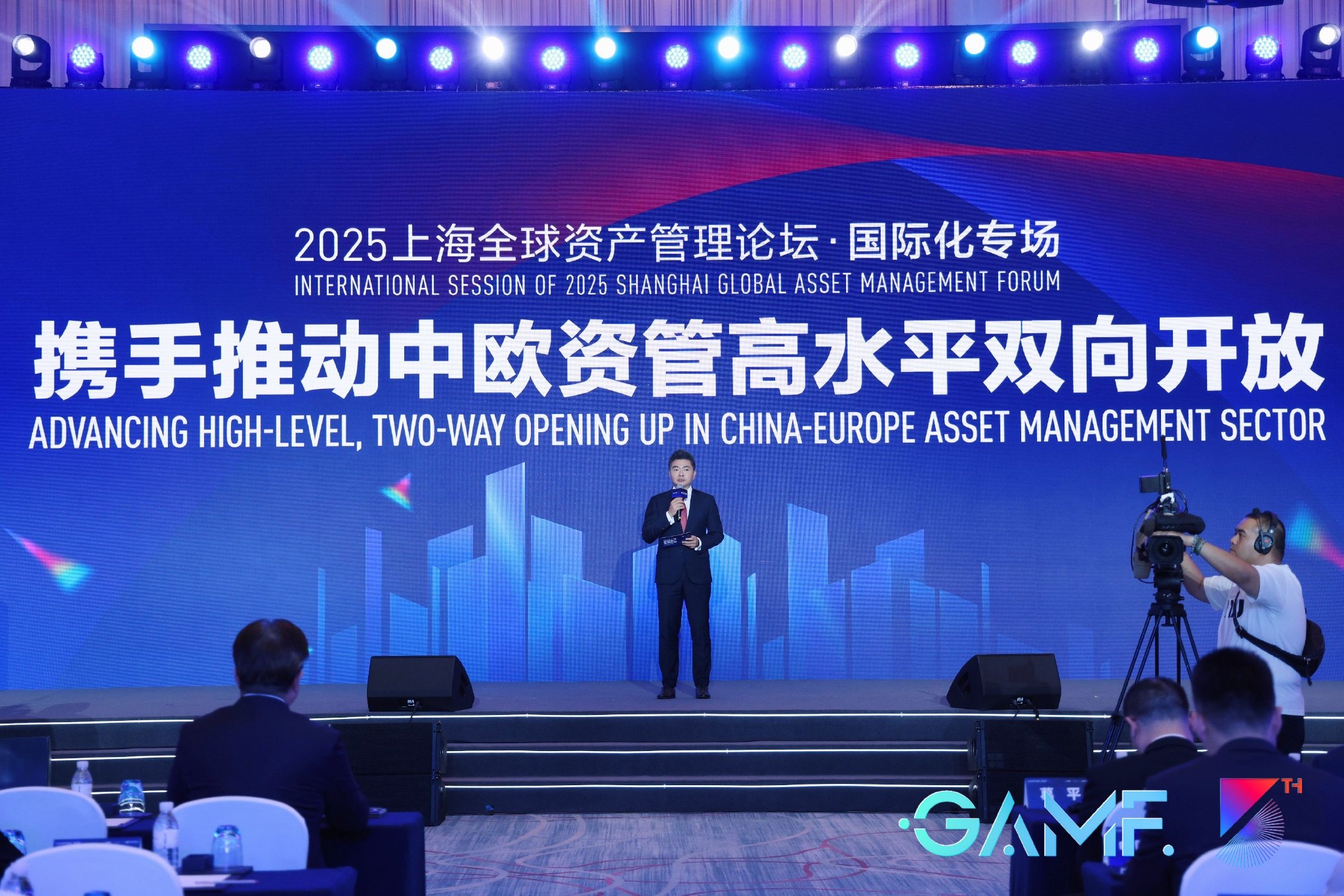
Core Insights - The "2025 Shanghai Global Asset Management Forum" emphasizes the importance of promoting high-level bilateral openness in the asset management sector between China and Europe amidst a complex international economic landscape [1][2] - China is enhancing its financial market and asset management openness, with the RMB gaining global attention as an investment and reserve currency, leading to increased interest from European institutions in China's stock and bond markets [3][4] Group 1: Economic and Financial Performance - Shanghai's GDP reached 2.6 trillion yuan in the first half of 2025, growing by 5.1% year-on-year, with the financial sector contributing 250 billion yuan, an 8.8% increase, accounting for 17.2% of the city's GDP [3] - The three leading industries in Shanghai—artificial intelligence, integrated circuits, and biomedicine—saw a combined output growth of 9.1%, supporting the city's competitiveness as an international financial center [3] Group 2: Policy and Institutional Developments - Shanghai is actively promoting the aggregation of financial institutions and enhancing financial service functions, currently hosting over one-third of the nation's foreign banks and nearly half of foreign insurance institutions [4] - The Shanghai Stock Exchange signed a memorandum of cooperation with the Swiss Exchange to advance cross-border openness, while also improving cross-border financial services and the internationalization of financial institutions [4] Group 3: Investment Trends and Opportunities - International investors are increasingly favoring Chinese assets due to supportive policies, technological innovations, and market performance, with net inflows exceeding 60% of the total for 2024 by mid-2025 [5] - The Chinese market is seen as having significant potential in areas like institutional openness, green finance, and pension markets, with suggestions to gradually relax restrictions on overseas investments in pensions [6] Group 4: Sector Performance and Investment Focus - From 2022 to 2024, energy and financial sectors showed resilience, while 2025 is expected to highlight sectors related to artificial intelligence and leading companies in pharmaceuticals and materials [7] - China is emerging as a leader in innovative drug development, with clinical-stage innovations accounting for 50% of global totals, and is also making strides in electric vehicles and robotics [7] Group 5: Financial Cooperation and Market Integration - The cooperation between China and Europe is characterized by accelerated infrastructure connectivity and deepening policy communication, with the RMB's role in bilateral cooperation becoming increasingly diverse [8] - The London Stock Exchange is implementing reforms to enhance its competitiveness, while also exploring opportunities for collaboration in green economy and energy sectors with Chinese firms [9] Group 6: Strategic Initiatives and Future Outlook - China Bank is positioned as a key player in facilitating China-Europe financial cooperation, with a global custody scale of 4.7 trillion yuan, serving over 100 countries [10] - Future initiatives will focus on enhancing collaboration in green finance, technology empowerment, product innovation, and risk management, aiming to leverage historical opportunities for high-quality development in China and green transitions in Europe [14]

三季度资管机构调研热情下降,科技和医药医疗股受青睐
2 1 Shi Ji Jing Ji Bao Dao· 2025-10-16 12:41
Group 1 - The enthusiasm of asset management institutions for researching listed companies has decreased in the third quarter, with a 24.8% decline in the number of research activities compared to the previous quarter [1][5] - In the second quarter, during a period of market stagnation, asset management institutions increased their research activities by 49.31% [1] - The focus of asset management institutions remains on technology stocks, with a growing interest in pharmaceutical and medical stocks in the third quarter [2][3] Group 2 - Insurance asset management companies conducted a total of 7,687 research activities on 5,850 individual stocks in the first three quarters, with a significant focus on Shenzhen Main Board and Sci-Tech Innovation Board stocks [2] - The most active insurance asset management company was Taikang Asset, which conducted 860 research activities on 566 stocks, primarily on the Shanghai Main Board [2] - The research frequency of brokerage asset management subsidiaries was slightly lower, with 4,216 research activities on 3,321 stocks, showing a preference for high-growth potential and technology-intensive companies [3] Group 3 - Wealth management companies conducted over 2,100 research activities on more than 1,700 listed companies in the first three quarters, with a notable preference for Shenzhen Main Board and Sci-Tech Innovation Board companies [4] - Trust companies showed less enthusiasm compared to other asset management institutions, with 1,580 research activities on 1,337 stocks [4] - The overall investment ratio of wealth management companies in equities remains low, but their management scale reached 27.48 trillion yuan by the end of June [3] Group 4 - The Sci-Tech 50 index rose by 49.02% in the third quarter, significantly outperforming the broader market, with the CSI 300 index increasing by 17.9% [7] - Insurance asset management companies focused on 600 Sci-Tech Innovation Board companies in the third quarter, which, along with Shenzhen Main Board stocks, accounted for 53.57% of their research activities [7] - The most researched stock in the third quarter was Mindray Medical, with 538 institutions conducting research, followed by Huichuan Technology and Maiwei Biological-U [8]

陆家嘴金融沙龙第30期圆桌对话 聚焦外资资管开放深化与产品创新升级
Di Yi Cai Jing· 2025-10-15 10:32
Group 1: Investment Opportunities in China - Foreign investment groups hold a bullish view on the Chinese market, citing low market sentiment and valuations as key factors for investment [2][3] - The significant undervaluation of the Chinese stock market is highlighted, with China's GDP accounting for nearly 20% of the global total, while its stock market capitalization is only about 10% [2] - The potential for high-tech companies in China is emphasized, with a strong belief in their growth prospects [2] Group 2: Market Dynamics and Strategies - The importance of localizing strategies for foreign asset management institutions in China is stressed, with a historical evolution of leadership from expatriates to local elites [4] - The need for foreign institutions to adapt to the cyclical nature of the market and avoid launching products at market peaks is discussed [5][6] - The call for a broader asset allocation perspective is made, suggesting that institutions should consider global assets with diverse risk-return profiles [4] Group 3: Regulatory Environment and Digital Transformation - The ongoing transformation of China's financial market is noted, with a focus on the resilience of the asset management industry despite global geopolitical tensions [7] - The recent rise of Shanghai in the global asset management center ranking indicates a renewed recognition of China's commitment to opening up its markets [7] - The necessity for foreign institutions to leverage China's digital transformation and technological advancements is highlighted, with an emphasis on AI and efficiency improvements [9] Group 4: Cultural and Consumer Insights - The potential for China's cultural influence and consumer market to expand globally is recognized, with historical patterns of cultural and product output being linked [3] - The phenomenon of "funds making money while investors do not" is addressed, emphasizing the need for investor education and transparency in fund performance [5][6]

流动性、政策面、基本面三位一体框架:牛市走向:流动性和增量政策的博弈
Xinda Securities· 2025-10-14 06:02
Group 1: Liquidity - Institutional funds waiting to enter the market amount to several trillion yuan, with a potential inflow of 1.64 to 5.75 trillion yuan based on equity position increases[2] - As of Q2 2025, the average equity position of various institutional funds is at a historical low of 8.7%[37] - The total balance of wealth management, trust, insurance, and asset management products exceeds 100 trillion yuan, indicating significant room for future market entry[37] Group 2: Policy - The People's Bank of China has not followed the U.S. Federal Reserve's interest rate cuts, maintaining the 7-day reverse repurchase rate at 1.4% and the 1-year LPR at 3%[40] - The Q3 monetary policy meeting did not signal any new incremental policies, emphasizing continuity and stability instead[41] - The introduction of 500 billion yuan in new policy financial tools is underway, with further fiscal policy measures still to be observed[56] Group 3: Fundamentals - The Producer Price Index (PPI) is expected to turn positive by the end of Q1 or early Q2 2026, driven by capacity management measures[2] - Short-term economic pressures remain, but corporate expectations have begun to stabilize, particularly in industries affected by the "anti-involution" policy[71] - The "anti-involution" policy aims to address overcapacity and improve corporate expectations, with specific measures being implemented across key industries[72]
深耕·立信·致远|2025 Wind财富管理论坛暨星选理财师颁奖盛典在沪举办,华夏基金战略助力
Wind万得· 2025-09-27 22:54
Core Viewpoint - The 2025 Wind Wealth Management Forum emphasized the integration of AI technology in transforming the value of buy-side advisory services in wealth management, highlighting the industry's shift towards high-quality service and client-centric approaches [1][8][10]. Group 1: Event Overview - The forum, held on September 25, 2025, in Shanghai, gathered leaders and experts from banking, securities, asset management, and fintech sectors to discuss the future of wealth management in the AI era [1]. - The event featured four keynote speeches, three roundtable discussions, and an awards ceremony, facilitating in-depth exchanges among hundreds of attendees [1]. Group 2: Keynote Insights - Wind's Senior Vice President, Jian Mengwen, highlighted the importance of a scientific evaluation system and fair selection mechanisms to empower outstanding financial advisors [6]. - The keynote on "AI Reshaping the Wealth Management Value Chain" discussed the increasing demand for buy-side advisory services as equity assets gain a larger share in household portfolios due to low interest rates [8]. - HSBC's Wang Ying presented on the transition from scale competition to value cultivation, emphasizing the need for comprehensive upgrades in client insights, product services, and investment research capabilities, with AI as a key enabler [10]. Group 3: Roundtable Discussions - A roundtable on maintaining high-quality wealth management services amidst declining fee trends emphasized that finding the right positioning and focusing on service quality is essential for navigating industry cycles [17]. - Another roundtable focused on supply-side reforms in asset management, advocating for a client-centered product creation mechanism that connects demand insights to product implementation [19]. - The discussion on intelligent advisory services concluded that AI should empower human advisors rather than replace them, promoting a collaborative model as the optimal solution [21]. Group 4: Awards and Recognition - The 2025 Wind Star Selection for Financial Advisors recognized outstanding talents in wealth management, with awards for "Outstanding Investment Advisors" and "Outstanding Financial Advisors" presented to top performers from various banks and financial institutions [22][24]. - A total of 68 institutions and 135 financial advisors received honors, showcasing the industry's commitment to excellence in wealth management [24]. Group 5: Future Directions - Wind aims to continue evolving the wealth management industry towards greater professionalism and intelligence, serving as a bridge between buy-side advisors and asset management institutions [26]. - The Star Selection platform is designed to empower financial advisors with a comprehensive suite of tools and resources, enhancing their capabilities across various business scenarios [27].
“9·24”一周年资管变局:股债历经四阶段 权益投资偏好切换
2 1 Shi Ji Jing Ji Bao Dao· 2025-09-25 23:19
Group 1 - The announcement of significant financial policies by the central bank and regulatory bodies on September 24, 2023, marked a turning point for the A-share market, leading to substantial market gains in the following year [1] - The Shanghai Composite Index increased by 40.19%, while the Shenzhen Component Index rose by 65.23% in the year following the announcement, contrasting with declines in the previous year [1] - Trading volumes for major indices doubled after September 24, 2023, with the Shanghai Composite's trading volume reaching 165.91 trillion yuan [1] Group 2 - The low risk appetite among clients has historically limited the acceptance of equity-based financial products compared to fixed-income products, with equity products only accounting for approximately 0.23% of the total bank wealth management market as of June 2025 [2] - Following the September 24 announcement, there has been a notable increase in the hiring of positions related to equity investment and multi-asset strategies within wealth management firms [2] - The performance of equity-based financial products has improved significantly, with an average net value growth rate of 13.39% in the first eight months of the year [6] Group 3 - The bond market has experienced a bull market since 2024, with the 1-year government bond yield dropping to a record low of 0.9307% in December 2024 [3] - The bond market has shown different volatility patterns compared to the stock market, with periods of both correlation and independence in their movements [4][5] - The investment preference has shifted from dividend stocks to technology sectors, reflecting changing market dynamics [6][7] Group 4 - Despite increased interest in equity investments, clients maintain a low risk tolerance, with a significant portion of new affluent individuals unwilling to accept losses exceeding 10% [8] - The asset allocation of new affluent individuals has shifted, with a decrease in cash and fixed deposits and an increase in fund investments, indicating a growing interest in higher-risk financial assets [8]
记者观察 | 持续推进“长钱长投” 助力增强市场内在稳定性
Zhong Guo Zheng Quan Bao· 2025-09-25 22:23
Core Viewpoint - The promotion of "long money long investment" is a crucial aspect of current capital market reforms, with policies showing positive effects and clear changes in the A-share market [1][2]. Group 1: Policy Implementation and Market Impact - The "Guiding Opinions on Promoting Long-term Funds to Enter the Market" was jointly issued by the Central Financial Office and the China Securities Regulatory Commission (CSRC) on September 26, 2024, aiming to facilitate the entry of long-term funds into the market [1]. - As of the end of August this year, various types of long-term funds held approximately 21.4 trillion yuan of A-share circulating market value, representing a 32% increase compared to the end of the 13th Five-Year Plan [1]. Group 2: Challenges and Future Directions - There is still significant room for growth in the scale of long-term funds entering the market, as the actual allocation of insurance funds to equity assets is still below the policy limits [2]. - The optimization of the investor structure in the capital market is a long-term process, requiring further enhancement of the leading and demonstrative effects of long-term funds [2]. Group 3: Enhancing Company Quality and Investment Value - Continuous improvement in the quality and investment value of listed companies is essential for the success of "long money long investment" [2]. - Regulatory measures have led to a notable increase in listed companies' ability and awareness to return value to investors, encouraging stable dividends and active market value management [2]. Group 4: Asset Management Institutions and Research Capabilities - The ongoing enhancement of asset management institutions' research capabilities is a critical guarantee for promoting "long money long investment" [3]. - Public funds are advancing the platform and systematic construction of research capabilities, while insurance institutions are focusing on stable cash flow assets and alternative investments [3].