锂矿

Search documents
碳酸锂周报:碳酸锂市场冲高回落,供应转松与需求疲软共振施压-20260323
Zhong Yuan Qi Huo· 2026-03-23 08:51
Report Industry Investment Rating No relevant content provided. Core Views - The lithium carbonate market has experienced a decline after reaching a peak, with the relaxation of supply and weak demand exerting joint pressure on the market. The current market is in a weak and volatile stage after a downward break, and the core contradiction lies in the enhanced expectation of supply resumption and the weak terminal demand. The pressure of the marginal relaxation of supply begins to dominate the market, while the low inventory and bargain - hunting buying provide support below, but the overall price center has shifted downward [3]. Summary by Relevant Catalogs Lithium Salt Market Introduction - **Price Changes**: The price of lithium carbonate futures dropped from 152,080 yuan/ton to 143,860 yuan/ton, a weekly decline of 5.41%. The price of battery - grade lithium carbonate in the spot market decreased by 8.43% week - on - week to 145,000 yuan/ton. The price of industrial - grade lithium carbonate dropped from 155,250 yuan/ton to 141,750 yuan/ton, a decline of 8.70%. The price of electric - grade coarse - particle lithium hydroxide decreased from 150,850 yuan/ton to 140,800 yuan/ton, a decline of 6.66%. The price of electric - grade fine - powder lithium hydroxide dropped from 156,050 yuan/ton to 146,000 yuan/ton, a decline of 6.44%. The price of industrial - grade lithium hydroxide decreased from 145,550 yuan/ton to 135,500 yuan/ton, a decline of 6.90% [5]. - **Premium and Discount Changes**: The premium and discount of various raw materials and enterprises have decreased by 100 yuan/ton [8]. Lithium Salt Fundamentals - **Supply - China Carbonate Lithium Production**: No specific content provided. - **Supply - Production in Each Region**: No specific content provided. - **Supply - Production from Each Raw Material Source**: No specific content provided. - **Supply - China Lithium Hydroxide Production**: No specific content provided. - **Demand - Mid - and Down - stream Consumption**: No specific content provided. - **Import and Export - Lithium Ore Import**: No specific content provided. - **Import and Export - Lithium Ore Transportation**: No specific content provided. - **Import and Export - Lithium Ore Transportation Cost**: The freight rates from South Africa, Zimbabwe, and Nigeria for both bulk and container transportation have increased. For example, the bulk freight rate from South Africa increased from 26.00 to 30.00, a 15.38% increase; the container freight rate increased from 29.00 to 33.00, a 13.79% increase [29]. - **Import and Export - Lithium Carbonate**: No specific content provided. - **Import and Export - Seasonal Changes**: No specific content provided. - **Import and Export - Lithium Hydroxide**: No specific content provided. - **Inventory - Lithium Carbonate Social Inventory**: No specific content provided. - **Inventory - Lithium Carbonate Warehouse Receipts**: The total number of lithium carbonate warehouse receipts decreased from 36,403 to 34,318, a decrease of 2,085 [42]. - **Cost and Profit - Lithium Carbonate**: The production cost decreased with the decline of raw material prices. The cost of externally purchased lithium concentrate decreased by 4.06% week - on - week to 153,832 yuan/ton. The production profit of the externally purchased lithium concentrate route was - 8,832 yuan/ton, in a loss state [3]. Lithium Battery Fundamentals - **Market - Cathode Materials**: No specific content provided. - **Supply - Cathode Material Production**: No specific content provided. - **Supply - Electrolyte Price and Production**: No specific content provided. - **Demand - Cathode Material Consumption**: No specific content provided. - **Import and Export - Lithium Battery Materials**: No specific content provided. - **Import and Export - Batteries**: No specific content provided. - **Cost and Profit - Ternary Materials**: No specific content provided. - **Lithium Battery Recycling**: No specific content provided. - **New Energy Vehicles - Production and Sales**: No specific content provided. - **New Energy Vehicles - Other Important Data**: No specific content provided.
大越期货碳酸锂期货早报-20260323
Da Yue Qi Huo· 2026-03-23 05:05
1. Report Industry Investment Rating - Not provided in the report 2. Core Viewpoints of the Report - The supply - side of lithium carbonate showed an increase last week, with a production of 24,186 tons, a 3.24% week - on - week increase, higher than the historical average. The demand - side saw an increase in the inventory of sample enterprises. The cost - side had different profit situations for different raw materials. The overall inventory was slightly reduced, and the market was in a state of tight supply - demand balance with sentiment fluctuations caused by news [8]. - There are both positive and negative factors in the market. Positive factors include the production cut plan of lithium mica manufacturers and the decrease in the import volume of lithium carbonate from Chile. Negative factors are the continuous high supply from ore/salt lake ends with limited decline [9][10]. - The main logic is the emotional shock caused by news under the tight supply - demand balance [11]. 3. Summary by Directory 3.1 Daily Views - **Supply**: Last week, lithium carbonate production was 24,186 tons, a 3.24% week - on - week increase, higher than the historical average. In February 2026, the production was 83,090 physical tons, and the predicted production for next month is 106,390 physical tons, a 28.04% month - on - month increase. The import volume in February 2026 was 21,800 physical tons, and the predicted import volume for next month is 26,000 physical tons, a 19.27% month - on - month increase [8]. - **Demand**: The inventory of phosphoric acid iron lithium sample enterprises was 106,718 tons, a 0.89% week - on - week increase, and the inventory of ternary material sample enterprises was 18,425 tons, a 2.25% week - on - week increase. It is expected that the demand will strengthen next month, and the inventory may be depleted [8]. - **Cost**: The cost of purchasing lithium spodumene concentrate was 147,976 yuan/ton, a 1.85% daily decrease, with a loss of 911 yuan/ton. The cost of purchasing lithium mica was 137,582 yuan/ton, a 2.45% daily decrease, with a profit of 6,321 yuan/ton. The cost of the recycling end was generally higher than that of the ore end, and the production enthusiasm was low. The quarterly cash production cost of the salt lake end was 32,231 yuan/ton, with sufficient profit margins [8]. - **Basis**: On March 20, the spot price of battery - grade lithium carbonate was 149,000 yuan/ton, and the basis of the 05 contract was 5,140 yuan/ton, with the spot at a premium to the futures [8]. - **Inventory**: The smelter inventory was 16,608 tons, a 1.94% week - on - week increase, lower than the historical average. The downstream inventory was 46,105 tons, a 1.00% week - on - week increase, higher than the historical average. Other inventories were 36,160 tons, a 2.32% week - on - week decrease. The overall inventory was 98,873 tons, a 0.08% week - on - week decrease, lower than the historical average [8]. - **Disk**: The MA20 of the disk was downward, and the futures price of the 05 contract closed below the MA20, showing a bearish signal [8]. - **Main Position**: The main position was net short, and the short position increased, showing a bearish signal [8]. - **Expectation**: The price of 6% concentrate CIF decreased daily, lower than the historical average. The demand - leading situation weakened, and lithium carbonate 2605 is expected to fluctuate in the range of 139,100 - 149,780 [8]. 3.2 Fundamental/Position Data - **Supply - side Data**: The weekly operating rate was 73.46%, unchanged from the previous week. The daily production cost of lithium spodumene was 147,976 yuan/ton, a 1.86% decrease from the previous day. The monthly processing cost of lithium spodumene was 20,800 yuan/ton, a 0.72% decrease from the previous month. The monthly production of lithium carbonate was 83,090 tons, a 15.13% decrease from the previous month. The monthly import volume of lithium concentrate was 438,336 tons, a 31.07% decrease from the previous month [17]. - **Demand - side Data**: The monthly operating rate of phosphoric acid iron was 60%, an 8 - percentage - point decrease from the previous month. The monthly production was 300,250 tons, a 7.67% decrease from the previous month. The monthly operating rate of phosphoric acid iron lithium was 45%, a 4 - percentage - point decrease from the previous month. The monthly production was 78,650 tons, an 8.98% decrease from the previous month. The monthly power battery loading volume was 26,300 GWh, a 37.38% decrease from the previous month [17].
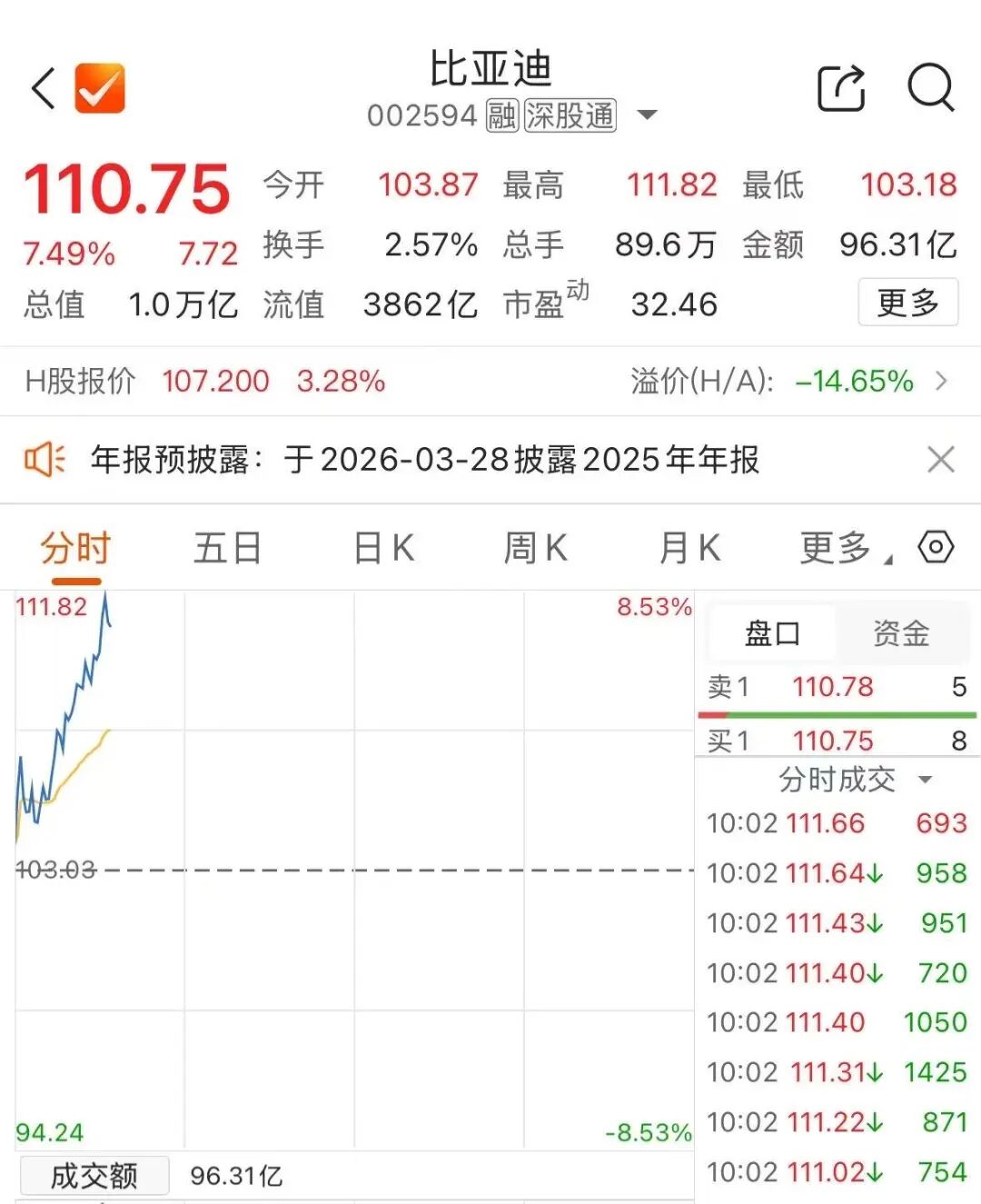
比亚迪,盘中涨超8%
Shang Hai Zheng Quan Bao· 2026-03-23 02:26
Group 1 - The lithium mining sector has rebounded, with Tianhua New Energy rising over 9%, Guocheng Mining and Dazhong Mining both increasing over 7%, and companies like Shengxin Lithium Energy and Ganfeng Lithium also seeing gains [1] Group 2 - Tianhua New Energy's latest stock price is 52.45, reflecting a 9.80% increase, which amounts to a rise of 4.68 [2] - Guocheng Mining's stock price is 32.92, with a 7.58% increase, translating to a gain of 2.32 [2] - Dazhong Mining's stock price is 37.35, showing a 7.45% increase, which is an increase of 2.59 [2] - Other notable companies include Yongxing Materials at 64.63 (4.92% increase), Rongjie Co. at 55.66 (4.86% increase), Shengxin Lithium Energy at 36.40 (3.50% increase), and Ganfeng Lithium at 69.66 (3.31% increase) [2][3]


碳酸锂周报:地缘政治问题带来资金扰动,锂价宽幅震荡-20260323
Tong Guan Jin Yuan Qi Huo· 2026-03-23 01:20
1. Report Industry Investment Rating - No information provided in the report 2. Core Viewpoints of the Report - **Last Week's Review**: Affected by the sudden escalation of the geopolitical crisis between the US and Iran, global risk - aversion sentiment soared, causing sharp fluctuations in crude oil and the US dollar index, and a severe liquidity crunch in the commodity market. Funds fled from risky assets, leading to a decline in the main contract of lithium carbonate with reduced positions, and the spot and cost ends also fell synchronously. On Friday, after a brief calm, the main contract of the lithium carbonate market rebounded from the MA60 moving - average line but weakened again at the end of the session [4]. - **Future Outlook**: Macroscopically, as the geopolitical situation between the US and Iran enters a game stage, the market's over - reaction to the liquidity crisis is expected to continue. Fundamentally, the core contradiction of low inventory and high production scheduling in the lithium carbonate market remains unchanged. Once the liquidity crisis eases or there is a vacuum in geopolitical news, the futures market is expected to have a restorative rebound. However, short - term disturbances from geopolitical news should be vigilant, as the stability of funds is still fragile, and the lithium market is expected to maintain wide - range fluctuations. It is not advisable to blindly chase up or sell down [4][12]. 3. Summary by Directory 3.1 Market Data | Indicator | 2026/3/20 | 2026/3/13 | Change | Change Rate | Unit | | --- | --- | --- | --- | --- | --- | | Imported lithium ore (1.3% - 2.2%) | 223 | 228 | - 5.00 | - 2.19% | US dollars/ton | | Imported lithium concentrate (5.5% - 6%) | 2175 | 2235 | - 60.00 | - 2.68% | US dollars/ton | | Domestic lithium concentrate (5.5% - 6%) | 2445 | 2505 | - 60.00 | - 2.40% | US dollars/ton | | Spot exchange rate: US dollar to RMB | 6.901 | 6.903 | 0.00 | - 0.02% | / | | Battery - grade lithium carbonate spot price | 14.18 | 15.53 | - 1.35 | - 8.70% | 10,000 yuan/ton | | Lithium carbonate main contract price | 14.39 | 15.21 | - 0.82 | - 5.41% | 10,000 yuan/ton | | Lithium iron phosphate price | 5.53 | 5.41 | 0.12 | 2.22% | 10,000 yuan/ton | | Lithium cobalt oxide price | 39.40 | 40.00 | - 0.60 | - 1.50% | 10,000 yuan/ton | | Ternary material price: 811 | 20.20 | 20.20 | 0.00 | 0.00% | 10,000 yuan/ton | | Ternary material price: 622 | 18.65 | 18.65 | 0.00 | 0.00% | 10,000 yuan/ton | [5] 3.2 Market Analysis and Outlook - **Last Week's Market Analysis** - **Regulation and Delivery**: As of March 23, 2026, the warehouse receipt scale of the Guangzhou Futures Exchange totaled 34,318 lots, and the holding scale of the main contract was 245,200 lots [7]. - **Supply Side** - **Production**: As of March 23, the weekly output of lithium carbonate was 24,050 tons, a 1.39% increase from the previous period. In March, there was a lot of production resumption in China. In lithium extraction from spodumene, the production line maintenance in Sichuan in February ended in mid - March, and many mainstream lithium salt plants resumed full - load production around March 15. In Jiangxi, the resumption progress of projects such as the Jianxiawo Mine under CATL was the focus. In lithium extraction from salt lakes, with the temperature rising in Qinghai, the evaporation efficiency of salt lakes improved, and the output in March increased naturally compared with February [7]. - **Lithium Ore Import**: The total import of lithium ore was about 788,500 tons, a month - on - month increase of 8.09%. The import from Australia was 309,500 tons, a month - on - month decrease of 27.18%; from Zimbabwe was about 132,300 tons, a month - on - month increase of 19.85%; from Nigeria was about 80,000 tons, a month - on - month decrease of 13.12%. The import from South Africa increased significantly to 109,400 tons [8]. - **Lithium Salt Import**: In February, the import volume of lithium carbonate was 26,426 tons, a month - on - month decrease of 1.61% and a year - on - year increase of 114.36%. The import from Chile was about 15,354 tons, a month - on - month decrease of 4.32%, accounting for about 58.10%. The import from Argentina was 10,353 tons, a month - on - month increase of 19.11%, accounting for about 39.18% [8]. - **Demand Side** - **Downstream Cathode Materials** - **Supply**: As of March 23, the weekly output of ternary materials was about 19,480 tons, with an operating rate of 49.34%, a 0.57 - percentage - point increase from the previous period, and the inventory was 12,050 tons, an 80 - ton increase from the previous period. The weekly output of lithium iron phosphate was about 114,500 tons, with an operating rate of 89.55%, a 1 - percentage - point increase from the previous period, and the inventory was 26,975 tons, a 756 - ton decrease from the previous period. - **Price**: As of March 23, the price of ternary materials was relatively stable. The price of 6 - series ternary materials increased from 181,700 yuan/ton to 182,700 yuan/ton; the price of 8 - series increased from 201,700 yuan/ton to 205,700 yuan/ton; the price of power - type lithium iron phosphate decreased from 56,200 yuan/ton to 53,600 yuan/ton, and the price of energy - storage type decreased from 54,300 yuan/ton to 51,700 yuan/ton. The profits of ternary material enterprises improved, but the demand recovery was slightly less than expected. Lithium iron phosphate production was stable according to existing orders, and the leading enterprises had good operating conditions. - **Overall Situation**: The market gradually recovered in March. The power battery was affected by the decline in new - energy passenger vehicle retail sales in the short term, but the production scheduling in April was expected to be good. The domestic and foreign energy - storage orders were still full, and the downstream market activity recovered. It should be noted that in the short term, due to the "buy - on - rising" mentality, the demand side mainly made rigid - need purchases, and the substantial realization of benefits needed the intervention of buyers after the continuous decline of lithium prices [9]. - **New - Energy Vehicles** - **Domestic**: From March 1 - 15, the retail sales of the new - energy passenger vehicle market in China were 285,000 units, a 28% year - on - year decrease compared with the same period in March last year and a 36% month - on - month increase compared with the same period last month. The cumulative retail sales this year were 1.345 million units, a 26% year - on - year decrease. The post - holiday new - energy vehicle market was recovering rapidly. - **Overseas**: In February 2026, the US auto market data showed that the new - car sales were 1.18 million units, a 3.8% year - on - year decline. In China, the central economic work conference emphasized the comprehensive rectification of "involution - style" competition, and the "price war" in the new - energy vehicle industry that lasted for two years ended. The industry entered the "cost - driven price - increase" stage, and the new - energy vehicle market entered a new stage and would experience a painful reshuffle period. Overall, the consumption of new - energy vehicles was expected to climb slowly [10]. - **Inventory**: As of March 23, the factory inventory of lithium carbonate was 20,015 tons, a 225 - ton reduction from the previous period; the exchange inventory was 34,318 lots, a 2,085 - lot reduction from the previous week. The overall industry inventory level dropped below 99,000 tons, and some third - party data showed it dropped to about 98,900 tons. Once the downstream demand turned into actual purchases, the low inventory would fuel the price rebound [11]. - **This Week's Outlook**: Geopolitical issues bring capital disturbances, and lithium prices fluctuate widely. Macroscopically, as the geopolitical situation between the US and Iran enters a game stage, the market's over - reaction to the liquidity crisis is expected to continue. Fundamentally, the core contradiction of low inventory and high production scheduling in the lithium carbonate market remains unchanged. Once the liquidity crisis eases or there is a vacuum in geopolitical news, the futures market is expected to have a restorative rebound. However, short - term disturbances from geopolitical news should be vigilant, as the stability of funds is still fragile, and the lithium market is expected to maintain wide - range fluctuations. It is not advisable to blindly chase up or sell down [12] 3.3 Industry News - Vulcan Energy announced that the German Lionheart lithium project, which has obtained a production license, has been fully financed and entered the construction stage. The project aims to start production in 2028, with a designed annual production capacity of about 24,000 tons of lithium hydroxide monohydrate and will produce renewable energy by - products [13]. - Fulin Jinggong's subsidiary plans to invest 1.004 billion yuan to promote the construction of a project with an annual output of 500,000 tons of high - end energy - storage lithium iron phosphate [13]. - On March 16, 2026, Xi'an Lanxiao Technology New Material Co., Ltd. announced the termination of the sales contract for a 3,000 - ton battery - grade lithium carbonate extraction device with Argentina's HANACOLLA S.A. due to changes in the project's overall plan. HANACOLLA needs to pay 1.5 million US dollars to Lanxiao Technology within 3 working days after signing the termination agreement and gives up the right to require the company to refund the 2.5 - million - US - dollar advance payment [13] 3.4 Related Charts - The report provides multiple charts, including those related to lithium carbonate futures prices, battery - grade lithium hydroxide prices, imported lithium concentrate prices, lithium carbonate production, and other aspects, with data sources from iFinD, Baichuan Yingfu, and Tongguan Jinyuan Futures [15][17][24]
全球锂矿供给行业深度分析
2026-03-22 14:35
Summary of Key Points from the Conference Call Industry Overview - The global lithium supply industry is projected to supply 2.08 million tons of lithium resources in 2026, with an effective supply of 1.98 million tons after turnover losses, while actual demand for cathode materials is expected to reach 2.04 million tons, resulting in a supply-demand gap of approximately 60,000 tons [1][3][4]. Core Insights and Arguments - The current cycle is driven by energy storage demand, with prices in the range of 100,000 to 150,000 CNY per ton being comfortable for investment. Prices exceeding 250,000 CNY may challenge project feasibility, although national energy security strategies could support higher premiums [1][4]. - Australian mines have limited recovery elasticity, with Pilbara Minerals expected to resume production in Q4 2026, adding only 6,000 tons of LCE. Mineral Resources has included expected increases in production, but actual delivery rates remain uncertain [1][7]. - African supply faces risks from resource nationalism and geopolitical issues, with Zimbabwe's ban on raw ore exports starting in 2027 expected to reduce supply. Nigeria's "chicken nest mines" are unsustainable, with anticipated declines in supply from 2027 [1][8]. - Domestic supply increases are constrained by policy, with delays in the resumption of operations in Jiangxi and slow approval processes for major mines in Sichuan and Tibet, leading to lower-than-expected contributions in 2026 [1][11]. - Cost pressures from Middle Eastern conflicts are impacting production costs, with a 1,000 CNY increase in sulfuric acid prices raising lithium carbonate costs by over 2,000 CNY [1][14]. Additional Important Content - The demand recovery in the second half of the year is expected to be strong due to the implementation of battery safety regulations and increased penetration of electric heavy trucks, which could amplify the effects of supply shortages [2][17]. - The current market is characterized by a clear shortage, primarily driven by demand rather than supply disruptions. The demand surge is particularly notable in energy storage, contrasting with previous cycles driven by electric vehicle demand [3][4]. - The reliability of various data sources for predicting lithium market supply-demand balance is crucial, with significant discrepancies arising from different methodologies and definitions used in demand calculations [5][6]. - The impact of Zimbabwe's export ban on lithium concentrate is significant, with an expected reduction of around 20,000 tons of lithium carbonate equivalent supply in 2026, necessitating downward adjustments in supply forecasts [8][9]. - The potential for increased lithium supply from Africa is hindered by geopolitical risks and resource nationalism, with countries like Zimbabwe and Nigeria facing significant challenges that could disrupt future supply [10][12]. Conclusion - The lithium market is currently in a state of fundamental shortage driven by energy storage demand, with various geopolitical and domestic factors influencing supply stability. The outlook for the second half of 2026 appears optimistic, with potential demand recovery and supportive policies expected to further impact supply dynamics [15][17].
碳酸锂周报:平衡表定性存疑,须看三四月需求成色-20260322
Guo Lian Qi Huo· 2026-03-22 13:27
1. Report Industry Investment Rating - No information provided in the report 2. Core View of the Report - The qualitative assessment of the balance sheet is questionable, and the demand in March and April needs to be observed. The supply and demand are both increasing, and there may be an excess of 0.5 tons in March. It is necessary to observe whether there will be more unexpected positive news in subsequent demand [7][8] 3. Summary According to the Directory 3.1 Weekly Core Points and Strategies - **Supply**: - Domestic supply: The weekly start - up rate has continued to increase in all process segments. In March, the lithium carbonate production increased by 28% month - on - month. Attention should be paid to the hedging supply of recycled materials. The exchange has stricter requirements for the moisture and impurities of the benchmark delivery products. Guocheng Mining's subsidiary Jinxin Mining is expected to reach full production in March [9] - Foreign supply (import): Focus on the import of spodumene and lithium carbonate, especially the impact of the US's procurement of strategic materials such as lithium carbonate, the joint statement on critical minerals between Chile and the US, the export ban in Zimbabwe, and the production increase in Australia. Australia plans to increase tariffs on spodumene, and the final implementation needs to be observed. From January to February, the import of lithium concentrate increased by 26% year - on - year, and the import of lithium carbonate increased by 64% year - on - year, with imports from Chile and Argentina increasing by 56% and 72% respectively [9] - **Demand**: In March, the production of ternary and lithium iron phosphate is expected to increase by 19.3% and 23.6% respectively month - on - month. Solid - state batteries are a direction worthy of continuous attention, and there is still strong policy support. Currently, more attention should be paid to the increasing demand for lithium iron phosphate. From April 1, 2026, the export tax rebate for battery products will be gradually reduced and cancelled [9] - **Inventory**: The weekly inventory has continued to decline, with 98,900 tons this week (- 86 tons), and the de - stocking has slowed down. The warehouse receipts decreased during the week, reaching 34,318 tons as of this Friday, a decrease of 2,085 tons during the week (including a decrease of 1,506 tons in factory warehouse receipts). The weekly available inventory of lithium ore is 105,000 tons (about 14,000 tons of LCE), a decrease of 15,000 tons of ore compared to the previous week [9] - **Valuation**: As of this Friday, based on the main contract, the net cash inflows from purchasing spodumene and lepidolite externally are approximately - 0.02 million yuan/ton and 0.13 million yuan/ton respectively; calculated according to the SMM spot valuation, they are approximately 0.48 million yuan/ton and 0.64 million yuan/ton respectively [9] - **Balance Sheet**: Considering factors such as the seasonal increase in the start - up rate at the salt lake end, a significant increase in imports in March, and March being the last time node for battery export rush, there may be an excess of 0.5 tons in March [9] 3.2 Data Chart Tracking - **Price Changes**: As of this Friday, the SMM valuation of battery - grade lithium carbonate is 149,000 yuan/ton, a decrease of 10,000 yuan/ton (- 6.3%) during the week; lepidolite is 4,450 yuan/ton, a decrease of 600 yuan/ton (- 11.9%) during the week, with a cost reduction of 14,100 yuan/ton; spodumene (6%) is 2,057 US dollars/ton, a decrease of 153 US dollars/ton (- 6.9%) during the week, with a cost reduction of 9,305 yuan/ton [20] - **Start - up and Production**: The weekly start - up rate and production of lithium salt plants have increased. The weekly start - up rate of lithium carbonate smelting is 59.05% (+ 1.93%), among which the start - up rate of spodumene is 70.29% (+ 1.79%), mica is 33.61% (+ 2.73%), and salt lake is 59.64% (+ 1.18%). The start - up rate of recycling is 35.08% (+ 0.7%). The weekly production of lithium carbonate is 24,186 tons (+ 760 tons), among which the production at the spodumene end is 14,914 tons (+ 380 tons), the production at the lepidolite end is 3,197 tons (+ 260 tons), the production at the salt lake end is 3,565 tons (+ 70 tons), and the production at the recycling end is 2,510 tons (+ 50 tons) [34][38] - **Import Situation**: From January to February, the import volume of lithium concentrate is 1.05 million tons, a year - on - year increase of 170,000 tons (+ 19%). Among them, the imports from Australia and Zimbabwe increased by 70,000 tons (+ 12%) and 3,500 tons (+ 3%) respectively. From January to February, 100,000 tons and 0 tons were imported from Mali respectively, and 13,000 tons and 3,000 tons were imported from Mongolia respectively. From January to February, the import of lithium carbonate is 53,300 tons, a year - on - year increase of 21,000 tons (+ 64%). Among them, 31,400 tons were imported from Chile, a year - on - year increase of 11,000 tons (+ 56%), and 19,000 tons were imported from Argentina, a year - on - year increase of 8,000 tons (+ 72%) [50][56] - **Positive Material Production**: SMM estimates that in March, the production of ternary and lithium iron phosphate will increase by 19.3% and 23.6% respectively month - on - month. From the perspective of weekly production, the month - on - month increase of ternary may not reach 19%, and it lags behind year - on - year. The weekly production of lithium iron phosphate and ternary increased by 0.2% and 3.1% respectively [57][59][61] - **Terminal Situation**: According to the Passenger Car Association, in January, the national new energy vehicle sales were 945,000, a year - on - year increase of 0.11%. The total scale of energy storage winning bids is still at a seasonal high. In February, the winning bid capacity was 26.4 GWh, a month - on - month increase of 3.3 GWh (+ 14%), and the cumulative capacity was 49.5 GWh, a year - on - year increase of 26.72 GWh (+ 117%) [69] - **Balance Sheet Recalculation**: According to SMM's estimated production schedule and a significant increase in imports, the balance sheet for March may have an excess of 0.5 tons. The subsequent import of foreign ore and lithium salt still needs to be tracked [95]
沪指失守4000点创年内新低,700亿算力巨头盘中闪崩,白银跳水
21世纪经济报道· 2026-03-20 07:25
Core Viewpoint - The A-share market is experiencing significant volatility, with the Shanghai Composite Index falling below the 4000-point mark, marking a new low for the year, driven by external factors and sector-specific declines [1][8]. Market Performance - The Shanghai Composite Index closed down over 1%, while the ChiNext Index rose by 1.43%. Nearly 4600 stocks in the market declined [1]. - Key sectors such as computing power leasing, fintech, cybersecurity, AI applications, and commercial aerospace saw declines, while solar energy and lithium battery sectors performed well [5][7]. Notable Stock Movements - The computing power leasing sector faced significant losses, with major player Chuangxin Data nearing a 20% drop limit, ultimately closing down 14.89% [6]. - Other companies in this sector, such as Supercom and Dongfang Guoxin, also experienced substantial declines, with drops exceeding 12% and 8% respectively [5][6]. Sector Analysis - The chemical sector saw declines, with companies like Jinniu Chemical and Luhua Technology hitting the daily limit down [7]. - Conversely, the lithium mining sector showed signs of recovery, with Ganfeng Lithium approaching a limit up and several other companies experiencing gains of over 8% [7]. External Influences - The market downturn is attributed to external factors, including escalating conflicts in the Middle East affecting global oil prices and a hawkish signal from the Federal Reserve, which has delayed expectations for global liquidity easing [8]. - Concerns about rising oil prices potentially leading to global inflation are impacting risk appetite for equities, particularly in high-valuation growth sectors [8]. Investment Strategy - Institutions suggest maintaining a defensive stance in the current market environment, focusing on dividend-yielding stocks and technology hardware sectors that show significant fundamental improvements, such as storage and optical communication [8].


锂矿股午后拉升 赣锋锂业一度升9% 天齐锂业曾涨近7%
Zhi Tong Cai Jing· 2026-03-20 06:04
Group 1 - Lithium stocks experienced a significant afternoon rally, with Ganfeng Lithium (002460)(01772) rising by 9% at one point and Tianqi Lithium (002466)(09696) increasing nearly 7% [1] - As of the report, Ganfeng Lithium was up 5.49% at HKD 58.6, while Tianqi Lithium rose 3.55% to HKD 41.44 [1] - According to Xinda Futures, the delayed resumption of production at the Jianxiawo mine has led to a significant postponement in market expectations [1] Group 2 - Downstream production in March is expected to reach a historical high, maintaining a trend of weekly inventory reduction [1] - Demand from the power sector is anticipated to strengthen in early 2023 due to national subsidies, while energy storage remains robust [1] - The industry is witnessing a continuous trend of increased production and inventory reduction, with inventory migrating from upstream to downstream, indicating strong demand [1] Group 3 - The current inventory structure is healthier compared to the same period last year [1] - However, there are expectations for upstream production resumption in the long term, along with pricing adjustments due to anticipated demand decline in the off-season, resulting in a near-term strong and long-term weak market structure [1]


港股异动 | 锂矿股午后拉升 赣锋锂业(01772)一度升9% 天齐锂业(09696)曾涨近7%
智通财经网· 2026-03-20 06:03
Core Viewpoint - Lithium mining stocks experienced a significant rally, with Ganfeng Lithium (01772) rising by 9% at one point and Tianqi Lithium (09696) increasing by nearly 7% [1] Group 1: Stock Performance - Ganfeng Lithium's stock rose by 5.49%, reaching HKD 58.6 [1] - Tianqi Lithium's stock increased by 3.55%, reaching HKD 41.44 [1] Group 2: Market Insights - Xian Da Futures indicated that the resumption of production at the Jianxiawo mine has been delayed, leading to a significant postponement in market expectations [1] - Downstream production in March is expected to reach a historical high, maintaining a trend of weekly inventory reduction [1] - Demand from the power sector may strengthen early in the year due to national subsidies, while energy storage remains robust [1] - The industry is witnessing a continuous increase in production and inventory reduction, with inventory migrating from upstream to downstream, indicating strong demand [1] - Current inventory structure is healthier compared to the same period last year [1] - However, there are expectations for upstream production resumption and pricing adjustments due to anticipated demand decline in the off-season, resulting in a near-term strong and long-term weak market structure [1]
千亿锂矿巨头触及涨停
21世纪经济报道· 2026-03-20 06:02
Group 1 - The A-share lithium mining sector experienced a significant rise, with Ganfeng Lithium hitting the daily limit, closing at 69.12 yuan per share, and a market capitalization of 136.6 billion yuan [1] - Other companies in the sector, such as Yongxing Materials and Dazhong Mining, saw increases of over 7%, while EVE Energy rose nearly 7% [1] - According to a report from CMB International, the lithium battery supply chain has fully rebounded in March, supported by the "old-for-new" policy and new vehicle launches, indicating a positive outlook for annual lithium battery demand [3] Group 2 - EVE Energy recently held a launch ceremony for two solid-state batteries, "Longquan No. 3" and "Longquan No. 4," at its Chengdu base, marking a significant technological innovation milestone for the company [3][4] - The successful launch of these solid-state batteries is expected to enhance industry safety standards and energy density, contributing to green low-carbon development and global energy transition [4]