
纺织

Search documents
四川省“5G+工业互联网”百城千园行活动举行 电子信息企业供需合作清单发布
Si Chuan Ri Bao· 2025-08-28 00:28
Group 1 - The event "2025 Sichuan Province '5G + Industrial Internet' Hundred Cities Thousand Parks" was held in Chengdu, focusing on the development of industrial internet and electronic information industry in Sichuan [1][2] - The event released several key documents, including the "2025 Sichuan Province 5G + Industrial Internet Typical Case Collection" and the "2025 Sichuan Province Electronic Information Enterprises Digital Transformation Typical Case Collection" [1] - The "Supply and Demand Cooperation List of Electronic Information Enterprises in Sichuan Province" includes over 120 companies and 299 pieces of information covering categories such as smart terminals, electronic components, software, and information services [1] Group 2 - Sichuan has been implementing actions for intelligent transformation and digital upgrading in manufacturing, leveraging the role of industrial internet to strengthen key industrial chains and upgrade traditional industries [2] - The province has launched 20 operational nodes covering 17 major industry categories, including electronic equipment manufacturing and textiles, with a total identification resolution exceeding 30 billion times, ranking fourth nationwide [2]
释新闻|美国今起对印度征收50%关税,印度如何应对?
Sou Hu Cai Jing· 2025-08-27 23:11
Group 1 - The United States has imposed a 25% additional tariff on goods imported from India, resulting in a total tariff rate of 50%, the highest for any country [2] - The high tariffs are expected to significantly impact India's exports, with an estimated $48.2 billion worth of exports affected [4] - Labor-intensive sectors such as textiles, jewelry, leather, food, and automotive industries in India are projected to be the most severely impacted [4] Group 2 - The U.S. imported $87 billion worth of goods from India last year, making it India's largest export market, with key imports including pharmaceuticals, communication equipment, and clothing [3] - Approximately 55% of India's export products will face a 30%-35% price disadvantage due to the new tariffs [4] - The tariffs may disrupt the "friend-shoring" strategy of U.S. companies, which aimed to relocate manufacturing from China to India [4][6] Group 3 - India has expressed intentions to retaliate against the U.S. tariffs, with potential targets including U.S. exports of oil and gas, chemicals, and aerospace products [6] - The Indian government is considering measures to boost domestic consumption and protect the economy, including tax adjustments and financial incentives for exporters [6] - India has been exploring expanding exports to other regions, particularly Latin America, Africa, and Southeast Asia, to mitigate the impact of U.S. tariffs [6]


华茂股份:2025年半年度归属于上市公司股东的净利润同比增长374.51%
Zheng Quan Ri Bao Zhi Sheng· 2025-08-27 12:38
Core Insights - The company reported a revenue of 1,602,108,168.82 yuan for the first half of 2025, representing a year-on-year decline of 4.09% [1] - The net profit attributable to shareholders increased significantly to 96,504,843.41 yuan, showing a year-on-year growth of 374.51% [1] Financial Performance - Revenue for the first half of 2025: 1,602,108,168.82 yuan, down 4.09% compared to the previous year [1] - Net profit for the same period: 96,504,843.41 yuan, up 374.51% year-on-year [1]

美对印关税生效,大量订单取消!印度官员:鼓励开拓中国、拉美、中东市场
Sou Hu Cai Jing· 2025-08-27 09:52
Core Viewpoint - The United States has raised tariffs on Indian goods to 50% due to India's continued purchase of Russian oil, significantly impacting India's exports and employment [1][2]. Group 1: Impact on Trade and Economy - The new tariffs, effective from August 27, make India one of the countries facing the highest tariffs from the U.S., threatening its export and employment [1]. - Economists predict that the tariffs could lead to a decline in India's GDP growth rate by 0.8% to 1% if they persist [7]. - The tariffs are expected to affect over half of India's exports to the U.S., including sectors like apparel, jewelry, footwear, furniture, and chemicals [3]. Group 2: Government Response and Support - The Indian government plans to provide financial support to affected exporters and encourages them to explore markets in China, Latin America, and the Middle East [3][9]. - Despite the government's strong stance to protect farmers and small businesses, there is a lack of hope for immediate tariff reductions from the U.S. [2][9]. Group 3: Competitive Landscape - The high tariffs threaten India's competitiveness in exports, making it difficult to compete with countries like China and Vietnam [5]. - There are concerns that the tariffs could lead to significant job losses in India's export sector and weaken its position in global value chains [5][6]. Group 4: Broader Economic Context - India's exports to the U.S. account for approximately 2% of its GDP, and strong domestic demand may help mitigate the impact of the tariffs [8]. - The bilateral trade volume between India and the U.S. is projected to be around $129 billion in 2024, with a trade deficit of $45.7 billion for India [3].
刚刚!50%关税 生效!
Zhong Guo Ji Jin Bao· 2025-08-27 09:35
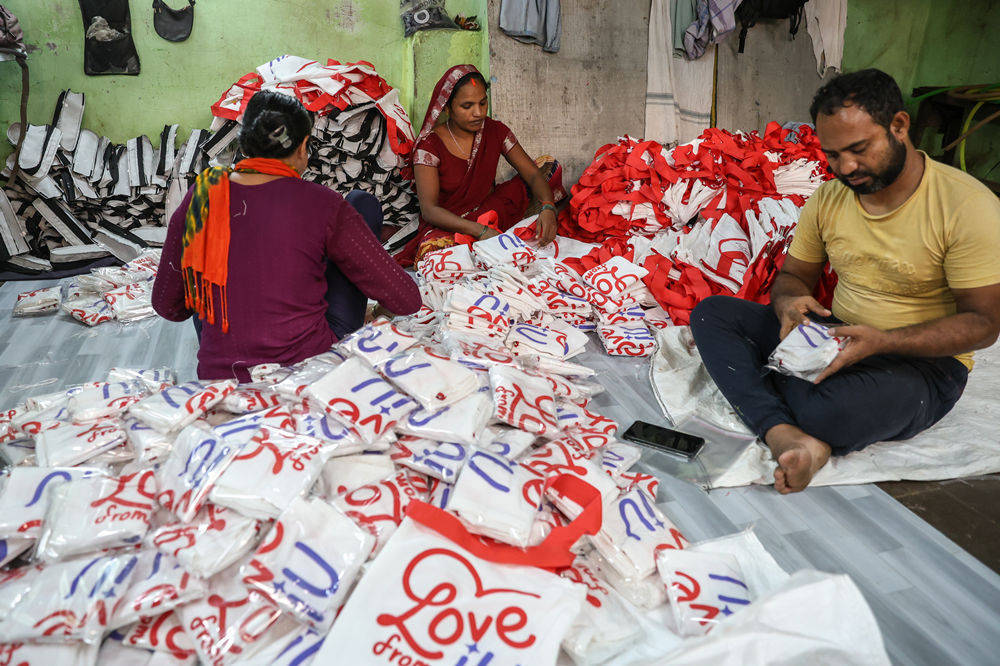
Group 1 - The United States has officially implemented a 50% tariff on Indian goods, significantly impacting over 55% of India's exports to the U.S., with textiles and jewelry being the most affected sectors [1][2] - The new tariff doubles the previous rate of 25%, marking a deterioration in U.S.-India relations, particularly following U.S. criticism of India's purchase of Russian oil [1][2] - The high tariffs threaten India's export competitiveness compared to China and Vietnam, raising concerns about Prime Minister Modi's ambition to establish India as a global manufacturing hub [1][2] Group 2 - Indian exporters, particularly in the footwear and textile sectors, are facing significant challenges, with reports of orders being shifted to countries like Bangladesh and Vietnam due to the new tariffs [2] - The tariffs have shocked Indian officials, especially after recent trade negotiations with Washington, highlighting ongoing frustrations over high tariffs in agriculture and dairy sectors [2] - The potential impact on India's GDP growth is estimated to be a decline of 0.6% to 0.8%, although domestic consumption remains a key driver of the economy [3] Group 3 - The Modi government is planning to implement "next-generation reforms," including significant changes to the goods and services tax system, to stabilize the economy and support affected industries [3] - The Indian financial markets have already shown signs of distress, with significant foreign capital outflows and the rupee becoming the worst-performing currency in Asia this year [3] - The strategic shock from the tariffs could lead to large-scale unemployment in export-centric industries and diminish India's role in global value chains [3]
携手开创东北亚新的美好未来——写在第十五届中国—东北亚博览会举办之际
Xin Hua She· 2025-08-26 14:24
Group 1: Event Overview - The 15th China-Northeast Asia Expo will be held in Changchun, Jilin Province from August 27 to 31, marking the 20th anniversary of the event [1] - The expo aims to explore new paths and models for regional cooperation amidst increasing global economic uncertainty, focusing on supply chain cooperation, new productivity cultivation, and expanding trade and investment [1] Group 2: Trade and Investment Opportunities - In 2024, trade volume between China and the five Northeast Asian countries is projected to reach USD 901.6 billion, a year-on-year increase of 1.6%, accounting for nearly 15% of China's total foreign trade [4] - The bilateral investment amount between China and the five Northeast Asian countries is expected to exceed USD 7 billion in 2024, with investment cooperation expanding into emerging fields such as digital economy and green development [5] Group 3: Regional Cooperation and Logistics - The expo features a total exhibition area of 73,000 square meters with 3,620 international standard booths, showcasing over 10,000 enterprises from 45 countries and regions [3] - The "Changchun-Europe" train service enhances logistics efficiency and supports regional cooperation under the Belt and Road Initiative, transforming Northeast China's geographical disadvantages into advantages [6] Group 4: Industry Collaboration and Innovation - The expo emphasizes supply chain cooperation, with a focus on modern industrial collaboration, including events like the Russia Business Day and China-Korea (Jilin) Economic Exchange Conference [8] - Major companies such as FAW, Huawei, and DJI are showcasing new products in the modern industrial pavilion, highlighting advancements in various sectors including automotive and biotechnology [7] Group 5: Cultural Exchange and Human Connection - The expo serves as a platform for deepening cultural exchanges, featuring unique cultural zones that promote regional cultural integration and cooperation [12] - Events like the "China-Russia Youth Singing Festival" and the popularity of Chinese products in Korea illustrate the growing cultural ties and market opportunities in Northeast Asia [12]
你觉得印度会低头吗?
Sou Hu Cai Jing· 2025-08-26 10:48
Group 1 - Trump has imposed a 50% tariff on Indian goods, doubling the previous rate, which is expected to severely impact Indian exporters [1][3] - The tariffs were introduced as a response to India's purchase of Russian oil, with the U.S. claiming it is part of sanctions against Russia, while critics argue it unfairly targets India [3][5] - India's exports to the U.S. amount to $120 billion annually, representing 17% of its total exports, making the country vulnerable to these tariffs [5] Group 2 - Modi's government faces pressure to resist the tariffs due to the importance of small businesses and farmers in India's economy, as a weak response could be politically damaging [5][7] - Potential retaliatory measures from India could include imposing tariffs on U.S. products, particularly in agriculture and technology sectors [5][7] - The situation may lead India to accelerate de-dollarization efforts, using alternative currencies for trade, which could undermine U.S. dollar dominance [7] Group 3 - The geopolitical implications of the tariffs could push India closer to Russia and China, complicating U.S. strategic interests in the Indo-Pacific region [7] - The ongoing trade conflict is characterized as a political spectacle, with both Trump and Modi prioritizing domestic political considerations over economic consequences [7]
大盘成长补涨,沪指加速上行
Hua Tai Qi Huo· 2025-08-26 05:23
Report Industry Investment Rating - No relevant content provided Core Viewpoints - The weak US housing market data led to concerns about the economic outlook, causing the three major US stock indexes to close lower, and the market is focused on the PCE data to be released on Friday [2] - In the domestic market, the large-cap growth stocks made up for losses, driving the Shanghai Composite Index to rise rapidly, and short-term overbought signals appeared. The current market maintains a rotation between sectors and a high-low switch within sectors. Considering the approaching important time nodes, it is expected that the market will not experience a significant adjustment before the military parade [2] Summary by Directory Market Analysis - Shanghai introduced a series of real estate policies, including relaxed housing purchase restrictions, increased housing provident fund loan limits for green buildings, unified mortgage interest rates for first and second homes, and fine-tuning of property tax policies [1] - In July, the annualized sales volume of new homes in the US decreased by 0.6% to 652,000 units, exceeding the market expectation of 630,000 units, and the median price of new homes fell by 5.9% year-on-year to $403,800 [1] - In the spot market, the three major A-share indexes opened higher and closed higher. The Shanghai Composite Index rose 1.51% to close at 3,883.56 points, and the ChiNext Index rose 3%. All sector indexes closed higher, with the communication, non-ferrous metals, and real estate sectors rising more than 3%. The trading volume of the Shanghai and Shenzhen stock markets reached 3.1 trillion yuan on the day. Overseas, the three major US stock indexes closed lower, with the Dow Jones Industrial Average falling 0.77% to 45,282.47 points [1] - In the futures market, the basis of the current-month futures contracts declined, and the IH and IF contracts maintained a premium. The trading volume and open interest of stock index futures increased simultaneously [1] Strategy - The weak US housing market data triggered concerns about the economic outlook, leading to a collective decline in the three major US stock indexes. The market is awaiting the PCE data to be released on Friday. In the domestic market, large-cap growth stocks made up for losses, driving the Shanghai Composite Index to rise rapidly, and short-term overbought signals emerged. The current market features sector rotation and high-low switching within sectors. With important time nodes approaching, it is expected that the market will not experience a significant correction before the military parade [2] Macroeconomic Charts - The report includes charts showing the relationship between the US dollar index, US Treasury yields, RMB exchange rate, and A-share trends and styles [5][10][15] Spot Market Tracking Charts - The daily performance of major domestic stock indexes on August 25, 2025, is presented, including the Shanghai Composite Index, Shenzhen Component Index, ChiNext Index, CSI 300 Index, SSE 50 Index, CSI 500 Index, and CSI 1000 Index, along with their respective daily changes [12] Futures Market Tracking Charts - The trading volume and open interest of stock index futures (IF, IH, IC, IM) are provided, along with their changes [16] - The basis of stock index futures contracts (current month, next month, current quarter, next quarter) is reported [34] - The inter - period spreads of stock index futures are presented, including various combinations such as next month - current month, next quarter - current month, etc. [42][43]
价格全方位多维跟踪体系(2025.08):反内卷语境看价格结构性修复
Guoxin Securities· 2025-08-25 13:14
Core Insights - The report highlights a structural price recovery in the context of anti-involution, with significant price movements observed across various sectors, particularly in upstream coal, midstream agriculture, and downstream chemicals [1][2][3] - A total of 49 major products were tracked, with 19 experiencing price increases, 28 seeing declines, and 2 remaining stable as of early August 2025, indicating a clear divergence in price trends across different industries [1][2] Price Tracking of Key Production Materials - As of early August 2025, prices for key production materials showed a mixed trend, with notable increases in upstream coal products and certain chemicals, while black metals and construction materials continued to face downward pressure due to weak downstream demand [1][2] - Year-on-year data indicates that industrial prices are still in a downward trend, but the rate of decline is stabilizing, with some sectors like steel and certain chemicals beginning to recover [1][2][3] Price Changes Across Industry Chains - Recent data indicates that upstream industries remain weak, with coal prices declining by 6% to 7%, while midstream sectors show signs of recovery, with indices for bulk commodities and shipping improving [2][3] - Downstream sectors are under pressure, particularly in real estate and traditional medicine, while food prices remain stable with slight declines in certain agricultural products [2][3] Industry Price Sentiment Tracking - The report analyzes price differentials across the supply chain, revealing that upstream resource prices are generally weak but exhibit significant differentiation, with precious metals and some non-ferrous metals performing well [3] - The midstream bulk commodity index has shown signs of recovery, while the construction materials sector continues to struggle, reflecting ongoing challenges in the real estate market [3]
黑牡丹:公司及子公司对外担保总额约38.94亿元
Mei Ri Jing Ji Xin Wen· 2025-08-25 13:05
Group 1 - The company, Black Peony (SH 600510), announced a financing plan where its subsidiary, Green Capital Real Estate, intends to apply for a financing limit of up to RMB 600 million from financial institutions [1] - The company will provide a joint liability guarantee for a loan of up to RMB 306 million based on its 51% stake in Green Capital Real Estate, while New Town Holdings will provide a guarantee for up to RMB 294 million based on its 49% stake [1] - Green Capital Real Estate will use land use rights and ongoing construction projects as collateral for the financing, with a guarantee period of no more than 25 years [1] Group 2 - As of the announcement date, the total external guarantees provided by the company and its subsidiaries amount to approximately RMB 3.894 billion, accounting for 37.55% of the company's latest audited net assets [2] - The revenue composition for Black Peony in 2024 is as follows: Real estate industry 48.69%, construction industry 31.34%, textile industry 17.35%, other industries 1.33%, and other businesses 1.29% [2] - The company's market capitalization is currently valued at RMB 7.5 billion [3]
